BACK UP BLOG (no longer updating)

This blog was a backup for American Indian Adoptees blog
USE THE SEARCH BAR or SEARCH TOPICS at bottom of this blog

If you need support

Support Info: If you are a Survivor and need emotional support, a national crisis line is available 24 hours a day, seven days a week: Residential School Survivor Support Line: 1-866-925-4419. Additional Health Support Information: Emotional, cultural, and professional support services are also available to Survivors and their families through the Indian Residential Schools Resolution Health Support Program. Services can be accessed on an individual, family, or group basis.” These & regional support phone numbers are found at https://nctr.ca/contact/survivors/ . MY EMAIL: tracelara@pm.me

Search This Blog

Wednesday, March 22, 2023

Help Fight the MMIWG Epidemic


YES! I JUST STARTED WATCHING ALASKA DAILY 


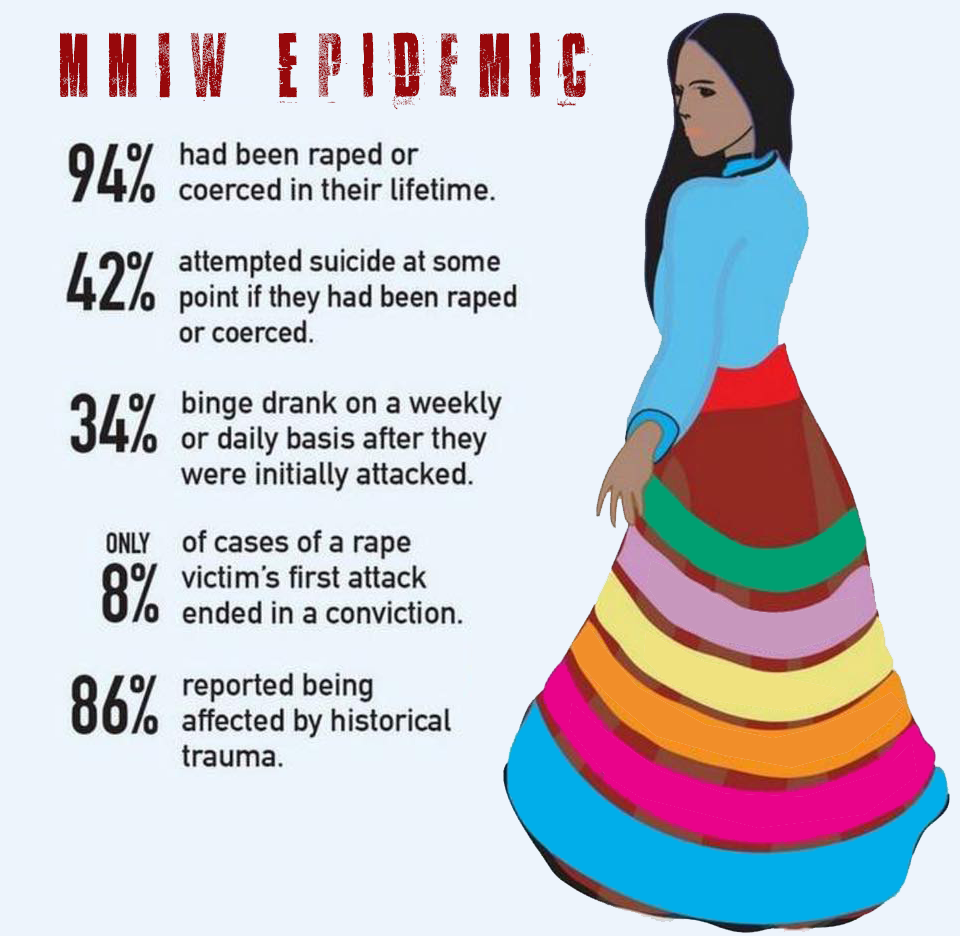
Help Fight the MMIW/MMIR Epidemic


Red
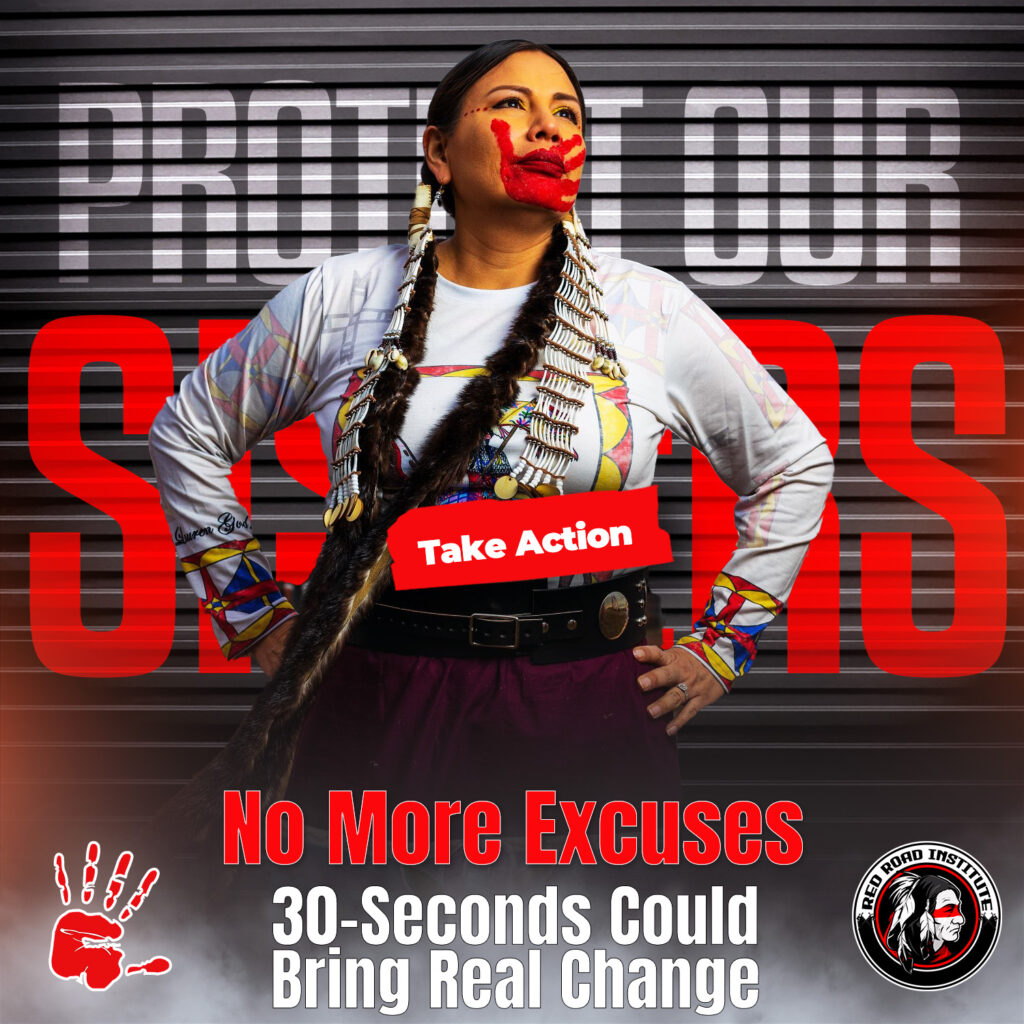
Road Institute is proud to announce two new initiatives protecting our
people and saving lives. We do need your help to see these through.


As
you might know, tribes are rarely able to prosecute non-tribal citizens
for crimes they commit on our reservations. As a result, our
reservations are breeding grounds for wicked people to rape, murder, and
assault our people.


Because
the local police are rarely allowed to prosecute crimes outside their
jurisdiction, the FBI is the only department able to investigate crimes
committed by non-Natives on tribal land.


In
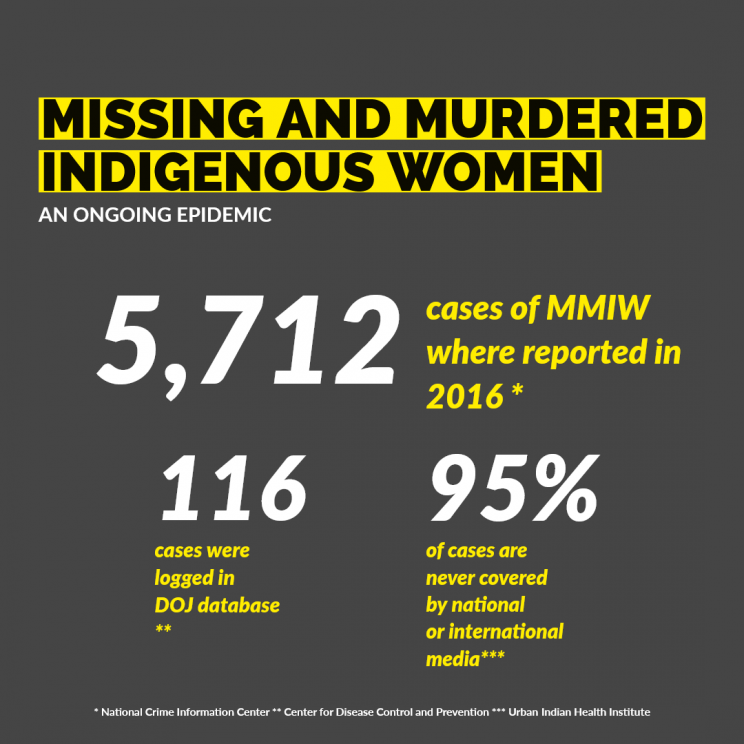
2016, the last year these stats were kept, there were 5,712 known cases
of missing or murdered indigenous women. However, only 116 were logged
into the DOJ database. For over 90% of the crimes, a real investigation
never happens.


So we're putting together these programs to help our people because the government will not. 

Red Road Alert:
On July 1st, we will roll out the Red Road Alert in South and North
Dakota. This system will allow tribal police departments and police in
cities surrounding reservations to send a text alert to people who have
subscribed to our service when one of our relatives is missing.


This is similar to an Amber Alert and will help our people be on the lookout for our relatives and share information.


We
plan to expand this to other states as funds and grants become
available. However, we need $19k more to ensure this is financed for an
entire year.


Donate to Red Road Alert


Red Road TV is the premier TV station for all of your Native American
and First Nations content. We are the largest indigenous TV station in
the world. We’re all Indigenous, All the Time!


Visit Red Road TV


Download Red Road TV to your home TV

Red Road TV – Native American | TV App | Roku Channel Store | Roku


A New Show on Red Road TV


MMIW: Unsolved Cases: Have you heard about Red Road TV?
This is our 100% free indigenous programming available on Roku and
other smart TVs. Since we don’t charge for our programming, we must
raise money for anything we produce.


We’re currently
working on the first five episodes of a show that will highlight
unsolved MMIW cases. We’re hiring private investigators to go where the
federal government will not.


On April 15th, we will
release a new website that will allow us to share information and
hopefully bring some of our stolen sisters home. Our budget is tight,
and we are short $11k for advertising and equipment if you want to
donate money or equipment.


We want you to know
that 100% of all Red Road Institute’s donations return to our
communities. Not one person on our staff receives compensation.


Buried Secrets Podcast

Chief
James H. Red Cloud, grandson of the famous Chief Red Cloud who allowed
the Jesuits to set up a school on Lakota land, addresses the 1958
graduating class of Holy Rosary Mission and a Jesuit father. Credit: Courtesy of the Red Cloud Indian School and Marquette University Holy Rosary Mission/Red Cloud Indian School records


Buried Secrets: America’s Indian Boarding Schools


This week on Reveal,
we’re bringing back a two-part investigation with ICT (formerly Indian
Country Today) about boarding schools for Native children and the United
States’ effort to come to terms with an educational system that was
designed to “kill the Indian and save the man.”


ICT reporter Mary Annette Pember has been reporting on these boarding
schools for more than 20 years. Much of her work focuses on the role the
Catholic Church played in shaping federal policy toward Native people.
The church was given more than 10,000 acres of tribal land by the
federal government, as well as access to money that had been given to
tribes through treaties with the U.S. government to build and operate
the schools.


In part one
of this investigation, Pember takes us to the Catholic-run Red Cloud
Indian School on the Pine Ridge Reservation in South Dakota, which is
now trying to bring truth and healing to its community despite the open
wound from the school’s history.


Listen to the episode


🎧 Other places to listen: Apple Podcasts, Spotify, Google Podcasts, Stitcher or wherever you get your podcasts. 


DIG DEEPER


📝 Buried Secrets: Red Cloud takes the lead in uncovering boarding school past. Read.


📝 Red Cloud Indian School will dig for graves. Read.


📝 The Catholic Church siphoned away $30M paid to Native people for stolen land. Read.


📝 Deaths at Chemawa. Read.


📝 ‘Sometimes we hear the voices of children playing there.’ Read.


Thursday, March 16, 2023

NEWS: ICWA, Kinship, and more


 With Supporters from Indian Country Looking on, Minnesota Lawmakers Vote to Protect Indigenous Families


Minnesota was already among the 12 states with a law that mirrors some
or all of the protections of the Indian Child Welfare Act (ICWA),
federal legislation passed decades ago to protect Indigenous families
from unnecessary family separation. 


But the state Legislature went further this year with enhancements to
the Minnesota Indian Family Preservation Act, which was originally
passed in 1985. The bill moves to Gov. Tim Walz’s desk as the nation
waits for a ruling from the Supreme Court on a case called Brackeen v.
Haaland, which could decide the fate of ICWA as a national law. A
decision in the case is expected this summer. 


“This bill says that we agree on Minnesota land that our children
deserve the opportunity to have access to their family, their culture,
their beliefs, and what I believe is the most beautiful part of
Minnesota,” Rep. Heather Keeler told lawmakers in advance of the floor
vote.


OPINION: We’re Building a New Path to Prioritize Kin


A group of leading organizations in child welfare is working to build
a new path for quickly licensing kin as foster parents. 


The Imprint Weekly Podcast


 Episode 122: We Were Once a Family, with Journalist and Author Roxanna Asgarian


On
this week’s podcast we discuss some updates on the Indian Child Welfare
Act front, Minnesota becoming a trans youth refuge, and the blind spot
in America’s knowledge of youth justice. 


Imprint alum Roxanna Asgarian joins to discuss her new book, “We Were
Once a Family: A Story of Love, Death, and Child Removal in America,”
which traces the lives and families of six children killed by their
adoptive parents in March of 2018.  HERE
 
👇👇👇

02/20/2023


A Child of the Indian Race: A Conversation with Sandy White Hawk


Part Two: A song for orphans

On this week’s podcast, we begin a two-part interview between
Imprint reporter Nancy Marie Spears and Sandy White Hawk, author of the
recently released memoir A Child of the Indian Race: A Story of Return.
White Hawk’s recounts her own adoption story, which began in 1955,
decades before the Indian Child Welfare Act was passed to protect
Indigenous families from being separated. 

This conversation comes just months after the Supreme Court heard
arguments in a case called Brackeen v. Haaland, in which several
non-Indigenous families and the State of Texas have claimed that ICWA is
unconstitutional. A decision in the case is expected to be delivered
this summer.


Guest Interview: Sandy White Hawk is a Sicangu Lakota adoptee from the Rosebud
Reservation, South Dakota. She is the founder and director of First
Nations Repatriation Institute


An Indigenous Adoptee Reclaims Her Culture

http://bit.ly/3YI0oF9


First-of-its-kind Survey Examines Trauma and Healing Among Indigenous Survivors of Family Separation

http://bit.ly/3e3XHfd


How a Chippewa Grandmother’s Adoption Fight Ended Up in the U.S. Supreme Court

http://bit.ly/3VLeS6k


The Imprint’s Coverage of Brackeen v. Haaland

http://bit.ly/3ttyzTy


Sunday, March 12, 2023

Part 3: What if We Lost ICWA? Kinship Care

👉Nicole Chung on the family who tried to end racism through adoption: “The reality, of course, is that transracial adoption has no intrinsic power to heal racial prejudice.” | The Atlantic

Part 3: What if We Lost ICWA?

By Trace L Hentz, blog editor

Last November I wrote a post: WE ARE NOT GOING BACK and ended the post with: If the Indian Child Welfare Act (ICWA) fails
we will write a
stronger law
.  I meant it, and states are enacting their own laws right now to protect Indian children from the predatory billion-dollar Adoption Industry.

I had a friend, Jagade, who dreamed for others.  (Yes, that is a real thing. Sadly she passed on a few years ago.) She told me about a dream she had that many more adoptees were coming.  I didn't want to believe her.  She told me that is why I was directed to do the anthologies, so that future adoptees would know the history of the Indian Adoption Projects and what happened.  And how to return to their tribes as adults.

This dream can means two things: There is still too much poverty in Indian Country and the authorities (social workers) will come for Native children, judging families based solely on living conditions. It's happened before.  They need an excuse to remove children so the judges and lawyers and adoption industry can continue making profits.  (It also means that there are not enough Native people to foster and adopt children, and become adoptive parents.) 

Poverty Porn? Yes.

High levels of perceived Poverty justifies removal of American Indian children (again?) #PovertyPorn

Individuals with little exposure to or
experience with American Indian communities would have little to no
knowledge of these forms of social safety nets (ie. kinship care).
 

Second: The other thing her dream might mean is: adoption will not be closed, and people who are adopted will know the truth when they become adults, and access and open their adoption file. And then have a reunion.

Yes, adoption has changed that much since I started studying it back in 2004/5.

Let's look at prior stats:

How many children were adopted in 2000 and 2001? STATiSTiCS

 AFCARS reported 54,627 adoptions in the United States during fiscal year 2000 and 50,136 adoptions in fiscal year 2001.


1992


PUBLIC: 18%


INTERCOUNTRY: 5%


PRIVATE, INDEPENDENT, KINSHIP AND TRIBAL: 77%


2001


PUBLIC: 39%


INTERCOUNTRY: 15%


PRIVATE, INDEPENDENT, KINSHIP AND TRIBAL: 46%
This
number includes private agency, independent, and tribal adoptions with
public agency involvement that were reported to AFCARS.

Is this the future? Kinship care?

Kinship care missing from survey

2010 excerpt:
Terry L. Cross, executive director of the Portland-based National Indian
Child Welfare Association and an enrolled member of the Seneca Nation
New York, said the results have their roots in cultural backgrounds.


“Cultural norms, including sustaining strong extended families, handing
down of culture and traditions, and establishing a positive identity,
contribute to perceptions of our foster care system and notions of your
place within that system. What is missing from the survey is how many
people would support ‘kinship care,’ or relative care, over foster care
placements in a stranger’s home,” Cross said.


Cross said kinship care is considered by most to be a cultural norm of
Indian Country, and when a crisis arises other family members step in to
share the burden of taking care of the children. Given a choice of a
child being removed from a home due to maltreatment and being placed in a
licensed foster home with strangers in a new community, Cross said, it
appears most Indians will choose informal kinship care arrangements,
even if it means little financial support for the kinship caregivers.
 
and finally in 2018:

KINSHIP: State Turns to Urgent Placement of Foster Kids with Relatives, Friends


A family from the Cheyenne River tribe plays together near Turtle Island during a protest against plans to pass the Dakota Access pipeline near the Standing Rock Indian Reservation, near Cannon Ball, North Dakota, U.S. November 26, 2016. REUTERS/Stephanie Keith - RC11F6A7B3D0


*

Editor Note: The government
takes the land AND causes the poverty, then they want more LAND and take
the children to achieve this goal. The genocide cycle never ends... 
That is the sport of colonization and empire. Trace

to be continued


Thursday, March 9, 2023

Hart adoptees Murder Case | #FamilySeparation | Tweets


We the Expert Series: MEPA, IEPA & ICWA

 COMING UP: Saturday, March 11 2023 Adoption Mosaic this Saturday has a great program
discussing an alphabet of laws that control many aspects of adoptions,
particularly transracial adoptions and adoptions from Native American
communities
.  Featuring Sandy White Hawk, Jordan Davis, Torie DiMartile,
Daryle Conquering Bear Crow, and Summer Sullivan, the program discusses
the Multi Ethnic Placement Act, Inter Ethnic Placement Act, and the
Indian Child Welfare Act and their impact on adoption, communities,
and adopted people. We the Expert Series: MEPA, IEPA & ICWASaturday, March 11, 202310am Pacific/11am Mountain/12pm Central/1pm Eastern

COST $10/15 (financial support is available to adoptees)

https://subscribe.adoptionmosaic.com/we-the-experts-register

Wednesday, March 8, 2023

Brackeen v. Haaland : Future of ICWA


 ICWA BRIEFING FOCUS ON NATIVE CHILDREN

On September 20, 2022, social workers, advocates, and Hill
staffers gathered in Room HV201 in the Capitol Visitor Center to discuss
how Congress might respond if the United States Supreme Court rules the
Indian Child Welfare Act (ICWA) is unconstitutional.  Co-hosted by CRISP
and the National Foster Youth Initiative, the briefing was held in
conjunction with the Congressional Social Work Caucus and the
Congressional Caucus on Foster Youth.  Congresswoman Barbara Lee
(D-CA-13), chair of the Social Work Caucus, provided a video greeting to
set the tone for the briefing. 

CRISP Legislative
Director Angelique Day, an associate professor at the University
of Washington School of Social Work and a descendant of the Ho Chunk
nation, consisted of Kathryn Isom-Clause, Bureau of Indian Affairs
Deputy Assistant Secretary for Policy and Economic Development; Kristen
Torres, MSW, child welfare legislative aide for Rep. Judy Chu (D-CA-27);
and Sonia Begay, a member of the Navajo Nation and grandparent
caregiver who provided compelling testimony about her experiences with
ICWA during the time she sought parental  custody of her grandchildren
who attended the briefing. 
 

The briefing began with opening
remarks from CRISP director Dr. Charles E. Lewis Jr., followed by
remarks from Rebecca Louve Yao, executive director of the National
Foster Youth Institute, a nonprofit organization founded by Rep. Bass
to 


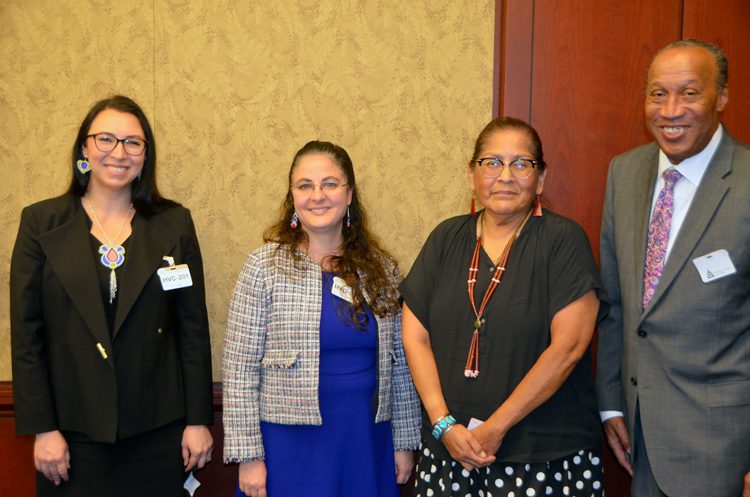
From left: Kathryn Isom-Clause, Bureau of Indian Affairs; Dr. Angelique Day, Sonia Begay, and Dr. Charles E. Lewis Jr.


revolutionize the foster care
system.  Camille Loya provided remarks on behalf of Rep. Bass. 

The most
compelling testimony was delivered by Sonia Begay. She told her story
about how her oldest son was struggling with substance abuse and
temporarily lost custody of his three children to the Kentucky foster
care system.  She was not granted custody of the children and was
appalled when she arrived at the state office and her grandson’s hair
had been cut.  His hair had never been cut before because of traditional
culture. She said it reminded her of the photos she had seen of native
children being taken into boarding schools in the 1940s and 50s.  His
hair had been cut within the span of 12 hours of him going into state
care.  She then contacted the Navajo Nation social services and the
Kentucky social services refused to grant her custody despite the Navajo
representative citing the need to comply with ICWA.  She said the trauma
of those events still haunts her. She was not living on the
reservation, so she did not have access to local resources but turned to
organizations and social workers seeking help and guidance. She discovered
bruises on the back and buttocks of her youngest granddaughter.  When
social services saw the injuries, they accuse the grandmother of abuse.  
The tribe went into action, sending a legal team to help get the
children released to their grandmother.  The process took more than nine
months.
  Eventually, she received a formal apology from Kentucky social
services.  She credits the ICWA for allowing her to take custody and care
for her grandchildren.


The focus of the briefing was to discuss how Congress might
respond should the Supreme Court declare ICWA to be unconstitutional. 
 

Several bills have been introduced in the House of Representatives to
protect the well-being of Native American families: H.R.1688, the Native American Child Protection Act
was introduced on March 21 by Reps. Ruben Gallego (D-AZ-7), Sharice
Davids, and Dusty Johnson (R-SD) and passed in the House on May 12,
2021; H.R.4348, the Tribal Family Fairness Act, was introduced by Rep. Bass on July 7, 2021; and H.R.8954, the Strengthening Tribal Families Act, was introduced by Reps. Judy Chu, Don Bacon (R-NE-2), Raul Ruiz (D-CA-36), and Tom Cole (R-OK-4) on September 23, 2022.


On November 9, 2022, the Supreme Court heard Brackeen v. Haaland
and three other cases challenging the constitutionality of the Indian
Child Welfare Act passed in 1978 giving tribal governments primary
jurisdiction over the removal of Native American children in custody,
foster care, adoption cases, and their placement in appropriate homes.  The Fifth Court of Appeals issued a divided ruling in April 2021. Defenders of ICWA point to a report recently released by the U.S. Department of the Interior detailing atrocities committed at boarding schools against Indigenous children as justification for needing ICWA’s federal protections. 

The
Department of Interior report showed that between 1819 and 1969, the
United States operated or supported 408 boarding schools across 37
states, including 21 schools in Alaska and 7 schools in Hawaii.  The
report described the boarding school environment, housing Native
American children as young as four years old, as fostering “rampant
physical, sexual, and emotional abuse; disease; malnourishment;
overcrowding; and lack of health care.”


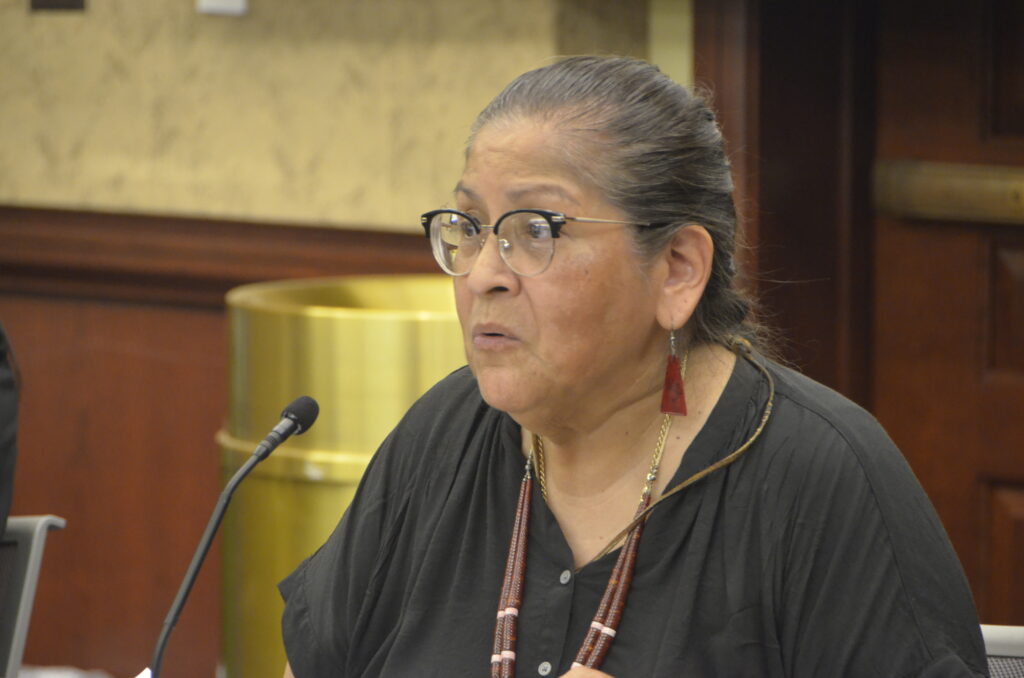
Sonia Begay provided emotional testimony.


Thirty-three Senators and 54 Members of the House of Representatives filed an amicus brief
in support of the constitutionality of Congress’s authority to
legislate the affairs of Native American tribes and their people and
urged the Supreme Court to “uphold the Indian Child Welfare Act’s
constitutionality in all respects.” Numerous amici briefs have been
filed supporting ICWA’s constitutionality, including briefs by several
tribal nations and the American Civil Liberties Union.

SOURCE


1987: Oversight Hearings on the Indian Child Welfare Act

 DOWNLOAD FULL TEXT

442 PAGES - 10 year review after ICWA was passed into federal law

Indian Child Welfare Act. Hearing on Oversight
Hearings on the Indian Child Welfare Act, before the Select Committee on
Indian Affairs. United States Senate, One Hundredth Congress, First
Session (November 10, 1987).

Congress of the U.S., Washington, DC. Senate Select Committee on Indian Affairs.
This
Senate hearing produced testimony on how the  Indian Child Welfare Act
of 1978 (ICWA) has been administered by government agencies and the
courts. Three members of the Select Committee on Indian Affairs
presented background information on the act's intent to confirm the
tribe as the primary authority in matters involving an Indian child's
relationship to parents or extended family. Seven tribal members from
Washington, Montana, Alaska, Oklahoma, California, and Arizona discussed
the importance to Indian children of maintaining contact with their
cultural roots; the high rates of placement of Native children in
non-Native foster and adoptive homes, particularly in Alaska; and the
problems of vague wording in ICWA and poor funding for tribal child
welfare activities.  A witness from the Bureau of Indian Affairs (BIA)
testified about the extent of the BIA's role in child placement
proceedings and its funding and monitoring of tribal child welfare
activities.  State officials from Washington and Alaska described
problems of inadequate funding and lack of Native foster homes.  A
Canadian speaker reported the unique problems of tribes that straddle
the border.  The Association on American Indian Affairs submitted
proposals for two bills, one to fund Indian social services out of four
existing federal programs, and the other to amend ICWA by clarifying and
expanding its coverage, increasing tribal involvement and control,
keeping families intact when possible, providing quicker proceedings,
and creating compliance monitoring mechanisms
.  An advocacy group
proposed an ICWA amendment that would extend coverage to indigenous
Hawaiians.  Twelve additional tribal groups submitted recommendations.
(SV)
 
Superintendent of Documents, Congressional Sales Office, U.S. Government Printing Office, Washington, DC 20402.


The Supreme Court and the Indian Child Welfare Act: What’s at Stake in Brackeen Case


Brackeen v. Haaland
could change the future of Indigenous rights.

At
age nine, tragedy struck Autumn Adams’ life. Her father passed away and
her mother was deemed unfit to care for her, leaving Adams with an
uncertain future. 

Adams, who is a member of the Yakama Nation,
a federally recognized Native tribe, recalls overhearing officers from
Child Protective Services discuss the possibility of moving her to a
non-Native home if they couldn’t soon find a Native family to place her
with. The idea terrified her. 

“At that point in my life, I had everything I recognized as home ripped away from me," she tells Teen Vogue.
"I had to bury my father. I had to be ripped from my mother's arms. The
only thing that was left that gave me that connection was my extended
family and culture.”

Adams
was eventually placed with family in a multigenerational home that
included her maternal aunt and grandmother. Now a law student, Adams
credits this upbringing with enabling her to stay close to her culture
and achieve success. “I was directly able to learn from my aunt, my
cousins, my grandmother, my other aunts and uncles during that time —
what it means to have perseverance, what it means to have responsibility
and respect, the definition of grit,” she explains. “It's through those
lessons that I've broken every negative statistic not only about former
foster youth but about Native former foster youth.”

In November,
the Supreme Court heard arguments for a case that could forever change
the landscape of adoption for Native youth like Adams. 

KEEP READING

CLICK OLDER POSTS (above) to see more news

CLICK OLDER POSTS  (above) to see more news

MEGWETCH THANK YOU

HUGE Thank you for visiting this blog and sharing this with your kin. It's appreciated. Contact Trace anytime! Use the form below.

BOOKSHOP

Please use BOOKSHOP to buy our titles. We will not be posting links to Amazon.

Popular Posts

To Veronica Brown

Veronica, we adult adoptees are thinking of you today and every day. We will be here when you need us. Your journey in the adopted life has begun, nothing can revoke that now, the damage cannot be undone. Be courageous, you have what no adoptee before you has had; a strong group of adult adoptees who know your story, who are behind you and will always be so.

OUR HISTORY

OUR HISTORY
BOOK 5: Lost Children of the Indian Adoption Projects