
|

|
|
|
|
|
"They always go for our babies." -Emily Edenshaw, President & CEO at Alaska Native Heritage Center
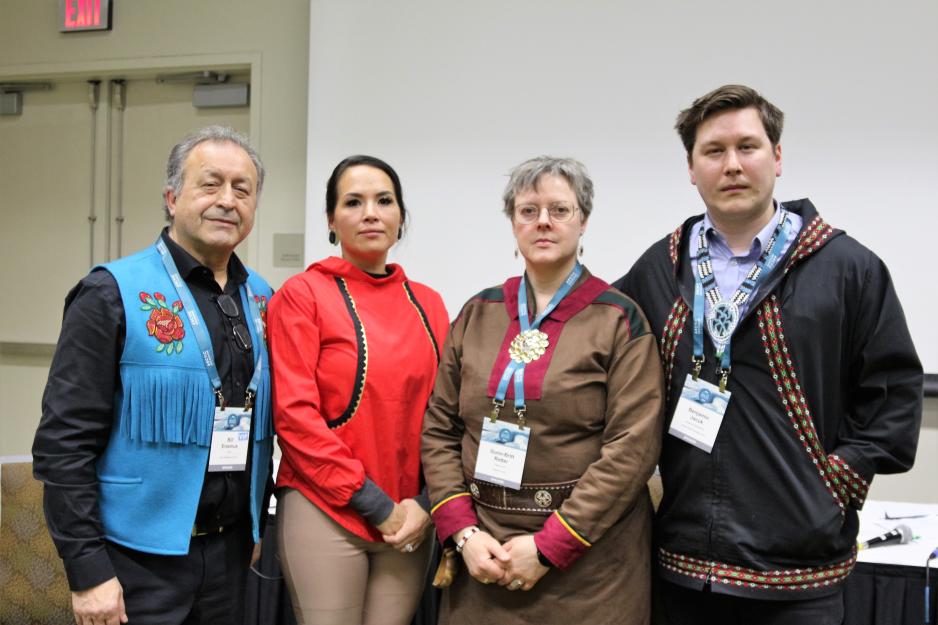
He admitted that this was genocide. -Chief Bill Erasmus
The boarding school practice started in Alaska in 1879,
12 years after the USA purchased the Arctic state from Russia without
consulting the indigenous population.
Maybe that is also where the healing has to start.
"Alaska may be ground zero for all of this. But ground zero can also
be the place of healing for indigenous peoples from all over the world,"
Jacuk concludes.
In 2015 the Truth and Reconciliation Commission of
Canada concluded what happened was "cultural genocide". It identified
more than 3,000 children who died from disease due to overcrowding,
malnutrition, and poor sanitation or died after being abused or trying
to run away.
Most schools had their own cemeteries, and sometimes when children died, their parents were never informed.

OPINION:
"By the late 1950s, more Indigenous kids in the south were finally living
at home. This concerned the mostly white folks who were social workers,
and they ‘scooped’ kids, or stole kids out of Indigenous communities
because the houses didn’t have perfect picket fences, the stay-at-home
moms and working dads, or the kitchens with chrome-plated
tables. Blatant racism in social work called Indigenous parents ‘bad’
and their kids were adopted or sold to white families—good
families. Hopefully those kids would lose that pesky Indigenous
identity. The ’60s Scoop kids were separated from families, and adopted
out across Canada, the United States, and around the world. It’s
estimated that 22,500 First Nations, Inuit, and Métis children were
removed from the homes in the ’60 Scoop. Any connection to culture and
belonging was severed completely."
_________________
Action 71 calls upon chief coroners and provincial vital statistics
agencies to make their records on the deaths of Indigenous children in
care of residential school authorities available to the National Centre
for Truth and Reconciliation.
As
the organization entrusted to receive, hold and archive the
commission’s records, the National Centre for Truth and Reconciliation
will add the newly acquired documents to the permanent record of what
happened in the residential school system.
The agreement will have
a positive impact on survivors and their families who are searching for
more information as a means to heal, Debbie Huntinghawk told the Sun on
Monday morning.
“That’s a beautiful game changer for a lot of people,” she said.
The upcoming Why Repatriation is Important livestream event will focus on repatriation of the children who died at Indian boarding schools as well as the healing that needs to take place in tribal communities to overcome the intergenerational trauma associated with Indian boarding school experiences.
Across the United States, many former Indian boarding schools have cemeteries on their grounds, including the former Carlisle Industrial Boarding School in Pennsylvania. The graves of deceased Indian children buried at Carlisle fall under the control of the U.S. Army, which has taken the position that the graves of Indian children buried there are not subject to the Native American Graves Protection and Repatriation Act (NAGPRA). Many Indian law experts disagree with the U.S. Army’s stance.
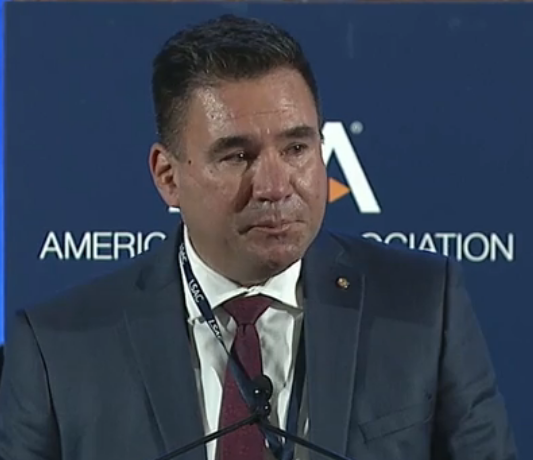
CHICAGO — In a resolution with multiple requests, the American Bar Association House of Delegates, a 597-member policy body, is calling on Congress to conduct oversight hearings on Indian boarding schools. The resolution was adopted by the ABA Monday evening.
GOOD: American Bar Association Calls on Congress to Investigate Indian Boarding Schools | Currents
Looks like lawyers will get in on the action here in the US... Blog Editor
| |
Not just in Canada, American has a bad history problem, too...
Against Residential School Denialism
Residential school denialism is not the outright denial of the Indian Residential School system’s existence, but rather the rejection or misrepresentation of basic facts about residential schooling to undermine truth and reconciliation efforts.
Residential school denialists employ an array of rhetorical arguments. The end game of denialism is to obscure truth about Canada’s residential school system in ways that ultimately protect the status quo as well as guilty parties.
Residential school denialists begin and end with a firm belief in innate Indigenous deficiency and settler innocence, often rooted in Christian triumphalism. Their ranks include missionary apologists, writers and academics, right-wing and anti-Indigenous editorialists, and relatives of residential school staff who uncritically refer to personal memory and work to defend their family reputations. These are neither informed nor objective commentators.


