BACK UP BLOG (no longer updating)

This blog was a backup for American Indian Adoptees blog
USE THE SEARCH BAR or SEARCH TOPICS at bottom of this blog

If you need support

Support Info: If you are a Survivor and need emotional support, a national crisis line is available 24 hours a day, seven days a week: Residential School Survivor Support Line: 1-866-925-4419. Additional Health Support Information: Emotional, cultural, and professional support services are also available to Survivors and their families through the Indian Residential Schools Resolution Health Support Program. Services can be accessed on an individual, family, or group basis.” These & regional support phone numbers are found at https://nctr.ca/contact/survivors/ . MY EMAIL: tracelara@pm.me

Search This Blog

Showing posts with label This Land podcast. Show all posts

Sunday, December 22, 2024

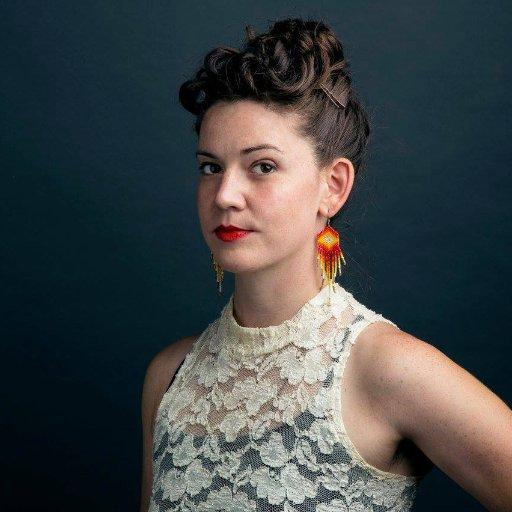
This journalist is pushing back against the erasure of Native American history


Originally published by The 19th

Rebecca Nagle has turned the false history of Native American communities she received as a child into a career of truth-driven storytelling. 

A writer, journalist and author, Nagle is the host of the documentary podcast “This Land” and author of the novel “By the Fire We Carry.” 

Born in Joplin, Missouri, 38-year-old Nagle spent much of her youth in Tulsa, Oklahoma, and Oklahoma City with her Cherokee family members. She recalls Native history scarcely being addressed throughout her education.

"I remember making ships out of popsicle sticks to celebrate Columbus Day and asking questions that went unanswered. I definitely think my education was lacking when it came to that stuff in public school," she said.

Her understanding of her family history and culture was primarily taught through her grandmother.

“Growing up, I learned a lot from my grandma. She made sure that we understood that we knew who our family was,” she said. “And then, of course, as an adult you sort of test what your family members told you about your family.” 

Her family’s portrayal of their forebears was mostly heroic, focused on how her “Cherokee ancestors sacrificed their lives for the sake of the Cherokee Nation.” Though she recognizes that her family’s history has more detail and nuance, she has kept their overarching pride and sacrifice close to her.

This passion for history fuels much of Nagle’s work as a writer and journalist. Over its two seasons, her podcast, “This Land,” reflects her will to dive into research and highlight the very stories that were avoided throughout her childhood. 

The first season leads the audience through the case of Patrick Murphy, a citizen of the Muscogee Nation who was sentenced to death for the murder of George Jacobs in 1999. Murphy’s case took an unexpected turn when his attorney challenged his conviction by arguing that he could not be prosecuted by the state of Oklahoma but instead must be tried by the Muscogee Nation. Murphy was ultimately convicted for murder and sentenced to life in prison by the federal court. 

Season two continues the work of purposeful storytelling by detailing the Haaland v. Brackeen Supreme Court case, which challenged the constitutionality of the Indian Child Welfare Act’s restrictions on Native children being adopted by non-Native parents. The high court affirmed the constitutionality of the act in 2023. 

Nagle describes the work she produced on her podcast as a push that led her to writing her novel, “By the Fire We Carry.”

“We made the first season, and I then kept wanting to follow this story and follow those threads, and I felt like I had more to tell and more research to do,” she said. 

“By the Fire We Carry” invites readers through the fight for rightful ownership of Native lands. Deep diving into U.S. history, Nagle highlights the ways in which Native people were forcibly removed from their homes on lands that are now recognized as property of eastern Oklahoma. The history she details provides context to the Murphy case, which she recognizes as a modern-day portrayal of the generations-long battle for Native grounds. 

Exploring how the past has influenced the present and using that knowledge to increase visibility and awareness is a primary reason she has continued to amplify Native stories in her journalism career.

“When you look out in the news media, there just isn’t enough Native representation, and I think that that creates this prevailing ignorance in U.S. society about Native people and our tribes and the law,” Nagle said.

“That ignorance is a really big barrier for progress, and I think that impedes us having better policy in place. That’s one thing that I’m very passionate about: pushing back against that erasure and having Native stories in the mainstream,” she continued.

But she said it can be tricky to get editors to view these stories as newsworthy. 

“It’s almost like if you were writing about women’s reproductive health and your editor didn’t know what abortion was and that’s their starting point,” she said. 

“People who are used to having a [high] level of knowledge and expertise have a hard time when they’re confronted with this situation where their ignorance is kind of daunting. I think some people can have a hard time admitting that.”

Today, Nagle can be found working on an essay series with other Native writers and historians about the history of colonization and genocide against Indigenous people undermining democracy in the United States.  

“You can tell some big lies about tribes and about Native people, and people will believe it because they don’t know that much. I think when you look at history, I can tie every oppressive policy against Native people to the lies that were told to justify it,” Nagle said. “I think so much of history informs our present day and I think we can’t understand one without the other.”

Sunday, January 8, 2023

What's ahead in 2023

Betting, adoption lawsuits pose greatest threat to tribes in decades, experts say

A lawsuit in Washington state and another case before the U.S. Supreme
Court are part of a coordinated campaign that experts say is pushing
once-fringe legal theories to the nation’s highest court and represents
the most serious challenge to tribal sovereignty in over 50 years.

“It could have really big impacts on basically every law Congress has
passed that has to do with tribes and tribal citizens,” said Rebecca
Nagle, a journalist, citizen of the Cherokee Nation and host of the “This Land”
podcast, which explored the Brackeen case in detail. “It’s really the
legal foundation for the rights of Indigenous nations in this country.”

The highest courts in Canada and the United States are expected
to decide child welfare cases this year that could have far-reaching
implications for Indigenous rights on both sides of the border.
 In Brackeen v. Haaland, the U.S. Supreme Court will decide the future of the Indian Child Welfare Act. And in Attorney General of Québec, et al. v. Attorney General of Canada, et al.,
the Supreme Court of Canada will rule on the constitutionality of the
federal government's Indigenous child welfare legislation, Bill C-92.
Although the constitutions and arguments before the top courts in both
countries are different, legal experts say the two parallel cases could
affect who has the legal right to decide what's best for Indigenous
children throughout the continent. Read more here.


KEY CASES SHARE ATTORNEY

Maverick Gaming and Chad and Jennifer Brackeen are also backed by the same legal team.

The
Brackeens are challenging ICWA, a 1978 law that requires caseworkers to
give preference to Indigenous families in foster and adoption
placements of children who are members of a federally recognized tribe.

The law was aimed at correcting centuries of injustice.

Between
1819 and 1969, the federal government took many thousands of Indigenous
kids from their homes and forced them to attend brutal schools that
employed “systematic militarized and identity-alteration methodologies,”
according to a report released by the U.S. Department of the Interior in May.

After
the federal government ended mandatory attendance at American Indian
boarding schools, officials continued to remove overwhelming numbers of
Indigenous kids from their families and place them in foster or adoptive
care outside their communities.

When Congress passed ICWA in 1978, studies showed
that state child welfare agencies and private adoption companies were
taking between 25% and 35% of Native kids from their families. And 85%
of those children were placed with non-Indigenous families.

Native
families are still four times as likely as white families to have kids
removed from their homes, according to the National Indian Child Welfare
Association.

READ MORE 

👉MORE👇

Native American News: 2022 in Review  


Martha
Aupaluktuq-Hickes, left with green hat, and her mother Nancy Aupaluktuq,
right, listen to Pope Francis during his visit to Iqaluit on July 29.
Seven of Nancy’s eight children, including Martha, are survivors of
Canada’s residential school system (Photo by Corey Larocque)


Wednesday, September 8, 2021

‘This Land’ podcast unravels complexity of child welfare in Indian Country in its second season

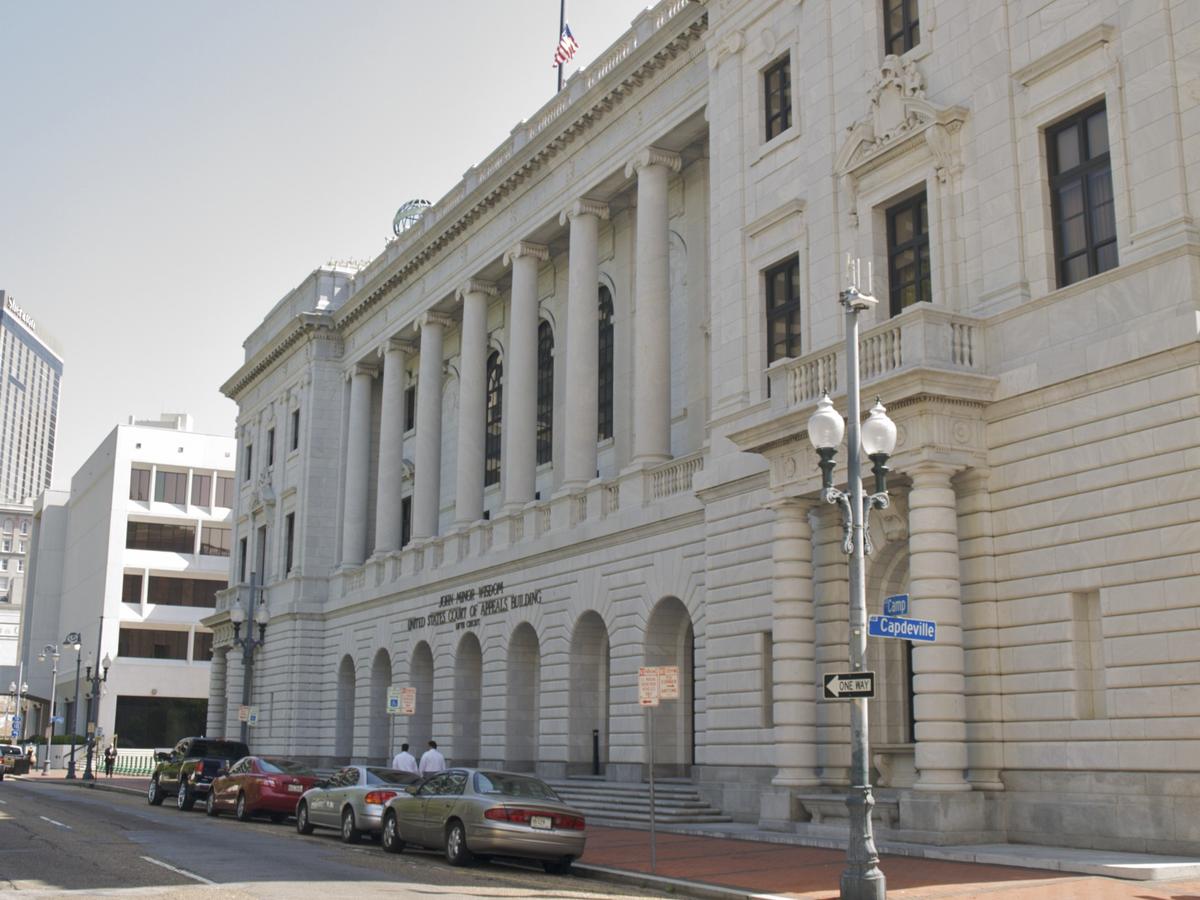
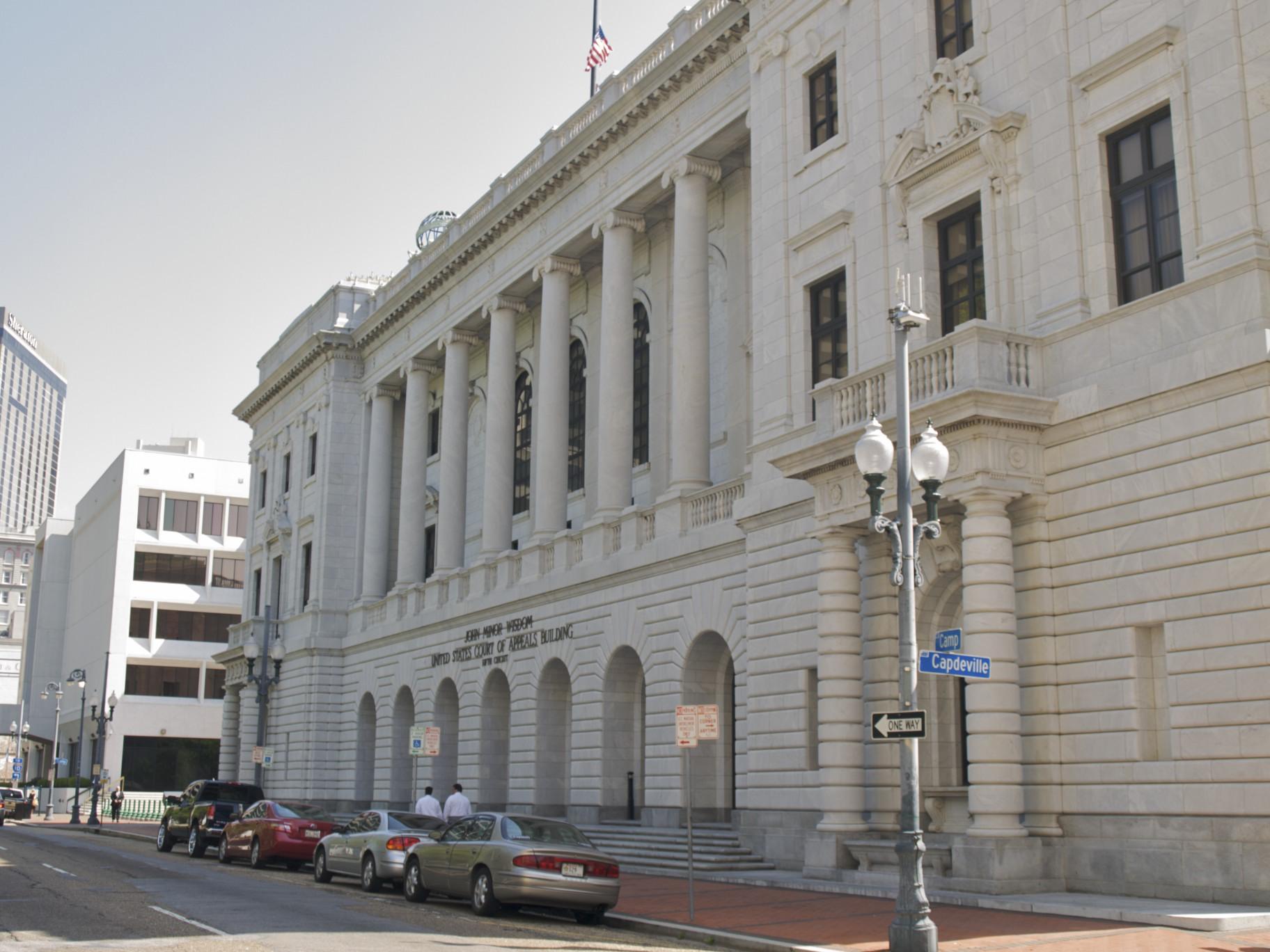
Sixteen judges on the United States Fifth Circuit Court of Appeals delivered a split decision in a lawsuit challenging the constitutionality of the Indian Child Welfare Act of 1978. The lawsuit charges that the law is racially based and unconstitutional because it is biased against non-Native families seeking to adopt. The 8-8 split decision largely means that portions of the ruling would apply only to cases in the Fifth Circuit district, which includes Texas, Mississippi and Louisiana, and would not directly affect ICWA cases in Alaska. (Creative Commons photo by David Schexnaydre/via Flickr)
• KNBA NEWS

The award-winning podcast “This Land” returns for a second season. This one examines the legal attacks on a 40-plus-year old federal law meant to protect Native children in the U.S. 

The first season of “This Land” examined two legal cases that became incredibly important to criminal jurisdiction and recognizing Tribal land. Cherokee journalist Rebecca Nagle is the host.  LINK

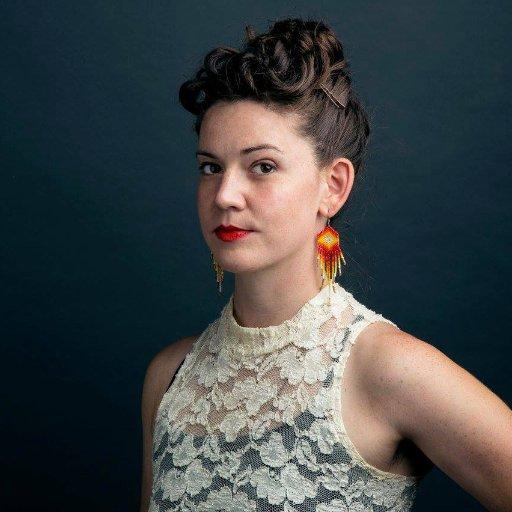
Rebecca Nagle (courtesy photo)

“The podcast is about cases that are important to federal Indian law and Indigenous sovereignty that I felt like needed to be covered more.” 

Two cases pitted state jurisdiction over Tribal jurisdiction in Oklahoma, where the Creek people were forced to relocate from the Southeast during the Trails of Tears in the 1800s. They signed another treaty with the federal government in 1856.  

Oklahoma never really recognized the Mvskoke (Muscogee) Nation reservation. 

“Oklahoma's main argument was, ‘we haven't recognized these reservations in over a century. And so you can't possibly ask us to recognize them.’ Now, there was no real legal argument behind that. It was just this kind of thing of, well, eastern Oklahoma can't possibly be a reservation.”

Eventually, those cases went to the U.S. Supreme Court, and the decisions re-affirmed the Mvskoke still had a reservation in eastern Oklahoma -- and in turn, jurisdiction over its lands and Tribal sovereignty. It also reaffirmed the Tribal land of four other Tribes in the area: The Cherokee, the Choctaw, the Chickasaw and the Seminoles.

But it’s still a huge legal mess. Oklahoma continues to challenge the Supreme Court decision. 

Nagle pivoted from that story to another legal battle that’s been brewing over the Indian Child Welfare Act, or ICWA. That’s a federal law passed in 1978 intended to prevent the removal of Native children from their families and communities.

Before ICWA, the federal government was adopting Native children out of their communities to white families. 

“The federal government under the BIA (Bureau of Indian Affairs) had this program called the Indian Adoption Project, where it was literally trying to take Native kids and put them up for adoption, for them to be adopted by white families,” Nagle said. “There was just deep racial bias within (the) child welfare system. So social workers were seeing Native kids being raised by an aunt or being raised by a grandma. But because they weren't being raised by the biological parent, that was child abandonment.” 

The Association on American Indian Affairs published a report that said between 1941 and 1967 as many as one-third of Native children were separated from their families. 

“And so it was a crisis -- about a third of Native kids were gone,” Nagle said. “You talk to Elders and people from that time and they'll talk about how there were communities, Native communities, where there just weren't kids.” 

The Indian Child Welfare Act was passed in 1978. 

“It was really created under this time where white homes were seen as being inherently better than Native homes. And it's this remedial measure to stop that racism in the system.”

ICWA requires that when child welfare workers consider the adoption of Native children -- they must first consider the family, the Tribe or Tribes, or at the very least another Native home. 

The law applies to Native children who are enrolled members of their Tribe or Tribes -- or are eligible for enrollment.

A years-long challenge to ICWA began brewing when a Texas couple, the Brackeens, fostering a Native toddler, were told they couldn’t adopt the child. 

“The child welfare department there in Texas and also the child welfare departments of Cherokee Nation, Navajo Nation, were looking for a permanent home for the child,” Nagle said. “Navajo Nation found a Navajo home, and because of ICWA, that's where the child was going to go. But then the Brackeens sued. And the way that they tell it is that ICWA was threatening to tear their family apart and that they were told they couldn't raise this child because he was Native and they were not. And so it was unfair to them and it was also unfair to the child, and that's unconstitutional.”

The Brackeens took their case to state court and then to federal court, until a split en banc decision in the 5th Circuit Court of Appeals -- ruled that in this case ICWA was constitutional in parts, but it wasn’t in others. 

But that decision really only affects court cases in the 5th Circuit -- which covers the federal judicial district in Louisiana, Mississippi and Texas.

“I think that the actual story of the custody cases show why there's still a deep bias in the system against our families -- against Native families and especially Native families who are struggling with poverty or homelessness or other issues,” Nagle said. “The system really doesn't view those families, at least in these cases, as favorably as white families and as families that have more money.” 

Nagle says podcast producers interviewed one grandmother, who helped raise a grandchild before she went into foster care.

The grandmother fought for three years to be considered as a placement for the grandchild -- and then she had to fight the non-Native foster family before she was finally able to adopt the grandchild.

"She had spent six years total fighting first the system and then this foster family to be able to adopt her grandchild," Nagle said. "If that bias hadn't been in the system, she wouldn't have had to go through all that, but also her grandchild wouldn't have had to go through all of that. 

Nagle said a lot of work went into producing this second season of the podcast. 

“I would say making podcasts is hard and I like to think that I'm learning and getting better at it,” Nagle said. “This season it was a story that we really had to uncover. And so we had to do a ton of legwork, one to just get our hands on the details of these custody cases and then two to really find out like what is going on behind this attack on ICWA.” 

Nagle says that the team sent 60 Freedom of Information Act requests during the reporting process.  But it has made a difference in the reporting and thoroughness -- in comparison with some mainstream media outlets like The New York Times, The Atlantic or NPR.

“I can look at those articles, especially the Atlantic article, and find factual inaccuracies and also just sort of and we also found factual inaccuracies within federal court documents and things that have been filed, a story that's been told to federal court,” Nagle said. “And so it became really, really, really important for us to get to the truth and to get to a well documented truth. And that that was a lot of legwork.”

Nagle says within the ICWA cases are broader implications -- like Tribal sovereignty and the rights of Tribes. 

“We need to think about the safety and well-being of our children. We also need to think about the legal status of Tribes that this case is attacking the heart of it,” Nagle said. “If you are worried about that, if you care about Indigenous rights in this country, this is a case to be paying attention to.”

Episodes of “This Land” season 2 drop every Monday through October 4. 


Wednesday, September 1, 2021

Podcasts: Crooked, This Land

LISTEN

The Lawsuit About the Indian Child Welfare Act That Isn’t About the Children

In This Episode

Fellow Crookedian Rebecca Nagle joins to talk about Season Two of “This Land.” From the “boarding schools” of the 19th century to the good intentions of the Indian Child Welfare Act — and the big money campaign to repeal it.

podcast link


excerpt:

Ana Marie Cox: What you’re telling me, Rebecca, is that there’s money to be made.

 Rebecca Nagle: There’s a lot of money to be made. There’s a lot of money to be made.

 Ana Marie Cox: [laughs] There’s surprisingly, there’s deep pockets because there’s deep, you know, dough on the other side. But I just wanna repeat back to you what I think you said just because it’s fascinating. And I think I want to make it really clear. There is some talk, there is some reason that is somewhat about this case is about kids. OK, fine. But if you dig deep, what you are seeing is an attempt to establish precedent, to undo almost everything that exists to protect tribal sovereignty.

 Rebecca Nagle: If the Supreme Court took this case in the broadest way possible and decided it based on the broadest way possible, it would absolutely set that precedent. And it’s interesting because you already see some people making that argument in other areas. So people are already, people have tried and are already making this like kind of like equal protection, race-based argument in other areas of federal Indian law. And some people are even doing it based on this case. And so I don’t think we have to, like, take a wild stretch of the imagination to see the broader implications of it. And then what I want to add is that I actually, I actually do think, and this was something that I was surprised by, that some people are fighting ICWA for ideological reasons. And that ideology is that our country should not have laws that are race conscious, should not have laws that are remedies to structural racism. And the thinking behind that is that the way to solve racism is to stop talking about race and to pretend like it doesn’t exist. And so when you look at the people who are attacking ICWA, a lot of them have also fought things like affirmative action. You know, it’s some of the same players that were behind the Abigail Fisher case and now the Harvard case. You know, we talked about the Voting Rights Act, it’s some of those people. And I think there is this really deep ideological divide, which I think in some ways is kind of intellectually dishonest because we can see all the ways that systemic racism in the child welfare system exists, but any effort to remedy that is what is unfair. [laughs] I think one of the things that’s very telling about this lawsuit is that they’re trying to get rid of something and not trying to build something different. I think if you’re concerned about children in foster care, there is a lot of reason to be concerned about the well-being of children in foster care in the country right now. You know, and there’s also a lot of reasons to see, you know, there’s a lot of evidence that ICWA actually does a lot of good. And so, yeah, I think if their end-goal was really helping Native children, they would be trying to build something, not trying to destroy something.

 Ana Marie Cox: So when I look at this case and your podcast and what I’ve learned, the case is itself about both children and the ability of non-Native people to adopt Native children in a echo of the boarding school, you know, system a little bit, that echoes—not the same! But it’s Echo. And it’s about who controls the resources in Native land, Native sovereignty. You know, you can’t oppress a people, just, you know, but, just in culture or just in economics, it’s both. It’s always both. You’re always, your oppressing in both these both these lanes. And it made me start to think about reparations. Which we talk a lot about in terms of slavery. But I really hear so much less discussion when it comes to Indigenous people. I mean, hardly any. I think I’ve talked to one person about it. But this case raises it for me, because it’s talking about the most precious resources you have in a community, which is the children, and who were taken.

 Rebecca Nagle: Yeah. And I think, you know, when I interviewed Native leaders, one thing, one thing that more than one Native leader said to me was, you know, if we can’t protect our children, then what can we protect? You know, if we can’t, if we can’t keep our children, then then what else do we have? Yeah, and I think when it comes to what justice looks like for Indigenous nations, you know, the slogan or the hashtag or what will you, but the thing that people are talking about a lot right now is Land Back. And I think that looks like a lot of different things. And so, you know, Under Secretary Deb Haaland, she’s trying to make the tribes putting land back in trust easier. There’s been some proposals that national parks or national forests should be returned to the stewardship of Indigenous nations. And I think it’s also restoring sovereignty over the land that we have that is recognized and really creating a legal reality where tribes, the inherent rights of our tribes to govern our land, to govern our citizens, is recognized. And right now, what we have in the United States, thanks in large part to the Supreme Court, some things that Congress has done, but mostly the Supreme Court, is that that’s piecemeal. And so when you look at civil jurisdiction, criminal jurisdiction, the right of law, the right of tribes to do everything from taxation, to arrest somebody, from speeding, for speeding it, it’s very complicated. And I think what we need is a full restoration of tribal sovereignty and tribal jurisdiction on tribal land and also restoring land to tribes. And my last thought, not to be too meta, but I think, you know, as our country faces a growing ecological and climate crisis, you know, I think that restoration of tribal sovereignty is going to be critical for all of us, and is what is best for all of us. You know, there’s the statistic that Indigenous people globally control about like 5% of the land in the globe, but protect 80% of biodiversity. And so, you know, Indigenous peoples, we really have the knowledge of that stewardship that is so desperately needed right now.


new episode

THIS LAND:

LISTEN


Tuesday, August 17, 2021

THIS LAND: Season 2 Podcast Debuts August 23


 LISTEN:  Here

This season is all about the Indian Child Welfare Act and the federal attacks on it.

ALM – as referred to in court documents – is a Navajo and Cherokee toddler. When he was a baby, a white couple from the suburbs of Dallas wanted to adopt him, but a federal law said they couldn’t. So they sued. Today, the lawsuit doesn’t just impact the future of one child, or even the future of one law. It threatens the entire legal structure defending Native American rights. 

In season 2 of This Land, host Rebecca Nagle investigates how the far right is using Native children to quietly dismantle American Indian tribes. 

Tune in beginning August 23rd.


Some White supremacists don't know we can REALLY SEE what they are doing

CLICK OLDER POSTS (above) to see more news

CLICK OLDER POSTS  (above) to see more news

MEGWETCH THANK YOU

HUGE Thank you for visiting this blog and sharing this with your kin. It's appreciated. Contact Trace anytime! Use the form below.

BOOKSHOP

Please use BOOKSHOP to buy our titles. We will not be posting links to Amazon.

Popular Posts

To Veronica Brown

Veronica, we adult adoptees are thinking of you today and every day. We will be here when you need us. Your journey in the adopted life has begun, nothing can revoke that now, the damage cannot be undone. Be courageous, you have what no adoptee before you has had; a strong group of adult adoptees who know your story, who are behind you and will always be so.

OUR HISTORY

OUR HISTORY
BOOK 5: Lost Children of the Indian Adoption Projects