BACK UP BLOG (no longer updating)

This blog was a backup for American Indian Adoptees blog
USE THE SEARCH BAR or SEARCH TOPICS at bottom of this blog

If you need support

Support Info: If you are a Survivor and need emotional support, a national crisis line is available 24 hours a day, seven days a week: Residential School Survivor Support Line: 1-866-925-4419. Additional Health Support Information: Emotional, cultural, and professional support services are also available to Survivors and their families through the Indian Residential Schools Resolution Health Support Program. Services can be accessed on an individual, family, or group basis.” These & regional support phone numbers are found at https://nctr.ca/contact/survivors/ . MY EMAIL: tracelara@pm.me

Search This Blog

Showing posts with label Cherokee. Show all posts

Wednesday, January 22, 2025

“TO RISE ABOVE THE COMMON MOLD”

From Peter D'Errico's blog

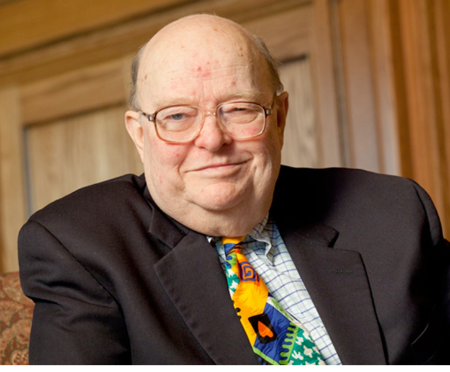
Osage / Cherokee Professor Rennard Strickland passed on January 5, 2021. He was a major figure in law and legal history, a law teacher and Dean at several schools, and a major contributor to Indigenous Peoples’ rights.

He wrote this essay fifty years ago, based on a speech before the Tenth Circuit Roundtable of the Law Student Division of the ABA in October 1974.  His essay was published in the same issue as mine on “The Law is Terror Put Into Words”.

Strickland said his law student audience were “preparing to move into the mad world of the twentieth century.” He called on them “to free us from the traditional molds of thinking and to come face to face with the reality of this changing world.”

His description of the problems they faced and his advice to them are as relevant in 2025 as in 1975:

He said:

“It is not enough to hold all of the ‘right views’ and espouse all the ‘right causes’ without asking why are these the ‘right views’ and the ‘right causes’…. Your challenge as young lawyers is to …lead us into an age of ‘reality, reason, and common sense.’"

University of Oklahoma College of Law Photo


And I will add that we lawyers as public policy leaders in executive and legislative posts have not let down this tradition of “credulity, superstition, and fanaticism.” Your challenge as young lawyers is to break out of this mold, free us from the limitations of your age, and lead us into an age of “reality, reason, and common sense.”


KEEP READING:  https://peterderrico.substack.com/p/in-memory-rennard-strickland-to-rise

Tuesday, January 14, 2025

Cherokee Actor Will Rogers Landmark Destroyed

Will Rogers' Western Ranch House was on the National Register of Historic Places. California State Parks
 The Historic Landmarks Razed By Los Angeles’ Deadly Fires

  www.smithsonianmag.com /smart-news/the-historic-landmarks-razed-by-los-angeles-deadly-fires-180985797/

Sonja Anderson  |  January 9, 2025


The raging wildfires in the Los Angeles area have so far killed five people, spreading over almost 30 square miles. The fires are the city’s most destructive to date: More than 2,000 structures have burnt down, including homes, businesses and historic buildings.

According to a Wednesday statement by California State Parks, fires that spread through Will Rogers State Historic Park engulfed the eponymous 1930s actor’s ranch house.  And blazes that swept through Topanga State Park destroyed the iconic Topanga Ranch Motel—once owned by 20th-century newspaper publisher William Randolph Hearst.  State park employee residences at Topanga and Will Rogers parks were also razed by these blazes belonging to the Palisades Fire, which ripped through the Pacific Palisades neighborhood, west of downtown Los Angeles.

“California State Parks mourns the loss of these treasured natural and cultural resources, and our hearts go out to everyone impacted by the devastating fires in the Los Angeles area,” says State Parks director Armando Quintero in the statement. “We are directing all available resources into the emergency response effort and working to secure and protect as much as we can at affected nearby state parks.”

Rogers was a cherished renaissance entertainer: movie star, radio personality, writer, philanthropist, aviation enthusiast and “cowboy philosopher;” the parks department referred to him as “America’s most beloved citizen.” Born in 1879 as a citizen of the Cherokee Nation, in territory that later became Oklahoma, Rogers traveled the world before purchasing land in the Palisades in the 1920s. By the time Roger died in 1935, he’d developed a sprawling ranch on his 359-acre property. The estate included a 31-room mansion, houses for guests, stables and corrals, a golf course and horse-riding trails. In 1944, Rogers’ wife, Betty, donated the property to California, and it became a historic park.

The estate included a mansion, stables and horse corrals.  California State Parks

State park employees were able to evacuate the ranch’s horses and some artifacts, including pieces of art, from Rogers’ ranch.  But the fires destroyed the entire building, save some stone chimneys and walls.  As Cherokee Principal Chief Chuck Hoskin Jr. says in a statement, “Rogers is among our most beloved Cherokees and a legacy of our people.”  He lauded the protectors of the Will Rogers ranch, who have preserved history over the years.

As of Thursday afternoon, first responders have made gains battling the Sunset Fire, which forced residents of the Hollywood Hills to evacuate, per the Los Angeles Times. Extreme wind speeds have contributed to the fires’ spreading. As Los Angeles Fire Department Chief Kristin Crowley said at a Wednesday press conference, “We are absolutely not out of danger yet.”

Top of Form

Bottom of Form

Sonja Anderson is a writer and reporter based in New York City.

https://www.smithsonianmag.com/smart-news/the-historic-landmarks-razed-by-los-angeles-deadly-fires-180985797/
 

Wednesday, November 21, 2018

The Indian Child Welfare Act is vital to our continued survival

excerpt:

Over the past several years, as part of a coalition of groups including for-profit adoption agencies, the right-wing Goldwater Institute has spearheaded attacks against ICWA in multiple states, including California, Arizona, Oklahoma and Minnesota. They finally made inroads last month: After a Texas couple sued for the right to adopt a Cherokee Nation toddler, a federal district court judge, Reed O’Connor, struck down portions of the ICWA, finding that the disputed sections violate the Fifth Amendment’s equal protection guarantee by mandating racial preferences. The case may wind up before the Supreme Court, where Justice Brett M. Kavanaugh is widely believed to be a deciding vote against it.

BIG READ: Why conservatives are attacking a law meant to protect Native American families - The Washington Post

Wednesday, July 17, 2013

Breaking News: Baby Veronica


CHARLESTON, S.C. - "Baby Veronica," a 3-year-old at the center of a high-profile custody case that advanced all the way to the Supreme Court last month, has been ordered back to the child's adoptive parents, the South Carolina Supreme Court ruled Wednesday.
SEE THE RULING (http://bit.ly/SCBabyVeronica)
June's U.S. Supreme Court decision gave jurisdiction back to the South Carolina Supreme Court and ruled that the Indian Child Welfare Act was not valid in the case.
STORY: U.S. Supreme Court decision (http://bit.ly/1aKpgzF)
That ruling, the South Carolina Supreme Court indicated Wednesday, led to a 3-2 vote to overturn their previous decision to return the child to her birth father, Nowata County native and Cherokee Nation member Dusten Brown.
Brown, who was awarded the rights to Baby Veronica following the South Carolina Supreme Court's initial ruling and filed for adoption rights himself July 3, still has the 3-year-old in his care for the time being, according to Brown's attorney.
RELATED: Father, grandparents file for Baby Veronica adoption (http://bit.ly/12W9ETn)
The case, which has gained national notoriety, revolves around Veronica, Brown, and Matt and Melanie Copabianco, the couple who took a newborn Veronica home from the hospital. A debate over the rights of the child soon began when Brown filed for custody of Veronica four months later.
Veronica's fate now lies with the South Carolina Family Court, which is expected to approve and finalize the adoptive rights of the Copabianco family and terminate Brown's parental rights.
"We aren't happy and won't give up," Cherokee Nation communications director Amanda Clinton said after the decision.
The Cherokee Nation released the following statement:
We are outraged and saddened that the South Carolina Supreme Court would order the transfer of this child without a hearing to determine what is in her best interests, particularly in light of the fact that this very same court previously found “we cannot say that Baby Girl's best interests are not served by the grant of custody to Father, as Appellants have not presented evidence that Baby Girl would not be safe, loved, and cared for if raised by Father and his family.
Dusten Brown is a fit, loving parent and Veronica is,  as the court previously defined, “safe, loved, and cared for." That should be enough.
Lori Alvino McGill, the attorney for Veronica's biological mother, said she and her client were "over the moon" and are now awaiting the Family Court's action.
"The only question now really is how and when this transfer of custody is going to happen, and how best to ensure a smooth transition for Veronica," McGill said.
Michael Nomura, general counsel for a non-profit adoption agency in Oklahoma, says, in his opinion, an appeal could be forthcoming. A petition for a re-hearing must be filed within five days.


Read more: http://www.kjrh.com/dpp/news/local_news/state-supreme-court-rules-against-father-in-baby-veronica-case-ordered-back-to-adoptive-parents#ixzz2ZLjkQa3y

Thursday, March 7, 2013

Tribes line up support as Supreme Court takes up ICWA dispute


The National Congress of American Indians and the Native American Rights Fund are lining up some major support as the U.S. Supreme Court prepares to hear Adoptive Couple v. Baby Girl, an Indian Child Welfare Act case.
At least a dozen briefs will be filed in support of Dusten Brown, a member of the Cherokee Nation whose rights are at issue in the case. Briefs are coming from individual tribes, national tribal organizations, adult Indian adoptees, several states, national child welfare organizations, law professors, religious groups, psychologists' associations, current and former members of Congress, military and veterans organizations and even the American Civil Liberties Union.

"We have brought our A-team to this case," NARF attorney Richard Guest said at NCAI's 2013 executive council winter session in Washington, D.C., on Tuesday.

Read it here: http://www.indianz.com/News/2013/008782.asp

Friday, July 27, 2012

Cherokee father keeps his baby after #Adoption custody dispute

Split South Carolina SCT Complies with ICWA and Affirms Return of Child to Cherokee Father

by Matthew L.M. Fletcher
Here is the opinion:
An excerpt:
We do not take lightly the grave interests at stake in this case. However, we are constrained by the law and convinced by the facts that the transfer of custody to Father was required under the law. Adoptive Couple are ideal parents who have exhibited the ability to provide a loving family environment for Baby Girl. Thus, it is with a heavy heart that we affirm the family court order. Because this case involves an Indian child, the ICWA applies and confers conclusive custodial preference to the Indian parent. All of the rest of our determinations flow from this reality. While we have the highest respect for the deeply felt opinions expressed by the dissent, we simply see this case as one in which the dictates of federal Indian law supersede state law where the adoption and custody of an Indian child is at issue. Father did not consent to Baby Girl's adoption, and we cannot say beyond a reasonable doubt that custody by him would result in serious emotional or physical harm to Baby Girl. Thus, under the federal standard we cannot terminate Father's parental rights. For these reasons, we affirm the family court's denial of the adoption decree and transfer of custody to Father.

Saturday, June 2, 2012

Supreme Court won't hear case

archival photo
Supreme Court rejects adoption case involving Cherokee Nation
— The U.S. Supreme Court on Monday (May 21) declined to hear an unusual adoption case from Utah involving the Cherokee Nation and the question of when a person becomes an Indian.
Without comment, the high court let stand a decision by the 10th U.S. Circuit Court of Appeals that a child's natural mother could not regain her parental rights by claiming that the child she gave up for adoption was an Indian who was subject to the federal Indian Child Welfare Act.
The mother of the child terminated her parental rights in court the day after the child was born in 2007. However, a month after the adoption was finalized in 2008, the mother filed a federal court petition seeking to nullify her voluntary termination of parental rights because the Indian Child Welfare Act required a 10-day waiting period in cases involving American Indian children.
The Cherokee Nation intervened for the mother, arguing that because the child's ancestors could be traced to the original tribal rolls, the child was automatically given temporary tribal citizenship at birth and that the Indian Child Welfare Act prohibited the mother from terminating her parental rights within 10 days.
A federal judge agreed. But the 10th U.S. Circuit Court of Appeals ruled that the question wasn't the Cherokee Nation's citizenship laws, but the federal law. The court said the law applied only to children eligible for tribal membership because their parent was a member and the child's mother was not a Cherokee citizen.
Utah attorney James B. Hanks, who represented the couple that adopted the child, said in an email response on Monday that the Supreme Court decision on Monday ended the case.
The Cherokee Nation declined comment on Monday.


Read more: http://newsok.com/washington-briefs-supreme-court-rejects-adoption-case-involving-cherokee-nation-majority-of-oklahoma-congressional-delegation-speaks-at-level-above-congressional-average/article/3677448#ixzz1wdyz6700

It's sad these news stories never mention the child as sacred or worthy of protection. It becomes the colonial mindset of who is Indian enough to be protected by federal law - which speaks volumes about court cases involving Indian children.... Trace

Monday, May 7, 2012

Kansas Supreme Court strongly supports ICWA #NDN

In re T.S.W., Kansas ICWA Case on Finality for Appeal and Placement in Private Adoptions

by Kate Fort via Turtle Talk
Here.
The Kansas Supreme Court again comes out with strong language in support of ICWA. In addition, the case, which has a complicated procedural history given the actions of the private adoption agency, provides an interesting analysis of what is a "final order" in an ICWA case and a discussion of the collateral order doctrine:
Under the circumstances presented here, we conclude the district court's order permitting a deviation from ICWA's placement preferences did not dispose of the entire merits of the case and left open the possibility of future action by the district court with respect to T.S.W.'s placement. Thus, the Tribe has not appealed from a "final order, judgment or decree" under K.S.A. 2011 Supp. 59-2401a(b)(1), and we lack statutory authority to hear this appeal.
But that holding does not end our analysis. Alternatively, the Tribe urges us to exercise jurisdiction under the collateral order doctrine. That doctrine, which we sparingly apply, provides a narrow exception to the final order requirement. It "allows appellate courts to reach 'not only judgments that "terminate an action," but also a "small class" of collateral rulings that, although they do not end the litigation, are appropriately deemed "final." [Citation omitted.]'" Kansas Medical Mut. Ins. Co., 291 Kan. at 611-12 (quoting Mohawk Industries, Inc. v. Carpenter, 558 U.S. ___, 130 S. Ct. 599, 605, 175 L. Ed. 2d 458 [2009]).
This case is also an illustration of the difficulties of ICWA and private adoptions. The adoption agency initially refused to consider any placements provided by the Cherokee Nation if the families couldn't pay the $27,500 fee:
In this case, we need not extensively consider whether the Agency followed the placement preferences before seeking a deviation from those preferences. It did not. While the Agency made some effort to satisfy the second placement preference when it requested the Tribe provide available adoptive family profiles, the Agency impermissibly qualified its request in at least two ways. First, the Agency provided the Tribe with Mother's extensive "criteria" for any prospective adoptive family. Second, the Agency specified that prospective adoptive families be able to pay the Agency's $27,500 fee requirement. And while the Agency eventually indicated a willingness to modify its fee based on an unspecified sliding scale, the parties never agreed as to the parameters of that scale because Mother chose a non-Indian family based on profiles presented to her from the Agency.
Essentially, the Agency grafted its substantial fee requirement as well as Mother's placement criteria (which ironically specified that the adoptive parents be Caucasian) onto ICWA's placement preferences. Common sense dictates that ICWA's placement preferences cannot be undermined in this manner. In fact, the Agency's actions appear to fly in the face of Congress' intent in enacting ICWA. See Holyfield, 490 U.S. at 37 (ICWA "'seeks to protect the rights of the Indian child as an Indian and the rights of the Indian community and tribe in retaining its children in its society' . . . by establishing 'a Federal policy that, where possible, an Indian child should remain in the Indian community'" and ensuring that Indian child welfare determinations are not based on a white, middle-class standard that often forecloses placement with an Indian family).
The Court found that the agency and the lower court did not follow the placement preferences of ICWA, even after the Nation provided 17-20 (!) potential adoptive families for the child, and reversed the decision.

Friday, April 20, 2012

SC high court takes up Indian child adoption case


COLUMBIA, S.C. (AP/Native Times) – The South Carolina Supreme Court is taking up arguments in a custody case involving a Charleston couple, an Oklahoma father and a federal law meant to protect Native American children.

Because it’s an adoption case, Tuesday’s arguments are closed.

The case pits the couple who nurtured a 2-year-old girl named Veronica against the child’s biological father, a Cherokee Nation citizen who took her to Oklahoma late last year after winning custody.

The case also concerns the federal Indian Child Welfare Act. The 1978 law was passed because many Indian children were being removed from their homes by public and private agencies.

The act gives the child’s tribe and family the right to a say in decisions affecting the child.


http://www.nativetimes.com/news/tribal/7098-sc-high-court-takes-up-indian-child-adoption-case


SC high court takes up Indian child adoption case

COLUMBIA, S.C. (AP/Native Times) – The South Carolina Supreme Court is taking up arguments in a custody case involving a Charleston couple, an Oklahoma father and a federal law meant to protect Native American children.

Because it’s an adoption case, Tuesday’s arguments are closed.

The case pits the couple who nurtured a 2-year-old girl named Veronica against the child’s biological father, a Cherokee Nation citizen who took her to Oklahoma late last year after winning custody.

The case also concerns the federal Indian Child Welfare Act. The 1978 law was passed because many Indian children were being removed from their homes by public and private agencies.

The act gives the child’s tribe and family the right to a say in decisions affecting the child.
http://www.nativetimes.com/news/tribal/7098-sc-high-court-takes-up-indian-child-adoption-case

Friday, February 17, 2012

Cherokee Nation maintaining Sequoyah orphan cemetery


Read here: CN maintaining Sequoyah orphan cemetery


Video


By TESINA JACKSON, Reporter

TAHLEQUAH, Okla. – Across from Sequoyah High School along Highway 62 in the Southgate Business Park is a small, bordered area where the Cherokee Nation has placed 32 stones to represent a cemetery that went forgotten for decades.

The cemetery, commonly called the Sequoyah orphan cemetery, began for children who attended Sequoyah during its days as an orphanage.

After the Civil War, Cherokee children were orphaned because of fighting between Cherokees. In 1871, the Cherokee National Council authorized the orphanage’s construction about four miles southwest of Tahlequah.

“All of the stones that are over at the cemetery are actually stones that were salvaged from the third floor of the Cherokee Nation jail facility,” CN Natural Resources Group Leader Pat Gwin said. The jail no longer stands, and its material is stored at the Cherokee Heritage Center. “We used that to make the rock walkways and the rock headstones.”

The orphanage also housed as an institution for the handicapped, and Sequoyah teacher Don Franklin believes that patients who died at the institution are buried in the cemetery.


tesina-jackson@cherokee.org


Cherokee Nation maintaining Sequoyah orphan cemetery

Read here: CN maintaining Sequoyah orphan cemetery

Video

By TESINA JACKSON, Reporter
TAHLEQUAH, Okla. – Across from Sequoyah High School along Highway 62 in the Southgate Business Park is a small, bordered area where the Cherokee Nation has placed 32 stones to represent a cemetery that went forgotten for decades.
The cemetery, commonly called the Sequoyah orphan cemetery, began for children who attended Sequoyah during its days as an orphanage.
After the Civil War, Cherokee children were orphaned because of fighting between Cherokees. In 1871, the Cherokee National Council authorized the orphanage’s construction about four miles southwest of Tahlequah.
“All of the stones that are over at the cemetery are actually stones that were salvaged from the third floor of the Cherokee Nation jail facility,” CN Natural Resources Group Leader Pat Gwin said. The jail no longer stands, and its material is stored at the Cherokee Heritage Center. “We used that to make the rock walkways and the rock headstones.”
The orphanage also housed as an institution for the handicapped, and Sequoyah teacher Don Franklin believes that patients who died at the institution are buried in the cemetery.

tesina-jackson@cherokee.org
 

CLICK OLDER POSTS (above) to see more news

CLICK OLDER POSTS  (above) to see more news

MEGWETCH THANK YOU

HUGE Thank you for visiting this blog and sharing this with your kin. It's appreciated. Contact Trace anytime! Use the form below.

BOOKSHOP

Please use BOOKSHOP to buy our titles. We will not be posting links to Amazon.

Popular Posts

To Veronica Brown

Veronica, we adult adoptees are thinking of you today and every day. We will be here when you need us. Your journey in the adopted life has begun, nothing can revoke that now, the damage cannot be undone. Be courageous, you have what no adoptee before you has had; a strong group of adult adoptees who know your story, who are behind you and will always be so.

OUR HISTORY

OUR HISTORY
BOOK 5: Lost Children of the Indian Adoption Projects