BACK UP BLOG (no longer updating)

This blog was a backup for American Indian Adoptees blog
USE THE SEARCH BAR or SEARCH TOPICS at bottom of this blog

If you need support

Support Info: If you are a Survivor and need emotional support, a national crisis line is available 24 hours a day, seven days a week: Residential School Survivor Support Line: 1-866-925-4419. Additional Health Support Information: Emotional, cultural, and professional support services are also available to Survivors and their families through the Indian Residential Schools Resolution Health Support Program. Services can be accessed on an individual, family, or group basis.” These & regional support phone numbers are found at https://nctr.ca/contact/survivors/ . MY EMAIL: tracelara@pm.me

Search This Blog

Showing posts with label land theft. Show all posts

Tuesday, December 3, 2024

Going Home: How the #LANDBACK movement is reclaiming ancestral lands


Going Home: How the land back movement is reclaiming ancestral lands.

The Land Back movement reflects the global efforts of Indigenous people to reclaim ancestral territories and sovereignty over public lands. Through a combination of military force, broken treaties, and discriminatory policies, Native communities have been stripped of 99% of their historical land base in the U.S., reduced from nearly 2.3 billion acres to just 56 million acres today. Here are some ways this has been codified in state and federal policy:

  • The Indian Removal Act of 1830 led to the forced relocation of southeastern tribes like the Cherokee, Muscogee (Creek), Seminole, Chickasaw, and Choctaw Nations along the brutal Trail of Tears, where thousands died during the journey westward.

  • In the Great Plains, the U.S. government repeatedly violated treaties like the Fort Laramie Treaty of 1868, seizing the Black Hills from the Great Sioux Nation after gold was discovered.

  • The Dawes Act of 1887 dispossessed tribes by breaking up communally held reservation lands into individual allotments, many of which were then sold to non-Native settlers.

  • Military campaigns and massacres, like the Sand Creek Massacre of 1864 where U.S. troops killed hundreds of peaceful Cheyenne and Arapaho people, were used to terrorize Indigenous communities and drive them onto increasingly smaller reservations.

  • The California Gold Rush led to state-sponsored genocide of Native peoples, with the state paying bounties for Indian scalps and heads in the 1850s and forcing survivors onto small rancherias.

Unlike what some might assume, the movement doesn't seek to displace current residents from their homes. Instead, it focuses on returning decision-making power to Indigenous communities and addressing the historical injustices of colonization that led to their dispossession. Here are four examples of what land back work looks like in action:

  • In 2020, the Esselen Tribe regained 1,200 acres of their ancestral homeland in Big Sur, California, after 250 years of displacement. Through a $4.5 million grant and partnership with Western Rivers Conservancy, the land, which includes sacred sites and endangered species, is now being used for traditional ceremonies and ecological conservation.

  • The Bois Forte Band of the Minnesota Chippewa Tribe, in partnership with The Conservation Fund, the Indian Land Tenure Foundation and the Indian Land Capital Company, purchased 28,089 acres of ancestral land within the Nett Lake and Deer Creek sections of the Bois Forte Reservation.

  • The Confederated Salish and Kootenai Tribes (CSKT) regained control of the National Bison Range in Montana in 2020. This 18,800-acre wildlife refuge, which was taken from them in 1908, is being used for bison conservation efforts while expanding public education about their cultural connections to the land.

  • In Maine, the Penobscot Nation has worked with conservation groups to reclaim over 100,000 acres of their ancestral territory along the Penobscot River since 2000, helping restore both tribal sovereignty and the river's ecological health, including critical salmon habitats.

  • In South Dakota, the Rosebud Sioux Tribe reacquired 28,000 acres of land in 2020. This prairie land is now being used for buffalo conservation, food sovereignty initiatives, and teaching traditional land management practices to tribal youth.

Indigenous communities’ approach to land stewardship goes beyond simple ownership, emphasizing a deep, complex relationship with the environment. As tribes reclaim more of their ancestral lands, they're leading innovative climate adaptation efforts and restoration projects, demonstrating how traditional Indigenous knowledge can help create a more sustainable future.

  • Support the work of NDN Collective, an Indigenous-led organization dedicated to building Indigenous power through organizing, activism, philanthropy, grantmaking, capacity-building and narrative change. You can make a donation or follow the action items for their specific initiatives.

  • Learn whose ancestral land you live on and pay real estate taxes to those Indigenous nations. Many tribes and Indigenous organizations have established voluntary land tax programs where residents can contribute a portion of their income or property value to support Indigenous land reclamation efforts, like the Shuumi Land Trust in the East Bay of Northern California.

  • Support Indigenous-led land conservation efforts and organizations working to protect sacred sites and expand tribal land holdings. This could mean donating to Indigenous land trusts, advocating for the return of public lands to tribal management, or backing specific land return campaigns.

  • Call on your local, state and federal representatives to honor treaties, expand tribal sovereignty, and return public lands to tribal nations.


The latest on the Land Back movement, in which Native American tribes reclaim land. Two reporters take a look at where it’s worked and where it hasn’t at reservations in Minnesota. NPR >


The Land Back movement is also about foodways. When Native peoples' land was stolen, they lost important hunting and fishing grounds and myriad places to gather and prepare food. Civil Eats >


Tribal lands were stolen. What happens when those ancestral territories are returned? The Land Back movement is long-overdue justice. It’s also a climate solution. Vox >


The Land Back Movement Unravels Manifest Destiny. Across Indian Country, tribal nations are buying back their land one parcel at a time. Sierra Club >


On Vancouver Island, Land Back Looks Like Going Home. Indigenous-led land back efforts are underway on Canada’s Vancouver Island while the land’s original stewards protect forests from logging. Atmos >


Land Rematriation: A Conversation with Cyndi Suarez, Donald Soctomah, Darren Ranco, Mali Obomsawin, Gabriela Alcalde, and Kate Dempsey. Kate Dempsey, state director of The Nature Conservancy in Maine, discuss the future of Tribal sovereignty, Land Back, and rematriation of the planet. NPQ >

  
  • Share this newsletter with a friend


Friday, September 20, 2024

The last Indian Wars were dirty wars. The new Indian Wars are as well.


Indian Fighting Today: Gibson, Dunn and Crutcher

News | September 19th, 2024

By Winona LaDuke | winona@winonaladuke.com

The business of Indian Hating is a lucrative one. It’s historically been designed to dehumanize Native people so that it’s easier to take their land. ‘Kill the Indian, save the man,” manifest destiny, and “merciless Indian savages” are all phrases which underscore the deep hatred of the American Empire for Indigenous peoples. After all, this is our land, indakiingimin, the very land to which we belong.  And to make America, it’s important to steal it.

That’s pretty much history — a lot of theft: land, cultural items and people. And where possible, the laws themselves. It starts with hating and expands to war. Welcome to the modern Indian Wars. Some of them are in the courtroom.

There’s a long list of law firms who specialize in modern day Indian fighting. It’s usually to do with tribal jurisdiction over water, land, or children, all pretty basic for the survival of a people. Most of those law firms have other clients like real estate or title insurance folks, mining companies, oil companies, county governments and the like who want to have access to more Indian land or people. Those interests need a modern cavalry; that’s some lawyers.

Gibson, Dunn and Crutcher is a big shot law firm for fighting Indians. That’s sort of their practice. These days, they are the attorneys for Energy Transfer in a $300 million case known as a Strategic Lawsuit Against Public Participation (or SLAPP suit), intended to stop Greenpeace, the international environmental network, from supporting Indigenous peoples. Gibson, Dunn and Crutcher appear to want to stop Indigenous peoples from protecting their lands. And while they are at it, scare away any allies to protect those lands.

It’s called a SLAPP suit. SLAPP lawsuits are more typically targeted at journalists and human rights defenders. They are meant to shut down anyone who opposes the corporation which sues. Thirty-two states have passed regulations discouraging these lawsuits, not only because they deter basic civil rights, but also because they waste a lot of time in the court. North Dakota is not among those 32 states.

Filed originally in 2019, Energy Transfer (ET) accuses Greenpeace of criminal behavior — trespassing, vandalism, arson, as well as the harassment and assault of construction workers — to stop the Dakota Access pipeline. Energy Transfer basically holds Greenpeace responsible for most of what happened at Standing Rock.

That’s rather surprising, since many of us were there, and frankly had no idea Greenpeace was in the camp. As a matter of fact, ET contends Greenpeace orchestrated a campaign that ultimately convinced the federal government to halt construction of DAPL for roughly five months. A lot of us wrote letters to the federal government and the Army Corps of Engineers and Greenpeace didn’t even give us pencils.

It is likely that Gibson, Dunn and Crutcher isn’t just interested in Greenpeace; they are actually interested in diminishing tribal sovereignty, and tribal rights. Let me explain.


Supreme Court and ICWA

Remember the U.S. Supreme Court case on the Indian Child Welfare Act? The Brackeens, in Haaland v. Brackeen (one of three lawsuits where no Native foster parents wanted to adopt Native children) had Gibson, Dunn and Crutcher represent them for free.  That’s right, pro bono.

The case, if it prevailed, would have gutted the Indian Child Welfare Act. That’s a hard fought for law to protect Native communities.

Mother Jones Magazine explains why pro bono made sense to the firm: “Taking a financial loss litigating a family law case is a small investment toward advancing the interests of the rest of the firm’s clients in diminishing the last, tenuous pockets of tribal sovereignty…. make no mistake that it is a business decision. All the ‘everyone deserves a lawyer’ rhetoric doesn’t play here — the firm is taking on a pro bono case for a family with seemingly no injuries as part of a broad attack on tribal rights.”

“One of the things that tribes need to continue to exist is their children,” says Shannon Smith, executive director of the Indian Child Welfare Act Law Center, which provides legal services for Native families. “Things just don’t exist if you don’t have kids.”

Ultimately, in a narrow margin, the Supreme Court affirmed the Indian Child Welfare Act, and ruled against the Brackeens, dashing Gibson, Dunn and Crutcher’s hopes. They have other battles.

Welcome to the modern-day Indian Wars.

Chevron in Ecuador

The Cofan are a water people who travel and live upon the Aguarico River in what’s called Ecuador. Because of American oil companies, they live in the oil wasteland.

Texaco began operating the Lago Agrio oil fields in the 1960s. By the 1990s, millions of gallons of crude oil had been spilled throughout the region. Toxic waste from drilling and refining was stored in unprotected pits, toxifying the soil and contaminating water supplies.

There were 30,000 plaintiffs in a case against oil producers, mostly Native. The case took almost 18 years to resolve, but in 2011 an Ecuadorian court ruled against Chevron, which now owned Texaco, ordering it to pay $18 billion. While that figure was later reduced to $9.5 billion, it still represented one of the largest judgments ever against an oil company. Rather than pay up, Chevron, the $200 billion company, refused to clean up and instead removed its assets from the country.

Enter Gibson, Dunn and Crutcher.

The attorney for the Ecuadorian Native people was a man named Steven Donziger. None of Donziger’s original 30,000 Ecuadorian clients — suffering and dying from cancers and other diseases that many believe are related to the oil contamination —have received a penny since the original lawsuit was filed in 1993.

The Ecuadorian court awarded $l8 million to the people of the river. Then it was halved. Three years after it all stopped in New York. Here’s what happened: Chevron’s attorneys, Gibson, Dunn and Crutcher, argued successfully that Steven Donziger had secured the $9.2 billion judgment by corrupt means. The lawyers argued that Donziger violated U.S. federal laws prohibiting attempted extortion, wire fraud, money laundering, witness tampering, and obstruction of justice, as well as the Foreign Corrupt Practices Act. That was in 2014. Then the state of New York arrested and disbarred the lawyer, Steven Donziger.

The river, the water, is still full of oil. And the people are sick. But Gibson, Dunn and Crutcher won.

Gibson, Dunn and Crutcher will be at the front lines of the Indian Wars in North Dakota. Looks like they hope to discredit Greenpeace, make them pay $300 million and be sure that no one says a peep about that dirty oil pipeline.

Greenpeace’s attorney Everett Jack told Southwest District Court Judge James Gion that “Greenpeace cannot be responsible for the entire protest without evidence.” Jack said only six people working for Greenpeace ever attended the demonstrations.

Greenpeace is a big fish in the environmental world.

But Lakota lands, waters and jurisdiction are a bigger fish. We will see how the case rolls out in Morton County, but ultimately Gibson, Dunn and Crutcher has proven to have a larger agenda for Indian Country. The last Indian Wars were dirty wars. The new Indian Wars are as well.

Friday, August 30, 2024

Theft of Tribal Lands

This ascendancy and its accompanying tragedy were exposed in a report written in 1924 by Lakota activist Zitkala-Sa, a.k.a. Gertrude Simmons Bonnin and others. The report, entitled Oklahoma’s Poor Rich Indians: An Orgy of Graft and Exploitation of the Five Civilized Tribes – Legalized Robbery, is a narrative of the most venal exposition of legalized land robbery in U.S. history.

Oklahoma Land Run 

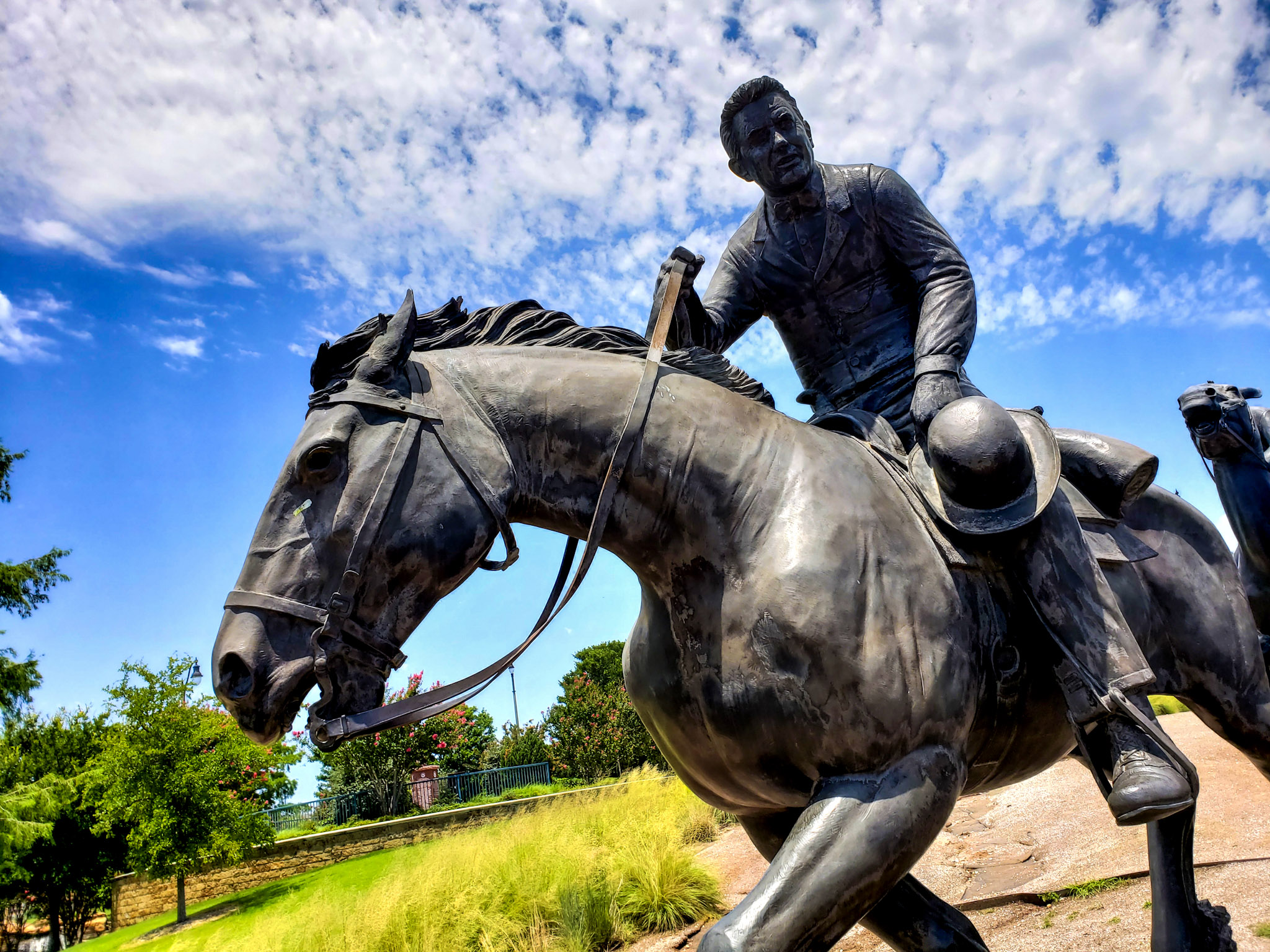
A memorial to the Oklahoma Land Run of 1889, when lands promised to the Muscogee Nation and the Seminole Nation were open to settlement to non-Indians. Photo: mike krzeszak

Oil boom = theft boom

And the more money a Native had, the more vulnerable they were in court. This was particularly true if oil land was involved.

READ:  The plunder, pillage, and robbery of the Five Tribes of Eastern Oklahoma

https://indianz.com/News/2024/08/28/albert-bender-the-theft-of-tribal-land-in-oklahoma/


Tuesday, August 10, 2021

Ask yourself: “how many schools do you know that have graveyards next to them?”


As a Diné child, I relished the time spent traveling to lectures that my dad delivered to museums and universities about his work as a photographer. The old Kodak projector slides dropped into focus with the rhythm of his lessons: Navajo people are the land, Navajo culture is Navajo survival. Native culture is Native survival.

His talks would share what it meant to be Navajo. As he shared about his work he would illustrate the legacy of Federal Indian Policy and its treatment of Native people. I still couldn’t imagine at that age what the U.S. government boarding schools had done to attack the very essence of my identity and pride in my culture I held so dear. Each time he delivered a talk, he asked a simple question that rings in my head to this day: “how many schools do you know that have graveyards next to them?”

That question rings in my head again today, and the past several weeks as multiple First Nations and Indigenous communities have uncovered mass graveyards of people— many of them children— at the sites of former residential schools in Canada.

Ben Nelms/CBC: Memorial at the Kamloops Indian Residential School

Here at the U.S. Department of Arts and Culture, we’ve long stated the importance of providing a land acknowledgement before events, gatherings and meetings. Whether in-person or online, the purpose of a land acknowledgement is meant to restore and name the ancestral and continuing bond between Indigenous peoples and the land, air, minerals, water, vision that we’ve stewarded since time immemorial. We see this as a small first step toward being in right relationship, toward true Native sovereignty. Today, we ask you to join us in recommitting to acknowledging not only the proper stewards of our land, but the specific violence that keeps that space in settler occupation. We ask you to commit to naming and contextualizing the violence that undergirds the places we call home.

For most Americans, the idea of a boarding school might invoke images of affluent college prep schools, or repositories for disobedient students. For Indigenous people in the US and Canada, the term brings forth terror. Indigenous boarding schools were a tactical experiment, supported by the US War Department and the Department of Interior. After hundreds of years of attempted ethnic genocide, Indigenous people maintained their hard-fought connection to land and culture. The U.S. government made the strategic decision to wage a new kind of war. Alongside the implementation of the Dawes Act of 1887, the Carlisle Indian Industrial School was a targeted effort to obliterate the ties children had between their culture and land before they were fully developed.

The continuing slogan of the first boarding school, Carlisle Indian School was “kill the Indian, save the man.” A phrase illustrative of the genocidal agenda at the center of these institutions. The school opened in 1879 and swiftly became a “success” by white supremacist standards as the children were taught Euro-centric education and were severely punished for practicing any part of their culture, language or Indigenous way of knowings.

Source: National Native American Boarding School Healing Coalition

According to the National Boarding School Healing Coalition, “between 1869 and the 1960s, it’s likely that hundreds of thousands of Native American children were removed from their homes and families and placed in boarding schools operated by the federal government and the churches. Though we don’t know how many children were taken in total, by 1900 there were 20,000 children in Indian boarding schools, and by 1925 that number had more than tripled.”

In Canada, from the 1800s to 1996 over 150,000 children were removed from their families and communities. Regardless of which side of the colonial border, Indigenous children were sent away from everything they knew and forced to assimilate into the settler culture. For countless Indigenous children, this meant pervasive abuse, psychological torment, cultural erasure and, as the recent headlines illustrate, murder.

In times like these I think of my dad, the photographer, how do you photograph the invisible? How do you document the erased? The Indian Boarding School Project created ghost generations. I have never wanted to become accepting of this horrific legacy in the U.S. education system. Children “graduated” from these hellish places to find a country that regarded them as subhuman, no matter how hard they’d had the culture beaten out of them. Many tried to return home and found they could no longer communicate with their own families, or practice their most sacred rites. Many lay in graveyards next to these schools, waiting to be found. We see now that the ghosts of this trauma want to be seen.

So how can we begin to be in right relationship? Here are some first steps:

  • Push for action to fund the U.S. efforts to investigate what happened to the thousands of children who didn’t return home: a call that Secretary of the Interior Deb Haaland declared. Contact your representatives and let them know you support this call to action.

  • Incorporate and specifically name the violence of boarding schools into the land acknowledgements you are already giving. Be explicit about the history necessary for truth-telling. (Check out the USDAC Native Land page if you don’t know how to get started)

  • Research the location of boarding schools near you. Since Carlisle proved to be “successful,” the U.S. and Canadian governments funded the opening of these schools across both countries, many times partnering with churches like the Catholic Church to operate these schools. For these reasons there are hundreds of schools that were opened across the U.S. and Canada.

  • You can access the curriculum of the National Indian Boarding School Healing Coalition to learn more about the history of the boarding school here.

  • You can teach the children in your life about the boarding school experience. There is a very poignant, child-appropriate episode of Molly of Denali here from PBS. You can read and access questions to help have a generative conversation with the children in your life here.

  • You can participate in Orange Shirt Day, a legacy project meant to build awareness of the residential school project and its harmful events.

Indigenous Nations and communities have long carried the living history and trauma of the boarding school era. It is time for allies to help in fighting for justice and truth. Without truth we will never reach the hope of reconciliation.

Yours in solidarity,

Jaclyn Roessel, Director of Decolonized Futures & Radical Dreams

U.S. Department of Arts and Culture


PHOTO: Ben Nelms/CBC: Memorial at the Kamloops Indian Residential School
Source: National Native American Boarding School Healing Coalition

Sunday, August 8, 2021

What's News? Tweets


(click links in tweets for access to stories)

Friday, September 11, 2020

Taking Children - Public Seminar/ Laura Briggs

Chapter 2 investigates the taking of Native children, beginning in the closing decade of the Indian Wars, designed to quiet further revolt. Child taking continued through the emergence of movements for sovereignty and against tribal termination in the middle of the twentieth century. Again, states responded with an aggressive discourse about welfare and illegitimacy, resulting in removal of one in three Native kids from their homes. In response, from 1969 to 1978, tribal councils, the Association on American Indian Affairs, and Native newspapers, newsletters, and radio shows began a campaign for an Indian Child Welfare Act, calling the taking of children the latest episode in centuries of settler colonialism — and they won.

READ Excerp from Taking Children: A History of American Terror by Laura Briggs, published by the University of California Press. © 2020.

Source: Taking Children - Public Seminar

Wednesday, December 11, 2019

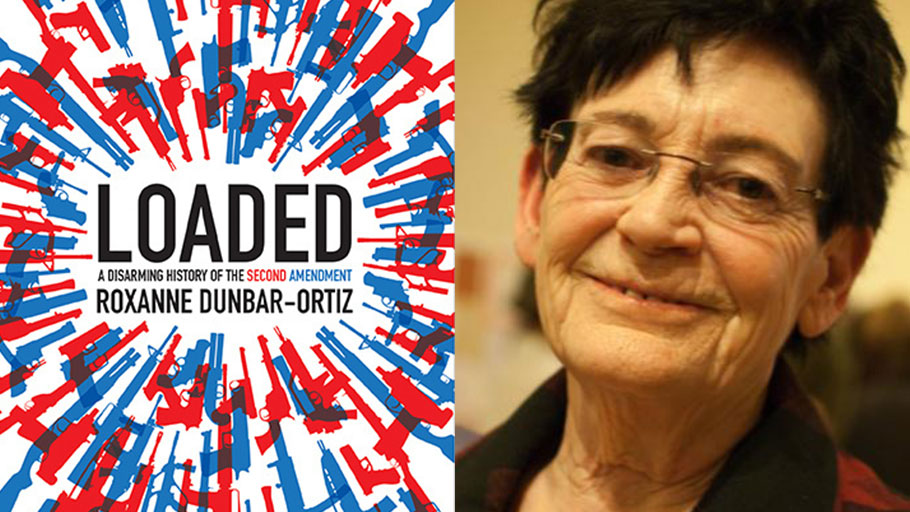
Loaded: A Disarming History of the Second Amendment

Roxanne Dunbar-Ortiz on the Roots of the NRA and the Second Amendment
FROM THE INTERCEPT PODCAST April 2018

JEREMY SKAHILL: There’s a new book that just came out that lays out a provocative argument for getting rid of the Second Amendment in its entirety, and the book asserts that the NRA has become a white nationalist organization. That book is titled “Loaded: A Disarming History of the Second Amendment” and it was written by the radical historian Roxanne Dunbar-Ortiz. Her book tells a very different tale about the so-called gun culture in the United States and about how the Second Amendment was, at its core, a solidifying of the rights of white people to bear arms to steal native land by force, to capture so-called runaway slaves and to prevent rebellions from oppressed people. It wasn’t about hunting. It wasn’t about protecting against the tyranny of government. It wasn’t about simply protecting your property from criminals and thieves. Sure, those arguments are made by Second Amendment enthusiasm. They’re certainly representative of a lot of people’s motives for possessing guns.

Roxanne Dunbar-Ortiz is the author of many books, including “An Indigenous People’s History of the United States,” “Roots of Resistance: A History of Land Tenure in New Mexico,” and “Blood on the Border: A Memoir of the Contra War.” Her latest book, again, is called, “Loaded.”
Roxanne Dunbar-Ortiz joins me now. Welcome to Intercepted.

Roxanne Dunbar-Ortiz: Thank you, Jeremy.

JS: If the United States has a gun culture, what is that gun culture?

RDO: It’s a weapon of settler colonialism, all over the world: Australia, New Zealand, Canada, Argentina, where settler colonialism was used. But in the United States, by putting it in the Constitution, that sacred document, as an individual right, it veered considerably from those other settler colonies.
From the very beginning, guns and ammunition were required in the colonies, in Virginia and then in Massachusetts Bay Colony and then in Virginia first, that every man, every household had to have firearm and a certain amount of gun powder and bullets. And if they couldn’t afford that, the colonial government would subsidize it.
So, what were they so afraid of? That they had to have all these guns because they were on land that they had stolen by burning people’s villages down, by killing, raping, maiming and driving Native people into the periphery where they fought back and tried to regain their land and also keep them from taking more.
So, U.S. settler colonialism was really required, the whole build-up of the United States, a white nationalist democracy: Every man a king with land. And, of course, then, institutionalized slavery took hold by the 1670s — out of these militias they carved slave patrols as well.
So that dual usage: you know, the right to own human bodies and land and to steal them, kidnap people, and kill people — really genocide — is just written into the very cellular structure of the United States: The Constitution, every institution.
And that, plus the militarism that lasted from before, during and after independence, and continued until 1890, more than 100 years of daily, moment-by-moment warfare against native people, at the same time invading other countries: The Barbary wars in 1806 and 1809, and then Mexico, 1846 to ’48, that just continued and continued and then jumped over the Pacific and into the Caribbean and then into the whole world. So, the militarism is the key component of it and only a third of the population even own a gun, and there’s a good portion of those who are combat vets.

JS: Hmm. The exact text, “A well regulated Militia, being necessary to the security of a free State, the right of the people to keep and bear Arms, shall not be infringed” — now, I’m not asking you about more recent interpretations by various courts, but at that time, in 1789, when they were referring to a well-regulated militia being necessary to the security of a free state, what was the historical context, and what did they refer to when they were talking about well-regulated militia?

RDO: Well they certainly weren’t talking about state militias, because those were provided for in the Constitution itself, that’s the genealogy of the National Guard. But the Bill of Rights which was, came later [than] the amendments, these were individual rights, very specifically individual rights, so they could only have referred to the existing citizen’s militias.
But they came to be self-organized — they were very well organized for selfish interests, for their own purpose — the state, the government had no authority over them whatsoever. And this was how the whole continent was taken, was these settlers themselves organized, that every, every settler a soldier, they’re all armed, they say, out in their fields and everything and they’re, they’re all well-organized, so they could in minutes call up of a militia and they knew what to do. It was in their self-interest, so.

JS: Well, what were these militia doing?


RDO: Killing Indians! Taking their land. And, then the land was theirs. And the slave patrols were also self-organized. It was really every white man had an obligation to keep an eye out, even if they didn’t own slaves to keep an eye out and turn in any stray black person that didn’t have a permit on him, that he’s doing some errand for the owner, and if he didn’t have that then he was considered a renegade — you know, had to be captured and returned to the owner.
 keep reading🔻
JS: Right, you write in the book, and this is a quote, “The astronomical number of firearms owned by U.S. civilians, with the Second Amendment considered a sacred mandate is also intricately related to militaristic culture and white nationalism. The militias referred to in the Second Amendment were intended as a means for white people to eliminate indigenous communities in order to take their land and for slave patrols to control black people.”

RDO: Slave patrols, several scholars have traced the genealogy of slave patrols into modern police forces so we still see the controlling of especially young black men by police forces. It’s not just history; it has led up to the exact kind of situation, both militaristic and institutionally violent society that we have now.

JS: When you listen and watch the current debate about guns in this country, what is your critique of the way that the Second Amendment is discussed by opponents of guns? Can you lay out your perspective on that?

RDO: You know, their arguments are “you don’t need an automatic weapon, you don’t need an assault rifle to kill a deer.” It is so stupid. It was never ever, ever about hunting. It’s never had anything to do with that. And of course for these gun nuts, you know, they think that is hilarious because they know what guns are for: guns are to kill people.
The other argument that liberals make is they create a bogeyman. It’s all about money and it’s advertising and sales and, you can say it’s capitalism. Well, of course everything is related to the evils of capitalism, but it’s not all about money. There is a populist basis, very large and it’s much larger. I consider the NRA the largest and most powerful hardcore white nationalist organization maybe in the world right now, except maybe for the U.S. government at this point. But they argue that either the gun industry or the NRA or both together in cahoots are the problem. It’s because they have so much money and they bribe congressman.
What they do is get these people unelected or elected or out of office through their base. They are a mass-based organization with chapters everywhere in the United States and they’re activists. That is what they live for. They are gun nuts, gun fetishes, and they’re one-third of the population, 80 percent of those are white, but 61 percent are white males.
That is the constituency. It’s like liberals, and even a lot of leftists, do not want to face the fact that there’s this much power. There’s been very little legislation ever, because as long as it was a nice, secure white republic up to World War II, with Jim Crow fully in charge, legal segregation, redlining and everything throughout the north, it was secure.
And then, then the civil rights movement which, of course, had always gone on — black resistance, native resistance — but it had a great success right after World War II, and that was the desegregation decision of the Supreme Court. That was the trigger, that was the earthquake, the tsunami that set off the new wave of white supremacy. It wasn’t really even needed. It always was there. But it wasn’t really needed in an organized way, as long as they controlled everything. I mean they were — they ran the whole government. Southern senators ran the Senate. They had nothing to worry about.
So, you see this tighten up with the founding of the LAPD, the new LAPD: It was an all-white, paramilitary, white nationalist police force. It’s never really lost that veneer or structure. It still has problems.
You know this is a rebellion. This is counter-revolution that started almost, I mean really at the time of the first victory, and built up and built up until it was taken over, the NRA was taken over by a gun nuttery group founded two years earlier, Harlon Carter, former vicious Border Patrol agent.

Harlon Carter: Thanks to you, the members and supporters of NRA, no national gun law has passed this year. We will stand together strong, dedicated, shoulder to shoulder for what is right.

RDO: And they infiltrated and got the vote and took over the NRA: That’s when it became a completely white supremacist organization and started emphasizing the Second Amendment.

HC: Any national gun law, no matter how innocent in appearance, presupposes a still further growth, in a centralized, computerized, gun-control bureaucracy in Washington D.C., a monstrous invasion of the rights to privacy of you law-abiding and decent people who have never committed a crime and concerning whom there is no evidence you ever will.

JS: You write: “By the time of its 1977 convention, the Second Amendment Foundation and its lobbying arm, the Citizens Committee for the Right to Keep and Bear Arms, which was founded in Washington state in 1974, seized leadership of the NRA. And you state: “The Constitution is the sacred text of the civic religion that is U.S. nationalism, and that nationalism is inexorably tied to white supremacy.”

RDO: Yes. We are weird in the world and the United States with this sanctification of a constitution. They built into the Constitution almost an inability to change it. But again, the originalism arose with this counterrevolution against black freedom.
But it really is an individual right. It was meant to be an individual right from the very beginning. So, you know, it really needs to be abolished, that’s what it needs to be. But it’s not the vehicle that produces the violence; it’s the violence that leans on this phony, sacred object, the Second Amendment, to the point that even all of these liberal congress people, you hear them, over and over, preceding their efforts for gun control, but:

Senator Bernie Sanders: But we have millions of people who are gun owners in this country, 99.9 percent of those people obey the law. I want to see real serious debate and action on guns. But it is not going to take place if we simply have extreme positions on both sides.

RDO: But that’s ridiculous, you know? What are they supporting? You know, do they know what that supporting? And then other liberals like Nancy Pelosi, they argue that it’s out of date, and if you think through what that means, it means, well, we don’t have to kill Indians anymore.

House Minority Leader Nancy Pelosi: We all support the right, the Second Amendment right to bear arms.

RDO: She forgets we still have to kill black people, though, apparently, and Muslims and Mexicans. So, it’s really an ineffective argument because they just go round and round: “Well, if you really believe in the Second Amendment.”
But I’ve heard it before. They say, “Oh, these old guns back then.” And, you know: “If we had individual right to a musket and plenty of gunpowder, then that would be fine.”
But, you know, they killed a hell of a lot of Indians with those muskets, they were good with those things, you know, they had whole wars, people were killed in Europe with muskets. It’s not nothing.

JS: Well and you also write quite bluntly, “White nationalists are the irregular forces, the volunteer militias of the actually existing political economic order. They are provided for in the Second Amendment.”

RDO: Yeah. They are. If people want that, then they should continue supporting the Second Amendment, but if they want to find out what the Second Amendment is really about and that takes a historical contextualization, because it wasn’t even debated at the time. It was already in the colonists — when they broke away with the Declaration of Independence, they each formed sovereign states. And of course the Constitution, seven, eight years later was to bring them together in a federation. But in their constitutions, they had already put in the mandate for the continuation of these citizen’s militias and the right of carrying arms. And Thomas Jefferson wrote the one in the Virginia Constitution and imported it to the Bill of Rights.
So, there was no discussion, there was no argument, no one said, “Oh, should we do this? Is it an individual right?” There was no argument. Everyone knew what it was about. What else could it have been for? Since they had actual state militias and the Army and the Navy in the Constitution.

JS: You mentioned earlier, you were giving some of the statistics, 74 of gun owners in the United States are male, 82 percent of gun owners are white, meaning 61 percent of all adults who own guns are white men and that group is around 30 percent of the total U.S. population, and then, I’m quoting here: “The top reason U.S. Americans give for owning a gun is for protection. What are the majority of white men so afraid of? Does anyone believe that centuries of racial and economic domination of the United States by white men have left no traces in our culture, views or institutions?” What are you saying there?

RDO: White men have a problem. We have a problem with white men. It’s not the people I come from: the tenant farmers, the sharecroppers, the poor people — they have their own gun problems. It really is the powerful defense industry, the powerful agribusiness industry, more and more the tech industry, that I think is — we have to bring class into the — I tell you, most of the poor white men in this country can’t afford those — weapons are very expensive and the really nice ones are very expensive. The average gun owner owns eight.
And that means some people, like the Las Vegas shooter, he owned something like 45 high-powered weapons all bought legally, and he’s a very wealthy man, you know, so.
And then we get into ROTC [Reserve Officer Training Corps], Junior ROTC, in all the schools teaching little kids to shoot lethal weapons, many of them, of course, go into the actual army, but this kid in Florida was from age 11 in Junior ROTC and he was a fanatic. Everyone interviewed said all he would ever talk about was, “Guns, guns, guns, and ROTC.”
And yet in these funerals, you know, and all they’re honoring these JROTC kids who were killed and not at all putting any focus on these defense industry-funded programs in all of our public schools and even middle schools.

JS: And in the book, you make that connection. You’re talking about the way that we discuss so-called mass shootings in our society, and you write: “Just why these events, horrific as they are and tragic for the families and communities traumatized by senseless violence and loss, loom so large in the public mind is a mystery when during the entire period since the 1966 Whitman massacre, the United States has perpetrated massive amounts of violence around the world responsible for killing millions of people and families.”
What you’re talking about there is something that you, I don’t know if we’ve ever heard that kind of connection being made from politicians on Capitol Hill, the idea that all of these wars that the United States is engaged in around the world to this moment and all of that history of slaughtering indigenous people, the slave patrols, the lynchings, etc., that they are also connected to the violence that we see happening in our movie theaters, our churches and our schools.

RDO: Every U.S. war, if you exclude the two shortest wars, World War I, World War II, where the U.S. came in at the end and took the spoils in both, there’s never been a moment in U.S. history that it’s not at war somewhere. Most people don’t even know about all these wars, the endless ones in Central America and the Caribbean all through the 19th century and 20th century, sort of ingrained, you know?
But now they’re more in the open and they were actually covertly with CIA counterinsurgencies during the ’50s, because people were tired of war. And after Vietnam, they had to go convert back into Central America and Afghanistan, those were covert CIA-run wars.
But with the Gulf War, H.W. Bush said, “Well finally, we got rid of the Vietnam syndrome and we can be proud of invading a country.”

President George H. W. Bush: Should military action be required, this will not be another Vietnam. This will not be a protracted, drawn-out war.

RDO: The school shootings, and especially workplace shootings did not start just then. They started with the Vietnam veteran who shot from the Texas towers. He was never in Vietnam by he was trained as a sniper.

Reporter: This is a KLRN news bulletin. A sniper with a high-powered rifle has taken up a position on the observation deck on back of the tower on the campus of the University of Texas. He is firing at persons within his range. All Austin-area residents —

RDO: And then you have the workplace shootings, the postal workers, as they begin to shrink the post office and government institutions, you know, in the late ’70s, and “Going Postal” became the phrase.

Reporter: Good evening. Here’s what’s happening: Someone in the post office had killed 14 people inside, then taken his own life. That somebody was 44 year-old Pat Sherrill. He shot everybody in sight.

RDO: Other kinds of shootings: Charleston, South Carolina.

Reporter: Witnesses say he announces that he is there to shoot black people and he does, opening fire, killing nine people: six women and three men.

JS: You’re talking about Dylann Roof and something about that case that I had never heard before that you pointed out was that he carried out that massacre on the 193rd anniversary of the Vesey-led revolt. Denmark Vesey who was born into slavery, then won the lottery, purchased his own freedom was unable to purchase the freedom of his wife and his sons.
Then this potential opportunity arises when the Missouri Constitution is being discussed in 1820 and he thinks, maybe it will go in his direction and he could actually facilitate freedom for his wife and his children. It doesn’t go that way. He, and again, there, you know, you’re saying that you’re citing your own historical research on this, but you believe that he felt extremely disappointed and felt like there was no hope of getting them freed through the law and he began to, inspired by the Haitian revolution, organize other free Africans to engage in an uprising in Charleston. And before that uprising could kick into effect, white militia and slavers descend on him and his cohort and they very brutally murder them.
RDO: He’s a very charismatic preacher, and he had an open public church. Slaves on their Sunday, you know, on their off-time could come to the church, they could see his family there, even. They started plotting and you know these slave patrols, they had ears everywhere, so they were able to prevent it from happening and then they hung and desecrated the bodies.
And that church, you know, still is a sacred place to all descendants of enslaved Africans and that Dylann Roof chose this place and came into a prayer meeting where he was welcomed, there were only 8 or 9 people at that prayer meeting, I, you know, I grew up in the Southern Baptist church and I know those Wednesday night prayer meetings, and he sat there through the whole prayer meeting, and then killed almost all of them. He actually left one alive to tell what happened.
Well, you know, very quickly they found out that Dylann, he had been in delving into the white nationalist websites. Dylann Roof was completely unrepentant, was very proud of what he did, obviously in no way mentally disturbed.
This mental disturbance thing, you know I would think Barack Obama could be considered mentally disturbed, if you ask who’s killing people every day, isn’t that crazy? But, you know, in fact it’s normalized. So certain things were in the boundaries of being normalized, and Dylann Roof was, I didn’t hear anyone calling him mentally ill and he was, they didn’t even make that argument at trial, he refused it.
But I don’t think it’s just marginal, I think it’s almost like, in a nutshell, symbolic of what I said of it being a counter-revolution, this whole Second Amendment, it’s rise again and importance and the sacredness of it. We’ve just got to stop giving that to them, and that means soul-searching about the gun fetish, and gun culture.

JS: Roxanne Dunbar-Ortiz, we’re going to have to leave it there. Thank you so much for joining us on Intercepted.

RDO: Thank you, Jeremy.

JS: Roxanne Dunbar-Ortiz is author of the new book “Loaded: A Disarming History of the Second Amendment”
[Musical interlude.]


CLICK OLDER POSTS (above) to see more news

CLICK OLDER POSTS  (above) to see more news

MEGWETCH THANK YOU

HUGE Thank you for visiting this blog and sharing this with your kin. It's appreciated. Contact Trace anytime! Use the form below.

BOOKSHOP

Please use BOOKSHOP to buy our titles. We will not be posting links to Amazon.

Popular Posts

To Veronica Brown

Veronica, we adult adoptees are thinking of you today and every day. We will be here when you need us. Your journey in the adopted life has begun, nothing can revoke that now, the damage cannot be undone. Be courageous, you have what no adoptee before you has had; a strong group of adult adoptees who know your story, who are behind you and will always be so.

OUR HISTORY

OUR HISTORY
BOOK 5: Lost Children of the Indian Adoption Projects