BACK UP BLOG (no longer updating)

This blog was a backup for American Indian Adoptees blog
USE THE SEARCH BAR or SEARCH TOPICS at bottom of this blog

If you need support

Support Info: If you are a Survivor and need emotional support, a national crisis line is available 24 hours a day, seven days a week: Residential School Survivor Support Line: 1-866-925-4419. Additional Health Support Information: Emotional, cultural, and professional support services are also available to Survivors and their families through the Indian Residential Schools Resolution Health Support Program. Services can be accessed on an individual, family, or group basis.” These & regional support phone numbers are found at https://nctr.ca/contact/survivors/ . MY EMAIL: tracelara@pm.me

Search This Blog

Showing posts with label American Indian history. Show all posts

Friday, July 7, 2023

Identity: One man’s search after adoption

Thomas with this adoptive parents (family photo)
REBLOG

An interview with Thomas H. Pierce (Menominee)
By Trace (blog editor)

Thanks to a growing community of adoptees on Facebook and the internet, I interviewed Thomas H. Pierce, now 58, a member of Menominee tribe of Keshena, Wisconsin.

Thomas explained that he is listed on their descendent roll (there is a 1/16 blood quantum requirement) though his tribal brother told him he has more. Like many adoptees learn, it’s a matter of proof and finding lost relatives after years of being lost and separated by a closed adoption.


The following testimony is graphic but very important as it’s related to the Indian Adoption Projects and their intended outcomes. Thomas is not the only adoptee I know from a Wisconsin reservation, including his Menominee rez, who was taken to Pennsylvania for a closed adoption.

Tell us a bit about your tribal affiliations…

Thomas: I am 3/16 Menominee and also 3/16 Stockbridge-Munsee Mohican. I believe my father was Native American but I can't find him, even though I know his name. I lack the 1/16 each tribe requires for minimum full tribal status.

Do you know why you are adopted?
Thomas: I was adopted when I was 5 days old. I found out my adoption was due mostly because my grandfather would not allow my birthmother to bring me home. My mother was a Navy Corpsman. (My birthfather may have been also.) I was born at the Naval Hospital in Camp Pendleton on the Marine Corps military base in California.

 What was your childhood like?

I was adopted by a career Marine, Lt. Col. Herbert E. Pierce, a soft spoken “hero” in every respect. My adoptive dad was Cherokee, 1/4 blood, but his family denied it because of racism in Oklahoma. He was a WWII and Korean veteran and highly decorated.

Then there is my adoptive mother, an alcoholic, pill popper, ETOH abuser. (ETOH Abuse: When it is said that an individual is suffering from ETOH abuse what it means is that they are abusing alcohol. Most people have not heard of alcoholism being referred to as ETOH abuse and this is because this phrase is predominantly used in the medical and rehabilitation sector. The word ETOH is short for ethanol, which is the primary ingredient in alcohol.)

My mother, I believe, just hated kids. She treated us shabbily but she held a special hate for me. When she was angry, she sailed on about me being a bastard.

My father wasn't around much due to his postings so I was raised by my older sister who was eleven years older than me. When I was about 8 years old, she went off to school.

Because of my mother’s ETOH abuse, she slept in everyday until 10 a.m., so I never had anyone to rely on for getting breakfast, getting dressed or ready for school. As a result, I was a wild child, feral in some ways.

I do remember my adoptive parents were going to adopt a Navajo boy but he was violent - he grew up on the street eating from garbage cans, taking care of his younger brother, so they sent him back. I took that to heart and realized my tenure with my family was tenuous at best.

They always seemed to be sending me off somewhere, every summer vacation. I went to camps or to relatives and finally to a children's home where corporal punishment was practiced liberally.

I even made many trips to psychologists, until they told me my mother was to blame for my problems. I don't blame my Dad though he enabled her and then he was dying, very sick, and passed away at age 54. At that time, I lost my only defender. Then my relationship with my mother turned for the worse, if that was even possible.

She sent me for a summer to an acquaintance where I was sexually abused and where my own alcohol abuse started. She would do things out of spite, like setting me up with a friend for a weekend, telling this friend of hers I was gay, which I am not; but at least by this time I was old enough to fight off my attacker.

Then later, she phoned child authorities telling them I was abusing my own son, all proven untrue.

I was written out of the family will and received no inheritance or money. She gave away land which we had bought but by then I didn't care. Our relationship was irretrievable. I just wanted the few possessions my father bequeathed to me, the only things that would have mattered; and she ignored my sons with their inheritance.

But believe it or not, I mourned at her passing, mostly for the lost opportunity of a decent relationship she threw away.

 Did you have any Indian friends growing up?

I had no Indian friends growing up; there are not many Indians in the snooty environs of Wyomissing, Pennsylvania, known for its wealth and society types. In fact, Wyomissing was a great place to learn how to fight. I was teased relentlessly. I learned to fight three or four guys at a time, just to survive as my tormentors waited for me with a beating and racial slurs.

But I was proud to be an Indian and I knew I was adopted from my first recollections. Despite the denials of being Indian from my father’s side of the family, they told me to be mum because they were still hanging Native Americans in Oklahoma and Missouri.

 What did you learn about your adoption and your adoptive parents?

Thomas:  I was adopted nine years after the end of World War II and my adoptive parents had been trying to have other children. My father wanted a boy. Since he was part Cherokee, a Native child seemed natural. One of my two sisters (their biological children) looked particularly Native American. After I was adopted, many of my father’s friends remarked, in their words, “You certainly can't deny him, Herb.”

We looked remarkably alike, even when I was in my 40s. I wished I was his but alas I am not.

I was told by my mother that due to father’s military service (malaria/jungle fevers) my dad was lacking enough sperm. I believe it was her who had medical problems and she had a hysterectomy in 1956-57. With her alcohol and drug abuse, as well as deep-seated psychological problems, perhaps she felt inadequate.

I was psychoanalyzed three times. The psychologists keep saying my problems were a result of her. She had a vicious temper and would assault me many times over the years, like a woman possessed, often when she visibly intoxicated.

My father and I had a good relationship, he was a mellow thoughtful man whom I could confide anything.

After my father died no one could modify her behavior. She kept an article on a blackboard about a theory that some children are “Bad Seeds.” This was pointed out to me constantly. She even blamed me for my father’s death.

She also had a way of pitting sibling against sibling to achieve her aims.

In early 1977, when she accused me of child abuse, I got so angry I threatened to kill her if she ever stuck her nose in my business again. I was written out of her will and had no contact with any family until the early 90s.

It was established there was no abuse of my children. I have raised six and never raised a hand in anger to any of them. I became my adoptive father.

There was not religious or financial reasons for them adopting me. When they sent that Navajo boy packing, that did affect me. I knew I could also be sent away. I acted out in my older years. I felt my mother just did not want me around.

 What’s your life like now and what type of work are you in?

Thomas: I have been married three times. It took me three to get it right.

I have been clean and sober for 18 years now.  I served in the military, Marines and Navy, as a corpsman. I boxed as an amateur. I love fast cars and motorcycles. I was Pre-Med in college but ran out of money. I’m studying for my Masters in Labor management, converting credits from my B.S. degree in nursing.

I have worked at everything: carpenter, boilermaker, sheet metal journeyman, and have lived all over this country. I’ve visited 49 of 50 states, lived in 15 states, and visited 25 different countries, as military, or working in the trades, or just for fun. One can never get enough travel, knowledge or evolve and involve oneself politically.

All the lessons I learned from the Colonel, early life with him, was a great civics lesson. He was a born teacher. He taught at Yale and had his PhD in History and also taught ROTC. He taught high school after he retired.

When did you decide to open your adoption or did your adoptive parents have info for you?

Thomas: I always knew my first mother’s maiden name and was curious in 1995. I felt I wasn’t disrespecting my adoptive parents. When I finally found her, my mother and I corresponded, wrote letters. She never told anyone about me so I never met her in person while she was alive, so as not to embarrass her.

Can you tell us a little about your tribal family reunion?

Thomas: About four years ago I reached out to my family in Keshena. Our reunion was grand. I come from such a proud and large family. I am still getting to know them and regret not doing it sooner.

Dr. Verna Fowler is a nun and she started the tribal college. I greatly respect my aunt and admire how she helped Native colleges everywhere. She’s truly a beautiful strong woman.

Also, my Aunt Shirley was instrumental in regaining our Nationhood back. (The Menominee were terminated but it was restored.) *see history below

I learned my own mother took in and adopted many children, as well as raising my two other half-brothers.

Unfortunately, due to many health issues and funds, I haven’t been able to travel back to my rez often. Mostly it’s my health. I almost died a year ago which awakened me to my own mortality, realizing I may have waited too long. It took many attempts to unseal my records and finally be recognized by my tribe.

One of my aunts thought I might be after something. She was right: I wanted my identity. My only regret is not starting this process sooner. I am fortunate to have such a wonderful family.

 Any advice for other adoptees…

Thomas: My advice to adoptees is “be persistent.” The laws are there but it’s just getting the system to work for you and it is slow. Yes, you might not be as fortunate as I was. My Aunt Verna gathered up as many relatives as she could and gave me a wonderful homecoming, catered at the College of the Menominee. I was and still am humbled by her kindness and warmth. I am still awaiting my naming ceremony, mostly due to health reasons, but I have no regrets.


HISTORY:

The Menominee Indian Tribe’s rich culture, history, and residency in the area now known as the State of Wisconsin, and parts of the States of Michigan and Illinois, dates back 10,000 years. At the start of the Treaty Era in the early 1800’s, the Menominee occupied a land base estimated at 10 million acres; however, through a series of seven treaties entered into with the United States Government during the 1800’s, the Tribe witnessed its land base erode to little more than 235,000 acres today. The Tribe experienced further setbacks in the 1950’s with the U.S. Congress’ passage of the Menominee Termination Act, which removed federal recognition over the Tribe and threatened to deprive Menominee people of their cultural identity. Fortunately, the Tribe won back its federal recognition in 1973 through a long and difficult grassroots movement that culminated with the passage of the Menominee Restoration Act, Public Law 93-197, on December 22, 1973.

Read more here: http://www.menominee-nsn.gov/MITW/aboutUs.aspx

Wednesday, October 5, 2022

The History & Future of The Indian Child Welfare Act (Session 1)

Penn Law/Field Center Session on the Origins and History of the Indian Child Welfare Act (VIDEO)👇


Briefing Completed in Haaland v. Brackeen [ICWA]


With the reply briefs filed yesterday, all of the briefing
is completed in the Supreme Court case Haaland v. Brackeen. Oral
argument will be at the Court on November 9th. There will be a decision
before the end of June, 2023, though there's no good way to determine
when that will arrive other than that.


Wednesday, December 1, 2021

Legacy of Native American Boarding Schools | Studying history is vital for understanding and transforming the world

Legacy of Native American Boarding Schools 

by David "Katya" Ketchum | LA Progressive

It’s not a secret that I love studying history; I believe it is a vital discipline for understanding and transforming the world. And as shocking and terrifying as human cruelty has been throughout recorded history, it’s also heartening to observe, time and time again, the movements opposing oppression that have always existed. This is also important to remember if you are tempted to excuse the complicity of people in the past by insisting that they were just products of their time. By studying history, we also become more aware of our own responsibilities and possibilities in the present.

A Legacy of Failure, Cruelty, and War

One of these important historical moments in US history, when there were multiple and large movements to either oppose or work for social justice, followed the American Civil War.

Optimism that Reconstruction would bring about true and lasting healing and change in a nation ravaged and traumatized by the horrors of slavery and war, were combined with optimism that there could be a change in the government’s policies regarding Native peoples.

President Ulysses S. Grant and the events that took place in his administration are a good example of these trends. The Enforcement Acts of 1870 and 1871, for example, were aimed at providing federal support to protect the rights of Black Americans and oppose the Ku Klux Klan.   Under the direction of Attorney General Amos Ackerman, hundreds of Klansmen were tried, often by Black juries, and imprisoned.  Thousands more received fines or warnings, or even fled to escape prosecution. As a result, the KKK as a formal organization was in wreckage by 1872.

Optimism that Reconstruction would bring about healing were combined with optimism that there could be a change in the government’s policies regarding Native peoples.

At the same time, Grant wanted to find a different approach to US relations with Native peoples. He worked closely with his longtime friend and colleague, Ely S. Parker, and made Parker his Commissioner of Indian Affairs.  Parker, whose Native name was Donehogawa, was a member of the Seneca nation and the first Indigenous person to hold the post of Commissioner.  Together, they developed policies that included providing federal troops to protect reservation borders from settlers and that ultimately would have provided a pathway to citizenship for Indigenous people.

These plans were vehemently opposed and undermined, and opponents eventually falsely accused Parker of embezzling money.  He was exonerated, but Congress stripped power from the office of Commissioner of Indian Affairs, and Parker resigned in 1871.

Plans and relationships fell apart, and Grant ended up waging war against the very people he had thought he would protect, including “the Modoc War in 1873, the Red River War in 1874, and the Great Sioux War in 1876.”

By 1885, the year Grant died, Donehogawa, once Grant’s enthusiastic colleague, described the fate of Indigenous peoples in North America. Resisting the racist idea that blamed Indigenous people for their troubles, he wrote:

“The disabilities, disadvantages and wrongs do not result, however, either primarily, consequently or ultimately from their tribal condition and native inheritances, but solely, wholly and absolutely from the unchristian treatment they have always received from Christian white people … . The tenacity with which the remnants of this people have adhered to their tribal organizations and religious traditions is all that has saved them thus far from inevitable extinguishment.”

Grant’s campaign slogan had been “Let us have peace,” and he seemed sincere in his vision to reform federal Indian policies. So how did it happen that, as Alysa Landry pointed out, “some of the worst massacres and grossest injustices in history [occurred] while Ulysses S. Grant was in office”? This is an important question to ask, if we want to avoid the kind of pitfalls that kept others’ from true healing and change.

In Grant’s case, central to his failures was “the development of millions of acres of federal public lands” and “the private acquisition of land by pioneers, spectators and railroad and mining companies,” made possible by Grant’s approval of the Timber Culture, General Mining, and Desert Lands Acts, which all expanded the land available to homesteaders and settlers – at the expense of Native peoples. In the end, Grant’s hopeful slogan, “Let us have peace,” was no match for the reality of expansionism. In Landry’s words,

“Grant realized that his expansionist goals required the removal of Indians from desirable land. His Indian Peace Policy, designed to reform the Indian Bureau and remove corrupt agents, also called for rigorous agricultural training on reservations and established schools and churches that would transform Indians into Christian citizens.”

Cultural Genocide by Another Name

This tension is the US setting for residential schools. Even though some people, like Grant and Donehogawa, wanted to promote and protect the rights of the Original Nations, that hope was always in second place to the relentless westward push of land-grabbing and violent displacement.

A cluster of ideas have especially supported and justified this kind of colonization. First, the dominating power believes in its own superiority. Members of this society, then, are entitled to rule and profit from that superiority, even if it comes at the expense of others.

This is especially the case when the people harmed are categorized as inferior. Moreover, because the dominating power believes in its superiority, it can reframe the harm it causes to others as ultimately in their best interest.

Those that survive will reap the benefits of being assimilated into the superior culture. It’s a tidy system that excused hundreds of years of oppression and continues to do so today.

The residential school emphasis on agricultural training, education, and conversion fits this pattern. But forced assimilation could only be viewed as moral and good from the vantage point of superiority.

Unfortunately, the settlers of North America never lacked that character trait. Captain Richard H. Pratt, who was a founder and superintendent of the infamous Carlisle Indian Industrial School in Pennsylvania, gave a speech in 1892 that showed how a person could justify even the most cruel actions under the guise of racist and paternalistic generosity and care. He began by stating that:

“A great general has said that the only good Indian is a dead one, and that high sanction of his destruction has been an enormous factor in promoting Indian massacres. In a sense, I agree with the sentiment, but only in this: that all the Indian there is in the race should be dead. Kill the Indian in him, and save the man.”

Amazingly and horrifyingly, Pratt would then use the enslavement of Africans as a positive example of how assimilation could work. Rather than recognize the courage, persistence, creativity, and love that marked Black resistance to slavery and its descendants, such as Jim Crow and mass incarceration, Pratt gave all the credit to the White people who enslaved them. In Pratt’s view, “the care and authority of individuals of the higher race” was a blessing in disguise.

“Horrible as were the experiences … of slavery itself, there was concealed in them the greatest blessing that ever came to the Negro race—seven millions of blacks from cannibalism in darkest Africa to citizenship in free and enlightened America … .” (ibid)

In contrast, Pratt saw the wars fought against Native peoples and concluded that forced assimilation was more effective. “We have never made any attempt to civilize them with the idea of taking them into the nation,” Pratt wrote, “and all of our policies have been against citizenizing and absorbing them.” Boarding schools were Pratt’s answer:

“It is a great mistake to think that the Indian is born an inevitable savage. He is born a blank, like all the rest of us. … Transfer the infant white to the savage surroundings, he will grow to possess a savage language, superstition, and habit. Transfer the savage-born infant to the surroundings of civilization, and he will grow to possess a civilized language and habit.” (ibid)

This is what White supremacy looks like, dressed up in schoolmaster’s robes. The unmistakable goal was to eliminate Indigenous nations, communities, customs, languages, and life.

Tuesday, May 4, 2021

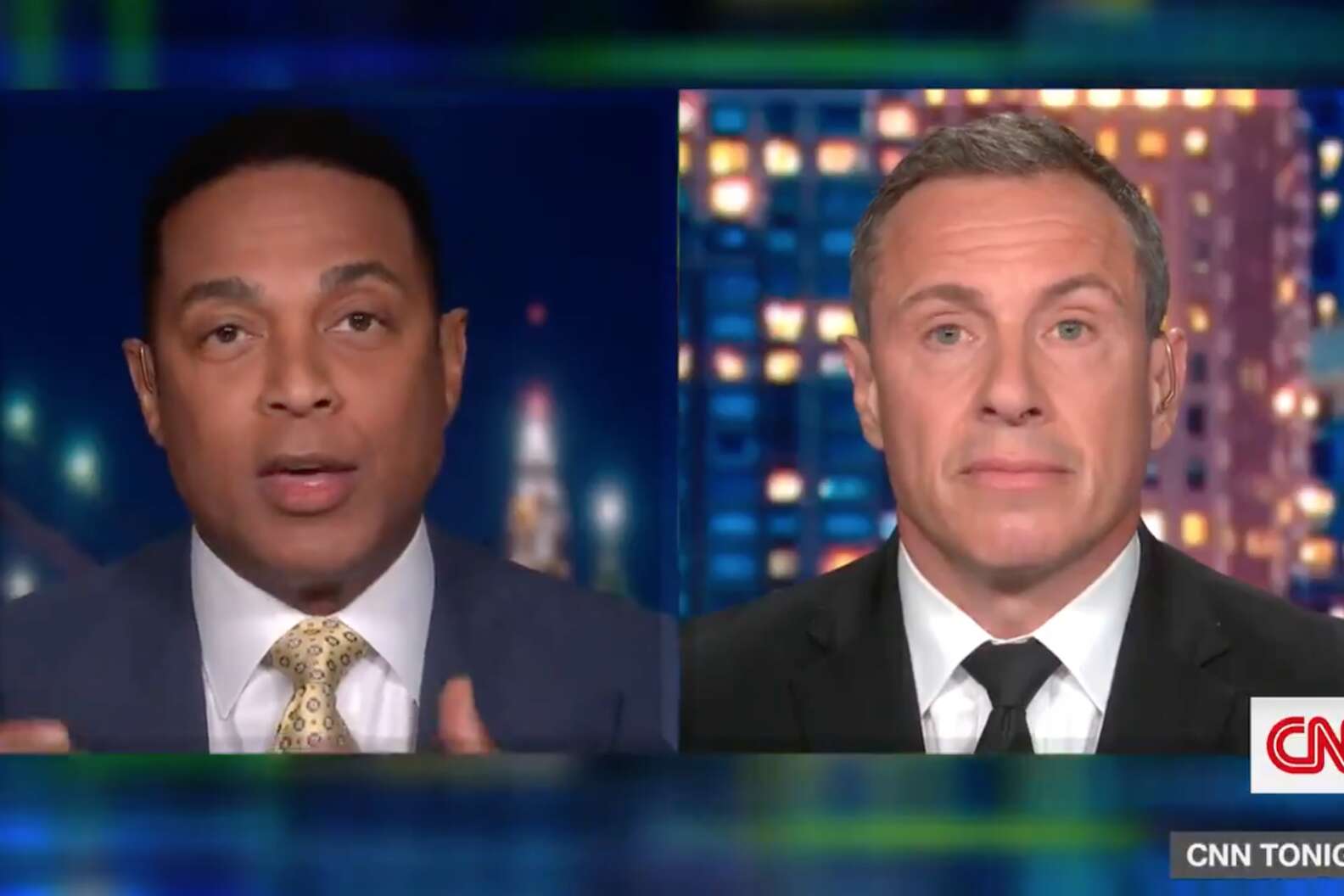
BIG FLAP: Santorum’s Native History on CNN


Don Lemon Wasn’t Having Any Of Rick Santorum’s Comments About Native History on CNN

“Did he actually think it was a good idea for him to come on television and whitewash the whitewash that he whitewashed?”

CNN anchor Don Lemon discusses his reaction to Rick Santorum's May 3, 2021, appearance on "Cuomo Prime Time." | CNN

CNN anchor Don Lemon apologized to viewers after former Republican lawmaker Rick Santorum discussed his recent controversial comments about the nation’s founding on Chris Cuomo’s show. Lemon called the appearance “horrible and insulting.”

“Europeans did not found this country,” Lemon said after Cuomo interviewed Santorum on Wednesday night. “It was here. The Native Americans had this country before the Europeans came.”

Santorum, a Republican politician and CNN commentator, made historically inaccurate and racist comments during a speech in April to Young America’s Foundation, a conservative youth group. During his speech, Santorum said he doesn’t “know of any country in the world that was settled predominantly by people who are coming to practice their faith.”

“They came here mostly from Europe and they set up a country that was based on Judeo-Christian principles,” the former U.S. senator and Republican presidential candidate continued during the speech. He went on to say that European colonizers “birthed a nation from nothing,” and that even though Native Americans already inhabited the land,“there isn’t much Native American culture in American culture.”

On May 3, during “Cuomo Prime Time,” the CNN anchor pressed Santorum about his comments. 

“This seemed like you were trying to erase diversity in the interest of some white Christian right,” Cuomo said. 

Santorum attempted to correct his statements but offered no apology. 

"Just to be clear, what I was not saying is that Native American culture — I misspoke,” Santorum said, stumbling over his words.

Santorum said he was trying to articulate that U.S. founding documents, including the Constitution and Declaration of Independence, were “created anew.” 

“I was not trying to dismiss Native Americans,” Santorum said to Cuomo. “The way we treated Native Americans was horrific. It goes against everything I ever fought for.”

The Native American Journalists Association put out a statement following Rick Santorum’s initial speech, calling on CNN “to immediately dismiss” him. It also urged its members to “avoid working” with CNN and implored advertisers to stop supporting the network. 

Fawn Sharp, president of the National Congress of American Indians, echoed NAJA’s calls for Santorum’s dismissal and enumerated the reasons that Santorum’s comments were factually incorrect. 

"What European colonizers found in the Americas were thousands of complex, sophisticated, and sovereign Tribal Nations, each with millennia of distinct cultural, spiritual and technological development,” Sharp wrote in a piece for Native News Online.

The contributions of Native Americans are plenty and consequential, Sharp wrote. They cultivated plants, like cotton, rubber, and tobacco, and developed the concept of environmentalism. 

"No idea is more fundamentally Native American and more explicitly spread by Native American peoples,” Sharp wrote. “There would be no National Park system without Native American influence.”

via

Tuesday, September 8, 2020

A Bridge of Repair

As Americans tussle with the idea of financial and institutional reparations, insight can be gained from other movements that have sought to redress historic injustices. One such injustice was the removal of more than 200,000 skeletons, millions of grave goods, and thousands of sacred objects—stolen from Native Americans.

GOOD READ: A bridge of repair for Native and Black America

Friday, December 20, 2019

Native Americans Weren't Guaranteed the Right to Vote in Every State Until 1962


Native people won citizenship in 1924, but the struggle for voting rights stretched on much longer.


Calvin Coolidge and Native American group at White House


Do
U.S. citizenship and voting rights go hand and hand? For most of the
country’s history, the answer has been no—just look at the example of
Native voting rights, which weren’t secured in all states until the
1960s.

Native Americans couldn’t be U.S. citizens when the country
ratified its Constitution in 1788, and wouldn’t win the right to be for
136 years. When black Americans won citizenship with the 14th Amendment in 1868, the government specifically interpreted the law so it didn’t apply to Native people.


Keep Reading

Native Americans Weren't Guaranteed the Right to Vote in Every State Until 1962

Native people won citizenship in 1924, but the struggle for voting rights stretched on much longer.
Calvin Coolidge and Native American group at White House
Do U.S. citizenship and voting rights go hand and hand? For most of the country’s history, the answer has been no—just look at the example of Native voting rights, which weren’t secured in all states until the 1960s.
Native Americans couldn’t be U.S. citizens when the country ratified its Constitution in 1788, and wouldn’t win the right to be for 136 years. When black Americans won citizenship with the 14th Amendment in 1868, the government specifically interpreted the law so it didn’t apply to Native people.

Keep Reading

Thursday, December 19, 2019

Slaughtered in the Name of ‘Civilization’

The Gnadenhutten Massacre, 1782. (Credit: Archive Photos/Getty Images)
Updated:

Their skin was dark. Their languages were foreign. And their world views and spiritual beliefs were beyond most white men’s comprehension.

On a cool May day in 1758, a 10-year girl with red hair and freckles was caring for her neighbor’s children in rural western Pennsylvania. In a few moments, Mary Campbell’s life changed forever when Delaware Indians kidnapped her and absorbed her into their community for the next six years. She became the first of some 200 known cases of white captives, many of whom became pawns in an ongoing power struggle that included European powers, American colonists and indigenous peoples straining to maintain their population, their land and way of life.
While Mary was ultimately returned to her white family—and some evidence points to her having lived happily with her adopted Indian tribe—stories such as hers became a cautionary tale among white settlers, stoking fear of “savage” Indians and creating a paranoia that escalated into all-out Indian hating.
A group of Native Americans look at a sailing ship in the bay below them. (Credit: Corbis/Getty Images)


From the time Europeans arrived on American shores, the frontier—the edge territory between white man’s civilization and the untamed natural world—became a shared space of vast, clashing differences that led the U.S. government to authorize over 1,500 wars, attacks and raids on Indians, the most of any country in the world against its indigenous people. By the close of the Indian Wars in the late 19th century, fewer than 238,000 indigenous people remained, a sharp decline from the estimated 5 million to 15 million living in North America when Columbus arrived in 1492.

Keep Reading 

+
Battle of White Bird Canyon: For the historian in you..there are many interesting narratives about this “first fight of the Nez Perce”; here is one of them.

Saturday, December 14, 2019

Won’t Somebody Please Think of the Children

In the late 1800s, the world was a lot deadlier. Almost one in five babies in the United States died before childhood — which was an improvement from the previous decades. At the turn of the century, 19 out of 20 births were still happening at home.

Incubator baby show? Who was Dr. Couney?

Some carnival showmen bought knock-off incubator machines based on Lion’s design and started charging entry to their own premature baby shows. But raising a baby is not easy, and most of them got out of the business quickly. One showman, however, was hooked on this idea. In 1897, Dr. Martin Couney put on his first incubator baby show in London. Unlike the other showmen, Couney’s show had more of a refined air. He hired nurses to hold the babies and feed them breastmilk. The show was a hit so Dr. Couney decided to give it a try in the United States at the Omaha World’s Fair.

Won’t Somebody Please Think of the Children?!

In the spring of 1905, Couney traveled to Chicago, Denver, and Minneapolis to set up new exhibits. While the new exhibits made Dr. Couney rich, he also made a lot of decisions not driven by profit. Saving babies became Dr. Couney’s mission, as he would tell many colleagues. In his travels, Couney would often wine and dine other doctors, and give them demonstrations of the incubators. On multiple occasions, Dr. Couney tried to donate his incubators to local health departments after the local fair was over, but no one would take them.
Doctors had all sorts of reasons for rejecting the technology. One reason was the disgraceful influence of the Eugenics Movement. In 1901, an anonymous editorial made the rounds in medical journals, disparaging the incubators. The author wrote that the human race suffered by keeping alive babies who the medical community literally referred to as “weaklings”.  The author lamented Couney’s babies would “transmit their deficiencies, deformities and vices” to the next generation. Eugenics was hateful pseudoscience. And it was not a fringe movement. A lot of the fairs where Couney showed his babies also featured eugenics exhibits. 

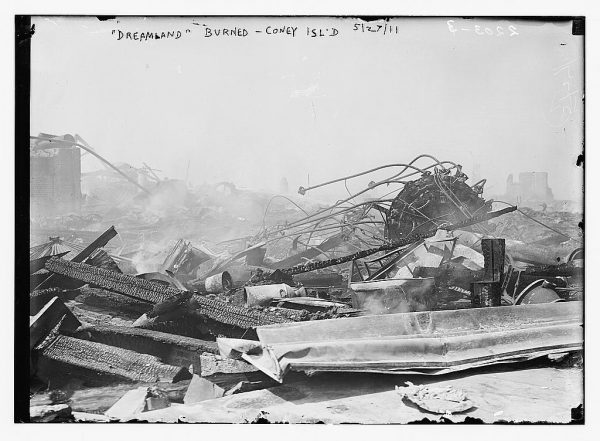
Dreamland at Coney Island after fire in 1911
There were lots of other concerns about Couney’s approach. Many were concerned that amusement parks weren’t safe. One time in 1911, a Coney Island park with one of Couney’s shows went up in flames. The staff of doctors and nurses were able to save all the babies, but the incident only solidified the fear that these parks were too hazardous. Many of the parks were built quickly and were pretty shoddy. Four years earlier, a different park at Coney Island also burned down, and it burned down again in 1936 and again in 1939. Luna Park burned down in 1944. Around this time, amusement parks all over the country were going up in flames. 
 
Beyond the safety concerns, there’s something deeply unsettling to modern eyes about the whole concept of incubator sideshows. 
Today, it’s clear that putting babies on display and profiting off of them is exploitative. In many ways, Couney’s exhibits were in line with some of the worst parts of amusement parks and World’s Fairs. In addition to the rides, many fairs and parks had “ethnological villages”, where Native Americans or people from faraway nations would live on-site in stereotyped caricatures of their homes. Some were literally caged and incarcerated on the grounds, with no record of payment. On a lot of midways, there was a despicable willingness to exploit human life for the entertainment of others. Charging money to see tiny infants was a small part of that.


read more

Tuesday, December 3, 2019

States Move to Add Native American History to Curriculum


A recent report shows that 87% of state history standards include no mention of Native American history after 1900.

MINNEAPOLIS—On the heels of the National Indian Education Association's conference held in Minneapolis earlier this fall and just in time for Native American Heritage Month (in November), the nearby Shakopee Mdewakanton Sioux Community announced a $5 million philanthropic campaign to fund resources, curriculum, and training on Native American heritage for teachers and administrators across Minnesota, according to the Star Tribune. "We're hoping we can move the needle in the narrative in Minnesota and be a model," Rebecca Crooks-Stratton, the secretary-treasurer for SMSC, told the newspaper.
A recent report by the National Congress of American Indians highlights the need for initiatives like SMSC's. Summarizing states' efforts to bring content about indigenous peoples and communities into K-12 classrooms across the country, the report found that 87% of state history standards include no mention of Native American history after 1900, and 27 states don't mention Native Americans in their K-12 curriculum.
However, 90% of states surveyed reported that they are working to improve the quality of and access to Native American education curriculum, and a majority of states indicated that Native American education is already included in their content standards, although far fewer require it be taught in public schools. Despite a dearth of requirements, educators don't have to wait for a state mandate to begin integrating Native American studies into their coursework, no matter their subject.

READ: States Move to Add Native American History to Education Curriculum | Best States | US News

Tuesday, October 16, 2018

The removal of Indian children continues to be a national crisis #ICWA


The Nation’s First Family Separation Policy 


Forty years ago, three in 10 Indian children were taken from their families.
October 9, 2018 | Christie Renick

The United States’ first family separation policy removed one-third of all American Indian children from their families and tribes. 

In the late 1960s, while employed by the Association on American Indian Affairs (AAIA), a New York-based attorney named Bertram Hirsch was sent to North Dakota to assist with a kinship dispute case on behalf of the Spirit Lake Tribe. Child welfare workers were forcibly removing children from family members and placing them in white homes, sometimes out of state. One grandmother had even been jailed after refusing to give up her grandchildren.
At the time, Hirsch says, he had no idea that an alarming number of American Indian children were being taken from their families and permanently placed in homes with white parents. But as he worked on the Spirit Lake case, he began to understand the scope of the problem. And by the time 1969 rolled around, he and the AAIA were deeply engaged in a nationwide data collection project that had him contacting every foster care or adoption agency and institution he could find. He surveyed the Bureau of Indian Affairs, which had the authority to place children at that time, and state social services departments as well as juvenile probation facilities.
Hirsch’s research found that somewhere between 25 and 35 percent of all American Indian children had been placed in adoptive homes, foster homes or institutions. 
Around 90 percent of those children were being raised by non-Indians. 
Many would never see their biological families again.

By the end of 1978, Hirsch had conducted his audit twice. Congressional commissions had convened in Washington numerous times, gathering hundreds of hours of testimony on the government’s egregious treatment of American Indian communities.

In its report to Congress, a task force said,
 “The removal of Indian children from their natural homes and tribal setting has been and continues to be a national crisis.”

The government-sanctioned removals were a wound for Native families and tribes that would be torn raw with each new generation.
Hirsch, along with two Congressional staffers, wrote and rewrote a bill to shield American Indian youth from being removed from their families and tribes. A culmination of what Hirsch describes as a huge grassroots effort spanning 11 years and involving thousands of people across the country, the Indian Child Welfare Act (ICWA) was passed at the 11th hour, just before the 95th Congress would come to a close, on October 24, 1978.
“If we didn’t get it passed in the 95th,” Hirsch said, “I’m not sure it ever would have passed.” ICWA defined the political relationship between two sovereigns – tribes and states. It designated that tribes can and must act as parents for their children, just as states do with non-Native children, when biological parents cannot. And it required that preference be given to tribal communities when children must be removed from their homes.
But 40 years later, states still don’t fully understand ICWA. One judge described ICWA as the most ignored federal law in the history of this country. The federal government has no ICWA data reporting requirements in place.Caseworkers and attorneys have been reported as viewing ICWA compliance as optional. Notice to tribes that an Indian child has entered foster care has been delayed by as many as four years, tribes have said.

And just last week, a federal district court judge ruled that the law was unconstitutional, rendering the fate of ICWA uncertain. 

KEEP READING

Tuesday, November 28, 2017

What came after the Indian Adoption Projects? Adoption Resource Exchange of North America

Source: U.S. Children's Bureau, Child-Welfare Exhibits:  Types and Preparation, Miscellaneous Series, No. 4, Bureau Publication No. 14 (Washington DC: Government Printing Office, 1915).
Beginning in 1916, the U.S. Children's Bureau brought its baby-week campaign to thousands of cities, towns, and rural communities across the United States. The photograph above was taken during a baby-week celebration on an Indian reservation.
1958
Child Welfare League of America published Standards of Adoption Service (revised in 1968, 1973, 1978, 1988, 2000); Indian Adoption Project began.
The Adoption Resource Exchange of North America (ARENA), founded in 1966, was the immediate successor to the Indian Adoption Project. ARENA was the first national adoption resource exchange devoted to finding homes for hard-to-place children. It continued the practice of placing Native American children with white adoptive parents for a number of years in the early 1970s. (It's estimated some 20,000 children were removed from their First Nations families and sent to non-Native parents in the US.)
1966The National Adoption Resource Exchange, later renamed the Adoption Resource Exchange of North America (ARENA), was established as an outgrowth of the Indian Adoption Project.
Quote: ARNOLD LYSLO, DIRECTOR, INDIAN ADOPTION PROJECT 12/1962
Indian children have certain rights which are theirs by birthright. That is, they have rights of tribal enrollment if they meet the requirements for enrollment set up by the tribe. As tribal members they have the right to share in all the assets of the tribe which are distributed on a per capita basis. The actual as well as anticipated benefits of an Indian child adopted through our Project are furnished by the Secretary of Interior. The Secretary of Interior, through the superintendent of the Indian agency where the child is enrolled, has the right to approve or disapprove of any plan made for the distribution of funds belonging to an Indian child.
Editor Note:  Even though Lyslo said we have rights, we are still taken from our tribes and placed in non-Indian families - which is part and parcel of a genocide program. And maybe those non-Indian parents adopted us for the money we could earn as tribal members...Poverty was often cited as the reason for removal - so who caused the poverty?? - we know the answer...

This post is about the government sanctioned Indian Adoption Project when adoptive parents were questioned over a period of years. It was a study. Who did they ask? Not the adoptee. But there were many projects and many churches who ran adoption programs... More than just this Indian Adoption Project... Trace

Saturday, July 1, 2017

History: Britain’s Futile Attempt to Keep American Colonists From Taking Tribal Land


880b70ce-9aeb-42fa-a725-aba0d804794a.png


***


In the 1760s, the government in Britain was taking a new approach to its
vast colonial holdings, and in 1763, colonial governors and tribal
leaders met in Fort Augusta, Georgia, for the first of 10 congresses at
which they negotiated a geographic separation. The king had ordered that
there should be a limit to colonial expansion—if a tribe claimed a
stretch of land, a colonial governor was not supposed to grant it to
settlers. The Fort Augusta meeting began with the tribal representatives
describing what they believed to be the extent of their territory. Over
the course of several congresses, the diplomats agreed on a boundary
between tribal lands and the seaboard colonies. This negotiated line was
supposed to limit conflict for the foreseeable future.


***


The
Royal Proclamation of 1763 was issued October 7, 1763, by King George
III following Great Britain's acquisition of French territory in North
America after the end of the French and Indian War/Seven Years' War,
which forbade all settlement past a line drawn along the Appalachian 


CLICK OLDER POSTS (above) to see more news

CLICK OLDER POSTS  (above) to see more news

MEGWETCH THANK YOU

HUGE Thank you for visiting this blog and sharing this with your kin. It's appreciated. Contact Trace anytime! Use the form below.

BOOKSHOP

Please use BOOKSHOP to buy our titles. We will not be posting links to Amazon.

Popular Posts

To Veronica Brown

Veronica, we adult adoptees are thinking of you today and every day. We will be here when you need us. Your journey in the adopted life has begun, nothing can revoke that now, the damage cannot be undone. Be courageous, you have what no adoptee before you has had; a strong group of adult adoptees who know your story, who are behind you and will always be so.

OUR HISTORY

OUR HISTORY
BOOK 5: Lost Children of the Indian Adoption Projects