BACK UP BLOG (no longer updating)

This blog was a backup for American Indian Adoptees blog
USE THE SEARCH BAR or SEARCH TOPICS at bottom of this blog

If you need support

Support Info: If you are a Survivor and need emotional support, a national crisis line is available 24 hours a day, seven days a week: Residential School Survivor Support Line: 1-866-925-4419. Additional Health Support Information: Emotional, cultural, and professional support services are also available to Survivors and their families through the Indian Residential Schools Resolution Health Support Program. Services can be accessed on an individual, family, or group basis.” These & regional support phone numbers are found at https://nctr.ca/contact/survivors/ . MY EMAIL: tracelara@pm.me

Search This Blog

Showing posts with label National Native News. Show all posts

Tuesday, December 31, 2024

2024: Review in Photos (MPR)


 GO LOOK: https://www.mprnews.org/story/2024/12/31/land-return-voting-rights-and-fashion-2024-native-news-coverage-through-photos

Personal histories, items can be claimed by adult adoptees from Minnesota’s DHS files

A small group of community members met at the Minneapolis American Indian Center in July to share information about how adopted adults can claim items left for them by their birth parents.

The conversation about the ability to retrieve personal effects came to the forefront with the law that went into effect July 1 — where birth records held by the state can be obtained by adopted adults.

More visuals for Native News can be found throughout online coverage.


GOOD READS:

Under a 'grandma moon,' Native Americans honor their sacred pact with salmon

Artnet News: How Native American Artists are Combatting Misrepresention with ‘Indigenous Joy’ 

High Country News: Indigenous affairs stories you need to read 


HAPPY NEW YEAR TO YOU ALL!   xox Trace 

Thursday, October 3, 2024

Extended Version: Moments with Indian Country Today (ICT)

Please subscribe to ICT:

Our work matters because we are bridging the gap between generations, offering a way for families to stay connected to their culture, their language, and their stories.

In the words of Quindrea Yazzie, a Navajo editor of the ICT Newscast, even though not everyone can live on the reservation, their children still get to experience their heritage in meaningful ways through ICT. This is the heart of what we do—ensuring Indigenous stories and voices are heard, preserved, and shared widely. 


Tuesday, April 11, 2023

How early churches used schools to separate Alaska Native peoples from their land


April 11, 2023 | Podcast: Play in new window | Download | Embed 

The

Alaska Native Heritage Center
says its study of church records that go back to the 1800s is not research for research’s sake, reports Rhonda McBride from our flagship station KNBA.

Researcher
Benjamin Jacuk-Dolchok (Kenaitze) says he hopes to reconstruct the
story of how early churches used schools to separate Alaska Native
peoples from their land, their culture, and their spirituality.

He says the impacts are still felt today.

“You can’t understand what you need healing from, unless you pull back the band aid and understand the wound.”

Jacuk-Dolchok says most Alaskans don’t realize how closely churches coordinated their efforts.

“While these might be different denominations, the ideology was mostly the same. And that was forced assimilation.”

Jacuk-Dolchok
says some of the research looks at the role of boarding schools — and
how Americanization and Christianity intersected to break the close
connections Alaska Natives had with their land.

He says the forced use of English took away the “heart language” of the people, which sped up the process.

“The major takeaway from what we’re doing is understanding the truth to bring healing, so that younger generations can thrive.”

Jacuk-Dolchok
has studied Native boarding schools for more than a decade and credits
his grandfather, who attended boarding school, for inspiring his work.

The
Princeton Seminary graduate says his theology studies has helped him
with his research and given him access to important documents.

Jacuk-Dolchok will share some of his research at the Alaska Native Heritage Center in Anchorage on Friday.

Wednesday, January 25, 2023

Report: Evidence of genocide found under CA residential school


National Native News January 25, 2023

Indigenous investigators in Alberta say they’ve found evidence of genocide at the site of a former Indian residential school.

As Dan Karpenchuk
reports, they’ve released a preliminary document into missing children
and unmarked graves at the former Blue Quills Residential School.

The
Aciniwyn Opaspiw Society says its investigators have uncovered physical
and documented evidence – and their report includes allegations that a
so-called disciplinarian who worked at the school from 1935 to 1942 was
seen killing Indigenous children.

The society said information came from intergenerational survivors whose parents witnessed the homicides.

The accused died in 1968.

Leah
Redcrow of the society also says many children died after they were
forced to drink unpasteurized milk contaminated with bovine
tuberculosis.

Redcrow says it was deliberate because school administrators were not dying and they didn’t eat the same food as the children.

Redcrow says ground penetrating radar was used on the site last autumn.

“When
it was accidentally excavated, the excavator found a bunch of little
skeletons piled on top of each other, and actually the GPR also
confirmed that it’s only (eight inches) below the surface of the ground.
We don’t know exactly how many children are in the mass grave yet, but
we do plan to excavate the mass grave as our investigation progresses."

Redcrow
says work is still underway to determine how many children disappeared.
She says her group is actively investigating the deaths of at least 200
residential school children who never returned home.

Over the
past year, hundreds of unmarked graves have been discovered at former
residential school sites in British Columbia and Saskatchewan, the
government-funded, church run schools.

The schools were operated across Canada from the late 1800’s to the late 1900’s.

About 150,000 Native children were taken from their families and forced to attend the schools.

Thousands were abused. Many died.

Thursday, March 3, 2022

America's Indian Boarding School Discussions – Why Repatriation is Important


The upcoming Why Repatriation is Important livestream event will focus on repatriation of the children who died at Indian boarding schools as well as the healing that needs to take place in tribal communities to overcome the intergenerational trauma associated with Indian boarding school experiences. 

Across the United States, many former Indian boarding schools have cemeteries on their grounds, including the former Carlisle Industrial Boarding School in Pennsylvania. The graves of deceased Indian children buried at Carlisle fall under the control of the U.S. Army, which has taken the position that the graves of Indian children buried there are not subject to the Native American Graves Protection and Repatriation Act (NAGPRA). Many Indian law experts disagree with the U.S. Army’s stance.


Friday, April 3, 2020

Covid-19 in Indian Country

Today's Headlines
April 3, 2020
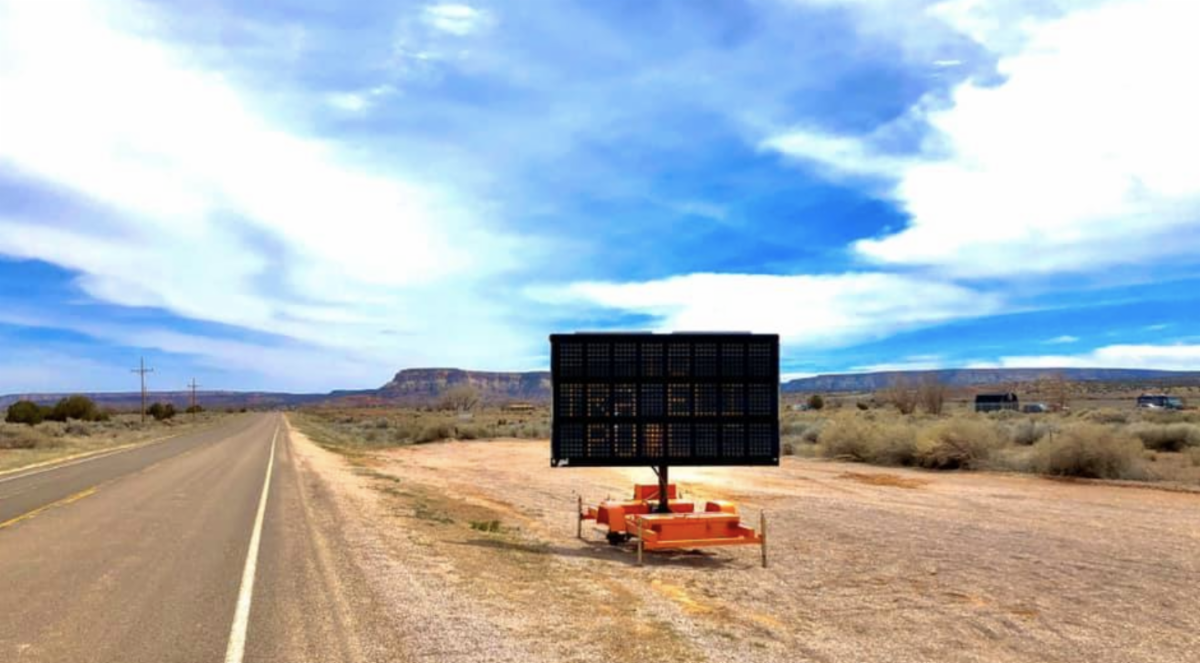
A travel advisory near Zuni Pueblo in New Mexico. The tribe has confirmed a COVID-19 case and is asking community members to limit travel outside the reservation. (Photo-Pueblo of Zuni, Facebook)
 
Some Pueblos communities confirm first cases of COVID-19

Volunteers deliver traditional herbs to elders in Rapid City

Doctor discusses anxiety and stress during the pandemic
**
Coming up...
The federal government's response to the COVID-19 crisis includes a $2.2 trillion stimulus package. Of that, $10 billion is aimed specifically toward helping tribal health, housing, education, and business recovery, among other things. The crisis is already severely affecting tribes, businesses and individuals. Health and business experts are still not able to predict the full extent of the financial damage. We'll talk with tribal policy and economic experts about what the stimulus package makes available for tribes and how you might see those funds working in your community.
                                                                            
Native child adoptions, court hearings and in-person family visitations are some of the things grinding to a halt because of efforts to slow the spread of coronavirus. Many child welfare advocates are also worried that states may use the current confusion to withhold information important to adequately assessing cases where the Indian Child Welfare Act may apply. We'll check in with the National Indian Child Welfare Association on suggestions they are providing for tribal child welfare agencies, attorneys and individuals about how to navigate the new normal of COVID-19 restrictions.
The Trump Administration took the unprecedented step of disestablishing the Mashpee Wampanoag's more than 300 acre reservation in Massachusetts. Tribal Chairman Cedric Cromwell described the action as "cruel" and "unnecessary." It sent shock waves through Indian Country and unnerved some tribal leaders who fear such a precedent could lead to more trust land reversals in the future. We'll get updates about the issue and get reaction from tribal leaders.
                                                                                
As the country grapples with an unprecedented pandemic threat, there is another health concern on the rise. The Centers for Disease Control and Prevention's most recent report shows rates of sexual transmitted disease (STDs) are at an all-time high. The revelation comes in the Sexually Transmitted Disease Surveillance 2018 report. Native Americans have some of the highest rates for diseases like chlamydia, gonorrhea and syphilis. We'll talk about what can be done to prevent further infections and how that is affected by COVID-19 pandemic.
Many people turn to prayer, traditional practices or messages of encouragement during times of personal or communal crisis. The COVID-19 pandemic limits people's ability to connect in groups to heal. But there are still ways to find fellowship and access spiritual solace. We'll get perspective from three people about what they are leaning on during this crisis. How are you managing? Send us an email to comments@nativeamericacalling.com with how you are getting through this challenging time.


-----------------------------------------------------------------------------------------------------------------


Native America Calling is a national call-in program that invites guests and listeners to join a dialogue about current events, music, arts, entertainment and culture.

The program is hosted by Tara Gatewood (Isleta Pueblo) and airs live each weekday from 1-2 pm Eastern.

Join the conversation by calling 1-800-996-2848.
LISTEN


CLICK OLDER POSTS (above) to see more news

CLICK OLDER POSTS  (above) to see more news

MEGWETCH THANK YOU

HUGE Thank you for visiting this blog and sharing this with your kin. It's appreciated. Contact Trace anytime! Use the form below.

BOOKSHOP

Please use BOOKSHOP to buy our titles. We will not be posting links to Amazon.

Popular Posts

To Veronica Brown

Veronica, we adult adoptees are thinking of you today and every day. We will be here when you need us. Your journey in the adopted life has begun, nothing can revoke that now, the damage cannot be undone. Be courageous, you have what no adoptee before you has had; a strong group of adult adoptees who know your story, who are behind you and will always be so.

OUR HISTORY

OUR HISTORY
BOOK 5: Lost Children of the Indian Adoption Projects