BACK UP BLOG (no longer updating)

This blog was a backup for American Indian Adoptees blog
USE THE SEARCH BAR or SEARCH TOPICS at bottom of this blog

If you need support

Support Info: If you are a Survivor and need emotional support, a national crisis line is available 24 hours a day, seven days a week: Residential School Survivor Support Line: 1-866-925-4419. Additional Health Support Information: Emotional, cultural, and professional support services are also available to Survivors and their families through the Indian Residential Schools Resolution Health Support Program. Services can be accessed on an individual, family, or group basis.” These & regional support phone numbers are found at https://nctr.ca/contact/survivors/ . MY EMAIL: tracelara@pm.me

Search This Blog

Showing posts with label adoptee support. Show all posts

Sunday, August 7, 2022

Australia: Second birth certificate created a legal fiction

Across the globe, adoptees are speaking up... and that is good... TL Hentz (blog editor)

My birth mother was not allowed to name her baby. But the name she gave me in her heart is real

Legislation once erased the original names and connections of forcibly adopted children. But even with this now addressed, family remains complicated
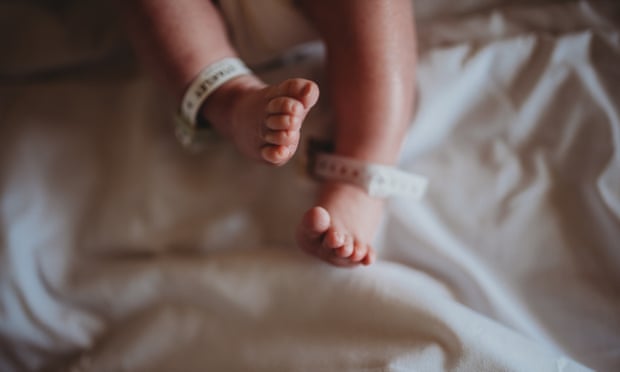
baby toes
The records of somewhere between 140,000 and 250,000 forcibly adopted babies were sealed by law, with all connection to their original family labelled top secret. Photograph: Cavan Images/Getty Images/Cavan Images RF
Anonymous
Sat 6 Aug 2022
It wasn’t until 2020, at the age of 52, that I was given the right to use my name. But as with all things adoption, nothing is quite as simple as it seems. Like other babies given to infertile couples under Australia’s “forced adoption” policies, my birth certificate was cancelled soon after I was born; a second birth certificate created a legal fiction to make it look like I was born to the infertile couple.

With a stroke of a pen I was denied connection with all of my family – my cousins, aunts, uncles, grandmothers – and my first given name. After a few months I was handed over to the couple who took me home. I had no social history, no medical, racial or genetic history. It was all top secret.

The records of somewhere between 140,00 and 250,000 Australian babies were sealed by law, with a promise that the truth would never be revealed.

Things on that front have gradually changed, and adopted people are now allowed to use the names on either of our birth certificates. When I first read about these changes I cried – it was the first time I had seen the dual identity and divided loyalty that shadows adopted people fully acknowledged.

But on my first birth certificate, the name my mother chose for me is missing, and I am identified by the word “Unnamed” with my mother’s surname. According to that certificate, my name is Unnamed Champion. My second birth certificate states the name given to me by my adopted family.

The Integrated Birth Certificate allows me to choose either of these two names, but it seems unhelpful for adopted people to be known as “Unnamed” when the intention of Integrated Birth Certificates is to help adopted people connect with their full identities.

It has taken me many months to realise that this profound breakthrough does not achieve what it set out to do: it does not allow me to see the name my mother wanted for me.

The only place my mother was ever allowed to use my name was inside her mind. While she was being told to stop crying by the “real” mothers breastfeeding their babies in the beds beside her, while she was given milk-suppression drugs without her knowledge, while she signed all the papers because she did everything she was told, the name was in her head and heart: Jona.

Like the perpetual state of longing, the name haunted her for years, though even now Jona still doesn’t exist. The state of New South Wales sent me to live with people who called me something else.  They called me Eudora*, the name I’ve been called for over 50 years.

The simple facts are this: I was born and hidden where my mother couldn’t find me. She had no advocate, and she was a minor, with no legal capacity to sign me away. A girl like her was not allowed to name her baby.

That was part of the punishment of being shamed and blamed in the birthing ward as a girl gone bad. Above the bed was a three letter sign, “BFA”, to identify that here was a Baby For Adoption.

“Unnamed Champion”. Born in a small regional town on the outskirts of Sydney, on a midwinter morning in the late 1960s, and no mention anywhere of “Jona”. For me, the confusion and cognitive dissonance seems impossible to resolve.

I recently explained to a psychologist that I have two families with two divergent histories. I look like these people. I sound like these people, I think and behave like these people, the people I was born to.
My brother, on the other hand, he is one of those people, from the other side of my life, the people I was sent to. My mum is one of those people. And my dad, well, he is one of those people too.

For an adopted person, the idea of dad is complicated. The idea of mum is complicated. The idea of brother and sister, home and belonging – it’s all complicated. Even your name, and the names we use to identify family – none of it is easy to understand.

Think of the words – mum, dad – how can anyone experience them without a visceral response in the belly, in the heart, in the throat? When I hear those words, there is a glitch, a realigning moment, while I track who holds those roles in my life. None of it gets easier over time.

In 2021 I applied to the Department of Community and Justice for my birth records. It is now July, 2022. A few months ago, I was asked to place an extra signature on the form, and told to wait another nine months for my Integrated Birth Certificate to arrive. This document gives me the choice of using either the name from my first birth certificate, or the second one – whichever I prefer.

After a whole lifetime, I finally get to choose. But first I must wait a whole new gestation period for the documents to arrive. And then, I will not be given the choice between identifying as Jona or Eudora. I will be offered the choice between Eudora or Unnamed.

The legislation governing my separation from my birth mother erased the history written into my body as though my DNA never existed. But it does exist, it’s real. And the name she calls me in her heart is real too.

* Name has been changed

Wednesday, January 1, 2014

What my adoption cost me

 a card sent from my adoptive mom Edie who i loved

(posted on lost daughters blog on january 17, 2012) (i want to share again, edited a little)


By Trace A. DeMeyer

Someone asked me what had adoption cost me personally. What a loaded question, I shot back in my email. I said I needed to think about it.

Obviously, first, I didn't ask to be adopted!

This situation was thrust on me by a damaged 22-year-old small-town Wisconsin girl who loved Chicago-clubbing and partying too much. She didn't want me after my 28-year-old father (also a big drinker) kicked her out. He moved back to his Illinois farm-town and found a new wife. She went to an unwed mothers home in Minnesota and signed me away to Catholic Charities. (Both had new kids right away.)

If my soul wanted a big test this lifetime, this was clearly the route to take. I am not miserable knowing the truth, not at all. I am better knowing the truth.

Finding out neither parent would ever look for me? That discovery cost me.

Who would tell a woman she cannot keep her own baby? Who made them think this way? Belief systems, religions, social workers, neighbors, parents, judges, priests? 

Even your own family can be so damaged, it's risky to find them. There were times I wished I had never looked but I had to know why I was abandoned, handed off. Taking those risks to find out the truth cost me years but I am not sorry.

Being told by my natural mother to never contact her again? That rejection cost me about two years and added grief since I'd have to contact her again for my fathers name. (No one told me this was somewhat common to be rejected again.)

I made all the moves, made all the calls, did all the travel and took all the risks to find both my birthparents. I put myself out there to join a family who didn't even know I existed or cared that I did. That cost me. The fact is they do not understand what I went through and didn't bother to ask, this cost me and confused me. But I do know people focus on their own pain. No one really cared about mine.

The adoption trade in babies was booming in the 1950s. In my opinion my adoptive parents were not carefully screened. Despite his raging alcoholism and their marital discord after two miscarriages, Catholic social workers still qualified them to be my parents. Very young I was sexually molested by my adoptive dad. That betrayal cost me.

I had to pretend for years I was alright when really I wasn't. I tried to live up to their expectations and be the baby they lost. That impossible situation cost me.

My adoptive parents didn't know adopting kids won't fix a marriage and could even make it worse! I had to suppress my shock and disappointment in them for too long. It took me years to find and get therapy and counseling that worked.  This delay cost me.

My lack of trust and being able to love someone cost me a marriage.

Many years later I learn my ancestry. My father, who had the Native blood, didn't intervene to keep me. How did that make me feel? Betrayed. I had no idea what to think about being "part-Indian" since there was no one in my dad's family to reconnect me to my tribal culture. That cost me.

How can you measure cultural loss when there is no dollar amount or apology that can undo what happened? There is no easy way to get that back.

What did adoption cost me? Everything.

What did adoption give me? Strength! And the determination to urge others to seek adoption reform and end all closed adoptions permanently.

Monday, July 29, 2013

CT Adult Adoptees want access to OBC

By MICHELLE GOLLADAY , The Connecticut Law Tribune , July 26, 2013
"Who am I?" "Why am I?" These are two basic questions human beings ask themselves upon growing older—especially when one's birth parents are not the same as the parents he or she grew up with.
For now, in Connecticut, it's nearly impossible for some people to find answers. Adults who were adopted when they were children don't have access to their true birth certificates. Now, an organization that includes a handful of lawyers, and a legislator with a J.D. degree, are advocating for a law change that would lift that restriction.
Access to birth certificates would not only identify a person's birth parents and connect them to other blood relatives, but it would also allow them to find out about possible genetic probems and address and anticipate possible health issues.
"To cut a human being off from their genetic heritage is insane," said lawyer and psychotherapist Karen Caffrey, who has a counseling practice in West Hartford. "We have to correct this inequality and injustice to Connecticut citizens, just like we did for women voters years ago."
Caffrey and other advocates are members of a group called Access Connecticut, which is lobbying for a change in the law.
Working alongside Connecticut's movement is state Representative David Alexander, an Enfield Democrat, an adoptee and a member of the legislature's Public Health Committee. He plans to try to push a bill through the committee in the 2014 legislative session that would allow adult adoptees to receive both of their birth certificates.
"I am a captain of the Marine Corps, and initially when I joined, I had to obtain and produce my birth certificate," said Alexander, who graduated from the University of Connecticut School of Law in 2006. "My original [birth certificate] existed, it was there in the government office, and the town clerk was like, 'I'm sorry, I can see it, but you can't.'"
Alexander said he has lined up several co-sponsors, and if the measure passes the Public Health Committee, it will be forwarded to the Judiciary Committee. The bill would allow adoptees over the age of 18, and who were adopted after 1983, to get their birth certificates. "It's weird that the government and the state have complete acccess to this document, said Alexander, and the adult adoptee does not.
Two Certificates
For most people, obtaining a birth certificate is as easy as visiting a government office in the state of birth upon turning 18 years old. For those same people, there is only one birth certificate to obtain—the original documentation of birth.

Saturday, December 29, 2012

Coleen Rajotte: Accounting for the 60s Scoop

By Coleen Rajotte, Winnipeg Free Press

Rajotte as a toddler: 'I still struggle with the reality of trying to re-connect with my birth family and culture.'
Rajotte as a toddler: 'I still struggle with the reality of trying to re-connect with my birth family and culture.' (FAMILY PHOTO)
 
My adoption story as an Indian child starts at the old Grace Hospital in Winnipeg in 1968. That's the year I was legally adopted by a white, middle-class family. Like 20,000 other aboriginal children taken from their families in the 1960s, '70s and early '80s, I have been on a life-long journey to reconnect with my family and culture and to figure out how to fit into both of these worlds.
For many adoptees, this was a traumatic experience. Many were sent across Canada, into the United States and some ended up in Europe. This all happened under the unfettered authority of provincial and territorial child welfare agencies.
This dark time in Canada's history became known as "the Sixties Scoop."
I consider myself lucky. I was placed with caring, adoptive parents who loved me, and an adoptive grandmother whom I cherished and adored. However, like all adoptees I still struggle with the reality of trying to reconnect with my birth family and culture.
Others weren't so fortunate. Many were deprived of love. We were all cut off from any sense of what it was like to belong to a community of our own people. We were not provided with any information about how to reconnect or find our birth families.
In a first for North America, the state of Maine, in an agreement with tribal leaders, is launching a reconciliation process next year to examine the history and legacy of the child welfare system's treatment of aboriginal people.
There is a growing sentiment that Canada, too, needs its own inquiry.
Justice Murray Sinclair, chairman of the country's Truth and Reconciliation Commission for the Indian Residential Schools, says a similar reconciliation process is needed to understand the impact of the Sixties Scoop.
"I would personally support there being a TRC process for Sixties Scoop kids because I think that their stories have never been given an opportunity to be brought to light," he says.
The Sixties Scoop followed the Indian Residential School era. The unstated intention of the scoop, many believe, was the same -- assimilate aboriginal children into non-aboriginal society.
A Manitoba review of native adoptions released a scathing report in 1985. It referred to the cultural misconceptions held by child-care workers about aboriginal peoples and about the way they raised their children.
"Cultural bias in the child-welfare system," the late Judge Edwin Kimelman concluded, "is practiced at every level from the social worker who works directly with the family, through the lawyers who represent the various parties in a custody case, to the judges who make the final disposition in the case.
"However, they were not the only ones to blame. All parties have been at fault -- federal and provincial governments who failed to resolve their jurisdictional dispute for the care of Treaty Indian children; former directors of child welfare who neglected to build accountability into the system; the child-care agencies, both public and private, who failed to examine the results of their policies and practices and who failed to keep accurate statistical data; the native organizations who remained too silent, too long before demanding control of their children."
My journey to find my own biological family is the topic of a film I have been working on for the last decade.
My birth mother was young and she had travelled from Saskatchewan to Winnipeg to live at what was called Bethany Home, a residence for unwed mothers run by the Salvation Army. The files show she was reluctant to give me up but she did sign the adoption papers.
There are also letters in my adoption file that she wrote to the agency begging for information about what happened to me. My mother was a residential school survivor and I believe that her lack of family connection contributed to her decision.
I am part of the generation that believed we were better off with white families. And this in my view was an act of assimilation and an act of colonization.
I remember like it was yesterday meeting my family 10 years ago. I remember flying to Saskatoon and then driving two hours to the Little Pine First Nation, a Plains Cree community with 700 people living on the reserve.
I was trying to pretend everything was OK. I was doing a bad job -- when I look at the video today, I was a stress mess.
As a journalist I had covered other "reunions" between adoptees and their families and I knew the heavy emotional toll they took on everyone. I remember thinking during that drive how can this be a reunion when I don't know these people?
In my own experiences and working with many other adoptees, I found that we shared a common hope that one day there would be official recognition of what happened to us.
Opinions vary on what should be done but many talk about a formal process to provide answers, compensation, an official apology or support for continued healing and reclamation of our culture and languages. We all agree that it's long overdue.
A process such as the one unfolding in Maine can and should happen in Canada, it only needs political will and public support.
Marlene Orgeron, an adoptee from Manitoba, was sent to New Orleans in 1974. Orgeron and her brothers, Christopher and Eric, were placed with a family in New Orleans after their parents were killed in a car crash.
At the time, extended family who were caring for them were given no explanation as to why they were being taken away.
"I still feel today that this was just another attempt at genocide for aboriginal people," Orgeron says, her voice cracking.
There are no reliable statistics on how many adoptees have returned home. Many have not, either because they are dead, in jail, homeless, have given up or have no idea how to find their homeland and families.
I have seen the deep pain, displacement and anger experienced by adoptees, their families and the adoptee's own children who have inherited the pain and loss of family and community connection.
I was lucky. I have a good relationship with my adoptive family. I continue to try to build relationships with my birth family, many of whom I haven't yet met.
I hope one day my adoptive family and my birth family could meet with the goal of healing, sharing and putting the painful parts of my adoption behind all of us.
More important, I want a formal process to start the healing process.
Source: http://www.winnipegfreepress.com/opinion/westview/accounting-for-the-sixties-scoop-185134321.html

Coleen Rajotte is a journalist, TV host and filmmaker based in Winnipeg. www.watchvitality.com or join her on Facebook under the name Coleen Rajotte

Thursday, August 23, 2012

The New Abolition: Ending Adoption in Our Time


Here is more from my brilliant articulate adoptee friend Daniel Ibn Zayd, a follow-up to my interview (on August 13).  He posted The New Abolition: Ending Adoption in Our Time on the website DISSIDENT VOICE... Here are a few quotes that resonated with me... He is working on a book!


"The implication here is that the adoptee also traverses the phases of being “colonized”: coddled by the seeming safety of his new-found place, seduced by the imposed mythology of a dominant culture, and abetted by the willfully distanced memory of his generational past. ...a clear definition for what is often referred to within adoptee circles as “the fog”, or “drinking the Kool-Aid”: the acceptance of a fragile notion of security sustained by a false sense of self within an alien and alienating environment....


"As our activism has grown over this near decade, I have been greatly inspired by adoptees in South Korea, for just one example, who have helped shut down adoption in that country as of this year. Other source countries are following suit, and I am further heartened to see an expansion of this activism, here citing just a few examples: mothers in Guatemala, demanding the repatriation of their kidnapped children; in Argentina, demonstrating for an accounting of the infants born to the imprisoned and then disappeared; in Spain, investigating the stolen children of the Franco era and beyond; in Russia, criticizing the despicable treatment of their children exported abroad; in indigenous American Nations, parents reclaiming their stolen progeny. This list grows longer every day.


"I invoke this term (abolition) fully aware of its weight as concerns the movement to abolish slavery, and to clarify this usage, I define adoption as follows:


Adoption is, in and of itself, a violence based in inequality. It is candy-coated, marketed, and packaged to seemingly concern families and children, but it is an economically and politically incentivized crime. It stems culturally and historically from the “peculiar institution” of Anglo-Saxon indentured servitude and not family creation. It is not universal and is not considered valid by most communal cultures. It is a treating of symptoms and not of disease. It is a negation of families and an annihilation of communities not imbued with any notion of humanity due to the adoptive culture’s inscribed bias concerning race, class, and human relevancy...

 "...And thus American Indian reservations, secret bases of extradition, Japanese internment camps, urban and rural ghettoes, the corporate-industrial prison complex, vigilante terrorism directed against immigrants, the aftermath of Katrina in New Orleans. Shamefully added to this list are the children sent to adoption rehabilitation camps in Montana, Russian boys returned alone on airplanes, disrupted adoptions, deported adoptees, the stockpiling of children by adoptive collectors and hoarders, RAD therapies, rebirthings and other pseudo-treatments bordering on outright torture, over-medication of our “mental illnesses”, as well as our “treatment” and study by an army of therapists, social workers, academics, assorted quacks and other misery-industry profiteers. The very existence of this cavalcade of systemic jerry-builders is a greater condemnation of the dysfunctional societal structures undergirding the industry of adoption than anything possibly expressed by the critics thereof. This, in and of itself, should give us great pause...."


http://dissidentvoice.org/2012/08/the-new-abolition-ending-adoption-in-our-time/


Daniel Ibn Zayd currently lives in Beirut.  This article is distilled from a book in progress comparing the political and economic aspects of adoption. He can be reached by email at:daniel.ibnzayd@inquisitor.com. Read other articles by Daniel, or visit Daniel's website.

The New Abolition: Ending Adoption in Our Time

Here is more from my brilliant articulate adoptee friend Daniel Ibn Zayd, a follow-up to my interview (on August 13).  He posted The New Abolition: Ending Adoption in Our Time on the website DISSIDENT VOICE... Here are a few quotes that resonated with me... He is working on a book!

"The implication here is that the adoptee also traverses the phases of being “colonized”: coddled by the seeming safety of his new-found place, seduced by the imposed mythology of a dominant culture, and abetted by the willfully distanced memory of his generational past. ...a clear definition for what is often referred to within adoptee circles as “the fog”, or “drinking the Kool-Aid”: the acceptance of a fragile notion of security sustained by a false sense of self within an alien and alienating environment....

"As our activism has grown over this near decade, I have been greatly inspired by adoptees in South Korea, for just one example, who have helped shut down adoption in that country as of this year. Other source countries are following suit, and I am further heartened to see an expansion of this activism, here citing just a few examples: mothers in Guatemala, demanding the repatriation of their kidnapped children; in Argentina, demonstrating for an accounting of the infants born to the imprisoned and then disappeared; in Spain, investigating the stolen children of the Franco era and beyond; in Russia, criticizing the despicable treatment of their children exported abroad; in indigenous American Nations, parents reclaiming their stolen progeny. This list grows longer every day.
"I invoke this term (abolition) fully aware of its weight as concerns the movement to abolish slavery, and to clarify this usage, I define adoption as follows:
Adoption is, in and of itself, a violence based in inequality. It is candy-coated, marketed, and packaged to seemingly concern families and children, but it is an economically and politically incentivized crime. It stems culturally and historically from the “peculiar institution” of Anglo-Saxon indentured servitude and not family creation. It is not universal and is not considered valid by most communal cultures. It is a treating of symptoms and not of disease. It is a negation of families and an annihilation of communities not imbued with any notion of humanity due to the adoptive culture’s inscribed bias concerning race, class, and human relevancy...
 "...And thus American Indian reservations, secret bases of extradition, Japanese internment camps, urban and rural ghettoes, the corporate-industrial prison complex, vigilante terrorism directed against immigrants, the aftermath of Katrina in New Orleans. Shamefully added to this list are the children sent to adoption rehabilitation camps in Montana, Russian boys returned alone on airplanes, disrupted adoptions, deported adoptees, the stockpiling of children by adoptive collectors and hoarders, RAD therapies, rebirthings and other pseudo-treatments bordering on outright torture, over-medication of our “mental illnesses”, as well as our “treatment” and study by an army of therapists, social workers, academics, assorted quacks and other misery-industry profiteers. The very existence of this cavalcade of systemic jerry-builders is a greater condemnation of the dysfunctional societal structures undergirding the industry of adoption than anything possibly expressed by the critics thereof. This, in and of itself, should give us great pause...."

http://dissidentvoice.org/2012/08/the-new-abolition-ending-adoption-in-our-time/

Daniel Ibn Zayd currently lives in Beirut.  This article is distilled from a book in progress comparing the political and economic aspects of adoption. He can be reached by email at:daniel.ibnzayd@inquisitor.com. Read other articles by Daniel, or visit Daniel's website.

Tuesday, April 24, 2012

Google Images and search tips for adoptees

parents1.JPG
Photo: Andrew Miller/For The Times of Trenton

Carla Hill, 44, poses for a portrait at her desk at Foundation Academy Charter School in Trenton on April 20, 2012 with a scrapbook her birth mother Linda Person gave to her last year. Hill found out at 23 she was adopted and has been looking for birth family for years when a Google images search last year helped her finally find her family.
This is one of the great tips I found recently. Here is the link to her story: http://www.nj.com/mercer/index.ssf/2012/04/search_and_social_media_bring.html

And as I posted prior, use Google Alerts with your birth info http://splitfeathers.blogspot.com/2012/03/adoptee-use-this-search-method.html

People decide to trace their genealogies for many reasons, adoptees searching for biological relatives and ancestors... A group called the Missing Connection is something I recommend you do with other adoptees you've met in your state. Here is one based in New York State and another in Virginia.
Genealogy group forming in Lowville
By STEVE VIRKLER , TIMES STAFF WRITER, TUESDAY, APRIL 10, 2012CLE OPTIONS

LOWVILLE, NY — A group for genealogy buffs is forming in connection with an organization created two decades ago in Watertown, New York. The Missing Connection will hold meetings from 6 to 7:30 p.m. on the second Tuesday of the month at the Lowville Free Library, 5387 Dayan St.
"There is just so much information out there,” said Katharine B. Manning, who is heading the local group. Forms and reference information will be available, and guest speakers and field trips to a cemetery may be planned. There is no charge for joining the group. Manning said she got involved with genealogical searches while seeking information on the biological parents of her father, who was adopted. “I had all this information, and it just blossomed from there,” she said.
Now, with the help of Internet site www.ancestry.com and other services, she has traced her lineage back 23 generations to the 1200s. People decide to trace their genealogies for many reasons, from searching for biological relatives among adoptees to simply looking for any prominent ancestors, Ms. Manning said.
Networking among genealogists is helpful, as different people may be able to suggest alternative search methods, she said.
Ms. Manning said she has reserved dates for April, May and June and plans to assess the interest in continuing the group after that three-month trial period.  For more information, contact Ms. Manning at 376-1630 or look for “The Missing Connection — Lowville Group” Facebook page.

“We just want to give people resources where they can search their family trees,” said Susan J. Palma, who formed The Mission Connection in 1992 in Watertown. Palma, then Susan Boyce, started the group to help reunite adoptees with their biological parents and siblings, assisting with roughly 100 reunions during its eight years in the north country, she said.
Now living in northern Virginia, Mrs. Palma recently restarted the group there. While still available to assist with adoptive-specific searches, she decided to broaden the revamped group’s focus on genealogy in general.
“We just hit it off instantly,” Mrs. Palma said.
According to its website, The Missing Connection’s mission is to promote genealogy, provide help and educational aid to researchers and preserve the heritage, history and genealogy of families who settled in the area.
For more information, visit http://www.themissingconnection.org.

Adoptees have to be creative when they search! These tips are great useful ideas!... Trace

Saturday, April 21, 2012

Abusive Adoption Practices (abstract and links)


The Aftermath of Abusive Adoption Practices in the Lives of Adoption Triad
Members: Responding to Adoption Triad Members Victimized by Abusive Adoption
Practices


by David Smolin and Desiree Smolin (via email)


Abstract:

The
above-titled presentation was given as a plenary presentation at the Annual
Symposium of the Joint Council on International Children’s Services (JCICS) on
April 18, 2012. 

It is important to note
that the original context for this presentation is Intercountry Adoption to the
United States. However, some of you may find some of these points relevant to
domestic adoption issues as well as Intercountry Adoption to other nations
(Canada, Italy, Spain, etc.)


Especially at the event itself, with our own
commentary added, this was a presentation not just on abusive adoption
practices, but especially on how the intercountry adoption system, as shaped by
the United States government and United States adoption agencies, is “designed
for failure.” Abusive adoption practices thus are not merely problems in
themselves, but are symptoms of a system that chronically produces abuses and
breakdowns in the system: a system that fails to self-correct and thus is
self-defeating.


Further, these features of the current dysfunctional
system were not necessarily inevitable, but have arisen from specific choices
made during the construction of the system by the U.S. government and U.S.
agencies. The governing rules they advocated for, and chose, created the
dysfunctions that have doomed the system to continuing cycles of
abuse.


This is very much a presentation about the inestimable human costs
of those failures for all those impacted by adoption: not only adoption triad
members, but also siblings, extended families, communities, and even nations.
It is also a presentation about a system that fails to assist or recognize its
own victims.


The presentation is very much of a joint project: each of
us wrote about half of the material, and each critiqued the other’s materials.
The process of converting material into PowerPoint format was done initially by
Desiree, although again the final product was reviewed, modified, and critiqued
by both of us. Overall, the concepts and information presented represent years
of working together to analyze adoption systems.

We certainly do not expect
everyone to be happy with these materials and critiques may come from all
sides. Please keep in mind that the PowerPoint cannot embody all that we said;
also please keep in mind the original audience and occasion for the
presentation. We welcome vigorous and respectful dialogue, from which we hope
to learn, as so much of what we do know to this point in time is due to the many
people who have shared their experiences and thoughts with us.


For
discussion and further commentary, please go to the blog: http://fleasbiting.blogspot.com/


Thanks,


David
and Desiree Smolin


Link: http://works.bepress.com/david_smolin/12


I do hope everyone will watch this presentation - we need to be informed about the billion dollar adoption industry and its practices... Trace

CLICK OLDER POSTS (above) to see more news

CLICK OLDER POSTS  (above) to see more news

MEGWETCH THANK YOU

HUGE Thank you for visiting this blog and sharing this with your kin. It's appreciated. Contact Trace anytime! Use the form below.

BOOKSHOP

Please use BOOKSHOP to buy our titles. We will not be posting links to Amazon.

Popular Posts

To Veronica Brown

Veronica, we adult adoptees are thinking of you today and every day. We will be here when you need us. Your journey in the adopted life has begun, nothing can revoke that now, the damage cannot be undone. Be courageous, you have what no adoptee before you has had; a strong group of adult adoptees who know your story, who are behind you and will always be so.

OUR HISTORY

OUR HISTORY
BOOK 5: Lost Children of the Indian Adoption Projects