BACK UP BLOG (no longer updating)

This blog was a backup for American Indian Adoptees blog
USE THE SEARCH BAR or SEARCH TOPICS at bottom of this blog

If you need support

Support Info: If you are a Survivor and need emotional support, a national crisis line is available 24 hours a day, seven days a week: Residential School Survivor Support Line: 1-866-925-4419. Additional Health Support Information: Emotional, cultural, and professional support services are also available to Survivors and their families through the Indian Residential Schools Resolution Health Support Program. Services can be accessed on an individual, family, or group basis.” These & regional support phone numbers are found at https://nctr.ca/contact/survivors/ . MY EMAIL: tracelara@pm.me

Search This Blog

Showing posts with label Dawnland. Show all posts

Monday, November 16, 2020

In New Mexico, ICWA bill coming in 2021 | Watch Dawnland Now (free)


Bill to codify the federal Indian Child Welfare Act into state law an important step, say advocates

A bill to protect Native American children so they can remain within their tribal communities and extended families will be pre-filed in the state Legislature in January, supporters say.

The bill, still in draft form, will codify the federal Indian Child Welfare Act (ICWA) into state law if it’s passed by the state Legislature next year. The U.S. Congress passed the Indian Child Welfare Act into law in 1978 but it is too often not enforced, according to experts working on the state law.

Because of implicit bias against Native Americans, Native children are often removed from the home when a white child in an identical situation is not, said Donalyn Sarracino, director of Tribal Affairs for the Office of the Secretary for Child, Youth and Families Department and of the Pueblo of Acoma.

She said this is a national problem and that, in some cases, the rate of removals of Native children from their families is sometimes four times higher than white children removals.

“(Native) children are removed for reasons white children might not be removed,” Sarracino said.

Jacqueline Yalch, President of New Mexico Tribal Indian Child Welfare Consortium and of the Isleta Pueblo, said that often, tribal communities are seen “as unfit to raise our children.”

The consortium formed in 2015 to address this issue.

Keep Reading 


FREE AGAIN:: 

DAWNLAND (86 min)

For decades, child welfare authorities have been removing Native American children from their homes. DAWNLAND goes behind-the-scenes as this historic body grapples with difficult truths, redefines reconciliation, and charts a new course for state and tribal relations.

Tuesday, December 10, 2019

Dear Georgina, the film

 
THE FILM Dear Georgina...
A Passamaquoddy elder journeys into an unclear past to better understand herself and her cultural heritage.

About the film
At age two Georgina Sappier-Richardson was removed from her home and Passamaquoddy community in downeast Maine by child protection services. She would never see her parents again. Terror and abuse followed over 16 years in four different foster homes.
Dear Georgina follows this Passamaquoddy elder from Motahkomikuk as she tries to fill in the blurry outlines of her identity. Now a grandmother Georgina is still attempting to re-integrate herself into the community she barely knew.

She remembers, “When I was 30 years old and I went back to the reservation this Indian lady told me, ‘You look exactly like your mother as a young person.’ So that made me feel special, made me feel real.” This propels Georgina’s lifelong mission to find herself. 
But despite her gregarious personality and infectious laugh, she is stuck straddling two different worlds.  At the end, Georgina travels to her foster community in northern Maine. Determined to reclaim some fragment of her lost childhood she makes an incredible discovery, but will it help heal decades old wounds?

Dear Georgina is a follow-up to the Emmy® award-winning Dawnland(2018), in which Georgina told a portion of her harrowing story of surviving foster care. Georgina is just one of many thousands of Indigenous children with similar stories. 

[Sundance supports indigenous film cycles, allowing indigenous people to be captured in their creative state and bring art back into their native land. This supports indigenous people and allows for others to see things from a different perspective and gain education on indigenous people’s lives.]
As said by Maine-Wabanaki, Gkisedtanamoogk, a prior professor at USM and Ted Talk speaker bringing light to indigenous people’s stories, “One common thread that bound us together was a deep abyss of love and gratitude.” More importantly, though, he does not just mean connecting indigenous people, but he means the connection that all human beings have to one another. “The life between sky and earth, everything is connected, everything, even people.”

Tuesday, October 8, 2019

Dawnland wins EMMY

Documentary co-produced by NAS professor wins Emmy

by Emily Zhang | 10/8/19

10-8-19-duthu-courtesy-eli-burakian
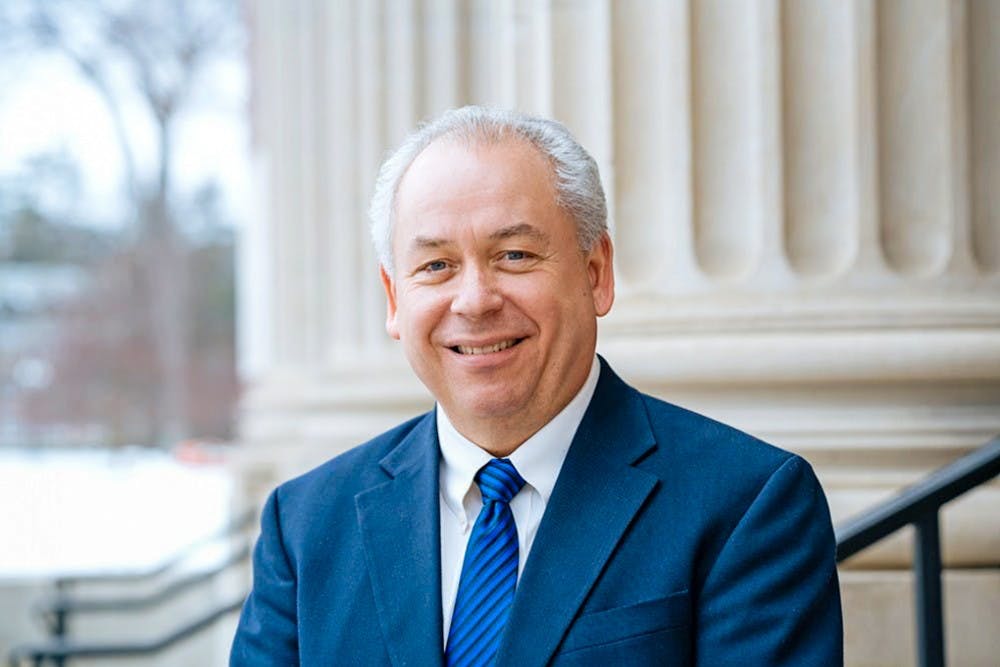
Duthu began his involvement in the project as a consultant.
Source: Eli Burakian/Courtesy of Dartmouth College
“Dawnland,” a documentary co-produced by Native American studies professor N. Bruce Duthu, recently won the News & Documentary Emmy Award for Outstanding Research.
“Dawnland” tells the story of indigenous child removal in the United States during the 20th century — when child welfare authorities forced Native American children to live in non-Native foster care, adoptive homes or boarding schools. The documentary follows the first so-called Truth and Reconciliation Commission in the United States for the contemporary Wabanaki community in Maine.
Duthu said that he believes “Dawnland” serves as a cautionary tale about “state power being misdirected against vulnerable populations.”

Currently leading a the Native American Studies Domestic Studies Program in Santa Fe, NM, Duthu said he regretted that he was not able to join his team at the awards ceremony in New York City, but he described the ceremony as “wonderful,” adding that he was later told that many Wabanaki people featured in the documentary were present at the ceremony.
 Duthu said that his involvement with the project began when he was brought on as a consultant to help the production team with legal and policy aspects of the federal Indian Child Welfare Act. Later on, as Duthu continued to help the team with research, fundraising and resource connections, he was invited to become a co-producer.
“Dawnland” co-director Adam Mazo said he was introduced to Duthu by Native American studies professor Colin Calloway and expressed his gratitude for having Duthu on the team.
“His way of distilling complex ideas into more easily digestible pieces is super helpful for us, as we are not academics,” Mazo said.
According to Duthu and Mazo, one of the most important accomplishments during the production of “Dawnland” was finding the footage of a U.S. Senate hearing on the Indian Child Welfare Act that occurred in the 1970s. At the hearing, Native American witnesses testified that children were abused and forced into foster homes.
Duthu said that when the team was reading through the transcript of the hearing, they noticed that a senator asked a witness if the light was too bright. That was when the team realized the hearing had actually been videotaped. Following an extensive effort from many members inside and outside of the film team, they finally were able to discover the footage at a local television station in Boston.
“This took a lot of patience from the team, and a lot of hard work,” Duthu said.
Mazo said he was inspired to direct “Dawnland” after he first heard about the Truth and Reconciliation Commission in 2013. He added that this commission was “historic,” as it was the first of its kind in the United States sanctioned by the state and tribal governments. He also noted that “Dawnland” was related to a 2010 documentary he directed, “Coexist,” about forced reconciliation after the 1994 Rwandan genocide.
“We also want to acknowledge genocide in this country’s history,” Mazo said. “We hope [‘Dawnland’] is going to put a greater spotlight on the story of the Wabanaki people and the reality of indigenous child removal that continues in this country today.”
“Dawnland” senior advisor and co-founder of the Akomawt Educational Initiative Chris Newell described “Dawnland” winning an Emmy as a “surreal experience.” A member of the Wabanaki tribe that “Dawnland” documents, Newell said that he believed it was his responsibility to help the story of his community “to be told correctly.”
Newell, who is now involved in multiple educational projects focusing on the education of Native American history, said he valued the opportunity that “Dawnland” provided to tell the story of the Wabanaki people to a larger audience.
“I was just part of a team that helps tell the story, but the story belongs to the people that told their truth and they are the ones that this recognition should really reflect,” Newell said.
Native Americans at Dartmouth co-president Elsa Armstrong ’20 said she watched some “Dawnland” clips in Duthu’s class NAS 30.3, “Native American Literature and Law” last winter. She said she appreciated that the clips were able to show history from an indigenous perspective.
Evan Barton ’20 described Duthu’s teaching as “phenomenal,” saying that Duthu was able to “challenge [students] appropriately” to “inspire creative processes.” Though he has not watched “Dawnland,” Barton said he was really eager to see the film to learn about the impact of child foster care on indigenous communities.
Although Duthu said that he was not a filmmaker and does not currently plan to pursue more filmmaking, he added that he was open to new opportunities.
“I never expected to be involved with something as significant as ‘Dawnland,’ so I am always open to opportunities where I might be able to be helpful,” Duthu said.
“Dawnland” was screened on the Dartmouth campus last October in Loew Auditorium.

Sunday, September 29, 2019

“Dawnland” Wins Emmy Award for Outstanding Research


Published September 29, 2019

DAWNLAND will stream live globally in celebration of Indigenous Peoples’ Day on October 14

BOSTON — The Upstander Project film DAWNLAND won the Emmy® award for Outstanding Research at the 40th Annual News and Documentary Awards this week. DAWNLAND composer Jennifer Kreisberg was also nominated for Outstanding Music at the ceremony hosted by the National Academy of Television Arts and Sciences at Alice Tully Hall at Lincoln Center in New York City on Tuesday, September 24th . Accepting the Emmy® award, codirector and producer Adam Mazo said, “DAWNLAND is a story for the Wabanaki people – the people of the dawn land. Our film presents testimony from Wabanaki people who are being separated from their families, nations, tribes, and communities by Euro-American settlers like me. The greatest recognition belongs to the Wabanaki people who have lived that experience and showed immense courage in telling their stories or holding them in their hearts.”

In DAWNLAND (PBS Independent Lens 2018), viewers witness Wabanaki people revealing their stories to a historic truth commission. The commission’s headline finding is that cultural genocide persists in Maine because the child welfare system continues to remove Native children from their homes and tribes at an alarmingly high rate.

Maine-Wabanaki REACH created the truth commission, both they and the community are at the heart of DAWNLAND. Wabanaki film participants and leaders from REACH, Denise Altvater and Esther Anne, joined the filmmakers on stage in accepting the award. Maine-Wabanaki REACH board member Esther Anne (Passamaquoddy) said, “The recognition of Wabanaki people through DAWNLAND helps Maine-Wabanaki REACH in our work to engage Wabanaki and non-Native people in learning history, understanding intergenerational trauma, and creating paths to healing.”
DAWNLAND co-director Ben Pender-Cudlip said, “The award truly honors everybody who shared their stories with the truth and reconciliation commission. We want to uplift Maine-Wabanaki REACH, who carry the responsibility of seeing through the TRC recommendations, and working toward restoration to Wabanaki and non-Native communities.” Pender-Cudlip, Mazo, Upstander Project learning director Dr. Mishy Lesser, and editor Kristen Salerno share the Emmy® award for Outstanding Research. Lesser said, “This award applauds researchers everywhere, those who scour ignored documents and transcripts for clues that tell a fuller story. We kept digging until we found archival images and hidden information, and appreciate the Academy’s recognition of our effort.”

“In this moment where the notion of fake news seems to dominate it is especially heartening to be honored for the years of journalistic research and fact-checking that our team put into DAWNLAND. We are proud to be part of growing and strengthening field of independent filmmakers who are telling vital underreported stories through ethical cocreation and collaborative practices for and with the communities being documented,” impact producer Tracy Rector (Choctaw/Seminole) added.

A special free global livestream of DAWNLAND will celebrate Indigenous Peoples’ Day on Monday October 14th at 3pm EDT. The filmmakers will be present for a Q & A.
RSVP here
Details for all upcoming screenings here: https://dawnland.org/screenings DAWNLAND can be purchased here:

Friday, May 11, 2018

Coming Up: Native America Calling: Tracy Rector


Tracy Rector's (Choctaw/Seminole) films have been seen by audiences at the Cannes Film Festival, ImagineNative, the Toronto International Film Festival, and PBS. Her latest work, Dawnland, follows Maine's Truth and Reconciliation Commission to address the removal of Native children from their homes. The other films she's worked on include Teachings of the Tree People, March Point, and Ch'aak' S'aagi. Rector describes herself as a mixed race urban Indian, filmmaker and activist. We'll talk with her about her passion for filmmaking, social justice and what is next for her career.
 
-----------------------------------------------------------------------------------------------------------------

Native America Calling is joining ProPublica's Documenting Hate project, working to collect, analyze and report on crimes motivated by hate and bias. The project is building a database of tips for use by journalists, researchers and civil-rights organizations. If you're a victim or a witness to a hate crime, click here to fill out an online form. The information will be shared with partners in the Documenting Hate project, but no one else will see the information you share without your permission.

 
***
 
Native America Calling is a national call-in program that invites guests and listeners to join a dialogue about current events, music, arts, entertainment and culture.

The program is hosted by Tara Gatewood (Isleta Pueblo) and airs live each weekday from 1-2 pm Eastern.

Join the conversation by calling 1-800-996-2848. 
 
 
This blog will be on hiatus until June... email: laratrace@outlook.com

Friday, April 27, 2018

Dawnland documentary premier #TRC

We mention this important documentary in the anthology STOLEN GENERATIONS (book 3 in the Lost Children of the Indian Adoption Projects book series)...

“They tried to kill the Penobscot part of us,’’ Dawn Neptune said. It didn’t work.

BANGOR — She was a 4-year-old kid named Dawn Neptune, who lived not far from here in a place called Indian Island, a reservation of the Penobscot Nation, a cultural touchstone that shaped — still shapes — who she is.
Her mother, then still a teenager, drank too much in those early days. It was an open family secret, part of an intergenerational trauma that, like her Penobscot heritage, was a critical and governing rhythm to her young life.
And then Dawn Neptune was gone. A baby sitter took her and a younger brother to a grocery store a half-hour away from the reservation. And then abruptly drove away, a cruel abandonment that served as the little girl’s entry into life in foster care, where she promptly learned a hard lesson no kid should be forced to absorb: Forget about your mom. Forget about Indian Island. Forget about being Penobscot.
And then one day she spoke briefly in her native tongue and suffered swift and ugly punishment she has never — can never — forget.
It also echoes through a riveting new documentary film, “Dawnland,’’ which makes its East Coast premiere on April 28 at Independent Film Festival Boston at the Somerville Theatre.
It’s an 86-minute journey of raw and recent history told through the eyes of those who have lived through it. Who have survived it. Who are determined to bear unstinting witness to it.


READ: Reclaiming a culture, reclaiming a life - The Boston Globe

WEBSITE: http://dawnland.org/


Saturday, April 22, 2017

Dawnland: Maine's Stolen Generations

Dawnland Trailer from Upstander Project on Vimeo.

About the film

When most people hear about children ripped from their families, they think of faraway places or of centuries past. The reality is it's been happening in the U.S. for centuries—and is still happening today. Native American children are more than twice as likely as non-Native children to be taken from their families and put into foster care, according to a 2013 study.
Americans should know that these atrocities are not history. 

READ MORE

We mention this documentary in the anthology STOLEN GENERATIONS (see sidebar)

CLICK OLDER POSTS (above) to see more news

CLICK OLDER POSTS  (above) to see more news

MEGWETCH THANK YOU

HUGE Thank you for visiting this blog and sharing this with your kin. It's appreciated. Contact Trace anytime! Use the form below.

BOOKSHOP

Please use BOOKSHOP to buy our titles. We will not be posting links to Amazon.

Popular Posts

To Veronica Brown

Veronica, we adult adoptees are thinking of you today and every day. We will be here when you need us. Your journey in the adopted life has begun, nothing can revoke that now, the damage cannot be undone. Be courageous, you have what no adoptee before you has had; a strong group of adult adoptees who know your story, who are behind you and will always be so.

OUR HISTORY

OUR HISTORY
BOOK 5: Lost Children of the Indian Adoption Projects