BACK UP BLOG (no longer updating)

This blog was a backup for American Indian Adoptees blog
USE THE SEARCH BAR or SEARCH TOPICS at bottom of this blog

If you need support

Support Info: If you are a Survivor and need emotional support, a national crisis line is available 24 hours a day, seven days a week: Residential School Survivor Support Line: 1-866-925-4419. Additional Health Support Information: Emotional, cultural, and professional support services are also available to Survivors and their families through the Indian Residential Schools Resolution Health Support Program. Services can be accessed on an individual, family, or group basis.” These & regional support phone numbers are found at https://nctr.ca/contact/survivors/ . MY EMAIL: tracelara@pm.me

Search This Blog

Showing posts with label Cree adoptee. Show all posts

Sunday, December 8, 2024

Indigenous rights champion and Order of Canada member Gail Cyr remembered

 Founder of the NWT Native Court Workers Association, former Yellowknife city councillor and member of the NWT Human Rights Commission passed away this week at the age of 71.
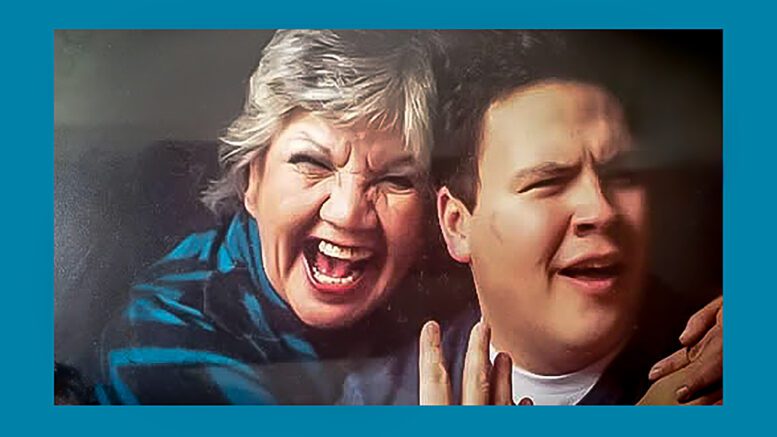

Gail Cyr and son Jesse Wheeler. (Photo courtesy Jesse Wheeler via Facebook)

Gail Cyr was known for her unwavering bravery fighting for Indigenous people in the North, and her life’s work was recognized nationally in 2022, when she was invested into the Order of Canada.

Cyr passed away on Tuesday, her son Jesse Wheeler posted to social media. She was 71.

“Thank you for your kind words and your sharing of stories,” Wheeler stated. “She led an incredibly full life. She leaves this place much better than she found it.

Gail Cyr, on the right, works with an unidentified woman in 1983. (Photo courtesy of NWT Archives/Arthur Boutilier fonds)

“That is all we can ask of a person. She did it tenfold. One-hundred fold.”

Cyr is originally from Nelson House, MB. A survivor of the Sixties Scoop, Gail was one of seven siblings all apprehended from her Cree parents.

In a 2022 profile in UpHere Magazine, Cyr stated: “There were a lot of rough times, and there were a lot of lonely times.”

The racism and sexism she recalled after moving to Winnipeg, led her to move to Yellowknife in 1974.

Cyr wrote a series of columns for Northern News Services in recent years, one detailed her early experiences in her new home of Yellowknife — on the Range.

“I started work at the Gold Range behind the bar pouring drinks as I had at the Spaghetti Factory in Winnipeg, with the one exception that hot pants and high heels were required as hostess wear,” she wrote in her column.

“I made it to the floor from bartending. I loved it. We walked miles every night carrying a tray of 16 of the largest draft glasses in Canada, perhaps 14 ounces – not like the wimpy glasses from down south – and ashtrays, change and a walled folder for bills.”

Cyr later was a coordinator with the Indian Brotherhood of the NWT, and was the first executive director of the NWT Native Court Workers Association.
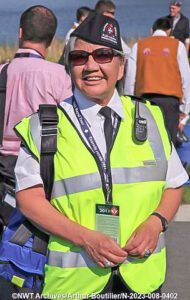
Gail Cyr, a St. John Ambulance volunteer, at the 2011 visit of the Duke and Duchess of Cambridge. (Photo courtesy of NWT Archives/Arthur Boutilier fonds)

She served on Yellowknife city council, worked for the territorial government and was a special advisor on Missing and Murdered Indigenous Women and Girls.

She also enjoyed live performances, producing costumes for the Northern Arts and Cultural Centre and performing with her son, Jesse.

Cyr was the former executive director of the Native Women’s Association and up until her passing, was on the NWT Human Rights Commission.

Charles Dent currently chairs the commission. He recalls first meeting Cyr at one of the first Folk on the Rocks festivals in the 1980s when Cyr was with St. John Ambulance and he was a volunteer firefighter.

Later on, when the pair were on Yellowknife City Council in the 1980s, with Cyr being the only Indigenous councillor. Dent said Cyr impressed by doing all the required reading and really made an effort to make good decisions to help the city develop.

Then, when Cyr joined the Human Rights Commission, Dent said she translated her personal experiences into leadership.

“She brought her … understanding and empathy that goes with having experienced the discrimination she personally went through during the Sixties Scoop,” he said.

“She was never afraid to talk about her experiences, never afraid to talk about how that affected her and others like her that you know had experienced the same sorts of things.

“She was courageous, because she was willing to share her experience. She tried to help people empathize with what people have gone through, and help along our path to reconciliation.

“As we developed the Commission, we developed our reconciliation strategy, she was key to helping us set that up, and I’m gonna miss her. We’re gonna miss her.”

CKLB will update this story when Cyr’s funeral arrangements are known. 

“You will be told you are ugly or ‘too beautiful to be Indigenous!’ If you were fostered into a white home, you will be told to your parents were drinkers, and you will be told to ignore any pull to your family you lost.”

         – Gail Cyr, on growing up in a non-Indigenous community
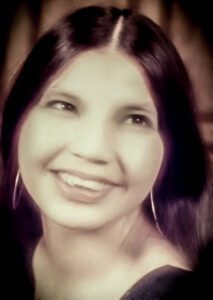
Gail Cyr as a teenager. (Photo courtesy of Cyr family via Facebook)

LINK:  https://cklbradio.com/2024/12/04/indigenous-rights-champion-and-order-of-canada-member-gail-cyr-remembered/

Thursday, August 29, 2024

‘I weave a West that’s honest’


Author J Hoolihan Clayton (adoptee) is First Nations Plains Cree. Having lived a diverse and authentic life in the American West, she now writes history as fiction in order to inspire and elucidate.


excerpt...

Alamosa Citizen: Can you tell us a little bit about yourself? Who you are, where you come from, where you’re going, all of that good stuff.

J Hoolihan Clayton: Okay, well I’m Plains Cree. I was taken as an infant from the reserve in Canada in the Sixties Scoop and illegally adopted out across the medicine line into the United States.

I was adopted by a white family with a ranch in Wyoming. I was raised on a ranch in Wyoming, basically in the middle of nowhere, no running water, no electricity. I spent a lot of time, from a young age around Native elders and old cowboys and basically it was there that I think I became a writer.

I was so fascinated with the stories. I seem to have sort of an idyllic memory. I retained stories and then as I grew older, I began to write stories for myself. Despite all the other things that I’ve done in my life, I’ve always been a writer. I learned cowboying growing up and wasn’t able to have a college education early on. I worked as a ranch hand and wound up fighting wildland fires for years until I sustained enough injuries that vocational rehabilitation sent me to the University of Montana and I was able to get a degree in education and history.

History has always been a passion for me.

So, from there, since I needed an indoor job, I started teaching and mostly focused on Native American education and history. And mostly taught Native students or Hispanic students. I also specialize in at-risk education programs. I ran the education in the juvenile detention center in Taos for five years.

I set up several alternative education programs. One in a treatment center on the Taos Pueblo. One on the Zuni Pueblo. I taught at Dulce on the Jicarilla Apache Reservation and in rural Hispanic areas mostly. Then I decided that, for a variety of reasons, administration, fighting cell phones, I decided to retire and write full time.

There’s a wonderful quote from E.L. Doctorow that the historian will tell you what happened, the novelist will tell you what it felt like. That’s my impetus in writing these books. I also, because of my troubled past, with having been stolen, and also spending many, many years living in and cowboying on reservations in Pueblos and working on Pueblos, I wanted to tell the stories that I was learning about Native groups that are told from a perspective that you don’t find. 

KEEP READING:  https://www.alamosacitizen.com/i-weave-a-west-thats-honest/


A member of Western Writers of America, J. Hoolihan has been published in western historical magazines, such as "True West" and "Wild West." During her extensive research, J. Hoolihan continues to accumulate an abundance of topics for a succession of factual stories pertaining to the 19th century American West. Her first novel, Commendable Discretion, was published in January 2021. With Great Discretion is the second book of this series.* "Throwing the hoolihan" is a technique that old time cowboys used for roping horses. "Hoolihan" has been Juliana's nickname for decades

Friday, November 17, 2023

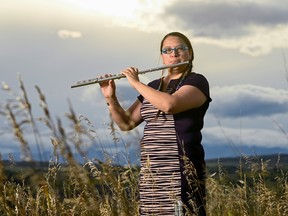
60s Scoop Adoptee Cree musician embraces culture for classical music album, Prairie Dusk

CALGARY, CANADA

In 2020, Jessica McMann and her husband moved to Cochrane, a shift that had more of an impact than the musician and composer had perhaps been anticipating.

The flautist holds a Bachelor of Music degree from the University of Calgary and was required to study composition as part of her course load. But it wasn’t until the pandemic that she began composing in earnest and delving into her culture, inspired by the view outside.

“Outside my studio window, I’m on the third floor, you can see the dusk happening from east to west because we are south-facing,” says McMann. “On the east, you have Cochrane, on the west, you have Morley and Star Ranch and the landscape of the reserve. In that moment of dusk – I just wrote it in that moment of seeing that change of colour. When I started working on the album, I started to reflect on what that meant. I looked at the pieces I already had written and I realized there was something about coming home, there’s something about my life as a Prairies person, as a Sixties Scoop adoptee, there is something about that journey. There is something about being from the Prairies and living on the Prairies and what does that mean to me as a Cree person.”

There is nothing on McMann’s new album, Prairie Dusk, to suggest she is a relative newbie to composing.  The recording features McMann on flute and voice, American Navajo pianist Connor Chee, violist Holly Bhattacharya and Metis baritone Jonathon Adams but the compositions all came from McMann. This lineup will also be featured in an upcoming tour of western Canada, which includes an Oct. 29 show at Found Books in Cochrane.

https://calgaryherald.com/entertainment/local-arts/cree-musician-embraces-culture-for-classical-music-album-prairie-dusk 


Wednesday, June 15, 2022

Behind the Mask #60sScoop


The Behind The Mask art project has left a lasting impact on those participating on the project, helping them in their mental health journeys. (Katie Green photo)

Unmasking mental health liberates Vernon Indigenous woman

Taking a deeper look at controversial Behind the Mask mural project

As a victim of the ’60s Scoop Freesia has worn many masks throughout her life.

Identity theft, sexual abuse, drug addiction, sex worker.

Now sober and living her best life, the Vernon Indigenous woman has been liberated through a recent art project she was fortunate to take part in.

The 50-year-old Cree native is one of 11 people Behind The Mask – an art installation focused on mental health.

“I felt enlightened by the mask, trying to be a better person where I fit in society as somebody who is healing,” Freesia said. “It was like putting on my new mask. The mask is my higher self.

“It’s nice to know all those other masks, survival tactics, are off.”

Tired of hiding behind unhealthy masks, Freesia said the project helped her express herself.

“It represents forgiveness of those who hurt me, including me.”

And she enjoyed being able to create with others, including Sarah Lillemo, harm reduction coordinator at the Cammy LaFleur Street Clinic.

“I feel like you really connected with the project,” Lillemo told Freesia, who has been sober since Sept 27, 2020.

Lillemo gathered the participants for the art project, led by Calgary artist Katie Green. She too was able to make a mask and have her photograph taken wearing it.

Unfortunately, not everyone is as excited about the project as the participants. The approved installation of these photographs blown up on the sides of buildings has stirred deep feelings among many area residents, calling the art ‘scary.’

“There’s nothing scary about it,” said Freesia.

The public backlash has hurt the participants and those involved. Freesia even thought that perhaps it was racially motivated due to her status.

Lillemo says those who aren’t comfortable with the art, “feel more comfortable hiding behind their keyboard and saying hateful things.”

There are others who are in full support of the project, and in the end, the goal of the art to spark a conversation around mental health has been reached.

The 60s Scoop refers to the large-scale removal of Indigenous children from their homes, communities and families and their subsequent adoption into predominantly non-Indigenous, middle-class families across the United States and Canada. This experience left many adoptees with a lost sense of cultural identity.

READ MORE

CLICK OLDER POSTS (above) to see more news

CLICK OLDER POSTS  (above) to see more news

MEGWETCH THANK YOU

HUGE Thank you for visiting this blog and sharing this with your kin. It's appreciated. Contact Trace anytime! Use the form below.

BOOKSHOP

Please use BOOKSHOP to buy our titles. We will not be posting links to Amazon.

Popular Posts

To Veronica Brown

Veronica, we adult adoptees are thinking of you today and every day. We will be here when you need us. Your journey in the adopted life has begun, nothing can revoke that now, the damage cannot be undone. Be courageous, you have what no adoptee before you has had; a strong group of adult adoptees who know your story, who are behind you and will always be so.

OUR HISTORY

OUR HISTORY
BOOK 5: Lost Children of the Indian Adoption Projects