BACK UP BLOG (no longer updating)

This blog was a backup for American Indian Adoptees blog
USE THE SEARCH BAR or SEARCH TOPICS at bottom of this blog

If you need support

Support Info: If you are a Survivor and need emotional support, a national crisis line is available 24 hours a day, seven days a week: Residential School Survivor Support Line: 1-866-925-4419. Additional Health Support Information: Emotional, cultural, and professional support services are also available to Survivors and their families through the Indian Residential Schools Resolution Health Support Program. Services can be accessed on an individual, family, or group basis.” These & regional support phone numbers are found at https://nctr.ca/contact/survivors/ . MY EMAIL: tracelara@pm.me

Search This Blog

Showing posts with label American Indian Adoptees. Show all posts

Friday, October 16, 2026

AMERICAN INDIAN ADOPTEES today #LANDBACK


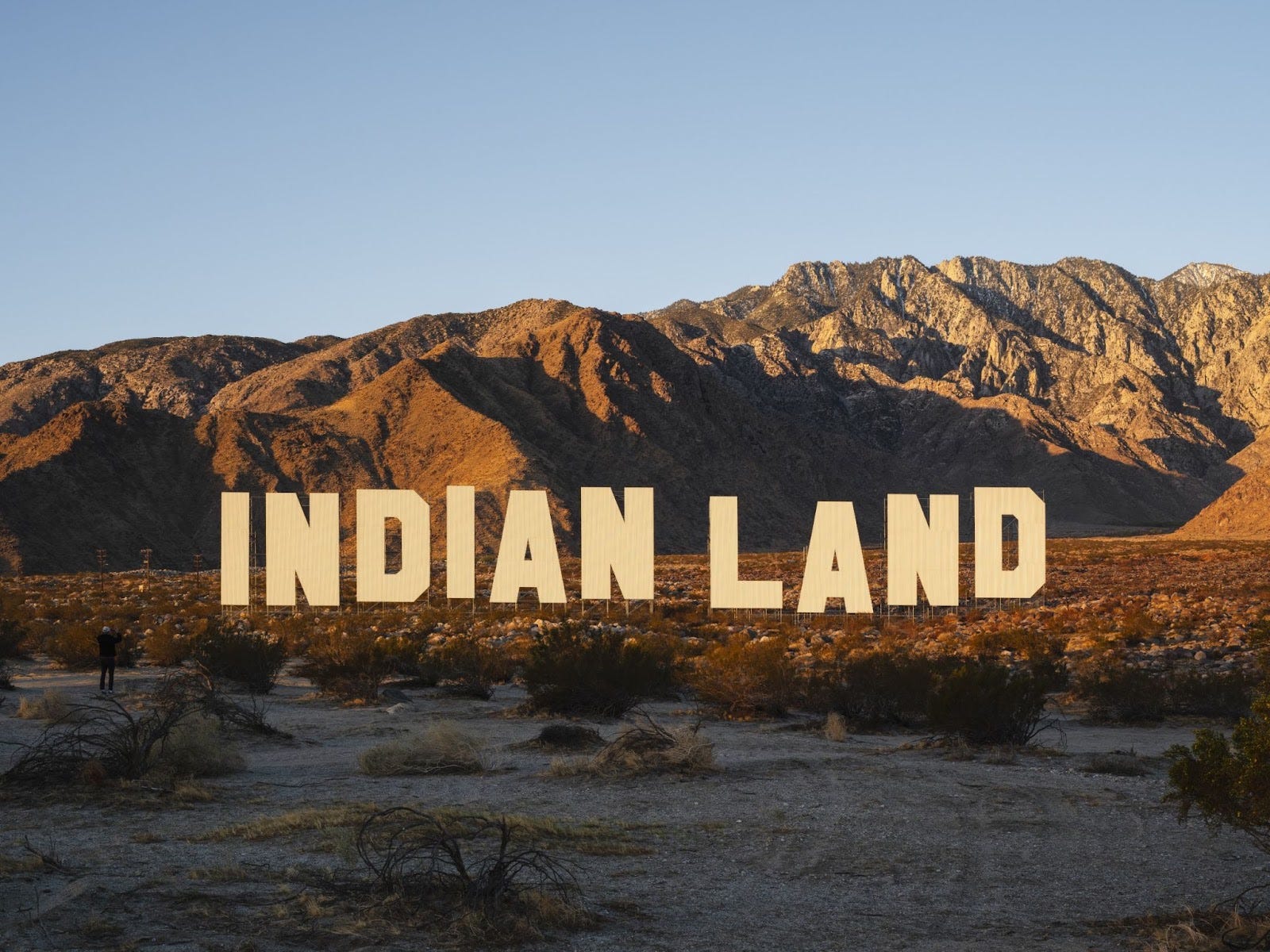
A caller to our radio show was furious. He said he was sick and tired of Indigenous people saying we are living on stolen land.

I understand why that phrase makes people defensive. They hear it as a personal accusation. They think: I didn’t steal anything. I bought my home. My grandparents came here after all of that happened. What exactly do you want from me?

But that reaction often misses what Indigenous people are actually saying.

When we say “you are on stolen land,” we are not saying that every person alive today personally stole a home, or that we want to knock on people’s doors and force them out. We are naming the foundation this country was built on: Indigenous lands were taken through removal, violence, broken treaties, fraud, confinement, and laws written to make theft look legal.

That is history. But it’s also the present.

“Legal” does not mean just.

A lot of people assume that because land is owned legally today, the question is settled.

But legal systems can be built to make injustice look legitimate.

The United States did not simply expand into “empty land.” It removed Native nations from territories that invaders and governments wanted. The Indian Removal Act of 1830 created the legal machinery for pushing Indigenous people west of the Mississippi. The Cherokee removal in 1838–39—the Trail of Tears—was carried out by the U.S. government, and approximately 4,000 Cherokee people died during that forced displacement.

That is a documented policy of making Indigenous land available by removing Indigenous people.

And removal was not the only strategy. The federal government also confined Native nations to reservations, violated treaties, and divided collectively held Indigenous lands through the allotment system. Under allotment, land deemed “surplus” was sold to non-Native settlers. Native landholdings dropped from 138 million acres in 1887 to 48 million acres by 1934.

So yes, someone can hold a valid deed today. That does not erase the chain of events that made the deed possible.

Not every Indigenous nation has the same history, and we should not flatten hundreds of nations into one story. As I always say, we are not a monolith.

But when Indigenous people call land “unceded,” they are making a specific point: the original Indigenous nation did not surrender, sell, or legally sign away that territory to the Crown (Canada) or the government (USA).

Much of British Columbia, Canada, is unceded territory.  About 95 percent of the province, including Vancouver, was never covered by treaties that transferred First Nations land to the Crown.  The City of Vancouver acknowledges that it is located on the unceded ancestral territories of the Musqueam, Squamish, and Tsleil-Waututh Nations.

Ottawa, Canada is located on unceded Algonquin Anishinaabe territory.  Large areas of British Columbia, Quebec, eastern Ontario, and Atlantic Canada have unresolved or unceded Indigenous land questions.

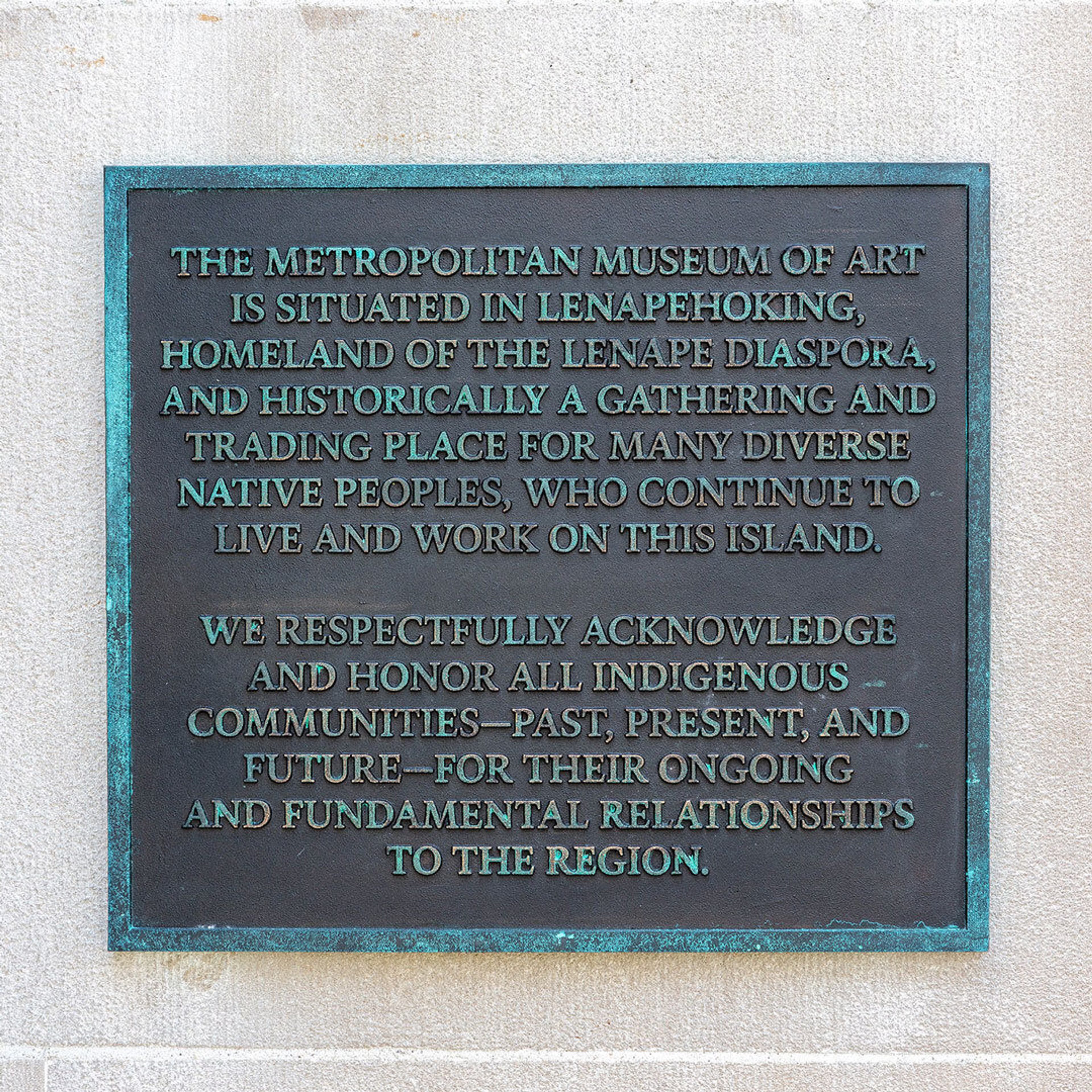
Here in New York City, we are in Lenapehoking—the homeland of the Lenape people. That does not mean we can reduce a complex history to a slogan “You are on Stolen Land”.  It means we should know whose homeland this was and is, and understand that the Lenape did not disappear just because settlers drew new borders and wrote new property laws.  Pratt Institute in Brooklyn identifies its location as the traditional and unceded homeland of the Lenape.

So does the Metropolitan Museum of Art.

Then there is the argument people make when they want the conversation to end quickly: But treaties were signed so the land issues were settled.

Yes, treaties were signed. But treaties were also broken, manipulated, ignored, and discarded when Indigenous land became profitable.

Look at the Black Hills.

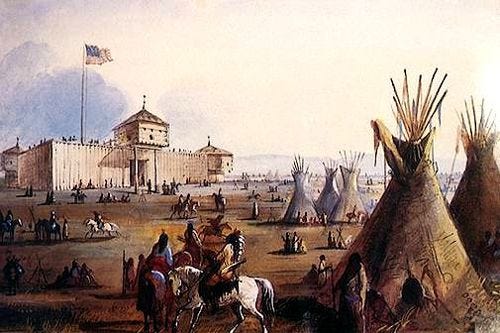
The Fort Laramie Treaty of 1868 recognized the Black Hills as part of the Great Sioux Reservation. Then gold was found. The United States took the land anyway. In 1980, the Supreme Court ruled that the federal government’s action amounted to a taking that required compensation.

Fort Laramie, Wyoming, painting by Alfred Jacob Miller.

The government took land in violation of its own agreement, and more than a century later, the country’s highest court recognized that the taking was unlawful. Stolen land!

Another thing people may not understand is that many Indigenous peoples hold a different worldview about money, ownership, and wealth.👇

Wednesday, August 5, 2026

Reposting this from AMERICAN INDIAN ADOPTEES website

 8-5-2026


Yesterday, (g**gle) the blogger platform took down my blog Otis and Puck.  Made for humor, I posted silly stuff, music, and sweet fun junk.  By the way:  Otis is a shapeshifter and Puck is a raven.  Nothing political or porn or anything bad was anywhere on that blog/website. It didn't have ads. [
https://www.blog.otisandpuck.com]

When I got notice yesterday that they took it down, once my shock wore off, I clicked a link they sent me and asked them to review it.  For a few hours today the blog was "reinstated" and was unlocked, then bam, an hour ago, it was locked again. It's gone.

This is the situation we are facing with any websites and blogs, even ones that are non-political.  They can simply disappear.

Now I am going to work fast to get a website/blog set-up just in case this one disappears. It could happen, and all the history posted here would be gone... 

(They changed how I can download and save my content on here, and they made it much more confusing and difficult to save everything and back it up.  I even had a back-up blog (https://americanindianadoptees.blogspot.com) just in case.  Last year, I was unable to upload news content from this website to that website. I tried!

I know it's important we keep a historical record, especially in Indian Country.  We have been erased before!

YES, I am trying to save everything quickly.

I guess that why real (paper) books are so important now, because they can't be deleted and erased, like what happened to Otis and Puck.

Having a bad day? I am...

Trace, blog editor 


(This back up blog has over 5,000 posts) 


Friday, August 26, 2022

URGENT REQUEST: Tell the World what Happened to STOLEN GENERATIONS #WHYICWAMATTERS

request the pdf

By Trace L Hentz, Blog Editor

I have a simple request for adoptees who read this blog.  

Starting now and THIS FALL I think we need to use our experience as adoptees and contact MEDIA (GOOGLE: newspapers in your city, state or town)  regarding the 1978 federal law Indian Child Welfare Act (ICWA) and why it is needed.  And we need to do this BEFORE the Supreme Court hearing in November.  

I think it would be a good idea to GET OUR STORIES out there.  

EMAIL or PHONE newspaper and radio stations and say: I'd like to tell you my story and WHY ICWA MATTERS:, mention the year you were born and explain if you are in reunion with your tribal relatives. 

Even if you have done this before, please consider updating your story in a newspaper (including tribal newspapers). I will also post your story on this website if you email me.

We adoptees know how we were affected.   YES, we are called a STOLEN GENERATION for a reason! Maybe the scars are internal but they are still scars. We know they exist, even if we were adopted by decent white people.

If anyone wishes to read TWO WORLDS: Lost Children of the Indian Adoption Projects, I will send you the pdf.  Read the testimony of other survivors and let that help you tell your own story.  You can tell the media how you searched and how you went into reunion or not.  This website has lots of adoptee stories posted. [email: tracelara@pm.me]

If you contact a newspaper, for example, you can inform them you are an adoptee pre-ICWA. You may have to send them to this website for background information. 

USE YOUR VOICE to educate others. WE NEED YOU!  You can use your own experience to explain why the INDIAN CHILD WELFARE ACT matters.

It does matter. 

READ THIS: https://blog.americanindianadoptees.com/2018/11/someone-finally-gets-it-why-icwa-matters.html 

READ THIS: https://blog.americanindianadoptees.com/2015/07/shattered.html

STUDY
Entire generations of First Nations people have been separated from their birth families and tribes by historical acts of relocation, boarding schools, and the adoption era.  Reunification is an essential component to rebuilding the First Nations population.  It is echoed across tribes captured by the phrase, “generation after generation we are coming home” (White Hawk, 2014).  The purpose of this study was to investigate personal and social identity indicators that contribute to a satisfactory reunification for 95 First Nations adult adoptees who were separated from their birth families during childhood by foster-care and/or adoption.  First Nations adoptees have not only a biological/birth family to return to, but also a tribe, and ancestral land.   

REFER to THIS:   Finding their way home: The reunification of First Nations adoptees by Ashley L. Landers, Sharon M. Danes, and Sandy White Hawk.

YOU can also refer them to me (Trace Hentz) or other adoptees, by all means do that... Send reporters to the National Indian Child Welfare Association: Terry L. Cross (Seneca) Senior Advisor  (503) 222-4044, Ext. 150 EMAIL: terry@nicwa.org

NICWA:  NICWA is a nonprofit, membership organization based in Portland, Oregon. Our members include tribes, individuals—both Native and non-Native—and private organizations from around the United States concerned with Native child and family issues. Together, our partners, board, and staff work to protect Native children and keep them connected to their family, community, and culture.

"...There is an ICWA because of us, all the American Indian Adoptees, Lost Birds, Stolen Children, 60s Scoop, and Indian Adoption Project adoptees. WE are the reason there is a law. We are still called the Stolen Generations. We are the second phase of atrocities committed against Indian People before during and after the boarding schools. (WE were supposed to permanently disappear in closed adoptions with sealed records, living "happily ever after" with our white parents.) There is a federal law ICWA because of us, because adoption trafficking in Native babies and children was clearly genocide. With ICWA, there will be many less adoptees... We get that; in Indian Country we know this." - Trace Hentz

Adoption was set up so they had an excuse to take children because of the (poor) conditions we had to live in...— Denise Altvater

The forced removal of children to non-Native homes and boarding schools was central to the government’s failed attempts to strip Indigenous people of their culture and languages, in order to indoctrinate them with Western ideals. - IMPRINT NEWS 2022

Before ICWA became federal law, between 75% and 85% of Indigenous families who lived on a reservation had at least one of their children taken into foster care, according to Montana’s Department of Public Health and Human Services.

“Protecting children in state courts is a fundamental act of external sovereignty for tribes.  Active efforts and qualified expert witnesses are core vehicles to do that,” Grinnell-Davis told The Imprint. “If tribes no longer have the right to protect their citizens, or have the tools taken away that are important in that protection, other acts of external sovereignty such as environmental and cultural protections, mineral rights and gaming contracts will be challenged next, and sovereignty will be sovereignty in name only.”

YOUR STORY is important, whether you are in reunion or not.  And you need to know what your state's adoption laws are when you speak to the newspaper... Yes, it will take some time for you to do some research but PLEASE do this... use your experience to tell others, the entire world, what happened to us.
 
"When laws restrict opening adoption records, these policymakers make us victims.  There are many adoptees ready to know their family name, meet relatives and have reunions, but cannot because of adoption laws. Other adoptees, lulled by gratitude, may fear upsetting their adoptive family, and may not see themselves as victims of a corrupt unjust system.

"The adoptee moves from victim to survivor when they decide to break the law, when they decide to regain and restore their own identity, and get their name. That’s a giant leap forward."
 
Please share this post on your social media and with all Native adoptees in your circle. DO NOT hesitate to get in touch with Trace via email. 
 
Trace Hentz 
email: tracelara@pm.me 
or laratrace@outlook.com


Sunday, January 2, 2022

'I had to be prayed home'

Thousands of Native children were adopted in the 1960s as a government plan of forced assimilation. This woman was one of them.

Kelley Bashew was adopted at the age of 3 months and taken from South Dakota to Glenside. She is shown on a hillside near her Meadowbrook home in April 2021.CHARLES FOX / Staff Photographer

While visiting the Tekakwitha Nursing Home to sing for residents, 13-year-old Denise Owen was led away from the rest of her boarding school group by a nun. A special surprise awaited her.

There, in another room in the Sisseton, S.D., facility, was her newborn sister, Rose Anne. Denise got only a glimpse of the infant, lying in a bassinet in a long-sleeve shirt and a diaper, before another nun ordered her to leave. Denise was not supposed to see her sibling, soon to be adopted.

It would be 50 years before they saw each other again.

Rose Anne, who would be raised by a Glenside dentist and his wife, became a child of the country’s American Indian adoption era, a decades-long forced assimilation of Native children first established under the Indian Adoption Project, which started in 1958 and evolved to include 50 private and public placement agencies across the United States and Canada, where the so-called Sixties Scoop was coined to describe the mass removal of children from Native homes. During the next 20 years, almost 13,000 Native children would be adopted.

Bashew experienced a loving childhood. But she always knew she was different, and felt isolated in white suburbia. Here, a series of photos from those times.CHARLES FOX / Staff Photographer

According to a 1969 report by the Association on American Indian Affairs, between 25% and 35% of all Native children were placed in adoptive homes, foster homes, or institutions; and about 90% of those children were being raised by non-Natives.

That was the case for Rose Anne, who, at the age of 3 months, was handed over to Salvatore and André Petrilli. The white couple of Italian and Irish descent had struggled to have their own biological children, and it was André's interest in American history and a phone conversation with a priest from St. Joseph’s Indian School in Chamberlain, S.D., that led her to seek a Native adoption through Catholic Charities.

Eventually, a new birth certificate reflected the new name of Kelley Elizabeth Petrilli, the child of two Caucasian parents. Her American Indian heritage was wiped away on paper. A Montgomery County Orphans Court clerk with the last name of Custer gave the final stamp of approval to the adoption.

“When I was younger, I wanted to be white. I still feel guilt about that,” said Bashew, who lives in Meadowbrook. “I just wanted to fit in and be like my sisters. … I did not like being tall and brown and different.”

Kelley Bashew was born Rose Anne Owen in Sisseton, S.D., but was adopted by Salvatore and André Petrilli, a suburban Philadelphia dentist and his wife.CHARLES FOX / Staff Photographer

 PLEASE SHARE THIS POST with other American Indian Adoptees... TLH

KEEP READING

Monday, November 1, 2021

Still here 17 years later... #NAAM2021 #Adoptee


This post was written in 2014 - now UPDATED in 2021 for National Adoption Awareness Month (#NAAM2021)


By Trace L Hentz (formerly DeMeyer)

If you had asked me in 2004 what I had planned for myself, I would have not said “writing” about adoption and child trafficking. I had just left my editor’s job at the Pequot Times in Connecticut in August and by September I was married, my second time. I have always known adoptees. It's like some (╋) magic radar that we seem to find each other... (which has always been life-saving for me.)

When I first started writing the article GENERATION AFTER GENERATION WE ARE COMING HOME in 2004, finally written and published in 2005 by American Indian Community House in New York City then in News From Indian Country, it was like a door opened.  That door is still open and I am still learning (and blogging here and covering news). I am not in Higher Ed nor do I wish to be. 

I write for adoptees like me. I am not a leader of adoptees/Lost Birds/SplitFeathers. I am an adoptee, someone who gathers stories who happens to be trained as a journalist (aka blogger.)

Second, I do help adoptees (Native and non-Native) connect with one another. There are plenty of adoptees with leadership skills, like my friend Levi EagleFeather and Sandy WhiteHawk, both are Lakota. If adoptees need ceremony, they are the people to approach. I am a bridge and can help you reach them.

Third, I am an adoptee myself so I know what I went through. And I write about it in great detail but that doesn't make me an expert. I do feel like I have an advanced degree in adoption after 17+ years of reading and writing on this topic. (And I'm 65 so it's a lived experience too.)

To me it doesn’t seem possible that those years went so fast – I didn't have any idea my skills would be put to use in this way. I am deeply humbled and deeply grateful to Great Spirit...Wakan Tanka.

Since I started American Indian Adoptees in late 2009, I met and know many bloggers on the topic of adoption (and many are good friends to me). We had hoped we’d made a strong and lasting impact by now.  

We all knew:

The adoptee voice was missing. 


Chapters of history were blank. The changes I worked for: giving voice to adoptees and writing that chapter, and I did what I could. There are four books in the Lost Children Book Series. That was the history few had ever documented...I had saved one article from Canada when I was working as a journalist at NFIC from 1996-1999. One!

 
Changing adoption? I had that dream myself.  I am not sure we can actually gauge or measure how worldviews of adoption have changed. States still have adoption files sealed tight. Are they hiding something? Are they afraid of a massive uprising of adoptees? (There are an estimated 10 million of us, maybe more!) Are they afraid we'll find out adoption agencies and churches were trafficking in children? For a profit?

The governments of Canada and America have much to fear.

Other changes? If books on Amazon are an indication, adoptee memoirs are still climbing the ranks over all the propaganda books about how to adopt a baby.


If the statistics on adoption are any indication, the number of babies adopted by Americans are dropping each and every year. There is definitely a demand for infants (primarily because of rising infertility since the 1950s) but there is still a short supply of newborn flesh to adopt.  (I do believe the adoption traffickers are constantly reinventing new ways to grab a fresh supply of infants. Think of what new poor countries or communities they will invade as the demand increases!! Propaganda will change.)


Will there be more adoptees? Sadly yes.

A happy ending in the media erases the very real structural realities of the adoption industrial complex, one that orchestrates the exchange of babies for money. - Alexa Strabuk

What hasn’t changed much since 2004 are adoption laws, sealed adoption files or the old archaic views of promised secrecy and confidentiality for first mothers.

Haven’t we moved past shaming women for unwed pregnancies? Yes, but not enough, apparently.  Lawmakers are still being wined and dined by adoption agency lobbyists so I don’t expect to see much change in the laws – but I hope I am wrong.

What I’d hoped would change faster is the perception of adoption, that it’s not as great and wonderful for adoptees as the public was made to believe. (In fact, vocal adoptees have changed everything in that regard.) 

As much as I’ve read in these past 17+ years, blogs and books changed me beyond recognition!  

Many times I have emailed legislators (like in New Jersey and Illinois) and offered my memoir (as a free book) hoping they would see the light and change existing adoption laws. Maybe it helped?

The big question: Open Adoption--when adoption is necessary--is also an indication that times are changing! But we have a long way to go…This is a quote I saved about open adoption:

…ignored by the adoption agencies is the reality of “open adoption.” Only 22 of fifty states in America (in 2014) recognize open adoption agreements, but failure of the adoptive parents to comply with the agreement is not legally enforceable by the surrendering mother.  (It is failing from many accounts I have read.)
There are many excellent writers making profound statements too.
A quote by adoptee-author-blogger Elle Cuardaigh: 
And adoption certainly is “worked.” When supply of newborns decreased in the 1970s, the adoption industry had to put a new spin on relinquishment  to stay in business. Since women could not be so easily shamed by single motherhood, they changed tactics. Potential suppliers (pregnant women) are now encouraged to “make an adoption plan.” She reads the “Dear Birthmother” letters and interviews hopeful adoptive parents. She is provided with medical care and possibly even housing.  She is promised this is her choice, and that she can have ongoing contact with her child in an open adoption. It would seem she has all the power, but she is being systematically conditioned to accept her role, her place. She doesn’t want to hurt the baby’s “real parents,” feels indebted to them, emotionally invested. She is soon convinced they are better than she is. She becomes “their birthmother.” It almost guarantees relinquishment.  READ Elle’s blog and new book THE TANGLED RED THREAD.  Or visit: http://ellecuardaigh.com


Read any and all posts at THE LIFE OF VON. (Von has since passed.)  Powerful WRITING!

In Blogland,  when your topic is adoption, you can never be free of trolls, extremists, zealots, fundamentalists, missionaries, the blinkered and the closed-minded. - (adoptee) Elizabeth Von Hughes

The number of excellent powerful blogs by adoptees and first parents (and even some APs) exploded in the past 15 years but there are far fewer now.

Helping to writing and publish four books about the Indian Adoption Projects and Programs and contributing to books like ADOPTIONLAND certainly changed me. And the Vance twins are doing a new anthology on Adoptionland and I have contributed (in 2021).

Back in 2014, #FliptheScript in November was brand new and really moved people - tweets and comments were flying everywhere, some good, some not so good. Discussion is still needed and the people who need to hear adoptees out are the ones we don't reach that well: ADOPTIVE PARENTS. They have their own fog to lift.

Last but not least: I am happily shocked this blog AMERICAN INDIAN ADOPTEES reached over 1,600,000 million hits with 1800+ posts!  If that is any indication, times really are a changin’.  Thanks to all the people who comment and read and subscribe!

There are thousands of Lost Children/Adoptees who are Native American. They are still out there. I do hope they find this blog and reach out and contact me!

There are two things I hope to see for Lost Bird Adoptees: A class action lawsuit in the USA on behalf of those children who were taken from their tribes because of the gov't programs (IAP and ARENA) and admitting PUBLICLY it happened with a declaration of this FACT. 

(Canada is now doing this for the 60s Scoop adoptees.)

I never would have guessed my life would move in the direction it did. I want to thank those hundreds of adoptees and families who have inspired me so much over past 17+ years.

So what will the next 17 years be like? I don’t have a clue.

Thursday, October 15, 2020

American Indian Children Still Removed From Homes at High Rates


 repost from 11/9/2015

By LEX TALAMO
 

Almost 40 years after the Indian Child Welfare Act (ICWA) passed, American Indian children are still being removed from their homes in highly disproportionate numbers– at a rate almost three times higher than any other ethnicity, excepting African American children.

Minnesota leads the list of states with the worst rates of disproportionate removal– where American Indian children are overly represented in the foster care system– according to a June 2015 report from the National Council of Juvenile and Family Court Judges.  Other states with high numbers of disproportionate removal include Nebraska, Iowa, Idaho, Wisconsin, Washington, South Dakota and Oregon.

Even in states without dramatic removal rates– like Arizona and New Mexico– many American Indian children find themselves removed from their families and placed in group homes, treatment centers or foster care.

In McKinley County, New Mexico,  American Indian children make up 73 percent of all children in foster care, according to a 2015  third quarter report from the New Mexico Children, Youth and Families Department (CYFD).  And in Arizona, over 1,300 American Indian children were in the foster care system as of March 31, 2015, according to a Department of Child Safety Child Welfare Report.

The Indian Child Welfare Act of 1978 applies to any child of American Indian descent who is an enrolled member or eligible for enrollment in any federally recognized tribe. When an American Indian child enters state custody, the state must contact the child’s tribe, and the tribe has the right to transfer the case to tribal court or to participate in court proceedings.

In order to help American Indian children stay connected to their tribal cultures and identities, ICWA also established a placement preference that starts with the child’s extended family and clan relatives and then progresses to enrolled members of the child’s tribe and enrolled members from any tribe– with placement of the child in a non-Indian family as a last resort.

“Any child who might be Native American, they have a [cultural] identity,” said Regina Yazzie, Program Director of the Navajo Nation Division of Social Services.  “It’s a benefit.”

Yazzie added that across the country, state agencies struggle to find American Indian foster families for children.  Finding placement families on reservation land can prove equally challenging.

Data from the Children, Youth and Families Department of New Mexico shows there are currently 43 American Indian foster care providers who have 79 placements available– nowhere near enough for the 262 American Indian children in New Mexico’s foster care system.  Melissa Otero from AdoptUsKids.org also said through an email correspondence that less than 1 percent of all AdoptUsKids placement families identify as American Indian.

When speaking with the Navajo Post, several tribal members mentioned hardships on reservations that negatively impacted families’ ability to foster– including poverty, poor housing, poor mental health care, suicide, and addiction.

“Part of what’s going on [is] drug and alcohol numbers are sky high,” said one tribal member, who wished to remain anonymous in order to be able to speak freely. “There are not a lot of healthy families. There are tons of families that care, but it takes structure, it takes money [to foster], and so many families are overwhelmed with the day to day living, how could they bring another child into their home?”

For the San Carlos Apache Tribe, methamphetamine poses a particular devastating problem.   Social services Director Terry Ross said that the reservation currently has an “epidemic of mothers with meth-exposed babies.”

“We try to work with the family, but when mothers are addicted to meth… it’s hard,” Ross said. “We can’t make people do anything. They have to want to change for their child.”

Many tribes offer social services like counseling, parenting classes, detox centers and emergency supplies to American Indian families in need. But representatives from several tribes mentioned that funding is limited and resources are stretched thin, so that American Indian children continue to find themselves in foster care– where many undergo significant trauma and loss of identity when growing up separated from their tribes, communities, and cultures.


A Sense of Belonging

Sandra White Hawk, an enrolled member of the Sicangu Lakota of the Rosebud Sioux Tribe,  was adopted into a white missionary family when she was 18 months old in the days before ICWA. The only Indian girl in her community, she grew up with a sense of being “different.”

“My adoptive mother constantly reminded me that no matter what I did, I came from a pagan race whose only hope for redemption was to assimilate to white culture,” wrote White Hawk, now executive director of the First Nations Repatriation Institute, on her website.

White Hawk added that people in her community were ignorant of her culture when she was growing up; they would ask her to do rain dances or give war whoops.  Susan Devan Harness, a member of the Confederated Salish and Kootenai Tribes, was also adopted into a non-Indian family at 18 months. Harness said she was called “Squaw Girl” growing up and that she had trouble finding dates in high school because her male classmates’ mothers believed stereotypes that American Indian women were promiscuous– and that dating one would get their sons in trouble.

“I have had privileges,” said Harness of her adoption. “Living in a nice neighborhood, going to college, I have a Master’s Degree…a place at the table. But I have paid a huge price for those privileges."

As part of that price, Harness said she was always fighting for a place of belonging, and that many adoptees exist in an “in between place” between their tribal communities and their adoptive families. White Hawk’s website states that many adult adoptees also show traits of survivors of trauma: anxiety, impulsivity, nightmares, guilt, and unresolved guilt– and that much healing of these issues takes place for adoptees when they reconnect with their tribal identities or “come home.”

“In the beginning I didn’t see the importance of why anyone would want to know my story as an adoptee because I didn’t understand the prevalence,” said White Hawk. “I get it now.”

White Hawk added that reconnecting with her biological family and tribe later in life allowed a “whole new part” of herself to awaken.  She sees similar transformations in the adoptees she works with – as does Karen Vigneault, a librarian who uses her research skills to search genealogy records and connect adoptees with their families.

Vigneault said that adoptees face many obstacles back-peddling through their pasts: opening sealed court documents, misspellings in their ancestors’ names or lack of names which makes tracing families difficult, and apprehension at returning to their communities and families decades later. Despite the challenges, Vigneault provides her help to adoptees free from charge.

“If Creator has people asking me for help, I can’t charge them for that,” Vigneault said. “To help them come home… it should be a free ride.”


A 2009 report published by the Annie E Casey Foundation found that resilience– the ability to bounce back after a traumatic or difficult experience– increases dramatically for American Indian individuals who have seven protective factors in their lives, including: 

a sense of belonging to a culture, spirituality, connections to the tribal language and extended family, a sense of humor, a mindset of forward thinking or “moving forward to the seventh generation,” and what authors Charlotte Goodluck and Angela Willeto describe as “responses from the culture”– which could include beadwork, drumming, sweat lodge, talking circles, smudging, pow wows and other ceremonies.

The association between resilience and strong rootedness in tribal culture have significant implications for American Indian children within the foster care and adoption systems today.

Tania Valdez, associate director of the voluntary treatment foster care program La Familia-Namaste, Inc in New Mexico, described the change she saw occur in a young woman in care when an ICWA worker sent her music and books from her Oklahoma tribe.

“I think it plays a tremendous role in her cultural identity. It’s part of who she is,” Valdez said. “She’s removed from her community, but it gave her a piece of her culture, and she embraced that.”

Nikki Kull, executive vice president of The Ranches in New Mexico, said that children in care struggle to transition from one culture to another, regardless of their race.

“We had some siblings from the Yuni tribe who were very connected to their culture… and it was hard for them to be separated from their culture. It’s heart-breaking to see,” Kull said. “I desperately understand the need for kids to stay within their culture, but the fact remains there aren’t enough homes.”

The Indian Child Welfare Act Today
Several judges who spoke with the Navajo Post said that ICWA was meant to be a gold standard for family law cases– that active efforts to work with families before removing children from their homes would be in the best interest of all children regardless of their race.

But lawsuits in several states– Minnesota, Arizona, Oklahoma and Virginia– challenge the constitutionality of ICWA. Common arguments include that the Act’s language discriminates against American Indian children on race alone and that the Act violates due process and privacy rights guaranteed by the Tenth and Fourteenth Amendments.

Judge Tim Connors, who teaches at the University of Michigan Law School and helps train new judges in handling ICWA cases, said that family law is mainly an issue for state courts, so that applying  ICWA– a federal law– to American Indian family cases is a “foreign concept” for many judges.  But he added that American Indian children are particularly harmed when removed from their families.

“Data shows the trauma when we separate children from their communities and their culture and their lineages,” Connors said. “And it is particularly harmful for Native American children.”

Judge William Thorne, vice-president of the National Indian Justice Center and a former member of the Board of Trustees for the National Council of Juvenile and Family Court Judges, said that while some judges and lawyers see ICWA as a violation of their code of ethics regarding fairness, ICWA was created with American Indian children’s best interest in mind.

“In tribal communities, if you cut a child off from their family, grandparents, aunts and uncles, cousins, that really is almost active abuse against that child, because in Indian communities things happen based on relationships,” Thorne said in a video produced by the Mississippi Administrative Office of Courts.

Judge Leonard Edwards, a retired judge who served for 26 years as a Superior Court Judge and six years as Judge-in-Residence at the Center for Families, Children & the Courts, stated that the adversarial processes prevalent in courts– where two or more sides argue their cases and then a “winner” is declared– go against traditional American Indian practices of resolving conflict.  Edwards said that the intention behind ICWA was to help make sure that all of an American Indian child’s resources were being considered.

“Social workers can be creative,” Edwards said. “It’s not mum and dad, it’s the extended family and community. It’s different [in tribal communities] and that can be difficult for our judges to understand.”

While ICWA has been acknowledged by many judges as a difficult law to understand and implement, tribes across the country insist keeping American Indian children connected to their tribes is of utmost importance.

“[If not] They lose the language, the culture, the integrity of what it is to be Native American and the values system,” said Doris Bailon, director of Social Services of the Santo Domingo Pueblo.

Sandra White Hawk and Susan Devan Harness had a suggestion to reduce the number of American Indian children entering the foster care system: providing “front end services.”

“Instead of the money going to clothe and feed kids in foster care, have that money going to strengthen Native families and communities,” Harness said.

SOURCE (broken)


Monday, April 8, 2019

American Indian adoptees deal with painful past and family separations

Larry Brown, Navajo, prepares for the November powwow ceremony at the Minneapolis American Indian Center. The ceremony provides a space for American Indian families to heal after decades of family separation. (Photo: Camille Erickson. )
The Indian Child Welfare Act has faced numerous constitutional challenges in federal courts since its enactment in 1978, attempts to undermine tribal nations’ authority in child welfare matters
Jane Harstad gave birth in 1986 to her first child, a son. Soon after, a pediatrician asked for her family’s medical history. She didn’t have a clue. She didn’t know who her biological mother or father was, let alone what medical conditions they had.
Harstad, who is Red Cliff Band of Lake Superior Chippewa, was adopted shortly after birth through Catholic Charities adoption services in 1965. The agency placed her in a white, middle-class family living in St. Paul, Minn.
After obtaining her biological mother’s address through the adoption agency, Harstad sat down to write a letter. She felt immediately overwhelmed.
“It took me a long time, you know, days or weeks [to write]. Even the first word like, ‘Hello,’ or ‘Dear Mom,’” she said. “It took a long time to carefully choose my words.” Harstad provided her phone number in the letter and said she wanted to meet her mother.
Harstad, now 56, would later reflect on that moment: “I was searching for a part of myself that was missing, and I knew she was the answer whether it was good or bad or ugly. It was like a puzzle and you’re missing one piece. You’re just never going to be complete.”
KEEP READING

Friday, February 8, 2019

Twins get 'mystifying' DNA ancestry test results | FamilyTreeDNA works with FBI


Note from Trace:
This video was the best I could find regarding the insanity and lies in TV commercials you see every day about DNA testing.


I have told many adoptees I do not trust or recommend DNA tests - I do not trust these companies.
When I found my birthfather, we did a DNA test together and back then it was $500... that was in 1994. The test came back Earl was 99.9% my dad. So we knew without a doubt.

Tribes do not use DNA tests unless it is an adoptee who needs to test with a tribal relative or parent to prove their ancestral connection for tribal membership. You will test with a specific person (like an uncle) to see if you are indeed THEIR relative. My adoptee friend in Sisseton, South Dakota did a DNA test with his father (who he didn't know was his father) because the tribe wanted to prove paternity - and my friend's children wanted to be enrolled in Sisseton. The test turned out 99.9% that this man was his dad. And now my friend is 100% Sisseton!

An adoptee would do DNA testing to find a cousin or aunt or someone else who IS your family member and go from there, with a reunion and phone calls.

Using DNA to say you are Native American/American Indian is not realistic. Why? Tribes do not trust these companies and do not use DNA for determining who is a tribal member. THEY will not use this test without a reason.

But when it comes to Native Americans, the question of genetic testing, and particularly genetic testing to determine ancestral origins, is controversial. […] Researchers and ethicists are still figuring how to balance scientific goals with the need to respect individual and cultural privacy. And for Native Americans, the question of how to do that, like nearly everything, is bound up in a long history of racism and colonialism.

Read this

NOW... one DNA testing company admits they are sharing our DNA data with the FBI. Not that I'm personally worried about criminals -- but WE didn't APPROVE how they SHARE our PERSONAL INFORMATION. Once they have it, they own it.

I wrote about this controversy myself in “BLOOD FOR MONEY”. My take on DNA: LEECH AND EARTHWORM. It’s not just money we need to be concerned about. 

FamilyTreeDNA Admits to Sharing Genetic Data With F.B.I ...

Feb 04, 2019 · FamilyTreeDNA, an at-home DNA testing company, apologized for failing to disclose it was sharing genetic information with the F.B.I. to help solve rapes and murders. Some of the site's users ...

Wednesday, August 29, 2018

How much I changed (Part 1) #BABYVERONICA

REBLOG (worth a read)


By Trace DeMeyer (now Trace Lara Hentz) (I'm legally dropping my adoptee name in 2014)

I started this blog in 2009! How little I knew then. I tried to write a regular post about the subject of adoption, my own experience of search and reunion, my learning curve, what I hate about the billion dollar adoption industry, and the history I was finding about the Indian Adoption Projects and the Indian Child Welfare Act (ICWA), all of it. I looked at books, academic papers, everything I could find.

First I had to learn Google Blogger then I did as the marketers suggest: use social media and share your blog posts on Facebook and Twitter to get new readers. (Thank you all for reading and adding me to your networks!)

I met many adoptees after my memoir One Small Sacrifice came out. These Native American adoptees needed to tell their stories which lead to the first anthology TWO WORLDS.

Then along came a little girl named Veronica. I was utterly changed. To think a mother would (and did) adopt out her infant (when the baby had a young Cherokee dad who was not notified), I really thought this was an odd phenomena. This was not something that happens now. It's not the 50s, 60s or early 70s! We have the Indian Child Welfare Act, even it was passed in 1978. This was not supposed to happen!

What would make a mother do this? Money was all I could think or possibly revenge. (Even if this was a supposedly open adoption, Veronica's Cherokee dad wasn't in the picture and she was not adoptable since that is a violation of federal law!)

Veronica is a Cherokee child. We see how Veronica was ensnared in the racketeering industry called adoption.  Veronica was sold! We really don't know how the Nightlight Adoption Agency circumvented ICWA but they did. Veronica was moved across state lines and the tribe was not notified correctly. All this smelled rotten to me.

I know about the Supreme Court case and I know that Indians don't win cases but come on! This is a child who is not with her tribe or her own family because her non-Indian mother adopted her out? How does this happen in this century when there is a federal law that was enacted to prevent this?

Well, this case was my wake up call. And there are other cases where evidently ICWA is not being adhered to, even if it is federal law. WHY? Indians can live anywhere and do. You can find a Lakota or Inuit in Los Angeles or Miami or Dallas.  We have judges and social workers in cities everywhere asking how can this be? If the mother (or father) is Lakota or Inuit, shouldn't they be in South Dakota or Alaska? NO!

These authority figures learned as little as I did about Indians in school. If they know so little, they shouldn't even be allowed to handle a case with an Indian child. If they haven't been to an Indian reservation, they should recuse themselves from any case involving an Indian family.

What they don't know is dangerous. This is how children will slip through like Veronica did. And that is not supposed to happen with ICWA.

Indians are still living here in the USA! 

(continued) Eight part series is posted under HOW I CHANGED (part 4 was deleted)
How much I changed (Part 2) #IndianProblem


Thursday, February 2, 2017

IN THE VEINS | Lost Children of the Indian Adoption Projects Book Series Vol. 4 #NoDAPL


Blue Hand Books,
442 Main St. #1061
Greenfield, MA 01301
(413) 258-0115


FOR IMMEDIATE RELEASE

Indigenous Native Poetry collection IN THE VEINS gives power to words

Greenfield, Massachusetts [2017]  --  “These poet’s words jumped off the page and made their way under my skin, into the chambers of my heart,”  said Editor Patricia Busbee (Cherokee) who has edited the new Native prose and poetry book, IN THE VEINS  (Vol. 4,  ISBN: 978-0692832646, Publisher: Blue Hand Books, Massachusetts). 

“It’s a transformative collection of poetry, truly Medicine for the Soul,” Busbee said, who has contributed poetry and prose to this collection and is Poetry Editor for Blue Hand Books.  “I thought about the iron infused blood that flows thru our veins and how our bones, blood and skeletal systems house our history, our stories and our ancestors.”

“Reading these poems I recognized how poetry affects all generations and how it bypasses our cautious minds and relates to us on an intimate soul level. Poetry is a vehicle that transports us from the outer world to the inner,” Busbee said.  Twenty-eight poets from across Turtle Island contributed, including First Nations poet David Groulx (Anishinabe Elliott Lake), Assiniboine playwright William Yellow Robe, Ojibwe scholar Dr. Carol A. Hand who wrote an introduction, notable poet MariJo Moore (Cherokee), and many more.

“These poets come to us from across Turtle Island.  Some are very well-known, even famous, and many will be in the future,” Busbee said.  “Their poetry offers exquisite interpretation of life and story, personal perceptions, and their views on issues of historical trauma, land-taking, loss of identity and culture, and child theft/adoption projects in the name of Manifest Destiny in North America.” 

This highly-anticipated collection is part of a history-making book series Lost Children of the Indian Adoption Projects.  This series includes TWO WORLDS (Vol. 1), CALLED HOME: The Road Map (Vol. 2), and STOLEN GENERATIONS: Survivors of the Indian Adoption Projects and 60s Scoop (Vol. 3).  IN THE VEINS (Vol. 4) will share part of its proceeds with Standing Rock Water Protectors.  All books were published by the Blue Hand Books in Massachusetts, a collective of Native American authors.

Blue Hand Books founder Trace Lara Hentz, Busbee’s friend and co-editor on the book series, has also contributed to this collection. “These word warriors take us with them to the outer reaches of Indian identity and history.  Reading could not be more powerful,”  Hentz said, adding that she recommends the entire book series and hopes to reach new readers, both Indian and non-Indian.  

“These poems do make clear that words do have power, word by word by word… With the current political climate, we need good thoughts as we all are standing with the Standing Rock Water Protectors to end the Black Snake and Dakota Access Pipe Line.” [www.bluehandbooks.org]


ABOUT THE EDITOR:
Patricia Busbee is a writer, author, editor, devotee of outsider art and poetry. She is also a soup maker and bread baker. She believes that nourishment is found not only in food but in stories. Patricia is a strong believer in blood memory. She can be found in her kitchen cooking for her family—both the living and the deceased or in her too small office that is over-run with geriatric cats and hand crafted altars, writing about family dynamics, multiculturalism, adoption, ancestry or whatever else is clamoring for her attention. Most likely she is scrolling thru her Twitter feed pretending to be busy. She enjoys adding poetry, proverbs, folklore, recipes and snippets of conversations to her work. Her heart's desire is to write a magical realism novel in 2017.  She is the co-editor of Two Worlds, Called Home: The RoadMap and editor of IN THE VEINS.  Her noir-fiction “Remedies” was published in 2013. Her website: singingthemoon.me


IN THE VEINS contributors and their poems:

Reflections about Veins by Dr. Carol A. Hand(Introduction)
Red by Tanajsia Slaughter
Dance of the Soul | Indian on the Milk-Box | Somewhere by Janelle Black Owl
Tante by Jen Edwards
She Speaks with Crows by Evelyn Red Lodge (Tipi Luta Win)
Go Child by Rez Chick
god’s river by Billy-Ray Belcourt
Residential School Orphans by David Groulx
After Sneaky | SENDING WORDS | Whiteness makes me more....by William S. Yellow Robe, Jr.
You, Seeing Me See You | We Walk Our Way by Dr. Raeschelle Potter-Deimel
When a trickle… becomes a river…then a flood | find home | sum of our ancestors by Trace L. Hentz (Winyan Ohmanisa Waste LaKe)
River In The Blood | Women's Work by Terra Trevor
Open-Heart Breeze, Then Rock by Anecia Tretikoff (Alutiiq)
Everyone Needs Someone by MariJo Moore
The Shallow Place | The Red-Headed-Bastard At The Family Reunion | A Visual Prophesy by Patricia Busbee
Rebellious Child | With You | When I found Ophelia by Crystal Dawn Draffen
Untitled 1 | Untitled 2 | Memorial Service by Andi Hill
Mother of Nations | The Penance of Genocide | NO EUCHARIST FOR GENOCIDE by Dr. Dawn Karima
Final Score | Perfect Son | SplitFeathers by Drew RedBear Rutledge
Ties That Bind | Living Apart | Here I Lay by Samantha Franklin
Josie and Mickey 1928 by Suzannne Z. Murphy
Truth | Our People by Sharon Euleen Bankhead Lammers
Who's Face Do I Carry | My Story by Tara Dawn
Reserve by Lance Guilbault
Who granted you this power? By Karen Belanger
Anxiety Dreams by Jagade
Haiku by Elizabeth Miyu Blake
Come Home by Judi Armbruster


###
ISBN: 978-0692832646 (Blue Hand Books)
Paperback $9.99   Kindle ebook $3.96
IN THE VEINS: Poetry (Book 4)

###
Blue Hand Books Collective is a small Native American-owned publishing company based in western New England.  Website: www.bluehandcollective.com or  www.bluehandbooks.org
Media Contact: Trace Hentz, Greenfield, Massachusetts, bluehandcollective@outlook.com


see book preview in sidebar on this blog
CLICK: Blue Hand Books Collective

Tuesday, August 30, 2016

Third Fletcher Commentary on ICWA in Cato Unbound


Here is “A History Lesson“:

An excerpt:
Reformers are still trying to save Indian children by taking them away from Indian families and tribes. Mr. Sandefur would rather force Indian children into state court systems by undoing ICWA, perhaps because they can be more easily plucked from state systems by the private adoption market. There have even been calls to greatly expand the number of Indian children in foster care. Literally no ethical person seeks to put more children in foster care. Studies show what should be inherently understood—plucking children out of a community they know and putting them in stranger foster care is actively harmful to kids (there’s a reason Casey Family Programs is putting a billion dollars into reducing the number of kids in foster care). Eighty percent of child welfare removals are due to neglect. Our children do deserve better: better services, better wrap around care, a better understanding of the mental health issues and chemical dependency that plagues their parents. They don’t deserve to be taken from everything familiar—their neighborhood, schools, and extended family—because of system failures in our society.
Imagine a child welfare proceeding where the judge meets with the parties for two hours before the hearing to engage in problem solving and to brainstorm creative ideas to best serve the child, followed by a formal hearing that may last two or more hours. Compare that to a state court hearing that lasts mere minutes, and where there are systematic financial pressures for “permanency,” in other words, to place children in foster care, terminate parental rights quickly, and adopt them out. It’s not even a comparison.

Prior entries here and here.

[My humble opinion is the billion dollar adoption trafficking industry needs to keep Indian kids in the pipeline to make money - and that is not in the best interest of an Indian child... Trace (adoptee and erased]

CLICK OLDER POSTS (above) to see more news

CLICK OLDER POSTS  (above) to see more news

MEGWETCH THANK YOU

HUGE Thank you for visiting this blog and sharing this with your kin. It's appreciated. Contact Trace anytime! Use the form below.

BOOKSHOP

Please use BOOKSHOP to buy our titles. We will not be posting links to Amazon.

Popular Posts

To Veronica Brown

Veronica, we adult adoptees are thinking of you today and every day. We will be here when you need us. Your journey in the adopted life has begun, nothing can revoke that now, the damage cannot be undone. Be courageous, you have what no adoptee before you has had; a strong group of adult adoptees who know your story, who are behind you and will always be so.

OUR HISTORY

OUR HISTORY
BOOK 5: Lost Children of the Indian Adoption Projects