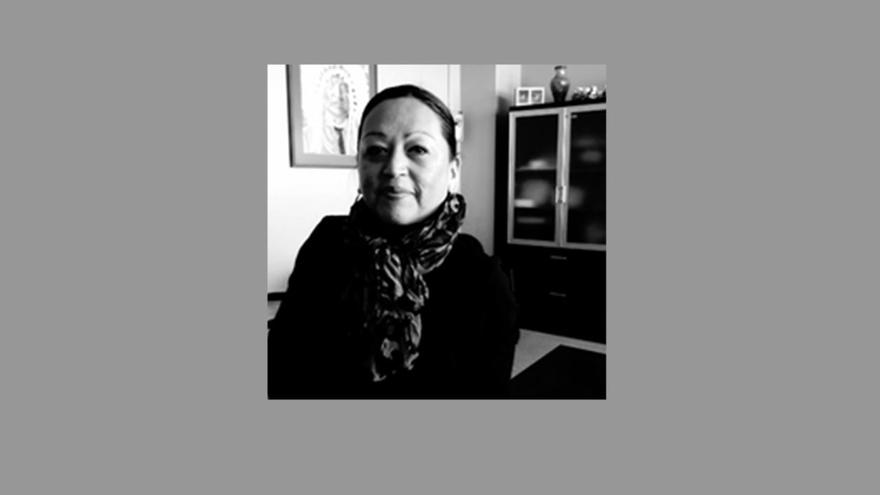
Estelle Simard is in her second year of a visiting scholar role in the UMD Department of Social Work. Her research features a theory of cultural attachment—or the idea that one’s connection to culture can help protect their well-being.
Simard obtained a Master of Social Work degree from UMD in 2009. For the research component of the program, she wrote a paper about the need for culturally restorative practices in American Indian child welfare. This foundational work impacted her career research trajectory.
A member of the Couchiching First Nation in Canada, Simard's research seeks to bring the concept of cultural attachment from the Indigenous world into academia. She also wants it to inform mainstream social work practice, particularly as it relates to child welfare.
The dominant approach to child welfare in the United States and Canada has long ignored the significance of culture. The overarching goal of the child welfare system is to protect children from harm. But removing Indigenous children from their homes and communities strips them of their cultural identity.
Because culture plays a role in nearly all aspects of Indigenous life, Simard asserts that culturally responsive services need to be integrated into social work practice. “Any service provision there is, culture has to be embedded within it. It needs to be a driving force,” she says, noting that otherwise Native children become “casualties of the system because we’re not addressing their unique cultural needs.”
Last summer, Simard helped facilitate the development of curriculum for the new Aabinoojiiyag-Wakhanheza Un Thantanhanpi - “For All the Children” Sacred Being: Tribal Training and Certification Partnership (TTCP), a foundational training for all Minnesota child welfare workers. This training is considered a foundational training piece for all practicing child welfare workers across Minnesota.
Simard calls the program and curriculum offered by the TTCP “provocative” and says it helps people to understand the true intention of the Indian Child Welfare Act and how to apply it in practice. This “decolonized social work practice” aims to protect children while preserving Native families.
She’s enthusiastic about the first virtual training, and says it was “exciting and pivotal” with people across Minnesota participating—including tribal child welfare workers in Leech Lake and Red Lake.
Developing and Sharing Knowledge The UMD Department of Social Work, which houses the TTCP, aligns itself and its coursework with social justice principles and places an emphasis on providing culturally responsive services to American Indians, which Simard appreciates. “These are exciting times—there are a lot of good developments. I like the direction the department is taking. It feels really good to be part of that.”
She credits Professor Priscilla Day for being a supportive mentor and is thankful to have a chance to share her expertise broadly within the UMD social work program. “To be able to have a space where I could bring the things I learned in my clinical social work experience—to bring that knowledge forth and rest it. To share, grow, and develop. It’s an incredible opportunity to be able to do that,” she says.
Simard teaches classes about trauma-informed and culturally responsive social work practice. “Students come to my class knowing they’re going to work. The information is really powerful and important,” she says.
Despite the COVID-19 constraints since last March, Simard remains optimistic and says teaching and helping students navigate intercultural relationships with American Indians has been a good experience.
Though she admits that the pandemic, racial injustice, and a contentious Presidential election all combined to make 2020 especially challenging, she says, “We have a real need and real opportunity to help students process that stuff out. Through our work, we’re keeping their minds focused and helping them develop strategies on how to deal with that stress.”
The department has a structure in place to respond effectively to the pandemic, which has been important, according to Simard. She also appreciates having the flexibility to make accommodations for students as needed.
A tight-knit community of UMD colleagues that work together and support one another is key to maintaining that balance. “There’s enough chaos in the world,” says Simard. “We’re all in the same canoe—don’t tip it over.”
Simard recently published the article (click)➣ “Indigenous Ways of Knowing: Research, Narratives, and Self-Actualization" in the International Journal of Critical Indigenous Studies. A forthcoming article, written with colleague Jennifer McCleary, associate professor and department head in the social work department, addresses the issue of white supremacy within social work and the systematic changes needed to decolonize social work practice.
She’s also working on a manuscript that outlines 130 factors in Indigenous well-being. “I like being an Indigenous scholar. I like writing and putting ideas out there,” Simard says.
Learn more about UMD's Department of Social Work.