BACK UP BLOG (no longer updating)

This blog was a backup for American Indian Adoptees blog
USE THE SEARCH BAR or SEARCH TOPICS at bottom of this blog

If you need support

Support Info: If you are a Survivor and need emotional support, a national crisis line is available 24 hours a day, seven days a week: Residential School Survivor Support Line: 1-866-925-4419. Additional Health Support Information: Emotional, cultural, and professional support services are also available to Survivors and their families through the Indian Residential Schools Resolution Health Support Program. Services can be accessed on an individual, family, or group basis.” These & regional support phone numbers are found at https://nctr.ca/contact/survivors/ . MY EMAIL: tracelara@pm.me

Search This Blog

Showing posts with label 2nd Edition One Small Sacrifice. Show all posts

Friday, November 3, 2023

Orphan Trauma: I didn't know

By Trace L Hentz (blog editor and adoptee)

Part 2: Adoption Awareness Month: Orphan Trauma I didn't know


or·phan    (ôr f n)

Deprived of parents. Intended for orphans: an orphan home. Lacking support, supervision, or care. Affecting so few people that the development of treatment is neglected or abandoned for being unprofitable: an orphan disease. ETYMOLOGY:
Middle English, from Late Latin orphanus, from Greek orphanos, orphaned


trau·ma    (trô m , trou -)

A serious injury or shock to the body, as from violence or an accident. An emotional wound or shock that creates substantial, lasting damage to the psychological development of a person, often leading to neurosis. An event or situation that causes great distress and disruption. ETYMOLOGY: Greek

“My problem is secrecy. I believe that perpetually secret adoptions assure un-accountability and lack of transparency. And secret adoptions are only the tip of the iceberg. The secrecy permeates the process: secret identities, secret parents, secret records, secret foster care providers, secret social workers, secret judges and lawyers (all their identities are sealed, typically), secret physicians, secret statistics and, in the case of some adoption-oriented organizations, secret budgets and secret boards of directors. In any social practice, when people in positions of power hide behind masks, one can be pretty sure that they have something to hide.”

Albert S. Wei, Special Advisor to the Bastard Nation Executive Committee


“The Indian survived our open intention of wiping them out. And since the tide turned they have even weathered our good intentions toward them, which can be more deadly.”
- John Steinbeck,
America and Americans


I didn't have a clue about any of this growing up.

When I get older: I ask myself, where is the missing piece …where is the voice of the adopted… what happens to the adoptee?  Honestly, there are very few orphans.  Most children have a relative, or a mom or dad.  Yes, after war, there are some orphans but your community (and country) is still your family, your kin.

I didn’t know the trauma of my being adopted was a problem, the real culprit.  In real life, adoptees who have been to a counselor for behavioral/emotional problems: 41% adopted as infants; 45% adopted from another country; 54% adopted from foster care. (Source: Illinois State University: A Comparative Study of Child Welfare Adoptions and Other Types of Adopted Children and Birth Children (2004)

In the last 50 years, adoption globally is widely publicized, with November as Awareness Month, and is still touted as noble, saving kids and particularly saintly of those men and women who adopt, who give so generously to orphans, all over the world.  That’s about all we hear: how great it is to adopt. 

That is how propaganda works: also why it's a billion dollar adoption industry! 

In 2004 I decided to write about my experience (as an adoption survivor and journalist) and include other American Indians who experienced being adopted. I found much more going on with the business of adoption, so I included it in my memoir ONE SMALL SACRIFICE.  Certainly this was a controversial book on adoption since I was often in a state of shock and utter disbelief during my years of research.

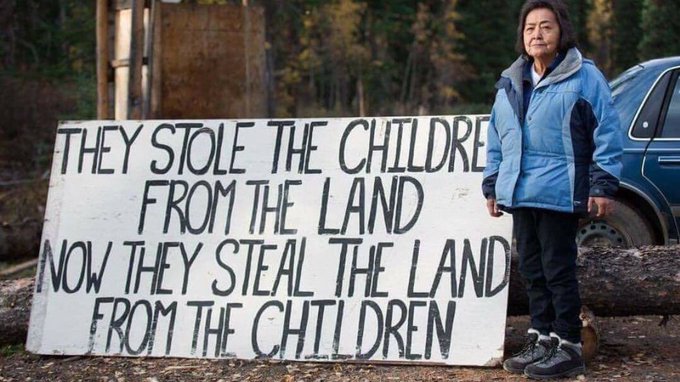
Indian child removals by adoption set out to accomplish the break-up of Indian families and culture.  Once adopted, you’re erased, an outsider, a stranger to your own nation, lands and people. I prefer to think of my younger self as brainwashed. There was fear and emotional illness, which I explain.

What is known about the Indian Adoption Projects and the aftermath, few books actually acknowledge it happened here. (Erasing this is also part of propaganda.)

There is persistent rampant poverty in Indian Country even now. Poverty is a tool, and so is assimilation/adoption. I found out Indian people were white-washed through strenuous puritanical forces using assimilation via adoption and boarding schools. Torture? Yes.

Adoptees with Indian blood find out soon enough their reservations are closed to strangers. Without proof, you’re suspect.  You can’t always get the proof since laws prevent it. 

You need that OBC: Original birth certificate. Most states have them locked up.

Associate Attorney General Tony West Delivers Remarks at the National Indian Child Welfare Association’s 32nd Annual Protecting Our Children Conference ~ Monday, April 14, 2014

 "...There's more work to do because every time an Indian child is removed in violation of ICWA, it can mean a loss of all connection with family, with tribe, with culture.  And with that loss, studies show, comes an increased risk for mental health challenges, homelessness in later life, and, tragically, suicide."

Friday, June 30, 2023

(Almost) Dead Indian: Writing in 2008

By Trace L Hentz, blog editor
 
In 2008, this is what I wrote as an introduction to the memoir I was working on... (a draft)

… a memoir of brainwashing and life as a dead Indian…


I did have to pretend to be someone – and live a lie - because I’m adopted. Ask any adoptee who has Native American ancestry.  If you are not told any truth, you’re just another dead Indian, at least on paper or on tribal rolls.  Our papers are usually fake and we live with amended original birth certificates (OBC).  Our adoptive parents are listed as our biological parents, which is another lie we live with....        

            America is like that.  Adoptees seem invisible yet the number of adoptees in the United States is estimated to be between six and ten million.  They’d prefer every one of us to live as an American citizen as if none other were as good or as important.  America forgets it’s very new by all standards and just acts like its old.  America has its own amnesia.

I intended to write about adoption history and what I experienced opening my adoption many years ago.  America’s adoption files of my era (the 1950s) are still sealed by laws in most states, still shrouded in secrecy. I expected little help or new discoveries.  Never did I expect to find so many adoptees in the same boat from 2005 onward.  I didn’t know there were millions of us, some blazing new trails on the internet global highway. I found friends.
            In the last 20+ years, adoption’s gone global, widely publicized and still touted as noble, saving and particularly saintly of those men and women who adopt, who give so generously to orphans.  That’s about all we hear: how great it is to adopt.
            I asked myself, where is the missing piece …where is the voice of the adopted… what happens to the adoptee?  I decided to write about my experience (as an adoption survivor and journalist) and include other American Indians who experienced being adopted.  I found much more going on with the business of adoption, so I include it.  Certainly this will be the most controversial book on adoption since I was often in a state of shock and utter disbelief during my years of research on the adoption industry.
            Indian child removals by adoption set out to accomplish the break-up of Indian families and culture.  Once adopted, you’re erased, an outsider, a stranger to your own nation, lands and people.  I prefer to think of my younger self as brainwashed.  There was fear and emotional illness, which I explain. What is known about the Indian Adoption Projects (more than one) and the aftermath, few books actually acknowledge it happened here.
            There is persistent rampant poverty in Indian Country even now.  I found Indian people who were white-washed through strenuous puritanical forces using assimilation via adoption and residential boarding schools. 
            Adoptees with Indian blood find out soon enough their reservations are closed to strangers.  Without proof, you’re suspect.  You can’t always get the proof since laws prevent it.  Just one Minnesota tribe, White Earth, decided to call out to its lost children; this made news in the fall in 2007.  Going back takes a special kind of courage.
            One Native American adoptee I know was told – be happy, be white. Ask yourself, how would you react? Is Indian Country such a bad place to be from? How did this happen to us?
            Society determined long ago what was best for children.  Once adopted, society can let us go, write us off.
            Here in America, thousands of Indian children were taken from parents and given to non-Indian people.
            Survivors are here to tell you this was a genocidal act against our humanity. Some of us were abducted, abused, brainwashed and all of us erased.
            Adoption secrets are protected by laws.  Laws prevented me from ever knowing the truth of my true identity.  I still found a way. 
 
This edition is on amazon and in some bookstores

p.s.
Wayne Carp, an adoption advocate and author who went “undercover” to compile his book on adoption industry history kept running into secrecy problems. Unlike Carp, I am the story.

Wednesday, October 12, 2022

NEW! TODAY! One Small Sacrifice is republished: Four Traumas #ICWA


Back in stores soon, ebook is on Amazon Kindle

By Trace Hentz, Blog Editor
After requests and many kind words, the second edition of ONE SMALL SACRIFICE is back on Amazon HERE and it will start showing up in bookstores again, or you can request your local bookstore order it for you.
I never wanted to write about me, but my story helped others and it might help you open your adoption, and process what happened to you.
 
 
👇👇👇This is a reblog from 2012:


The Special Place of Children in Aboriginal
Cultures


Children hold a special
place in Aboriginal cultures. According to tradition, they are gifts from the
spirit world and have to be treated very gently lest they become disillusioned
with this world and return to a more congenial place. They must be protected
from harm because there are spirits that would wish to entice them back to that
other realm. They bring a purity of vision to the world that can teach their
elders. They carry within them the gifts that manifest themselves as they
become teachers, mothers, hunters, councillors, artisans and visionaries. They
renew the strength of the family, clan and village and make the elders young
again with their joyful presence. Failure to care for these gifts bestowed on
the family, and to protect children from the betrayal of others, is perhaps the
greatest shame that can befall an Aboriginal family.  It is a shame that
countless Aboriginal families have experienced some of this repeatedly over
generations.


 By Trace Hentz (formerly DeMeyer)


I saw a photo today (see below) This book cover reminded me of this excerpt and chapter in my memoir.


via


Four Traumas (published in 2012) (10 years later, republished in 2022)


            Now
that we have the internet and many ways to find information, I read that adoptees
are more traumatized than a prisoner of war. That’s right. It’s called post-traumatic
stress disorder. A prisoner of war may escape or be released, but an adoptee may
suffer their entire life.


I
believe there are four distinct traumas in being an adoptee. They are: 1) in
utero, when you feel what is happening to you or sense what is coming; 2) when
you are delivered, abandoned, and handed to strangers; 3) later when you are
told you are adopted and realize fully what it means; and 4) when you realize
you are different, from a different culture or country, and you can’t contact
your people, or know them, or have the information you need to find them.


 It took me years to get this. There
are more traumas, too – like when I’d fill out forms at the doctor’s office. I
had no medical history. I had no idea if I was sitting next to someone who
could be my biological brother, sister, mother or father. It was terrifying to
think I could marry my own relative! I could carry a gene or trait that I pass
down to my children – and I wouldn’t know until it’s too late. If my birthparents
were alcoholics, then I really shouldn’t drink. I could be pre-disposed to
diabetes or heart disease or cancer or depression and not even know. My list went
on and on.


In 2006, I
found out my birthmother had diabetes, which came as another shock.


I realize a
powerful link exists between what I’m feeling, and what happens in my body. Years
ago I’d use emotional binging, working more than one job, creating drama, just to
numb my emotional pain. By 18 I was a total workaholic!  I blamed myself and
hated myself for everything.  What grief, too young to
understand. My birthmother’s rejection destroyed my ability to trust anyone.


There
may be some adoptees who do not wish to heal this and go on as they are,
holding on to these sad feelings and self-pity, rather than do the mental work
to heal. Recognizing a pattern of belief is tough, partly because you gain
sympathy by stealing (or sucking) energy from others when you act sick. That is
no way to live. You need to be your own person, self-energizing, and not steal
energy from anyone.


            Adoptees
are meant to survive this, no matter who we are or how we were traumatized. It’s
a test.


            Can
we heal our own minds? Yes.


            Can
we love two families? Yes.


            Can
we take our recovery and story back to our families? Definitely.


Some
adoptees believe that when we meet mother or father, all pain and agony will
disappear. That sadly is just hope. That is not the way it works. A reunion is
just one step on the journey and it helps, but there are many many more steps
just as difficult. It’s truly a test.       


Regardless
of ancestry, creed or complexion, adoptees can heal this. The only one who can
fix it is you.


 I’m uneasy
around new people, reserved and shy at times. I’ve lived through many
disappointments. It’s very upsetting to find out about orphan trauma now, years
later, knowing no one bothered to tell me or help me while I was experiencing
it. 


After
multiple traumas, which I’ll describe, I came to terms with it… eventually.


CLICK OLDER POSTS (above) to see more news

CLICK OLDER POSTS  (above) to see more news

MEGWETCH THANK YOU

HUGE Thank you for visiting this blog and sharing this with your kin. It's appreciated. Contact Trace anytime! Use the form below.

BOOKSHOP

Please use BOOKSHOP to buy our titles. We will not be posting links to Amazon.

Popular Posts

To Veronica Brown

Veronica, we adult adoptees are thinking of you today and every day. We will be here when you need us. Your journey in the adopted life has begun, nothing can revoke that now, the damage cannot be undone. Be courageous, you have what no adoptee before you has had; a strong group of adult adoptees who know your story, who are behind you and will always be so.

OUR HISTORY

OUR HISTORY
BOOK 5: Lost Children of the Indian Adoption Projects