LEARN MORE: https://www.firstcontactcanada.ca/
The full series is available to stream on APTN’s website here: http://aptn.ca/firstcontact/
SEASON 2:
LEARN MORE: https://www.firstcontactcanada.ca/
The full series is available to stream on APTN’s website here: http://aptn.ca/firstcontact/
SEASON 2:

IMAGE
REBLOG from
By Jana-Rae Yerxa
Sure everybody struggles. But to be born an Indigenous person, you are born into struggle. My struggle. Your struggle. Our struggle. The colonial struggle. There are many layers to this struggle. For the longest time, I didn’t even know what the true struggle was about yet I couldn’t escape it. It consumed me. Colonialism, as I have been forced to discover, is like a cancer. But instead of the cells in your body betraying itself, the thoughts in your mind work against you and eat you up from the inside out. You’re like the walking dead and you don’t even know it because you are so blinded. You can’t see the truth.
Here are some of the perverted ways colonialism infects the mind:
• With a colonized mind, I hate being Indian.
• With a colonized mind, I accept that I am Indian because that’s who the colonizer told me I am.
• With a colonized mind, I don’t understand that I am Anishinaabe.
• With a colonized mind, I believe I am inferior to the white race.
• With a colonized mind, I wish I was white.
• With a colonized mind, I draw pictures of my family with peach
coloured skin, blonde hair and blue eyes because I’ve internalized that
this is the ideal, what looks good and what is beautiful.
• With a colonized mind, I keep my feelings of inferiority to white people a secret from others and even from myself.
• With a colonized mind, I try diligently to mirror white people as closely as I possibly can.
• With a colonized mind, I desperately want to be accepted by white people.
• With a colonized mind, to gain the acceptance of white people, I will
detach myself from all that does not mirror acceptable “white”
standards, whether it is how one dresses, one speaks, or one looks.
• With a colonized mind, I feel as though I am swearing when I say “white people” in front of white people.
• With a colonized mind, I believe there is no racism.
• With a colonized mind, I believe that racism does not impact me.
• With a colonized mind, I deny my heritage and proudly say, “We are all just people.”
• With a colonized mind, when discussing issues pertaining to race, I try desperately not to offend white people.
• With a colonized mind, I do not know who I am.
• With a colonized mind, I believe I know who I am and do not understand
that this isn’t so because I’ve become the distorted image of who the
colonizer wants me to be and remain unaware of this reality.
• With a colonized mind, I could care less about history and think that our history don’t matter.
• With a colonized mind, I do not understand how the history created the present.
• With a colonized mind, I do not see how I have been brainwashed to be
an active participant in my own dehumanization and the dehumanization of
my people.
• With a colonized mind, I do not recognize how others dehumanize me and my people.
• With a colonized mind, I devalue the ways of my people- their ways of
seeing, their ways of knowing, their ways of living, their ways of
being.
• With a colonized mind, I cannot speak the language of my ancestors and do not care that this is so.
• With a colonized mind, I am unaware of how colonization has impacted my ancestors, my community, my family, and myself.
• With a colonized mind, I think that my people are a bunch of lazy, drunk, stupid Indians.
• With a colonized mind, I discredit my own people.
• With a colonized mind, I think that I am better than ‘those Indians’.
• With a colonized mind, I will silently watch my people be victimized.
• With a colonized mind, I will victimize my own people.
• With a colonized mind, I will defend those that perpetrate against my people.
• With a colonized mind, I will hide behind false notions of tradition
entrenched with Euro-western shame and shame my own people re-creating
more barriers amongst us.
• With a colonized mind, I tolerate our women being raped and beaten.
• With a colonized mind, I tolerate our children being raised without their fathers.
• With a colonized mind, I feel threatened when someone else, who is
Anishinaabe, achieves something great because I feel jealous and wish it
was me.
• With a colonized mind, when I see an Anishinaabe person working
towards bettering their life, because my of my own insecurities, I
accuse them of thinking they are ‘so good now’.
• With a colonized mind, I am unaware that I was set up to hate myself.
• With a colonized mind, I do not think critically about the world.
• With a colonized mind, I believe in merit and do not recognize unearned colonial privilege.
• With a colonized mind, I ignorantly believe that my ways of seeing,
living and believing were all decided by me when in reality everything
was and is decided for me.
• With a colonized mind, I am lost.
• With a colonized mind, I do not care about the land.
• With a colonized mind, I believe that freedom is a gift that can be bestowed upon me by the colonizer.
• With a colonized mind, I believe that I am powerless and act accordingly.
• With a colonized mind, I do not have a true, authentic voice.
• With a colonized mind, I live defeat.
• With a colonized mind, I will remain a victim of history.
• With a colonized mind, I will pass self-hatred on to my children.
• With a colonized mind, I do not understand the term “self-responsibility.”
• With a colonized mind, I do not recognize that I have choice and do
not have to fatalistically accept oppressive, colonial realities.
• With a colonized mind, I do not see that I am a person of worth.
• With a colonized mind, I do not know I am powerful.
The colonial struggle, as I said earlier, has many layers. I am no longer being eaten from the inside. Yet it is no less painful. What is different today is that I am connected to a true source of power that was always there. It’s like my friend once said, “I come from a distinguished people whose legacy shines on me like the sun.” I now understand this and it is because of this understanding that my mind and my soul are freer than they have ever been. It is because of that gift- that awakening which came through struggle- that I will proudly continue to struggle for freedom.
My freedom. Your freedom. Our freedom.
Jana-Rae Yerxa, is Anishinaabe from Little Eagle and Couchiching First Nation and belongs to the Sturgeon clan. Activist. Social Worker. Former professor. Current student. She is committed to furthering her understanding of Anishinaabe identity and resurgence as well as deconstructing Indigenous/settler relations in the contexts of colonization and decolonization. Jana-Rae is currently enrolled in the Indigenous Governance Program at University of Victoria.
This post is from 2014 but is STILL TRUE for too many of us...But we have the POWER to change ourselves. We must! Trace
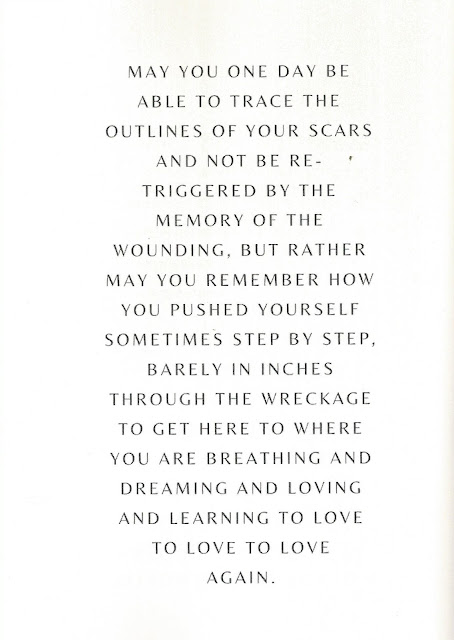

Source: Poetry (June 2018)
I am not murdered, and I am not missing, but parts of me have been disappeared.
— Leanne Simpson
Poet, writer, and educator Tanaya Winder is an enrolled member of the Duckwater Shoshone Tribe and has ancestors from the Southern Ute, Pyramid Lake Paiute, Navajo, and Black tribes.
In an interview with Zingara Poetry Review, Winder notes, “I am a person who hopes my own writing and poetry reflects the times and the needs of society; without interacting with the community the poetry cannot attempt to reflect communities and so I believe poetry must intersect with community. Poetry has the potential to create community for people who are searching for it by providing a space to interact and share experiences on the page.”
Winder cofounded As/Us, an online journal devoted to writers of color; cofounded the traveling exhibit Sing Our Rivers Red to raise awareness of missing and murdered indigenous women; and founded Dream Warriors Management, a company that manages indigenous artists. The National Center for American Indian Enterprise Development named her one of “40 Under 40” emerging American Indian leaders, and she was a 2017 First Peoples Fund Artists in Business Leadership fellow.


