For six years, a Native woman from the White Earth Band fought for
custody of her granddaughter. In November, her struggle will be heard by
the U.S. Supreme Court. The case, Brackeen v. Haaland, threatens the
federal law protecting the bond between Native American children and
their families and tribes.
This article is being co-published with The Imprint, a national nonprofit news outlet covering child welfare and youth justice.
Three white couples who sought to adopt Indigenous children will have
their legal cases heard by the U.S. Supreme Court next month. Each of
the foster families, including a couple from Minnesota, says the 1978 Indian Child Welfare Act discriminated against them because of their race.
The law, known as ICWA, ensures that tribes have a right to intervene
when their members are involved in child welfare cases. And it requires
that local governments make extra efforts to protect connections with
Indigenous culture and kin. The outcome of the case challenging ICWA,
Brackeen v. Haaland, has far-reaching implications: not only for the
battle against family separation in Indian Country, but potentially for
the foundational rights of tribes in relation to the U.S. government.
Two of the couples—Jennifer Kay and Chad Everet Brackeen of Texas,
and Heather Lynn and Frank Nicholas Libretti of Nevada—gained full
custody of the Native children they wanted to adopt.
One of the three sets of plaintiffs in the Brackeen v. Haaland case did not.
Like the other two couples, Danielle and Jason Clifford of Minnesota
ran into laws enacted to address centuries of destructive government
policies. Native children have historically been forced to attend
abusive boarding schools and systematically placed for adoption into
non-Native homes.
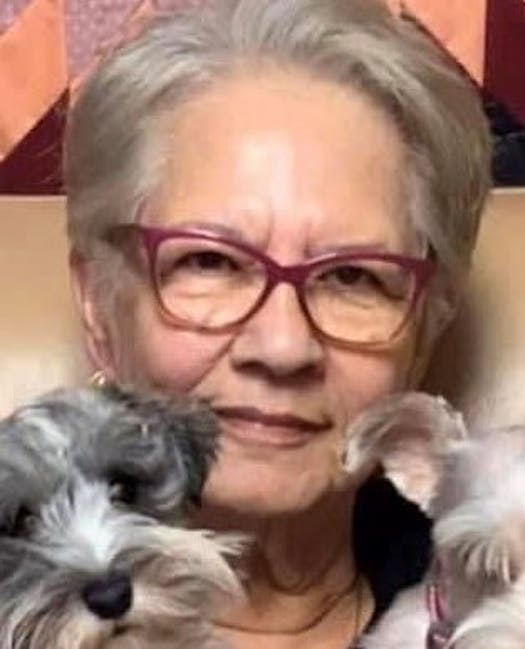
But the Cliffords also encountered Robyn Bradshaw. A member of the
White Earth Band of the Minnesota Chippewa Tribe, Bradshaw refused to
give up her granddaughter, named in court documents as P.S.
“She was the only person who was there for P.S. every single step of
the way,” said Conor Tucker, Bradshaw’s attorney of record at the
Supreme Court. “The judges changed. The lawyers changed. Sometimes
people weren’t there. But Robyn was always, always there.”
After four years in foster care and six years of court hearings, P.S.
is now back home with her White Earth community and her grandmother.
The 11-year-old is a fan of bike riding and has learned to swim. In
addition to sharing movie nights, cartoons, and coloring, Bradshaw has
sought regalia so her granddaughter can attend powwows. She’s also
introducing P.S. to the Ojibwe language.
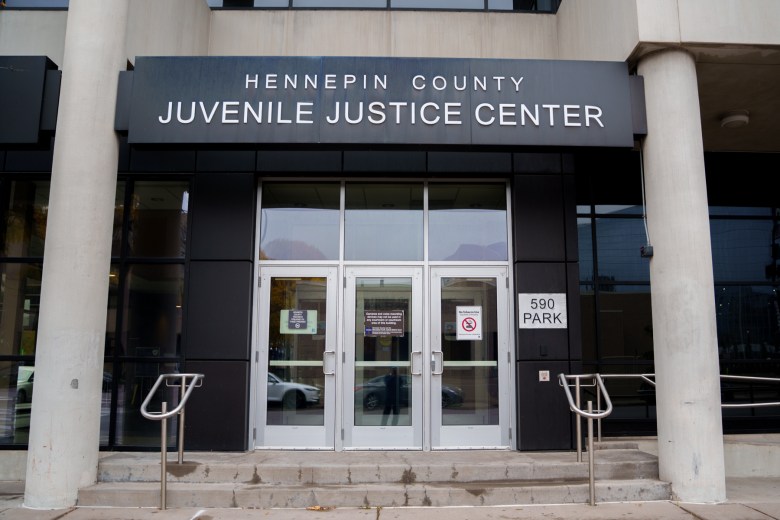
In granting the adoption in 2020, a Hennepin County trial court
acknowledged the nearly two years P.S. had spent with the Cliffords as a
positive foster care experience. But after a long legal battle, the
Minneapolis couple did not meet the court’s approval to become her
adoptive parents.
“The Cliffords can provide love, attachment, an active two-family
household and extended family, and ample financial resources,” the court
had ruled the year prior. But her grandmother can nurture her
“connection to her tribe, to her Ojibwe culture, to her sister, and to
both sides of her family in a way that the Cliffords cannot.”
The adoption of P.S. through the Minnesota juvenile court is final
and not in dispute. But the role ICWA played in hindering the Cliffords’
adoption efforts stands at the center of the larger argument now before
the nation’s highest court.
The players in Brackeen v. Haaland
The Supreme Court is set to hear oral arguments in the Brackeen v.
Haaland case on November 9. Secretary of the Interior Deb Haaland, a
Laguna Pueblo member from New Mexico and the nation’s first Indigenous
cabinet member, is a named defendant in the case because she represents
the federal agency representing the tribes.

The case was brought by the state of Texas, Louisiana, and Indiana,
along with seven individual plaintiffs. They include three sets of
foster parents and one biological mother:
- the Cliffords, from Minnesota
- the Brackeens, who adopted a Navajo child in 2018 and are seeking to adopt the boy’s half-sister
- the Librettis, who adopted an Indigenous girl in 2018
- Altagracia Socorro Hernandez, the biological mother of the child the Librettis adopted
In completing their adoption, the Librettis overcame initial
objections by the Ysleta del Sur Pueblo tribe in Texas. But according to
court records, the biological father and Hernandez, the child’s mother,
were fully supportive. Hernandez, who is non-Native, has stated ICWA was “interfering with her wishes to have the Librettis adopt her baby.”
All three couples say prioritizing Native homes for Indigenous foster
children, and providing additional support to the children’s parents, denies them equal protection. They also say states should not be forced to follow federal law, and that ICWA exceeds the authority of Congress.
A total of 497 Indian tribes and 62 American Indian organizations, 87 members of Congress, 23 states and Washington, D.C.,
have filed briefs in opposition to the Brackeen plaintiffs. They detail
a dire need to maintain the Indian Child Welfare Act, and to protect
the integrity of Indigenous families and communities. Defenders of ICWA
maintain that the federal law is not based on race, but on the rights of
tribes as sovereign nations who have treaty relationships with the U.S.
government.
Bradshaw chose to speak through her attorneys and their amicus brief
in the case. They say she did not intend to be a party to this case and
simply wants to live peacefully with P.S. out of the limelight.
Yet her amicus brief now before the Supreme Court is described
by the respected Turtle Talk Indigenous legal affairs blog as “unique,”
among the dozens that have been filed in the case to date: “The
Cliffords’ narrative of facts was allowed to go unchecked throughout the
life of the case until now.”
A child born with her grandmother close
Each of the three plaintiffs in the Brackeen case has a unique set of
circumstances. But none can be divorced from history and the high
stakes of the case.
ICWA became law at a time when one in four Indigenous children were
separated from their families. In contemporary Minnesota, Native
children are more than 16 times more likely to enter foster care than white children.
According to the U.S. Department of Health and Human Services’
Children’s Bureau: “ICWA was enacted after Native American children were
systematically removed—often without evidence of abuse or neglect that
would be considered grounds for removal—and placed with non-Native
families, with the intent to deprive them of their Native family or
culture.”
Bradshaw’s granddaughter was among them.
“P.S. was born on a warm, clear, and breezy day in July 2011,” a brief filed to the Supreme Court reads.
“Ms. Bradshaw had bonded with P.S. in the womb and saw P.S.’s face
for the first time moments after her birth—in the delivery room.”
P.S. and her mother lived with Bradshaw after the birth. And “for the
next three years, P.S. was raised in a loving and stable home with Ms.
Bradshaw and P.S.’s mother as active, full-time caregivers,” records
show. “Ms. Bradshaw fed P.S., bathed her, dressed her, changed her
diapers, played with her, sang to her, comforted her, cared for her,
tucked her into bed, and woke up the next morning to do it all again.”
But in 2014, Bradshaw’s daughter “fell into drug addiction and became
unable to care for P.S. or to contribute to the household finances,”
according to court filings. Bradshaw, taking on full responsibility for
her granddaughter while her daughter fought to recover, had limited
income and lost her home to eviction.
Bradshaw and P.S. stayed with friends for a time. But she eventually
left P.S. in the care of her father for two days, while finalizing
permanent housing. He agreed, but then disappeared with the child, court
records show. Bradshaw panicked. She called the police, who filed a CPS
report with Hennepin County.
On August 7, Bradshaw learned her daughter and her grandaughter’s
father had been arrested on drug-related charges with P.S. present, and
the girl had been placed in emergency foster care.
“Ms. Bradshaw immediately called Hennepin County and asked when she
could pick up P.S.,” court documents state. “The County told her she
could not do so and gave her no further information.”
Bradshaw had been taken from her home as a child and forced to attend
a residential boarding school. So she was steadfast in her
determination to reunite with P.S., records show. She “resolved that she
would never abandon her granddaughter.”
A Minnesota trial court would later rule that Bradshaw “deeply loved”
her granddaughter and the two shared “a strong bond and a secure
attachment.”