This blog was a backup for American Indian Adopteesblog
USE THE SEARCH BAR or SEARCH TOPICS at bottom of this blog
If you need support
Support Info: If you are a Survivor and need emotional support, a national crisis line is available 24 hours a day, seven days a week: Residential School Survivor Support Line: 1-866-925-4419. Additional Health Support Information: Emotional, cultural, and professional support services are also available to Survivors and their families through the Indian Residential Schools Resolution Health Support Program. Services can be accessed on an individual, family, or group basis.” These & regional support phone numbers are found at https://nctr.ca/contact/survivors/ .
MY EMAIL: tracelara@pm.me
Search This Blog
Showing posts with label sex trafficking. Show all posts
Showing posts with label sex trafficking. Show all posts
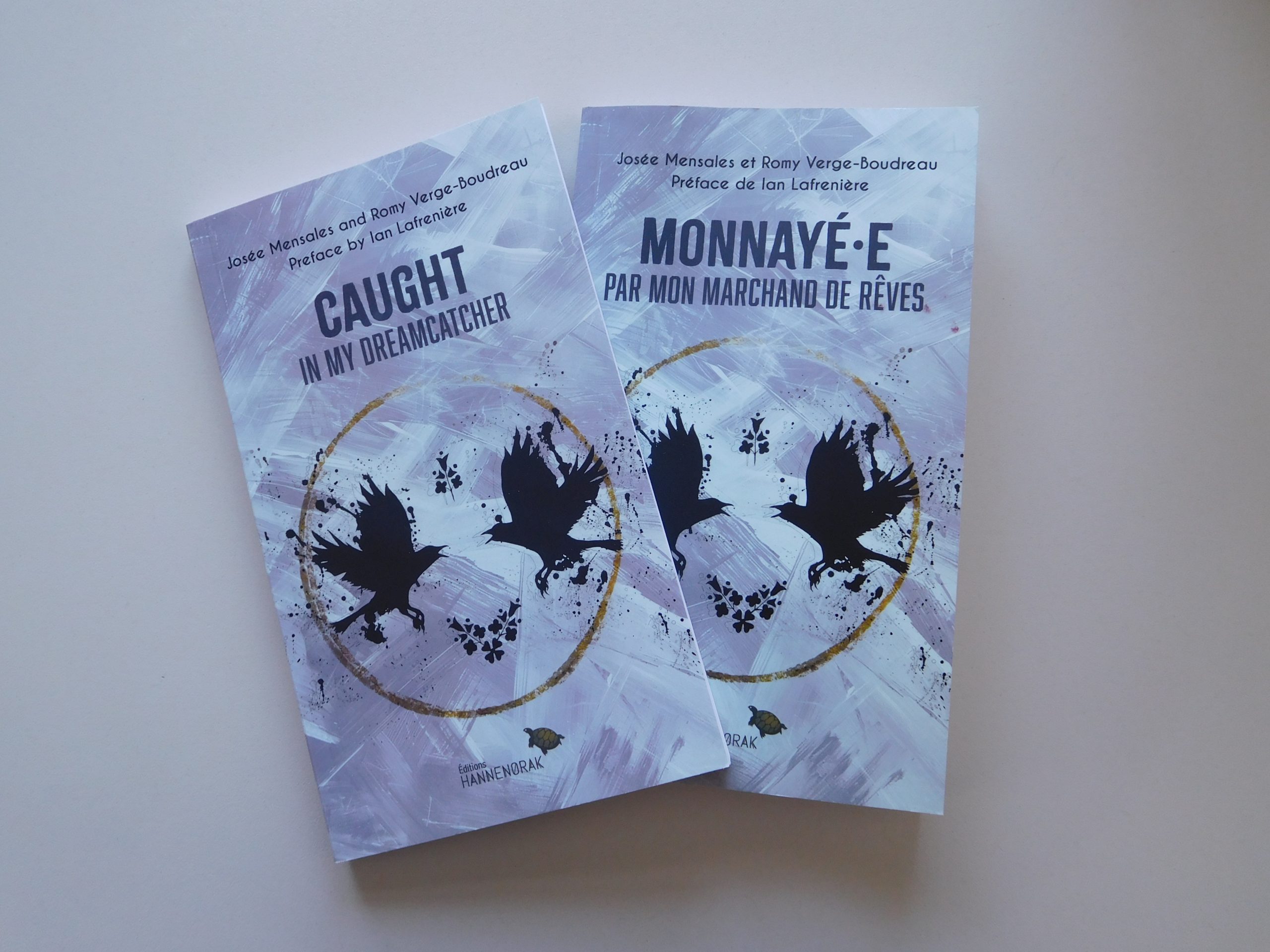
The book was originally published in French. Miriam Lafontaine/The Eastern Door
Sex trafficking happens in every community. That’s the message behind Caught in my Dreamcatcher, a new book written by two Montreal police officers.
“It hits in the best of families. It hits no matter where we come
from. It’s a crime of opportunity,” said Josée Mensales, who co-wrote
the book alongside her colleague Romy Verge-Boudreau.
The two also work for the Surete du Québec (SQ) unit dedicated to
arresting those who profit off the sale of others, touring communities
all over the province prior its publication last week.
(EAGAN, MN. July 1, 2023) – If not for the journals of America’s first explorers, Indigenous people might not have an understanding of the overwhelming feeling of discomfort when in the presence of some non-Native people. As though, we do not matter, as though we are less than they, that they could do to us what they wanted as a person, a family, as a nation of people.
But, we do have those journals to reflect on as evidence of the day when Indigenous people became a commodity to be trafficked and enslaved for the purpose of sex and labor in both America and Europe.
October 11, 1492:
“They should be good servants and intelligent, for I observed that they quickly took in what was said to them, and I believe that they would easily be made Christians.”
October 14, 1492:
“These people are very simple [in] the use of arms …with fifty men they can all be subjugated and made to do what is required of them.”
American History vs Native History
More than five centuries later, school children learn about “Thanksgiving” and how Native and non-Natives feasted and thrived in friendship when nothing could be farther from the truth. Across the nation, elected state leaders are banning teaching the truth about our history, calling it “critical race theory.”
“Our nation was built upon the graves of Indigenous people and upon the backs of minorities,” said CEO Lori Jump, StrongHearts Native Helpline. “When state legislatures are denying and suppressing the truth about our history, we can not sufficiently address nor prevent human trafficking. In order to heal from the tragedies of our past, in order to understand the dynamics of domestic and sexual violence - we must face the truth about our nation’s history.”
Human Trafficking Worldwide
Human traffickers profit at the expense of their victims by forcing them to perform labor or to engage in commercial sex in every region of the United States and around the world. With an estimated 27.6 million victims worldwide at any given time, human traffickers prey on people of all ages, backgrounds, and nationalities, exploiting them for their own profit.
Studies on human trafficking are few and far between, especially those related to Native people. In a Minnesota based study on sex trafficking,“Garden of Truth: The Prostitution and Trafficking of Native Women in Minnesota,” 105 Native women who were trafficked participated in a survey about the tragedy of their own experiences. Native women, children and Two-spirit people were found to be victimized with more frequency - noting that most traffickers were non-Native who targeted those most vulnerable to being poverty stricken and homeless.
Normalization of Selling Sex
Jessica Smith, a victim-survivor turned advocate, knows what it means to be trafficked both as a child and as an adult. And, she knows that the only way to help these victims is to get them off the streets and into stable housing.
“As children, we see our Mothers being trafficked and we look up to them [as role models],” Smith said and explained that there is a connection between intergenerational trauma and human trafficking. “I saw generations of it and thought it was normal.”
Smith added, “It’s important for people to understand that sex trafficking is perpetrated by people outside of our [Native] communities. Whether it’s domestic violence, rape, murder, prostitution or sex trafficking, the vast majority of perpetrators against Native women and children are not Native men,” said Smith. “We found that to be true in the Garden of Truth.”
Perpetrators and Their Victims
Native victim survivors readily identified perpetrators as primarily white men followed by African American men and to a much lesser degree by Native men. Sex traffickers use common tactics that include: trickery and coercion as well as emotional, physical and sexual abuse.
Vulnerabilities to human trafficking include:
An unstable living situation
Previous experience with other forms of violence (sexual/domestic)
Identified as a runaway and/or involved in the juvenile justice or child welfare systems
Poverty and/or economic need
Addiction to drugs and/or alcohol (often introduced by traffickers)
Substance abuse by a caregiver or family member
Vulnerability among Native women surveyed:
99 percent were currently or previously homeless.
92 percent had been raped and wanted to escape prostitution
84 percent had been physically assaulted in prostitution.
79 percent had been sexually abused as children by an average of 4 perpetrators.
72 percent suffered traumatic brain injuries in prostitution.
52 percent had post traumatic stress disorder (PTSD), a rate equal to combat veterans.
As a survivor and advocate,” Smith concluded that survivor led advocacy is key to prevention. “We need [advocates] to understand that we were raped, beaten, and made to sell our bodies. [That] we did not choose this life. It was chosen for us.”
StrongHearts Understands
At StrongHearts Native Helpline, we understand. We recognize the importance of education and we strive to identify and expose the roots of human trafficking. We acknowledge that it began with colonization and continues primarily at the hands of non-Natives. Ours is the story of all Indigenous peoples - a story about survival and resilience and a story that must conclude with truth, reparation and reconciliation.
StrongHearts advocates are available 24/7 and offer:
Information and education about domestic violence and sexual violence
Personalized safety planning
Crisis intervention
Referrals to Native-centered domestic violence and sexual violence service providers
Basic information about health options
Support locating health facilities or crisis centers trained in the care of sexual assault and forensic exams
General information about jurisdiction and legal advocacy referrals
Serving all individuals who reach out for their services regardless of race, ethnicity, gender, gender identity, age, religion, national origin, sexual orientation, disability, or any other factor protected by local, state, or federal law, The National Human Trafficking Hotline can be reached at 1-888-373-7888, hearing impaired dial 711, text 233733 SMS text lines and live online chat available 24 hours a day, 7 days a week, 365 days a year.
READ: Karr, Ronald Dale. “‘Why Should You Be So Furious?’: The Violence of the Pequot War.” The Journal of American History, vol. 85, no. 3, [Oxford University Press, Organization of American Historians], 1998, pp. 876–909, https://doi.org/10.2307/2567215.
Honolulu, Hawaiʻi— TheHawaiʻi State Commission on the Status of Womenhonored the national day of awareness for Missing Murdered and Indigenous Women and Girls’ Day on May 5,2021, and announced that Hawaiʻi State Legislature passedHCR11, which created ataskforce for missing and murdered indigenous women and girls (MMIWG). The state-wide, multi-year taskforce will be co-chaired by the Office of Hawaiian Affairs and the Hawaiʻi State Commission on the Status of Women(Commission). The Apology Resolution, a jointresolution of U.S. Congress passed in 1993, confirmed that Native Hawaiians are an “indigenouspeople,” which established a “political” relationship between Native Hawaiians and the United States government. However, Native Hawaiians have not been included in national research on MMWIG to date. The Hawaiʻi State Legislature Women’s Legislative Caucus included HCR11 in their priority bill package for 2021.
Hawaiʻi State Representative Stacelynn K.M. Eli championed HCR11: “For too long we Native Hawaiian women, like our land, have been commodified. Our bodies and our stories are used and forgotten. This is vital work for us as a State, to provide us with meaningful data to ensure theprotection of our most vulnerable population: Native Hawaiian women and girls.”
Unlike other states such as Washington state, Hawaii’s MMIWG taskforce willnotbe led by law enforcement, but rather by agencies that advocate for Native Hawaiians, women and gender diversepeople.
The legislation also formally recognizes that “harmful colonial stereotypes have resulted in thesexual fetishization of Native Hawaiians” and that “land dispossession and incarceration have increased vulnerability of Native Hawaiians” to violence.
"People ask why is an MMIWG taskforce needed in Hawaiʻi? Preliminary data shows that Native Hawaiians are disproportionately trafficked into the sex trade, which fuels the MMIWG crisis. From 2017 to 2019, one out of every three child sex trafficking victims reported to the State of Hawaiʻi, Child Welfare Services hotline were Native Hawaiian. In addition, 64% of 97 sex trafficking victims identified in 2019 by Child & Family Services were Native Hawaiian,” said Khara Jabola-Carolus, Executive Director, of the Commission.
“We lose Indigenous girls in Hawaiʻi through many means--through the foster care system, through predators who quietly lure children into human trafficking, and of course through domesticviolence. This issue exists because we do not care about Indigenous women. We allow unforgivablenumbers of women to be murdered in our country and yes, even in our state. So, we have decided thatwe need to do something to raise awareness in Hawai`i, and honor the families here whose daughters are missing and murdered. Today, to raise awareness and support our Indigenous Sisters, we will wear red, with red handprints over our faces to represent their voices being silenced, as we say NO MORE STOLEN SISTERS,” emphasized Stacey Moniz, Maui Commissioner of the State Commission.
Edie Ignacio-Neumiller, KauaʻiCommissioner of the State Commission stated, “All islands including Kauaʻi will be at the table to interrogate this cycle of violence. There is a crisis of missing and murderedindigenous women and girls and widespread rampant of violence among women and girls. There needsto be more specific data to find local solutions and locations of MMIWG.”
“This day also provides an opportunity for our government to reaffirm their commitment to stop exploitation of other humans for profit, particularly Native Hawaiian women and girls. We will addressthe systemic shortcomings of national and local governments to adequately focus on issues of HumanTrafficking that most often leads to Missing and Murdered Indigenous Women and Girls,” said Cyd Hoffeld, Hawaiʻi Island Commissioner of the State Commission. “We will continue to bring public awareness and ongoing island-wide discussions about human trafficking in Hawai’i, through the supportand partnerships of the Hawai’i State Commission, and our County Committees on the Status ofWomen.”
T he Métis National Council and the Government of Canada will be working collaboratively, Nation-to-Nation, to develop a process to engag...
To Veronica Brown
Veronica, we adult adoptees are thinking of you today and every day. We will be here when you need us. Your journey in the adopted life has begun, nothing can revoke that now, the damage cannot be undone. Be courageous, you have what no adoptee before you has had; a strong group of adult adoptees who know your story, who are behind you and will always be so.
OUR HISTORY
BOOK 5: Lost Children of the Indian Adoption Projects