SAN
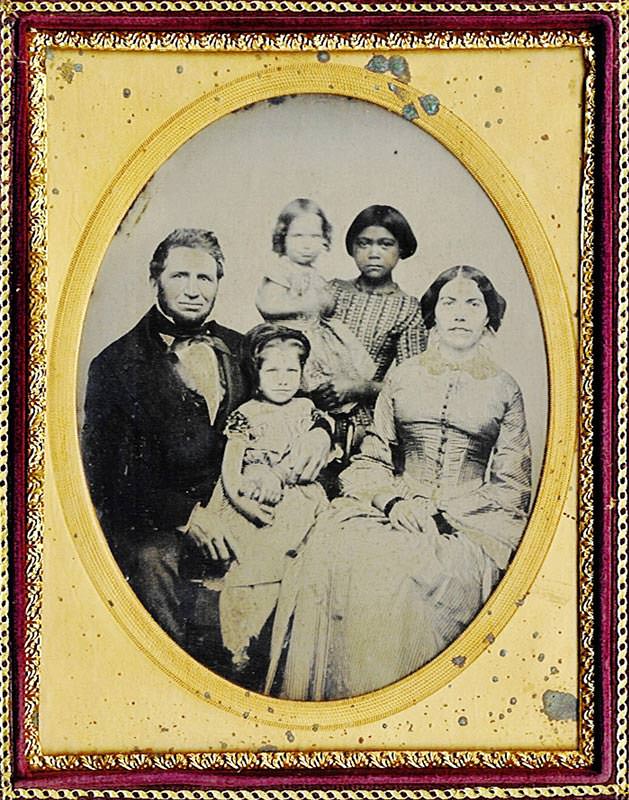
FRANCISCO, CA – California came into the Union as a free state in 1850
with a constitution that banned slavery. So how did white settlers in
the mid-19th century get away with enslaving Indigenous
children, some of them as young as 2 years old? And why does this little
known, terrible chapter of California history matter today?
Today, the ACLU of Northern California released the third episode of Gold Chains, our podcast about California’s hidden history of slavery. “Indigenous Injustice” examines a 19th
century state law called the Act for the Government and Protection of
Indians that effectively legalized Indigenous child slavery and
encouraged kidnappers to snatch Native children from their tribal
communities.
“The
horror of what happened in California, the genocidal violence against
Native people, and especially the enactment of that violence against
children, is unfathomable,” said historian Stacey Smith, who appears as a
guest on the show.
“Indigenous
Injustice” isn’t just ancient history. Over time, the practice of
forcibly separating Native children from their tribal communities has
taken on many forms. There were the so- called Indian Boarding Schools. A
variety of other government-sanctioned adoption schemes have funneled
Indigenous children into Non-Native, mostly white households.
Currently,
there’s a landmark case scheduled to be heard by the U.S. Supreme Court
on Nov. 9 – Brackeen v. Haaland – that deals with the very same issue
of the forced removal of Native children from their families, tribes and
tribal culture. It threatens to dismantle the Indian Child Welfare Act (ICWA), which was passed to prevent Native children from being removed from their communities.
The American Civil Liberties Union, along with 12 ACLU affiliates ( including the ACLU of Northern California) have filed an amicus brief with the U.S. Supreme Court, urging the court to uphold the constitutionality of the Indian Child Welfare Act.
“Indigenous Injustice” is a timely story that connects the dots between Indigenous child slavery in California to the present.
Link to Episode Website
California joined the Union as a so-called free state in 1850.
So how did white settlers get away with enslaving Native children until
they were young adults?
We explore a little-known California state law called the Act
for the Government and Protection of Indians that unleashed genocidal
violence against Indigenous children. And we connect the dots between
that terrible past and a landmark upcoming U.S. Supreme Court case.
Episode Credits:
Produced by the ACLU of Northern California
Host and writer Tammerlin Drummond
Senior Producer and Editor Joanne Jennings
Mix and Original Score Renzo Gorrio
Executive Producer Candice Francis
We’d like to thank our wonderful guides Stacey L Smith, William Bauer and Tedde Simon.
Our associate producers are Lisa P. White and Carmen King.
A special thanks also to our voice actors Pauline Schindler, William Freeman, and Avi Frey.
Elize Manoukian provided fact-checking and production assistance.
Field recording was done by Julie Conquest, Ron George and Eric Gleske.
We’d also like to thank the following members of our Gold
Chains team: Brady Hirsch, Gigi Harney and Eliza Wee. Thank you also to
Abdi Soltani, executive director of the ACLU of Northern California.
A special thanks to World Affairs, Oregon State University and
the University of Nevada, Las Vegas for providing us with recording
studios.
Archival sound was provided courtesy of Periscope Films and Prelinger Archives.
Episode Guests:
William Bauer
is a professor of history at the University of Nevada, Las Vegas and a
citizen of the Round Valley Reservation. He is the author of California Through Native Eyes: Reclaiming History and We Were All Like Migrant Workers Here: Work, Community and Memory on California’s Round Valley Reservation.
Stacey Smith is an associate history professor at Oregon State University. She is the author of Freedom's Frontier: California and the Struggle over Unfree Labor, Emancipation and Reconstruction.
Tedde Simon is the Indigenous justice advocate at the ACLU of Northern California and a citizen of the Navajo Nation.
Additional Resources:
Gold Chains: The Hidden History of Slavery in California, ACLU of Northern California
Among the Diggers of 30 Years Ago, Helen M. Carpenter
Early California Laws and Polices Related to California Indians Kimberly Johnston-Dodds, California State Library
Federal Indian Boarding School Investigative Report U.S. Department of Indian Affairs
This Land, host Rebecca Nagle
At Liberty, host Kendall Ciesemier
IMPORTANT STEP!

Northern Arapaho business council member Lee Spoonhunter has one request of the Wyoming legislature.
“Let's get started on working on legislation to protect the children of the state of Wyoming,” Spoonhunter asked
An upcoming U.S. Supreme Court case looking at the Indian Child Welfare Act (ICWA), first passed in 1978. A law that keeps tribes of Indigenous children in the loop of family court proceedings to maintain families and communities. Spoonhunter is asking the state-tribal relations committee on behalf of the Northern Arapaho tribe to enact a state law protecting the tenets of ICWA.
The U.S. Supreme Court is expected to rule on Brackeen v. Haaland before summer of next year, and some fear that ICWA will be repealed.
“We're going to lose our children to the system. We're not going to find them until they've been adopted out,” said Spoonhunter. “And that's just the reality of what's going to happen if this law is struck down.”
An ICWA case requires two things: One, a child who is enrolled or could be enrolled in a tribe and one of their parents needs to be enrolled and two: the child’s case needs to be going through some kind of child custody proceedings. This includes foster care, adoption, or a termination of parental rights.
Clare Johnson, the Northern Arapaho tribe attorney, said she is currently working on 62 ICWA cases, about half within the state of Wyoming and the other half Northern Arapaho children in other states. They are all unique in what the individual child requires to be compliant with ICWA. But all have one thing in common.
“The Northern Arapaho tribe strongly believes in bringing these cases back to tribal court to attempt to reunify the child with their family. And if that's not possible to place them with other members of their family or their tribe,” said Johnson.
Being adopted outside of the community might lead a child to feel disconnected from their culture. And the U.S. has a long history of actively taking away Indigenous children from their families in boarding schools. This was a policy that removed Indigenous children from their homes in order to break cultural traditions.
Department of Interior Deb Haaland has enacted its Indian Boarding School Initiative, aimed at detailing the forced assimilation of Indigenous children.
ICWA has allowed children to stay in their communities.
“The tribe likes to have the children within the tribal system so we can look at alternative solutions,” said Johnson. “So, that maybe we place with grandma, and parents have a chance to work the system and get into a place where they can one day have their children back.”
The proposed options could include drafting a trigger protection legislation. What that means is if the federal government does strike down ICWA, Wyoming could say ‘no, we will still follow the tenets of ICWA’. Or use the federal law as a template to draft a state law.
But Senator Affie Ellis said it might be prudent to wait and see what the federal government does before drafting legislation. Since tribes are political entities, they have a special status under the law that describes them as sovereign, unlike other racial categories. This gives them political power and protections under the tribes that they are enrolled in.
Ellis said if the law was repealed, this unique political distinction afforded to tribes would be called into question.
“So, that's what's at stake here, is if the Supreme Court somehow finds that that political classification no longer applies, and it's just race-based, then we can't just mimic the federal law, because then it really just takes it all away,” she said.
So, Ellis said waiting might be the better move.
Kate Fort, director of the Indian Law Clinic at Michigan State University, is an expert on ICWA. She said ICWA brings state and tribal governments together in a unique way.
“State ICWA laws are going to protect and ensure that the protections that exist now continue,” she said. “It provides guidance to your state agencies. I think one thing that is really hard to explain to the Supreme Court is sort of how much work has been built up around ICWA.”
Fort said it's hard to say if the federal government is prepared to upend decades of federal Indian law, but being prepared isn’t a bad thing. While the tribes are essential to getting a state ICWA law going, the state should get involved.
“ICWA is the state's responsibility, it was, frankly, a remedial law to ensure that states aren't acting agencies and courts aren't acting wrong when they get native children in front of them,” she said.
Ten states currently have state ICWA laws including Iowa, Nebraska, and New Mexico.
The next tribal committee meeting is in October on the University of Wyoming campus where the committee will continue to discuss whether to write a bill or wait to see what the supreme court does.
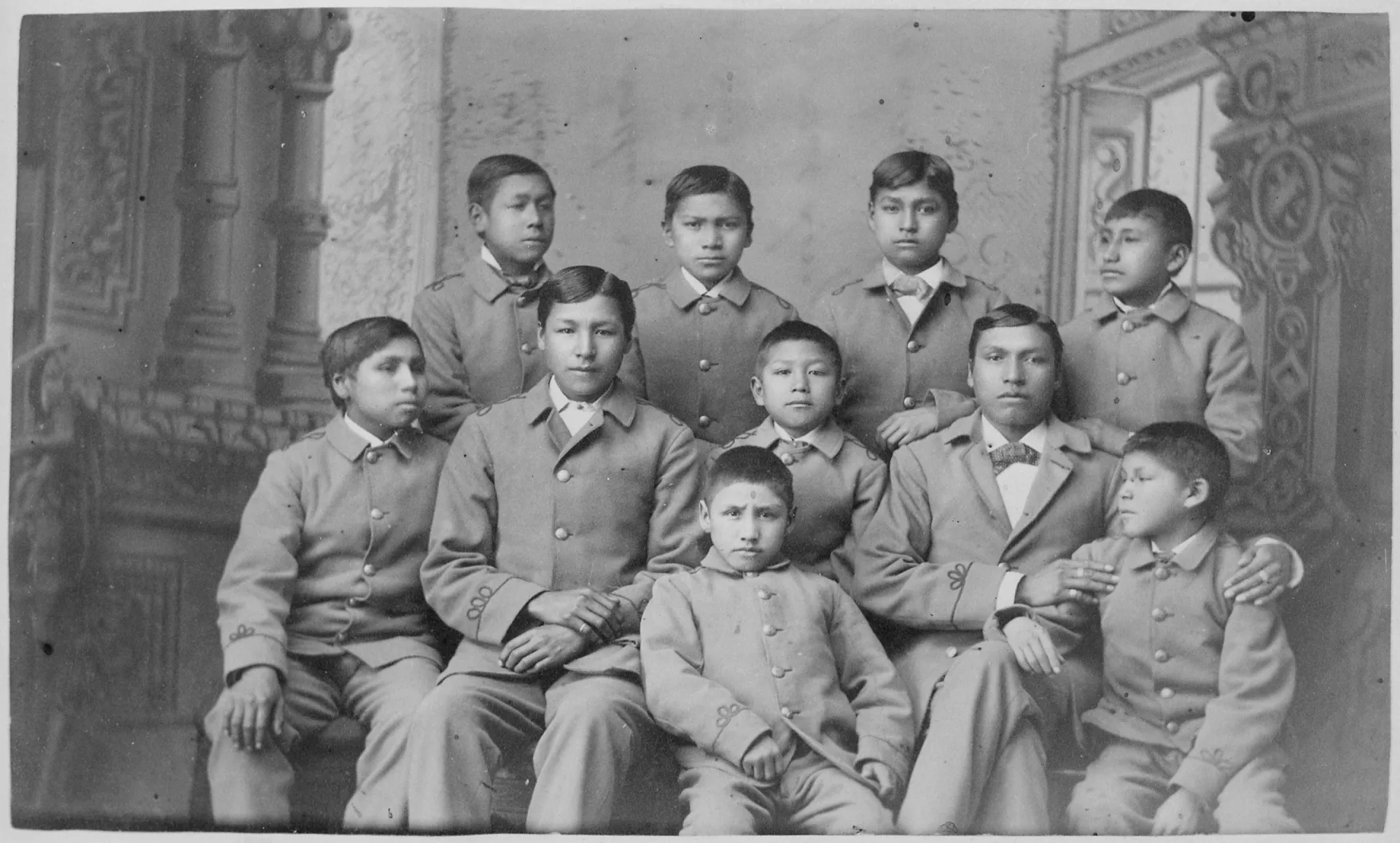 |
| Group of Omaha boys in cadet uniforms, Carlisle Indian School, Pennsylvania, ca. 1880. (National Archives Identifier 519136) |
ACLU of Wyoming urges Supreme Court to uphold Indian Child Welfare Act
The ACLU of Wyoming is weighing in on a U.S. Supreme Court case that could overturn the Indian Child Welfare Act, a law that protects Indigenous children from forced removal from their families and tribes.
The court will start reviewing the act in November, and the Wyoming ACLU branch recently sent the justices a brief, along with 13 other states, urging them to uphold the act.
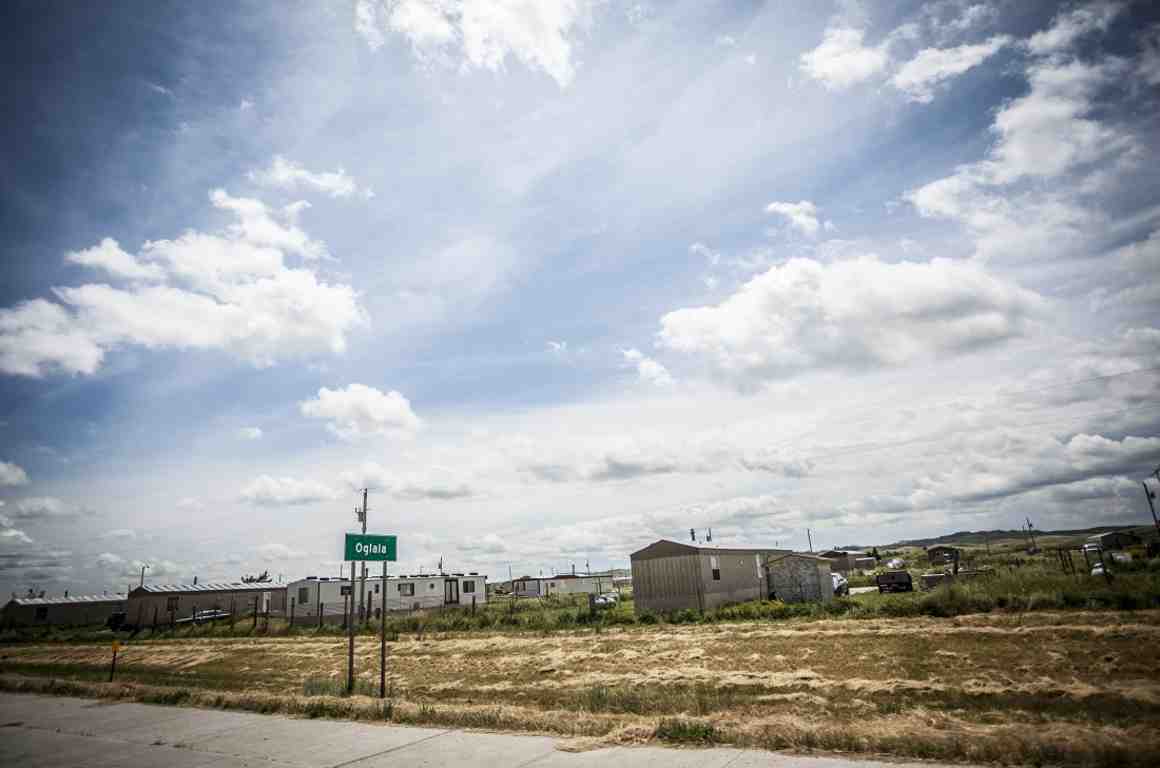
"It basically ensures that all efforts are made to maintain those ties and connections between Indian children and their heritage," said Stephanie Amiotte, legal director of the Wyoming ACLU, and an enrolled member of the Oglala Lakota Sioux tribe in South Dakota.
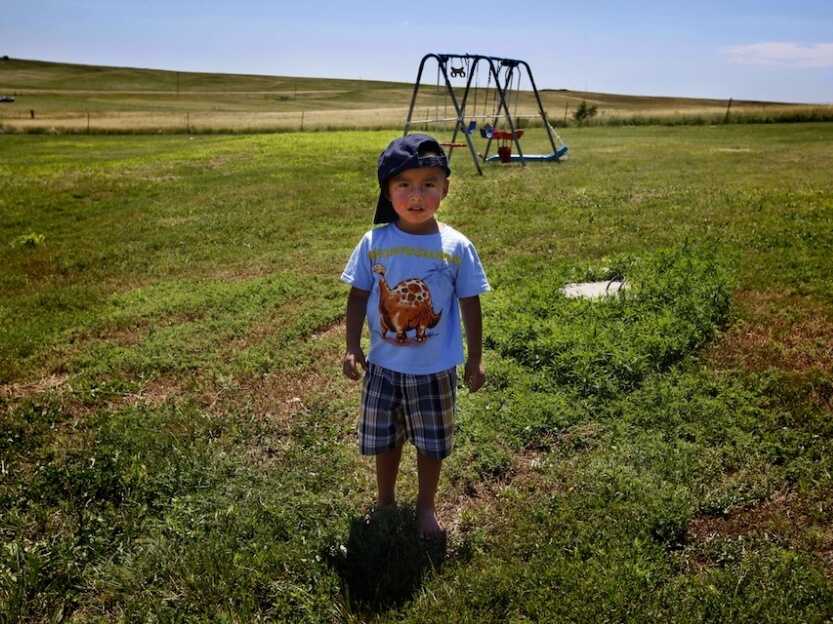 |
| Janice Howe's grandchild Derrin Yellow Robe, 3, stands in his great-grandparents' back yard on the Crow Creek Reservation in South Dakota. Along with his twin sister and two older sisters, he was taken off the reservation by South Dakota's Department of Social Services in July of 2009. READ |
It took over a year and a half for Erin Yellow Robe, a member of the Crow Creek Sioux Tribe, to be reunited with her children. Based on an unsubstantiated rumor that Erin was misusing prescription pills, authorities took custody of her children and placed them with white foster parents — despite the federal Indian Child Welfare Act’s requirements and the willingness of relatives and tribal members to care for the children.
For white families, these scenarios typically do not lead to child welfare involvement. For Black and Indigenous families, they often lead to years — potentially a lifetime — of ensnarement in the child welfare system or, as some are now more appropriately calling it, the family regulation system.
Our country’s latest reckoning with structural racism has involved critical reflection on the role of the criminal justice system, education policy, and housing practices in perpetuating racial inequity. The family regulation system needs to be added to this list, along with the algorithms working behind the scenes. That’s why the ACLU has conducted a nationwide survey to learn more about these tools.
Women and children who are Indigenous, Black, or experiencing poverty are disproportionately placed under child welfare’s scrutiny. Once there, Indigenous and Black families fare worse than their white counterparts at nearly every critical step. These disparities are partly the legacy of past social practices and government policies that sought to tear apart Indigenous and Black families. But the disparities are also the result of the continued policing of women in recent years through child welfare practices, public benefits laws, the failed war on drugs, and other criminal justice policies that punish women who fail to conform to particular conceptions of “fit mothers.”
Many child welfare agencies have begun turning to risk assessment tools for reasons ranging from wanting the ability to predict which children are at higher risk for maltreatment to improving agency operations. Allegheny County, Pennsylvania has been using the Allegheny Family Screening Tool (AFST) since 2016. The AFST generates a risk score for complaints received through the county’s child maltreatment hotline by looking at whether certain characteristics of the agency’s past cases are also present in the complaint allegations. Key among these characteristics are family member demographics and prior involvement with the county’s child welfare, jail, juvenile probation, and behavioral health systems. Intake staff then use this risk score as an aide in deciding whether or not to follow up on a complaint with a home study or a formal investigation, or to dismiss it outright.
Like their criminal justice analogues, however, child welfare risk assessment tools do not predict the future. For instance, a recidivism risk assessment tool measures the odds that a person will be arrested in the future, not the odds that they will actually commit a crime. Just as being under arrest doesn’t necessarily mean you did something illegal, a child’s removal from the home, often the target of a prediction model, doesn’t necessarily mean a child was in fact maltreated.
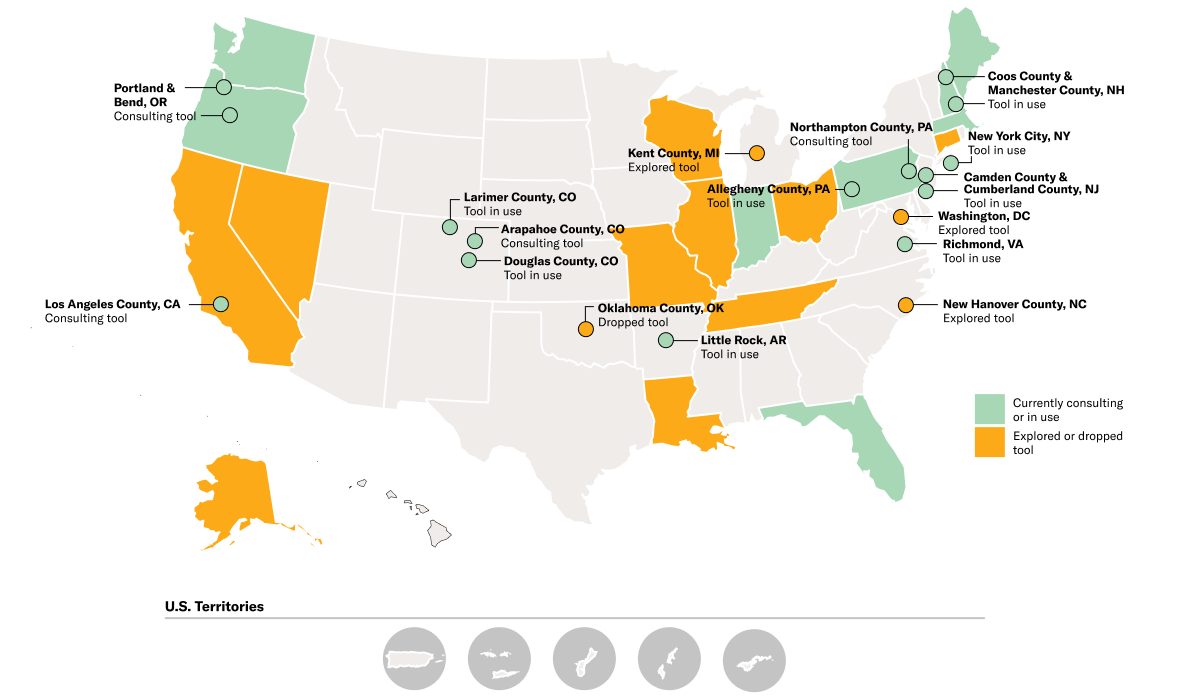
We examined how many jurisdictions across the 50 states, D.C., and U.S. territories are using one category of predictive analytics tools: models that systematically use data collected by jurisdictions’ public agencies to attempt to predict the likelihood that a child in a given situation or location will be maltreated. Here’s what we found:
Despite the growing popularity of these tools, few families or advocates have heard about them, much less provided meaningful input into their development and use. Yet countless policy choices and value judgments are made in the course of creating and using the tool, any or all of which can impact whether the tool promotes “fairness” or reduces racial disproportionality in agency action.
Moreover, like the tools we have seen in the criminal legal system, any tool built from a jurisdiction’s historical data runs the risk of continuing and increasing existing bias. Historically over-regulated and over-separated communities may get caught in a feedback loop that quickly magnifies the biases in these systems. Who decides what “high risk” means? When a caseworker sees a “high” risk score for a Black person, do they respond in the same way as they would for a white person?
Ultimately, we must ask whether these tools are the best way to spend hundreds of thousands, if not millions of dollars, when such funds are urgently needed to help families avoid the crises that lead to abuse and neglect allegations.
It’s critical that we interrogate these tools before they become entrenched, as they have in the criminal justice system. Information about the data used to create a predictive algorithm, the policy choices embedded in the tool, and the tool’s impact both system-wide and in individual cases are some of the things that should be disclosed to the public before a tool is adopted and throughout its use. In addition to such transparency, jurisdictions need to make available opportunities to question and contest a tool’s implementation or application in a specific instance if our policymakers and elected officials are to be held accountable for the rules and penalties enforced through such tools.
In this vein, the ACLU has requested data from Allegheny County and other jurisdictions to independently evaluate the design and impact of their predictive analytics tools and any measures they may be taking to address fairness, due process, and civil liberty concerns.
It’s time that all of us ask our local policymakers to end the unnecessary and harmful policing of families through the family regulation system.
Read the full white paper:
https://www.aclu.org/fact-sheet/family-surveillance-algorithm
We need you with us to keep fighting