BACK UP BLOG (no longer updating)

This blog was a backup for American Indian Adoptees blog
USE THE SEARCH BAR or SEARCH TOPICS at bottom of this blog

If you need support

Support Info: If you are a Survivor and need emotional support, a national crisis line is available 24 hours a day, seven days a week: Residential School Survivor Support Line: 1-866-925-4419. Additional Health Support Information: Emotional, cultural, and professional support services are also available to Survivors and their families through the Indian Residential Schools Resolution Health Support Program. Services can be accessed on an individual, family, or group basis.” These & regional support phone numbers are found at https://nctr.ca/contact/survivors/ . MY EMAIL: tracelara@pm.me

Search This Blog

Showing posts with label Survivors of the Indian Adoption Projects and 60s Scoop. Show all posts

Friday, November 10, 2023

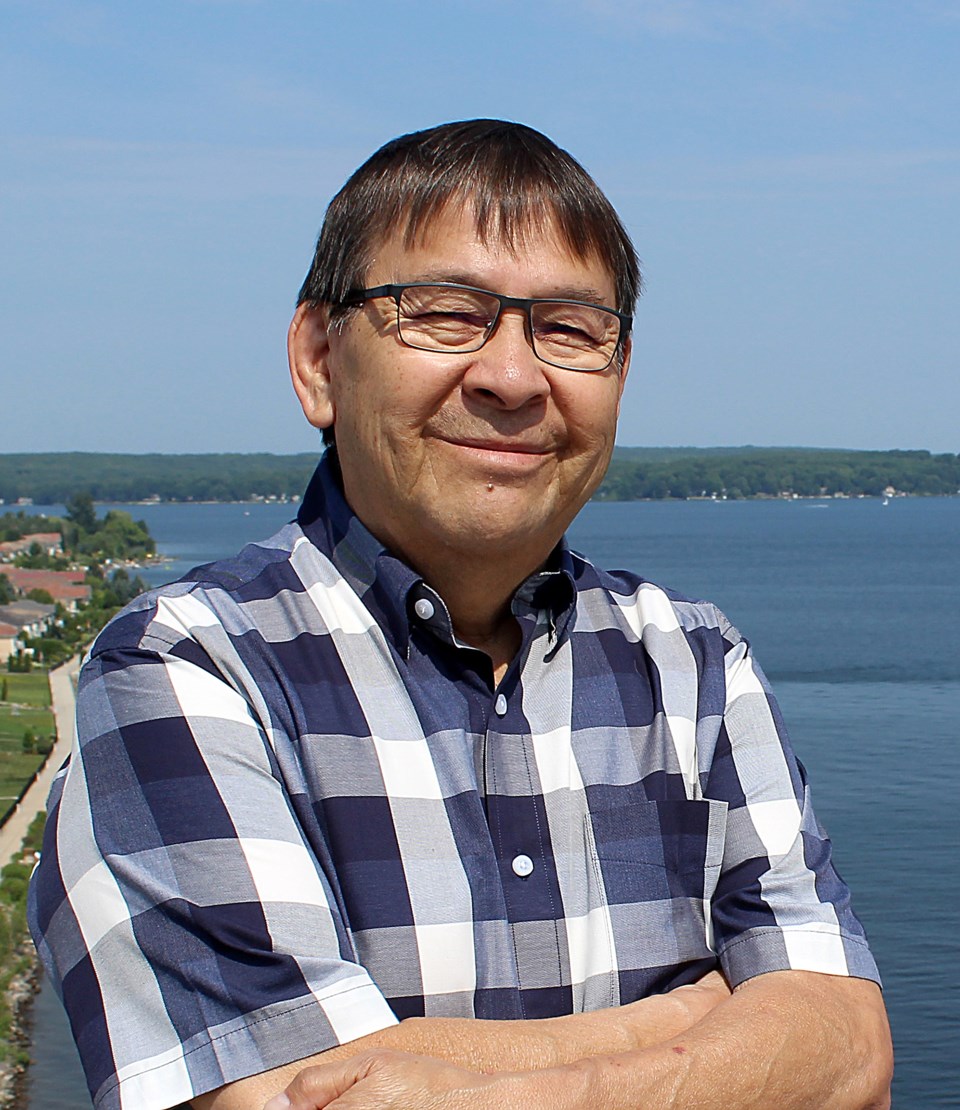
'Sudden and unexpected': Midland Deputy Mayor Jack Contin dies

  • Midland Deputy Mayor Jack Contin passed away this morning at the age of 70 at Georgian Bay General Hospital.

    Contin was elected to the role of Deputy Mayor in 2022, and served on Simcoe County council on behalf of the town. He served Midland as a town councillor and public servant for more than 25 years prior to being elected in the current council term.

    “It was sudden and unexpected,” said Mayor Bill Gordon. “He was full of life, and actually had some really good one-liners and zingers (at last night’s council meeting).”

    With deep sadness, Gordon shared how Contin was a “kind, gentle, and soft-spoken” man.

    “You couldn’t find a nicer guy. Absolutely genuine and authentic. He was my wingman, and he’s left a void that won’t be easily filled.”

    Gordon said that Contin was as gentle and thoughtful in life as he was during council meetings.

    “He was an author, if you can believe it. He was working on a book that was almost ready to publish about his survival as a Sixties Scoop child.”

    Contin was a founding member of the regional UNESCO biosphere reserve program, established in 2004, and had been the representative liaison for First Nations and Métis collaboration in recent years.

    During his election bid, Contin told MidlandToday that the legacy he wanted to be remembered by Midland residents was for “a cleaner Georgian Bay.”

    “At the heart of our community is the Bay, from fishing, tourism, boating and recreation, the heart of our community is the Bay. If I can take steps to protect it, and make it even just a little cleaner and better preserved for the next generation, that would be a good legacy,” said Contin in 2022.

    Flags at Midland town hall have been lowered in Contin’s honour.

    SOURCE: https://www.pentictonherald.ca/spare_news/article_2f9aea4e-24d8-5ad2-94fe-1e1063e4c4ed.html

Wednesday, September 6, 2023

‘Oh my God. You’re my son’: B.C. mom reunited with son 50 years after Sixties Scoop

A DNA test and Facebook groups helped an Indigenous man taken from his parents finally find his biological family.

Warning: This story deals with sensitive subject matter. If you are experiencing emotional distress and want to talk, free counselling and crisis intervention services are available at 1-855-242-3310, or at www.hopeforwellness.ca.


Donald Fales had been waiting a lifetime to meet his birth parents after he was taken from them as a baby

Fales was among thousands of Indigenous children, who between the 1960s and 1980s, faced mass removal from their families into Canada’s child welfare system in what became known as the 'Sixties Scoop.'

A few years ago, a close acquaintance suggested Fales consider applying for the Sixties Scoop Settlement, which provided compensation for people who were separated by adoption from their biological parents, often done without the consent of their families or bands.

“Once I found out that I was part of that, it kind of flipped everything upside down that I knew about my adoption and just started moving forward with it all,” he says. 

Fales always knew something was missing in his life.

Since he was 16 years old, he has wondered who his biological parents were. At 50, he finally came face-to-face with his mother in a powerful reunion. 

“It was extremely emotional,” he says thinking back to the day. “I spent all my lifetime pretty much looking for these answers and waiting."

At just three months old, Fales was taken from his parents and put into foster care. 

“I never had that experience of watching your parents drive away or dropping you off and never coming back. I don’t remember any of that part of it,” he says. “So I’m lucky in that way."

Fales was adopted in Prince Rupert at about one year old and shortly after moved to Cowichan Valley on Vancouver Island. Legally, his adoptive mother had to go through the Supreme Court of Canada when he was six years old and he says this is how he uncovered his birth name.

“I knew I was from Kitkatla (Gitxaala Nation) because my mother registered me through Indian status at the time of birth,” Fales said. 

He had a starting point with his band and began connecting the dots by speaking to people and trying to make further family connections.  Fales chatted with people through Facebook groups, trying to find leads.  Ultimately, he decided to take a DNA test through Ancestry DNA which confirmed his relatives. 

His mother was from the Kitkatla Band, a small village located 45 kilometres southwest of Prince Rupert that can only be accessed by float plane or boat.  His father was from the Haisla Band located in Kitimat. 

Fales soon learned that at birth his given name had been Donald Albert Stewart — his middle and last names handed to him from his grandfather and father, respectively.

An emotional reunion with his mother

On New Year’s Day, Fales received the phone number of a woman who was possibly his mother. 

"I called her and just explained the story and the names that I had,” he says. “It was just pretty surreal.”

Fales remembers the woman responding with “Oh my god. You’re my son” — words he had spent most of his adult life searching and waiting to hear. 

“After I got off the phone with her. I just crumbled. I broke down,” he says. 

The pair kept chatting on the phone over the following days, sharing stories and planning a day to meet in person in February 2023.

An emotional video he filmed captures their heart-wrenching reunion.  Fales shared the video on social media, which has since been viewed more than 2.2 million times. 

“It was extremely emotional and just everything seems so surreal,” he recalls. “You wait a lifetime to make these connections and when you do make them, it doesn't seem real.”

When his mother opened her arms to hug him, she broke down. 

“I always wondered what happened to you my son,” he says. “It broke my heart to hear her say those words.”

Fales has four biological brothers and one sister. The mother, who lost all of her children during the Sixties Scoop period, has now reconnected with all of them, according to Fales.

Unfortunately, Fales's father died before the two got to be reunited.  

“It's just extremely emotional, extremely powerful, and a lifetime of emotions just kind of flooding out of you,” he says. 

Healing after all these years 

Fales has spent three years on a healing journey as a way to cope with learning that he was taken from his biological parents. 

“It took a little while to find a proper way to speak about it and deal with my feelings of knowing that I was taken from my family and not giving up,” he says. 

His journey of finding his biological parents has been long, but he says it’s been worth every step. He now lives in Edmonton, Alta., and is married with two children.

"I can see all the likenesses and see where some of the looks and everything comes from, so it's been pretty amazing,” he says. 

Both of his children have encouraged him to reconnect with his biological mother and other family members.

“They’ve always been pretty receptive with pushing me into looking a little bit more and being supportive of me,” he says. 

Fales has since travelled to meet his biological father’s family in Haisla and across Northern B.C. He travelled to where his father is buried in Kitimat, B.C., and says he has spent time learning about his culture.

“It was totally amazing to be welcomed in by everybody and learn about all the different cultures, different songs, dances. It was a huge part that just kind of filled my heart with everything that I was looking for,” Fales says.

He hopes that other people will hear his story and consider reaching out to find out about their own cultures.

“Don’t give up,” he says. “If it’s not finding biological parents, just connect with your culture.” 

He added that finding his parent's First Nation cultures have answered many questions.

“It's been a blessing to just have the reception that I've had to both my mother's side on my father's side of their communities, and as well as the support that I've got from my adoptive parents as well,” he says. 

If you were adopted and want to learn about your biological origins and cultural heritage, there is a way to obtain adoption records. For more information about eligibility and how to access adoption records in B.C., visit this website.
Monday, July 10, 2023

60sScoop Survivor: ‘I basically rescued myself’

Guelph poet and ’60s Scoop survivor shares her personal journey through writing

How Cynthia (Wasizo kwe) Missabie became her own hero

Cynthia Missabie, a ’60s Scoop survivor, looks out at the Speed River in Guelph's Riverside Park. - Joy Struthers/Metroland

Local poet Cynthia Missabie took her name back when she was 40 years old, though she did not know how to pronounce it. 

Her adoptive parents had changed her name to Catherine Claire Cross, after their daughter who had died.

It was in the 1960s when she said she was three or four, when she was adopted by a “white, middle class” couple she still calls her mother and father. They were the parents of four boys and owned a Guelph bowling alley.

“I was part of the ’60s Scoop,” said Missabie.

Her birth mother and father were married but struggled with alcohol and illness. They had two little girls, and her birth mother also had four other children, who were all given up for adoption.

Missabie’s birth mother was from the Henvey Inlet First Nation located on the French River. She grew up living in a residential school and later lived in Toronto. Missabie’s birth father was from Newfoundland.

A very independent child, Missabie said she was happy with her new family at first.

“In the beginning, it was beautiful,” she said. “Then when I was about nine or 10, I was molested by my father, and he had it out for me, like he was attracted to me for years. I had to keep protecting myself.”

Her family had left Guelph, was moving around the United States, and even went to Puerto Rico.

“At first, it was an adventure, like, oh, I’m going to a new place, I’m going to meet new people,” Missabie said. “But then I got attached to those people.”

She would even change her name when she moved, from Catherine to Cathy, or Kate to Katie. Some people still call her by different names.

“I look back on that time and I think, wherever we lived, I tried to make some kind of friend, so I could escape,” Missabie said.

Finally, she admitted to her mother that she was abused by her father, and it split up the family temporarily.

“My mother moved everybody up to Canada for a year,” Missabie said. “At the end of the year, my parents got back together.”

She said her mother had been drinking for years, and “was a mess” without her father.

The children were all struggling, and Missabie said some of them still do.

“Not every story has a happy ending, and so many people lose themselves,” said Missabie.

For her, she said she loves the peaceful life she has created. She returned to Guelph in 1981 and has been here ever since.

Both her mother and father are now dead, but Missabie had tried to maintain relationships with her family, as well as learn about her birth relatives.

She has been in recovery for 34 years and runs a weekly meeting which incorporates both Alcoholics Anonymous and Indigenous teachings.

“Everything is a teaching, no matter how you go about your life. If this hadn’t happened to me, I wouldn’t be who I am,” she said. “And then there’s the idea of what I am leaving behind for other people.”

Missabie sings with the barbershop group, the Over Tones, and dotes on her dog, though she never had children of her own.

“I started writing because I was so depressed and lonely, I just had to do something,” she said.

One night she read a poem at an event and a man said to her, “You’re kind of angry, aren’t you?” And she thought, “well, if you had lived my life, you’d be a bit angry too.”

Truthfully, she said now she approaches things with a healthy sense of humour.

She is in a different place now emotionally then she was when she contributed poetry to “River Bundles, an Anthology of Original Peoples in the Waterloo-Wellington Area,” edited by Plume Writers Circle.

She was one of the original circle members in Guelph along with friends Hope Engel and Wendy Stewart. She also read her poetry with them at the Eden Mills Writers’ Festival.

She plans to contribute to an upcoming compilation, called “Blood Memory, an Indigenous Poets Society Anthology.”

“One thing I got through my writing, and what I gained over that time, is that I basically rescued myself. So, I had become my own hero in a way,” she said.

She shared that her spirit name is Wasizo kwe, or Woman who Glitters.

“I always thought I was kind of different, and it wasn’t always great, but now it’s wonderful,” Missabie said.

 SOURCE


Saturday, August 7, 2021

Sixties Scoop survivors call for federal inquiry and apology

 Survivors' group, Sinclair say more needed to uncover full number of children taken

Katherine Legrange is a Sixties Scoop adoptee and volunteer co-ordinator of the 60s Scoop Legacy of Canada group, which is calling for a federal inquiry. (Submitted by Katherine Legrange)

WARNING: This story contains distressing details.

Former Canadian senator Murray Sinclair and a group representing survivors of the Sixties Scoop are calling for a federal inquiry into the actions and policies of governments that led to thousands of Indigenous children being taken from their homes over four decades and placed with non-Indigenous families.

"There have been studies on the Sixties Scoop, but we really haven't delved into how far-reaching the effects really are," said Katherine Legrange, volunteer co-ordinator with the 60s Scoop Legacy of Canada.

An inquiry is needed to get a full account of the number of children taken, and the impacts on the lives of survivors and their families, said Legrange, a plaintiff in one of the lawsuits involving survivors. 

The children who were removed need to know they are not alone, but they also need to know that there were reasons for what happened that were not of their parents' making.

- Murray Sinclair, former senator

Sinclair, who chaired the Truth and Reconciliation Commission, said many of the challenges facing Indigenous families that led to the apprehension of their children stemmed from the legacy of decades of the residential school system.

"The children who were removed need to know they are not alone, but they also need to know that there were reasons for what happened that were not of their parents' making," he said in a release.

The group wants a meeting with federal Crown-Indigenous Relations Minister Carolyn Bennett to discuss an inquiry, as well as a national apology and a settlement for Métis and non-status survivors who were excluded from a 2017 class-action settlement.

Canada's settlement agreement set aside $750 million to compensate First Nations and Inuit children who were removed from their homes and placed with non-Indigenous foster or adoptive parents between 1951 and 1991, and ended up losing their cultural identities.

Views differ on number of children taken

Estimates of the number of children taken are at around 20,000, but Legrange said survivors and families believe the figure is much higher.

Legrange and her brother were born seven months apart. They were separated from each other when they were children, but reunited in 2019 after she tracked him down on Facebook. 

"He welcomed me with open arms, never questioned who I was or where I came from, and so we connected quite well," Legrange said.

Recently, however, Legrange lost contact with her brother, who she said endured trauma as a result of his experiences in the child welfare system.

"He's marginalized, he was suffering with unresolved trauma and some addictions issues, and unfortunately he passed away from an overdose on June 11. And it wasn't until July 18 that I was notified that he had passed away."

In 2018, Bennett pledged a separate settlement for Métis and non-status Indigenous survivors, but Legrange said her group has not had any meetings yet with Bennett to discuss it.

Leslie Michelson, a spokesperson for Crown-Indigenous Relations and Northern Affairs Canada, said the Sixties Scoop settlement agreement was "only the first step" to address the harm done by that system.

"We know that there are other claims that remain unresolved, including those of the Métis and non-status First Nations, and we are working with our partners toward a fair and lasting resolution for all survivors," Michelson said in an emailed statement on Monday evening.

On top of individual compensation, the Sixties Scoop settlement also agreed on the need for a foundation to support those affected, the statement said.

"It was crucial to all of those involved that this foundation would bring forward the perspectives of survivors to undertake and fund healing, wellness, education, language and culture activities related to the Sixties Scoop," Michelson said.

Although the Truth and Reconciliation Commission and the national inquiry inquiry into missing and murdered Indigenous women and girls (MMIWG) examined elements of the Sixties Scoop, there are key differences that need to be considered, Legrange said.

Many survivors of residential schools returned to their home communities; the Sixties Scoop involved the permanent removal of children from their families, she said.


Support is available for anyone affected by their experience at residential schools and for those triggered by the latest reports.

A national Indian Residential School Crisis Line has been set up to provide support for residential school survivors and those affected. People can access emotional and crisis referral services by calling the 24-hour national crisis line: 1-866-925-4419.

  • Do you know of a child who never came home from residential school? Or someone who worked at one? We would like to hear from you. Email our Indigenous-led team investigating the impacts of residential schools at wherearethey@cbc.ca or call toll-free: 1-833-824-0800.
  • Do you have information about residential schools? Email your tips to: WhereAreThey@cbc.ca

Wednesday, August 24, 2016

Fletcher: “The Next Justice’s Impact On The Indian Child Welfare Act” (law360.com)

SOURCE

Justice Antonin Scalia’s death impacts Indian country in dramatic ways. Last term, the most critical tribal court jurisdiction appeal to hit the Supreme Court of the United States in decades was affirmed by a 4-4 tie in favor of tribal jurisdiction. The court declined certiorari in a pair of tribal labor relations cases where there was a gaping circuit split, possibly because the justices foresaw yet another 4-4 tie. The next justice may be the deciding vote in cases that bring the same questions, but bigger cases involving the Indian Child Welfare Act(ICWA) are in the pipeline.

ICWA is invoked in literally hundreds of child welfare cases throughout the country every year. ICWA applies whenever an Indian child is removed from home by state agencies, and further applies when an Indian parent’s rights to a child might be terminated. ICWA requires state courts with jurisdiction over Indian children to notify relevant tribes and allow them to intervene as a party, and in some matters transfer jurisdiction to tribal court. ICWA more quietly establishes robust due process protections for Indian parents and Indian children, protections that Casey Family Programs and 16 other child welfare advocacy groups call the “gold standard” in child welfare statutes. Given that many state child welfare systems are bureaucratic nightmares where families can be lost, this is an important statement.

On rare occasions, only twice, the Supreme Court has addressed narrow questions of statutory interpretation in the weeds of ICWA’s text. In both instances, Justice Scalia voted in favor of tribal interests under ICWA, but later stated publicly he didn’t like it. Since ICWA’s enactment in 1978, some state court judges and agencies have been saying the same thing. Because certain provisions of ICWA also apply to a “voluntary proceeding[s],” (read: private market adoption), the most strident opponent to ICWA’s enactment then and now is the private adoption industry, a $14 billion market. Groups that represent that market have been trying to serve up a vehicle for Supreme Court review of the constitutionality of some or all of ICWA.

And by “vehicle,” I mean an Indian child with Indian parents, likely going through the roughest period of their lives. Congress enacted ICWA because it found that 25-35 percent of all Indian children had been removed from their homes and almost always placed by state workers as far from their Indian family members as possible. All of that without due process. Nearly four decades later, states are still removing Indian children and placing them in state foster care at wildly disproportionate rates. But now Indian tribes are intervening under ICWA whenever they can, offering services and doing their best to keep the state agencies honest.

How does an Indian child welfare matter become appellate litigation that could be teed up for Supreme Court review? In the two prior instances the court addressed ICWA, the party opposing the application of ICWA simply refused to comply with ICWA, and dared an appellate court to stop them. In the first case, Mississippi Band of Choctaw Indians v. Holyfield, decided way back in 1989 by a 6-3 vote, private adoption counsel persuaded a young Indian couple that was pregnant to move off the reservation to have their children (twins) and let a non-Indian couple adopt the kids through state court processes. The Mississippi courts, ignoring their own law on domicile, allowed the adoption. The Supreme Court reversed, and ordered the case transferred to tribal court. By that time, years had passed with the children in the non-Indian home. The tribe and the tribal court welcomed the children home but still ratified the adoption with the non-Indian family. Justice Scalia voted in favor of the tribe, though he said later in interviews that it was one of his most difficult votes.

Survivor Stories
In the second Supreme Court case, Adoptive Couple v. Baby Girl, decided 5-4, private adoption counsel improperly spelled the Indian father’s name wrong and provided the wrong birth date when notifying the tribe. That kept the tribe out of the early stages of the adoption. They kept the father out, too, by not serving him in a timely manner. The father was an active duty serviceman about to be deployed to a war zone when adoption counsel finally served him with the adoption papers. His deployment stalled everything for about a year, but during that time Baby Girl V. was living with the non-Indian couple and not her relatives, who would have gladly taken her. By the time the South Carolina Supreme Court decided in favor of the Indian father, Baby Girl V. was two years old. The adoptive couple then used a powerful media strategy to attack ICWA and the Indian father. The Supreme Court took the case and reversed on a technical interpretation of ICWA. Justice Scalia dissented on the simple ground that there was a fit father who wanted his child home with him, and who had her home with him for two years before he was forced to give her back to the adoptive couple.  
Sadly, Baby Girl’s most critical precedent might have been to unintentionally endorse the borderline unethical tactics of adoption counsel. That included stalling instead of returning Indian children to their families and violating the privacy rights of Indian families by pasting their images and names on social media and everywhere else.

By now, the private adoption industry’s playbook on attacking the application of ICWA is clear. Match an Indian child with a non-Indian foster or adoptive family. Persuade the foster family to renounce the goal of reunification of the Indian family and seek adoption instead. Use the media to incite racial hostility toward Indian people in the media. Then go to court, claim that ICWA is preventing the foster family from adopting the Indian child and litigate, litigate, litigate.
That’s what happened, and may still be happening in the matter of Alexandria P. Lexi, an Oklahoma Choctaw child living in California who was removed from her parents and placed with a local foster family while efforts to reunify the family were ongoing. Non-Indian relatives living in Utah began preparations to bring Lexi into their home in case reunification failed, visiting her regularly at her foster home. Reunification failed after a year or so. The trial court conducted a best interest of the child hearing and concluded Lexi should go with her Utah relatives. This conformed to the wishes and recommendations of Lexi’s attorney, the state of California and the Choctaw Nation of Oklahoma. By then, the foster couple had shifted into an adversarial mode against Lexi’s relatives, and wanted to keep Lexi. Private adoption counsel advised the foster couple to appeal, and then appeal again, and then appeal again. All these appeals stalled the return of Lexi to her relatives for three years. There were three best interests of the child hearings favoring Lexi’s return to her relatives followed by appeals. And when the appellate court finally confirmed the placement order after the third appeal, the foster family generated the media firestorm that is now a critical part of the private adoption industry’s anti-ICWA playbook, putting a little girl under a national microscope that violated her right to privacy and turned public opinion against the good people who had Lexi’s best interests at heart.

Lexi is back with her relatives, which is what should happen whenever there are fit relatives, under state law or ICWA. Perhaps not wanting all the media attention to go to waste, adoption counsel is still seeking appellate review, now from the California Supreme Court. Counsel is still pointing at ICWA as the problem. But Lexi is not a good “vehicle” for attacking ICWA’s constitutionality. State law would have justified Lexi’s return to her relatives. And three times the trial court, with three different judges, confirmed that it was in her best interests to return to her relatives. Surely the California Supreme Court will see through the smoke and mirrors.

Even as Indian children like Lexi are identified by the private adoption industry as vehicles to challenge ICWA, the U.S. Department of the Interior recently promulgated formal ICWA regulations that will be live in December 2016. They resolve some ambiguities in the statute that the private adoption industry has exploited for years, and so there will surely be challenges to those regulations as well.

All of this means that the Supreme Court may be peppered with certiorari petitions involving challenges to ICWA in the coming years. There is a clear divide on the court right now, with Justice Elena Kagan offering a pragmatic view of federal Indian law that takes into account the history of tribal-federal-state relations, and more conservative justices expressing skepticism. In Indian affairs cases that test the constitutionality of statutes rather than their interpretation, the rest of the court tends to side with the now-standard ideological splits seen in other areas, such as affirmative action and abortion. But ICWA can excite passions, and perhaps may unsettle the regular split.

The next justice likely will have to sift through zealous, emotional attacks on ICWA, Indian tribes and Indian people. Justice Scalia was able to do that in the Holyfield and Baby Girl cases, and voted in line with the statutory text. In any event, the next justice may be the fifth vote in how ICWA will be interpreted, or if it will even survive.

—By Matthew L.M. Fletcher, Michigan State University College of Law

Matthew L.M. Fletcher is a professor of law at Michigan State University College of Law. Fletcher is the primary editor and author of the leading law blog on American Indian law and policy, Turtle Talk.

The opinions expressed are those of the author(s) and do not necessarily reflect the views of the firm, its clients, or Portfolio Media Inc., or any of its or their respective affiliates. This article is for general information purposes and is not intended to be and should not be taken as legal advice.

Wednesday, April 20, 2016

Why it's so important? #ICWA #adoption #stolengenerations

If you thought that ethnic cleansing was something for the history books, think again...

Book One
By Trace Hentz, editor of the new book STOLEN GENERATIONS

In the last few days, I checked the book reviews in the UK (England) and was so happy to read this great honest review for Two Worlds by Yassmin. She gets it! (read her quote above and the review below)

The writers in the first anthology Two Worlds (Book 1) broke new ground. They told their story in their own way in their own words. (I like to tease them and call them rock stars.)  We are the pre-ICWA adoptees - before the federal law was signed, preventing adoption to non-Indian parents and thereby supporting kinship adoption when children remain in their tribal community.

For these adoptees, it takes real courage to think about the past and try to make sense of it.  Many of us adoptees thought we were the only one...  I know I did.

Many of us felt alone, isolated, confused.

Then we have to look at the reunion aspects of our journey with relatives and parents, and doing that we reconnect to our sovereign nations again.  Maybe we were already enrolled, maybe not.  Maybe we have land to inherit, maybe not.  (The purpose of these adoptions was to erase us, end our rights, take our land and erase "the Indian" us off the BIA books.)

Book 2 (40 adoptees +)
Now in 2016 I find that we have more than one generation who was affected by the various Indian Adoption Projects.  We have adult children of adoptees who are living their own identity issues... and they have questions.  Two of these men wrote in the new book Stolen Generations. Their parent was adopted out.

Can you see how widespread this is (in Canada and the US) and how it's a growing  problem?  The problem is exasperated by states with sealed adoption records and the Bureau of Indian Affairs who is not actively helping us adoptees rejoin our tribes. 
The deception is obvious - their point was to not have any of us be Indian and enrolled!

 
1 of 1 people found the following helpful
Thought-provoking and moving 11 October 2012
Two Worlds - Lost children of the Indian Adoption Projects

If you thought that ethnic cleansing was something for the history books, think again. This work tells the stories of Native American Indian adoptees "The Lost Birds" who continue to suffer the effects of successive US and Canadian government policies on adoption; policies that were in force as recently as the 1970's. Many of the contributors still bear the scars of their separation from their ancestral roots. What becomes apparent to the reader is the reality of a racial memory that lives in the DNA of adoptees and calls to them from the past.
The editors have let the contributors tell their own stories of their childhood and search for their blood relatives, allowing the reader to gain a true impression of their personalities. What becomes apparent is that nothing is straightforward; re-assimilation brings its own cultural and emotional problems. Not all of the stories are harrowing or sad; there are a number of heart-warming successes, and not all placements amongst white families had negative consequences. But with whom should the ultimate decision of adoption reside? Government authorities or the Indian people themselves? Read Two Worlds and decide for yourself.


LINK
 What is significant about this new book? Everything. 10 years ago there were no books. Now we have more than one generation who experienced the Indian Adoption Projects and 60s Scoop.

We have documented new history in our own words in Three Books!

For me, that is all I hoped for, prayed for... I have been reunited with my own family over 20 years.
...and because I feel as I do doesn't mean adoption will ever change... it probably won't.
I am a voice in the wind... I just want to spare a child the pain of secrecy, lies, hurt, loss...

Tuesday, April 19, 2016

STOLEN GENERATIONS! Survivors of the Indian Adoption Projects and 60s Scoop ON SALE tomorrow

cover art by Ojibwe adoptee Terry Niska Watson
NEW BOOK NOTICE: April 20, 2016

A highly anticipated follow up to the history-making anthologies TWO WORLDS (Book One) and CALLED HOME (Book Two): Lost Children of the Indian Adoption Projects series, STOLEN GENERATIONS: Survivors of the Indian Adoption Projects and 60s Scoop offers more narratives on the history of land-taking and child theft/adoption projects in the name of Manifest Destiny in North America. These narratives make clear that Lost Children are not only survivors but resilient.

A collection of adoptees’ firsthand accounts and the historical background of the Indian Adoption Projects and 60s Scoop, along with pertinent news, history, documentaries, quotes and bibliography, this stunning new anthology has been edited by award winning journalist, adoptee-author Trace L Hentz (formerly DeMeyer).


"Stolen Generations" is available now in the Kindle Store. It is available here.
BUY LINK  PAPERBACK HERE: https://www.createspace.com/5982643


By Trace Hentz (Shawnee-Cherokee-French Canadian mix)


I am honored to be editor of this new anthology, to know these adoptees (or their relative who wrote an essay) and to work with them. Their stories will amaze you, make you cry, make you proud and best of all, this collection writes new truth, new history, blazing new ground!

After doing two earlier anthologies, WE are survivors and WE are resilient. That I know.

Ebook proceeds will benefit the IronEagleFeather Project for adoptees. Levi and I are creating a safe haven and workshops for adoptees...


Contributors:
INTRO: Johnathan Brooks (Northern Cheyenne)
Preface: Trace Hentz (Shawnee-Cherokee mix)
Joseph Henning (Cree)
Leland Pacheco Kirk Morrill (Navajo)
Nakuset (Cree)
Debra Newman (Choctaw Cherokee)
Belinda Mastalski Smith (Oneida New York)
Janelle Black Owl (Mandan, Hidatasa, Turtle Mountain Chippewa, Lakota)
Susan Devan Harness (Confederated Salish Kootenai Tribes)
Dana LoneHill (Oglala Lakota)
Joy Meness (Iroquois)
Levi William EagleFeather Sr. (Sicangu Lakota)
Patricia Busbee (Cherokee)
Karl Mizenmayer (Minnesota Ojibwe)
MITZI LIPSCOMB/ROSEMARY BLACKBIRD (Walpole Bkejwanong First Nations)
Rebecca Larsen (Quinault Indian Nation)
Joseph M. Pierce (Cherokee)
Mary St. Martin (Koyukon Athabascan)
Joshua Whitehead (Peguis First Nation Manitoba)
 
COVER ART: Terry Niska Watson (White Earth) 
This illustration I painted years ago when I was in a very dark place in my life.  This is a painting of a subject matter that has always drawn my interest, that is the Native life and the beauty of tradition, family and nature.  As my sister, Elizabeth Blake, said about this painting that still hangs on my wall, “the most interesting part is that the face is not visible.  That is how it is when you do not know your birth family.”

PREVIEW:  Once Upon A Time

Stolen Generations (Book 3)

Survivor Narratives of 60s Scoop and First Nations adoptees
An anthology of adoptees’ firsthand accounts and the historical background of the Indian Adoption Projects and 60s Scoop in North America
ISBN-13: 978-0692615560 (Blue Hand Books) 
Paperback $12.96 
Kindle ebook $3.96

Email for more information: larahentz@yahoo.com
On Kindle: US UK DE FR ES IT NL JP BR Canada MX AU IN  

click bird to post tweet
Tweet: Stolen Generations on Kindle http://ctt.ec/Ddd9e+
will post to your twitter account

CLICK OLDER POSTS (above) to see more news

CLICK OLDER POSTS  (above) to see more news

MEGWETCH THANK YOU

HUGE Thank you for visiting this blog and sharing this with your kin. It's appreciated. Contact Trace anytime! Use the form below.

BOOKSHOP

Please use BOOKSHOP to buy our titles. We will not be posting links to Amazon.

Popular Posts

To Veronica Brown

Veronica, we adult adoptees are thinking of you today and every day. We will be here when you need us. Your journey in the adopted life has begun, nothing can revoke that now, the damage cannot be undone. Be courageous, you have what no adoptee before you has had; a strong group of adult adoptees who know your story, who are behind you and will always be so.

OUR HISTORY

OUR HISTORY
BOOK 5: Lost Children of the Indian Adoption Projects