

IMPORTANT STORY:
IMPORTANT STORY:
By Miriam Lafontaine -
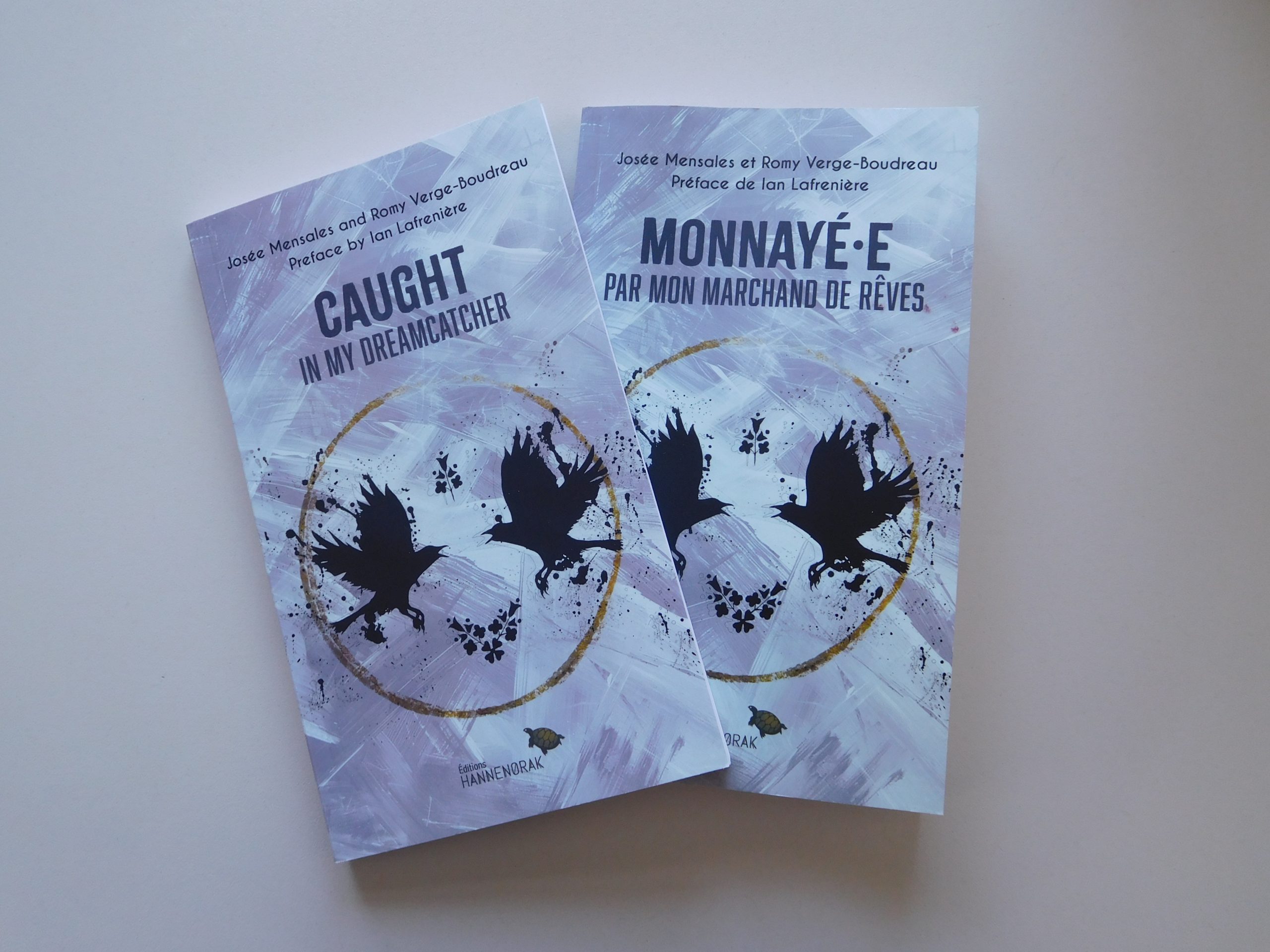
Sex trafficking happens in every community. That’s the message behind Caught in my Dreamcatcher, a new book written by two Montreal police officers.
“It hits in the best of families. It hits no matter where we come from. It’s a crime of opportunity,” said Josée Mensales, who co-wrote the book alongside her colleague Romy Verge-Boudreau.
The two also work for the Surete du Québec (SQ) unit dedicated to arresting those who profit off the sale of others, touring communities all over the province prior its publication last week.
Caught in my Dreamcatcher (ISBN : 9782925118640) is currently being sold at Renaud Bray. Both print and e-book versions of the book can also be purchased directly from the website of its publisher, Éditions Hannenorak. PUBLISHER: https://editions.hannenorak.com/catalogue/monnaye-e-par-mon-marchand-de-reves/
KEEP READING:
https://easterndoor.com/2025/02/21/new-book-educates-on-reality-of-sex-trafficking/
The shotgun blast took Terri McCauley’s face off, killing her instantly.
She was found murdered on Sept. 27, 1983, in Sioux City, Iowa and for more than 40 years, her case was cold as a cucumber.
A member of the Omaha Tribe, McCauley, 18, fell under the dark umbrella of murdered and missing Indigenous women and girls (MMIWG). There have been varying estimates of the casualty figures but it’s somewhere between 4,000 and 7,000.
But while Canada has been content to virtue signal and sloganeer just enough to keep the denizens of the Annex, Westmount and the Glebe smug, America has taken action. Adding insult to injury for the woke, the bold initiative was started by President Donald Trump during his first term in office.
Canada’s chattering classes talked, self-flagellated, scolded and offered meaningless tears. In America, they’ve closed cases, made arrests and brought justice, relief and maybe some closure to the families of the dead.
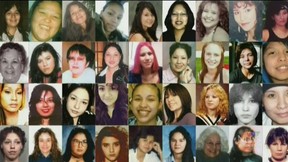 |
| MMIWG: A criminology professor has warned that the real number of murdered Indigenous women and girls could be double official estimates. |
The U.S. formed half a dozen task forces in “Indian Country” to solve the murders and disappearances. Canada? Not so much.
Toronto Police cold case boss Det. Sgt. Steve Smith told the Toronto Sun that it isn’t as if this kind of initiative hadn’t been brought to the current government.
“With TPS, we have the ideal model to serve all of Ontario,” Smith said, adding that for the past three years, the solicitor general has provided funding to tackle 30 unsolved murders, unidentified bodies and historic sex assaults.

“Federally, we asked numerous times for funding to set up a national task force to make the expertise accessible across Canada but there was zero traction.
“We’re hoping to take it up again with a new federal government. So many of the MMIWG cases are easily solvable.”
Smith and TPS have been at the forefront of the revolution in cold-case investigations. Using genetic genealogy, they have closed some of the city’s most vexing homicides: Christine Jessop, Susan Tice, Erin Gilmour and others.
But anyone will tell you, that land acknowledgements are cheap and easier than solving a homicide.
McCauley — a mother of two — was last seen that terrible day 41 years ago getting into a car with an unknown man. Her body was found 10 days later.
The wheels of justice grind slowly, but grind they do. Last week, cops announced that they had arrested Thomas Popp, 62, of Lakeview, Washington. He is now charged with first-degree murder.
The arrest of Popp and others by MMIWG cold-case task forces has given renewed hope to Native American communities that maybe, just maybe, justice will be done after decades of agony.
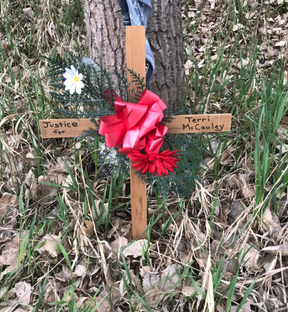 |
| REMEMBER: A makeshift memorial to murdered mother of two Terri McCauley. Cops say they've arrested her killer after more than 40 years. FACEBOOK |
“Since Monday, I think it definitely has given hope and courage for these families to continue to fight for justice for their families or their relatives who have gone missing and murdered,” Trisha Rivers, of the Great Plains Action Society, told reporters.
She added that the arrest shows what can happen when cops and the justice system work with the Native community.
Rivers said: “This case means so much to everybody in Indian Country because I feel like all of us can relate to it in some kind of way that makes sense.”
Meanwhile, in Canada, bureaucrats get fat, money is spent on fecal hygiene in Ghana, and the agony of the affected families and their communities continues apace.
bhunter@postmedia.com | @HunterTOSun
MORE:
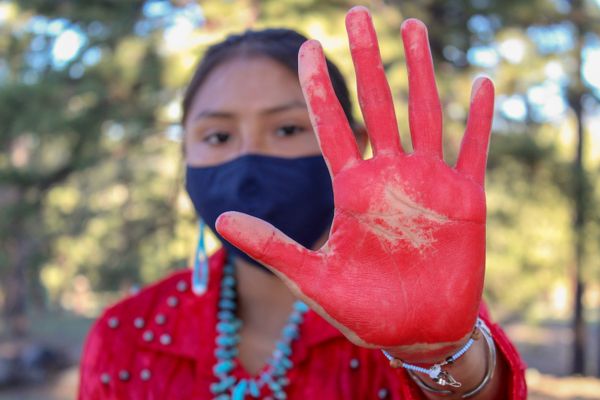
Family affected by the Missing and Murdered Indigenous People (MMIP) Crisis feel lackluster media coverage influences how cases are perceived by the public and pursued by law enforcement. That’s according to new guidelines released by the federal government this week on best practices for media coverage of MMIP.
The guidelines result from roundtable discussions moderated by Assistant Secretary for Indian Affairs Bryan Newland and attended by more than 200 participants, including journalists, survivors, community advocates, and Tribal and federal officials. Among the participants where members of the Not Invisible Act Commission, a 41-person committee tasked with developing recommendations improving intergovernmental collaboration on violent crimes in Indian Country and providing resources for survivors and victims’ families.
Between 2022 and 2023, the Commission held seven in-person listening sessions across Indian Country, plus one virtual session. According to the Commission’s 212-page report, more than 600 individuals attended the hearings. Of those, 260 gave testimony to the NIAC, sharing their expertise, experiences, and recommendations to address and reduce the tragic consequences of the crisis of missing, murdered, and trafficked American Indians and Alaska Natives. Many families and survivors expressed concern at the lack of media coverage or coverage that reinforces long-standing prejudice against Native communities.
The new recommendations encourage journalists to focus on an MMIP humanity rather than any potential criminal background. Also, the guidelines urge media to contextualize cases within the disparities faced by Native communities, wrought by generations of forced assimilation, broken treaty promises, and gross underfunding for health and public safety. Using language such as “crisis” vs. “epidemic” and “at-risk” vs. “vulnerable” is encouraged.
The report also features guidelines for strengthening collaboration between law enforcement and journalists, including designating public information officers to release timely information on MMIP case developments to the media.
The MMIP crisis is characterized by Native American communities experiencing disproportionately high rates of assault, abduction and murder. The crisis dates back decades, underpinned by systemic apathy, jurisdictional confusion, and underfunded law enforcement. There is no nationwide data system for MMIP information, and the actual number of MMIP cases is unknown; however, the Bureau of Indian Affairs estimates there are 4,200 unsolved cases.
LINK: https://nativenewsonline.net/currents/feds-release-media-guidelines-for-reporting-on-mmip-cases
Back in July, the governing Liberals decided to quietly announce they were cutting funding to Indigenous searches for unmarked children’s graves around residential schools.
Indigenous communities were initially offered up to $3 million per year to help defray the costs of identification.
However, the federal government chose to cap those funds — in the absence of any consultations with Indigenous leaders — at $500,000. Thankfully, the Trudeau government reversed course in August and restored the original funding allotment of $3 million.
It is instructive to note that Ottawa has constitutional competence for — and thus a fiduciary responsibility to — Indigenous Peoples in Canada.
All of this got me thinking about one of the most enduring features of Indigenous/non-Indigenous relations in Canada — namely, the federal government’s obsession with pinching pennies when it comes to our Indigenous communities.
One of the critical areas of investigation around this topic is fully understanding its key drivers.
Why would monetary considerations be top of mind for colonial and Canadian governments for hundreds of years? What should we infer from that fixation with dollars and cents?
Significantly, I’m not talking about budget constraints, lower reserve costs, special circumstances or an increase in wealthier Indigenous communities.
I’m suggesting there has been a deliberate and ongoing mindset in Ottawa that starts with this premise: How do we find ways to cut funding for Indigenous Peoples?
The whole point of
colonial and Canadian government policies toward Indigenous Peoples was
to assimilate them and, if that didn’t work, to eradicate them outright. (kill off)
That way, the federal government’s “honour of the Crown” and its fiduciary commitment would come to a screeching halt. Crudely put, the costs associated with “Indian status” would no longer be necessary.
Residential schools in Canada were intended, among other things, to sever the bond between Indigenous children and their parents and reserve community. As they assimilated into white society, this would eventually lead to fewer First Nations people on the government’s payrolls.
The schools (many were of poor construction and deadly firetraps) were a case study in cost-cutting: Indigenous children constantly complained of being hungry and cold and often went without medications. Even when children died at these schools, the government refused to pay the costs of returning them to their Indigenous families.
Similarly, the horrible “Sixties Scoop” was a continuation of this same line of thinking: force Indigenous kids into foster care and foreign adoption to reduce costs over time.
The federal government moved in the late 1950s with the express intention of saving money by turning the care and welfare of Indigenous children over to provincial child protection services.
With respect to the National Inquiry into Missing and Murdered Indigenous Women and Girls, the Trudeau Liberals have been excruciatingly slow in implementing many of the final report’s 231 “calls for justice.”
Only five per cent or so of the government’s promise to spend $724 million on supporting Indigenous women and girls with new shelters and transitional housing has been spent.
From the advent of colonial governments in Canada in the mid-1700s, each one has sought to reduce expenditures for Indigenous Peoples. Officials in the old Department of Indian Affairs — long before its current iteration as the Department of Crown Indigenous Relations — were always crunching the actuarial numbers to identify when payments to Indigenous communities would finally end.
Don’t forget the cost-savings sought through violating solemn treaties, withholding annuity and land dispossession payments, building low-budget “Indian hospitals” and even denying benefits for returning Indigenous soldiers from the world wars.
Much of the cutting of Indigenous monies is consistent with a colonial mindset or project that has devalued, dehumanized and degraded Indigenous Peoples from the very beginning.
The racist rationale was simple: they were only going to die off anyway, they would forever be ””uncivilized,” pagan “savages,” they would never be smart enough to know what to do with the land and financial resources, and they would always be expendable, largely invisible and, most assuredly worthless.
I’m sure that I’ve missed many other examples of damaging government cost-cutting. But one common theme that is painfully obvious is that Canadian governments have historically sought to short-change Indigenous Peoples.
In the end, the First Peoples just weren’t worth spending government money on. You have to conclude that the real power brokers of this country never really accorded them much value from the outset.
November is Native American Heritage Month. These new middle grade books by Native American and Indigenous Canadian authors explore various topics, from residential schools to Missing and Murdered Indigenous Women and Girls, in fiction and nonfiction formats. They’re all wonderful books.

This is a lovely middle grade novel centering two Cree girls in Alberta, Canada. Summer spends every summer on the reservation where her mom’s family lives. She and her little brother and cousin Autumn swim in the lake, collect sweetgrass, pick berries, and have a wonderful time. But this summer is a little bit different. Authorities have gathered around a former residential school—one where Summer’s grandfather had been kidnapped and taken to as a child—to scan the ground with new technology. They’ve discovered the bodies of Indigenous children buried there. Meanwhile, Summer begins having vivid dreams of the past about a girl, named Buffalo Dreamer, who runs away from the school when her friend Ann disappears. It’s a slim, fantastic novel.
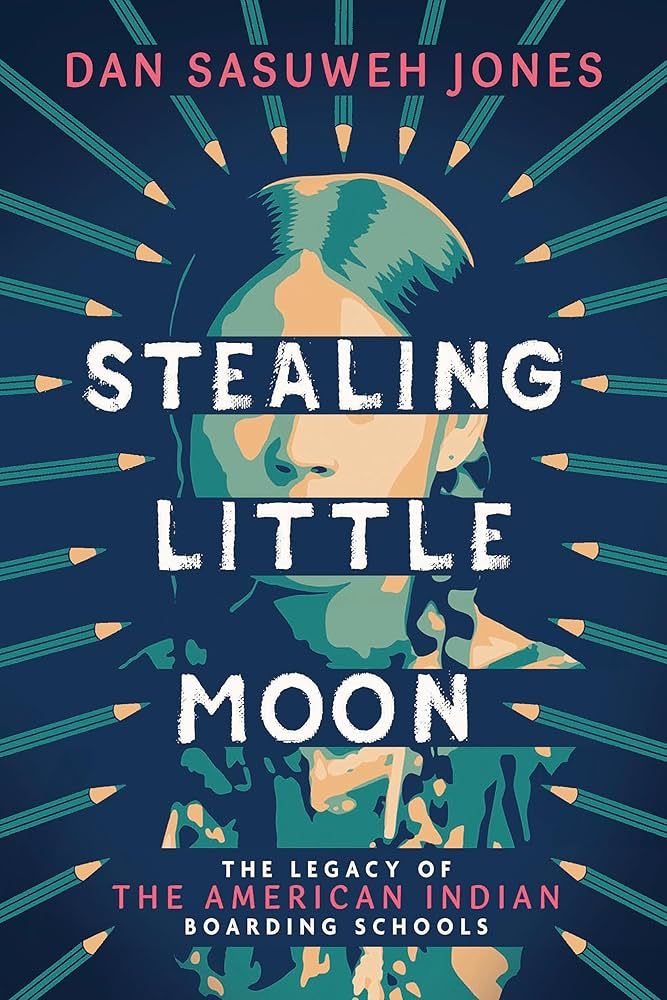
If your middle grader wants to investigate more about residential schools after reading Buffalo Dreamer, then check out this detailed and gut-wrenching middle grade nonfiction. It combines the author’s family history with nonfiction investigation. The author’s grandmother, Little Moon There Are No Stars Tonight, was forcibly taken from her family home by federal authorities when she was just four years old, and taken to a residential school to rid her of her Ponco culture and heritage. Jones traces her story from the time she was stolen to when the residential school was shut down during his lifetime. It’s a very informative read, and I recommend it for upper middle grade readers.
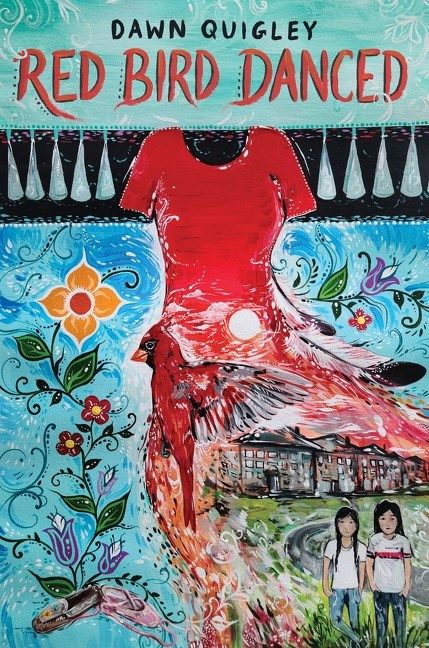
This is a beautiful, accessible middle grade novel-in-verse told from the perspectives of two Ojibwe tweens who live in a Native American urban housing community. Ariel’s aunt is missing, so she chooses to study the Missing and Murdered Indigenous Women and Girls (MMIWG) crisis for a school project. She’s also learning how to dance the jingle dance, though part of her wants to learn ballet. Tomah has a reading disability and struggles in school, though he hides the problem from teachers and his family. Words dance on the page. However, he’s an excellent storyteller and a valued member of his Native community because of it. He loves feeding the birds. Ariel and Tomah are friends, both slowly untangling what it means to be Native and their roles in their community.
READ MORE: https://bookriot.com/middle-grade-books-native-american-heritage-month/
Nancy Etok shares experience from meeting with Indigenous women from U.S., Mexico earlier this month in Mexico City
Pauktuutit president Nancy Etok, left, speaks at the Sixth Convening of the Trilateral Working Group on Violence Against Women and Girls in Mexico City, which ran Sept. 3 and 4. (Photo courtesy of Pauktuutit Inuit Women of Canada)
Inuit voices must be included in conversations about ending violence against Indigenous women, girls and gender-diverse people, says Pauktuutit president Nancy Etok.
Etok attended a trilateral working group that included representatives from Canada, the United States and Mexico on Sept. 3 and 4 in Mexico City on behalf of Pauktuutit Inuit Women of Canada, the national non-profit Inuit women’s organization.
The meeting aimed to address the alarming rates of violence against Indigenous women and girls.
“We were able to share what kind of work we do at Pauktuutit,” Etok said, adding she also had the chance to listen to what Indigenous women had to say about finding solutions.
“If I were to close my eyes and just listen, all women were facing all of the same struggles with violence,” she said.
The trilateral working group was established as a result of the North American Leaders Summit in June 2016, which brought national leaders from Canada, the U.S. and Mexico together to discuss the “alarming” rates of violence against this demographic, a joint statement from the group released Sept. 5 said.
This month’s meeting marked the sixth time the working group has convened.
Etok said the discussions in Mexico City highlighted the ongoing failure by governments to implement promises made to Indigenous communities.
For Canada specifically, she said the federal government must be held accountable on following through on recommendations stemming from the National Inquiry into Missing and Murdered Indigenous Women and Girls.
The MMIWG inquiry was hosted across Canada between 2016 and 2019. It gave Indigenous women and girls the chance to provide testimony about their experiences with violence, police, the justice system and other colonial systems.
In its final report, released in 2019, the inquiry said high rates of violence against Indigenous women and girls amounts to a genocide. It released 231 calls to action aimed at governments, institutions and the public.
“The Government of Canada has been given a clear path forward to end this genocide. What is lacking is political will,” said Etok.
In a joint statement from the meeting, the trilateral working group called on the three countries’ governments to respond to the group’s demands from previous years by Nov. 25, the International Day for the Elimination of Violence Against Women.
The group wants to see a “matrix” of each of the trilateral group’s demands by year. It should provide corresponding information as to how the governments have responded to these demands, and include resources developed and future plans for continuing efforts on the group’s requests.
“Pauktuutit is going to keep asking on what the government committed to. They need to start delivering,” said Etok.
“Inuit women’s voices must be heard and it’s absolutely essential that Pauktuutit is included in those conversations because we have the ideas, we have the solutions, and we are ready.”
Members of the working group are scheduled to have quarterly meetings to allow Indigenous leaders to independently shape the group’s agenda and focus on priorities outside the influence of the three national governments. Indigenous leaders in the U.S. are set to host the first meeting on Jan. 15.
“With unwavering resolve and collective commitment to justice, we stand united in our mission to create a future where Indigenous rights are honoured, respected, upheld, and protected,” reads a portion of the group’s statement.
Their Shows Might Be Over, but They’re Just Getting Started
Historic Emmy nominees Lily Gladstone, Kali Reis, Sterlin Harjo, and D’Pharaoh Woon-A-Tai all see their celebrated shows ending as a new beginning for Native representation on TV.
By Marcus Jones August 24, 2024

FX/HBO/Hulu
However exciting it was for Lily Gladstone to receive her own first Emmy nomination for her work in the Hulu series “Under the Bridge,” the more meaningful aspect of her Outstanding Supporting Actress in a Limited or Anthology Series or Movie nod was seeing “True Detective: Night Country” breakout Kali Reis be honored as well. “I love that I’m not alone in this category. Having just had a bunch of first time historical monikers applied to me, there’s something that’s very lonely about that,” the recent Oscar nominee told IndieWire over Zoom. “So it’s great to carry that with another actress who turned in just this stellar performance, and then just represents a whole other aspect of how diverse and how important it is to highlight how diverse Indian country is.”
The conclusion of “True Detective: Night Country,” highlighting some of its Native actors that had mostly stayed in the background, was a twist the star did not see coming, but thoroughly appreciated. “Coming from the Native community, the nosy-ass aunties know everything. They know everything. If you want to know the tea, go to Auntie’s house,” said Reis. “Also on a serious note, the invisibility, the very thing that is something that we ‘are’ or people look at us or don’t look at Native people, especially Native women, as invisible, that invisibility is the very thing that was a superpower.” It reflected the ways in which indigenous organizations have to take finding answers for missing and murdered indigenous women into their own hands in a way Gladstone also found “invigorating.”
KEEP READING:

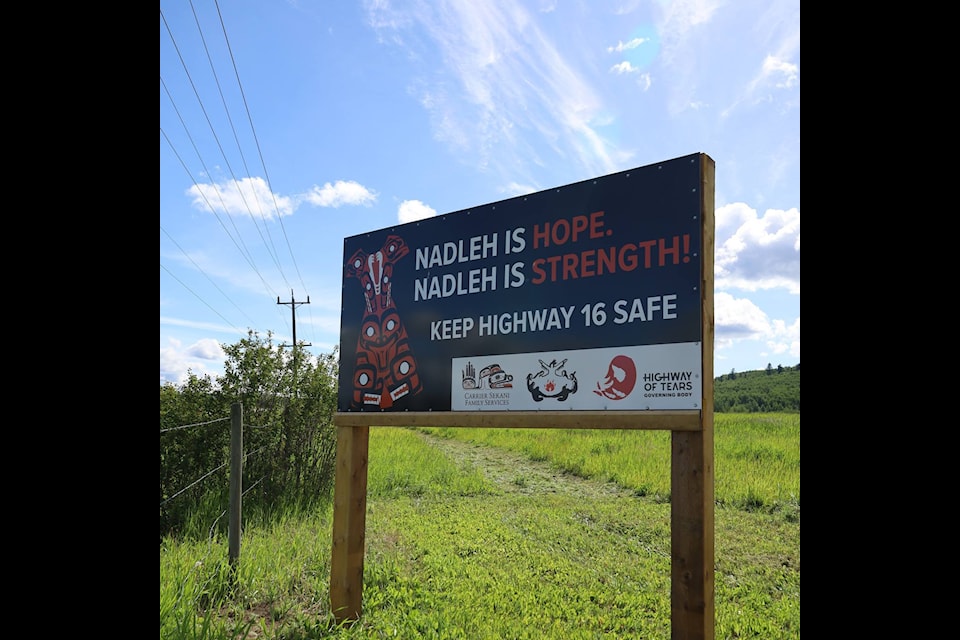 |
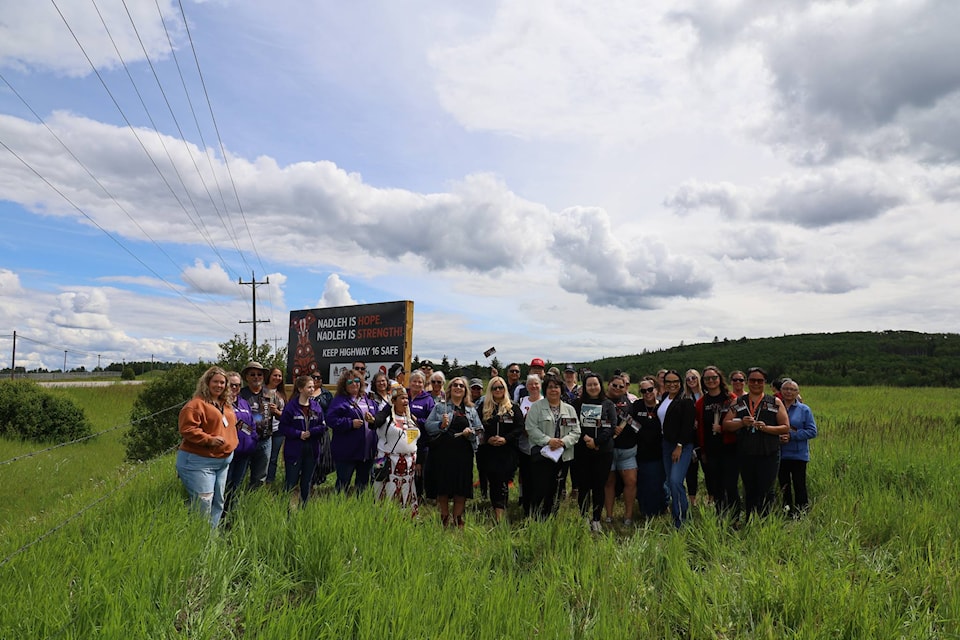
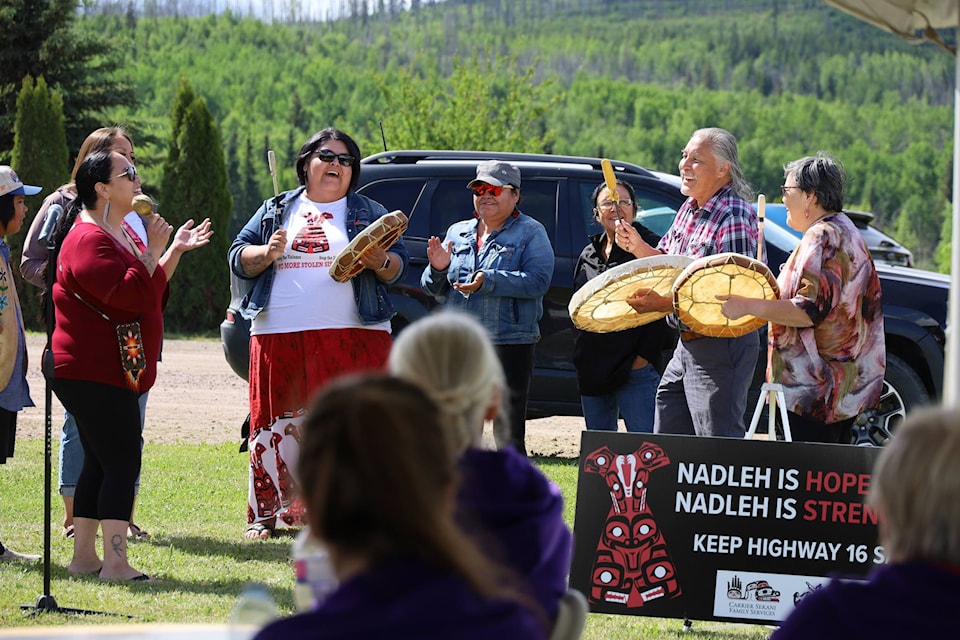
| Nadleh Whut’en unveiled the Hope and Strength billboard, located at the Tse Yaz Bunket Gas Bar, along Hwy 16 on June 25 . The billboard signifies Nadleh’s commitment to the safety of all people along Highway 16. |
A new billboard, advocating awareness for the the Missing and Murdered Indigenous people was unveiled along Highway 16, near Fraser Lake (on June 25).
The billboard, unveiled amidst drumming and speeches, features the message of 'Hope and Strength' and is located 5 kilometres east of Fraser Lake at the Tse Yaz Bunk’et Gas Bar & Café.
It was erected by Nadleh Whut’en, in partnership with Carrier Sekani Family Services (CSFS).
Talking about the event, Serina Greene, Family Advocate at Nadleh
Whut’en said the moment exemplifies the strength of the Nadleh
community.
“The billboards are important to draw awareness for the Missing and Murdered Indigenous people along Highway 16 and to bring hope and strength to our people,” Greene said.
“It took a lot of people and partnerships to make this possible, and it warms my heart to see so many come together for justice," she said, adding, "I get goosebumps just thinking about it.”
"The strength shown by families who have lost loved ones along Highway 16 is inspirational, and gives us strength in our campaign for justice for Missing and Murdered Indigenous Women, Girls, Men, Boys, and 2SLGBTQQIA individuals who are missing or have been murdered along this highway. All of this work is for them.”
👇BACKGROUND
For many British Columbians, a new report deeming the deaths and disappearances of thousands of Indigenous women and girls a "Canadian genocide" could not come soon enough.
The national inquiry into the ongoing tragedy, two-and-a-half years and $92 million in the making, culminated in a final report that was set to be released on Monday. CBC obtained a copy earlier.
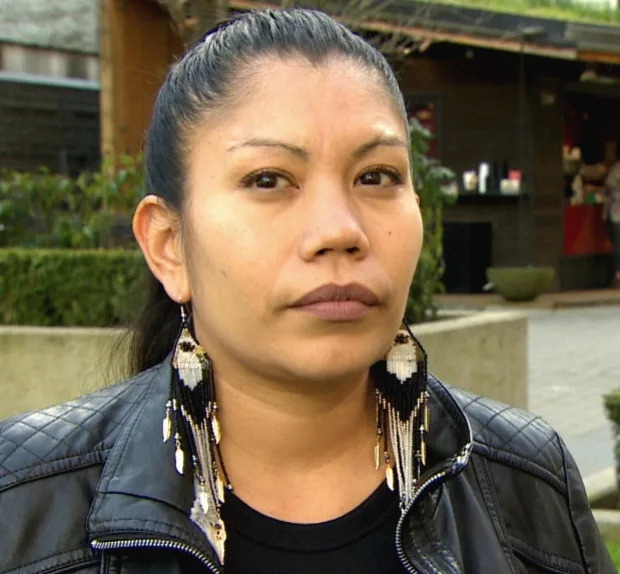
"Our families have been fighting for this for so long and it's coming to an end," said Lorelei Williams, who testified at the national inquiry.
"I'm definitely feeling emotional."
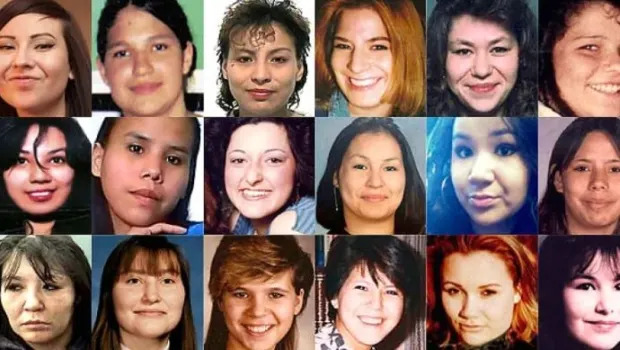
Her cousin Tanya Holyk's DNA was found on the farm of convicted serial killer Robert Pickton. Her aunt, Belinda Williams, went missing from Vancouver's Downtown Eastside more than 40 years ago.
Since 2017, the inquiry has held 24 hearings and events to gather statements from people like Williams across the country. More than 2,380 Canadians attended those events.
"It's been a very, very hard process," Williams told CBC's B.C. Today
"Now, it's coming to an end but our women are still going missing and being murdered at a high rate."
Some estimates have suggested roughly 4,000 Indigenous women have been murdered or have disappeared over the past few decades.
The inquiry report said the true number may be impossible to establish.
Not just numbers
For Mary Teegee, executive director of Child and Family Services for Carrier Sekani, the data doesn't tell the full story.
"The report talks about the atrocities and it talks about genocide, which is very real, but we can't forget that all the statistics is somebody's daughter, somebody's child, somebody's cousin, somebody's friend," she said.
Her cousin Ramona is among those murdered along Highway 16, known as the Highway of Tears.
"It's a vindication and I welcome this report. I'm glad that it has been completed, but definitely there's a lot of bittersweet feelings," Teegee said.
"We could have been doing this decades ago."
Calls for action
The report runs to over 1,200 pages and includes more than 230 recommendations.
Judy Wilson, Chief of the Neskonlith and Union of BC Indian Chief's Executive Member, said she hopes the report will lead to immediate action.
"It's really timely with this report because we need to get on with the actions," said Wilson, whose sister was murdered.
She wants to see concrete change before the fall election. "We're dealing with it in every day of our lives," she said.
"It's hard to find anyone that is not affected in some way or another — our family is most definitely affected with the murder of my young sister at the age of 21."
SOURCE: https://ca.style.yahoo.com/news/apos-bittersweet-apos-reaction-mmiwg-021712810.html


