BACK UP BLOG (no longer updating)

This blog was a backup for American Indian Adoptees blog
USE THE SEARCH BAR or SEARCH TOPICS at bottom of this blog

If you need support

Support Info: If you are a Survivor and need emotional support, a national crisis line is available 24 hours a day, seven days a week: Residential School Survivor Support Line: 1-866-925-4419. Additional Health Support Information: Emotional, cultural, and professional support services are also available to Survivors and their families through the Indian Residential Schools Resolution Health Support Program. Services can be accessed on an individual, family, or group basis.” These & regional support phone numbers are found at https://nctr.ca/contact/survivors/ . MY EMAIL: tracelara@pm.me

Search This Blog

Showing posts with label artifact theft. Show all posts

Tuesday, December 10, 2024

Tightening federal law gives tribes more power for Indigenous items to be returned to communities

 By Charly Edsitty KTRK logo

December 9, 2024

There is a push for universities and museums to return Indigenous remains and sacred belongings with new federal regulations.

There is a push for universities and museums to return Indigenous remains and sacred belongings with new federal regulations.

The push for museums, universities, and federal agencies to return Indigenous remains and sacred belongings is getting stronger as federal regulations have further tightened the rules around how these items can be displayed, giving more legal power to Indigenous tribes.

The Native American Graves Protection and Repatriation Act (NAGPRA) is a federal law created in 1990. It states that organizations that receive federal funding and possess remains of ancestors and sacred belongings must catalog, identify, and repatriate or return them to their rightful and ancestral owners.

"Anyone can imagine how they would feel if their relatives were being held in an institution and their bones were being pulverized due to radio-carbon testing," Ray Halbritter, the leader of the Oneida Indian Nation in New York, said.

Since its implementation more than thirty years ago, repatriation has been slow-moving. But thanks to tightening restrictions implemented in January, tribes have more legal power to stop the display of ancestors or sacred belongings without their approval. This forced museums across the country to adjust their exhibits to stay in compliance.

It also gave more power to Indigenous communities in identifying ancestors and set a five-year deadline for museums, universities, and federal agencies to definitively identify remains and update inventories.

"Out of an abundance of caution, we decided to de-install or remove a rattle that might have specific meaning in ceremonial context," said Dr. Dirk Van Tuerenhout, the curator of anthropology at the Houston Museum of Natural Science.

Dr. Van Tuerenhout says a pair of woven sandals were also removed out of caution, leaving an open space in the middle of the display.

HMNS' John P. McGovern Hall of The Americas explores Indigenous peoples' diverse and dense history from the Arctic to South America.

According to data from ABC News' owned & operated station WLS in Chicago, there are currently 496 museums or federal agencies across the country that have possession of 90,169 ancestral remains and 708, 279 associated funerary objects that are still pending identification and are not available for repatriation.

"We know that museums, agencies, and universities have identified 128-thousand ancestral remains in their collections," said Maggie Green, data journalist at WLS.

According to data gathered from the Federal Register by Green, these are the Houston-area entities with an inventory: Houston Museum of Natural Science with 26 ancestors, Rice University with five ancestors and 11 funerary objects, and the Army Corps of Engineers - Galveston District with 13 ancestors and 24 funerary items.

The National Park Service defines funerary object as any object reasonably believed to have been placed intentionally with or near human remains.

Dr. Van Tuerenhout estimates the museum currently possesses at least 70 ancestors and sacred belongings - explaining that in the years since their initial NAGPRA review was completed, their staff has discovered additional remains that they are working to return.

ABC13 reached out to Rice University regarding the status of the items listed in the Federal Register, which states the 11 funerary belongings in their possession are currently missing and the university is seeking to find them.

This is the university's response: "Last year, in compliance with the Native American Graves Protection and Repatriation Act, Rice returned the human remains of five Native American individuals to the Tonkawa Tribe of Indians of Oklahoma. Concerning the artifacts referenced in the National Archives and Records Administration Federal Register, we have no record of ever possessing these items."

When explicitly asked about the status of the missing items, the university said it could not provide further details.

As for the Army Corps of Engineers - Galveston District, ABC13 made multiple attempts to get a response and has yet to hear back.

Regarding the process of identification, it cannot utilize DNA testing, which is a controversial method among Indigenous communities who say it desecrates the remains of their ancestors.

In some cases, this leaves only a paper trail to find clues about where the ancestors or remains were taken from and how to take steps to return them.

"In the last 20 years, we've returned about 90 of our ancestors back to us," Halbritter said. "Through sacred ceremonies and spiritual ceremonies not open to the public, we've returned them to their resting place. Their home."

Dr. Van Tuerenhout says their office regularly sends letters to various tribes trying to find a possible match.

These letters could lead to more conversations or a visit to the museum to examine the ancestors or belongings in question.

Its work, he says, is essential to HMNS for one reason.

"Well, it's the right thing to do. So, there is the answer," he said. "These belongings do not belong to us."

LINK:  https://abc13.com/post/tightening-federal-law-gives-tribes-more-power-reclaiming-ancestors-belongings/15627943/

Friday, November 15, 2024

Respecting the past, the importance of leaving artifacts undisturbed

By Erin Jimenez | November 9, 2024 (US ARMY)

Native Americans hold a deep belief that everything possesses a spirit. Imagine this: you’re strolling along the serene banks of a USACE-managed river or lake when something catches your eye, jutting up from the earth.  Curiosity piqued, you momentarily forget your walk and approach it.  As you kneel down, your fingers gently disturb the soil, and after a little digging, you uncover an arrowhead. Excitement surges as you think of how amazing it will be to share this treasure with your friends and family.  You tuck it into your pocket, convinced that since it’s just one arrowhead — and there are surely more where it came from — taking it home is harmless.  But in reality, you may be disturbing something far more significant.

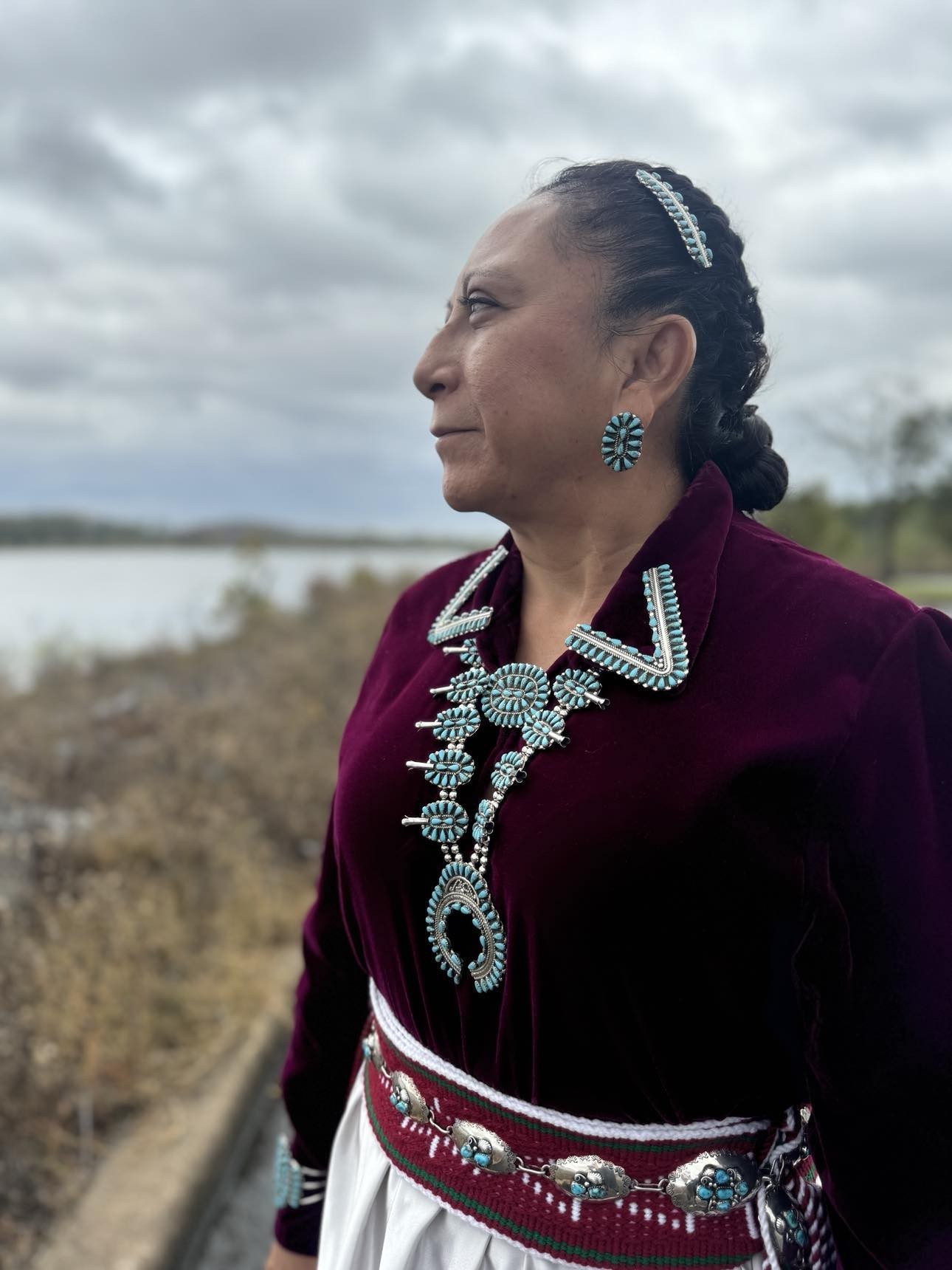
“When someone digs up and loots these artifacts, they are taking away a part of our heritage. These objects are created with a spirit and purpose; they hold significant meaning,” said Casandra Beaver, a member of the Navajo Nation and Administrative Assistant with the U.S. Army Corps of Engineers, Little Rock District. (ABOVE)

Digging for and stealing artifacts and remains from prehistoric Native American and historic archaeological sites is a serious issue that disrespects cultural heritage and threatens invaluable historical knowledge.

The theft and vandalism of these sites, particularly on government property, is a growing concern that demands urgent action.  Each artifact carries a story, a connection to the past, and taking them diminishes our understanding of history. It's essential to respect these sites and preserve their integrity for future generations.

Many people may not realize that digging up artifacts is not only illegal but also deeply disrespectful, as it can disturb human burials and sacred sites.

“Just as it is unacceptable to search for artifacts in a cemetery or to steal sacred objects from a church altar, we must emphasize that the same unethical methods are employed to obtain pottery, woven items, jewelry, arrowheads, knives, and even human remains that some looters choose to display in their collections,” said Billie Burtrum, Tribal Historic Preservation Officer for the Quapaw Nation. “The Quapaw Nation fully supports the prosecution of looting and grave robbery, as these actions violate cultural heritage and displace the historical significance of the items taken.”

Additionally, searching for artifacts on private property without the landowner's permission is equally unacceptable.  This practice undermines the trust and respect owed to landowners and diminishes the personal and cultural significance of the land and its potential archaeological resources.

State laws exist to prosecute violators on private lands, emphasizing the seriousness of these actions.

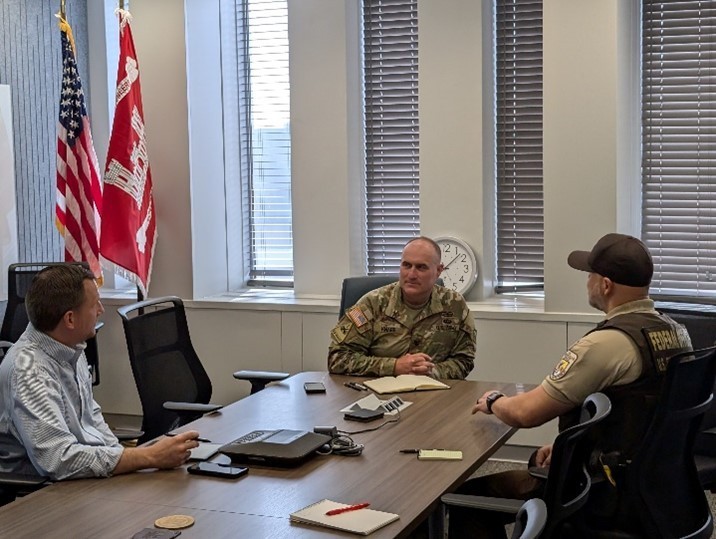
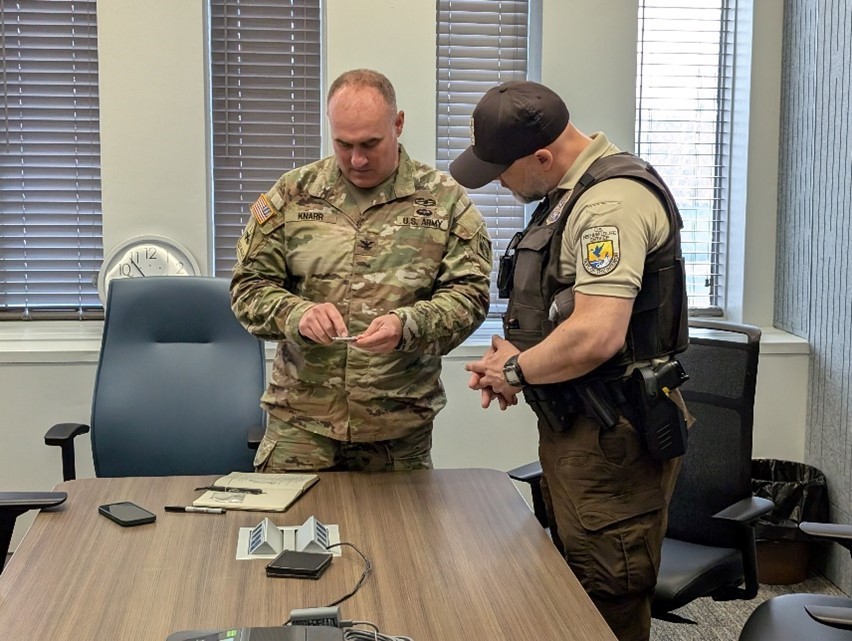
In response to this escalating issue, the USACE Little Rock District, is forming strategic partnerships with the Arkansas Game and Fish Commission and the U.S. Fish and Wildlife Service to raise awareness and intensify efforts to combat the troubling rise in looting incidents.

Strengthening Collaboration: USACE and U.S. Fish and Wildlife Service discuss law enforcement support on USACE managed lands
1 / 2 Show Caption + Little Rock District Commander Col. Damon Knarr, Deputy Chief of Operations Greg Matson and Captain of the U.S. Fish and Wildlife Service Division of Refuge Law Enforcement, Capt. Brandon Bland, meet to discuss USFWS law enforcement support on USACE managed lands in Little Rock, Ark., June 26, 2024.

(Photo Credit: Allen Wilson)
VIEW ORIGINAL
Strengthening Collaboration: USACE and US Fish and Wildlife Service discuss law enforcement support on USACE managed lands
2 / 2 Show Caption + Little Rock District Commander Col. Damon Knarr and U.S. Fish and Wildlife Service Division of Refuge Law Enforcement, Capt. Brandon Bland, meet to discuss USFWS law enforcement support on USACE managed lands in Little Rock, Ark., June 26, 2024.
(Photo Credit: Allen Wilson)
VIEW ORIGINAL

This collaborative initiative not only seeks to increase investigations aimed at deterring individuals from targeting artifacts on government lands but also emphasizes the importance of pursuing convictions to highlight the seriousness of the issue.

“Archeological sites are not just made up of individual artifacts; they consist of interconnected artifacts and the soil matrix surrounding them, which together tell the story of the past,” said Dr. Melissa Zabecki, State Archeologist for the Arkansas Archeological Survey. “When an artifact is removed, not only is a sacred object stolen, but the entire site's integrity is compromised as a crucial puzzle piece is taken away and valuable soil information disturbed.”

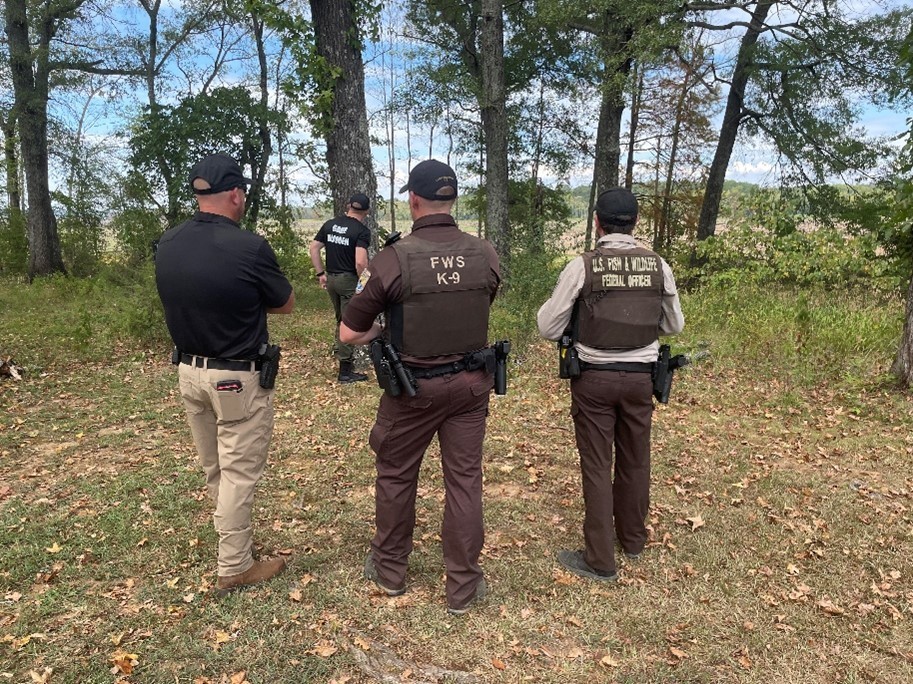
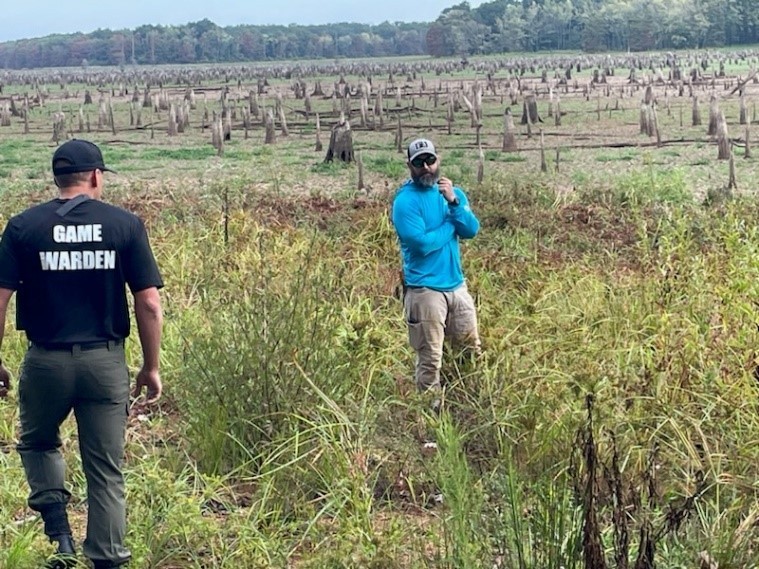
Unfortunately, public lands in Arkansas and Missouri have a troubling history of cultural resource exploitation.  To counteract this trend, Little Rock District Archaeologist Allen Wilson, has teamed up with Capt. Brandon Bland, who oversees the U.S. Fish and Wildlife Service division of Refuge Law Enforcement in Arkansas to provide training to law enforcement focused on identifying theft sites and understanding legal cases as they relate to cultural resources.

“We are extremely proud of our cultural resources training program and the devotion of the USACE, AGFC and USFWS training staff who make it successful,” said Bland.

Over the years, this program has led to heightened investigative interest and engagement from law enforcement at both state and federal levels. Notably, during a recent training session, an officer detected an Archeological Resource Protection Act violation on USACE lands, which was promptly reported to the USFWS and AGFC.

Violators of these laws face severe penalties, including potential prison sentences of up to five years without parole and fines reaching $250,000. Digging for and selling artifacts for profit not only undermines ethical standards but also shows a profound disregard for the irreplaceable nature of our cultural resources.

“There are no more prehistoric archaeological sites being created,” said Wilson. “When areas like these are destroyed or artifacts removed, we lose invaluable insights into the cultures of these regions. Our resources for understanding this history is already limited, making preservation essential.”

As these agencies confront the pressing issue of theft and vandalism at historical sites, it’s imperative to recognize the cultural significance of these artifacts and the critical need for their protection. Illegal activities associated with artifact theft encompass the unauthorized excavation of archaeological items—such as tools, pottery, and burial remains—regardless of whether the site is on government or private land.

Taking artifacts from their original locations violates laws such as the Archaeological Resources Protection Act, the Native American Graves Protection and Repatriation Act and state regulations, which exist to protect the integrity of archaeological sites and Native American graves.

Actively searching for and collecting artifacts with the intent to sell or display them constitutes looting and undermines cultural heritage.

“Site destruction has gone on far too long and it’s time to start respecting other peoples’ history by ending the practice of looting,” said Dr. Zabecki.

By raising awareness of these illegal activities and emphasizing the importance of cultural preservation and legal enforcement, communities can play a crucial role in safeguarding our shared heritage for generations to come.

KEEP READING:  https://www.army.mil/article/281175/respecting_the_past_the_importance_of_leaving_artifacts_undisturbed

CLICK OLDER POSTS (above) to see more news

CLICK OLDER POSTS  (above) to see more news

MEGWETCH THANK YOU

HUGE Thank you for visiting this blog and sharing this with your kin. It's appreciated. Contact Trace anytime! Use the form below.

BOOKSHOP

Please use BOOKSHOP to buy our titles. We will not be posting links to Amazon.

Popular Posts

To Veronica Brown

Veronica, we adult adoptees are thinking of you today and every day. We will be here when you need us. Your journey in the adopted life has begun, nothing can revoke that now, the damage cannot be undone. Be courageous, you have what no adoptee before you has had; a strong group of adult adoptees who know your story, who are behind you and will always be so.

OUR HISTORY

OUR HISTORY
BOOK 5: Lost Children of the Indian Adoption Projects