Listen to an interview about the new book STOLEN GENERATIONS
Listen to an interview about the new book STOLEN GENERATIONS

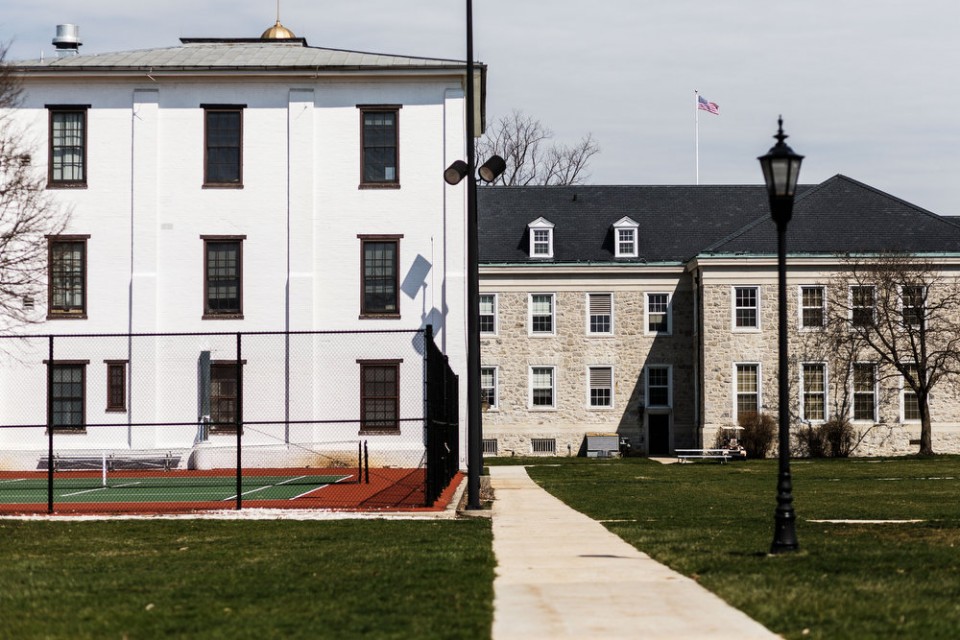

Today many American Indians view what took place at Carlisle as genocide.


Today many American Indians view what took place at Carlisle as genocide.
Today many American Indians view what took place at Carlisle as genocide.


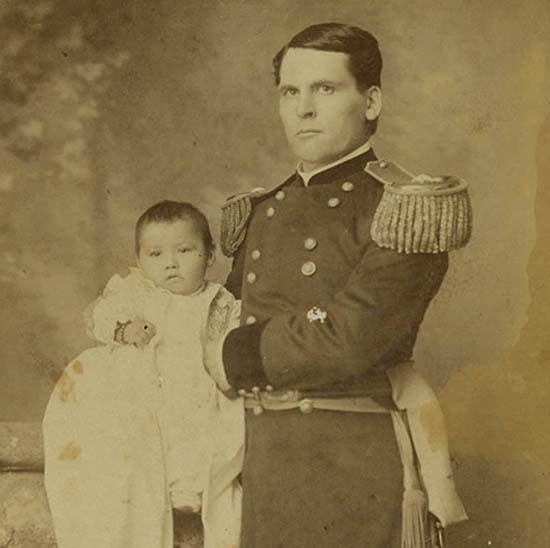
Lyncoya was a living argument for the supremacy of the white way of life. Jackson killed Creek people, took Creek land, and raised their children as his own—a primal act of domination.
 |
| The soldiers took 84 captives, including Lyncoya. |
Despite what the URL might indicate, the video and site do not belong to an organization with a long history of pushing to expand civil rights protections to minority groups. Rather, they are part of a campaign by the Goldwater Institute — a conservative legal organization mostly known for its anti-government and pro-property rights work — aimed at eliminating ICWA, a 1978 federal law designed to protect Native American kids from more than 100 years of government-mandated assimilation. That legislation established tougher requirements for removing Native American children from their biological families and gave federally recognized tribes control over the adoption and custody processes for their citizens’ kids.
***
Matthew L.M. Fletcher, who directs the Indigenous Law and Policy Center at the Michigan State University College of Law says the key function of ICWA is that it “gives tribes a chance to have a say in what happens to their kids.” He notes that the due process requirements it provides have been held up by child welfare advocacy groups as “the gold standard for child welfare decisions for all children.”
***
Kathryn E. Fort, who works with Fletcher at MSU’s Indigenous Law and Policy Center, agrees. “I think what ICWA has done is given a backstop, in many ways, to the worst abuses,” she said. But recent problems in South Dakota, for instance, are proof that there are “still counties where they’re just not following the law.” Last March, a federal judge found that state officials had improperly removed scores of Native American children in one county from their parents’ custody, failing to follow ICWA’s procedure.
If the Goldwater Institute’s challenge is successful, not only will the strongest tool to stop those kinds of discrimination be taken away — so might a whole host of other laws.
Password: icwa
 The Minneapolis ICWA Law Center represents parents in ICWA cases, among other things.
 |
| archive photo |
This article develops the history of the role of Indian children in the formation of the federal-tribal trust relationship and comes as constitutional challenges to the Indian Child Welfare Act (ICWA) are now pending. We conclude the historical record demonstrates the core of the federal-tribal trust relationship is the welfare of Indian children and their relationship to Indian nations. The challenges to ICWA are based on legally and historically false assumptions about federal and state powers in relation to Indian children and the federal government’s trust relationship with Indian children.
Indian children have been a focus of federal Indian affairs at least since the Framing of the Constitution. The Founding Generation initially used Indian children as military and diplomatic pawns, and later undertook a duty of protection to Indian nations and, especially, Indian children. Dozens of Indian treaties memorialize and implement the federal government’s duty to Indian children. Sadly, the United States then catastrophically distorted that duty of protection by deviating from its constitution-based obligations well into the 20th century. It was during this Coercive Period that federal Indian law and policy largely became unmoored from the constitution.
The modern duty of protection, now characterized as a federal general trust relationship, is manifested in federal statutes such as ICWA and various self-determination acts that return self-governance to tribes and acknowledge the United States’ duty of protection to Indian children. The federal duty of protection of internal tribal sovereignty, which has been strongly linked to the welfare of Indian children since the Founding, is now as closely realized as it ever has been throughout American history. In the Self-Determination Era, modern federal laws, including ICWA, constitute a return of federal Indian law and policy to constitutional fidelity.
 |
| archive photo |
This article develops the history of the role of
Indian children in the formation of the federal-tribal trust
relationship and comes as constitutional challenges to the Indian Child
Welfare Act (ICWA) are now pending. We conclude the historical record
demonstrates the core of the federal-tribal trust relationship is the
welfare of Indian children and their relationship to Indian nations. The
challenges to ICWA are based on legally and historically false
assumptions about federal and state powers in relation to Indian
children and the federal government’s trust relationship with Indian
children.
Indian children have been a focus of federal Indian affairs at
least since the Framing of the Constitution. The Founding Generation
initially used Indian children as military and diplomatic pawns, and
later undertook a duty of protection to Indian nations and, especially,
Indian children. Dozens of Indian treaties memorialize and implement the
federal government’s duty to Indian children. Sadly, the United States
then catastrophically distorted that duty of protection by deviating
from its constitution-based obligations well into the 20th century. It
was during this Coercive Period that federal Indian law and policy
largely became unmoored from the constitution.
The modern duty of protection, now characterized as a federal
general trust relationship, is manifested in federal statutes such as
ICWA and various self-determination acts that return self-governance to
tribes and acknowledge the United States’ duty of protection to Indian
children. The federal duty of protection of internal tribal sovereignty,
which has been strongly linked to the welfare of Indian children since
the Founding, is now as closely realized as it ever has been throughout
American history. In the Self-Determination Era, modern federal laws,
including ICWA, constitute a return of federal Indian law and policy to
constitutional fidelity.
|
| archive photo |
This article develops the history of the role of Indian children in the formation of the federal-tribal trust relationship and comes as constitutional challenges to the Indian Child Welfare Act (ICWA) are now pending. We conclude the historical record demonstrates the core of the federal-tribal trust relationship is the welfare of Indian children and their relationship to Indian nations. The challenges to ICWA are based on legally and historically false assumptions about federal and state powers in relation to Indian children and the federal government’s trust relationship with Indian children.
Indian children have been a focus of federal Indian affairs at least since the Framing of the Constitution. The Founding Generation initially used Indian children as military and diplomatic pawns, and later undertook a duty of protection to Indian nations and, especially, Indian children. Dozens of Indian treaties memorialize and implement the federal government’s duty to Indian children. Sadly, the United States then catastrophically distorted that duty of protection by deviating from its constitution-based obligations well into the 20th century. It was during this Coercive Period that federal Indian law and policy largely became unmoored from the constitution.
The modern duty of protection, now characterized as a federal general trust relationship, is manifested in federal statutes such as ICWA and various self-determination acts that return self-governance to tribes and acknowledge the United States’ duty of protection to Indian children. The federal duty of protection of internal tribal sovereignty, which has been strongly linked to the welfare of Indian children since the Founding, is now as closely realized as it ever has been throughout American history. In the Self-Determination Era, modern federal laws, including ICWA, constitute a return of federal Indian law and policy to constitutional fidelity.
|
| archive photo |
This article develops the history of the role of Indian children in the formation of the federal-tribal trust relationship and comes as constitutional challenges to the Indian Child Welfare Act (ICWA) are now pending. We conclude the historical record demonstrates the core of the federal-tribal trust relationship is the welfare of Indian children and their relationship to Indian nations. The challenges to ICWA are based on legally and historically false assumptions about federal and state powers in relation to Indian children and the federal government’s trust relationship with Indian children.
Indian children have been a focus of federal Indian affairs at least since the Framing of the Constitution. The Founding Generation initially used Indian children as military and diplomatic pawns, and later undertook a duty of protection to Indian nations and, especially, Indian children. Dozens of Indian treaties memorialize and implement the federal government’s duty to Indian children. Sadly, the United States then catastrophically distorted that duty of protection by deviating from its constitution-based obligations well into the 20th century. It was during this Coercive Period that federal Indian law and policy largely became unmoored from the constitution.
The modern duty of protection, now characterized as a federal general trust relationship, is manifested in federal statutes such as ICWA and various self-determination acts that return self-governance to tribes and acknowledge the United States’ duty of protection to Indian children. The federal duty of protection of internal tribal sovereignty, which has been strongly linked to the welfare of Indian children since the Founding, is now as closely realized as it ever has been throughout American history. In the Self-Determination Era, modern federal laws, including ICWA, constitute a return of federal Indian law and policy to constitutional fidelity.

******************** and also from their blogSurvivors of Canada's notorious residential school system have the right to see their stories archived if they wish, but their accounts must otherwise be destroyed in 15 years, Ontario's top court ruled in a split decision (April 4).
At issue are documents related to compensation claims made by as many as 30,000 survivors of Indian residential schools — many heart-rending accounts of sexual, physical and psychological abuse.
“For more than a century, the governments of Canada and the United States pursued a policy of forcible removal of indigenous children from their homes and communities. The Truth and Reconciliation Commission of Canada recently released a report on these removal practices, recognizing them to be part of a policy of “cultural genocide.”
If you thought that ethnic cleansing was something for the history books, think again...
 |
| Book One |
 |
| Book 2 (40 adoptees +) |
 Thought-provoking and moving 11 October 2012
  |
| LINK |
 |
| cover art by Ojibwe adoptee Terry Niska Watson |

After doing two earlier anthologies, WE are survivors and WE are resilient. That I know.
 |
| will post to your twitter account |


