BACK UP BLOG (no longer updating)

This blog was a backup for American Indian Adoptees blog
USE THE SEARCH BAR or SEARCH TOPICS at bottom of this blog

If you need support

Support Info: If you are a Survivor and need emotional support, a national crisis line is available 24 hours a day, seven days a week: Residential School Survivor Support Line: 1-866-925-4419. Additional Health Support Information: Emotional, cultural, and professional support services are also available to Survivors and their families through the Indian Residential Schools Resolution Health Support Program. Services can be accessed on an individual, family, or group basis.” These & regional support phone numbers are found at https://nctr.ca/contact/survivors/ . MY EMAIL: tracelara@pm.me

Search This Blog

Monday, November 21, 2022

My Navajo identity was taken from me

 SOURCE


Opinion: I’m a Jersey girl born into the Salt Clan. My Navajo identity was taken from me


Editor’s Note: Hilary C. Tompkins, a member of the Navajo
Nation, served as the Solicitor of the US Department of the Interior
during the Obama administration. She currently practices law in
Washington, DC. The views expressed in this piece are her own. Read more opinion at CNN.


CNN
 — 


My adoption papers said my mother was “very attractive” and that
my “grandmother has some education and is considered to be an
intelligent woman.” My father, who was listed as “Plains,” was described as having “hair with a slight tendency to wave.”


These small nuggets of information from my adoption papers were my
only connection to my birth family. Only much later in life, as a young
adult taking Native American studies at Dartmouth College, did I learn
that I also had a legal connection with the Navajo Nation as a citizen
of the Tribe.
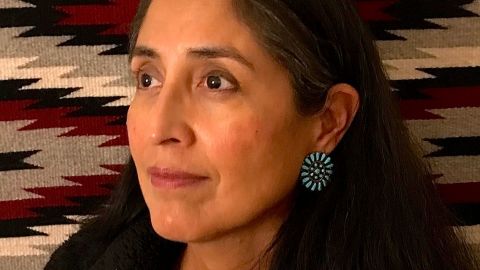


Hilary Tompkins


I’m like many Native Americans who were placed in White families under the Department of the Interior’s Indian Adoption Project in the 1960s and 1970s.


As with the placements of Indian children in boarding schools,
this program removed Native children from their Tribes without
justification and assimilated them into mainstream America. When I met
my birth family as a young adult, one of my aunts held me and cried,
saying the last time she held me I was a baby and she had told the
hospital officials that she and my extended family would take care of
me, but to no avail. I was taken away and put up for adoption anyway.


Recognizing that the continued existence of Tribal Nations was at stake because of the loss of up to 35% of their children, Congress outlawed this practice in 1978 with the passage of the Indian Child Welfare Act (ICWA). At the time, placement with White families was estimated to be at 90%.


Earlier this month, the US Supreme Court held oral arguments in a closely watched case, Haaland v. Brackeen,
to decide whether the Indian Child Welfare Act is unconstitutional
because it favors the adoption of Native children by Native families.


The states of Texas, Louisiana and Indiana, along with non-Native
parents seeking to adopt Native children, say that ICWA amounts to
racial discrimination because it has nothing to do with the “ability of
Indians to govern themselves.” They argue that the states and non-Native
parents should be able to decide the placement of Native children free
of consideration of their tribal status because there is no political
interest of the Tribes at stake.


And opponents of the Indian Child Welfare Act even go a step
further, saying that the law goes against the best interests of Native
children by imposing standards that make it harder for them to be
adopted into stable, loving homes.


As a Native person who was adopted into a White family before the
implementation of ICWA, that’s not the way I see it. I can attest
firsthand, as a citizen of both the United States and the Navajo Nation,
that ICWA is not about race.


I grew up in southern New Jersey, but I always knew I was Navajo.
Born in Zuni Pueblo, New Mexico, I was separated from my family with
only a few papers as evidence of my Tribal status.


By all outward appearances, my life today gives the impression that the Indian Adoption Project
was a success. I was placed in a family that loved me. I received an
exemplary education. I live a comfortable, middle class life. I have
enjoyed professional success, having served as Solicitor of the
Department of the Interior, the third ranking position in the department
– the very federal agency that set my course in life. Yet despite these
blessings, the Indian Adoption Project left me adrift, a foreigner in
my own country.


Upon my return to the Navajo Nation almost 30 years ago, my sense of loss was overwhelming. The Navajo Nation
is a different world: Navajo is frequently spoken there and the laws
and way of living are based on Navajo traditions. There is no separation
of Navajo spirituality from Navajo sovereignty. One foundational
principle is ke’ – kinship
– which is rooted in a vast clan system. I didn’t know my clan and
couldn’t speak the language. Nor did I understand the complex and
traditional laws of Navajo society. The loss of my culture was not just
personal, but political.


I tried to make up for my losses, learning some of the language,
attending our traditional ceremonies and working for the Navajo Nation
Department of Justice. But despite my best efforts, I couldn’t catch up.
I can vote in our elections but I don’t understand the stump speeches. I
can’t run for office as I am not a fluent Navajo speaker. I reconnected
with my birth family, but I have never felt fully integrated into
Navajo society.


ICWA recognized that in order to have functioning tribal
governments, you need the next generation of tribal citizens to be part
of tribal political society. Taking away Native children threatens
tribes’ future because the loss of their kids jeopardizes Tribes’
ability to be political sovereign entities. The law gives a preference
for placing a Native child with extended family members, members of its
Tribe or members of another Tribe – a priority that can make it harder
for a White family to adopt. It requires state courts to notify the
Tribe about the child, and to have them indicate the preferred placement
– or to say placement with a particular non-Native family is okay.


During oral arguments
earlier this month, two of the justices indicated that they understood
how high the stakes are for Tribal Nations. Justice Neil Gorsuch observed
during oral arguments that in passing the law, Congress understood that
ICWA is “essential to [the] self-preservation of Indian tribes.” And
Justice Kagan recognized
that “the political entity is itself being threatened because of the
way decisions on the placement of children are being made.”


If ICWA had been in place when I was adopted, my Tribe would have
been involved in my adoption. Navajo tribal authorities would have had a
say in my adoption had I been adopted under the provisions of the law. I
could have maintained a connection with my relatives – even if I had
ended up with White parents. I still could have been adopted by a
non-Native family, but my adoptive family might have been able to
connect with my extended family or others, fostering a connection with
my Tribe. But because I was placed for adoption prior to the existence
of ICWA, I had to reclaim my connection with my Tribe all on my own.


My family and I eventually found each other by serendipity when I
was living on the Navajo reservation. In middle age, I have come to
accept who I am – a Jersey girl born into the Salt Clan. I have overcome
the pain and loss. But I wouldn’t wish my experience on the children of
Tribal citizens today. We cannot fail Native children again as we have
failed them in the past.


Native children deserve the opportunity to be citizens of both the
United States and Tribal Nations. I pray that they will not be the
subject of another social experiment based on the decisions of
government officials who haven’t walked in the shoes of the First
Americans.



Tuesday, November 15, 2022

How did we get here? (with some humor)


WHY ICWA MATTERS? Land Theft? Child Trafficking? Cultural Genocide? Horrible Adoption Outcomes? Loss of everything?

Yup.

Friday, November 11, 2022

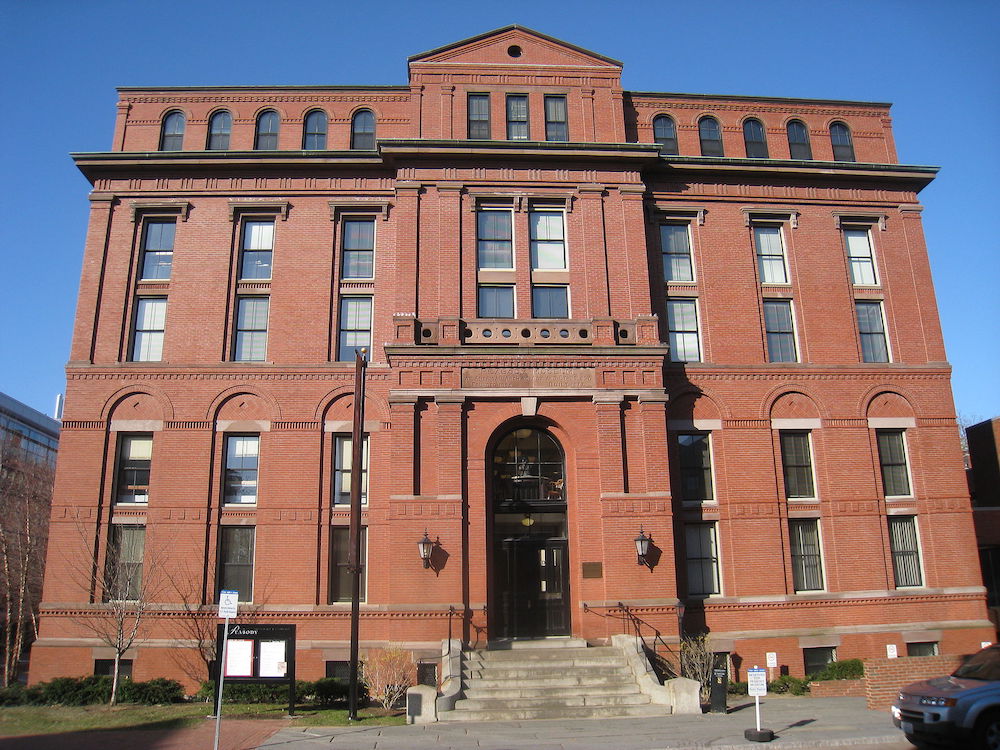
Harvard Museum Says It Has Hair Clippings from 700 Native Children Who Attended Indian Boarding Schools


Harvard's Peabody Museum (Photo: Public domain)


**This story contains
disturbing details from U.S. Indian Boarding Schools. For support and
mental health resources, visit The Native American Boarding School
Healing Coalition’s list of resources.** 


Harvard’s Peabody Museum has hair clippings taken from the heads of
about 700 Native American children while they were attending U.S. Indian
Boarding Schools, the institution announced this morning.


The clippings from Native children are part of a collection that
includes 1,500 total hair samples from people across Asia, Central
America, North America, Oceania, and South America. It was assembled by
anthropologist and former Harvard professor, George Woodbury, between
1930 and 1933.  Woodbury took “the vast majority” of samples from living
people across the world to study racial hierarchies, The Peabody Museum wrote online.


Woodbury obtained the samples by enlisting the help of “other
anthropologists and archaeologists, as well as administrators at a wide
variety of U.S. Indian reservations, U.S. Indian boarding schools, and
Canadian hospitals as well as missionaries worldwide,” Harvard wrote in
an online statement published at 9am on Nov. 10. The collection was donated to Harvard and accessioned in 1935.


According to Harvard University spokesperson Rachael Dane, when the
Peabody began organizing its collections in a database in 2008, the
location of the Woodbury collection was marked ‘unknown.’ In April 2022,
Peabody Museum staff cataloged the Woodbury Collection and determined
its contents. 


Many of the samples have the names of the children whose hair was taken, as well as their tribal affiliation.  Approximately 300 tribal nations had samples taken from their kids from at least 21 boarding school locations, plus an additional 12 “collecting locations” noted by Harvard.  The most samples, records show, were taken from 138 children at The
Fort Totten Indian School in North Dakota, and 122 children at the
Sherman Institute in Riverside, California.


“I just cannot for the life of me wrap my head around something like
that,” Rosebud Indian Reservation’s Tribal Historic Preservation Officer
Ione Quigley told Native News Online. She learned that hair
samples were taken from her relatives in an email that came through from
Harvard late Monday evening, she said. “Why would somebody want hair
samples … from little ones? That's a human remain that, for us, holds so
much sacredness.”


Harvard says it will return all of the hair samples, and that it
contacted tribal chairs and tribal historic preservation officers by
email to let them know about the samples, though it “did not have all
the emails,” Dane told Native News Online.

“The Peabody Museum apologizes to Indigenous families and tribal
nations for our complicity in the objectification of Native peoples and
for our more than 80-year possession of hair taken from their
relatives,” the museum’s website reads.


Nowhere does Harvard acknowledge that it likely broke a federal law
that’s been in place since the ‘90s, the Native American Graves
Protection and Repatration Act. Under NAGPRA, institutions are required
to catalog and return their collections of Native American human remains
and their burial objects. Human remains are defined by law as “The
physical remains of the body of a person of Native American ancestry.”
The term excludes remains or portions of remains “that may reasonably be
determined to have been freely given or naturally shed by the
individual from whose body they were obtained, such as hair made into
ropes or nets.”


This year alone, at least three institutions have completed
reparations of human hair to Native tribes or Native Hawaiian
Organizations, according to federal register notices. But Dane told Native News Online
that, “the Peabody Museum understands that this type of hair sample,
which can be found in many museums and federal agencies, is not subject
to NAGPRA.”


“I don’t see how they could argue that [collecting hair samples from
children can be done with] consent,” Association on American Indian
Affairs chief Executive and attorney Shannon O’Loughlin (Choctaw) told Native News Online.
“Human hair is considered remains that require inventory and
consultation. My first reaction, because there was hair from a Choctaw
child included in there, is…what in the world? How did they not know
this existed for so long? It’s so disappointing to see Harvard just not
getting how to work with Native Nations.”


O’Loughlin said that the Association intends to hold Harvard
accountable for requesting proper tribal consultation, instead of merely
asking tribal representatives to fill out a contact form online to be notified when further information on return “becomes available.”


From from 1819 to 1969, the federal government operated more that 400
Indian boarding schools where Native kids were forced to attend with
the express purpose of cultural assimilation that coincided with Indian
territorial dispossession. At these institutions, the government
employed “systematic militarized and identity-alteration methodologies”
to assimilate Native children through renaming them, banning the use of
their language, and cutting their hair, a federal investigation into the government’s role in the schools released in May 2022 noted.


Quigley, the Rosebud tribal preservation officer, is a boarding
school survivor from St. Francis Indian School on the Rosebud Indian
Reservation.  She can attest to the lack of consent in Native kids
having their hair cut at boarding schools—she lived through it. When she
arrived at St. Francis Indian School as a sixth grader, nuns forcibly
cut her hair.


“It was very very traumatic for me to have my hair cut like that,”
Quigley said. “No affection, no care, nothing. There’s something really
wrong in that.”


“Does it seem reasonable to you that this hair was freely given or
naturally shed?” Melanie O’Brien, who manages the National NAGPRA
Program, wrote in response to questions from Native News Online. “That is the ONLY exception to human remains under NAGPRA.”


O’Brien said that she can’t say if Harvard has failed to comply with NAGPRA unless any person alleges it, and the Department of the Interior investigates it. 


“If this were determined to be a failure to comply with NAGPRA
because these human remains were not reported in an inventory, the
penalty amount would be $7,475 times the number of lineal descendants,
Indian Tribes, or NHOs involved,” she wrote. If Harvard were found to be
out of compliance with NAGPRA for its collection of inventoried 700
hair samples, it would owe more than $5 million.


Harvard University has one of the largest collections of Native
American human remains in the country, according to the inventory it did
report in the 90s. Currently, the institution holds at least 6,162 ancestors.
Harvard received five federal grants totaling $287,430 from 1994 to
1997 to complete its inventory. It also received two extensions to
complete their inventory in 1998 and 2000, public records show.  


This is a developing story.

More Stories Like This

1,520 Oneida Funerary Repatriated from Colgate University
U.S. Supreme Court Hears Arguments in ICWA Case That Threatens Tribal Sovereignty
The Indian Child Welfare Act: What it is and What’s at Stake
More than 160 Lakota Artifacts Repatriated

Haaland v. Brackeen: The Case that Could Break Native Sovereignty


Why ICWA Matters


Breaking News


tags:
Supreme Court, Native American history, Tribal Sovereignty, Haaland v. Brackeen, Indian Child Welfare Act


Rebecca Nagle is a journalist based in Tahlequah, Oklahoma. Her podcast, This Land, won the American Mosaic Journalism Prize in 2020.


Every generation of Americans has seen an effort to undermine
Indigenous sovereignty. The latest attempt heads to the Supreme Court
tomorrow.


In the sprawling federal lawsuit Haaland v. Brackeen, a
handful of white foster parents, among other plaintiffs, are asking the
Supreme Court to overturn a law called the Indian Child Welfare Act.
ICWA was created in 1978 to prevent family separation in Native
communities. When the law passed, about a third of Native children had been removed from their families. But in the lawsuit, far more than the future of Native children is at stake.


When a Native child is up for adoption, ICWA prioritizes placing that
child first with relatives, then other members of their tribe, and then
other Native families. These placement preferences, the non-Native
foster parents claim, give them “fourth-tier status.” Their pro bono lawyer Matthew McGill told the Fifth Circuit that
this was all because “they are not and cannot be, because of their
race, Indian families.” (Notably, in two of the three underlying custody
cases, the non-Native foster parents won custody—when blood relatives
also wanted to raise the children.) Citing the equal-protection clause
of the Fourteenth Amendment, the plaintiffs claim that ICWA violates
their constitutional rights by discriminating against them.


What makes the case tricky is that many people in the United States
think of Native Americans as a racial group. But that is not how
American law works. Under federal law, tribes and tribal citizens are
not a racial group, but a political one.  Accordingly, ICWA applies only
to Native children who either are enrolled in a federally recognized
tribe or are eligible based on a given tribe’s citizenship requirements.
Just as certain laws apply to me because I am a citizen of the United
States or a resident of Oklahoma, certain laws apply to me because I’m a
citizen of the Cherokee Nation. Those laws flow from the treaties
signed between my sovereign Indigenous nation and the United States,
established through the same constitutional process the U.S. uses to
sign treaties with Britain or Japan.


A host of federal statutes—including on land rights, water rights,
health care, gaming, criminal and civil jurisdiction, and tribal
self-governance—treat Native Americans differently based on this
political classification. In this light, I fear that the Brackeen lawsuit is the first in a row of dominoes—if the Court strikes down ICWA, everything else could soon go with it.


If ICWA is unconstitutional because it is based on race, then what of
the clinic where I get my health care that serves only tribal citizens?
If ICWA discriminates against non-Native foster parents, what of gaming
regulations that allow tribes to operate casinos where non-Native
casino developers can’t?  What “racial group” in the United States has
their own police forces, courts, elections, governments, and lands, as
tribes do?  The possible shift is radical.  The U.S. has been passing laws
that treat tribes and tribal citizens differently from non-Native
citizens since the founding of the republic.  If that is
unconstitutional, the entire legal structure defending the legal rights
of Indigenous nations could crumble.

KEEP READING


Thursday, November 10, 2022

ICT: Indigenous people flock to DC for ICWA hearing

 ‘If you take our children, you take our identity’


Approximately 60 stood in line waiting to sit inside the court to
witness the oral arguments. Many sat between the Capitol and court
listening to three hours of oral arguments on their headphones, and
others listened to the line of speakers and songs all morning and into
midday.

Haaland v. Brackeen challenges the Indian Child
Welfare Act, a law that has been referred to as the “gold standard” for
child welfare by many child welfare organizations. It was enacted in
1978 to “halt the unnecessary forced removal of Native kids from their
families,” said Sarah Kastelic, an enrolled citizen of the Native
Village of Ouzinkie and executive director of the National Indian Child Welfare Association.

ICWA - Sarah Kastelic, executive director of the National Indian Child Welfare Association and an enrolled citizen of the Native Village of Ouzinkie, stands outside the U.S. Supreme Court with a sign in her language in Washington, D.C., on November 9, 2022. (Photo by Jourdan Bennett-Begaye, ICT)

“So in our organization,
one of the things that we talk about is the recipe for colonization,”
Kastelic said. This recipe is “consistently followed by colonizers to
colonize Indigenous people.”

She said there are five ingredients:

  1. “Take the land;”
  2. “Control the natural resources, especially the water;”
  3. “Usurp, replace Indigenous governance to delegitimize Indigenous thought;”
  4. “Undermine Native worldview, values, traditions, beliefs;” and

And
number five, “the most important ingredient,” she says, is to “sever
Native children from their sense of identity, from their culture, from
their sense of belonging, from that sense of connectedness to
something
.”

This would meet the United Nations definition of genocide.

KEEP READING 

** BEST QUOTE


NATIVE AMERICA CALLING:

The fate of ICWA


Each side presented their oral arguments Wednesday to the U.S.
Supreme Court for the most serious challenge to the Indian Child Welfare
Act in recent memory. The decision in Haaland v. Brackeen will be a major force in the future of ICWA and the scope of tribal sovereignty. Today on Native America Calling, Shawn Spruce analyzes the legal debate from a Native perspective with Matthew Fletcher (Grand Traverse Band of Ottawa and Chippewa Indians), law professor at the University of Michigan Law School and author of the Turtle Talk blog; independent journalist Suzette Brewer (citizen of the Cherokee Nation); and Dr. Sarah Kastelic (Alutiiq), director of the National Indian Child Welfare Association.


Full Brackeen Indian Child Welfare Act oral arguments  (Indigenous Wire)

Oral arguments in Haaland v. Brackeen, a U.S. Supreme Court case that will decide whether the Indian Child Welfare Act (ICWA) of 1978
is constitutional and/or will be altered in any way, were heard
yesterday. Books will likely be written about this law and the case —
and their impact on tribal sovereignty — and we’ll be featuring much
more about the issues at stake in days to come.

For those so inclined, take a listen to the 3-hour oral arguments, which are online here. Transcript here.

Of
note: Not a single lawyer arguing the case in court yesterday were
Indigenous, although Natives with Jenner & Block and the Native
American Rights Fund did help prep for the case. A Native has never
served on the U.S. Supreme Court, and the high court usually decides
several cases each term that impact tribes and Indigenous citizens.


Tuesday, November 8, 2022

Unprecendented ATTACK on ICWA

 “This is an all-out nuclear war attack on ICWA,” said Mary Kathryn
Nagle, a Cherokee attorney for the National Indigenous Women’s Resource
Center who filed a brief in support of the law. “We have not seen that
before. That’s either ironic or interesting, because the law has been on
the books for 44 years, and this is the first time the
constitutionality of the law has been challenged. This is
unprecedented.”

READ


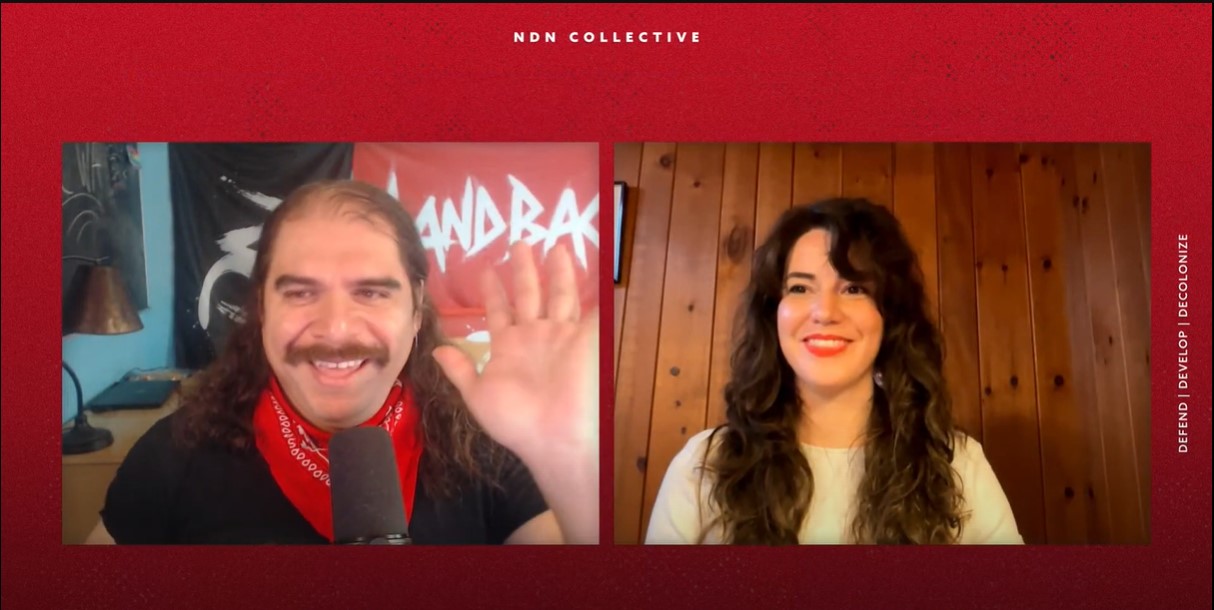
NDN Collective LIVESTREAM #ICWA Lawsuit


The Indian Child Welfare Act (ICWA) was passed in 1978 as a federal law that set standards for the removal and out-of-home placement for Indigenous children; it protects the best interests of the child by placing them in homes that are connected to their tribes and relatives. Brackeen is challenging
the constitutionality of ICWA, as it places preference for the
placement of Indian children to the tribes themselves.

This Wednesday, November 9th, the Supreme Court of the United States will hear oral arguments for the Brackeen v. Haaland (2021) case. 


Learn more about the case, the Indian Child Welfare Act, and the fight to protect ICWA by visiting these resources:

Monday, November 7, 2022

Zoom Discussion on Brackeen ICWA CASE November 9th - free to register


Brackeen Post-Oral Argument Discussion – via Zoom

Please join the Indigenous Law and Policy Center this Wednesday, November 9, at 6:00 p.m. ET for a post-oral argument discussion of Brackeen over Zoom. Wenona Singel will be moderating this conversation with speakers Matthew L.M. Fletcher, Melody McCoy and April Youpee-Roll.

The link to register is here. Please see the below flyer for more information.

Videos are not displayed in this email and must be viewed on the website.

Friday, November 4, 2022

National Adoption Awareness Month #NAAM2022 #adoptiontraffickingmonth


MORE MAPS: here 


Tuesday, November 1, 2022

November is Adoption (beware) Awareness Month (#NAAM) AND Native American Heritage Month


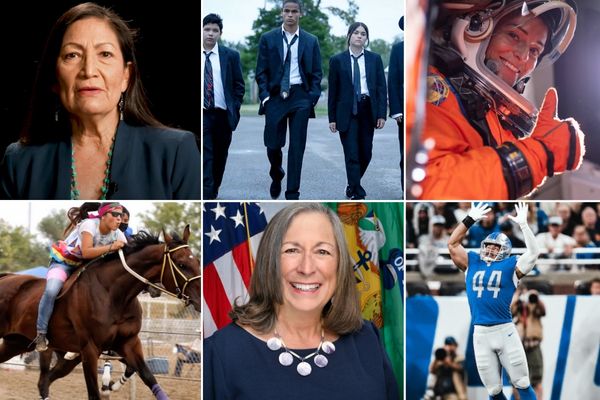
Top row (L-R): Interior Secretary Deb Haaland (Laguna Pueblo), the
first Native American cabinet secretary; some of the young cast members
of the breakout hit show “Reservation Dogs”; Marine Colonel Nicole
Aunapu Mann (Round Valley Indian Tribes), the first Indigenous woman in
space. Bottom row (L-R): An Indian relay rider in Buffalo, Wyoming;
Chief Lynn Malerba (Mohegan Tribe), Treasurer of the United States;
Detroit Lions rookie linebacker Malcolm Rodriguez (Cherokee).


A journalist asked me recently: What’s the one thing that mainstream media often get wrong about your community?


My answer was brief:  Unfortunately, the media still speaks about Native Americans in the past tense. 


The truth is: We are still here.


That’s part of the reason Native News Online was founded in 2011.
Because the media often portrayed Native people in a negative light:
high levels of alcoholism, poverty or as all being rich because of
Indian casinos.

In our newsroom, we work to present a balanced and accurate portrayal
of Native people living in contemporary times. We write about Native
people as we are now, and the issues that actually matter to us. 


We report on — and occasionally celebrate — Native people who, in
2022, are reaching new heights in art, science, business, and public
service.  


They’re not just doing great things in Indian Country.  They’re doing
great things that affect the entire country — and well beyond our
borders, as well. 


Throughout the month of November, Native News Online will highlight
some of the Native Americans who have made “immeasurable contributions
to the country’s progress,” as President Joe Biden noted in his proclamation
about National Native American Heritage Month yesterday. We’ll share
stories of Native Americans who have helped shape culture in Indian
Country, the United States, and around the world.


We are still here, and our presence is growing.  

In advance of
recognizing Native American Heritage Month, the U.S. Census Bureau
released the following facts about American Indians and Alaska Natives:


3.7 million


The nation’s American Indian and Alaska Native population alone in
2020. This population group identifies as AI/AN only and does not
identify with any other race.


10.1 million


The projected population of American Indian and Alaska Native alone
or in combination with other race groups on July 1, 2060, about 2.5% of
the projected total U.S. population.


324


The number of distinct, federally recognized American Indian
reservations in 2022, including federal reservations and off-reservation
trust land. 


574


The number of federally recognized Indian tribes in 2022.


120,944


The number of single-race American Indian and Alaska Native veterans of the U.S. Armed Forces in 2021.


We are still here.  We have been since time immemorial.  And we plan to be for generations to come. 

SOURCE


CLICK OLDER POSTS (above) to see more news

CLICK OLDER POSTS  (above) to see more news

MEGWETCH THANK YOU

HUGE Thank you for visiting this blog and sharing this with your kin. It's appreciated. Contact Trace anytime! Use the form below.

BOOKSHOP

Please use BOOKSHOP to buy our titles. We will not be posting links to Amazon.

Popular Posts

To Veronica Brown

Veronica, we adult adoptees are thinking of you today and every day. We will be here when you need us. Your journey in the adopted life has begun, nothing can revoke that now, the damage cannot be undone. Be courageous, you have what no adoptee before you has had; a strong group of adult adoptees who know your story, who are behind you and will always be so.

OUR HISTORY

OUR HISTORY
BOOK 5: Lost Children of the Indian Adoption Projects