BACK UP BLOG (no longer updating)

This blog was a backup for American Indian Adoptees blog
USE THE SEARCH BAR or SEARCH TOPICS at bottom of this blog

If you need support

Support Info: If you are a Survivor and need emotional support, a national crisis line is available 24 hours a day, seven days a week: Residential School Survivor Support Line: 1-866-925-4419. Additional Health Support Information: Emotional, cultural, and professional support services are also available to Survivors and their families through the Indian Residential Schools Resolution Health Support Program. Services can be accessed on an individual, family, or group basis.” These & regional support phone numbers are found at https://nctr.ca/contact/survivors/ . MY EMAIL: tracelara@pm.me

Search This Blog

Thursday, April 21, 2022

Remembering St. Anne's students


Canada’s National Centre for Truth and Reconciliation says their records show at least 24 students passed away while attending St. Anne’s Indian Residential School throughout its 70 years in operation.

In memory of former St. Anne’s students:

- Abraham Moses Nakogee
- Alexandra Chookomoolin
- Anna Aitel
- Antoine Wisk
- Charles Hunter (Fort Albany)
- Emile Anishinape
- Emilien Aitel
- Gabriel Carpenter
- Imelda Edwards
- Jennie Kostachin
- John Kioki
- Joseph Metat
- Josephine Chookomoolin
- Madeline Sutherland
- Margaret Sutherland
- Matheiu Kamascatishishit
- Michael Sutherland
- Michel Matinas
- Raphael Katakwapit
- Raphael Tomykatie
- Sabeth Sutherland
- Sabeth Wabano
- Simeon Ashnipinishkam
- Therese Okitigo

Additional photos of the school throughout its history can be found through Algoma University HERE.

In 1992, Former Chief of Fort Albany First Nation, Edmund Metatawabin, presented evidence to Ontario’s provincial police about abuse at the former school, prompting a six-year investigation.

The OPP’s work led to seven former St. Anne’s teachers and administrators being arrested in 1998, with 156 survivors receiving some form of compensation by 2004 – two years before the historic Indian Residential Schools Settlement of 2006.

Documents from the investigation were released in 2014 after an Ontario Superior Court judge ordered the federal government to disclose them to survivors and the Truth and Reconciliation Commission.

But by that time, the federal government had already redacted over 12,000 documents from the record – which denied many survivors any amount of compensation.

Still, the documents that were released by Ottawa revealed the use of a homemade electric chair being used between the 1950s and 1960s, with a variety of reports of disturbing physical and sexual abuse such as beatings, rancid food, disappearances and much more.

“Innocent children were malnourished, physically assaulted, sexually abused, and tortured. They went to bed hungry and lived in fear of a homemade electric chair. Some were forced to eat their own vomit,” said NAN leadership, as they described St. Anne survivors’ experiences. 

NAN’s search at notorious residential school continues #TRC


NAN’s search at notorious residential school continues

Written by Ryan Forbes Wednesday, Apr 20 2022, 4:55 AM
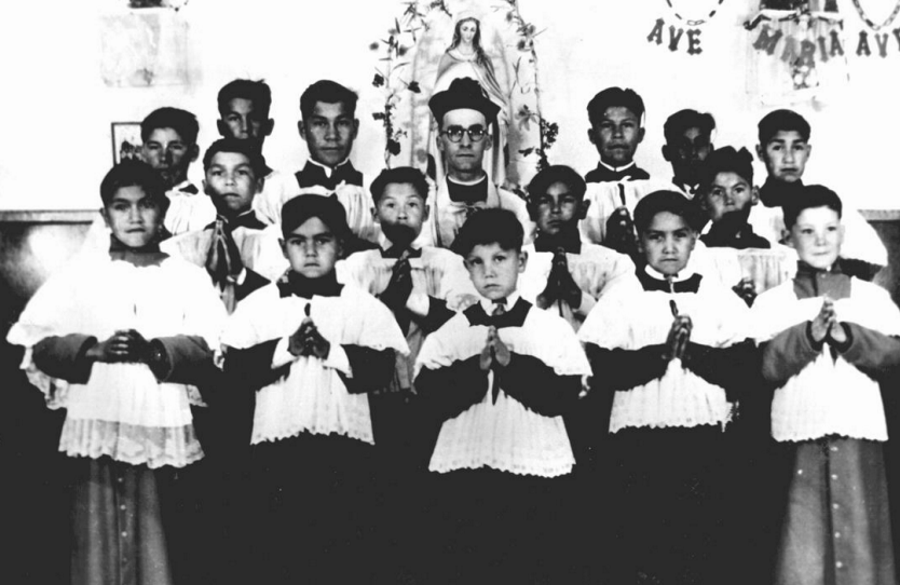
Students at St. Anne’s Indian Residential School in Fort Albany First Nation. Photo courtesy of Algoma University.

If you are a residential school survivor, you are able to contact the 24-hour National Crisis Line at 1-866-925-4419 for support. Indigenous people can also access the Hope for Wellness Help Line at 1-855-242-3310 or online chat at www.hopeforwellness.ca.


The provincial governent is committing nearly $500,000 to support community members in the Nishnawbe Aski Nation area with the region’s search of one of the most notorious Indian Residential School locations in Canada.

Ontario and Ottawa have committed $475,000 over two years to support survivors affected by the six former Indian Residential Schools in the NAN territory, including those of St. Anne’s Indian Residential School in Fort Albany First Nation.

Records from the federal government show students at St. Anne’s were subjected to a homemade electric chair, with survivors describing physical, mental and sexual abuse. Legal battles over compensation for survivors continue to this day.

“This funding will help us develop healing initiatives to support our families and communities through community-driven initiatives as they search for their loved ones,” said NAN’s Deputy Grand Chief, Anna Betty Achneepineskum.


“The search for these innocent children will be a painful experience and needs to be done with great care and respect. We look forward to implementing our Reclamation and Healing Strategy and will continue to develop and implement cultural and spiritual mental health supports to support all those who undertake this important work,” she adds.

Achneepineskum adds the strategy will be developed with survivors and will include recommendations from the Truth and Reconciliation Commission’s 94 Calls to Action of 2015. Funding will also support communications and technical supports, as well as public education and awareness initiatives.

St. Anne’s Indian Residential School was run by the Oblates of Mary Immaculate Catholic Church and the Grey Nuns of the Cross in Fort Albany First Nation between 1906 and 1976, with support from the federal government.

Records show that the school was originally located at the Fort Albany Mission on Albany Island in Treaty #9, before relocating to the banks of the Albany River in 1932. The school burned down in 1939 and was later rebuilt.

First Nations youth from Fort Albany, Attawapiskat, Weenusk, Constance Lake, Moose Fort and Fort Severn all attended the school.

 KEEP READING

‘60s Scoop survivor says healing foundation is no help at all | APTN News


‘I haven’t heard a word:’ ‘60s Scoop survivor says healing foundation is no help at all 

Some survivors of the ‘60s Scoop say they’re frustrated by the lack of response they’re getting from the organization set up to help them heal.

“I’ve been waiting to hear from the Sixties Scoop (Healing Foundation) to tell me what they have planned,” says survivor Darlene Gilbert of Annapolis Valley First Nation in Nova Scotia.

“I’ve heard nothing.”

The Sixties Scoop Healing Foundation was created with $50 million from the $875-million national class-action settlement that compensated Inuit and First Nations survivors for the loss of their cultural identities.

As children, they were taken from their homes between the 1950s and 1990s to be placed with non-Indigenous foster and adoptive families across Canada and around the world. Métis and non-status Indigenous peoples were excluded from the settlement agreement.

According to the Class Action Scoop Settlement Agreement website, 20,167 people have been approved to receive $25,000 in compensation including Gilbert.

The foundation says on its website its mission is to “accompany Survivors and their descendants along their healing journey by supporting cultural reclamation and reunification, holistic wellness services, advocacy, commemoration, and education initiatives.”

healing foundation
Darlene Gilbert was 10 years old when she was taken from her family. Photo: Angel Moore/APTN.

Gilbert, who was removed from her family when she was 10 years old, was placed in a number of temporary spaces and group homes in Nova Scotia.

She says she contacted the foundation using the phone number listed on its website to access therapy to deal with the traumatic effects of losing her culture and language.

“There’s supposed to be healing money,” she said in an interview. “We need therapy, our families need therapy, our children, our grandchildren may.

“I haven’t heard a word, not a word; so that was just like I felt brushed under the carpet like we all do.”

Katherine Legrange, a ‘60s Scoop survivor and director of the national non-profit support group 60s Scoop Legacy of Canada, feels the foundation isn’t working so far.

“I’d say that the communication with survivors has been really poor to date, it’s really unclear about how the healing foundation intends to directly help survivors,” she says from Winnipeg.

“I feel like they are really struggling to connect with survivors and share what their plans are; even if there are no plans, share that.”

Call for a national inquiry

Legrange has called for a national inquiry to examine the ‘60s Scoop and “make that connection with residential schools, with MMIWG (missing and murdered Indigenous women and girls), with the justice system, because we know that lots of us ended up in these kinds of unfortunate situations.”

The National Centre for Truth and Reconciliation, a research and archive centre established after the Indian Residential Schools Settlement Agreement, “is in full support of the 60’s Scoop Legacy of Canada and their call for the federal government to commission a national inquiry into Indigenous child removal.

“The Residential School system came first, followed by the Scoop,” the centre says.

“Finding this truth means hearing from those affected directly – nationally and internationally – to hear from all the children, the families and the individuals that ran those systems to fully understand the colonial historical record of the Scoop and what really happened.”

APTN News tried reaching the foundation using the phone number and email on its website and didn’t receive a response.

APTN also requested an interview with the foundation’s inaugural CEO, Dr. Jacqueline Maurice of Saskatchewan.

Maurice, a Métis-Indigenous Scoop survivor with a Ph.D. in social work and a medical degree, was appointed in September 2021.

Her vision for the foundation, described in a statement following her appointment, includes the concept of one survivor helping another survivor on the path to healing.

“In this new role, [Maurice] will be responsible for the development and implementation of programs and services to support survivors and will play an integral part in the development of grants, services and supports to survivors,” the statement added.

A few months later, the foundation distributed its first round of grants – valued at just over $1 million – to eight community groups.

“This year’s pilot program begins the foundation’s legacy of investment into healing and serving Sixties Scoop survivors across the nation,” Maurice said at the time.

“The initial grant process will inform the design of future funding streams that will deliver valuable services to those who need them most.”

But Gilbert is still in the dark about what’s available to her and whether it’s in Nova Scotia.

She feels a national inquiry would help.

“We should be able to tell the government how they tried to colonize us, break us, take our language, keep us away from our communities,” she says.

“This is important for this generation – the ‘60s Scoop – to be able to say, ‘Hey, we need this healing in order to break what has come behind us and [so] it doesn’t come [back] in the future.”

With files from Kathleen Martens

Wednesday, April 20, 2022

Warning Signs that Someone Has Experienced Sexual Violence


From the StrongHearts Native Helpline

Sexual violence is a far too common thing throughout Native communities. According to the National Resource Center on Domestic Violence, Native Americans are 2.5 times more likely to experience sexual violence in their lifetime. As we know, this may be even higher due to the lack of reporting common in Native communities. Sexual violence is any type of sexual activity done without consent. We often don't know when someone is struggling with something. Sexual violence is no exception.

If you believe someone you know and love has experienced sexual violence, here are some warning signs:

Pulling out of their favorite activities or hobbies

            Your relative may be showing little or no interest in their favorite activities.

Small signs of loss of trust

            Your relative might stop trusting you or your family members with small or large things. 

Isolation

You may notice that your loved one is absent or turning down more invitations. They may have secluded themselves in their homes or workplaces or finding reasons to spend more time alone or with very few people.

Signs of depression or energy fatigue

Your relative may be starting to show signs of depression. This can include changes in appetite and weight, conversations that include hopelessness or lack of outlook on life, and either uncontrollable emotions or numbing of emotions.

Loss of interest in conversations or seeming spaced out

Your relative might be experiencing zone out or feelings of disconnection while in the middle of a conversation. This could look like slow responses to questions, looks of lost in thoughts or slower speech when talking.

Seeming to be uncomfortable when talking about sex or topics related to sex

This can be a little hard to detect if you don't already know how comfortable someone is with talking about the topic of sex. But if you see a dramatic change in the comfortability of one's expression and opinions of sex this could be a sign of sexual violence. 

If your partner has a change in interest in sex or being touched

If you are concerned that your partner may have experienced sexual violence, one warning sign may be that they no longer show interest in sex and pull away when you try to approach or touch them. The main component here is that they seem to have lost trust or interest in sexual touch, but not necessarily in your relationship. 

While not every sexual assault or rape leaves physical injuries, here are a few to look out for:

●      Bruising

●      Vaginal or anal bleeding

●      Broken or dislocated bones

●      Difficulty walking

It can be difficult to talk with someone who has experienced something as traumatic as sexual violence. But as a relative, your support can mean a lot to a victim-survivor. StrongHearts Native Helpline is here to chat about ways that you can support a relative experiencing the effects of sexual violence. 

Call or text 1-844-7NATIVE or chat here on strongheartshelpline.org, advocates are available 24/7 for free, safe and confidential support. If you would like more information about how you can help someone in an unhealthy or abusive relationship visit our Help a Friend or Relative page.

Your body. Your sovereignty. Your decision.

Tuesday, April 19, 2022

Pope Francis to make 3 Canadian stops in July to meet residential school survivors, sources say

Pope Francis is expected to visit at least three cities during a late July trip to Canada, CBC News has learned.

Sources
involved in the planning of the trip say the Pope will likely make
stops in Edmonton, Quebec City and Iqaluit during what is scheduled to
be about a four-day trip to the country. CBC News is not identifying the
confidential sources because they were not authorized to speak
publicly.

The
pontiff initially announced plans for the visit during his Vatican
meetings on April 1 with Indigenous delegates from Canada, where he
offered an initial apology for the actions of individual Roman Catholic Church members in Canada's residential schools.

KEEP READING 

Assembly of First Nations Regional Chief Gerald Antoine,
centre left, Inuit Tapiriit Kanatami president Natan Obed and Métis
National Council president Cassidy Caron walk in St. Peter's Square
after a final audience with Pope Francis on April 1. (Yara Nardi/Reuters)


Christi Heath, Choctaw, 2022 Champion for Native Children


Cristi Heath is an advocate for Native American Children, having worked for the Department of Human Services for over 17 years.

Cristi Heath, Yukon, Oklahoma, has been selected by the National
Indian Child Welfare Association as a 2022 Champion for Native Children.


A member of the Choctaw Nation, Heath has worked for the Department
of Human Services (DHS) for over 17 years and has spent most of her
career with DHS in Oklahoma county.


She received her associate degree from Rose State College with honors
and was a part of the Sociological Honor Society. She received her
bachelor’s degree from the Univ. of Central Okla. (UCO) in Edmond,
Okla., graduating magna cum laude.


Heath said, "When I started with the Department of Human Services, I
did investigations (Child Protective Services) for four and a half
years. Then I was part of the pilot program that they started in
Oklahoma County called Kinship Foster Care. I worked doing that for a
year and then supervised Kinship Foster Care in Oklahoma County from
2006-2009."


She went on to reading home studies for people who wanted to be foster parents.


"I did what they called Family Centered Services for five years,
supervised that for five years. And then I came to STPU (Specialized
Placement and Partnership Unit) and have been doing that for the last
two years," said Heath.


On a day-to-day basis, Heath oversees the DHS youth in shelters
across the state of Oklahoma. She supervises four liaisons who are each
assigned a region of Oklahoma with 21 shelters that have placement of
DHS youth. The liaisons check the shelters, assess safety, and see how
the kids are doing.

Keep Reading

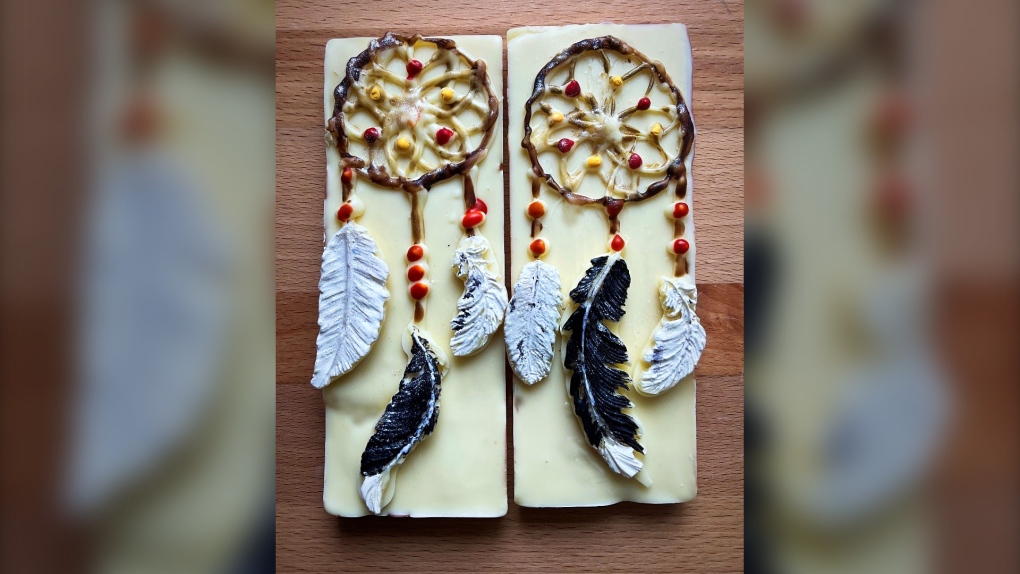
Indigenous chocolate shop to open in downtown Sudbury #60sScoop


 An Indigenous chef who creates edible art is expanding her business in Sudbury.


Tammy Maki started Raven Rising Chocolate shop e-Commerce in October
020 and is now opening a storefront. Maki used some of the money she
received from the '60s scoop settlement to start up the business.


"It kinda' didn't feel like very good money, so I actually wanted to
take that money and apply it to something positive," she said.


"So I did take a portion of it strayed Raven Rising and quite frankly it was the best decision I have made."


Maki's chocolate shop will be located in the old Capitol Theatre on Cedar Street downtown.


"I fell in love when I walked in here and I remember it because I am 57
so I remember when it was the Capitol Theatre," she said.


"And when I allowed in and saw the ceilings, what I do is create art … edible art and this place makes me want to create it."


Maki said Raven Rising will be an Indigenous forward shop.


edible art

"There will be a lot of chocolates that are Indigenous ingredient-based
and I do a lot of sourcing from Indigenous businesses, but, of course, I
also proudly use local ingredients, lots of local farm ingredients and
sourced in Canada as well," she said.


Along with opening the retail space, Maki is helping Indigenous
students pursue the art. She's offering a 1,500 Raven Rising Pastry Art
Scholarship at George Brown College. 


Cultural Genocide indeed

 SOURCE

“I feel shame and pain. I ask forgiveness of God,” Pope Francis said on Friday as he apologized for the “deplorable” abuses of Canada’s First Nations children.

Between the 1880s and the 1990s, the government ran a system of compulsory boarding schools which a National Truth and Reconciliation Commission (TRC) recently dubbed ‘cultural genocide’,” The New York Times reported. The Catholic church operated about 70 percent of those schools, where about 150,000 children were placed and “where abuse, both physical and sexual, was widespread, along with neglect and disease,” The Times said. A former judge, Murray Sinclair, who headed the commission, estimated that at least 6,000 children went missing.

The TRC, established as part of a government apology and settlement over the schools, concluded that at least 4,100 students died from mistreatment, neglect, disease or accident. The Tk’emlups te Secwepemc First Nation in British Columbia, using ground penetrating radar, discovered the remains of 215 of them buried near the Kamloops Indian Residential School which opened in 1890 and closed in the late 1970s, The Times reported. “It’s a harsh reality and it’s our truth, it’s our history,” Chief Rosanne Casimir told a news conference.

Children were also placed with non-Native families, a policy which Ontario Superior Court Justice Edward Belobaba denounced as he ruled in a class action lawsuit, The Guardian reported. “There is … no dispute that great harm was done,” Belobaba wrote. “The ‘scooped’ children lost contact with their families. They lost their aboriginal language, culture and identity. Neither the children nor their foster or adoptive parents were given information about the children’s aboriginal heritage or about the various educational and other benefits that they were entitled to receive. The removed children vanished ‘scarcely without a trace’.”

In Australia, Kevin Rudd, as prime minister, apologized in 2008 for this "great stain on our nation’s soul." He was referring to more than 100,000 Aboriginal and Torres Strait Islander children being placed in institutions or foster homes or adopted by nonIndigenous families between 1900 and 1970.

New Zealand tried to “civilize” Māori children, starting in 1840. “Boarding schools initially taught in the Māori language but soon qualified for subsidies only if lessons were in English. By 1960, only 26 percent of children could still speak their native language,” the Toronto Globe and Mail reported.

Denmark’s Prime Minister Mette Frederiksen apologized for the treatment of 22 Inuit children from Greenland, then a Danish colony, more than 70 years ago, Agence France Press reported. Frederiksen told the six survivors at a ceremony in the Danish capital Copenhagen, “What you were subjected to was terrible. It was inhumane. It was unfair. And it was heartless.”

Norway, Sweden and Finland are supporting initiatives to protect the culture of the Sami people living in Sápmi — formerly Lapland — following efforts to force them to culturally assimilate, The Guardian reported.

In the United States, the Trump administration’s seizing of 2,300 refugee children from their parents recalled a history of African and Indigenous family separation. The Washington Post recalled this tweet from the African American Research Collaborative: “Official US policy. Until 1865, rip African American children from their parents. From 1870s to 1970s, rip Native American children from their parents. Now, rip children of immigrants and refugees from their parents.” The Post drew attention to “The Weeping Time” exhibit at the Smithsonian’s National Museum of African American History and Culture documenting the story of children sold away from their enslaved families.

The government sent thousands of Indigenous children to government or government-funded, church-run “Indian schools” between the 1800s and the 1970s. Richard Pratt, who founded the first one, the Carlisle Indian School in Pennsylvania on Nov. 1, 1879, described his philosophy as: “All the Indian there is in the race should be dead. Kill the Indian in him and save the man.”

“While the government believed a white youth’s ‘moral character and habits are already formed and welldefined, when he leaves for school, a Indigenous youth was thought to be ‘born a savage and raised in an atmosphere of superstition and ignorance’,” The Equal Justice Initiative reported. “The government believed that ‘if [an Indigenous child] is to rise from his low estate the germs of a nobler existence must be implanted in him and cultivated.’”

As the boarding schools began closing, the government launched the Indian Adoption Project to promote European American adoption of Indigenous children, Vox reported. “The data showed that 25 to 35 percent of Native children around the country were being taken from their homes, and that 85 to 95 percent of those kids ended up in non-Native homes or institutions,” Vox stated.

Elizabeth Williams, who had been sold twice since she last saw her children, placed an ad in the Christian Recorder newspaper in Philadelphia in 1866 to try to locate them, The Post said. And Sandy White Hawk, a Sicangu Lakota adoptee from the Rosebud Reservation in South Dakota, founded the First Nations Repatriation Institute to help adoptees reunite with their tribes and families.

WGBH noted in a 2015 documentary that Maine had set up its own TRC – an approach which South Africa started in 1995 to try to forge unity after apartheid ended. The commission heard Indigenous testimony such as this: “All we did was beg for our foster mothers to hug us and say they loved us. My baby sister and I sat in a tub of bleach one time trying to convince each other that we’re getting white.”

The struggle continues with a federal lawsuit challenging as racially discriminatory the 1978 Indian Child Welfare Act (ICWA), which deals with child separation, filed by a European American couple in Texas, joined by their state, Indiana and Louisiana. The National Indian Child Welfare Association says the law addresses a crisis affecting Indigenous children, families and tribes. Invalidating the ICWA, its supporters say, would have far-reaching consequences for Indigenous peoples, including the issue of tribal sovereignty.

Pratt’s racism and White Hawk’s lament notwithstanding, it is hard to miss the defiance in the song “Drums” written by Peter LaFarge which Johhny Cash sang 58 years ago:

“And when they think that they’d changed me

Cut my hair to meet their needs

Will they think I’m white or Indian

Quarter blood or just half breed

Let me tell you Mr. teacher

When you say you’ll make me right

In five hundred years of fighting

Not one Indian turned white.”

‘60s Scoop survivor compensation payments capped at $25K


Survivors told payments would be as high as $50,000. (video here)

Mental health counselling and crisis support is available 24 hours a day, 7 days a week through Hope for Wellness Help Line at 1-855-242-3310 or the online chat at www.hopeforwellness.ca


The total federal settlement payment for individual ‘60s Scoop survivors is now set at $25,000, the claims administrator announced this week.

“I understand everyone won’t be happy,” said Doug Lennox of Klein Lawyers, lead spokesperson for the class-action agreement approved in November 2018.

“But now we know how much money we still need to pay and what everybody’s owed.”

The ‘60s Scoop was a wave of adoptions from the 1950s to the ‘90s that swept First Nations, Inuit and Métis children out of their homes and into non-Indigenous foster and adoptive placements across Canada and around the world.

Survivors sued the federal and Ontario governments, settling for $875-million to compensate for the loss of their cultural identities. Inuit and First Nations people not registered under the Indian Act (non-status) were left out of the deal.

Interim compensation

Already 12,500 survivors received an interim compensation payment of $21,000 during the coronavirus pandemic. They are awaiting their second and final payment of $4,000.

Then, there are those whose claims were approved during the pandemic and are waiting for their total payment of $25,000.

“I know it’s enormously frustrating,” Lennox added.

“People want to know why does everything take so long? We have a legal system that is hundreds of years old. It moves at its own pace.”

He said Collectiva would be ready to implement the decision almost immediately, adding its call centre is now open extended hours.

“They have the funds, they’re ready to go.”

 KEEP READING

Friday, April 15, 2022

Probably Ruby #adopteebook

 Probably Ruby is her debut novel and her American debut


For readers of Tommy Orange’s There There and Terese Marie Mailhot’s Heart Berries, Probably Ruby is an audacious, brave and beautiful book about an adopted woman’s search for her Indigenous identity.

Relinquished as an infant, Ruby is placed in a foster home and finally adopted by Alice and Mel, a less-than-desirable couple who can’t afford to complain too loudly about Ruby’s Indigenous roots. But when her new parents’ marriage falls apart, Ruby finds herself vulnerable and in compromising situations that lead her to search, in the unlikeliest of places, for her Indigenous identity.

Unabashedly self-destructing on alcohol, drugs and bad relationships, Ruby grapples with the meaning of the legacy left to her. In a series of expanding narratives, Ruby and the people connected to her tell their stories and help flesh out Ruby’s history. Seeking understanding of how we come to know who we are, Probably Ruby explores how we find and invent ourselves in ways as peculiar and varied as the experiences of Indigenous adoptees themselves. Ruby’s voice, her devastating honesty and tremendous laugh, will not soon be forgotten.

Probably Ruby is a perfectly crafted novel, with effortless, nearly imperceptible shifts in time and perspective, exquisitely chosen detail, natural dialogue and emotional control that results in breathtaking levels of tension and points of revelation.

LISA BIRD-WILSON is a Saskatchewan Métis and nêhiyaw writer. Her fiction book, Just Pretending (Coteau Books, 2013), won four Saskatchewan Book Awards, including 2014 Book of the Year, was shortlisted for the Danuta Gleed Award, and was the 2019 One Book, One Province selection. Her debut poetry collection, The Red Files (Nightwood Editions, 2016), is inspired by family and archival sources, and reflects on the legacy of the residential school system and the fragmentation of families and histories. She is the chair of the Saskatchewan Ânskohk Writers Circle Inc. (SAWCI)—the group that hosts the Ânskohk Indigenous Literature Festival and the CEO of the Gabriel Dumont Institute of Native Studies and Applied Research Inc. in Saskatoon.


Wednesday, April 13, 2022

Pimicikamak Cree Nations will search for graves

 National Native News

Another First Nation in Canada is preparing to search for unmarked graves at a former residential school.

As Dan Karpenchuk reports, this time it will be in northern Manitoba.

The Pimicikamak Cree Nations has announced plans to search the site of the former St. Joseph’s Residential School. It was operated near Cross Lake by the Roman Catholic Church in northern Manitoba, between 1912 and 1969. The chief of the Pimicikamak Nations is David Monia. He says the reserve has identified the names of 85 children who died at the school.  However, he adds that surviving records are incomplete.

“Many of them are listed as boy, as girl, 40% of them have first names only. Where did these kids come from?”

Investigators say they will use ground penetrating radar to search the site, which is now a neighborhood with homes.

“You know they don’t describe it as a school. More like assimilation camps, torture camps, or death camps and really that’s an international crime.”

No start date for the search has yet been determined. It was just over a week ago that the Pope apologized at the Vatican to a Canadian Indigenous delegation, for the role of the Catholic Church in the abuses at Canada’s residential schools. Thousands of Native children were abused at the schools, many died.

Friday, April 8, 2022

We Don’t Want an Apology: We Want Justice


Wednesday, April 6, 2022


There is a reason why the Six Nations-Haudenosaunee (Iroquois) were not invited to Rome to meet the pope and secure an apology for the victims of the residential schools — we don’t want an apology, we want justice.


Tens of thousands of Native children suffered abuse by the residential
schools administered by the Roman Catholic Church with the compliance of
the provincial and federal governments and it may well be proven
thousands died either by murder or neglect by the priests. nuns and
staff at the schools.


I was baptized into the Church as a child at the Akwesasne Mohawk
Territory. I was taken against my will to the Mohawk Institute in
Brantford, Ontarior, 600 kilometers (373 miles) from my home and, along
with the two dozen other Akwesasronon (people from Akwesasne) endured
sexual, mental and physical abuse while being denied adequate food and
health care, our bodies marked by open sores and rotting teeth leaving
permanent scars.

KEEP READING

Project engages federal Indian law to protect tribal self-determination

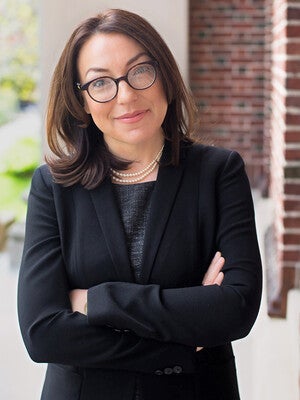
Maggie Blackhawk
Maggie Blackhawk

After the American Indian Sovereignty Project was established last summer, its leaders knew that they would be busy with scholarly engagements in contemporary issues in federal Indian law. But the group, a collaboration between Yale and New York University (NYU), had little idea how quickly they would become immersed in a series of immediate court challenges at the highest level.

In February, the project had one of its most visible moments to date when U.S. Supreme Court Associate Justice Stephen Breyer cited during oral arguments an amicus brief filed by the project’s team in the case Denezpi v. United States.

A joint initiative of Yale’s Faculty of Arts and Sciences (FAS) and the NYU School of Law, the Sovereignty Project brings together scholars, law students, graduate students, and a select number of undergraduates to study, research, and engage American Indian law and policy. The brief cited by Breyer is the second of three the project’s team has written for the high court, and the justice’s reference was an important recognition: It highlighted the impact their work can have in helping to elucidate federal Indian law and policy and in advocating more broadly for Native American tribal sovereignty, according to Ned Blackhawk (Te-Moak Tribe of Western Shoshone Indians of Nevada), the Howard R. Lamar Professor of History and of American Studies at Yale.

He and Maggie Blackhawk (Fond du Lac Band of Lake Superior Ojibwe), professor of law at New York University, co-founded the Sovereignty Project partly with the mission of providing support to Native tribes in legal cases involving Indian Country. The project, he said, also aims “to build an intellectual research community oriented around questions of American Indian legal concern as well as educational awareness about pressing contemporary tribal issues.”

In the six months since the Sovereignty Project was established, it has already been “flooded” with requests from the Tribal Supreme Court Project for assistance on federal court cases, according to Maggie Blackhawk.

KEEP READING


Pope's apology on residential schools is a step on the journey to reconciliation

Editorial: There have been many reactions among Indigenous people to the Pope's expression of "shame and sorrow." All of them are valid.

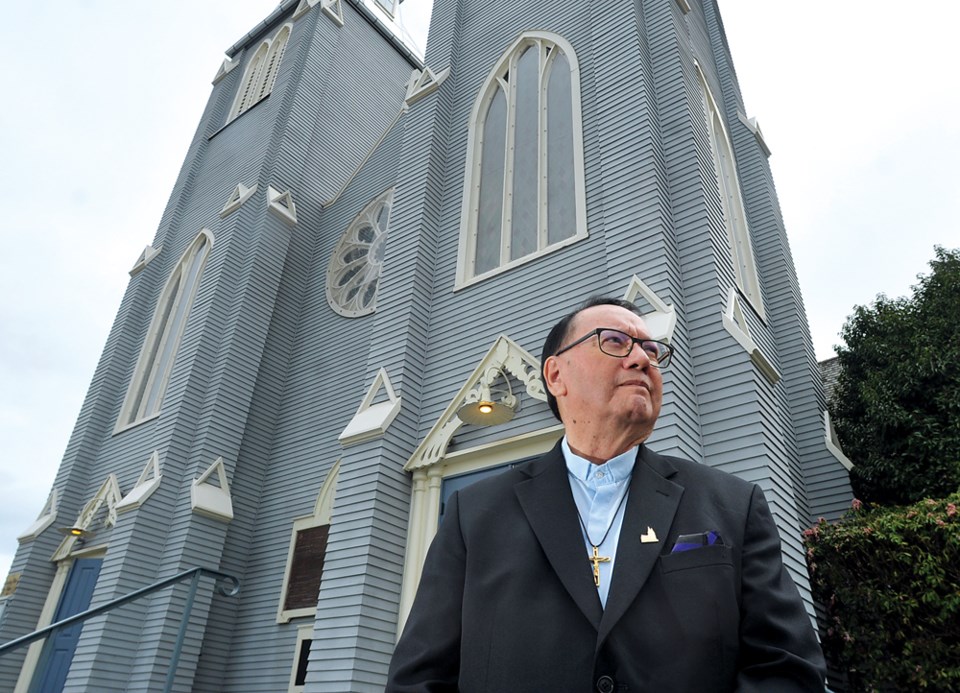
Deacon Rennie Nahanee Horiz PM web
Deacon Rennie Nahanee, here at St. Paul's Catholic Church, believes the Pope's recent apology is just the beginning.

On Friday, the Pope met with nearly 200 First Nations, Inuit and Metis delegates at the Vatican and delivered a long-sought apology for actions of church leaders in perpetuating abuse of Indigenous children at Catholic residential schools.

In the apology, the Pope voiced “sorrow and shame” for the role that members of the clergy had in “all these things that wounded you, in the abuses you suffered and in the lack of respect shown for your identity, your culture and even your spiritual values.” For that conduct, the Pope said he asked “for God’s forgiveness” and joined Canadian bishops “in asking your pardon.”

Since the historic occasion, there have been a diverse range of reactions among Indigenous people and residential school survivors. Some have welcomed the apology. Some have felt the Pope’s words did not go far enough in accepting the church’s role in the abuse. Some have called for more tangible actions to follow the expression of sorrow.

All are valid reactions and all Indigenous people are entitled to greet the apology on their own terms. 

KEEP READING


Wabanaki Nations seek ‘equality’ for their tribal sovereignty

‘We’re denied one of the most fundamental rights’
Monday, April 4, 2022
Indianz.Com

WASHINGTON, D.C. — With one long-overdue legislative achievement under their belts, tribal nations from one of the furthest ends of Indian Country are asking Congress to fully recognize their sovereignty.

Maine is home to five federally recognized tribal governments. But the Aroostook Band of Micmacs, Houlton Band of Maliseet Indians, the Passamaquoddy Tribe at Indian Township, the Passamaquoddy Tribe at Pleasant Point and the Penobscot Nation are unable to exercise their rights in the same manner as every other Indian nation.

The outcome has been disastrous. Whether it’s safeguarding water in their communities, enhancing public safety or protecting Indian children through the Indian Child Welfare Act (ICWA), tribal leaders say they are being left behind when it comes to true self-determination.


READ MORE

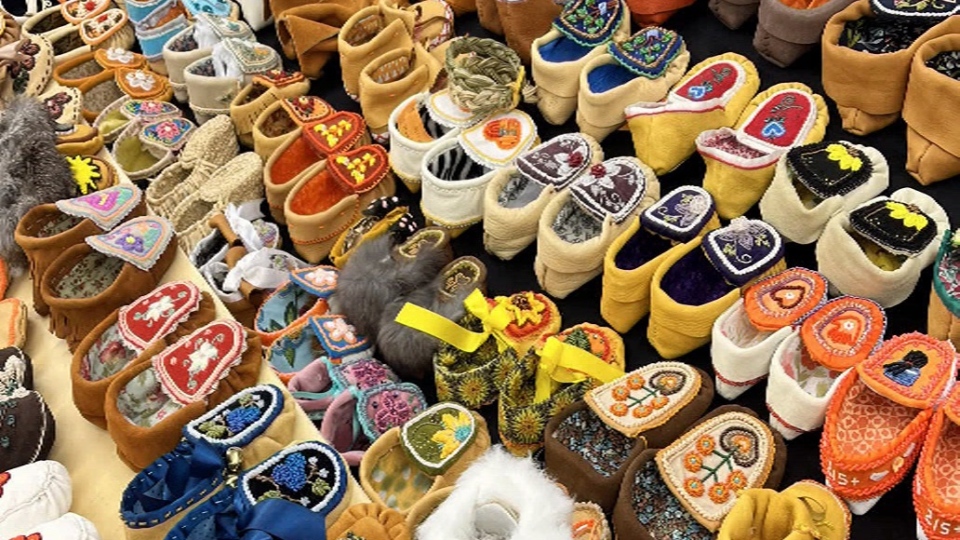
Montreal students honour memory of Indigenous children by hand-sewing moccasins


Students at Montreal's Beurling Academy are on a creative mission to
honour the memory of Indigenous children, one moccasin at a time.


The students are learning about how, since the late 19th century,
150,000 First Nations, Inuit and Métis children were removed from their
families and forced to attend residential schools.


To learn from and honour Indigenous children, students learned how
hand-sew small moccasins during a community initiative called Project
215.


The workshop was hosted by Rebekah Elkerton. She is Anishinaabe from Chippewas of the Thames First Nation, near London, Ont. KEEP READING


Complete Coverage special promo image


Pope Francis apologizes for Catholic Church's role in Canadian residential school system


'I am very sorry:' A look at the history, hurdles of papal apologies


First Nations say Pope Francis meeting the beginning of a 'new partnership'


'I never thought I'd see that in my lifetime': Three generations of Indigenous family witness Pope's apology


Read the full text of the Pope's apology for Canada's residential schools


Residential school survivor presents Pope with symbolic moccasins


As Pope Francis prepares to come to Canada, a look at past papal visits


Indigenous delegate receives cultural name in ceremony outside Vatican


Why the meeting with Pope Francis is a historic one for First Nations


Former AFN regional chief believes papal apology is important for Catholics too


Here are the times a pope has apologized in recent history


Canadian residential schools: A timeline of apologies


A forensic anthropologist on the difficulties of identifying human remains


Indigenous artifacts in Vatican collection 'need to come home,' advocates say


Hopes high for 'change of heart' by Pope Francis after meetings with Indigenous delegates


'Today is about our own life': Metis elder reflects after meeting with the Pope


Meeting with Pope an 'opportunity' to begin handover of residential school records: former AFN chief


Catholic Church must ‘address deniers’ following apology

WATCH

Catholic Church must ‘address deniers’ following apology says Murray Sinclair

Sorry is ‘an important milestone’ but more work must be done, according to the retired senator and former judge...

The former chair of the Truth and Reconciliation Commission is urging the Catholic Church to tackle residential school denialism following Pope Francis’s apology on Friday morning.

Church leaders who refuse to accept survivors’ truths are, right now, “the biggest source of resistance to reconciliation,” says Murray Sinclair.

“Denialism was allowed to flourish because of the silence that was coming from the Pope,” said the retired senator in an interview. “With this statement, those denying within the church — or denying in public because of the church being able to support denialism — will no longer have that ladder upon which they can stand.”

On the final day of an Indigenous delegation’s Vatican visit, the pontiff uttered a long-awaited and much-anticipated sorry “for the role that a number of Catholics” had in abusing children forced to attend Canada’s residential schools.

“All these things are contrary to the gospel of Jesus Christ,” Francis said. “For the deplorable conduct of those members of the Catholic Church, I ask for God’s forgiveness and I want to say to you with all my heart: I am very sorry.”

The role these Catholics had in wounding Indigenous children and stripping them of their identity, culture and spirituality filled him with feelings of shame, sorrow and indignation, the pontiff added.

His apology comes nearly seven years after the TRC delivered its final report. In it, Call to Action 58 urged the pope to apologize for the “Catholic Church’s role in the spiritual, cultural, emotional, physical, and sexual abuse of First Nations, Inuit, and Métis children.”

Pope’s apology a powerful gesture, but unlikely to affect court cases in Canada, experts say READ


Francis didn’t outright apologize for the church’s institutional role in perpetrating the abuse but rather the bad behaviour of individual Catholics that, he suggested, had turned their backs on their faith.

Sinclair told APTN the contrition “is a major step” but said Francis still must come to Canada and face survivors to fulfill Call to Action 58.  Sinclair also said the reference to policies of cultural assimilation was a notable insinuation of institutional guilt.

“That’s important,” Sinclair said. “That should be taken together with the apology for the individuals who committed wrongs. The one thing that arguably was missing was an acknowledgement that they put those people in place, in those positions of power where they could get away with that.”

Nevertheless, Sinclair said in a press release it was an important moment and long past time the church took responsibility for “a dark chapter of Canada’s colonialist history, one which the Church was a key co-author.”

The former judge took control of the TRC in 2009 as it began crisscrossing the country seeking out survivors and documenting the horrors of residential schools. He was appointed to the Senate in 2016 and retired in 2021.

KEEP READING 

CANADA leads THE WAY on reconciliation - is AMERICA next? Real reconciliation requires JUSTICE and arrests!  TLH

Pope Francis apologizes for church role in Indigenous residential schools - The Washington Post 

Pope's apology a powerful gesture, but unlikely to affect court cases in Canada, experts say


Residential school survivor watching Indigenous delegates’ meetings with Pope closely

 CLICK: https://globalnews.ca/video/8726979/residential-school-survivor-watching-indigenous-delegates-meetings-with-pope-closely/

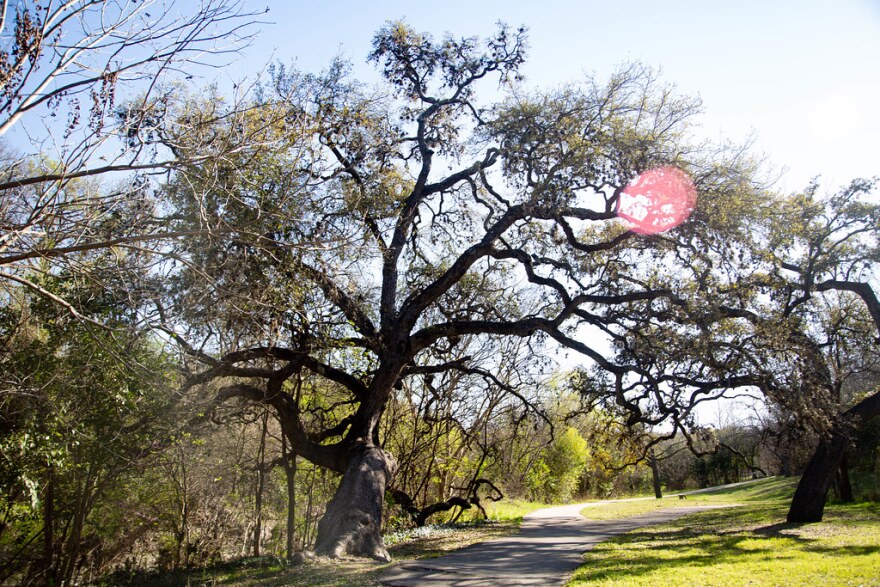
TEXAS: Where have Austin's Indigenous people gone?


Seiders Oak trees along a trail.


(Patricia Lim\KUT)  The trail along Shoal Creek was once used by Comanches and other Indigenous tribes in the region.


 excerpt:

Remnants of history around us

Austin’s Indigenous history is complex and dates back at least 37,000 years,
according to some anthropologists’ estimates. How it takes shape in the
public discourse is often focused through a historical context, which
Circe Sturm, professor of Anthropology and Native American and
Indigenous Studies at UT Austin, finds problematic.

“We have a
state government that doesn’t acknowledge, doesn’t recognize, its own
Indigenous history,” said Sturm, who is a descendant of the federally
recognized Mississippi Band of Choctaw Indians.

“When students
study about Indigenous people as part of their Texas history module,
it’s focused on the past and not on the present," she said, "in a way
that there’s a real disconnect between our understanding of our history
and our understanding of our present.”

A brief history lesson

In addition to
the Comanches, the Caddo, Cherokee, Coahuiltecan, Lipan Apache,
Karankawa, Tonkawa and Wichita tribes also claimed Central Texas as part
of their territory. They were incredibly diverse, speaking numerous
languages, adopting multiple beliefs and creation stories — and all
living off this land differently.

Then in the mid-16th century, European settlers first came to the interior of Texas.

They
brought waves of infectious disease — including epidemics of smallpox,
measles and cholera — that had widespread impacts on Texas’ American
Indian population.

Two sedentary tribes in Central Texas, the
Caddo and Wichita, were hit especially hard by disease. Their
livelihoods were dependent on agriculture, which was hard to sustain
when a big part of their population was wiped out. The nomadic tribes,
like the Coahuiltecan, maintained their hunting and gathering lifestyle.
In that sense they may have been more equipped to distance themselves
from outbreaks, but that still didn’t guarantee survival.

So while Austin’s Indigenous history may not be evident with historical
markers, it’s deeply rooted in the city’s landscape. Because after all,
this area once was — and in some ways still is — Indigenous land.

KEEP READING

Colorado: CDHS is in support of the ICWA legislation (Op-Ed)

 https://www.durangoherald.com/articles/our-view-high-court-must-uphold-indian-child-welfare-act/


archive photo

Our View: High Court must uphold Indian Child Welfare Act

Bitter custody battles over Native American children have reached the U.S. Supreme Court, which will examine biology versus the best interests of a child, and culture and attachment.

At the heart of the argument is the constitutionality of the 1978 Indian Child Welfare Act, which prioritizes placement of Indian children with relatives, other Native Americans or a tribe to reinforce tribal identity. ICWA was intended to heal wounds for the harm done by social workers and adoption agencies for forcibly removing 25% to 35% of Native children, and placing them with white families or in group homes.

ICWA covers Native American children who live outside reservations, which puts them under state jurisdiction. The tribe has a voice in the proceedings. If a birth family is deemed unfit, the tribe can find an extended family, then an unrelated tribal family and, finally, another tribe. A judge can reject the tribe’s candidate for “clear and convincing” reasons.

Now, the law is vulnerable to fall. Opponents of ICWA say it is a race-based system, defined by a child’s genetics and ancestry that ignores equal protection. We hope, though, that ICWA survives legal scrutiny.

The Supreme Court consolidated four cases under Haaland v. Brackeen, scheduled to appear on the docket in the October 2022 to 2023 term.

Seven individuals and three states — Texas, Indiana and Louisiana — are challenging the law. The plaintiffs say ICWA requires state officials to put aside the standard of doing what is best for the child. They say it violates the Constitution’s promise of equal protection.

“ICWA operates as a unified scheme that places ‘Indian children’ in a disfavored position, depriving them of a placement decision based on their best interests, and instead requiring placements” based on the child’s biology, the individual plaintiffs said in their filing.

In September 2021, in her official capacity, U.S. Secretary of the Interior Deb Haaland, a member of the Pueblo of Laguna and a 35th generation New Mexican, petitioned the high court to uphold ICWA.

Overturning ICWA, would undermine sovereign tribal rights. Striking down this law could threaten guards over tribal water and land rights, and casinos, too. ICWA is more than a law. It implies a promise that harm done by forced assimilation won’t happen again.

In 2013, in a 5-4 decision, the Supreme Court ruled in Adoptive Couple v. Baby Girl that 3-year-old Veronica’s biological father, Dusten Brown, a member of the Cherokee Nation, did not have parental rights under ICWA because he “abandoned the (American) Indian child before birth and never had custody of the child.” In his concurring opinion, Justice Clarence Thomas said that in passing ICWA, the federal government may have interfered in family law, a topic constitutionally reserved to the states. The high court reversed the 2011 decision of the South Carolina courts, which ruled that under ICWA, the child be returned to her biological father.

We expect Thomas would favor striking down ICWA for equal-protection reasons. Justice Amy Coney Barrett has seven children with two adopted from Haiti. We’re wondering whether she should recuse herself from this case.

In Southwest Colorado, Martha Johnson, director of La Plata County Department of Human Services, said that if an American Indian child cannot return to a home because of safety issues, “we work with the tribe and the court to finalize permanency for that child in a home that the tribe approves.” Johnson also said most contacts have occurred with out-of-state tribes.

Madlynn Ruble, deputy director of communications for the Colorado Department of Human Services said, “CDHS is in support of the ICWA legislation, and works closely with our tribal partners to make sure we are following the law and tribal sovereignty.”

Each child-welfare case is different. It’s heart-wrenching to imagine the pain of losing a child to another family after becoming attached. But tribes must maintain authority. It keeps a Native child’s culture and heritage a matter of importance.


Friday, April 1, 2022

When Justice Is Denied Women Help Women Heal

April is Sexual Assault Awareness Month 

From StrongHearts Native Helpline


A Moment in History

“It’s for every survivor like Lisa, who never got their day in court and for every family that feels like justice is beyond reach and for every tribal community struggling to keep its people safe that I’ll be signing the Tribal Law and Order Act into law today,” President Obama, July 29, 2010. 

Lisa Marie Iyotte is a citizen of the Fort Belknap “White Clay People” Tribe — her father’s Tribe but grew up Lakota on the Rosebud Indian Reservation (her mother’s Tribe) in a town called Saint Francis, a name adopted from the St. Francis Indian boarding School. She’s a traditional woman that carries with her a thousand voices of Native women who for centuries have been silenced.

The Context of Historical Trauma

As an Indigenous woman, Lisa has the lived experience created by more than 500 years of being stalked, captured, subjugated, trafficked, maimed and murdered by non-Native colonizers. As a survivor, she and generations before her faced violence, devastation and assimilation on a scale that normalized rape culture and, more often than not, no clear path to justice.

Moving Home

In 1994, Lisa moved back to the Rosebud Indian Reservation as a married mother of two girls. Her house was located in a bad neighborhood where her husband worked in law enforcement. The marriage dissolved and left Lisa a single mother at 25 years of age.

TRIGGER WARNING: The Assault

On May 15, 1994, a day after celebrating the birthday of her three-year-old daughter, Lisa spent the day cleaning house as she would any other Sunday. After she put the girls to bed, Lisa was tired and fell asleep on the couch. The living room lamp was still on when she woke to a knock on the door.

She turned on the porch light and peered through the window. She recognized the man and answered the door. He told her that he’d been stabbed and asked if she would call a number for help. While she closed the door to call for help, she found there was no answer. When she reopened the door to let him know, he had twisted the porch light bulb off and covered his face. Until that moment, Lisa would have helped anyone who needed it.“He came in the door and started to hit me,” said Lisa, who fought back. “We knocked over the lamp and I kept fighting him.” She worried about her sleeping girls and thought she should be quiet, but it was too late. She saw the girls standing there crying when he got on top of her and covered her mouth. She bit him and told her girls to go back to their room and lock the door.”

The Aftermath

By the time he left, Lisa’s injuries were substantial. The perpetrator bit her face leaving teeth marks that needed to be stitched. There was blood everywhere, but she couldn’t call for help because he had taken her phone. She couldn’t leave because he pushed her car out of sight. 

“I put on pants and pajama top and went through the house and turned on all the lights and made sure everything was locked. My girls were hiding, and I couldn't find them,” said Lisa. Her eldest daughter, just four years old, hid under the bed, but not before hiding her little sister under a Raggedy Ann doll in the closet.

Neighbors and Scanners

Neighbors heard the brutal attack and came to check on her. They called the police and ambulance. If not for her neighbors, Lisa would have had no access to medical care or law enforcement.

“My cousin had a scanner and heard what happened when they gave the code and said my name,” she explained. “My cousin and mom came over and when the police arrived, I told my cousin to take the girls because I didn’t want them to see me.”Lisa stayed the night at the hospital waiting for the sexual assault nurse to do the rape kit. She was out of it — her mind wasn’t right — she couldn’t remember things when her mother snapped her back to reality.“I was asking where my daughters were when my mom said, 'You've asked me several times and I've told you several times,’” Lisa remembered. “I didn’t ask her again.”

The Healing Journey

“My face was all beat up, one of my eyes was all red so they wanted me to go to the eye clinic and get it checked out,” she explained, remembering the embarrassment as she was wheeled through the hospital to the clinic. By then it was morning and there were a lot of people. Though she would bear a scar, her eye exam revealed no permanent damage.

Lisa’s Mom, grandma and aunt waited with Tillie Black Bear and behavioral health counselor Bernie Waln in the E.R. Upon Lisa’s return, they decided it was best for the girls not to see her until she healed for a time. Lisa returned home two weeks later. “That’s when I realized how much I had forgotten,” said Lisa, explaining that while giving her daughter a bath she asked, ‘did that happen when that guy was on top of you?’ It would be awhile before all the pieces came back together.

Justice Denied

Although law enforcement came and took photos of her injuries, Lisa couldn’t put a name or face to her rapist. Like many other sexual assault victims, Lisa experienced a memory block of the trauma and for the longest time she didn’t recognize him.

After six months of inquiries, Rosebud Tribal investigators explained to Lisa that even though there was a DNA match from the rape kit, federal prosecutors declined to prosecute because the perpetrator did not use a weapon.

The Healing Lodge

Although the Bear Butte Lodge Retreat Center located near Sturgis, South Dakota was destroyed by fire in June 2021, the butte remains a sacred place to the Rosebud Tribe. Lisa remembered her own healing journey at the Women’s Camp held at Bear Butte.

“When we were at one of the sessions, we explored seven teachings,” said Lisa, adding that there were seven helpers and seven women who shared their stories using a variety of mediums including art, massage, talking sticks, journaling, making tobacco ties and participating in guided talks throughout the day.“We always ended our sessions with a ceremony,” said Lisa. “We wrote the perpetrator's name on a piece of paper and burned it. We said his name out loud to remove it from our body.”

Women Helping Women

During the women's camp, Lisa shared that after the assault her father wanted her to move to Seattle, Washington. It was something she wanted to do prior to the assault, but after the assault she refused, concluding: “Even though this guy did something horrific to me and my girls witnessed it, he’s not going to take anything else from me. This is my home, where I live, where I grew up; and no, he is not going to take anything else.”

Saying that changed the trajectory of another victim’s life. Years later, a woman told Lisa that because of her words, she was no longer scared or living in fear anywhere.“That’s the big takeaway from the women’s camp. For three days, we were all together — women helping women,” Lisa explained. “I’m not going to give him anything more and by saying that I gave her some strength. That’s what the women’s camp did.”

Justice Served

Angelo Duval Young raped another woman and then a 16-year-old minor for which he was prosecuted. “He pleaded not guilty until I showed up,” said Lisa. “By showing up, they told me that I helped the little girl and saved her from having to testify when he changed his plea to guilty.”

Young served seven years for raping the minor and upon his first release resumed harassing the victim. He was again incarcerated and according to the South Dakota Department of Corrections discharged on August 9, 2005.

Needed Changes

The Tribal Law and Order Act (TLOA) was enacted 16 years after Lisa’s rape. It provided standardized sexual assault policies and protocols at Indian Health Service facilities, improved evidence collection and conviction rates and expanded training of tribal enforcement officers to ensure victims of domestic and sexual violence would be met by authorities who would understand their cases.

StrongHearts Native Helpline Director Lori Jump (Sault Ste. Marie Tribe of Chippewa Indians) remembered a very important component of the act included mandatory reporting when federal prosecutors declined to prosecute. “They had to give reasons for not prosecuting cases — something they never had to do before,” said Jump. “Accountability for your actions is important, even for federal prosecutors.”

StrongHearts Native Helpline is a 24/7 free, confidential and anonymous culturally-appropriate domestic, dating and sexual violence helpline for Native Americans and Alaska Natives. To speak with an advocate, call or text (1-844-762-8483) or chat online at strongheartshelpline.org.

Sources: “Signing the Tribal Law and Order Act (TLOA) H.R. 725” Accessed February 9, 2022: https://bit.ly/3qetqh0


CLICK OLDER POSTS (above) to see more news

CLICK OLDER POSTS  (above) to see more news

MEGWETCH THANK YOU

HUGE Thank you for visiting this blog and sharing this with your kin. It's appreciated. Contact Trace anytime! Use the form below.

BOOKSHOP

Please use BOOKSHOP to buy our titles. We will not be posting links to Amazon.

Popular Posts

To Veronica Brown

Veronica, we adult adoptees are thinking of you today and every day. We will be here when you need us. Your journey in the adopted life has begun, nothing can revoke that now, the damage cannot be undone. Be courageous, you have what no adoptee before you has had; a strong group of adult adoptees who know your story, who are behind you and will always be so.

OUR HISTORY

OUR HISTORY
BOOK 5: Lost Children of the Indian Adoption Projects