BACK UP BLOG (no longer updating)

This blog was a backup for American Indian Adoptees blog
USE THE SEARCH BAR or SEARCH TOPICS at bottom of this blog

If you need support

Support Info: If you are a Survivor and need emotional support, a national crisis line is available 24 hours a day, seven days a week: Residential School Survivor Support Line: 1-866-925-4419. Additional Health Support Information: Emotional, cultural, and professional support services are also available to Survivors and their families through the Indian Residential Schools Resolution Health Support Program. Services can be accessed on an individual, family, or group basis.” These & regional support phone numbers are found at https://nctr.ca/contact/survivors/ . MY EMAIL: tracelara@pm.me

Search This Blog

Tuesday, December 10, 2024

Tightening federal law gives tribes more power for Indigenous items to be returned to communities

 By Charly Edsitty KTRK logo

December 9, 2024

There is a push for universities and museums to return Indigenous remains and sacred belongings with new federal regulations.

There is a push for universities and museums to return Indigenous remains and sacred belongings with new federal regulations.

The push for museums, universities, and federal agencies to return Indigenous remains and sacred belongings is getting stronger as federal regulations have further tightened the rules around how these items can be displayed, giving more legal power to Indigenous tribes.

The Native American Graves Protection and Repatriation Act (NAGPRA) is a federal law created in 1990. It states that organizations that receive federal funding and possess remains of ancestors and sacred belongings must catalog, identify, and repatriate or return them to their rightful and ancestral owners.

"Anyone can imagine how they would feel if their relatives were being held in an institution and their bones were being pulverized due to radio-carbon testing," Ray Halbritter, the leader of the Oneida Indian Nation in New York, said.

Since its implementation more than thirty years ago, repatriation has been slow-moving. But thanks to tightening restrictions implemented in January, tribes have more legal power to stop the display of ancestors or sacred belongings without their approval. This forced museums across the country to adjust their exhibits to stay in compliance.

It also gave more power to Indigenous communities in identifying ancestors and set a five-year deadline for museums, universities, and federal agencies to definitively identify remains and update inventories.

"Out of an abundance of caution, we decided to de-install or remove a rattle that might have specific meaning in ceremonial context," said Dr. Dirk Van Tuerenhout, the curator of anthropology at the Houston Museum of Natural Science.

Dr. Van Tuerenhout says a pair of woven sandals were also removed out of caution, leaving an open space in the middle of the display.

HMNS' John P. McGovern Hall of The Americas explores Indigenous peoples' diverse and dense history from the Arctic to South America.

According to data from ABC News' owned & operated station WLS in Chicago, there are currently 496 museums or federal agencies across the country that have possession of 90,169 ancestral remains and 708, 279 associated funerary objects that are still pending identification and are not available for repatriation.

"We know that museums, agencies, and universities have identified 128-thousand ancestral remains in their collections," said Maggie Green, data journalist at WLS.

According to data gathered from the Federal Register by Green, these are the Houston-area entities with an inventory: Houston Museum of Natural Science with 26 ancestors, Rice University with five ancestors and 11 funerary objects, and the Army Corps of Engineers - Galveston District with 13 ancestors and 24 funerary items.

The National Park Service defines funerary object as any object reasonably believed to have been placed intentionally with or near human remains.

Dr. Van Tuerenhout estimates the museum currently possesses at least 70 ancestors and sacred belongings - explaining that in the years since their initial NAGPRA review was completed, their staff has discovered additional remains that they are working to return.

ABC13 reached out to Rice University regarding the status of the items listed in the Federal Register, which states the 11 funerary belongings in their possession are currently missing and the university is seeking to find them.

This is the university's response: "Last year, in compliance with the Native American Graves Protection and Repatriation Act, Rice returned the human remains of five Native American individuals to the Tonkawa Tribe of Indians of Oklahoma. Concerning the artifacts referenced in the National Archives and Records Administration Federal Register, we have no record of ever possessing these items."

When explicitly asked about the status of the missing items, the university said it could not provide further details.

As for the Army Corps of Engineers - Galveston District, ABC13 made multiple attempts to get a response and has yet to hear back.

Regarding the process of identification, it cannot utilize DNA testing, which is a controversial method among Indigenous communities who say it desecrates the remains of their ancestors.

In some cases, this leaves only a paper trail to find clues about where the ancestors or remains were taken from and how to take steps to return them.

"In the last 20 years, we've returned about 90 of our ancestors back to us," Halbritter said. "Through sacred ceremonies and spiritual ceremonies not open to the public, we've returned them to their resting place. Their home."

Dr. Van Tuerenhout says their office regularly sends letters to various tribes trying to find a possible match.

These letters could lead to more conversations or a visit to the museum to examine the ancestors or belongings in question.

Its work, he says, is essential to HMNS for one reason.

"Well, it's the right thing to do. So, there is the answer," he said. "These belongings do not belong to us."

LINK:  https://abc13.com/post/tightening-federal-law-gives-tribes-more-power-reclaiming-ancestors-belongings/15627943/

Monday, December 9, 2024

California law helps tribes keep kids out of foster care. A new court ruling strengthens their hand


Indian Child Welfare Act recently upheld

The issue of child custody and Native Americans has long been a point of painful history in the United States. In June 2023, the U.S. Supreme Court upheld the 1978 Indian Child Welfare Act, which regulates the removal and out-of-home placement of Native children. A July 2024 report from the U.S. Department of the Interior found that over 900 children died nationwide in forced boarding schools from 1819 to 1969.


READ: 

https://ictnews.org/news/california-law-helps-tribes-keep-kids-out-of-foster-care-a-new-court-ruling-strengthens-their-hand-

White House Tribal Nations Summit. Afternoon Session

White House Tribal Nations Summit. Morning Session

COST CUTTING: Federal government nickel-and-dimes Indigenous Peoples

THINH NGUYEN
In an example of Ottawa’s cost-cutting and penny-pinching when it comes to spending on First Nations concerns, only five per cent or so of the government’s promise to spend $724 million on supporting Indigenous women and girls with new shelters and transitional housing has so far been spent.

Back in July, the governing Liberals decided to quietly announce they were cutting funding to Indigenous searches for unmarked children’s graves around residential schools.

Indigenous communities were initially offered up to $3 million per year to help defray the costs of identification.

However, the federal government chose to cap those funds — in the absence of any consultations with Indigenous leaders — at $500,000. Thankfully, the Trudeau government reversed course in August and restored the original funding allotment of $3 million.

It is instructive to note that Ottawa has constitutional competence for — and thus a fiduciary responsibility to — Indigenous Peoples in Canada.

All of this got me thinking about one of the most enduring features of Indigenous/non-Indigenous relations in Canada — namely, the federal government’s obsession with pinching pennies when it comes to our Indigenous communities.

DELIBERATE FRAMEWORK

One of the critical areas of investigation around this topic is fully understanding its key drivers.

Why would monetary considerations be top of mind for colonial and Canadian governments for hundreds of years? What should we infer from that fixation with dollars and cents?

Significantly, I’m not talking about budget constraints, lower reserve costs, special circumstances or an increase in wealthier Indigenous communities.

I’m suggesting there has been a deliberate and ongoing mindset in Ottawa that starts with this premise: How do we find ways to cut funding for Indigenous Peoples?

The whole point of colonial and Canadian government policies toward Indigenous Peoples was to assimilate them and, if that didn’t work, to eradicate them outright. (kill off)

That way, the federal government’s “honour of the Crown” and its fiduciary commitment would come to a screeching halt. Crudely put, the costs associated with “Indian status” would no longer be necessary.

SEVERING BONDS

Residential schools in Canada were intended, among other things, to sever the bond between Indigenous children and their parents and reserve community. As they assimilated into white society, this would eventually lead to fewer First Nations people on the government’s payrolls.

The schools (many were of poor construction and deadly firetraps) were a case study in cost-cutting: Indigenous children constantly complained of being hungry and cold and often went without medications. Even when children died at these schools, the government refused to pay the costs of returning them to their Indigenous families.

Similarly, the horrible “Sixties Scoop” was a continuation of this same line of thinking: force Indigenous kids into foster care and foreign adoption to reduce costs over time.

The federal government moved in the late 1950s with the express intention of saving money by turning the care and welfare of Indigenous children over to provincial child protection services.

With respect to the National Inquiry into Missing and Murdered Indigenous Women and Girls, the Trudeau Liberals have been excruciatingly slow in implementing many of the final report’s 231 “calls for justice.”

Only five per cent or so of the government’s promise to spend $724 million on supporting Indigenous women and girls with new shelters and transitional housing has been spent.

From the advent of colonial governments in Canada in the mid-1700s, each one has sought to reduce expenditures for Indigenous Peoples. Officials in the old Department of Indian Affairs — long before its current iteration as the Department of Crown Indigenous Relations — were always crunching the actuarial numbers to identify when payments to Indigenous communities would finally end.

Don’t forget the cost-savings sought through violating solemn treaties, withholding annuity and land dispossession payments, building low-budget “Indian hospitals” and even denying benefits for returning Indigenous soldiers from the world wars.

Much of the cutting of Indigenous monies is consistent with a colonial mindset or project that has devalued, dehumanized and degraded Indigenous Peoples from the very beginning.

The racist rationale was simple: they were only going to die off anyway, they would forever be ””uncivilized,” pagan “savages,” they would never be smart enough to know what to do with the land and financial resources, and they would always be expendable, largely invisible and, most assuredly worthless.

I’m sure that I’ve missed many other examples of damaging government cost-cutting. But one common theme that is painfully obvious is that Canadian governments have historically sought to short-change Indigenous Peoples.

In the end, the First Peoples just weren’t worth spending government money on. You have to conclude that the real power brokers of this country never really accorded them much value from the outset.


Sunday, December 8, 2024

Indigenous rights champion and Order of Canada member Gail Cyr remembered

 Founder of the NWT Native Court Workers Association, former Yellowknife city councillor and member of the NWT Human Rights Commission passed away this week at the age of 71.


Gail Cyr and son Jesse Wheeler. (Photo courtesy Jesse Wheeler via Facebook)

Gail Cyr was known for her unwavering bravery fighting for Indigenous people in the North, and her life’s work was recognized nationally in 2022, when she was invested into the Order of Canada.

Cyr passed away on Tuesday, her son Jesse Wheeler posted to social media. She was 71.

“Thank you for your kind words and your sharing of stories,” Wheeler stated. “She led an incredibly full life. She leaves this place much better than she found it.

Gail Cyr, on the right, works with an unidentified woman in 1983. (Photo courtesy of NWT Archives/Arthur Boutilier fonds)

“That is all we can ask of a person. She did it tenfold. One-hundred fold.”

Cyr is originally from Nelson House, MB. A survivor of the Sixties Scoop, Gail was one of seven siblings all apprehended from her Cree parents.

In a 2022 profile in UpHere Magazine, Cyr stated: “There were a lot of rough times, and there were a lot of lonely times.”

The racism and sexism she recalled after moving to Winnipeg, led her to move to Yellowknife in 1974.

Cyr wrote a series of columns for Northern News Services in recent years, one detailed her early experiences in her new home of Yellowknife — on the Range.

“I started work at the Gold Range behind the bar pouring drinks as I had at the Spaghetti Factory in Winnipeg, with the one exception that hot pants and high heels were required as hostess wear,” she wrote in her column.

“I made it to the floor from bartending. I loved it. We walked miles every night carrying a tray of 16 of the largest draft glasses in Canada, perhaps 14 ounces – not like the wimpy glasses from down south – and ashtrays, change and a walled folder for bills.”

Cyr later was a coordinator with the Indian Brotherhood of the NWT, and was the first executive director of the NWT Native Court Workers Association.

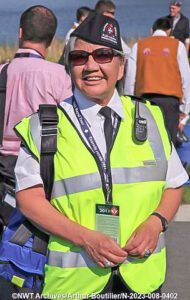
Gail Cyr, a St. John Ambulance volunteer, at the 2011 visit of the Duke and Duchess of Cambridge. (Photo courtesy of NWT Archives/Arthur Boutilier fonds)

She served on Yellowknife city council, worked for the territorial government and was a special advisor on Missing and Murdered Indigenous Women and Girls.

She also enjoyed live performances, producing costumes for the Northern Arts and Cultural Centre and performing with her son, Jesse.

Cyr was the former executive director of the Native Women’s Association and up until her passing, was on the NWT Human Rights Commission.

Charles Dent currently chairs the commission. He recalls first meeting Cyr at one of the first Folk on the Rocks festivals in the 1980s when Cyr was with St. John Ambulance and he was a volunteer firefighter.

Later on, when the pair were on Yellowknife City Council in the 1980s, with Cyr being the only Indigenous councillor. Dent said Cyr impressed by doing all the required reading and really made an effort to make good decisions to help the city develop.

Then, when Cyr joined the Human Rights Commission, Dent said she translated her personal experiences into leadership.

“She brought her … understanding and empathy that goes with having experienced the discrimination she personally went through during the Sixties Scoop,” he said.

“She was never afraid to talk about her experiences, never afraid to talk about how that affected her and others like her that you know had experienced the same sorts of things.

“She was courageous, because she was willing to share her experience. She tried to help people empathize with what people have gone through, and help along our path to reconciliation.

“As we developed the Commission, we developed our reconciliation strategy, she was key to helping us set that up, and I’m gonna miss her. We’re gonna miss her.”

CKLB will update this story when Cyr’s funeral arrangements are known. 

“You will be told you are ugly or ‘too beautiful to be Indigenous!’ If you were fostered into a white home, you will be told to your parents were drinkers, and you will be told to ignore any pull to your family you lost.”

         – Gail Cyr, on growing up in a non-Indigenous community

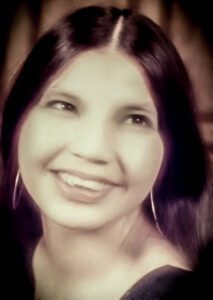
Gail Cyr as a teenager. (Photo courtesy of Cyr family via Facebook)

LINK:  https://cklbradio.com/2024/12/04/indigenous-rights-champion-and-order-of-canada-member-gail-cyr-remembered/

Friday, December 6, 2024

Alarm Bells are going off 🔔🔔🔔

🔔🔔🔔

By Trace L Hentz, blog editor

Have you done an internet search? 

Do you use a personal computer or a phone?

To find you updates, I do use google search and firefox duck-duck go, etc.  But I noticed stories (using keywords) are not there anymore, and I do wonder how much longer this website/blog can exist...

I do research all the time, but keywords are disappearing, and it's happening so fast I hear alarm bells going off.

The internet was FREE (to get us addicted) - so NOW maybe the inventors (like Google) got what they wanted from us to train their AI, so now they don't want the internet to be free anymore - news we need to read will be behind paywalls... 

Do a google search like "adoptees" and see what you find....

I try to keep you current on all kinds of news and topics, but it's getting weird... I started this as a blog in late 2009, the internet was just starting to become a treasure trove.

Putting original writing on the internet may not exist much longer.  I KNOW that books, on paper, cannot be altered, but online, content can and does and will disappear... I have seen it with a free book I put on its own website in 2022:  https://www.findingtheinvisibles.com -  Get this: Images started to disappear.  I noticed that chapters were out of order, though I uploaded everything in order.  One chapter three disappeared! (Now it is there. I reloaded it...)

👉👇I had a thought I'd do an old-fashioned printed newsletter instead of this website if the internet does blow up and disappear.  I'd mail it out to you, if necessary. 

But that costs money to print and mail, right?  I'd have to charge you for a subscription! I never wanted to do that...

Are we going backwards? Will we have to get newsletters by mail? But the post office has issues, too.

Why is this happening?  

Information is needed to counter the chaos! (and outright lies and panic and craziness)

We know the adoption industry makes billions every year and their propaganda was all you'd see about ADOPTION... but adoptees (you and me) changed that... we fought back with our voices... and I think we WON!

I just wanted you to be aware that this information, years and years of articles, will remain free, as long as I can keep it up and running. (I do pay $$ for domain names.) (I do not run ads or make any money off this website.) (If you buy a book through bookshop or amazon I will see a small payment as a royalty.)

UPDATE:  The COUNT 2024 (of adoptees) didn't work. Not enough adoptees took the survey and mailed it back to me.  So that failure is on me... it didn't work.  I just wanted you to know...

So a huge thanks for reading, thanks for making comments and most of all, thank you for your emails to me.

Just keep my email if this website disappears: tracelara@pm.me.

We will work this out and build our future together... as a community

Thursday, December 5, 2024

The turtle inspires these Indigenous advocates to give back to the land

Turtle is revered for the truth and as a healer of the earth, says grandmother Vivian Recollet

A red and white turtle. A forest of black pines sits in the background against a yellow sky. A red ribbon and a yellow ribbon cross the background.
The turtle teaches truth in the Seven Sacred Laws, or Seven Grandfather Teachings. (Ben Shannon/CBC)

In the Anishinaabe creation story, the first woman to arrive on Earth, Sky Woman, is given a home on a great turtle's back. 

Anishinaabe grandmother Vivian Recollet says the turtle also played a role in her own personal creation story. 

"Because I was not raised with my parents, it was that turtle that came to get me, to bring me to this beautiful life," she told Unreserved host Rosanna Deerchild.

Recollet is a member of the Turtle Clan from Wiikwemkoong Unceded Territory on Manitoulin Island in Ontario.  As a Sixties Scoop survivor, reconnecting with Anishinaabe culture and teachings as an adult brought her on a journey of healing.  

The path to reclaiming her identity reminds her of the turtle's teaching, one of the Seven Grandfather Teachings: truth. 

"I have come to find the truth, in every facet of my life," she said. "It was the impact of colonization that changed our whole beautiful life journey from the one that had always been there for us as Anishinaabe people."

Today, Recollet feels a responsibility to return that gift of healing back to the turtle in her home city of Toronto.

She is an adviser to Turtle Protectors, or Mishiikenh Gizhaasowin in Anishinaabemowin.  The Indigenous-led program helps safeguard urban park-dwelling turtles against threats like foot traffic, pets, fishing and over-predation. 

"We have a responsibility as Anishinaabe people to take care of those beings because they are the ones that sustained us from the beginning of time. They're the ones that taught us how to survive, how to live," she said. "The least we could do is honour them and protect them as well." 

A pale rectangular sign in a park reads "Turtle Protectors - Mishiikenh Gizhaasowin." It has an image of a blue and green turtle and a hotline number.
A Turtle Protectors sign in Toronto's High Park (Elena Hudgins Lyle/CBC)

'Not just about turtle'

Turtle Protectors was founded in 2022 by Carolynne Crawley and Jenny Davis. It began its work in High Park in Toronto's west end, but has since expanded its program to include six other parks in the Greater Toronto Area.

Its staff and volunteers raise awareness of urban turtles among park goers, protect turtle nests, and run a hotline to field reports of vulnerable or injured turtles. 

Crawley was inspired to care for her local shell-dwellers after encountering a nesting mother snapping turtle on a walk in High Park. The encounter reminded Crawley of the importance of slowing down and being present. 

"Turtle is such a vulnerable being, but is so in tune to their surroundings.… I think about how many times people may walk through a park and really not notice all the relations around them," she said.

"So really, Turtle tells us to tune in, to pay attention."

Crawley and Davis quickly discovered there was no official turtle protection program in Toronto, despite all eight species of turtle in Ontario being listed as species at risk.

Two women and a man pose on a park path next to a pond. They wear tan shirts with a turtle logo that say Turtle Protectors/Mishiikenh Gizhaasowin
Co-founder Carolynne Crawley, left, and volunteers Alicia and Miles, centre and right, seen here in Toronto's High Park, are part of the Indigenous-led program Turtle Protectors. (Elena Hudgins Lyle/CBC)

Crawley says turtles play important roles in the health of their ecosystems, including keeping waters clean by eating the dead plants and dead animals in the water.

"And this work is not just about turtle; it's about all our relations as well."

Crawley sees her work as part of repairing the harms caused to the natural environment by colonization and resource extraction. She envisions a path forward where humanity embraces a reciprocal relationship to the natural world, as is found in Indigenous philosophies. 

"The Earth can survive and thrive without us humans, but we cannot survive without the Earth," she said.

"It could make a huge difference if we were to see all of these beings as family or as kin, to be treated with the same love and respect and gratitude as we treat our human loved ones. If we all just did that one thing, then so much can change."

Two side-by-side photos of turtle nest protectors: small wooden frames in the grass with wire mesh overtop, and little orange flags to alert passersby
Nest protectors protect turtle eggs and hatchlings. (Elena Hudgins Lyle/CBC)

Joining the turtle's journey

In the Anishinaabe Turtle Song, the turtle invites humanity on a journey to heal our Earth. 

When Anishinaabe elder Garry Sault discovered the song, it was love at first listen. Sault credits the song to Elder Dan Pine, a medicine man from Garden River First Nation who passed away in 1992. 

The song tells the story of the turtle setting out on a journey across the land and waters. 

"He sees all his medicines and his places of beauty have been rolled over by a bulldozer," Sault said. "Instead of healing, they desecrated the land and put it in a bad way."

"So he's saying come along with the Anishinaabe and us, and let's look at the Earth and all of the things that have to be looked after, and see if we can help to heal it."

Elder Garry Sault sings the Anishinaabe turtle song and shares its important lessons

VIDEO
Duration 2:10
Elder Garry Sault explains the meaning behind the Anishinaabe turtle song, and why he performs it in ceremony.

Sault says that the Anishinaabe have a responsibility to take care of the land and waters. For his part, Sault takes part in projects protecting his local environment, such as monitoring the health of nearby rivers and streams. The Turtle Song serves as a tool for engaging governments and business interests with his message.

"Then when I go into the things that are not so nice for them to hear, they have a reason to listen to me because I told them what happened, why the turtle is doing it all." 

"I want those people to come along with me on the same journey that I'm taking so that we can help to save the Earth in this time of climate change, make it into a journey where both of us are looking for the same outcome, a good and safe place for our future generations."


Banner graphic featuring "Sacred Seven" surrounded by an eagle, a bear, a turtle, a beaver, a wolf, a buffalo and a raven.

This story is part of a series from Unreserved called Sacred Seven. The series explores the seven sacred teachings and introduces us to Indigenous Elders, knowledge keepers and community members who are putting those teachings into action.

LINK:  https://www.cbc.ca/radio/unreserved/sacred-seven-protecting-turtles-1.7393114

Wednesday, December 4, 2024

Investigation into Indigenous remains repatriation finds Arizona universities vary on compliance

STORY: https://indianz.com/News/2024/12/03/cronkite-news-museum-continues-to-move-slowly-on-repatriation/

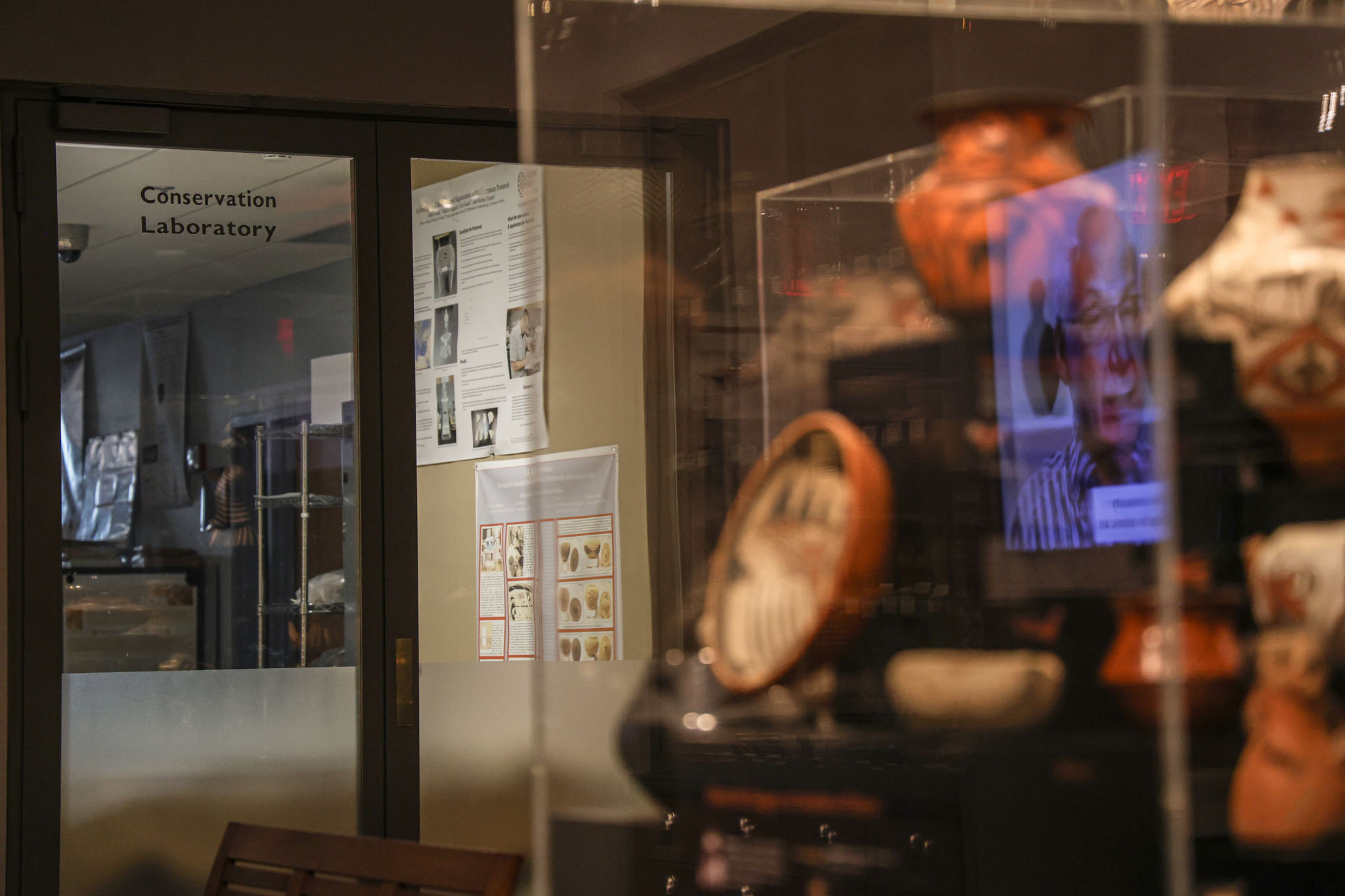
In NAGPRA’s first years, ASM began repatriating artifacts and sacred objects that were not associated with Native American burials to tribes, according to documents from the Federal Register. Pottery Room at Arizona State Museum

Items in the Pottery Room of the Arizona State Museum are on display near the entrance to a conservation laboratory. Photo by Christopher Lomahquahu / Cronkite News and the Howard Center for Investigative Journalism at ASU

Adoption Reality: Victims of South Korea's adoption system search for answers

South Korea used to be the world's largest source of babies for adoption. It's believed 200,000 children are part of the Korean adoptee diaspora, many of whom were sent away illegally and unethically. Those babies are now adults determined to trace their biological roots. Teresa Tang goes on an emotional journey with CNA's Lim Yun Suk. 


Tuesday, December 3, 2024

Northfield History Center repatriates items to Prairie Island

 Cannon Falls, MINNESOTA,

  • Published on

PIIC logo

The Northfield History Center has repatriated a number of items from its collection to the Prairie Island Indian Community. 

The Northfield History Center voluntarily invited the Prairie Island Tribal Historic Preservation Office (THPO) to review its collection and then took steps for the THPO to take immediate possession of the items. In a process that has been historically fraught with difficulties for tribes, the willingness of the Northfield History Center made it a positive experience and cemented a foundation for future collaborations between the two entities.

“Oftentimes, it’s a struggle to get some of these objects returned so whenever we have a volunteer and cooperating partner, it makes the process so much easier and in this instance, we found a true partnership that we are building upon with our friends over at Northfield History Center,” said Franky Jackson, Prairie Island’s tribal historic compliance officer.

The Northfield History Center announced Nov. 18 that its Board of Directors approved the deaccessioning of the items. The items are sacred Native American items that have significance to local Indigenous people, according to the announcement.

“These items have been in the Northfield History Center collection for many years, but they do not belong to the Northfield community. They belong to the people that lived in this area long before us, and that made and used these items,” Executive Director Sean Allen said in a statement. “Today we are proud to be able to repatriate these important pieces to their rightful owners and to build a lasting partnership with the Prairie Island Indian Community.”


New federal rules

It’s important to tribes to identify which institutions have their items and which people within the tribe can benefit from having the items returned, Jackson said. 

“When it comes to our sacred items, this is part of how we heal our hoop. This is part of how we heal our communities, is by capturing and bringing home these sacred items that help us with our ceremonies,” Jackson said.

Repatriation is also related to the tribe’s cultural revitalization. It’s “crucially important” for Prairie Island’s artists to have access to the items to have a connection to their relatives’ handiwork, carry forward the artistry and pass it down to next generations, Jackson said.

“That’s a big part of what we’re doing with our Tribal Historic Preservation Office here. As we accession in items, it’s our goal to allow our community-based artists to have access to those items,” Jackson said.

The process for institutions to repatriate items to tribes is regulated by the federal Native American Graves Protection and Repatriation Act (NAGPRA) of 1990,which requires institutions that receive federal funding to transfer Native American human remains and objects of cultural patrimony to lineal descendants and culturally affiliated tribes. Despite the law, thousands of Native American human remains and artifacts remained in museums. 

A revision of NAGPRA went into effect in January that streamlines the repatriation process, gives tribes the power to define what is a sacred object and gives tribes more jurisdiction over the institutions’ use of human remains and objects. It also requires institutions to inventory all of their Native American artifacts within the next five years. 

Under the revised law, an institution has 90 days to respond once a claim has been filed. Prior to the change in January, "institutions could drag their feet and take as long as they wanted. In some instances, it has taken us literally years to reconcile some items,” Jackson said. 

An example of that is the noose that was known as the Mankato Hanging Rope in the Minnesota Historical Society’s collection.  The noose was used in the hanging of Wicanhpi Wastedanpi (Good Little Stars) on Dec. 26, 1862 in Mankato as part of the largest mass execution in U.S. history.  The Minnesota Historical Society returned the noose earlier this year after Prairie Island submitted a claim under the new NAGPRA rules.  The repatriation of the noose this year came after Dakota tribes’ “11-year struggle” to have it returned, Jackson said.

“With some of the new legislation that took place with the law, that strengthens the tribal voice when it comes to certain things and it allows us to have this done in a way that’s timely for us,” Jackson said.

Often, Prairie Island learns of an object belonging to the tribe when a museum contacts the THPO or the object is put up for auction to the highest bidder. Both can be a “tumulteous” process for the tribe, Jackson said. 

Museums who received the federal funding appropriated by Congress during the Covid-19 pandemic are now required to inventory their collections under the revised law. The Prairie Island THPO is seeing an influx of inquiries from institutions across the United States to review items in their collections that they believe belong to Prairie Island. Noah White, Prairie Island’s tribal historic preservation officer, estimates they’ve heard from 30-35 institutions since the beginning of the year. 

“Nobody ever really reached out to us in the past. We’d always find out from a different source,” White said.

After Prairie Island’s struggles to reclaim items, they had “jubilation and excitement” when the Northfield History Center reached out and the THPO was able to easily bring the items home, Jackson said. 

“They looked within their collection, identified some items that they knew were going to be controversial, some that may have fallen under the federal definition of that law, and they were proactive,” Jackson said.

The process with the Northfield History Center moved quickly.

“They rolled the doors open. They greeted us, they were very welcoming,” Jackson said.

After Allen and the Board of Directors reached out, the Prairie Island THPO visited the Northfield History Center to inventory its collection and identified several items that met the definition as a sacred object or object of cultural patrimony under NAGPRA, Jackson said.

Prairie Island had to formally file a NAGPRA claim on the items, but on the THPO’s second visit, the Northfield History Center established a temporary loan agreement to allow the THPO to take possession of the objects immediately. 

“That is very rare. That doesn’t happen often,” Jackson said.

When a tribe reviews a museum’s collection and identifies items it wants returned, it can create a lot of “anxiety” and “angst” for the tribe, Jackson said.

“To have this institution introduce a loan agreement as part of the solution just demonstrated beyond measures that they had more than a passing interest to return these objects to the appropriate people,” Jackson said. “That really demonstrated that we have a trusted partner at the table that wanted to do the morally right thing.” 


Repatriated items

Most of the items that were returned by the Northfield History Center will be held by the tribe as objects of cultural patrimony, meaning that they belong to the broader tribe, Jackson said. 

The items included two large ceremonial headdresses made of eagle feathers, handmade beads and other materials, according to the Northfield History Center. The headdresses are “exquisite,” Jackson said. The repatriation helps bring those items back into the Prairie Island community so they can view them and learn the story of the repatriation, he said.

Some of the objects are considered sacred and won’t have public access, he said.

There were several “wonderful and beautiful” sacred pipes in the collection, Jackson said. The provenance on some of the pipes was detailed and the THPO was able to identify the families to whom the pipes need to be returned.

“That’s a wonderful, wonderful experience for us to be able to work with this institution to be able to find that pathway home for some of these objects,” Jackson said.

Prairie Island is also working with several other museums in Minnesota on voluntary repatriation and to create repatriation policies. The cross-cultural exchange and collaboration with the Northfield History Center shows what’s possible. Prairie Island plans to collaborate with the history center on its exhibits and history center staff plans to visit Prairie Island to see their collection and buffalo herd, Jackson said. 

“The partnership with Northfield is going to go much deeper,” he said.

Potential unmarked graves identified at former residential school in central B.C.


STORY AND VIDEO
: https://www.msn.com/en-ca/news/canada/potential-unmarked-graves-identified-at-former-residential-school-in-central-b-c/ar-AA1v2LtG

The site of a former British Columbia residential school that had its own cemetery since the early 1920s is now the location of potential unmarked graves, says the chief of a Fraser Lake area First Nation.

Nadleh Whut'en First Nation Chief Beverly Ketlo said after almost two years of geophysical survey work, the nation believes it can confirm potential unmarked graves at the site of the former Lejac Indian Residential School, located about 160 kilometres west of Prince George.

The First Nation had always known children were buried at the church-run institution because many of their graves were marked in a cemetery that had been there since 1922, when the school opened, but the survey's findings suggest a number of unmarked graves, she said at a news conference Saturday.

"We have information today that shows that there are likely grave sites in the location of the Lejac school," said Ketlo. "We know there were more children there, we just didn't know where. How many, and this is a question I ask everybody I meet, how many of the schools you attended had graveyards in the backyard?"

The survey did not positively identify any unmarked graves, but indicated "23 markers" of potential burial locations, she said.

The geophysical survey work, using ground-penetrating radar and magnetometry, started in the winter of 2023 and focused on areas identified by survivors of the residential school, said Ketlo.

About 7,850 Indigenous children attended Lejac school, which was in operation from 1922 to 1976.

The Nadleh Whut'en First Nation said there were 38 documented deaths at the institution.

Ketlo said among the Lejac Indian Residential School's darkest chapters was the deaths of four boys in 1937.


Editors Now Accepting Submissions on Adoption Loss from Birthparents

 Are you a BIRTHPARENT?

SEATTLE, WA, UNITED STATES, December 1, 2024 /EINPresswire.com/ -- 

“Adoptionland: From Orphans to Activists” Editors Now Accepting Submissions for a New Collection of Stories and Experiences Focusing on Adoption Loss from Birthparents.

The editors of the acclaimed anthology “Adoptionland: From Orphans to Activists,” are pleased to announce that they are now accepting submissions for their upcoming collection.  This new volume will spotlight the often-overlooked voices of parents of adoption loss, also referred to as "birthparents" among industry stakeholders.


Janine Vance, senior editor, emphasizes, "We are excited to bring together a diverse collection of stories that reflect the depth and breadth of experiences. Through this collection, we hope to foster greater understanding, community care, and awareness within the adoption diaspora and beyond."

Since its publication in 2014, Janine and her twin, Jeanette, also known as the "Vance Twins," have been committed to providing a platform for adopted people (“adoptees”) and parents of adoption loss to share their stories and experiences. They established the Adoption Truth & Transparency Worldwide Information Network in 2011, a discussion forum on social media that now also monitors the adoption industry. Adoptionland, its first collection of adoption stories, has garnered international attention for its raw, honest, and impactful narratives.

"We believe that the stories of parents of loss are crucial to understanding the full picture of adoption," Janine Vance says. "This call for submissions seeks personal essays, stories, and reflections that delve into the emotional, psychological, and societal impacts of adoption loss from the perspective of those who have experienced it." The curator adds: "The benefits of reading 'Adoptionland' are significant for isolated adoptees, offering them a sense of community and validation. The narratives within the anthology provide a safe space for adoptees to relate to others' experiences, fostering a sense of belonging and understanding. Readers can gain insights into the complexities of adoption, recognize their emotions and struggles, and find solace in shared experiences. 'Adoptionland' is a vital resource for adoptees seeking to navigate their identities, heal from past traumas, and connect with a larger community of individuals who share similar journeys."

Submissions are open to all adoptees and parents of loss, regardless of their background or country of origin. The editors are particularly interested in stories that explore themes such as the emotional aftermath of relinquishment, the search for lost children, the impact of societal stigma, and the journey toward healing and reconciliation.

Selected contributors will have their work published in the new volume of “Adoptionland” and will receive a complimentary copy of the book upon its release. Additionally, they will be invited to participate in a series of virtual events and discussions centered on adoption and its aftermath.

“Adoptionland” is a series of stories published by Adoption Truth & Transparency Worldwide Information Network (AT TWIN), serving to amplify the voices of those most impacted by adoption. You may also contact Janine Vance privately if you've lost a child to adoption and are still searching. AT TWIN promotes community care and peer support through sharing personal narratives and critical essays.

Submission Guidelines:
• Word Count: Submissions should be between 1,000 to 3,000 words.
• Format: Manuscripts should be submitted as Word documents or PDFs.
• Deadline: The submission deadline is March 1st, 2025. If you pass the deadline, you are invited to share your experience privately to the same email.
• How to Submit: Authors can submit their essay to the email below with the subject line: "Adoptionland Submission – [Author Name]."

You may also email Janine Vance at her author website for commentary, media inquiries, or consultations on adoption issues. Visit Janine Vance for more information about the submission process or to learn more about Vance's private and personal perspective on adoption.

Administrator:  Adoption Truth & Transparency Worldwide Information Network
admin@adoptiontruth.org
Visit us on social media:
Facebook
X
Instagram
YouTube
Other


As an adoptee, Trace contributed her story in the first anthology ADOPTIONLAND...

Going Home: How the #LANDBACK movement is reclaiming ancestral lands


Going Home: How the land back movement is reclaiming ancestral lands.

The Land Back movement reflects the global efforts of Indigenous people to reclaim ancestral territories and sovereignty over public lands. Through a combination of military force, broken treaties, and discriminatory policies, Native communities have been stripped of 99% of their historical land base in the U.S., reduced from nearly 2.3 billion acres to just 56 million acres today. Here are some ways this has been codified in state and federal policy:

  • The Indian Removal Act of 1830 led to the forced relocation of southeastern tribes like the Cherokee, Muscogee (Creek), Seminole, Chickasaw, and Choctaw Nations along the brutal Trail of Tears, where thousands died during the journey westward.

  • In the Great Plains, the U.S. government repeatedly violated treaties like the Fort Laramie Treaty of 1868, seizing the Black Hills from the Great Sioux Nation after gold was discovered.

  • The Dawes Act of 1887 dispossessed tribes by breaking up communally held reservation lands into individual allotments, many of which were then sold to non-Native settlers.

  • Military campaigns and massacres, like the Sand Creek Massacre of 1864 where U.S. troops killed hundreds of peaceful Cheyenne and Arapaho people, were used to terrorize Indigenous communities and drive them onto increasingly smaller reservations.

  • The California Gold Rush led to state-sponsored genocide of Native peoples, with the state paying bounties for Indian scalps and heads in the 1850s and forcing survivors onto small rancherias.

Unlike what some might assume, the movement doesn't seek to displace current residents from their homes. Instead, it focuses on returning decision-making power to Indigenous communities and addressing the historical injustices of colonization that led to their dispossession. Here are four examples of what land back work looks like in action:

  • In 2020, the Esselen Tribe regained 1,200 acres of their ancestral homeland in Big Sur, California, after 250 years of displacement. Through a $4.5 million grant and partnership with Western Rivers Conservancy, the land, which includes sacred sites and endangered species, is now being used for traditional ceremonies and ecological conservation.

  • The Bois Forte Band of the Minnesota Chippewa Tribe, in partnership with The Conservation Fund, the Indian Land Tenure Foundation and the Indian Land Capital Company, purchased 28,089 acres of ancestral land within the Nett Lake and Deer Creek sections of the Bois Forte Reservation.

  • The Confederated Salish and Kootenai Tribes (CSKT) regained control of the National Bison Range in Montana in 2020. This 18,800-acre wildlife refuge, which was taken from them in 1908, is being used for bison conservation efforts while expanding public education about their cultural connections to the land.

  • In Maine, the Penobscot Nation has worked with conservation groups to reclaim over 100,000 acres of their ancestral territory along the Penobscot River since 2000, helping restore both tribal sovereignty and the river's ecological health, including critical salmon habitats.

  • In South Dakota, the Rosebud Sioux Tribe reacquired 28,000 acres of land in 2020. This prairie land is now being used for buffalo conservation, food sovereignty initiatives, and teaching traditional land management practices to tribal youth.

Indigenous communities’ approach to land stewardship goes beyond simple ownership, emphasizing a deep, complex relationship with the environment. As tribes reclaim more of their ancestral lands, they're leading innovative climate adaptation efforts and restoration projects, demonstrating how traditional Indigenous knowledge can help create a more sustainable future.

  • Support the work of NDN Collective, an Indigenous-led organization dedicated to building Indigenous power through organizing, activism, philanthropy, grantmaking, capacity-building and narrative change. You can make a donation or follow the action items for their specific initiatives.

  • Learn whose ancestral land you live on and pay real estate taxes to those Indigenous nations. Many tribes and Indigenous organizations have established voluntary land tax programs where residents can contribute a portion of their income or property value to support Indigenous land reclamation efforts, like the Shuumi Land Trust in the East Bay of Northern California.

  • Support Indigenous-led land conservation efforts and organizations working to protect sacred sites and expand tribal land holdings. This could mean donating to Indigenous land trusts, advocating for the return of public lands to tribal management, or backing specific land return campaigns.

  • Call on your local, state and federal representatives to honor treaties, expand tribal sovereignty, and return public lands to tribal nations.


The latest on the Land Back movement, in which Native American tribes reclaim land. Two reporters take a look at where it’s worked and where it hasn’t at reservations in Minnesota. NPR >


The Land Back movement is also about foodways. When Native peoples' land was stolen, they lost important hunting and fishing grounds and myriad places to gather and prepare food. Civil Eats >


Tribal lands were stolen. What happens when those ancestral territories are returned? The Land Back movement is long-overdue justice. It’s also a climate solution. Vox >


The Land Back Movement Unravels Manifest Destiny. Across Indian Country, tribal nations are buying back their land one parcel at a time. Sierra Club >


On Vancouver Island, Land Back Looks Like Going Home. Indigenous-led land back efforts are underway on Canada’s Vancouver Island while the land’s original stewards protect forests from logging. Atmos >


Land Rematriation: A Conversation with Cyndi Suarez, Donald Soctomah, Darren Ranco, Mali Obomsawin, Gabriela Alcalde, and Kate Dempsey. Kate Dempsey, state director of The Nature Conservancy in Maine, discuss the future of Tribal sovereignty, Land Back, and rematriation of the planet. NPQ >

  
  • Share this newsletter with a friend


CLICK OLDER POSTS (above) to see more news

CLICK OLDER POSTS  (above) to see more news

MEGWETCH THANK YOU

HUGE Thank you for visiting this blog and sharing this with your kin. It's appreciated. Contact Trace anytime! Use the form below.

BOOKSHOP

Please use BOOKSHOP to buy our titles. We will not be posting links to Amazon.

Popular Posts

To Veronica Brown

Veronica, we adult adoptees are thinking of you today and every day. We will be here when you need us. Your journey in the adopted life has begun, nothing can revoke that now, the damage cannot be undone. Be courageous, you have what no adoptee before you has had; a strong group of adult adoptees who know your story, who are behind you and will always be so.

OUR HISTORY

OUR HISTORY
BOOK 5: Lost Children of the Indian Adoption Projects