This blog was a backup for American Indian Adopteesblog
USE THE SEARCH BAR or SEARCH TOPICS at bottom of this blog
If you need support
Support Info: If you are a Survivor and need emotional support, a national crisis line is available 24 hours a day, seven days a week: Residential School Survivor Support Line: 1-866-925-4419. Additional Health Support Information: Emotional, cultural, and professional support services are also available to Survivors and their families through the Indian Residential Schools Resolution Health Support Program. Services can be accessed on an individual, family, or group basis.” These & regional support phone numbers are found at https://nctr.ca/contact/survivors/ .
MY EMAIL: tracelara@pm.me
“I get up. I walk. I fall down. Meanwhile I keep dancing.” That is a line in the book “Bird by Bird” by Ann Lamott. Her comical book offers instructions on writing and life and so far -- I’ve had good belly laughs. Yep, Ann made a funny book!
In part two, Ann was fighting herself over jealousy of another writer friend. She wrote, “Sometimes this human stuff is slimy and pathetic - jealousy especially so - but better to feel it and talk about it and walk through it than to spend a lifetime poisoned by it."
Poison is nothing to mess with. I spoke with an adoptee friend last night and Levi is sure we adoptees need to create new ceremonies, even some just for us adoptees. I was nodding at every word Levi said. A lifetime of isolation from what we know to be ours, our blood rights as Indigenous People, our language and culture and the healing offered by participating in ceremony, it was not ours growing up white and adopted and assimilated.
But we adoptees are not victims, Levi said. No, we are changed by adoption but not its victims.
I thought about ceremony, what ceremony I missed growing up, and what other Indian people probably took for granted growing up. That does make me jealous. I didn’t get to meet my grandmothers in flesh, only in dreams.
I am sad I do not how to make my own regalia. I see others dance at powwow and wish someone had time to teach me what I need to know.
I can think of a million things I’d like to know. When I met relatives in Illinois last year, I was over the moon happy.My Harlow cousins filled many holes in my heart.
I am in reunion. Jealousy is not my poison.
For those not in reunion, their hearts ache. We need to find a way to heal them.
“Some envision themselves as saviors, maintaining that Native children are better off growing up in white homes.”
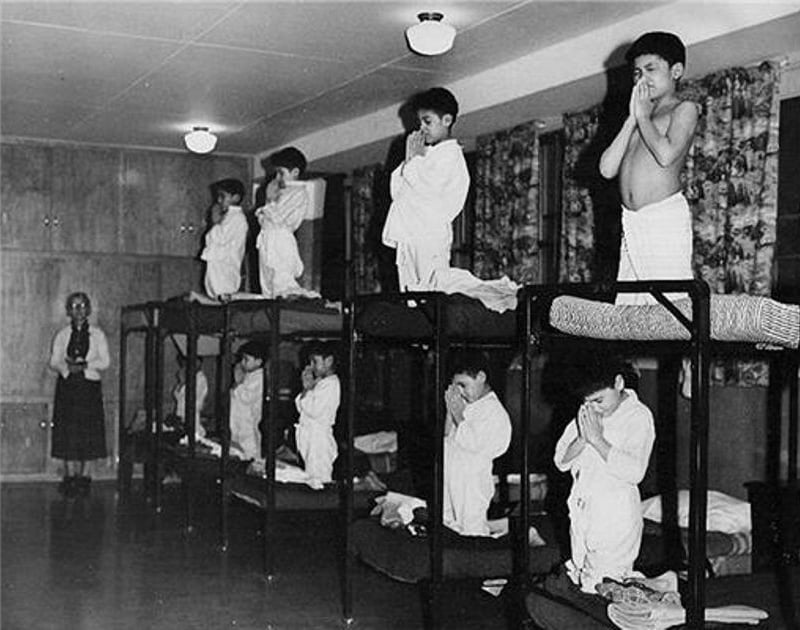
Removal didn’t just happen through boarding schools. Native children were also taken from their families and communities and placed with non-Natives. Lost Bird was among the first. She was found as an infant under her mother’s frozen body after the Wounded Knee Massacre in 1890, when more than 150 unarmed Lakota were slaughtered by the U.S. Cavalry. She was adopted by Gen. Leonard Colby. Her life was difficult and marred with rejection and abuse: Her adoptive father was indifferent to her existence, and her adoptive mother attempted to raise her as white, but society would not accept her. No one could erase her desire to learn about her Lakota roots, either. By the 1970s, research found that approximately 25% to 35% of all Native children in the U.S. were being placed in foster homes, adoptive homes, or institutions, and 85% of these children were being placed outside of their families and communities, even when fit and willing relatives were available to care for them. Research has shown that Native children in foster care who stayed connected to their culture did better, and those who weren’t were at greater risk for behavioral and mental health problems.
Tracy Rector's (Choctaw/Seminole) films have been seen by audiences at the Cannes Film Festival, ImagineNative, the Toronto International Film Festival, and PBS. Her latest work, Dawnland, follows Maine's Truth and Reconciliation Commission to address the removal of Native children from their homes. The other films she's worked on include Teachings of the Tree People, March Point, and Ch'aak' S'aagi. Rector describes herself as a mixed race urban Indian, filmmaker and activist. We'll talk with her about her passion for filmmaking, social justice and what is next for her career.
Native America Calling is joining ProPublica's Documenting Hate project, working to collect, analyze and report on crimes motivated by hate and bias. The project is building a database of tips for use by journalists, researchers and civil-rights organizations. If you're a victim or a witness to a hate crime, click here to fill out an online form. The information will be shared with partners in the Documenting Hate project, but no one else will see the information you share without your permission.
***
Native America Calling is a national call-in program that invites guests and listeners to join a dialogue about current events, music, arts, entertainment and culture.
The program is hosted by Tara Gatewood (Isleta Pueblo) and airs live each weekday from 1-2 pm Eastern.
Navajo Nation Seeks to Dismiss Texas’ Challenge to Indian Child Welfare Act
Published April 30, 2018
WINDOW ROCK – On April 26, 2018 the Navajo Nation filed its Motion to Intervene and Dismiss with the federal district court in Texas v. Zinke. The case is a constitutional challenge to the Indian Child Welfare Act (ICWA) by the states of Texas, Indiana, and Louisiana. It relies on a Texas state ICWA case concerning the placement of a Navajo child with a non-native family. In its motions the Nation argues that a decision for Texas would negatively affect the Nation’s relationship with this child and numerous Navajo children throughout the country. The Nation asks the court to dismiss the case because it is not a party, and it cannot be made a party, due to its sovereign immunity.
ICWA was passed by Congress in 1978 to stop the mass removal of Indian children from Native families and facilitated placement of those children with non-Natives. Congress found ICWA to be necessary because Indian children are the future of their tribes, and so their removal threatens the very existence of tribes. ICWA provides tribes and tribal members rights to protect their interests in their children.
In the Texas case the Nation located a Navajo family to adopt the Navajo child. However, the non-Native foster parents refused to allow the removal of the child, filing multiple court challenges to the placement of the Navajo child with the Navajo family, including the Texas v. Zinke challenge. The actions by the foster parents have prevented the Navajo child from growing up in his Navajo culture, language and community, and has prevented the Nation from maintaining a vital connection to one of its members.
“The Navajo Nation is committed to the protection of all its children, wherever they may live” commented Navajo Nation President Russell Begaye. “We want all Navajo children to have the opportunity to know their people, their traditions, and their language. As this lawsuit shows, we will continue to fight for them. We want them to know they are not forgotten, no matter where they may live.”
“Our children are the future of the Navajo Nation,” noted Vice-President Jonathan Nez. “They are the ones who will take our elders teachings and pass them down for generations to come. I am disappointed by the actions of the plaintiffs in this case who are attempting to sever the connection between Navajo children and our way of life teachings.”
“Keeping our children with Diné families keeps our language and culture with our most valuable children” stated Navajo Nation Council Delegate Nathaniel Brown. “The future of our Nation depends on our children. They are the ones who will carry on our traditions and our ways. The actions taken by the foster parents and the State of Texas have deprived this precious Navajo child of a connection to his Navajo culture and tribe.”
“ICWA was meant to prevent the exact situation in this case: the wresting of an Indian child from his people” noted Attorney General Branch. “ICWA’s entire purpose is to maintain and preserve the connection between an Indian child and her tribe. This year is ICWA’s 40th anniversary; we should be celebrating the success of ICWA, not having to defend ICWA and the basic human right of Navajo families and communities to remain intact. There should be no question to our right to remain distinctly Navajo through the passage of our culture, language, and treaty and sovereign rights to our children.”
BANGOR — She was a 4-year-old kid named Dawn Neptune, who lived not far from here in a place called Indian Island, a reservation of the Penobscot Nation, a cultural touchstone that shaped — still shapes — who she is. Her mother, then still a teenager, drank too much in those early days. It was an open family secret, part of an intergenerational trauma that, like her Penobscot heritage, was a critical and governing rhythm to her young life. And then Dawn Neptune was gone. A baby sitter took her and a younger brother to a grocery store a half-hour away from the reservation. And then abruptly drove away, a cruel abandonment that served as the little girl’s entry into life in foster care, where she promptly learned a hard lesson no kid should be forced to absorb: Forget about your mom. Forget about Indian Island. Forget about being Penobscot. And then one day she spoke briefly in her native tongue and suffered swift and ugly punishment she has never — can never — forget. It also echoes through a riveting new documentary film, “Dawnland,’’ which makes its East Coast premiere on April 28 at Independent Film Festival Boston at the Somerville Theatre. It’s an 86-minute journey of raw and recent history told through the eyes of those who have lived through it. Who have survived it. Who are determined to bear unstinting witness to it.
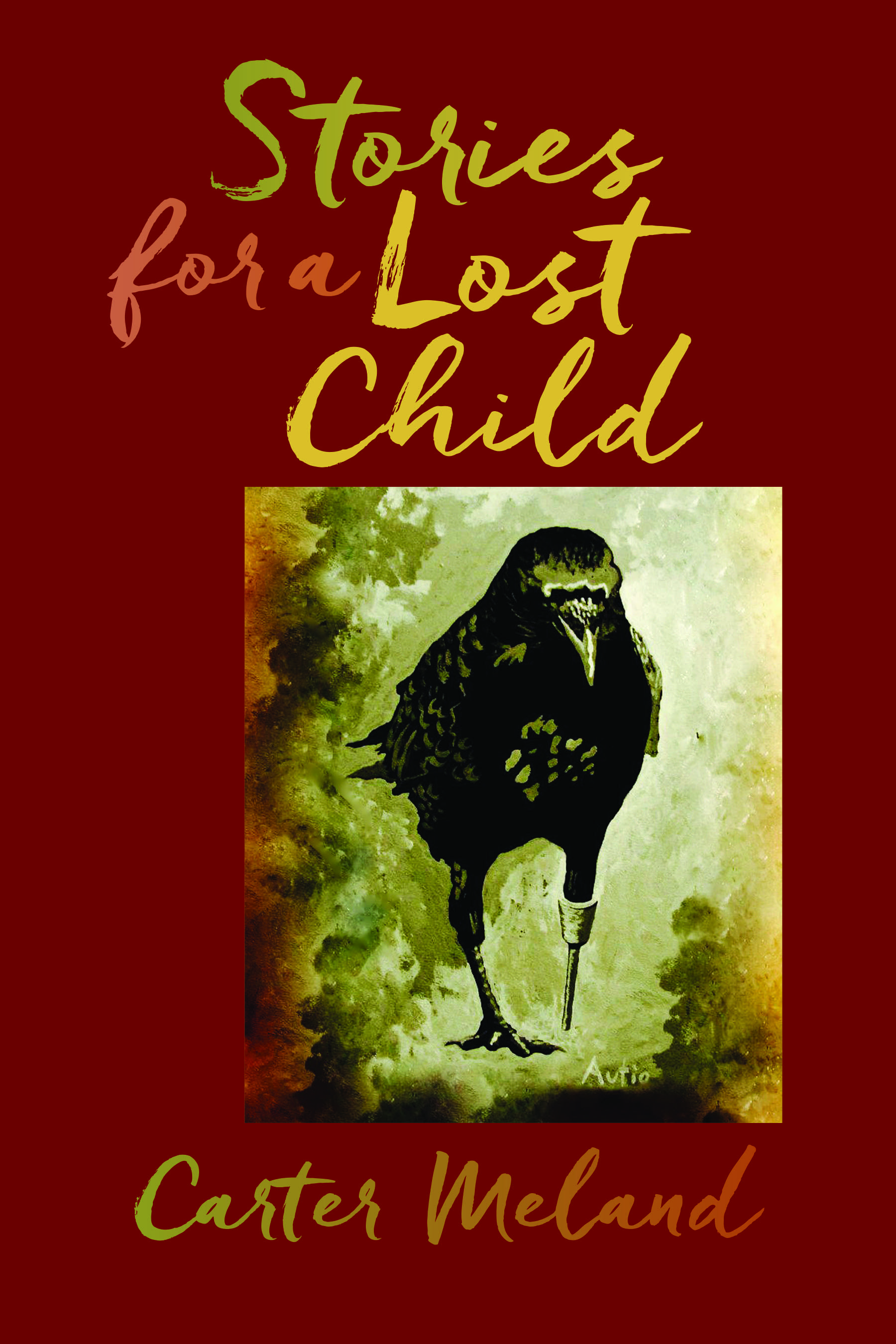
Stories for a Lost Child, by Carter MelandCourtesy Michigan State University Press Most people consider it helpful to know about their cultural heritage. Minneapolis author Carter Meland argues it can be a burden not to know — especially if you have Native heritage. Meland's book "Stories for a Lost Child" is a finalist in the best novel category at this weekend's Minnesota Book Awards. It's fiction, but reflects Meland's own experience. Growing up, he said, there were gaps in his family history.
"My dad never knew his biological father," he said. "And we never knew much about him. My grandmother was reluctant to talk about him, and we tried to respect that."
But that changed one day about 25 years ago, when Meland was "getting close to 30," he said. Meland recounted some Minnesota history: Back in 1985, Congress passed the White Earth Land Settlement act. It was designed to resolve longstanding disputes over land ownership on the northern Minnesota reservation. Originally tribal members were allotted land on the reservation, but thousands of acres were illegally sold to nonmembers in the early 20th century. Under the act, the search began for heirs of people originally allotted land to give them compensation. "And my dad was one of their heirs, through his father. So he gets a phone call one day," Meland said. The family had no idea of its Anishinaabe heritage. But, as Meland tells it: "In my world of cosmic coincidences, or perhaps cosmic blessings, I was already in grad school beginning to study Native literature. So I kind of feel like somebody was telling me stuff." Meland's studies took on new significance. He learned a little of the Ojibwe language. He also began writing short stories. Some were based on traditional characters, and others just sprang into his mind. "Stories about Indians in space, and Bigfoot, Mesabe or Sasquatch or whatever you want to call him. We say Mesabe in Anishinaabemowin," said Meland, using the Ojibwe word for the language. "And other stories, including one about a 17th century missionary to the Anishinaabe." Eventually he connected the tales, and they became the novel "Stories for a Lost Child." It's about a teenage girl called Fiona who receives a mysterious box filled with writing. It's from her grandfather, a man who abandoned her mother years ago. "But wanting some kind of contact, and sending this box of stories to Fiona, perhaps 18 years after he died, through an intermediary," he said. It's a surreal collection, linked by letters from her grandfather, which are also in the box. In one he admits he's a con man and an unreliable guide. However, in time — and through a few misadventures of her own — Fiona begins to understand her heritage. "And what I realized, as I was reading the book and talking to people about the book, is what motivates my writing was what does it mean not to know you have Anishinaabe heritage, right?" said Meland. When he taught Native literature he discovered that his experience of learning late about his heritage was not unusual. "I have had many moving conversations with students who know they have Anishinaabe heritage, or Dakota heritage or Cree heritage, or what have you, but they don't know what it means," he said. And he's likely to have more of those conversations now that he's up for a Minnesota Book Award on Saturday evening. The other nominees in the best novel/short story category are Louise Erdrich for "Future Home of a Living God," A. Rafael Johnson for "The Through," and Lesley Nneka Arimah for "What it Means when a Man falls from the Sky." Meland says it's significant that none of the nominees comes from what he calls the majority culture. "The literary community is very hungry for stories from under-represented voices, or slightly less misrepresented voices, and it's really exciting," he said. When you read a really good book, Meland said, you become the protagonist in that book. When you are of a background different from that of the protagonist, that can be a good thing, he said. He will read from his novel at Subtext Books in St. Paul at 7 p.m. May 9 and at the Brown Bag Lunch with Author series at the Brainerd Public Library on June 18.
'She died coming to try to find me:' Sixties Scoop adoptee pieces together tragic story of separation
Robert Kalkman was adopted at age 2, and his life shattered at 9 after discovering his true heritage
Jorge Barrera · CBC News |
Robert Kalkman, aged about 3, in Fort Frances, Ont., after his adoption. (Submitted by Robert Kalkman)
Robert Kalkman's memory of the woman standing outside the window is like the frame from a negative burned too hot by light. Among the shapes of things in this memory is his adoptive father leaving the house in Fort Frances, Ont., to speak with this woman who kept coming back to stand outside the window. "I remember as a child looking out the window and seeing this lady standing on the street and the commotion of my dad going out and begging her to leave," said Kalkman, 53. "I was like three years old; it's the last thing I can remember." Later in life, he would come to know the woman in the window was his biological mother, Kathleen McGinnis. There is only one photograph of McGinnis that remains. It's from the 1952 edition of the magazine Northern Sportsman and published above an article headlined, I Write About Indians. The photograph is of an Anishinaabe family having a picnic. The caption does not identify anyone in the photograph, but Kalkman's biological family told him that it is her, as a baby, swaddled and fastened to a cradleboard.
This is the only surviving photograph of Kathleen McGinnis. She is the baby attached to the cradleboard in the upper right-hand side of the photograph. (Submitted by Robert Kalkman)
There are other documents about Kalkman's biological mother — coroner and police reports from April 1978. There are witness statements about the accident, how she seemed dazed waving cars down on a highway near Calgary when she was suddenly struck and killed on April 3. The impact severed one of her legs and the circumstances that led to her death remain shrouded in mystery. Kalkman was out in northern British Columbia a few years ago in a work camp when he came across a website listing missing and murdered Indigenous women. He first noticed the name of a woman he once went to school with and then he noticed his mother's name, along with that of her two sisters, Edith Quagon and Sarah Mason, who were both separately murdered by men plunging a knife through their hearts. "I was like, 'wow.' I was just overwhelmed," he said. "I wish whoever the police was, or whatever, spent a little more time investigating and looking into it. If it was a white person, they would be all over it."
Kalkman would later learn that his biological mother was hitchhiking to British Columbia from Thunder Bay, Ont. McGinnis had heard one of her two children — seized in 1966 from her father's house on the Manitou reserve portion of Rainy River First Nation while she shopped in Fort Frances, Ont. — had been adopted by a family that had moved from Fort Frances to B.C. "She died coming to try to find me," said Kalkman. "It's an identity you lose, the moment she is gone."
Aftershocks
McGinnis's family, along with Kalkman's sister Diane Geissler, testified in Thunder Bay in early December during three days of hearings held by the national inquiry into murdered and missing Indigenous women and girls. Kalkman didn't make the hearing. Kalkman's story is also one among thousands of aftershocks still reverberating from the Sixties Scoop when child welfare agencies across the country would seize Indigenous children and quickly adopt them out into the care of non-Indigenous families.
His story also connects the Scoop with residential schools, which McGinnis attended, and reveals the systemic discrimination that led state agencies to repeatedly seize Indigenous children.
Robert Kalkman, aged 2, is held by the caretaker of the foster home where he was placed after he was taken by child welfare agents. (Submitted by Robert Kalkman)
Ontario's child welfare agents determined the teenage mother — who had Geissler at 14 and Kalkman at 15 — didn't have the financial means to raise her children despite the fact she lived with her parents. "It was because she was Native and lived a traditional lifestyle. She couldn't prove that she had an apartment or a house. It wasn't in her name, it was in her parents' name," said Geissler, who lives in Thunder Bay a few blocks away from where McGinnis lived before she left hitchhiking, looking for one of her children. "She couldn't prove income because they hunted, trapped — they had a trapline — and fished for food. They grew their own vegetables, they picked berries, they picked herbs. They didn't have a nine-to-five job. They lived on the reserve."
Seized by child welfare
Kalkman and Geissler don't know the exact date or the details about the circumstances leading to the moment when they were seized. There is a story about a snowstorm stranding their mother in Fort Frances on the day they were taken. There is another about an uncle who hid them in a closet until a child's cry gave them away. Kalkman said one of his aunts confessed to him in 1991 that she had called child welfare because she was worried about the care the children were receiving.
Geissler was immediately adopted by a family that remained in the Fort Frances area. Kalkman remained in foster care for about a year until he was adopted at age two by a Fort Frances doctor who had treated him for various ailments. "I think as a family we thought we were ... helping out someone who has a need," said Peter Kalkman, Robert Kalkman's adoptive brother. "I think we did it for the right reason."
From left to right: Robert Kalkman with his adoptive family Klari Kalkman, Johannes Wilhelmus Kalkman and Peter Kalkman. (Submitted by Peter Kalkman)
Peter Kalkman remembers as an eight-year-old going to the courthouse with his parents to finalize the adoption on Feb. 24, 1967. "It was very serious circumstances where the judge is saying you are taking on this person to be part of your family," said Kalkman, a radiologist who now lives in Abbotsford, B.C. "It's a very large responsibility and commitment and we all felt that way." Robert Gary Shebageget became Robert William Kalkman that day. The family then moved to Vancouver.
'You're an Indian'
Throughout his early years, Robert Kalkman said he didn't contemplate differences with his adoptive home's older brother and sister, who were the biological children of his adoptive parents. He never noticed his darker skin or wondered where he came from. He liked to dress up like a cowboy. Then, at the age of nine, he noticed one of his friends in the Vancouver neighbourhood where he lived had stopped playing with him. When he asked him why, the answer shattered his world. "He said, 'Because you're an Indian. My dad said you are an Indian,'" said Kalkman.
Robert, aged 12, and his adoptive father Johannes Kalkman, when they lived in Vancouver. (Submitted by Robert Kalkman)
When he got home, his adoptive mother Janet Kalkman was cooking. "I asked her, 'Mom, am I an Indian?' She said, 'Don't talk to me right now, I'm cooking,'" said Robert Kalkman. "I went to my room and looked in the mirror."
A little while later she came into his room and put down a book. Kalkman said the book had about 40 pages of black and white photographs depicting Ojibway people from Minnesota and Ontario. "That is when I started rebelling," he said.
Robert Kalkman, around age 17, in Vancouver. (Submitted by Robert Kalkman)
"I had an identity crisis."
His life became a series of conflicts with his family, with his school and with the law. Eventually his adoptive parents turned him over into the custody of the courts at age 13. He became a ward of the state, again, and bounced between foster homes and juvenile detention centres. "I was so angry at the world because I didn't know who I was, where I came from or what was going on," he said. "I despised the fact I was Native. I would fight every Indian I could fight."
The girl at the bus stop
The anger may have totally consumed and eventually destroyed Kalkman except for a girl he saw from a city bus window standing at a downtown Vancouver bus stop in 1987. He wouldn't see her again for several months. In that time he would end up serving 80 days in jail for failing to pay a $548 fine for drinking and driving in a car stolen from his adoptive parents.
Robert and Kathleen Kalkman on their wedding day, Aug. 3, 1991. (Submitted by Robert Kalkman)
When he got out, he decided to try and make a go of it and enrolled in a college where the girl from the bus stop also attended. They fell in love and married on Aug. 3, 1991. Robert and Kathleen Kalkman, who is from the Tahltan Nation, now live in Chetwynd, B.C., and they have four sons, aged 27, 25, 17 and 15, along with two grandchildren aged three and five. Kalkman, a journeyman carpenter, made a career working in gold mines and oil fields throughout northern B.C..
Robert and Kathleen Kalkman, centre, with their children, from the left: Dakota Kalkman, Kross Kalkman, Trey Kalkman and Jeremy Kalkman. (Submitted by Robert Kalkman)
Still there was a piece that remained lost. His adoptive father, Johannes Wilhelmus Kalkman, who died from cancer about two years ago, "harboured quite a bit of anger for many years" over the adoption, said Peter Kalkman, 59. And Janet Kalkman, who is 85 and living in an assisted care home, remains "a little bit ambivalent about the whole thing," said Peter.
"My wife, she has brothers and sisters, a mother and a father. My kids look at me and say where is your mom? Where is your dad? You got to look at them and say, 'All you got is me,'" said Robert Kalkman. "Every time I wake up in the morning I tell them, 'I love you.' I tell them in their face, 'I love you.' That is the connection I have to have because this is all I have. I won't let anybody try to take what I have now."
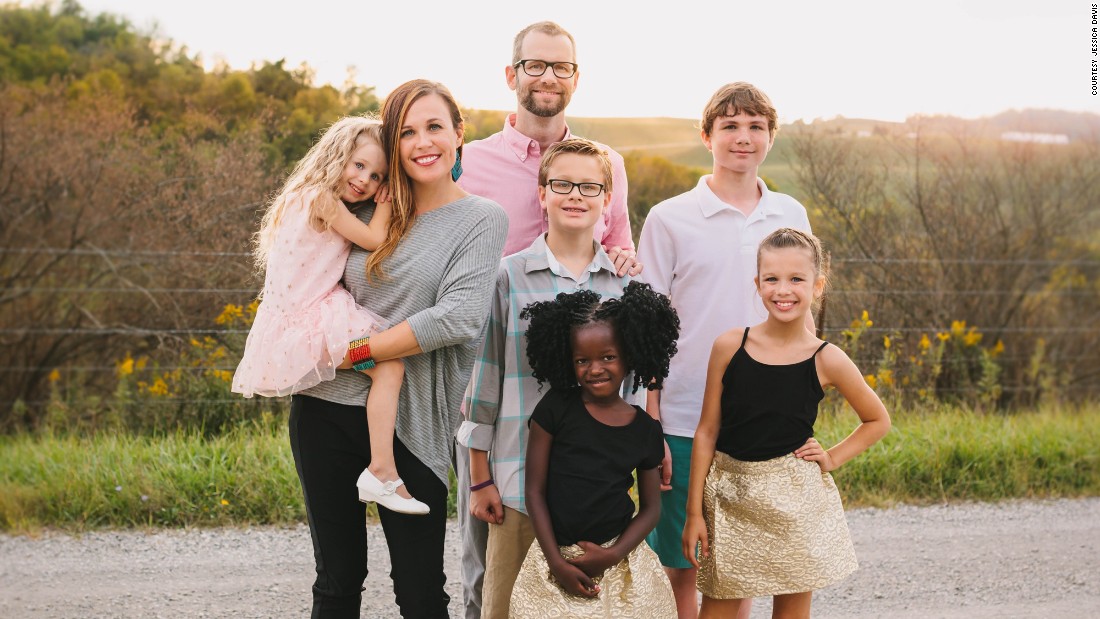
A CNN exclusive investigation uncovers what could be a child trafficking scheme for adoptions after one mom blew the whistle.
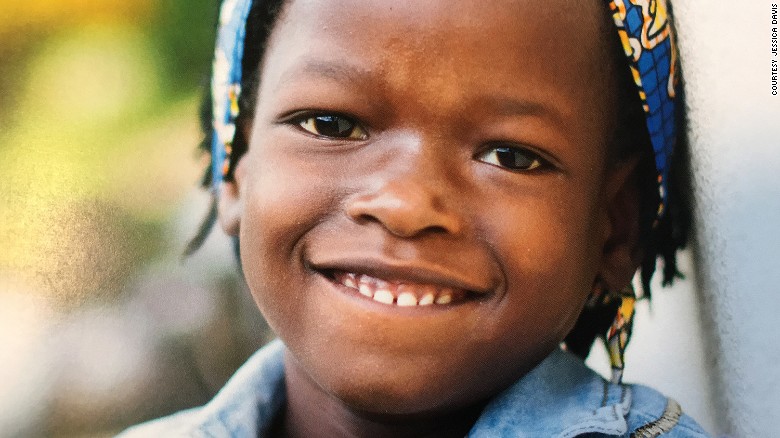
By the time the call ends, Mata's radiant smile has turned to sobs. "My mom was tricked," she says. "My mom was tricked."
Her mother told her it was never her intent to give Mata up for good -- that she'd been deceived. She had been told that Mata would be given a great educational opportunity if she was sent away but that she would one day return. That Mom would always be a part of her daughter's life.
At the time of that call, the Davises now believe, Mata wasn't an orphan at all but was still living at home with a mother who loved her. They believe she was pulled from her home and placed in the orphanage after the adoption agency found an American couple -- buyers, in a sense -- with money to adopt a child.
An investigation by CNN into this alleged trafficking scheme found that children are being taken from their homes in Uganda on the promise of better schooling, placed into orphanages even though they aren't orphans, and sold for as much as $15,000 each to unsuspecting American families. CNN's investigation discovered that multiple families were duped this way.
T he Métis National Council and the Government of Canada will be working collaboratively, Nation-to-Nation, to develop a process to engag...
To Veronica Brown
Veronica, we adult adoptees are thinking of you today and every day. We will be here when you need us. Your journey in the adopted life has begun, nothing can revoke that now, the damage cannot be undone. Be courageous, you have what no adoptee before you has had; a strong group of adult adoptees who know your story, who are behind you and will always be so.
OUR HISTORY
BOOK 5: Lost Children of the Indian Adoption Projects