BACK UP BLOG (no longer updating)

This blog was a backup for American Indian Adoptees blog
USE THE SEARCH BAR or SEARCH TOPICS at bottom of this blog

If you need support

Support Info: If you are a Survivor and need emotional support, a national crisis line is available 24 hours a day, seven days a week: Residential School Survivor Support Line: 1-866-925-4419. Additional Health Support Information: Emotional, cultural, and professional support services are also available to Survivors and their families through the Indian Residential Schools Resolution Health Support Program. Services can be accessed on an individual, family, or group basis.” These & regional support phone numbers are found at https://nctr.ca/contact/survivors/ . MY EMAIL: tracelara@pm.me

Search This Blog

Thursday, October 12, 2017

Evidence 1935 | Hopi Prisoners on the Rock


Sadly, this was taking place across North America. 
One group of 19 Hopi men were sent to the U.S. military prison on Alcatraz when they refused to give up their children.

READ:

Hopi Prisoners on the Rock


Hopi Indians on Alcatraz Island, courtesy nps.gov
 I wrote about this in my memoir ONE SMALL SACRIFICE.... Trace

Saturday, October 7, 2017

Judge rules in Sixties Scoop victims' favour

Marcia’s Vision for the Path Forward

Sixties Scoop survivor hopes federal settlement leads to healing

Raven Sinclair wants portion of money to go to counselling, healing retreats, culture camps

Raven Sinclair
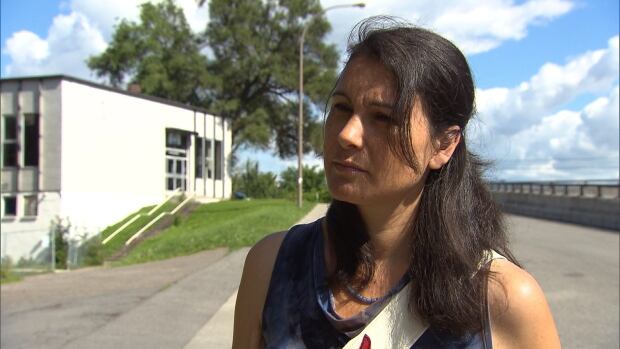
Raven Sinclair was taken from her mother at age four, along with her siblings. She hopes Friday's settlement helps fund ways to help people like her heal from their past trauma. (University of Regina)
143  shares
A Saskatchewan survivor says the federal government's settlement with Indigenous survivors of the Sixties Scoop — the details of which are expected Friday morning — has provoked mixed reactions within herself.
"A small bit of money for a lifetime of change and turmoil and in some instances pretty extreme trauma — I don't know if the compensation really matches," said Raven Sinclair, now a professor of social work at the University of Regina.
"But it's at least an overture that they're making."

Money expected for reconciliation

Multiple sources speaking on the condition of anonymity told CBC News on Thursday the settlement will include some $800 million in compensation, or between $25,000 and $50,000 for each claimant. Roughly $100 million will be dedicated to other reconciliation initiatives.
Carolyn Bennett, federal minister responsible for Crown-Aboriginal Relations and Northern Affairs, announced on Monday in addition to the $750 million earmarked for individual compensation, $50 million would be set aside for a foundation to provide aid and supports for Sixties Scoop survivors.
Another $75 million will be provided to cover legal fees accumulated over the years for the plaintiffs.
Conditions of the legal fees compensation, which is capped at $75 million, include the agreement that lawyers will not go back to the survivors to try and get more money out of them.
During the time period known as the Sixties Scoop, thousands of First Nations children were forced out of their homes and placed in non-Indigenous care between 1965 and 1984, which resulted in psychological harm that has dogged survivors into adulthood, according to an Ontario Supreme Court ruling.

'Endless ways' to bring survivors together

Sinclair, a member of the George Gordon First Nation in southern Saskatchewan who was taken from her mother at age four, knows what she'd like the $10-million reconciliation portion to fund.
"I want to see adoptees have the opportunity to access healing programs, whether that's individual counselling, group counselling, healing retreats, culture camps," she said.
"There's endless ways that we can bring people together and help them to deal with past traumas and find more effective ways of living."

Placing a dollar amount on trauma

Nakuset native women's shelter
Nakuset said if she knew her language and culture, she could pass the teachings on to her own children. For now, they have Cree names and that's a start, she said. (CBC)


Nakuset, a Cree woman from La Ronge who was taken from her family at age three and adopted to a family in Montreal, told CBC Radio's The Morning Edition the ruling will mean different things to different people.
"What we learned from the residential school pay outs is that those that weren't able to sort of -- if they weren't able to receive the moneys, then the money disappeared quite quickly," she said. "It didn't really help."
Nakuset questions how a dollar amount can be placed on loss of culture, trauma and loss of familial connection.
Nakuset is the executive director of the Native Woman's Shelter of Montreal.
For Nakuset, she said if she went back to her community, she doesn't think she would survive.
"I'm so urban — I don't speak the language. I don't know how to live off the land. I don't know how to fish. I don't know how to hunt. I don't know how to do beadwork; I don't know how to do any of the things I'm supposed to know how to do."
If she knew how to do those things, then the teachings could be passed on to her children. Nakuset's children have Cree names and that's a start for now, she said.

Apologies awaited

She's still waiting for an apology, one promised by Premier Brad Wall.
"To me an apology is a recognition of wrongdoing, and also ideally an apology is made because it's not going to happen again."
Indigenous leaders have also called on Prime Minister Justin Trudeau to formally apologize for the wrongs of the Sixties Scoop.

Nakuset shared her story in the anthology STOLEN GENERATIONS. Use the seach bar on this blog.

Canada to Pay Millions in Indigenous Lawsuit Over Forced Adoptions - The New York Times

Bennett said a final agreement still has to be reached, but the government has set aside $750 million for individual compensation. They've earmarked another $50 million for a foundation dedicated to reconciliation initiatives.
60s Scoop Deal 20171006 TOPIX
Chief Marcia Brown Martel, the lead plaintiff in an Ontario class action lawsuit related to the Sixties Scoop, drums out of Centre Block on Parliament Hill. (Adrian Wyld/Canadian Press)

Friday, October 6, 2017

Government to Announce Payout of $800M to Indigenous Victims of #60sScoop

Government to announce payout of $800M to Indigenous victims of ’60s Scoop
Sources say the agreement includes a payout of between $25,000 and $50,000 for each claimant.
The federal government has agreed to pay hundreds of millions of dollars to survivors of the ‘60s Scoop for the harm suffered by Indigenous children who were robbed of their cultural identities by being placed with non-native families, The Canadian Press has learned.
The national settlement with an estimated 20,000 victims, to be announced Friday by Crown-Indigenous Relations Minister Carolyn Bennett, is aimed at resolving numerous related lawsuits, most notable among them a successful class action in Ontario.
Confidential details of the agreement include a payout of between $25,000 and $50,000 for each claimant, to a maximum of $750 million, sources said.
In addition, sources familiar with the deal said the government would set aside a further $50 million for a new Indigenous Healing Foundation, a key demand of the representative plaintiff in Ontario, Marcia Brown Martel.
Spokespeople for both Bennett and the plaintiffs would only confirm an announcement was pending Friday, but refused to elaborate.
“The (parties) have agreed to work towards a comprehensive resolution and discussions are in progress,” Bennett’s office said in a statement on Thursday. “As the negotiations are ongoing and confidential, we cannot provide further information at this time.”
The sources said the government has also agreed to pay the plaintiffs’ legal fees — estimated at about $75 million — separately, meaning the full amount of the settlement will go to the victims and the healing centre, to be established in the coming months, sources said.
The settlement would be worth at least $800 million and include Inuit victims, the sources said. The final amount is less than the $1.3 billion Brown Martel had sought for victims of the Ontario Scoop in which at-risk on-reserve Indigenous children were placed in non-Aboriginal homes from 1965 to 1984 under terms of a federal-provincial agreement.
In an unprecedented class action begun in 2009, Brown Martel, chief of the Beaverhouse First Nation, maintained the government had been negligent in protecting her and about 16,000 other on-reserve children from the lasting harm they suffered from being alienated from their heritage.
Brown Martel, a member of the Temagami First Nation near Kirkland Lake, Ont., was taken by child welfare officials and adopted by a non-native family. She later discovered the Canadian government had declared her original identity dead.
Her lawsuit, among some 17 others in Canada, is the only one to have been certified as a class action. Her suit sparked more than eight years of litigation in which the government fought tooth and nail against the claim.
However, in February, Ontario Superior Court Justice Edward Belobaba sided with Brown Martel, finding the government liable for the harm the ‘60s Scoop caused. Belobaba was firm in rejecting the government’s arguments that the 1960s were different times and that it had acted with good intentions in line with prevailing standards.
While Bennett said at the time she would not appeal the ruling and hoped for a negotiated settlement with all affected Indigenous children, federal lawyers appeared to be trying to get around Belobaba’s ruling. Among other things, they attempted to argue individuals would have to prove damages on a case-by-case basis.
A court hearing to determine damages in the Ontario action, scheduled for three days next week, has been scrapped in light of the negotiated resolution, which took place under Federal Court Judge Michel Shore.
One source said some aspects of the many claims might still have to be settled but called Friday’s announcement a “significant” step toward resolving the ‘60s Scoop issue — part of the Liberal government’s promise under Prime Minister Justin Trudeau to make reconciliation with Canada’s Indigenous people a priority.
Jeffery Wilson, one of Brown Martel’s lawyers, has previously said the class action was the first anywhere to recognize the importance of a person’s cultural heritage and the individual harm caused when it is lost.
The Canadian Press

Thursday, September 28, 2017

Reporting on Sex Trafficking | Suzette Brewer's Important Work

Suzette Brewer

Suzette Brewer specializes in federal Indian law and social justice issues, having written extensively on the Indian Child Welfare Act, the Supreme Court and the environment for Indian Country Today Media Network. Her published books include Real Indians: Portraits of Contemporary Native Americans and America’s Tribal Colleges and Sovereign: An Oral History of Indian Gaming in America.

All Work

Tuesday, September 26, 2017

I Thought I was Alone | 60s Scoop Survivors


Todd Coon and his sister Patsy were “scooped” by child welfare authorities when they were just toddlers in the wake of a 1966 Winnipeg house fire. Coon’s father could made only one request — that his children be adopted together.
The pair were shuffled through foster homes over two years before they were adopted by a family in Ontario. For Coon, it was far from a happy childhood. “I seemed to be bullied because of my skin colour. I didn’t know why,” says Coon, now 53.
Coon was 11 before he understood that he was Indigenous and learned much later he was part of the “Sixties scoop” generation. Between the 1960s and 1980s, thousands of Indigenous children were adopted by white families. Like Coon, many found themselves with a foot in both cultures, but feeling alienated by both.
He will be among the 75 scoop survivors gathering in Ottawa this week from as far away as New Zealand, an event organized by National Indigenous Survivors of Child Welfare. In a way, it is a reunion of people who may not know each other, but who share the same scars.

READ: ‘I thought I was alone’: Sixties scoop survivors gather in Ottawa | Ottawa Citizen

Tuesday, September 19, 2017

The Surveillance of Cindy Blackstock

Surveillance. Turns out, we’ve invited it into our homes through digital assistants, connected toys and baby monitors.
LISTEN: I Spy With My Digital Eye

In this podcast episode, Dr. Cindy Blackstock who advocates for Native children in Canada is featured.
We have posted many articles on her on this blog.

READ:
Cindy Blackstock, Canada's Warrior for Children
CBC 8th Fire: Profile: Cindy Blackstock
Child Advocate Cindy Blackstock awarded damages
Government spies on advocate for Native children
Why is the federal government spying on Cindy Blackstock?
When does a life-long advocate for aboriginal children become an enemy of the state?
The answer, it would seem, is when you file a human rights complaint accusing your government of willfully underfunding child welfare services to First Nations children on reserves.
Accusing your government, in other words, of racial discrimination.
That’s what Blackstock, as executive director of the First Nations Child and Family Caring Society of Canada, did in 2007.

Thursday, September 14, 2017

14th Gathering for Our Children & Returning Adoptees Pow Wow


Please share far and wide. Adoptees have come as far away as Alaska. Thank you!

Greetings everyone!

It's that time of year again when we call out for our relatives who are
making their way back to the circle. We also encourage birth
mothers/fathers and relatives to be part of this celebration of life and
healing.

Dancers! Please come dance and welcome our relatives back to our circle.


Adoptees/formerly fostered individuals, birth relatives, foster
parents, foster youth, adoptive parents and your children - this pow wow
is for you............come and celebrate and let us celebrate with you!


1. Adoptees/formerly fostered individuals and birth relatives are
invited to gather in the auditorium on the 2nd floor of the Indian
Center. There we will meet and visit with other adoptees. We will meet
at 10:00 a.m. - 2 hours before the 1:00 grand entry.
2. The ceremony
for adoptees/fostered individuals and others who wish to be part of the
ceremony, will be sometime in the afternoon session around 3:00.
3.
The meeting room will be open again after the ceremony so we can
process and talk about the ceremony or whatever else may be on your
mind.
4. Sometime after the evening grand entry there will be an
honor song for all our Young Relatives who have experienced foster care.
5. There will be an honor song for all our foster and adoptive parents and their families.


14th Annual
Gathering for Our Children & Returning Adoptees Pow wow
November 4, 2017


MINNEAPOLIS AMERICAN INDIAN CENTER
1530 EAST FRANKLIN AVENUE, MINNEAPOLIS, MN
www.maicnet.org for directions


Wednesday, August 30, 2017

Intergenerational Trauma: Onigamiising: Seasons of an Ojibwe Year (new book)

‘Onigamiising’: an Ojibwe Woman’s Life

Linda LeGarde Grover’s ‘Onigamiising’ is lyrical, insightful and very personal

Now a grandmother in the fourth season of her life, Linda LeGarde Grover, Bois Forte Band of Ojibwe, has crafted 50 short essays that address what she characterizes as “contemporary and historical Ojibwe life in northeastern Minnesota from my perspective as an Ojibwe woman.” Each is a finely nuanced reflection on the spiritual and the mundane, the everyday and the extraordinary, the seasons of the year and the seasons of a life.
Linda LeGarde Grover
Courtesy Brett Groehler
Linda LeGarde Grover

“Our time on Mother Earth will end, but we mindimooyag dash akiiwensii know that when our seasons have completed there is continuity beyond our existence as individuals. Biboon [winter] leads that greater life to what always follows, which is another spring [Ziigwan] and thus the continuation of the story,” explains Grover in her introductory observations.
Written over ten years, the volume of essays is titled Onigamiising: Seasons of an Ojibwe Year (University of Minnesota Press, October 2017). Onigamiising is the Ojibwe word for Duluth, where Grover was born, as were her grandparents—and her grandchildren. A great part of what she is writing about is continuity—of family, language, customs and culture. An important preserver of that continuity for the Ojibwe is storytelling, of which this collection is a superb example.
Considering hankies, moccasins, dream catchers and urban chickens, Grover escorts us through her personal landscape, recalling a childhood summer [Niibin] graced by an ersatz vehicle made from the discarded frame of a worn-out baby buggy, a visit to the temperature-controlled Tweed Museum of Art on a hot and steamy afternoon, the gatherings and rituals of women: wedding showers, the collective sewing of ribbon skirts, and a tea party/luncheon/baby shower arranged by a plethora of girl cousins—all in the service of Mino-bimaadiziwin, the living of a good life, a concept that is “at the foundation of traditional Anishinaabe teaching and learning,” she writes.
Grover talks about the trauma of the boarding school era between 1879 and 1934, when most Indian children were removed from their homes, and notes that the children were not the only ones to suffer grievous harm.
She refers back repeatedly to the federal Indian boarding school system that damaged so many lives and led to what she prefers to call intergenerational, rather than historical, trauma. And she delights in writing about the children, grandchildren, cousins and relatives whom she has had the privilege of helping to raise—all in the gentlest possible lyrical prose that is a joy to read.
“The privilege and blessing of raising children were cruelly denied, which hurt tribes and communities far beyond the family unit,” she writes. “The heart’s blood of a nation is its families, and the future of a nation is its children.”

Onigamiising: Seasons of an Ojibwe Year will be published in early October.

Monday, August 21, 2017

Tribal Justice | POV | PBS

Tribal Justice | POV | PBS: In Tribal Justice, two Native American judges reach back to traditional concepts of justice in order to reduce incarceration rates, foster greater safety for their communities, and create a more positive future for their youth. A co-production of Vision Maker Media and American Documentary | POV.


TONITE

Tribal Justice | POV | PBS

Tribal Justice | POV | PBS: In Tribal Justice, two Native American judges reach back to traditional concepts of justice in order to reduce incarceration rates, foster greater safety for their communities, and create a more positive future for their youth. A co-production of Vision Maker Media and American Documentary | POV.


TONITE

Pikwakanagan host 30th Pow Wow

This year's Pow Wow was dedicated to the Scoop survivors of the 1960s. The Sixties Scoop refers to the practice of taking, or “scooping up,” children of Aboriginal peoples in Canada from their families for placing in foster homes or adoption beginning in the 1960s and continuing until the late 1980s. An estimated 20,000 aboriginal children were taken from their families and fostered or adopted out to primarily white middle-class families, some within Canada and some in the U.S. or Western Europe. Earlier this year, Ontario Superior Court Justice Edward Belobaba ruled that the federal government failed in its common law duty of care to failed to take reasonable steps to prevent thousands of on-reserve children who were placed with non-native families from losing their indigenous heritage.

READ: Pikwakanagan host 30th Pow Wow | Pembroke Daily Observer

Sunday, August 20, 2017

Minnesota law thwarts adoptees' quest to know their roots


A national movement led by adoptees has improved access to adoption records in 19 states since 1997. This year, thousands of people in New Jersey and Pennsylvania will see their original birth certificates for the first time. Adoptees in Missouri and Arkansas will get that chance starting next year.
When children are adopted in Minnesota, the state creates a new birth certificate with the child’s adopted name. Adoptees who have requested original birth certificates from the state Department of Health are often surprised to get a call back from the private agency that handled their adoption.
That’s because Minnesota law requires that agencies try to find the birth parents before honoring an adoptee’s request for original birth certificates. About 5 percent of birth parents have notified the state ahead of time about their preferences. Ninety percent of them said they welcome their names being known.


What the hell is wrong with you Minnesota?

Source: Minnesota law is thwarting adoptees' quest to learn roots - StarTribune.com

Thursday, August 17, 2017

Carlisle report: Remains don't match - not Little Plume

Students at the Carlisle Indian Industrial School in Pennsylvania, circa 1900.

Exhumed remains don't match 19th century Indian child, in fact contains two unidentified sets
CARLISLE, Pa. — According to the Associated Press, the remains unearthed at a Pennsylvania Army base don't match the Native American child thought to have been buried there after dying at the government-run Carlisle Indian Industrial School in the 19th century, authorities said Friday.

The U.S. Army said Friday the grave thought to contain 10-year-old Little Plume, also called Hayes Vanderbilt Friday, doesn't match his age, and in fact contains two sets of unidentified remains.
The remains of 15-year-old Little Chief, also known as Dickens Nor, and 14-year-old Horse, also called Horace Washington, do match and will be returned to a Northern Arapaho delegation on Monday. They'll be reburied in Wyoming's Wind River Reservation.

The grave with Little Plume's headstone contains remains from a teenage male and another person of undetermined age or sex. They will be reinterred at the site.

The government-run Carlisle Indian Industrial School, founded by an Army officer, took drastic steps to separate Native American students from their culture, including cutting their braids, dressing them in military-style uniforms and punishing them for speaking their native languages. They were forced to adopt European names.

More than 10,000 Native American children were taught there and endured harsh conditions that sometimes led to death from such diseases as tuberculosis.

The exhumations began early Tuesday at the post cemetery on the grounds of the Carlisle Barracks, which today houses the U.S. Army War College.

Seventeen members of the Northern Arapaho tribe, including tribal elders and young people, came to Carlisle to take part in the process. In 2016, the tribe had formally requested the bodies be returned to them.

"The U.S. Army honored its promise to reunite Native American families with their children who died more than 100 years ago at the Carlisle Indian Industrial School," Army National Military Cemeteries Executive Director Karen Durham-Aguilera said in a statement. "We are thankful to the Northern Arapaho families for their patience and collaboration during this process."

Editors Note: This is so wrong. And we are expecting them to find more remains that are not officially registered.

Tuesday, August 8, 2017

Billings Gazette Piece on the #ICWA Court in Yellowstone County

The most difficult cases in Montana District Courts involve children who have been abused or neglected in their own homes.
When children are in danger, judges must decide where and with whom they will live, making rulings that could affect the children for life.
When Native American children are involved, the legal situation is more complex. In addition to state law, the federal Indian Child Welfare Act must be applied, and the child’s tribe is part of the decision making.
At any given time, the number of Native American children in Montana’s foster care system is much higher than their 10 percent share of the total child population would suggest.
In Yellowstone County last year, 43 percent of the 550 civil child abuse and neglect cases filed involved children who are tribal members or eligible for membership. But there hasn’t been court resources dedicated specifically to improving outcomes for ICWA children — until now.

READ: Gazette opinion: Bringing Indian foster kids home | Editorial | billingsgazette.com

Monday, August 7, 2017

Returning Home


American Indian Children Buried in Carlisle for a Century to be Disinterred


Published August 7, 2017


Editor’s Note: This article was published on PENNLIVE. 


CARLISLE, PENNSYLVANIA – It has been more than a century, but they are finally going home.


Three Native American children, buried at what is now the Carlisle Barracks, will be disinterred on Tuesday,
starting the process of returning their remains to their rightful home
in Wyoming, capping decades of efforts to get them there.


The three children are members of the Northern Arapaho Nation and are
among the 200 who died when they were students at the Carlisle Indian
Industrial School.


Read more …


Returning Home


American Indian Children Buried in Carlisle for a Century to be Disinterred


Published August 7, 2017
Editor’s Note: This article was published on PENNLIVE. 

CARLISLE, PENNSYLVANIA – It has been more than a century, but they are finally going home.
Three Native American children, buried at what is now the Carlisle Barracks, will be disinterred on Tuesday, starting the process of returning their remains to their rightful home in Wyoming, capping decades of efforts to get them there.
The three children are members of the Northern Arapaho Nation and are among the 200 who died when they were students at the Carlisle Indian Industrial School.
Read more …

Thursday, August 3, 2017

Remembering our friend Cynthia Lammers


Cynthia Lammers (center photo)


  • Kearney resident, 51


FUNK — Cynthia S. “Cindy” Lammers, 51, of Kearney died Tuesday, July 11, 2017, near Funk.

Private family memorial services will be later.

There will be no visitation. Horner Lieske McBride & Kuhl Funeral and Cremation Services is in charge of arrangements.

——

Cindy
was born on Feb. 10, 1966, in Rosebud, S.D. She grew up in Kearney and
graduated from Kearney High School in 1984. She then attended Central
Community College. She married Mike Splitter in Kearney on Aug. 14,
1993. They later divorced.

Cindy worked at Mount Carmel Home and Rehabilitation Center in Kearney. She enjoyed fishing and camping.


Surviving relatives include her father, LeRoy K.
Lammers of Kearney; sister, Shellie Ingersoll and her husband, Odee, of
Kearney; stepbrothers, John Moss and Jeff Moss, both of Fort Wayne,
Ind., David Blankenship and his wife, Sandy, of Alliance and Johnny
Blankenship and his wife, Jennifer, of Lincoln; also many nieces,
nephews, aunts and uncles.

Cindy was preceded in death by her
mother, Norma Lammers; brother, Mitch Lammers; grandparents;
stepbrother, Earl Soden; and birth mother, Amy Standing Soldier-Busch.

Memorials are suggested to the Red Cloud Indian School in Pine Ridge, S.D.

Visit www.hlmkfuneral.com to leave a tribute or message of condolence.


Photo from the memorial on August 4 (Jessica photo)

Cynthia (Sherry Standing Soldier of Rosebud) contributed her story to the book CALLED HOME: THE ROADMAP, published last year. Our hearts are heavy... Cynthia had finally found her brothers who were also adopted out... Trace 


A roadside marker where she was killed (Family Photo)


Remembering our friend Cynthia Lammers

Cynthia Lammers (center photo)

  • Kearney resident, 51

FUNK — Cynthia S. “Cindy” Lammers, 51, of Kearney died Tuesday, July 11, 2017, near Funk.
Private family memorial services will be later.
There will be no visitation. Horner Lieske McBride & Kuhl Funeral and Cremation Services is in charge of arrangements.
——
Cindy was born on Feb. 10, 1966, in Rosebud, S.D. She grew up in Kearney and graduated from Kearney High School in 1984. She then attended Central Community College. She married Mike Splitter in Kearney on Aug. 14, 1993. They later divorced.
Cindy worked at Mount Carmel Home and Rehabilitation Center in Kearney. She enjoyed fishing and camping.
Surviving relatives include her father, LeRoy K. Lammers of Kearney; sister, Shellie Ingersoll and her husband, Odee, of Kearney; stepbrothers, John Moss and Jeff Moss, both of Fort Wayne, Ind., David Blankenship and his wife, Sandy, of Alliance and Johnny Blankenship and his wife, Jennifer, of Lincoln; also many nieces, nephews, aunts and uncles.
Cindy was preceded in death by her mother, Norma Lammers; brother, Mitch Lammers; grandparents; stepbrother, Earl Soden; and birth mother, Amy Standing Soldier-Busch.
Memorials are suggested to the Red Cloud Indian School in Pine Ridge, S.D.
Visit www.hlmkfuneral.com to leave a tribute or message of condolence.


Photo from the memorial on August 4 (Jessica photo)
Cynthia (Sherry Standing Soldier of Rosebud) contributed her story to the book CALLED HOME: THE ROADMAP, published last year. Our hearts are heavy... Cynthia had finally found her brothers who were also adopted out... Trace 
A roadside marker where she was killed (Family Photo)

Tuesday, August 1, 2017

Am I Indian?

Tale of Discovery  ‘Am I Indian?’: A young man’s journey to reclaim identity
Growing up, Matthew Shorting knew that he was Indigenous — but didn’t know much more than that. Join Matthew on his journey of discovery as he seeks to find out more about his Indian heritage.
For the entire NewFire article visit here.


more stories from this episode


Thursday, July 27, 2017

Sen. Udall Holds Listening Session on Human Trafficking in Indian Country

Native News Online Staff
Vice Chair of the U.S. Senate Committee on Indian Affairs Tom Udall - D - New Mexico

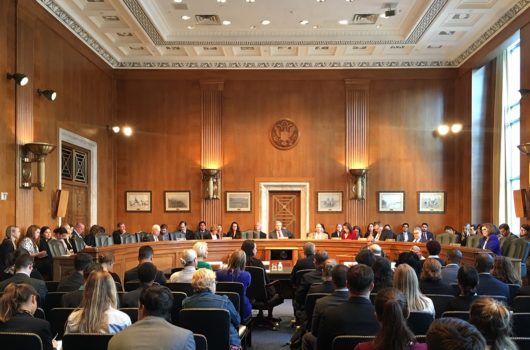
WASHINGTON — Today, U.S. Senator Tom Udall, vice chairman of the Senate Committee on Indian Affairs, held a stakeholder meeting on ways to more effectively prevent, prosecute, and improve data collection on human trafficking in Indian Country. Federal data on human trafficking in Native communities is limited, but available information suggests human trafficking in the United States frequently targets vulnerable populations, which would include Native Americans who disproportionately face high rates of poverty and trauma. In order to address the shortage of information, the Indian Affairs committee requested that the Government Accountability Office (GAO) seek data on the prevalence of human trafficking in Native communities and research the frequency with which law enforcement agencies have encountered it, the services that are available to victims, demographic information, efforts to increase prosecutions, and other federal initiatives. 
 
Udall released the following statement:
 
"Human trafficking affects every community in the United States – regardless of age, gender, ethnicity and socio-economic background. And because Native Americans disproportionally face high rates of poverty and trauma, they are especially vulnerable and frequent targets of human trafficking. For years, Tribal leaders and Native activists have raised the issue of human trafficking with Congress. By sharing their powerful and often heart-breaking stories, they have elevated our awareness about the need for more information and more resources to combat the spread of human trafficking in Indian country.  
 
"But the fact is that the federal government knows very little about the rates of human trafficking on Tribal lands. And it knows even less about human trafficking of individual Native Americans. After reviewing these GAO reports, it is clear that the true extent of human trafficking in Indian Country remains unknown. But it is also clear to me that the federal government could do more to help Native victims who are slipping through the cracks. Congress must take a long, hard look at how federal agencies collect and monitor data on this issue, ensure their accountability, and then work to provide federal and Tribal law enforcement agencies with enough resources to keep Indian Country safe. The administration’s proposed cuts to federal law enforcement agencies and Tribal programs would only further strain public safety initiatives on Tribal lands. Instead of jeopardizing Native communities by cutting policing and justice budgets, Congress should look for new ways to get funding resources to Tribes.
 
"Like with other crimes in Indian Country, addressing human trafficking will require Congress to look at and pass legislation that addresses issues of jurisdiction and inter-agency cooperation, and I’m hopeful that we can work together to provide Tribes with more resources to combat human trafficking and ensure that all Native victims of crime get the support they so desperately need."

Wednesday, July 26, 2017

The REAL ID ACT is already here?


by Lauren Hannula on


The REAL ID Act: Are You Ready for a National ID?


WI REAL ID 300x192 The REAL ID Act: Are You Ready for a National ID?
Sample of the new REAL ID for Wisconsin

People throughout the country might see some big changes happening to their driver’s licenses and state IDs. As of February 2013, 19 states have demonstrated compliance with the REAL ID Act, a piece of legislature that imposes much stricter measures on how people can obtain a driver’s license, and sets more thorough standards as to what will be displayed on them. Called the new “national ID,” the REAL ID Act has gained some traction in light of recent events like the Boston Marathon bombings.
But what exactly is the REAL ID Act, and how will it affect drivers across the nation?

The History of REAL ID

After 9/11, the federal government began to look at ways to increase security surrounding state identification cards and driver’s licenses, in an attempt to prevent further terrorism and/or unlawful entry into and out of the country.
In 2005, the House of Representatives passed a bill into law called the REAL ID Act. This Act would set certain federal standards upon all driver’s licenses, which are currently regulated by each individual state. After being passed into law, the bill was tabled until 2007, when it was announced that the federal enforcement of the act would be postponed for a period of two years. However, many state governments were slow to support this act, feeling that it not only infringed upon states’ rights handed to them by the 10th Amendment, but also created unnecessary cost to taxpayers in order to implement the change. It wasn’t until this year that the federal government announced that all states would need to be in compliance with the REAL ID Act by the end of 2017.

How IDs Will Be Affected

The REAL ID Act sets forth new federally mandated requirements for all state driver’s licenses and ID cards. The Department of Homeland Security (DHS) has set standards not entirely dissimilar from the requirements already in place for most states throughout the country. On each ID, the following information must be present:
  • Full legal name
  • Residential address
  • Birth date
  • Gender
  • Driver’s license/identification card number
  • Digital front-facing photograph
  • Signature
Driver’s licenses and IDs must now also include a common barcode and security devices to prevent any tampering with or counterfeiting of the card, and must display a star in the upper right-hand corner, signifying that your identification has been approved by the TSA and your identity has been verified. There are also new requirements put in place to obtain an ID or license; all applicants must present the following documents during the application process:
  • A photo ID, or non-photo ID that contains the applicant’s full legal name and birth date
  • Valid birth certificate
  • Social Security number
  • Proof of legal U.S. citizenship, OR proof of lawful admittance into or temporary residence within the U.S.
Lastly, each state must also agree to share its database of licensed citizens and drivers with all other states, including every piece of data on the cards themselves (name, address, birth date, etc.), along with all driving records and driver histories of everyone licensed to drive in the state.

The Pros and Cons of REAL ID

Proponents of the REAL ID Act cite its advantages to national security. These measures ensure that non-citizens are unable to obtain a state-issued ID or driver’s license, and also prevent anyone without one from boarding aircraft or entering high-security locations. Similarly, these IDs would place the United States in the company of nearly 100 other countries in the world (including most European countries) that have some form of a national ID card.

Cost, Freedom, and Privacy Concerns

However, many states oppose the implementation of the REAL ID Act based upon the estimated cost. The Act is a unfunded mandate, meaning that while the requirement is federally issued, the entire cost of recreating and re-issuing millions of licenses and ID cards would fall solely upon the states – without any financial assistance from the federal government. States are therefore required to raise their licensing fees in order to make up the added cost… putting an extra financial burden upon the licensee, who may simply be attempting to transfer one valid license into the REAL ID format.
Once the Act is fully implemented, residents without the new mandated ID will also be barred from boarding airplanes, entering nuclear facilities, and performing any other actions that require “official” federal identification. Citizens will need to provide a valid U.S. passport or permanent residency card in place of the new ID.
Another major concern is the idea of personal information being gathered and stored into what some are calling a “national database.” In order for the DHS and TSA to validate a citizen’s identity, they need to collect and store the information that otherwise would be solely kept by individual states. Many are worried about the “Big Brother”-esque implications this may have to personal privacy.

Major Effects Upon Immigrants

Immigrants and foreign nationals working in the United States are similarly worried about how the REAL ID Act may affect their abilities to live and work within the country. As the requirements for obtaining a new ID card are much more stringent than what some states may currently employ, foreigners without legal proof of entry into the country or without a Social Security number will be barred from obtaining a driver’s license, limiting their means of travel throughout country by a huge margin and possibly forcing them to return to their home country to renew their ID. Then again, supporters of the REAL ID Act cite this as an example of the system working properly, as it ensures that the only people working and traveling within the U.S. are those that the government has officially allowed to be here.

Immigration, Adoptees and The Identity Police: The REAL ID ACT of 2005

By Trace Hentz, Blog Editor

Have you tried to get a driver's license recently? I spoke to a cousin in Illinois who was not given a driver's license (renewal) but a piece of paper instead. She is not adopted. The Illinois Motor Vehicles people told her they are doing a background check first then will mail it to her. (My cousin has lived in Illinois all her life and she is over 60.)
WHAT IS HAPPENING?
We have seen this coming. (I was worried in 2005 when I went to get a passport and had to mail them my fake birth certificate.)
In 2011, Leland Morrill wrote this Facebook post on his concerns about the lack of original birth certificates for many Native adoptees like him. Leland did not have a birth certificate but a Certificate of No Birth Record.
READ HERE 

Leland contributed to the book series Lost Children of the Indian Adoption Projects. In the first book TWO WORLDS he shared he had not found his mother or father and was adopted by Mormons. In the second book CALLED HOME he found his mother's family. In STOLEN GENERATIONS, the third book, he found and met all his clans and his father.

Each year for an adoptee, information can drip drip drip and finally come. It's not a fast process. Each piece of paper helps.
You have two parents and two family trees. Never give up hope of finding the paperwork and the people.

ALSO::: If you adopted a child, request their adoption file as soon as possible. If you signed these documents you have the right to have a certified copy of the adoption proceedings and court documents. You and your adopted child will need ALL this information, when they reach adulthood. If you adopted a child from another country, did you get them their US citizenship records? If not, they could be deported. It is that serious.

If you do not have documentation of any kind, call the local FBI right now and explain your situation and remind them of the REAL ID ACT - and how it affects you as an adoptee.


This is what Leland shared about the REAL ID ACT of 2005:

REAL ID ACT of 2005 passages affecting me and possibly other Native Americans:
(pg 42) TITLE II—IMPROVED SECURITY FOR DRIVERS’ LICENSES AND PERSONAL
IDENTIFICATION CARDS
(pg 43) Minimum document requirements:
(pg 44) (2) The person’s date of birth.
(pg 45) (B) Documentation showing the person’s date of birth
(pg 46) (C) TEMPORARY DRIVERS’ LICENSES AND17 IDENTIFICATION CARDS

(i) IN GENERAL.—If a person presents evidence under any of clauses (v) through (ix) of subparagraph (B), the State may only issue a temporary driver’s license or temporary identification card to the person. (ii) EXPIRATION DATE.—A temporary driver’s license or temporary identification card issued pursuant to this subparagraph shall be valid only during the period of time of the applicant’s authorized stay in the United States or, if there is no definite end to the period of authorized stay, a period of one year.
There will be undocumented Native Americans who will find through their respective state Department of Motor Vehicles (DMV) they no longer have the eligible documentation to maintain or be issued an Identification Card or Drivers License.  Some will be issued a temporary "paper" 1 to 6 month extension, up to one year, as per The Real ID ACT of 2005.  Others will not.  Once the State issued temporary extension, Identification, Drivers License expires, these Native Americans (me included) will become undocumented, thus illegal with no papers.
One of the main reasons for me setting up this Facebook page is because I never received correspondence from Representative Sensenbrenner. In addition, through 22 years of research, my own research has resulted in obtaining a State of Arizona Certificate of No Birth, keep in mind the Navajo Nation adopted me out in Chinle, Arizona.
My State of Arizona "Certificate of No Birth," was issued December 21, 2010, the result of my continuous research since September 07, 1989.
So far, with the help of my close friends, and people willing to help, my own financing, tens of thousands of US dollars later, I now have a State of Arizona Certificate of No Birth and a second State issued 6 month temporary paper Drivers License expiring July 13, 2011. My United States of America CITIZENSHIP expires on that date, again JULY 13, 2011. By virtue of the REAL ID ACT of 2005, States may only issue temporary Drivers Licenses and Identification for those who currently have one for an additional year. I am one of those cases.

Representative Sensenbrenner's Real ID ACT of 2005 will make me an ILLEGAL ALIEN who cannot work, and cannot access medical care, obtain a credit card, bank account, vote, and any right that is afforded a United States Citizen because of not having a current State issued Identification Card or Drivers License. My citizenship expires July 13, 2011 after my second 6 month temporary State issued Drivers License does.  (Leland was able to get this resolved.) Commissioner Chai Feldblum delivered a copy of my version of the Real IS Act to Jim Sensenbrenner.. The same day I talked to Chai Feldblum at UCLA School of Law, the Navajo Nation called me to tell me they were going to issue my Birth Certificate.

*** My Final Thoughts

The Department of Homeland Security (DHS) originally estimated that REAL ID will cost $23.1 billion over 10 years. DHS planned to extend the deadline in 2013. Now it's 2017 and states must put it into effect.
In 2017, tell your governor to boycott it!  If you are an adoptee, explain why you cannot access your original birth certificate (if you live in a state with sealed adoption records.) Tell them what you stand to lose!
When an adoption is finalized, a new birth certificate for the child is customarily issued to the adoptive parents. The adoptive parents names are listed on our amended birth certificate.  The original birth certificate is then sealed and kept confidential by the State registrar of vital records. In the past, nearly all States required a court order for adoptees to gain access to their original birth certificates. In approximately 26 States, the District of Columbia, American Samoa, Guam, and Puerto Rico, a court order is still required.

Read more about your state's adoption laws here (2009 report):
www.childwelfare.gov/systemwide/laws_policies/statutes/infoaccessap.cfm

Lawmakers ignorance about adoptees is not only dangerous, it's another SCARY chapter of adoption culture!
The Identity Police are asking for our identification and they are the ones withholding it for adoptees?
If anyone reading this blog has been denied a driver's license because you are an adoptee and do not have a copy of an original birth certificate  - please email me: laratrace@outlook.com.  You can also read about Navajo adoptee Leland Morrill on this blog - use the search bar to find his posts. He had difficulty replacing his lost driver's license...but was successful and is now an advocate for all of us adoptees.


Human Trafficking in Indian Country

The General Accounting Office has published a report, HUMAN TRAFFICKING: Information on Cases in Indian Country or that Involved Native Americans.
Human trafficking—the exploitation of
a person typically through force, fraud,
or coercion for such purposes as
forced labor, involuntary servitude or
commercial sex
—is occurring in the
United States and
involves vulnerable
populations. Native Americans are
considered a vulnerable population
because of high rates of poverty and
abuse, and other factors. GAO was
asked to research human trafficking
taking place in Indian country and
trafficking of Native American persons
regardless of where they are located in
the United States
.

PDF

NOTE: If you are an adoptee and do not have papers, and your adoptive parents have died CONTACT THE FBI immediately. Many adoptions were done by private attorneys and you could be a victim of human trafficking and were sold into adoption. 

https://www.uscis.gov/humanitarian/victims-human-trafficking-other-crimes
 

Wednesday, July 12, 2017

TRIBAL JUSTICE DOCUMENTARY: reexamine the current definition of justice in America


New PBS Documentary on Native American Judges Focuses on Rehabilitative Justice

"We are village people. We have village values. And those values compel us to take care of each other, our families and our country," says Abby Abinanti, chief judge of the Yurok Tribal Court and the first Native American woman admitted to the State Bar of California. Tribal Justice spotlights tribal courts that incorporate indigenous customs and beliefs into their justice systems. The film follows Abby Abinanti and Claudette White, chief judges in two of the more than 300 tribal courts across the country, as they navigate cross-jurisdictional issues in their courts and communities.


Tribal Justice has its national broadcast premiere on the PBS documentary series POV (Point of View) on Monday, August 21, 2017. POV is American television's longest-running independent documentary series, now in its 30th season.  


White is the chief judge of the Quechan Tribal Court in the Southern California desert. She says the affiliated tribe has been "vastly diminished," but never removed from its homeland. "We have a lot of social ills in our community based on our location and the limitation to services," she says. "In my capacity as chief judge, what I'm fighting for is our people, our independence, our sovereignty, our existence."

White sees Abinanti as a mentor, and both women are focused on restoring their communities rather than punishing offenders. The Yurok and Quechan tribes are the two largest in California. Each faces its own unique issues, but Abinanti and White share the goal of increasing safety and decreasing incarceration in an effort to dismantle the school-to-prison pipeline. Both judges are passionate about preserving their cultures and creating new pathways to justice for families dealing with historical trauma and intergenerational addiction.

"You guys could be leaders in our community or you could help destroy our community," White tells two teenage boys in her court.

Studies show that rural areas and American Indian reservations are plagued by the manufacturing, trafficking and use of crystal methamphetamine. Reservations are targeted by non-Native drug cartels. Native Americans have the highest meth usage of any ethnic group in the nation, resulting in extremely high crime and incarceration rates. Abinanti remarks, "The state has a lot of responsibility for all the people. I have responsibility to one set of people-6,000 Yuroks and their families. And that's what I'm responsible for: for that and for this land."

Viewers first meet Taos Proctor, a large and gregarious young man, in Abinanti's tribal court in 2013. While out on parole from San Quentin State Prison, Proctor was arrested with methamphetamine on his person; he is facing a third-strike conviction and 25 years to life in prison. Over two years, the film follows Abinanti and her staff as they take on Proctor's case and help him to complete court programs and rebuild his life.

A thousand miles to the south, White invokes the Indian Child Welfare Act of 1978 to reunite an autistic and epileptic 9-year-old boy with his family. She also takes on a more personal case when she becomes the legal guardian to her troubled teenage nephew, Isaac Palone. Palone has recently left a group home and faces two felony charges for breaking into cars; his case is in state court rather than tribal court, and he is at risk of beginning a life shuttling in and out of prison.


Tribal Justice contradicts the entrenched mainstream narrative that depicts Native Americans as locked in hopeless circumstances as their tribes vanish. Abinanti and White's struggles and triumphs tell a different story, one of strong female leaders working alongside their people to affirm tribal sovereignty and break free of the systems of poverty and inequality confronting Native Americans today.

Director Anne Makepeace says that she was immediately moved by the two judges upon meeting them in 2013 and felt that audiences needed to know about their work. "I realized the film would educate a broad audience about something few Americans know about-tribal courts-and that it could have a tremendous positive impact on our criminal justice system."

"Tribal Justice challenges viewers to reexamine the current definition of justice in America," says POV executive producer Justine Nagan. "Through the often personal experiences of two powerful women striving to elevate their people through the tribal court process, Anne Makepeace gives us the opportunity to watch a rarely seen justice system effectively at work."

CLICK OLDER POSTS (above) to see more news

CLICK OLDER POSTS  (above) to see more news

MEGWETCH THANK YOU

HUGE Thank you for visiting this blog and sharing this with your kin. It's appreciated. Contact Trace anytime! Use the form below.

BOOKSHOP

Please use BOOKSHOP to buy our titles. We will not be posting links to Amazon.

Popular Posts

To Veronica Brown

Veronica, we adult adoptees are thinking of you today and every day. We will be here when you need us. Your journey in the adopted life has begun, nothing can revoke that now, the damage cannot be undone. Be courageous, you have what no adoptee before you has had; a strong group of adult adoptees who know your story, who are behind you and will always be so.

OUR HISTORY

OUR HISTORY
BOOK 5: Lost Children of the Indian Adoption Projects