BACK UP BLOG (no longer updating)

This blog was a backup for American Indian Adoptees blog
USE THE SEARCH BAR or SEARCH TOPICS at bottom of this blog

If you need support

Support Info: If you are a Survivor and need emotional support, a national crisis line is available 24 hours a day, seven days a week: Residential School Survivor Support Line: 1-866-925-4419. Additional Health Support Information: Emotional, cultural, and professional support services are also available to Survivors and their families through the Indian Residential Schools Resolution Health Support Program. Services can be accessed on an individual, family, or group basis.” These & regional support phone numbers are found at https://nctr.ca/contact/survivors/ . MY EMAIL: tracelara@pm.me

Search This Blog

Saturday, March 5, 2016

Historic agreement gives tribe foster care control


Jurisdiction over child welfare to transfer from state to Tlingit and Haida Central Council


By LISA PHU | JUNEAU EMPIRE| March 3, 2016

When children are taken out of their homes due to neglect or abuse, they’re under the responsibility and jurisdiction of the State Office of Children’s Services. 

Now, through an agreement signed Wednesday night at the Elizabeth Peratrovich Hall between the State of Alaska and Central Council of the Tlingit and Haida Indian Tribes of Alaska, the Central Council will be able to take over child welfare cases of tribal children.

Instead of going through the state court system, these cases will go through the tribal court system. Instead of state workers overseeing the cases, tribal case managers will work with families. Instead of the state licensing the foster homes, Central Council will recruit and license tribal foster homes and be reimbursed by the state for the cost of foster care placement.

“This truly is a government-to-government agreement that recognizes that tribes are uniquely and supremely and ultimately qualified to be able to meet the needs of tribal families,” said Valerie Davidson, Department of Health and Social Services Commissioner. “That’s not new. And quite frankly — if I may as an Alaska Native — we have known that for thousands of years.” 

Barbara Dude is a child welfare specialist with Central Council’s Tribal Family & Youth Services. She said parents trying to get their children back will have a better working relationship with a tribal entity than with the state, and be more successful at reunification. 

“Families are just more willing to work with us because we’re the tribal workers. They’re more willing to sit down with us and help their case plans,” Dude said.

She also noted that tribal court “is just a friendlier environment.”

President Richard Peterson said Central Council has been working toward the agreement for 16 years and thanked the Office of Children’s Services for working collaboratively. He said Alaska Native families continue to work through issues stemming from historical trauma and the agreement “will begin putting our families back together.”

Central Council will start by taking just a few Juneau cases from the state. Right now, 24 Tlingit and Haida children are in foster homes, the majority of which are in Juneau, according to the Office of Children’s Services.

Francine Eddy Jones, director of Central Council’s Tribal Family & Youth Services, said it’s important to be methodical and cautious.

“It’s a process of learning together — Office of Children’s Services, the tribe, the state court and tribal court — to figure out what that handoff looks like,” she said.

Jones said Central Council hopes to provide a lot of support and encouragement to families who’ve had children taken away and tribal foster families, many of whom don’t trust the state.

“It really means taking care of our own,” Jones said. “It means being responsible and respectful and honoring them with the values of the tribe, making sure we’re holding up those families whatever that situation is for why their children are removed, embrace them and provide them the support and services they need to get back on their feet, and hopefully be reunited with their children. That’s our commitment.”

This is only the second such agreement between the state and a tribe. The first was with the Tanana Chiefs Conference in 2013. 


• Contact reporter Lisa Phu at 523-2246 or lisa.phu@juneauempire.com.

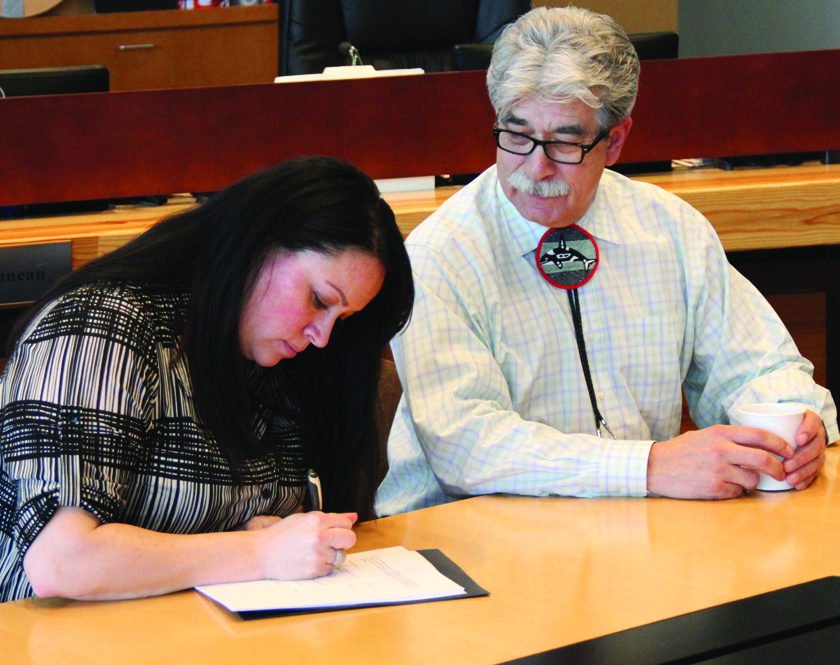
Top Photo: After signing the agreement, Department of Health and Social Services Commissioner Valerie Davidson takes a picture of Central Council President Richard Peterson doing the same. The signing ceremony took place at the Elizabeth Peratrovich Hall on Wednesday night.

Tuesday, March 1, 2016

Reunion Show ‘Long Lost Family’ on March 6

Open a fresh box of Kleenex and flip over to TLC: The cable channel has ordered “Long Lost Family” to series.
The show features highly emotional and touching stories of people who have suffered a lifetime of separation and are yearning to be reunited with their birth parents and biological families. The reverse also applies on this reality show: Parents who wish to find children they had to place for adoption long ago.
Hosts Chris Jacobs and Lisa Joyner are both adoptees who have embarked on their own journeys to discover their biological families. Each episode follows the hosts as they investigate the stories of two individuals or families who have longed to resolve their lifelong searches.
The stakes are high, TLC promises: A successful investigation offers the promise of not just a heartwarming reunion but also a chance of redemption for people who have wrestled with emotional agony for years.
There is no simple path to find the missing loved ones. With tightly held family secrets in their way, the searchers have odds stacked against them. Jacobs and Joyner conduct painstaking searches through public records and utilize the latest DNA technology in their hunt for answers. But what they discover, and who they find, is anything but expected.
TLC’s descriptions of some participants are included below.
Rita (pictured above, with host Joyner)
A mother who was forced to place her baby boy for adoption 31 years ago. Rita’s boyfriend dumped her when she told him she was pregnant and her mother sent her to a home for pregnant young women for fear of a scandal. Still holding on to his baby blanket from the hospital, she longs to meet her son again and keep the promise she made to find him.
Jenny
Her birth mother was the daughter of a minister who was deeply embarrassed by a pregnancy out of wedlock. Because of the lack of support offered, she ended up placing Jenny with social services. The search for Jenny’s birth mother takes a dramatic turn, when photo evidence suggests they may have been unknowingly connected for years.
Diana and Jeannette
They are two women in search for the father who suddenly vanished from their lives when they were just 4 and 5 years old. With no memories of their separation from him, the women have grown up haunted by his sudden disappearance. They hope he can be found so they can see him once again to find out the truth and ask him what happened.
Ancestry, the largest provider of family history and personal DNA testing, is teaming up with TLC as a sponsor of the upcoming season. As part of the show sponsorship, Ancestry provides family history research on each of the featured individuals to help make discoveries possible.
“Long Lost Family” is produced by Shed Media for TLC. The series premieres Sunday, March 6, at 10/9c.  Watch a video teaser above, which is also exclusive to TheWrap.

Monday, February 22, 2016

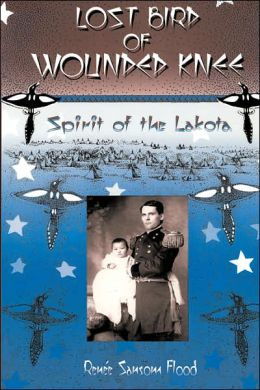
Lost Bird of Wounded Knee

SDPB DOCUMENTARIES

Lost Bird of Wounded Knee

  • Aired: 12/31/1999
  • 26:54
  • Rating: TV-G
The true story of a Lakota child who survived the Wounded Knee massacre, only to be adopted as a "living curio" by a prominent white couple. What follows is another tragedy - a life of racism, abuse, poverty, and heartbreak. 
I highly recommend you read this book. This is a true story, with all its tragedy and horror...  Trace

Truth and Reconciliation: The Findings on Wabanaki Child Welfare in the State of Maine

S
sipayik_me
“Imagine you’re about to have a little one, the love that you have for that little one… and then imagine somebody outside of your family you don’t even know making claims on your little one. They don’t like the way you live and they’re going to take your little one by force. Imagine what the loss is when this is not just your family, but your entire community loses its children.” — gkisedtanamoogk, Truth and Reconciliation Commission member in the documentary film First Light

The U.S. government’s historical attempts to solve the so-called “Indian problem” have included stealing land, introducing disease and warfare, and killing entire tribes. The documented atrocities have been relentless, resulting in great harm to the Indigenous people of this land. One of the most painful of these has been the forced removal of Native children from their families and communities.
In the 1800s Congress authorized the Civilization Fund Act, providing funding for boarding schools for Indian children. Native children were taken far from their homes to boarding schools where they were forbidden to speak their language or practice their customs. Children were separated from siblings and were often badly abused; many died there. Those who survived returned to their communities not knowing their language and traditions, and they and their communities were never the same. The last boarding school closed in 1984.


Child Welfare
In the 1950s, the Bureau of Indian Affairs and the Child Welfare League of America created the Indian Adoption Project, through which hundreds of Native children were taken from their families and placed with mostly white adoptive parents. The 1978 Indian Child Welfare Act gave Indian children, families, and communities greater legal protections by recognizing “the essential tribal relationship of Indian people and culture and social standards prevailing in Indian communities and families.” Still, through the 1990s, Native children were being placed in foster care in Maine at a rate higher than most other states.
In 1999, Wabanaki Tribes and the state of Maine collaborated to improve state compliance with the Indian Child Welfare Act. The Muskie School of Public Service, with funding from the Maine Office of Child and Family Services, established a working group (later named Maine-Wabanaki REACH) with tribal and state child welfare representatives as members. The working group trained caseworkers, developed policy, and gathered data about compliance in many Maine communities.


Truth and Reconciliation
Despite positive steps, the working group found that significant problems remained in practice and attitudes toward working with Native children, families, and communities. In 2008, they concluded that in order to create lasting change, the past needed to be investigated and better understood. Over the next four years, the working group created the Maine Wabanaki-State Child Welfare Truth and Reconciliation Commission—the first of its kind to address issues of Native child welfare—to investigate systemic abuses and the factors that contributed to them.
The Commission’s articulated intent was to uncover the truth of what happened to Wabanaki people in state child welfare following the passage of the Indian Child Welfare Act in 1978, and to promote healing and contribute to change in child welfare practices. Its mandate was signed in 2012 by the five Wabanaki Chiefs and the Maine governor, outlining responsibilities, timelines, and guidelines for interactions with tribal communities.
Commissions rely on personal testimony, documentary research, and other sources of evidence to understand the past. The Maine Commission held listening circles, ceremonial gatherings, and interviews in six Wabanaki communities and in five regions with non-Native Mainers. Hundreds of people participated, including Wabanaki elders, children formerly in care, foster and adoptive parents, tribal leaders, service providers, incarcerated people, attorneys and judges, caseworkers and administrators, and parents and grandparents. Talking about memories, often painful and traumatic, was not an easy task, as many people had never before shared their stories.


Commission Findings
The Commission’s final report, presented in 2015, found that Wabanaki children in Maine entered foster care at an average of five times the rate of non-Native children. The report concluded that to improve Native child welfare, the state and the tribes must continue to confront:
1. Underlying racism still at work in state institutions and the public
2. Ongoing impact of historical trauma, also known as intergenerational trauma, on Wabanaki people that influences the well-being of individuals and communities
3. Differing interpretations of tribal sovereignty and jurisdiction that make encounters between the tribes and the state contentious

The report further asserted that these conditions “can be held within the context of continued cultural genocide, as defined by the Convention on the Prevention and Punishment of the Crime of Genocide,” adopted by the UN General Assembly in 1948.


What’s Next?
The Commission issued a series of recommendations, inviting communities and stakeholders to engage with the underlying conditions that contribute to the problematic relationship between the Wabanaki Tribes and the state of Maine and with child welfare practice failures. The Upstander Project represents one such effort with its films, First Light and Dawnland, companion learning resources, and teacher workshops.
Maine-Wabanaki REACH, which formed the Commission, provides education on history, trauma, resiliency, healing, and ally-building to Maine and Wabanaki communities. Healing circles, health and wellness workshops, and community events focus on resilience and capacity building in all tribal communities in the state. This includes restorative justice and peacemaking circles and creating connections to Wabanaki incarcerated relatives through a prison book drive and pen pal initiative. REACH provides educational events, ally-building, and ongoing ally supports across Maine to deepen the understanding of the shared history between Native and nonNative Mainers. Allies are encouraged to take action to create a more just relationship between Native and non-Native people in Maine via legislative hearings, rallies, letters to the editor, letters to legislators, and volunteering at Truth Commission events. REACH staff are also working with the Indian Child Welfare Act working group on child welfare improvements. REACH will play a vital role in the implementation of the Truth and Reconciliation Commission’s recommendations.
As the Commission stated in its final report, “We have heard the voices of the many who spoke with us and to remain quiet is to continue to perpetrate harms that must be known. Consider this report as a step toward refusing that silence and continuing this conversation, that will, we hope, like all the best communication, offer ample time for everyone to simply listen.”
— Penthea Burns is Maine-Wabanaki REACH co-director (www.mainewabanakireach.org)

To read the Commission’s report in full, visit www.mainewabanakitrc.org/report. 

First Light 
First Light is the first film in a series, anchored by the feature film Dawnland (to be released in 2017), conveying the stories of pain and resilience that emerged during the Truth and Reconciliation Commission’s process. It  tells a piece of the story of the Commission and its origins. Dawnland will bring viewers inside the Commission and share testimony from those who suffered because of the child welfare system, along with those who upheld its policies.

“When we tell these stories, we feel it in our bodies and our hearts. But I believe we can get to the point where it has less power over us. This was a perfect example of the readiness, that it’s time.” —Sandy White Hawk, TRC Commissioner.

First Light and its learning resources are available for free at upstanderproject.org. These resources help teachers and students deepen their understanding of the brutal and disturbing history of settler colonialism that began with the invasion of Native peoples’ homeland, and government policies that aimed to force Native people to stop being who they are. These resources are central to the Upstander Project’s teacher and student workshops.
The Upstander Project helps bystanders become upstanders through compelling documentary films and learning resources. Its goals are to help educators and students overcome indifference to social injustice, develop the skills of upstanders, and contribute to action-oriented campaigns in response to vital social issues.

View First Light here: upstanderproject.org. 


Introducing the Commissioners
• gkisedtanamoogk (key-said-TAH-NAH-mook), Wampanoag from the community of Mashpee in Cape Cod, Massachusetts, and adjunct instructor in the Native American Studies and Peace & Reconciliation Programs at the University of Maine
• Matt Dunlap, Maine’s secretary of state and former Maine state representative
• Carol Wishcamper, former chair of the Maine state board of education, the Maine Center for Educational Service, and the Maine chapter of the Nature Conservancy
• Sandy White Hawk, Sicangu Lakota from the Rosebud Reservation in South Dakota and founder and director of the First Nations Repatriation Institute
• Dr. Gail Werrbach, director and associate professor at the University of Maine School of Social Work

Source: Cultural Survival

LINK

Thursday, February 18, 2016

Adoptee Nation: Native Adoptees fighting REAL ID ACT in real time

Leland and his dad Edward
By Trace Hentz

Leland Morill Kirk and I gave an interview to the Santa Fe Reporter newspaper that just hit newstands in New Mexico.  

Here is the LINK.

There is no doubt in my mind that many many adoptees are very concerned about their "fake" amended birth certificates. And too many lame lawmakers are still dragging their feet about changing the laws to give us adoptees our original paperwork and birth certificate.  It's getting serious enough that even voting in elections might be affected!

I hope you will share this article and talk to your own lawmaker by sending them the link to this blog.

“On paper, we’ve literally disappeared into the American landscape,” says Trace Lara Hentz, 59, a Greenfield, Mass., adoptee who shared her story with SFR.  For decades, she’s been trying to get her birth certificate from the state of Minnesota, but to no avail, and now she worries about how the Real ID Act will make her life harder without the document.

“It’s criminal neglect in my mind,” Hentz claims, “how certain states would refuse us these documents and that the federal government would write an act that wouldn’t even consider us.”
“There are hundreds of thousands of adoptees out there like me,” she says. “While I understand the need for security, I don’t think we’re going about it the right way.” - See more at: http://www.sfreporter.com/santafe/article-11596-an-adoptee-nation.html#sthash.tTF1XJaW.dpuf

Trace Hentz had to send her "fake" birth certificate to get a passport and worried they'd keep it or destroy it since it's fake.

Saturday, February 13, 2016

Trauma of Stolen Generations 'passed down'


A survivor says the trauma of the Stolen Generations is being transferred to younger generations in a cycle that needs to be broken, ahead of the eighth anniversary of Australia's apology.
Sharing stories and bonding with other Stolen Generation members has proved to be one of the best ways to help men and women heal, a new report from The Healing Foundation says.
Survivor Aunty Lorraine Peeters says children are still being affected by the older generation's loss of culture, family and community.
"If you grow up in a household where you've got traumatised people that have all these issues, they are being transferred down to the next one," she told reporters at the launch of the report at the National Centre of Indigenous Excellence (NCIE) in Sydney.
The launch included performances from musician Archie Roach and a gathering of survivors who shared their stories.
Aunty Lorraine, 77, who was taken from her parents and trained as a maid, has called on the federal government to take up the report's recommendations for more indigenous-led programs.
"(The trauma) will continue if it's not broken and ... collective healing is one way of getting through that," she said.
An analysis of 31 projects involving 3676 Stolen Generations members has shown the western model of counselling doesn't help victims, The Healing Foundation says.
They need trauma-informed services with knowledge of the Stolen Generations, says the foundation, which is a national organisation focused on supporting members of the Stolen Generations and their children.
Recommendations to the government include greater access to "collective healing" opportunities, such as yarning circles, trips and family reunions.

Originally published as Trauma of Stolen Generations 'passed down'


Monday, February 8, 2016

The costs of being adopted

That's me on the right with my adoptive family

By Trace Hentz

News stories like this one in Missouri enrage me (read below).  31+ states restrict adoptees’ access to their original birth certificates, just like Missouri who is now considering a change. Some states will charge fees in the thousands of dollars for an adoptee to get their own identifying information.

Minnesota is still holding my OBC hostage. WHY? Old laws, old ignorant beliefs. All my parents, birth and adoptive, are dead. Why can't I have a piece of paper that has my real name? Why should I have to pay anything to have it? I didn't ask to be adopted. I didn't ask to have a fake amended birth certificate.

Has anyone else heard of the REAL ID ACT of 2005 that will require we all have documentation as to our identity. The creators of this ACT didn't think of 7+million adoptees - most don't have any real identification?

And let's look at more costs! State Intermediaries also charge adoptees fees: More money we don't have. I spoke with an adoptee last week and she said Lutheran Social Services told her to pay them $1000 and there was no guarantee they'd even find her file. No, they don't give refunds either. REALLY?

Karen Vigneault and I are still assisting Native adoptees who are trying to find their tribal families. And it's free. But we run into roadblocks with states like Missouri, Minnesota and Utah who are holding Native adoptees own documentation hostage. (look in the reference section to get in touch with Karen or me.) If you need to know information about the state where you live, and how to open your adoption records, please email Karen or me.

The costs of being adopted is not even mentioned in this story below:  

Missouri considers easing adoptee birth certificate access

Feb. 6. 2016
JEFFERSON CITY • Danika Donatti first met her biological father when he was in hospice dying from complications of a disease she might also carry.

Donatti, 18, was adopted shortly after birth. She has known the names of her biological parents since childhood but didn’t try to form a relationship with them until she learned her biological father was fighting cancer and a rare genetic disorder, which she had a 50 percent chance of inheriting.

“I could have this and I wouldn’t have known that had I not had my birth certificate,” she told The Associated Press.

Missouri is one of more than 31 states that restrict adoptees’ access to their original birth certificates, according to the American Adoption Congress, a group advocating expanding such access. Adoptees can obtain their original birth certificates only through a court order; they can access their adoption file, which can contain identifying information, if their biological parents give their permission or die.

If the parents cannot be found, the information remains sealed.

Legislation scheduled for a vote on Feb.9 by a Missouri House committee would change that. The Missouri Adoptee Rights Act, sponsored by Rep. Don Phillips, would open access to original birth certificates to adoptees at age 18.

The current law creates hardships for adoptees that should not exist under the U.S. Constitution’s equal protection clause, said Phillips, R-Kimberling City. “It doesn’t say, P.S., by the way adoptees, sorry about your bad luck but you’re not included.”

After an adoption is finalized, a court amends the child’s birth certificate to list the adoptive family as the parents. An adoptee doesn’t need consent to get nonidentifying information about biological parents — which can include a medical history if it was provided at birth.

The current arrangement protects the confidentiality of the birth mother, said Laura Long, and it would be wrong to change that retroactively.

Long, who is an adoptee, works as a confidential intermediary for people seeking their biological parents’ permission to release their identifying information. Many parents consent, she said, but many were traumatized by getting pregnant and placing their child for adoption. People still feel stigmatized by that, she said, and it’s still a secret for some.

The state should respect the wishes of parents who agreed to adoption because of its confidentiality, said Tyler McClay, general counsel for the Missouri Catholic Conference, which opposes the bill. He said a better model is Illinois, which makes identifying documents available unless the biological parents opt out.
The bill is HB 1599.

Friday, February 5, 2016

Grieved Out: Suicide Rates At Crisis Levels


The numbers are staggering.

10/02/2015 | Anna AlmendralaHealthy Living Senior Editor, Huffington Post

AP Photo/James MacPherson  A stuffed bear is placed on a white picket fence on Monday, Nov. 19, 2012 in New Town, N.D.

Five years ago, psychiatrist R. Dale Walker was invited to a small Northern Plains reservation that had suffered 17 suicides in eight months. It was there, listening in a group therapy meeting, that he first heard the phrase "grieved out."
Walker, who specializes in American Indian psychiatric issues and is himself a Cherokee, felt overwhelmed at the toll that suicide was taking on reservations and Indian communities.

"One of the most difficult things to hear is when the community says, 'We can grieve no more. We're cried out. We just can't respond anymore to the problem,'" he said. "It really does have an impact."
Walker has become more attuned to this sense of being too exhausted to grieve with each new call to an American Indian community that is facing an unusually high rate of suicide.

Suicide looks very different in Native communities than it does in the general population. Nationally, suicide tends to skew middle-aged (and white); but among Native Americans, 40 percent of those who die by suicide are between the ages of 15 and 24. And among young adults ages 18 to 24, Native American have higher rates of suicide than any other ethnicity, and higher than the general population.

A new report, published by the CDC's National Center for Health Statistics, highlights what Native American health experts have long known: Suicide among Native youth is a crisis, and one that is not receiving the attention it needs.

Keep Reading 

=============
The long term affects of poverty and Third World conditions on reservations are genocide... My Uncle Black Bear Stephen LaBoueff has worked on this issue for several YEARS. I also interviewed him for News From Indian Country and we keep in touch. ...Trace Hentz, blog editor

Read Stephen's blog: http://wisdomofcoyote.blogspot.com/2014/04/have-plan-of-action.html?spref=tw

Thursday, February 4, 2016

Reclaiming OUR memory

"I'm 70. I'm on my way out, and I don't have a problem with that -- that's natural. But when I look at my descendants, our young people, I just kinda think we have to reclaim our memory. The genocide of civilization is there to erase that memory -- we don't remember we're human beings anymore. That's why there's all the false prides. That's why there's the drug use, the alcoholism. Those are symptoms of it. It's the genocide itself. It's denied itself. It's the genocide that's created these conditions. We've forgotten that we're human beings, and we're passing this diseased perception of reality amongst ourselves. We really need to look at who we are. It's not enough to say that 'I'm a traditionalist.' It's not enough to say 'I can speak the language.' It's not enough to say 'We're all about respect.' It's not enough anymore. We have to understand what we're saying. We have to understand tradition, culture, sharing, love. That's the way it was a long time ago. That was our way of life." -John Trudell (1946-2015) -- 💙 fly high...
Wind Spirit Spotted Bear's photo.

Friday, January 29, 2016

Tulalip Tribes and State Sign MOA for Child Welfare Cases

MOA a new pathway to keep children with their families

Misty Napeahi, Tulalip Tribes General Manager and Mel Sheldon, Tulalip Tribes Chairman, signing the government-to-government child welfare agreement between the Tulalip Tribes and the State of Washington.Photo/Micheal Rios
Misty Napeahi, Tulalip Tribes General Manager and Mel Sheldon, Tulalip Tribes Chairman, signing the government-to-government child welfare agreement between the Tulalip Tribes and the State of Washington.
Photo/Micheal Rios


by Micheal Rios, Tulalip News 
Few events are more traumatic for children than being removed from their families and entered into the foster care system. The trauma is even worse for Native children because usually when a government agency removes a child, they take them from not only their family but their culture and reservation as well. Such displacement can often lead children down a path to a deeply troubled life.

Here in Tulalip, like countless reservations across the United States, we’ve been forced to bear witness to tribal parents losing their tribal children to the State, of families being torn apart because of a government agency who knows very little about the Native way of life.

There are a lot of Native citizens who don’t understand how this continues to happen, since Congress passed the Indian Child Welfare Act in 1978 in an effort to stop Native families from having their children removed by the State and local officials for invalid and misconstrued reasons. Yet 38 years later, Native children are still much more likely to be removed from their families and placed in foster care than non-Native children.

The Tulalip Tribes leadership, along with the Office of the Reservation Attorney, and beda?chelh, have long fought for a solution that accurately reflects Tulalip values while being anchored by our inherent sovereignty. Back in 2011, the Tribe entered their first formal child welfare agreement with the State, but that was a general boiler plate model that laid the groundwork for a specifically Tulalip tailored agreement to follow. After years of steadfast dedication and due diligence, the solution may have finally arrived in the form of an updated government-to-government child welfare agreement between the Tulalip Tribes and the State of Washington. The agreement is reflective of Tulalip’s cultural values, aims to keep families together, and, as much as possible, minimize disruption to tribal children. The official agreement was signed into effect on January 13, 2016 by Chairman Mel Sheldon, General Manager Misty Napeahi, and officials from the Washington State Department of Social and Health Services and the Children’s Administration.

The signed agreement formalizes the government-to-government relationship between the Tribe and the State with child welfare cases. It’s based on the fundamental principles of the government-to-government relationship acknowledged in the 1989 Centennial Accord and recognizes the sovereignty of the Tribes and the State of Washington and each respective sovereign’s interests. What does this mean? It means the State of Washington now officially recognizes Tulalip has jurisdiction over Tulalip children wherever found and that Tulalip desires to assert its jurisdiction and authority to protect Tulalip children and keep families together whenever possible.

“I would like to thank everybody for coming out today and pay a special tribute to Michelle Demmert, our reservation attorney, for all the hard work she has done and for understanding my vision to protect our children and families,” said Misty Napeahi, General Manager of the Tulalip Tribes, during the document signing. “With this agreement we are doing what’s in the best interest of Tulalip children. That’s who we are here for. This is a road map that will help guide us and allows us to work in the best interest of our children.”

The overarching purpose of this agreement is the safety and well-being of Tulalip Tribal children. To this end, the specific purpose of this agreement between the tribe and the state is to clarify the handling of Child Protective Services and Child Welfare Services cases involving Tulalip children and their families.

Pursuant to the Indian Child Welfare Act and our sovereignty, the Tulalip Tribes have jurisdiction to handle all child abuse and neglect cases for our children. Some may be wondering, haven’t we always had that jurisdiction? The simple answer is no. In certain situations state agencies were able to, and would, circumvent the tribe altogether in cases involving allegations of child neglect or abuse. Now, with this agreement in place, the tribe can no longer be circumvented. Going forward, any time a state agency comes to investigate an allegation of child neglect or abuse, a beda?chelh case manager will be on the scene.

For instance, if there’s a child abuse referral made by a teacher who sees something that isn’t good for a child. Say at school a child is coming in late all the time and one day comes in and has bruising on his face or arms. That teacher or school would call the CPS hotline and provide those details. That would trigger a series of events. If the child was Tulalip, then the State would notify beda?chelh and they would tag the case an emergency or not (24 hour vs. 72 hour contact by beda?chelh and State representatives). If it’s an emergency, then this new agreement lays out the State is required to contact beda?chelh and a beda?chelh case manager would need to be involved in the process from the get go.
This agreement ensures Tulalip staff and representatives are always actively involved in any and all cases involving our children, and that we are taking the lead when the opportunity is there. The bottom line is we want our primary goal to be child safety, and to make sure any services or treatment families are receiving is defined by the tribe. That’s why this agreement also lends itself to the creation of a Tulalip Family Intervention Team (FIT), which will contact families of low-risk assessment and provide skill based services to parent their children, so that no court intervention is necessary.

FIT aims to keep families together and act as a proactive solution offering culture based services to families, while getting parents actively involved. It’s a way to handle things more traditionally between the Tribe and the families.

It may be an agreement of this nature is long overdue, but it took many days and long hours from individuals across several different tribal and state agencies to carefully craft and fine tune in order to get it right, not just for Tulalip children and families, but for all Native children and families. With Tulalip leading the way, there are sure to be multiple tribes who model their own government-to-government child welfare agreements after this one.

“I would like to thank the Tulalip leadership that allows us to do our job and work in the best interest of this community and the children,” said reservation attorney Michelle Demmert. “So many voices do not have someone who is championing their cause. Being an attorney for 24 years people think I should be doing something else rather than focusing on issues involving children or domestic violence, but these are the issues where people do not have a voice in the community. They need someone who can speak for them and understand their situation. Being a Tlingit woman, I have that perspective and can bring out their voice. This agreement does that and so much more. It benefits not only the Tulalip families and community, but other tribes who will follow suit.”

Representatives from the Tulalip Tribes, the Washington State Department of Social and Health Services and the Children’s Administration signed the official agreement on January 13, 2016.Photo/Micheal Rios
Representatives from the Tulalip Tribes, the Washington State Department of Social and Health Services and the Children’s Administration signed the official agreement on January 13, 2016.
Photo/Micheal Rios

Thursday, January 28, 2016

Sea Change: Setting a precedent


Excerpt:


Jean Teillet says Tuesday's ruling calls out Canadians for providing the 'minimal amount we can get away with' for services on First Nations. (Pape Salter Teillet Barristers and Solicitors)

Although human rights cases don't cite precedent the same way courts do, Teillet said, the "damning evidence" in the judgment will have a significant effect on other human rights complaints involving services on First Nations. "[It] will be very hard for them to turn around and make some kind of contrary finding," she said. 
Despite the legal victory, the lawyers said, the federal government faces an enormous task when it comes to taking action. The next step has to be a "sea change" in its relationship with aboriginal people, Hensel said. "The newly elected Liberal government has said a lot of very fine words about their perception and their intentions in this regard," she said. "And now it's time for implementation." Despite her hope that further human rights complaints won't be necessary, if that implementation doesn't happen quickly, "They're coming," Hensel said. Metallic said she recognizes the necessary changes carry a big financial cost. "There's going to have to be an adult conversation about funding things appropriately," she said.
Aboriginal lawyers are cautiously optimistic Tuesday's human rights ruling that Canada fails to provide equal services for children on reserves will legally oblige the government to fix other inequities facing First Nations, including education, housing, access to clean water and health care.

Wednesday, January 27, 2016

If it happens in Canada, will it happen here? #StolenGenerations

Adoption Council Applauds Human Rights Tribunal Decision re: First Nations Children— OTTAWA, ON--(Marketwired - January 26, 2016) - The Adoption Council of Canada applauds the landmark ruling by the Canadian Human Rights tribunal, which has today recognized the federal government's discrimination in the provision of child and family services for First Nations' children and families living on reserve and in the Yukon.


Supporting First Nations' children and youth in finding permanent families also requires the commitment of post-permanency resources at the same level as these children and youth required when they were in care.
"The leadership of Cindy Blackstock and the First Nations' Caring Society was essential in securing this vital decision," says Laura Eggertson, interim executive director of the Adoption Council of Canada. "As a result, First Nations children on-reserve and in the Yukon face the prospect of a better future."

By Trace Hentz (editor of American Indian Adoptees blog)

Canada is a blur with news about the injustice of adoption practices (aka cultural genocide) and lack of funding for First Nations families to receive monies to keep families intact. And if children need to be into foster care, then keep the siblings together.
That is Canada, not the US.
One of the reasons I post on this blog about Canada is they are making headway in news stories and the US is not.
If it happens in Canada, can it happen here too?
I hope so. I really do.
Human trafficking involves money and certain people who profit. Adoption is a form of human trafficking, taking a child from the reservation and placing them with a non-Indian parent for a fee. The agency makes money in that transaction. That the Adoption Council of Canada is making this proclamation means to them that those monies will soon dry out. You can't run an adoption agency without product (children and babies) and the reserve was a source of that product.

This story I posted on my other blog in 2013!:

Some things never change: more Stolen Generations


English: A public broadcast of Kevin Rudd's fo...
A public broadcast of Kevin Rudd’s formal apology to the Stolen Generations at Elder Park, Adelaide. (Photo credit: Wikipedia)


SOURCE As a Native American who has experienced upheaval and survived my own closed adoption, the devastating loss of my culture and my language cannot be overstated as a loss to me, to my family and to other adoptees I know who endured it. This media release struck me that some things never change, either in the US or in Australia. If we do not teach this history, we are doomed to repeat it – over and over.
Poverty is the worst form of violence and the Third World and Indian Country is still suffering the effects, generation after generation… Trace/Lara

Concerned Australians MEDIA RELEASE 20 May 2013

KEEPING THEM HOME

The most recent data shows that children being moved into out-of-home care in the Northern Territory is increasing at an alarming rate and that two-thirds of these children are placed with non-Indigenous families away from their communities…
‘Concerned Australians’ invites the Chief Minister to join the campaign to keep Aboriginal children safely in their communities. We know Adam Giles cares very greatly about the safety of children and we call on him and his ministers, and all those in the Northern Territory who have the capacity to influence policy, to throw their support behind:

•An increase in Aboriginal-managed Family Support services in all Aboriginal communities, including the establishment of Family Group Conferencing processes when there are concerns regarding child safety
• A reversal of the decision that cut funds to the Community Sector
We ask you to hear the words of Elder Dr Djiniyini Gondarra OAM: A Yolŋu child has a spirituality, his own ‘skin’, his culture, language, and place in his community. He belongs to that country and its people. You are committing a deep wrong by taking that away from him…
And, This is why so many of the Stolen Generation have suffered so much. The deep psychological trauma from being taken away has led so many of them to substance abuse, contact with the criminal courts and family breakdown. And the trauma is then passed onto their children.

This is a matter of urgency. We do not wish to see the emergence of another Stolen Generation.


Tuesday, January 26, 2016

Aboriginal People Respond To “Australia Day”

Aboriginal People Respond To “Australia Day”

Canada discriminates against children on reserves, tribunal rules

On-reserve child welfare system receives up to 38% less funding than elsewhere

CBC News Posted: Jan 26, 2016 
Reaction to tribunal's decision on reserve children LIVE 11:59:59
The federal government discriminates against First Nation children on reserves by failing to provide the same level of child welfare services that exist elsewhere, the Canadian Human Rights Tribunal has ruled.

Cindy Blackstock, executive director of the First Nations and Family Caring Society, along with the Assembly of First Nations, filed a complaint against Ottawa with the Canadian Human Rights Commission in February 2007.

They argued the support the federal government provides for child welfare on reserves is much lower than the support provincial governments give to children off reserves – even though on-reserve needs are greater. Less funding for family support means more children end up in the child welfare system, they said.

The Canadian Human Rights Tribunal agreed, according to a decision published Tuesday morning that says the federal government's funding model and management of its First Nations child and family services "resulted in denials of services and created various adverse impacts for many First Nations children and families living on reserves."

The decision says the government must "cease the discriminatory practice and take measures to redress and prevent it." It calls for the redesign of the child welfare system and its funding model, urging the use of experts to ensure First Nations are given culturally appropriate services.

The decision also compares on-reserve child welfare to the residential schools system, where "the fate and future of many First Nations children is still being determined by the government." It recommends increasing funding and support to allow First Nations to deliver their own child welfare.

"I can't even believe we had to file a case against the Canadian government so First Nations children have the same chance to grow up in their families as other kids get," Blackstock said, before the decision was made public.

"I'm still shocked by that, even nine years later." 
In a news release, the Canadian Human Rights Commission applauded the tribunal's ruling.
"This historic decision could have a profound impact on how the government of Canada funds other on-reserve programs and services," wrote Marie-Claude Landry, chief commissioner of the human rights commission.

KEEP READING

Related Stories

External Links

CLICK OLDER POSTS (above) to see more news

CLICK OLDER POSTS  (above) to see more news

MEGWETCH THANK YOU

HUGE Thank you for visiting this blog and sharing this with your kin. It's appreciated. Contact Trace anytime! Use the form below.

BOOKSHOP

Please use BOOKSHOP to buy our titles. We will not be posting links to Amazon.

Popular Posts

To Veronica Brown

Veronica, we adult adoptees are thinking of you today and every day. We will be here when you need us. Your journey in the adopted life has begun, nothing can revoke that now, the damage cannot be undone. Be courageous, you have what no adoptee before you has had; a strong group of adult adoptees who know your story, who are behind you and will always be so.

OUR HISTORY

OUR HISTORY
BOOK 5: Lost Children of the Indian Adoption Projects