BACK UP BLOG (no longer updating)

This blog was a backup for American Indian Adoptees blog
USE THE SEARCH BAR or SEARCH TOPICS at bottom of this blog

If you need support

Support Info: If you are a Survivor and need emotional support, a national crisis line is available 24 hours a day, seven days a week: Residential School Survivor Support Line: 1-866-925-4419. Additional Health Support Information: Emotional, cultural, and professional support services are also available to Survivors and their families through the Indian Residential Schools Resolution Health Support Program. Services can be accessed on an individual, family, or group basis.” These & regional support phone numbers are found at https://nctr.ca/contact/survivors/ . MY EMAIL: tracelara@pm.me

Search This Blog

Tuesday, January 14, 2025

FIGHTING FIRES: PRISON INMATES: It’s time to abolish the 13th Amendment ‘slavery clause’

 Inmates Can Make Up Nearly A Third Of Those Fighting California Fires

Due to “Slavery Clause,” 30% of LA Fires are Being Fought by Inmates
Doug Melville, Forbes, January 9, 2025

Inmate firefighters with Delta Conservation Camp construct a hand line during the Point Fire in ... [+]

 San Francisco Chronicle via Getty Images


As the shock of the Los Angeles fires and their effect on so many communities, businesses and families is still being digested, lots of attention is being turned to those who are on the front lines fighting the flames.

Many people might not be aware that one particular group has long been depended on to battle wildfires: inmates.

While the 13th Amendment ended slavery in the United States, a loophole allows people convicted of crimes to be forced to work for public or private enterprises. In this case, those tasked with firefighting volunteer for those positions and must meet certain criteria. They are not assigned without their consent.

Their pay scale was doubled in 2023, and depending on the skill level and the task assigned, they either receive $0.16 to $0.74 an hour or a maximum day rate of $5.80 to $10.24.

Most of their lunches consist of a simple sandwich—two pieces of white bread with a few slices of bologna—plus an apple. Their daily food budget of approximately $4 per day is hardly enough to sustain them for their high volume of manual labor.

Incarcerated firefighters have some of the highest injury rates among all prison workers and are four times more likely to sustain injuries compared to other firefighters. Also, they work some of the longest hours and have some of the hardest tasks to execute. They don’t shoot water hoses; they use powered chainsaws and manual hand tools, such as axes, with the goal of starving the fire of fuel to continue to burn.

What is an inmate firefighter?

In some form, inmate firefighters have been used in California since the end of World War II. The state has leaned on inmates to provide additional fire-fighting staff in “hand crews” to help contain the blazes. These teams also respond to other disasters like floods.

The California Department of Corrections and Rehabilitation (CDCR) has a Conservation Camp Program that employs incarcerated people as firefighters, who respond to emergencies at the local, state, and federal level. The program started in 1915, and the modern protocol of training the inmates at camps began in 1946. Today, there are 44 conservation camps, also known as fire camps, operated by the CDCR in partnership with the California Department of Forestry and Fire Protection (CAL FIRE) and the Los Angeles County Fire Department.

In 2010, nearly 4,000 inmates lived in California’s fire camps. That number has declined due to the prison population shrinking, sentencing reform and less inmate interest in this volunteer assignment. CDCR has tried to expand eligibility to higher-risk inmates, but the program still represents up to 30% of the wildfire workforce.

For perspective, in 2023 to 2024, the Los Angeles Fire Department has 3,902 employees (3,246 uniformed firefighters and 353 professional support) and is the third busiest in the United States.

It’s time to abolish the 13th Amendment ‘slavery clause’

The 13th Amendment reads:

“Neither slavery nor involuntary servitude, except as a punishment for crime whereof the party shall have been duly convicted, shall exist within the United States, or any place subject to their jurisdiction.”

Passed by Congress on January 31, 1865, and ratified on December 6, 1865, this legislation led to a new form of slavery developed in the 20th century, formally known as convict-leasing. Convict-leasing was a labor solution in which private individuals and businesses leased out prisoners for forced labor.

This practice is still very big business today. It is estimated that $11 billion in prison labor is used annually, from making hand sanitizer and digging mass graves during COVID-19 to cleaning up hazardous materials. The Associated Press recently uncovered a hidden workforce, apparently linking retail brands to forced prison labor. And in instead of pay—which for some is pennies per hour—the prisoners’ wages are often garnished to pay for things like their own room and board and court fees to appeal their cases.

During the most recent U.S. election, California voters rejected Proposition 6, a ballot measure that would have banned forced labor in state prisons. Only a handful of states have abolished forced prison labor: Colorado, Vermont, Nebraska, Utah, Alabama, Oregon and Tennessee.

Will Americans ever change their stance on forced prison labor?

After watching what these men and women battling the most devastating wildfires in Los Angeles history, I know I have.


SOURCE: https://www.forbes.com/sites/dougmelville/2025/01/09/inmates-makes-up-nearly-a-third-of-those-fighting-la-fires/


CALIFORNIA WILDFIRES

NEWS AND UPDATES

Today, the city of Los Angeles is home to nearly four million people, and the county a stunning 10 million. And it’s on fire. 


Members of the Native community in Los Angeles, Calif. gathered Monday evening, for a prayer and healing circle as wildfires continue to burn in Southern California.

The gathering at United American Indian Involvement (UAII) was intended to bring together community members and raise awareness about the resources being provided to those in need by the urban Indian organization.

UAII has set up an emergency response center – among efforts the organization is providing temporary shelter, coordinating housing, distributing emergency supplies, and coordinating transportation for those impacted by the fires.

The organization held a press conference before the gathering.

UAII board member Laura Escobar says that, among challenges they’re hearing from Native community members in fire zones, there are power outages – and people unable to leave secured areas and not being able to get necessities like food and water.

UAII board member and elder Keith Vielle says their effort is what community is all about that even though they may be far away from their reservations, they have Native values and traditional ways, which include helping one another.

They’re also offering hotel accommodations and meals, and working on long-term plans to offer assistance after the fires.

The organization is accepting donations and has a telephone helpline for those impacted by the wildfires.

According to the UAII, it serves a large urban Native population with more than 200,000 Native people living in Los Angeles County.

Neighboring tribes are among those offering support to fight the wildfires.


San Manuel Band of Mission Indians sends fire crew to neighbors in LA

 Neighboring tribes are among those offering support to fight the wildfires. The San Manuel Band of Mission Indians in San Bernardino County says as its neighbors face overwhelming challenges of the devastating wildfires in Los Angeles County, the tribe is responding to mutual aid requests.

It has sent the San Manuel Fire Department to the Eaton Fire in Altadena to help battle the blaze.

In a statement, the tribe says during this difficult time, the tribe “stands united with the courageous first responders, fully committed to help safeguard homes, loved ones, and the spirit of community.”

Other California tribes and tribes across the country have sent fire trucks and crews to help battle the wildfires.

California Wildfires and Climate Solutions: A Klamath River Perspective

READ: https://nativenewsonline.net/opinion/california-wildfires-and-climate-solution-a-klamath-river-perspective


MALIBU FIRE

NAVAJO SENDS SCOUTS  

https://www.nativenews.net/tuesday-january-14-2025/


https://www.msn.com/en-us/weather/topstories/navajo-scouts-deploy-to-battle-california-wildfires/ar-BB1rbxWD


Fox News host Jesse Watters connected dam removals requested by Native American tribes to California's wildfire crisis, saying Governor Gavin Newsom removed four dams “because the Native Americans told him to do it.”

During the January 8 broadcast of “The Five,” Watters criticized California's fire response, noting that crews “have contained 0% of this fire.” He then pointed to dam removals, saying Newsom “tore more dams down — four — than anybody in the history of this country. Because the Native Americans told him to do it, because it would save some salmon. Now look at this.” 

READ: https://nativenewsonline.net/currents/fox-news-host-faults-the-native-americans-for-california-fires


Our thoughts are with our friends and community members in Los Angeles, who are dealing with immense loss during these dangerous and uncertain times. 

In the Footsteps of Our Ancestors

From Coalition of Native and Allies: www.coalitionofnativesandallies.org

Chip Fox is an important photographer/reporter for the Inquirer and Indian Country Today and friend of CNA.  He covered the adoption story of our Native American board member Kelley Bova in the Inquirer who was adopted by a White family in 1963.

In Indian Country Today he covered the story when Kelley accompanied the remains of two Native Children from the Carlisle Indian School back to her homelands in South Dakota, among other important articles for Indian Country.

His latest article in Indian Country Today https://ictnews.org/news/in-the-footsteps-of-our-ancestors is a moving combination of stories from the Carlisle School and stunning photo collages that he created. He's a writer and an artist. We wanted to make sure you saw this important article.


JUST TWO OF THE IMAGES FROM THE CHIP'S ARTICLE:


Students Nancy Renville, left, and Justine LaFromboise were among six Sisseton Wahpeton Oyate and Spirit Lake students, four boys and two girls, who arrived at the Carlisle Indian Industrial School on Nov. 6, 1879. The first group of students had arrived one month earlier. The four male students died at the school or soon after being returned home while ill. Amos LaFromboise (not pictured) who died 20 days after arriving at the school, was the first to die. The remains of Amos LaFromboise and Spirit Lake student Edward Upright were finally returned to their tribes in 2023, where a ceremonial fire was lit to burn during the 4 days of mourning. The background image by Charles Fox shows the fire burning at the repatriation cemetery on the Lake Traverse Reservation. Historic photos of the students are courtesy of the National Anthropological Archives, Smithsonian Institution. (Photo illustration by Charles Fox/Special to ICT)


Native students arriving at Carlisle Indian Industrial School faced the cutting of their long hair, a disturbing cultural violation. This barber’s chair was photographed by Charles Fox at the Heard Museum in Phoenix, Arizona, where it was part of an exhibit, "Away from Home," on Native boarding schools. The background photo, courtesy of the Cumberland County Historical Society, shows a group of students in March 1892. (Photo illustration by Charles Fox/Special to ICT)


Friday, January 10, 2025

You’re No Indian – Official Trailer | Tribal Disenrollment Documentary

A new film coming out later this year, You're No Indian, takes a hard look at the growing practice of Native American disenrollment, a process where tribes remove individuals from their membership rolls. 

Directed by Ryan Flynn, the documentary dives into how this trend has impacted thousands of people, fractured communities, and stirred up debates about identity and sovereignty. 

READ: https://nativenewsonline.net/arts-entertainment/you-re-no-indian-documentary-exposes-native-american-tribal-disenrollment

This is going to require me to write an op-ed for this blog VERY soon - Trace

Thursday, January 9, 2025

Justin Trudeau’s record on Indigenous issues


Native America Calling: January 8, 2025


Canadian Prime Minister Justin Trudeau’s resignation announcement halts any progress on a $48 billion proposal to reform child welfare systems on reserves. It also stalls a First Nations clean drinking water bill. Trudeau received both praise and criticism from Indigenous leaders following his resignation announcement. We’ll look at how Trudeau delivered on Indigenous issues in Canada.

GUESTS

Russ Diabo (Kahnawake Mohawk), policy analyst

Matthew Wildcat (Cree), assistant professor of Native Studies and director of Indigenous Governance and Partnership at the University of Alberta

LINK:  https://www.nativeamericacalling.com/wednesday-january-8-2025-justin-trudeaus-record-on-indigenous-issues/


Lakota Spirituality New Year's Eve 2024 Message #happynewyear

They will be missed: LOST in 2024


READ: https://ictnews.org/news/those-weve-lost-in-2024

UC Professor’s Book Debut Explores Darker Outcomes of Adoption

January 7, 2025

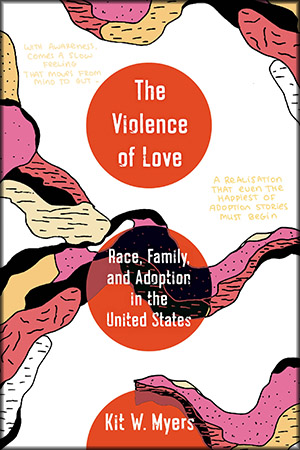
In his book debut, a UC Merced professor challenges the common narrative that adoption is mainly an act of love that benefits the adoptees, adoptive parents and birth parents, especially in cases that cross racial lines and national borders.

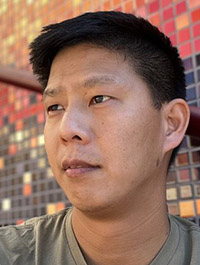
Kit Myers, a faculty member in the Department of History & Critical Race and Ethnic Studies , analyzed the adoption of Asian, Black and Native American children by White families for “The Violence of Love: Race, Family, and Adoption in the United States” (University of California Press).  In the book, Myers says race has been positioned to mark certain homes, families and nations as better sources than others for love, freedom and positive futures for the adoptees.

The word “violence” refers not only to physical harm but also to forms of erasure and displacement in transnational or transracial adoptions. For example, the process of forming a new family can require removing or obscuring elements of the adoptee's history. These erasures are potentially traumatic, even when done with the perceived positive intention of creating new family bonds.

“The Violence of Love” confronts this discomforting reality and rethinks theories of family to offer more extensive understandings of love, kinship and care.

Myers, a professor at UC Mered since 2016, said his book relates to broader research interests on the study of race as a social, relational and intersectional category of difference and power.

LINK: https://news.ucmerced.edu/content/uc-professor%E2%80%99s-book-debut-explores-darker-outcomes-adoption

Passed: H.R. 9076, Protecting America’s Children by Strengthening Families Act : NACPA, what is it?


JANUARY 5, 2025

WASHINGTON, D.C. – Bipartisan legislation – representing the work of many members of the Ways and Means Committee – to provide critical supports to vulnerable children and families has been signed into law.  The Supporting America’s Children and Families Act (H.R.9076), introduced by Work and Welfare Subcommittee Chairman Darin LaHood (IL-16) and Ranking Member Danny K. Davis (IL-07), reauthorizes, fully for the first time in over fifteen years, child welfare programs under Title IV-B of the Social Security Act that provide federal resources to states, tribes, and territories for family preservation and to promote the safety, permanence, and well-being of children in foster care.


• In fiscal year (FY) 2022, 369,000 American children were in foster care and 19,000 youth aged-out of foster care.
• The program also provides funding for the Court Improvement Program to support child welfare legal proceedings, and Regional Partnership Grants to address parental substance use disorder as cause of child removal in order to help keep families united.

Background on the Supporting America’s Children and Families Act:

Reauthorizes Title IV-B for five years and makes reforms to modernize the program. Saves taxpayer dollars by supporting early intervention to help families stay united and reducing duplication in the child welfare system.  Uses savings from H.R. 7906, the Strengthening State and Tribal Child Enforcement Act to make targeted investments that will:

  • Reduce administrative burden by requiring the U.S. Department of Health and Human Services (HHS) to reduce paperwork and data reporting for state agencies and caseworkers by at least 15 percent.
  • Improve access for Indian tribes by streamlining funding, as well as monitoring state engagement with the Indian Child Welfare Act.
  • Support expansion of evidence-based services to prevent child abuse and neglect and ensures children are not separated from parents solely due to poverty-related neglect.
  • Address the caseworker crises by ensuring caseworkers have access to training and support to improve retention and recruitment.
  • Strengthen support systems for the 2.5 million grandparents and relatives providing kinship care for children who would otherwise enter foster care.
  • Improve outcomes for youth transitioning from foster care by including individuals with lived experience (formerly in foster care) in state service planning and ensuring youth have access to mental health services.
  • Support post-adoption services by requiring HHS to review post-adoption supports provided under Title IV-B and identify opportunities for strengthening them.

Read a one-pager on H.R. 9076 here.


READ:

https://goldrushcam.com/sierrasuntimes/index.php/news/local-news/63380-u-s-senators-susan-collins-and-ben-ray-lujan-bipartisan-bill-to-protect-native-american-children-signed-into-law 

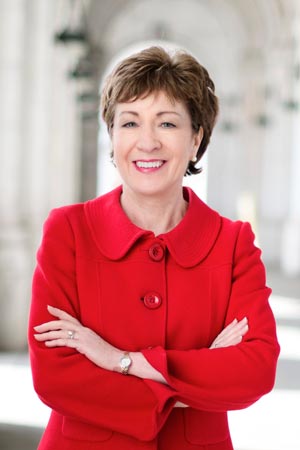
January 3, 2025 - Washington, D.C. – On Thursday, the President signed into law the Native American Child Protection Act (NACPA), susan collins us senatorbipartisan legislation introduced by U.S. Senators Susan Collins and Ben Ray Luján (D-NM). The bill reauthorizes and reforms three programs that ensure tribes have the tools needed to treat, prevent, investigate, and prosecute Native American child abuse and neglect. These programs were originally authorized in 1990 as part of the Indian Child Protection and Family Violence Prevention Act to fill funding gaps in tribal child welfare services, but the programs were never truly funded and have not been reauthorized by Congress.

“No matter where a child grows up in the United States, they deserve to live in an environment free from abuse. The Native American Child Protection Act reauthorizes and modernizes programs that aim to assist tribes in their efforts to help victims of child abuse and prevent future abuse,” said Senator Collins. “This bill recognizes the significance of each tribe’s unique cultural values, customs, and traditions, while helping to ensure that children and families receive the support they deserve.”

“I’m proud to see President Biden sign the Native American Child Protection Act into law, which was passed in Congress with bipartisan support. In this country, all children deserve grow up without fear of being harmed or neglected,” said Senator Luján. “This legislation is an important step in ensuring that tribes have access to the resources needed to provide services that reduce trauma and uncertainty for children.”

To ensure tribes have adequate resources to effectively prevent and respond to child abuse and neglect in their communities, the NACPA:

  • Establishes a single National Indian Child Resource and Family Services Center to provide tribes with technical assistance and training on addressing child abuse, family violence, and child neglect. It will also improve intergovernmental coordination between federal and tribal personnel responding to these issues;
  • Reauthorizes the competitive Indian Child Abuse Treatment Grant Program to establish treatment programs and culturally appropriate services for the victims of child abuse and neglect in Indian Country; and
  • Reauthorizes formula grants to tribes under the Indian Child Protection and Family Violence Prevention Program for child abuse prevention and investigation.

To this day, these grants are still the only tribal-specific child abuse prevention and treatment programs for Native children. However, Congress has only appropriated $5 million since their original enactment in 1990. Reauthorizing and modernizing these critical programs will help tribes develop and strengthen services to reduce trauma and uncertainty for Native American children. 
Source: Senator Susan Collins


President Carter’s Native American report card

A look back on the 39th U.S. President’s legacy and policies regarding Indigenous people

PLAINS, G.A – Former U.S. President Jimmy Carter recently passed away at the age of 100 at his home on December 19, 2024. Carter leaves behind a complex legacy among Americans and Indian Country alike. Elected in 1977, Carter oversaw many challenges throughout his presidency including stagflation, the Iranian Hostage crisis, and an energy crisis. Triumphs of Carter’s presidency include negotiating the Camp David Accords, signing the Alaska National Interest Lands Conservation Act and many major pieces of legislation that continue to benefit Indigenous peoples today.

Born in the small town of Plains, GA, Carter was born on what was formally the homelands of the Mvskoke people. Carter was the first U.S. President born in a hospital, and remained a resident of Plains for most of his life. He served in the U.S. Senate and served a term as Georgia’s governor, however one of his most well-known professions was peanut farming.

In Indian Country Carter is most well known for signing the Indian Child Welfare Act (ICWA) and the American Indian Religious Freedom Act (AIRFA). The former protects Native American children by giving adoption preference to their families, then their tribe if there are no family members available. The latter gave Native Americans the freedom to exercise their traditional religions by worshiping through ceremonial and traditional rites.

President Carter’s legacy among Indigenous people is also known to Panamainians. In 1978 Carter successfully negotiated the Torrijos-Carter Treaties, which transferred ownership of the Panama Canal to the Nation of Panama after years of tension.

U.S. Secretary of the Interior Deb Haaland (Laguna Pueblo) shared that Carter was a man of service, and left a deep impact on Indian Country.

“President Jimmy Carter exemplified what it means to live a life of faith and service to others,” Secretary Haaland said. “His love for and conservation of our shared public lands leaves a tremendous legacy, and I am grateful that the Department will continue to honor his work at the Jimmy Carter National Historical Park for generations to come. My heartfelt condolences go out to his family and the global community as we all mourn this selfless public servant.” 

In a public statement, Muscogee (Creek) Nation Principal Chief David Hill expressed condolences for the former president’s family. The statement reads,

“The Muscogee Nation is saddened to learn of the passing of President Jimmy Carter, a dedicated and selfless public servant and statesman, who lived a full life of 100 years.

President Carter signed two monumental pieces of legislation for Indian Country into law in 1978, with the Indian Child Welfare Act (ICWA) and the American Indian Religious Freedom Act. ICWA has been an enduring protection for Native families and children and the AIRF, gave our ceremonial grounds and others the confidence to hold onto and perpetuate their traditions.

MVTO President Carter for your contributions and your compassion and commitment to the betterment of your fellow man.”

A six day funeral observance is currently underway celebrating the former president’s life.  The observance began in Americus, Georgia where Carter was born, and made its way to his hometown in Plains, then made its way to Atalanta where he served as governor.  Carter’s remains will travel to Washington where a national service happened on Jan. 9.

CLICK OLDER POSTS (above) to see more news

CLICK OLDER POSTS  (above) to see more news

MEGWETCH THANK YOU

HUGE Thank you for visiting this blog and sharing this with your kin. It's appreciated. Contact Trace anytime! Use the form below.

BOOKSHOP

Please use BOOKSHOP to buy our titles. We will not be posting links to Amazon.

Popular Posts

To Veronica Brown

Veronica, we adult adoptees are thinking of you today and every day. We will be here when you need us. Your journey in the adopted life has begun, nothing can revoke that now, the damage cannot be undone. Be courageous, you have what no adoptee before you has had; a strong group of adult adoptees who know your story, who are behind you and will always be so.

OUR HISTORY

OUR HISTORY
BOOK 5: Lost Children of the Indian Adoption Projects