BACK UP BLOG (no longer updating)

This blog was a backup for American Indian Adoptees blog
USE THE SEARCH BAR or SEARCH TOPICS at bottom of this blog

If you need support

Support Info: If you are a Survivor and need emotional support, a national crisis line is available 24 hours a day, seven days a week: Residential School Survivor Support Line: 1-866-925-4419. Additional Health Support Information: Emotional, cultural, and professional support services are also available to Survivors and their families through the Indian Residential Schools Resolution Health Support Program. Services can be accessed on an individual, family, or group basis.” These & regional support phone numbers are found at https://nctr.ca/contact/survivors/ . MY EMAIL: tracelara@pm.me

Search This Blog

Saturday, November 16, 2024

Petition to OPEN ADOPTION RECORDS (2024) (USE ICWA)


If you or your parent was adopted, here is what you need to do: FILE a petition in STATE where you were adopted or your parent was adopted.... ICWA gives you that right. (Even if the state has closed adoption records, you still have the right to obtain your records.)
 

The Indian Child Welfare Act, 25 U.S.C. 1901 et seq., provides in pertinent part:

Upon application by an Indian individual who has reached the age of eighteen and who was the subject of an adoptive placement, the court which entered the final decree shall inform such individual of the tribal affiliation, if any, of the individual's biological parents and provide such other information as may be necessary to protect any rights flowing from the individual's tribal relationship.


CLICK👉Petition to Obtain Adoption Records PDF Microsoft Office Word®


EXAMPLE: 

IN THE _________ COURT

FOR _________ COUNTY, STATE OF _______

In the Matter of: ___________________,     )           


PETITION PURSUANT TO 25 U.S.C. § 1917

TO OBTAIN CERTAIN BIRTH RECORD INFORMATION

FROM COURT AND AGENCY ADOPTION RECORDS

             COMES NOW the Petitioner, _________________, and respectfully petitions the Court for an order, pursuant to 25 U.S.C. § 1917, permitting him/her to have access to certain identifying information pertaining to him/herself, his/her natural mother/father, and natural maternal/paternal grandparents, and contained in the records of his/her adoption maintained in the above-captioned matter by this Court and by _______________________________ an agency that maintains the adoption records of the now defunct _______________________________________.  In support of his/her petition, Petitioner states:


            1.  I presently reside at _____________________________________.

            2.  I was born on _____________ in ________________.  On information and belief, my natural mother/father named me ______________________________ at birth.

            3.  On _____________ the _________________ Court, a predecessor to this Court, entered a decree of adoption approving my adoption by ________________ and changing my name to ___________________________.

            4.  The ______________________________________________________ an agency that is now defunct was involved in my adoption and kept records pertaining to the adoption.  _______________________________________________ currently maintains the adoption records of this defunct agency.

            5.  According to this Court's records of my adoption, my natural mother/father was American Indian/Alaskan Native.  I do not know his/her tribal affiliation.  On information and belief, his/her name is ___________________.

            6.  Members of American Indian tribes/Alaskan Native villages are provided with legal rights under federal law that are not available to others.  These rights include, for example, scholarships and other education programs, health care, employment rights, business grants and loans, a variety of social services, property rights including the right to share tribal lands and the income therefrom, the right to be exempt from certain taxes, and other similar rights.

            7.  Members of American Indian tribes/Alaskan Native villages associate with one another in a socio-political community, commonly known as the tribal relationship, sharing a common heritage and culture and promoting the economic well-being of the entire tribal community.

            8.  I am not a member of any Indian tribe/Alaskan Native village and, at present, I am unable to establish eligibility for such membership.

            9.  I have been deprived of my Indian culture, heritage and tribal relationship and all the rights under federal law that would flow from membership in a tribe/Alaskan Native village.  I have also been deprived of the political, social, economic, and psychological advantages and benefits which would flow from membership in a tribe/Alaskan Native village.

            10.  The Indian Child Welfare Act, 25 U.S.C. 1901 et seq., provides in pertinent part:

Upon application by an Indian individual who has reached the age of eighteen and who was the subject of an adoptive placement, the court which entered the final decree shall inform such individual of the tribal affiliation, if any, of the individual's biological parents and provide such other information as may be necessary to protect any rights flowing from the individual's tribal relationship.

25 U.S.C. § 1917. 

            11.  United States Senate Report No. 95-597, 95th Cong. 1st Sess. (November 3, 1977), explains § 1917.

An Indian child who has been placed in adoptive, foster care, or other setting is authorized upon obtaining the age of eighteen to obtain information regarding his or her placement as may be needed to qualify for enrollment in his or her tribe of origin and for other benefits and property rights to which he or she may be entitled because of Indian status.

Senate Report No. 95-597 at page 11.

It is the intent of this section [sec. 1917] as amended to authorize the release of only such information as is necessary to establish the child's rights as an Indian person.  Upon a proper showing to a court that knowledge of the names and addresses of his or her natural parent or parents is needed, only then shall the child be entitled to the information under the provision of this section.


Senate Report No. 95-597 at page 18.

            12.  The Indian Child Welfare Act was enacted after extensive Congressional testimony and study revealed that an inordinate number of Indian children had been separated from their tribal communities through adoption and other placements frequently detrimental to the children, their families and their tribes.

. . . the Congress finds –

. . . (4) that an alarmingly high percentage of Indian families are broken up by the removal, often unwarranted, of their children from them by nontribal public and private agencies and that an alarmingly high percentage of such children are placed in non-Indian foster and adoptive homes and institutions; and (5) that the States, exercising their recognized jurisdiction over Indian child custody proceedings through administrative and judicial bodies, have often failed to recognize the essential tribal relations of Indian people and the social and cultural standards prevailing in Indian communities and families.


25 U.S.C. §§ 1901(4) and 1901(5).


            13.  The Congress in the Indian Child Welfare Act stressed the national policy of protecting and preserving the relationship between Indian tribes and their children.  25 U.S.C. §§ 1901(2), 1901(3) and 1902.  The policy derived in part from findings by the American Indian Policy Review Commission that "'[r]emoval of Indian children from their cultural setting [by placement in non-Indian adoptive homes] seriously impacts a long-term tribal survival and has damaging social and psychological impact on many individual Indian children.'"  Miss. Band of Choctaw Indians v. Holyfield, 490 U.S. 30, 48 (1989).  See also, Matter of Adoption of a Child of Indian Heritage, 111 N.J. 155, 543 A.2d 925, 930-931 (1988) (The Indian Child Welfare Act is based on findings " . . . that an Indian child . . . separated from all aspects of Indian culture . . . . not only posed a threat to the stability and security of Indian tribes, but also carried with it the potential for psychological harm to the Indian child . . . [including] ethnic confusion and a sense of abandonment"

 WHEREFORE, movant respectfully requests that this Court enter an order:

            1.  Granting movant the right to inspect and copy the records of his/her adoption maintained by this Court, and the records of _______________________________ now maintained by ______________________ for the purpose of identifying his/her tribal affiliation or the tribal affiliation of her natural father/mother and, if necessary, his/her natural maternal/paternal grandparents.

            2.  Granting movant the right to inspect and copy all information contained in the records of his/her adoption maintained by this Court, and the records of _______________________________________ now maintained by ________________ as may be necessary to enable him/her to become a member of an Indian tribe/Alaskan Native village and to protect his/her rights flowing from the tribal relationship and his/her status as an Indian/Alaskan Native, such information to include the original certificate of his/her birth, the final decree of adoption, the names and last known addresses of his/her biological father/mother, and if necessary, his/her biological maternal/paternal grandparents.                                                                                      _____________________________

    Signed

Disclaimer: You should consult competent legal counsel for legal advice, rather than rely on this form.


Do you need help with your ICWA case?

Use the National Indian Law Library ICWA Contacts page to find legal assistance with your case.

To find legal assistance by state:

Federal funding for federally-recognized tribes:

To learn about federal sources of funding that federally-recognized tribes are eligible for to provide child welfare related services, see ICWA Topic #22: Resources.


LAST THING: DO NOT GIVE UP


5 Middle Grade Books To Read For Native American Heritage Month And Beyond

These new middle grade books by Indigenous authors educate about residential schools and Missing and Murdered Indigenous Women and Girls.

This content contains affiliate links. When you buy through these links, we may earn an affiliate commission.

November is Native American Heritage Month. These new middle grade books by Native American and Indigenous Canadian authors explore various topics, from residential schools to Missing and Murdered Indigenous Women and Girls, in fiction and nonfiction formats. They’re all wonderful books.

cover of Buffalo Dreamer by Violet Duncan

Buffalo Dreamer by Violet Duncan

This is a lovely middle grade novel centering two Cree girls in Alberta, Canada. Summer spends every summer on the reservation where her mom’s family lives. She and her little brother and cousin Autumn swim in the lake, collect sweetgrass, pick berries, and have a wonderful time. But this summer is a little bit different. Authorities have gathered around a former residential school—one where Summer’s grandfather had been kidnapped and taken to as a child—to scan the ground with new technology. They’ve discovered the bodies of Indigenous children buried there. Meanwhile, Summer begins having vivid dreams of the past about a girl, named Buffalo Dreamer, who runs away from the school when her friend Ann disappears. It’s a slim, fantastic novel.

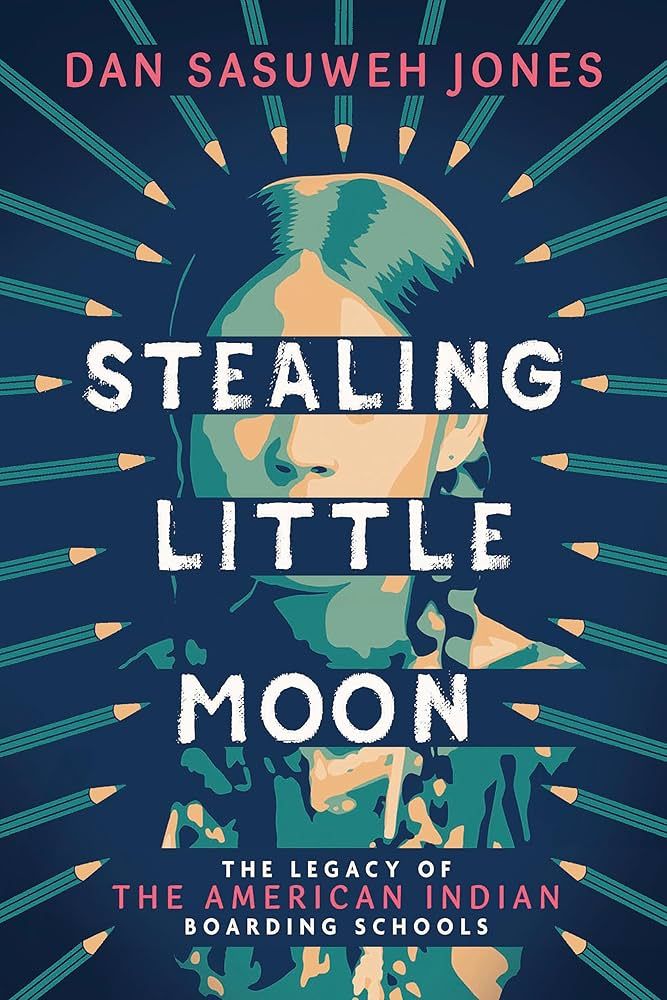
Cover of Stealing Little Moon: The Legacy of the American Indian Boarding Schools by Dan SaSuWeh Jones

Stealing Little Moon: The Legacy of the American Indian Boarding Schools by Dan SaSuWeh Jones

If your middle grader wants to investigate more about residential schools after reading Buffalo Dreamer, then check out this detailed and gut-wrenching middle grade nonfiction. It combines the author’s family history with nonfiction investigation. The author’s grandmother, Little Moon There Are No Stars Tonight, was forcibly taken from her family home by federal authorities when she was just four years old, and taken to a residential school to rid her of her Ponco culture and heritage. Jones traces her story from the time she was stolen to when the residential school was shut down during his lifetime. It’s a very informative read, and I recommend it for upper middle grade readers.

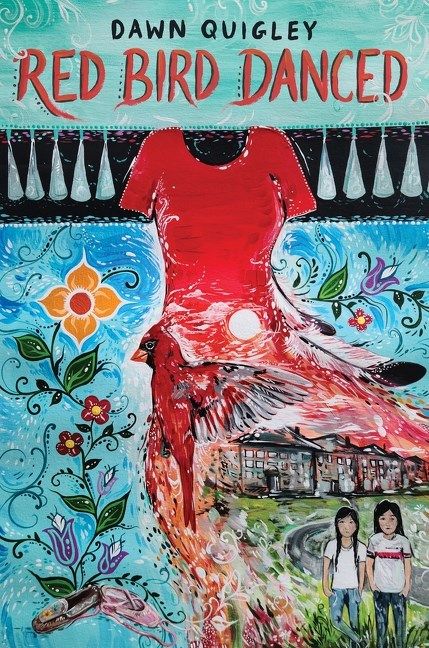
Cover of Red Bird Danced by Quigley

Red Bird Danced by Dawn Quigley

This is a beautiful, accessible middle grade novel-in-verse told from the perspectives of two Ojibwe tweens who live in a Native American urban housing community. Ariel’s aunt is missing, so she chooses to study the Missing and Murdered Indigenous Women and Girls (MMIWG) crisis for a school project. She’s also learning how to dance the jingle dance, though part of her wants to learn ballet. Tomah has a reading disability and struggles in school, though he hides the problem from teachers and his family. Words dance on the page. However, he’s an excellent storyteller and a valued member of his Native community because of it. He loves feeding the birds. Ariel and Tomah are friends, both slowly untangling what it means to be Native and their roles in their community.

READ MORE:  https://bookriot.com/middle-grade-books-native-american-heritage-month/

WRONG Side of History


OPINION: 

Halito! Chim Achukma? (Hello, how are you?)

It’s Native American Heritage Month again. I would like to discuss something that’s been endeared to me for some time.  I seek transparency, and I do not desire to be offensive in any way, but I’m on deck, and it’s my turn to bat.

This concerns school curriculums and at least offering ‘Native American’ studies as an elective.

We seldom hear anything about Native American history, and after all, we are Oklahoma and home to 69 tribes who were displaced here in the 1800s. The Oklahoma History course in school only skims the surface of Native studies, and, after all, with its indigenous history, no other state compares to Oklahoma.

There’s been a sudden urgency to actualize how Native American history should be taught in our schools.  For a start, why not tell the truth instead of withholding, editing, and sanitizing it? In layman‘s terms, “tell it like it is.”.

We’re talking transparency here.  It’s necessary to open ‘Pandora’s box’ and discuss land theft (I call it ‘land grab’), government corruption, hundreds of broken treaties, rape, human trafficking, taking children from parents and sending them far away, and even scalping men, women, and children and collecting ‘bounties’ for scalps.

The prestigious yet dishonest Texas Rangers even murdered Mexican people scalped them, and sold scalps as being Indians.  Rangers called it glory, and they answered to nobody.

For many years, our history books have failed miserably regarding Indigenous history.  Three years ago, Kim and I were in West Point, New York, and I finally found an 8’ x 8’ section in the museum basement devoted to ‘Indian Wars,’ which referenced it as ‘Indian Uprising.’ I might also add that Native people should never be referred to as ‘renegades’ when referencing people who were fighting for their land, families, and the honor of being the true and quintessential Americans. Unfortunately, they have been... on the wrong side of history.

Such was the case when Indigenous people fought on what I call the ‘wrong side of history.’

Indigenous people have, to a large extent, wandered anonymously in the education of America’s youth. Take Native Chiefs, for example.

Where are they now?  The same place they’ve always been—lost in the annals of American history.  Their names are without content.  Their voices are silent.  A rightful place in American history has not been reserved for them. A desecration of sorts, to me anyway. Or, just…‘On the wrong side of history.’

American history has been ‘all in’ when focused on such leaders as George Washington and Thomas Jefferson (both slave owners), Douglass ‘Doug-Out’ MacArthur, Dwight D. Eisenhower, U.S. Grant, and Andrew Jackson. Grant and Jackson committed their share of genocide. Jackson championed the Indian Removal Act of 1830.

The U.S. Supreme Court said he couldn’t do that, but he said, “Just watch.” And, thus, the Choctaws, Chickasaws, Cherokees, Creeks, and Seminoles had all their lands dispossessed and were driven like animals to Oklahoma, and nobody spoke up for them. I ask, Where was the ‘Rule of Law’ in our Constitution, which says, ”No one is above the law?“ They were more or less an afterthought as the U.S. government continued the seizure of more and more ‘Indian land’ while being…‘On the wrong side of history.’

Meanwhile, little credit has been given to Chief Seattle, Chief Joseph, Sitting Bull, Crazy Horse, Red Cloud, Quanah Parker, Black Kettle, Geronimo, Osceola, Tishomingo and Pushmataha, to name a few. These Indigenous leaders have been ‘all out’, not ‘all in.’

How brilliant and courageous these leaders were to have withstood genocide and kept their people together against insurmountable odds while being, in the truest sense, Americans. They were incredible military leaders who often made a mockery out of the U.S. Army (always under-reported). Truth: when the U.S. Cavalry won a battle, it was called a victory, but when the Indians won, it was called a massacre. Once again...‘On the wrong side of history’.

They didn’t hold PhDs, graduate from Harvard, nor were they in America’s Who’s Who, or come from affluent families back east. They shared a relationship with the land and were willing to die for it. This was something that Euro-Americans could never understand. Nobody could place a price on the land, nor could you fence it. The land was a part of the Native, and the Native was a part of the land, inseparable. One and the same, and settlers and the U.S. government both wanted it.

We’re talking blatant, unadulterated land theft, and treaties were like New Year’s diets, not worth the paper they were written on. This was a one-sided, non-negotiable act and was never a ‘Robin Hood’ type. In every instance, he was doomed for defeat, and nobody in our illustrious history has anyone been the consummate underdog such as He. He was outmanned, outgunned, but never outfought. For almost three centuries, he held that distinction while also being…‘On the wrong side of history.’

Most often, the cry of settlers was, “What do they want with all that land? They don’t need all that land.”

Even John Wayne was quoted, “I don’t feel wrong about taking this great country from them. There were great numbers of settlers who needed that land, and Indians were selfishly keeping it for themselves.” Okay, let’s say that John Wayne was eating at the Cattlemen’s Steakhouse in OKC. He’s served a huge 16-ounce ribeye, and I casually walk over, cut over half of it, put it on my plate, and say, ‘Sorry Duke, but you don’t need all that steak.’”

I have very few fears. One of those is that the history of Native America and its many incomparable leaders will be a thing of the past if we don’t salvage and recover the remnants of what’s already been lost. You get beyond two hundred years, and the authenticity of history can be a matter of conjecture and a ‘crap shoot’. This can be especially so if you happen to be...‘On the wrong side of history.’

I could elaborate more, but I feel we have a moral and ethical obligation to tell the other side of a people who were and are the ‘First Americans’. It’s an evolving door now, and many native people prefer to be called by their tribal name, and the word ‘Indian’ has definitely fallen out of favor because the name is inaccurate since it was given by Europeans who thought they had landed in ‘India’. Just consider what we would have been called had Europeans been searching for China.

‘Chi pisa la chike,’ — Alan Simpson

ADA NEWS: https://www.theadanews.com/opinion/wrong-side-of-history/article_9e2c6546-9df0-11ef-8507-438a9819f94c.html

Friday, November 15, 2024

Indian Boarding School Survivors and Their Loved Ones Have Responded to Biden’s Apology. Their Message: Now Take Action

Indian Boarding School Survivors and Their Loved Ones Have Responded to President Biden’s Apology. Their Message: Now Take Action
“The only thing we have left is the cemetery where a lot of our Quapaws are buried,” says Carrie Wilson, whose mother was forced to attend St. Mary of the Quapaws school in Oklahoma. Photo illustration by Julie Reynolds.

In its attempt to crush Native America through assimilation, the U.S. government created, operated, funded and perpetuated a network of hundreds of Indian boarding schools across the country. For centuries, the government forcibly severed Indigenous children from their families and tribal homes. Countless students were subjected to sexual, emotional and physical abuse. Nearly 1,000 schoolchildren died. Many were buried in unmarked graves.

Last month, over 200 years after the first school opened, outgoing President Joe Biden apologized.

How the apology landed for everyone is impossible to fully capture. But The Imprint reached out to boarding school survivors and their descendants, and compiled public statements made in recent weeks. 

For some, the apology rang hollow. Others described it as an important first step. But they all said more specific action must follow: more funding for education, the return of buried children’s remains, and adherence to reforms called for by the U.S. Interior Department, which is led by the nation’s first Indigenous cabinet-level secretary, Deb Haaland.

“The apology was a welcome statement to me that should result in solid action in terms of remedying harms to Tribal families and communities,” wrote legal scholar Angelique EagleWoman, chief justice on the Sisseton-Wahpeton Supreme Court and director of the Native American Law and Sovereignty Institute in Saint Paul, Minnesota.

President Biden’s apology is the latest in a short list of acknowledgements of historical harms caused by the U.S. government:

  • 1983: The U.S. apologized for shielding a former Gestapo officer known as the “Butcher of Lyon.”
  • 1988: President Ronald Reagan apologized to Japanese Americans for their forced removal to internment camps during World War II. The apology was accompanied by $20,000 in compensation to each person who was imprisoned.
  • 1993: Congress apologized for a 1893 coup staged against the Hawaiian Queen Lili’uokalani by American businessmen and sugar plantation owners.
  • 1997: President Bill Clinton formally recognized the U.S. role in the infamous 40-year Tuskegee experiment, involving doctors from the Tuskegee Institute in Alabama who withheld medical treatment to hundreds of Black men infected with syphilis in order to study the long-term progression of the disease. More than 100 men died. 
  • 2008: The second-most recent — and entirely symbolic — apology was issued by Congress, an acknowledgment of the U.S. government’s perpetuation of the Atlantic slave trade and Jim Crow laws. 
President Joe Biden after his apology in Arizona for the U.S. government’s boarding school policies. Photo still from C-SPAN livestream.

Biden acknowledged Indian boarding school survivors 16 years after the Canadian government apologized for its own network of such abusive institutions. Canada’s apology was followed by a $2 billion settlement with First Nations to compensate survivors for the schools’ acts of “cultural genocide.” 

Mental health experts interviewed for this piece emphasized restitution as critical for individual and collective healing from historical trauma. They pointed out that unlike Canada, the U.S. president did not announce his apology alongside any meaningful next steps beyond verbal acknowledgement.

Spero Manson, medical anthropologist and director of the Centers for American Indian and Alaska Native Health, said when answering the question of ‘what does an apology need to have in order to offer healing?’ that self-determination is key. Individuals on this recovery journey, he said, must have the opportunity to dictate their own course in navigating the consequences of their traumas. Boarding school survivors and their descendants are no exception.

“When we talk about treating patients who suffer from trauma — and the emotional and psychological consequences thereof — after that first acknowledging of the root causes, we begin to explore ways to reassert a sense of self-efficacy, of reacquiring the ability to interact positively with one’s environment,” Manson said. “We see this happening at community levels as well as individuals, or at least the prospects of that happening.

So what resources are necessary to enable people to continue on this recovery journey? There are many different resources. The problem is, from my point of view, with the changing nature of federal initiatives and priorities, there’s great uncertainty about the ability of the government to commit consistently, long term, to the provision of these resources and attendant support for tribal communities.”

The Association on American Indian Affairs has called for burial remains to be returned home to ancestral lands.

“Justice requires action, including the repatriation of children who were buried at these schools,” reads a public statement released after the apology. “We must ensure this work not only continues but expands in the next administration. Our next generations depend on it.”

Self-described Indigiqueer scholar and activist Autumn Asher BlackDeer was not impressed with Biden’s apology.

“Apologies without action are like the drive-by privilege checks or hollow readings of land acknowledgments,” said BlackDeer, who is Southern Cheyenne and an assistant professor in the Graduate School of Social Work at the University of Denver. “No imperialist is getting a pat on the back from me anytime soon.”

Below are responses to Biden’s apology to boarding school survivors and their descendants from around the country:

Judge Abby Abinanti. Provided photo

Abby Abinanti, chief judge of the Yurok Tribal Nation

Abinanti’s mother and her two sisters were sent to Sherman Indian High School in Riverside, California.

“The apology is an important starting point and must be followed up by substantive efforts to ‘make it right.’ That is where the major work must be done with the families, the descendants. Discussions must occur at the ground level, and plans must be created.”


Robert Ludgate, child welfare expert and Siksika Nation descendant

Although he is employed by the University of Washington as a development and facilitation specialist, his views do not reflect the views or positions of the university.

“Taking steps to remedy the effects of the boarding/residential school systems means focusing on contemporary child welfare system reform as they are inextricably intertwined. An apology without action to address what is happening now to Native families in the child welfare system means very little.

Any meaningful apology related to the boarding/residential school system needs to acknowledge both its context in the contemporary child welfare system and be followed with action for systemic changes within the contemporary child welfare system.”


Angelique EagleWoman, chief justice on the Sisseton-Wahpeton Supreme Court

EagleWoman’s father, grandparents and great-grandparents attended Indian boarding schools.

“U.S. President Biden spoke for a government that was engaged in genocidal acts toward Tribal Nations for over a hundred years when he gave the apology on Oct. 25, 2024. This was a long time in coming and absolutely necessary to acknowledge the intergenerational trauma stemming from deliberate U.S. policies towards Tribal children.

The suppression of this history must end. By understanding the harms from the U.S. Indian boarding school era, the need for contemporary responses such as the Indian Child Welfare Act to provide active efforts in unifying Tribal families and transferring child cases to Tribal courts is better understood. 

The apology was a welcome statement to me that should result in solid action in terms of remedying harms to Tribal families and communities.”


Sen. Mary Kunesh

Minnesota Sen. Mary Kunesh, a New Brighton, Minnesota lawmaker of Lakota heritage

“This recognition of past wrongdoings is an important step towards healing relationships between the United States and the sovereign nations affected by these past systems. This dark period of American history must be remembered and taught. 

The generational trauma caused by over a century of family separation and forced cultural assimilation still weighs on Indigenous communities to this day. In a time where we see a resurgence of white supremacist attitudes in this country, it is crucial that we reject these hateful ideas, in order to make sure we do not repeat these injustices of history. Furthermore, we must remain vigilant of acts of ethnic cleansing and prevent them from happening, both in our country and around the world.”

Minnesota Lt. Gov. Peggy Flanagan

Minnesota Lt. Gov. Peggy Flanagan of White Earth Band of Ojibwe

Flanagan is a descendant of boarding school survivors.

“There literally is no Native person who hasn’t been impacted by this,” she told The Minnesota Star Tribune. “I think he really said the things that people have been waiting to hear for generations, acknowledged just the horror and trauma of literally having our children stolen from our communities. It’s a powerful first step toward healing.”


Angelique Albert, CEO of Native Forward Scholars Fund and member of Confederated Salish and Kootenai Tribes

Albert is the granddaughter of boarding school survivors. 

“As we build upon this moment, I encourage President Biden and the next administration to execute the additional seven recommendations from the Interior Department’s report. This includes the responsibility to educate the American public on Native history, including the history of federal Indian boarding schools, and to invest in education for Native people.”


Ben Barnes, chief of the Shawnee Tribe

Barnes speaks often about boarding school survivors within his own tribe and how their needs should be uplifted. 

“I’m delighted that President Biden’s apology today has shed an unprecedented light on the evils perpetuated by the United States in Indian boarding schools and elevated the visibility of tribal nations and our fight to find justice for boarding school survivors and descendants. However, I am incredibly disappointed President Biden did not utilize this once-in-a-lifetime occasion to announce any meaningful new action that will bring us closer to those goals.

Until the U.S. Truth and Healing Commission bill is passed, and until American education systems tell the full history of this chapter in our shared history, we will still have a very long fight for justice ahead of us.”


SOURCE: https://imprintnews.org/top-stories/indian-boarding-school-survivors-respond-biden-apology/256088

ICWA 2050 Launched by NICWA To Honor Anniversary | UTAH ICWA | NORTH DAKOTA GOVERNOR Nomination to DOI


PORTLAND, OR – Recently, the National Indian Child Welfare Association’s (NICWA) Protect ICWA Campaign released ICWA 2050, a 25-year strategy to strengthen the Indian Child Welfare Act (ICWA) and tribal child welfare.  Honoring the 46th anniversary of ICWA, ICWA 2050 casts a vision that recognizes and upholds the critical role that tribal nations play in protecting Native children, helping families in tribal child welfare systems and assisting states as they implement ICWA.

ICWA 2050 outlines a uniting vision spanning decades and sectors. It represents a holistic vision and approach to changing the interrelated systems that protect Native kids for generations to come. Achieving that vision will require work across and within many sectors, from the courtroom to the newsroom. Each goal has a powerful impact on the cultural fabric we are weaving back together to create nurturing networks for Native children, including:

  • Increasing tribal child welfare capacity to ensure the best care for Native children within their communities.
  • Improving outcomes in state child welfare systems by strengthening relationships between tribal and state governments and improving tribal advocacy.
  • Enhancing tribal-federal partnerships to ensure federal policy supports tribal sovereignty and the well-being of Native children.
  • Improving communication about ICWA as the gold standard of child welfare policy and emphasize the importance of honoring tribal sovereignty.

“ICWA 2050 is a collective effort guided by Indian Country, including tribal leadership across all regions of the United States and the technical expertise of tribal child welfare directors,” said Sarah Kastelic, National Indian Child Welfare Association Executive Director. “We are inspired by the collaboration and shared vision that shaped this effort. ICWA 2050 represents a commitment to one generation of work that can change the trajectory of many generations of Native children.”

“ICWA 2050 not only fortifies protections for Native children today, but also builds a path for generations to come, ensuring that our children remain grounded in their cultures and communities,” said Larry Wright, Jr., National Congress of American Indians Executive Director. “This forward-looking strategy reflects the strength of tribal sovereignty and collaboration across Indian Country, empowering tribal nations to lead in defining the future of child welfare for Native families. The National Congress of American Indians and its members are proud to support and join this vision, rooted in the resilience and self-determination of our communities.”

“ICWA 2050 offers a powerful vision to strengthen and protect ICWA, ensuring that Native children remain deeply connected to their cultures and Nations,” said Kim Mettler, Association on American Indian Affairs Next Generations Director. “By supporting ICWA 2050, we help affirm and protect the fundamental human rights of every Native child – to family, cultural identity, freedom from forced assimilation, and the right to self-determination. ICWA 2050 is an investment in our shared future.”

👇

READ:  https://www.kuer.org/politics-government/2024-11-14/utahs-version-of-the-indian-child-welfare-act-could-make-a-2025-comeback
 

👉Donald Trump to nominate North Dakota Gov. Doug Burgum for Secretary of Interior

Known as an independent-minded Republican for much of his tenure as governor, Burgum has since embraced Trump's hardline rhetoric and MAGA Republicanism. Trump included Burgum on his final short list as vice president before picking JD Vance.

Burgum's second term as governor ends next month when Gov.-elect Kelly Armstrong, a GOP congressman, is sworn in.

Born and raised in the tiny farm town of Arthur, North Dakota, with a population of 328, Burgum in 1983 mortgaged farmland he inherited from his family to invest in Fargo-based Great Plains Software. He became the company's president the next year, and by 2001 sold the company to Microsoft for $1.1 billion. At Microsoft, Burgum worked as senior vice president through 2007.

Today, Burgum has a net worth of more than $100 million, according to Forbes magazine. Burgum is the founder of Kilbourne Group, a Fargo-based real estate firm, and is co-founder of Arthur Ventures, a software venture capital firm based in Minneapolis. He is also board chairman of Atlassian and SuccessFactors.

As governor, Burgum took steps to improve relations with the state's native tribes. That includes signing legislation codifying the federal Indian Child Welfare Act to give preference to Native American families in the adoption of native children.

SOURCE:  https://www.usatoday.com/story/news/politics/elections/2024/11/14/trump-cabinet-doug-burgum-interior-secretary/76203334007/


Respecting the past, the importance of leaving artifacts undisturbed

By Erin Jimenez | November 9, 2024 (US ARMY)

Native Americans hold a deep belief that everything possesses a spirit. Imagine this: you’re strolling along the serene banks of a USACE-managed river or lake when something catches your eye, jutting up from the earth.  Curiosity piqued, you momentarily forget your walk and approach it.  As you kneel down, your fingers gently disturb the soil, and after a little digging, you uncover an arrowhead. Excitement surges as you think of how amazing it will be to share this treasure with your friends and family.  You tuck it into your pocket, convinced that since it’s just one arrowhead — and there are surely more where it came from — taking it home is harmless.  But in reality, you may be disturbing something far more significant.

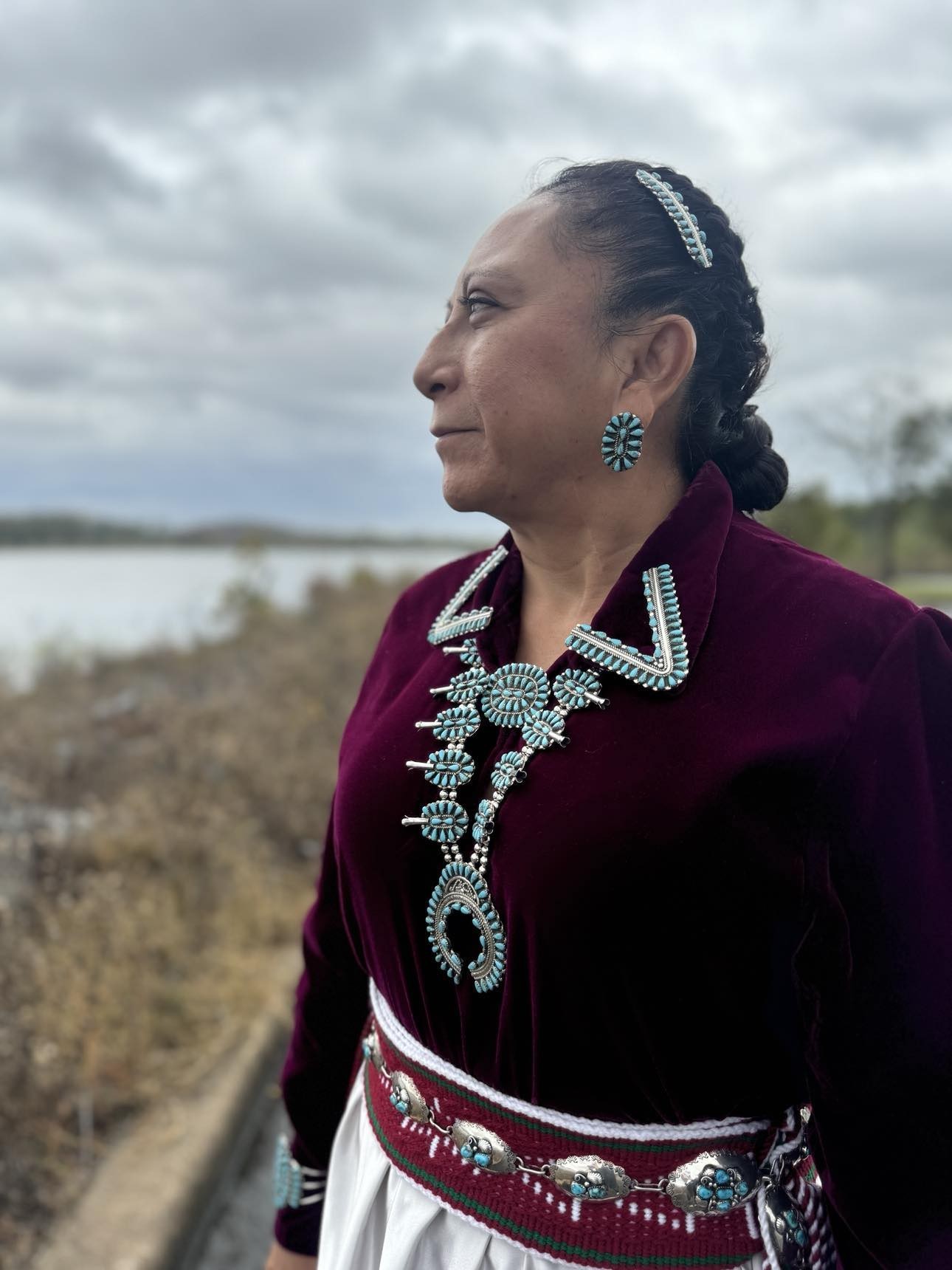
“When someone digs up and loots these artifacts, they are taking away a part of our heritage. These objects are created with a spirit and purpose; they hold significant meaning,” said Casandra Beaver, a member of the Navajo Nation and Administrative Assistant with the U.S. Army Corps of Engineers, Little Rock District. (ABOVE)

Digging for and stealing artifacts and remains from prehistoric Native American and historic archaeological sites is a serious issue that disrespects cultural heritage and threatens invaluable historical knowledge.

The theft and vandalism of these sites, particularly on government property, is a growing concern that demands urgent action.  Each artifact carries a story, a connection to the past, and taking them diminishes our understanding of history. It's essential to respect these sites and preserve their integrity for future generations.

Many people may not realize that digging up artifacts is not only illegal but also deeply disrespectful, as it can disturb human burials and sacred sites.

“Just as it is unacceptable to search for artifacts in a cemetery or to steal sacred objects from a church altar, we must emphasize that the same unethical methods are employed to obtain pottery, woven items, jewelry, arrowheads, knives, and even human remains that some looters choose to display in their collections,” said Billie Burtrum, Tribal Historic Preservation Officer for the Quapaw Nation. “The Quapaw Nation fully supports the prosecution of looting and grave robbery, as these actions violate cultural heritage and displace the historical significance of the items taken.”

Additionally, searching for artifacts on private property without the landowner's permission is equally unacceptable.  This practice undermines the trust and respect owed to landowners and diminishes the personal and cultural significance of the land and its potential archaeological resources.

State laws exist to prosecute violators on private lands, emphasizing the seriousness of these actions.

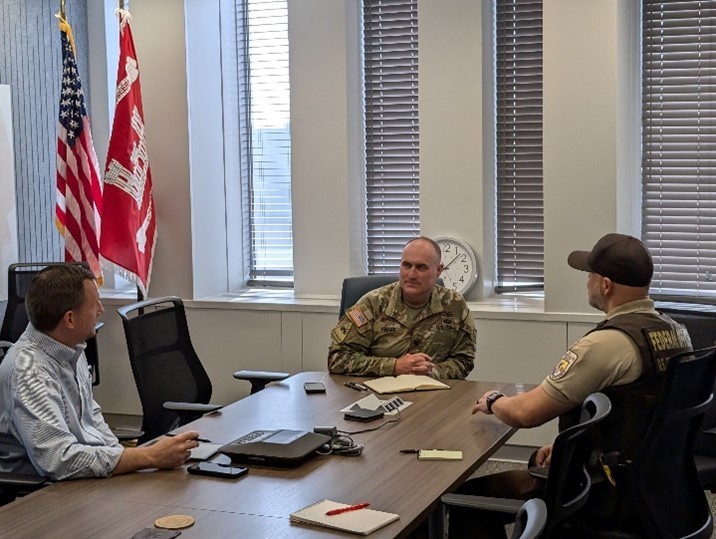
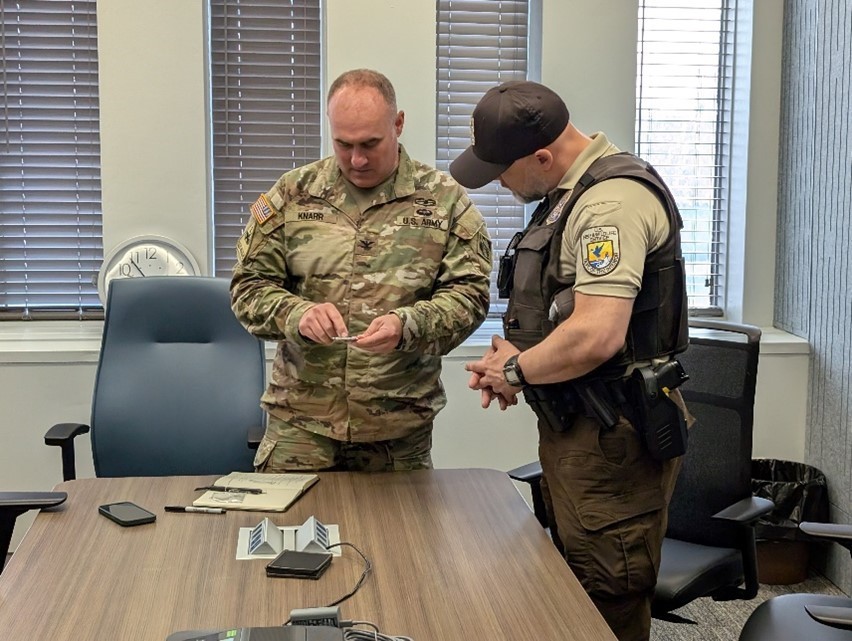
In response to this escalating issue, the USACE Little Rock District, is forming strategic partnerships with the Arkansas Game and Fish Commission and the U.S. Fish and Wildlife Service to raise awareness and intensify efforts to combat the troubling rise in looting incidents.

Strengthening Collaboration: USACE and U.S. Fish and Wildlife Service discuss law enforcement support on USACE managed lands
1 / 2 Show Caption + Little Rock District Commander Col. Damon Knarr, Deputy Chief of Operations Greg Matson and Captain of the U.S. Fish and Wildlife Service Division of Refuge Law Enforcement, Capt. Brandon Bland, meet to discuss USFWS law enforcement support on USACE managed lands in Little Rock, Ark., June 26, 2024.

(Photo Credit: Allen Wilson)
VIEW ORIGINAL
Strengthening Collaboration: USACE and US Fish and Wildlife Service discuss law enforcement support on USACE managed lands
2 / 2 Show Caption + Little Rock District Commander Col. Damon Knarr and U.S. Fish and Wildlife Service Division of Refuge Law Enforcement, Capt. Brandon Bland, meet to discuss USFWS law enforcement support on USACE managed lands in Little Rock, Ark., June 26, 2024.
(Photo Credit: Allen Wilson)
VIEW ORIGINAL

This collaborative initiative not only seeks to increase investigations aimed at deterring individuals from targeting artifacts on government lands but also emphasizes the importance of pursuing convictions to highlight the seriousness of the issue.

“Archeological sites are not just made up of individual artifacts; they consist of interconnected artifacts and the soil matrix surrounding them, which together tell the story of the past,” said Dr. Melissa Zabecki, State Archeologist for the Arkansas Archeological Survey. “When an artifact is removed, not only is a sacred object stolen, but the entire site's integrity is compromised as a crucial puzzle piece is taken away and valuable soil information disturbed.”

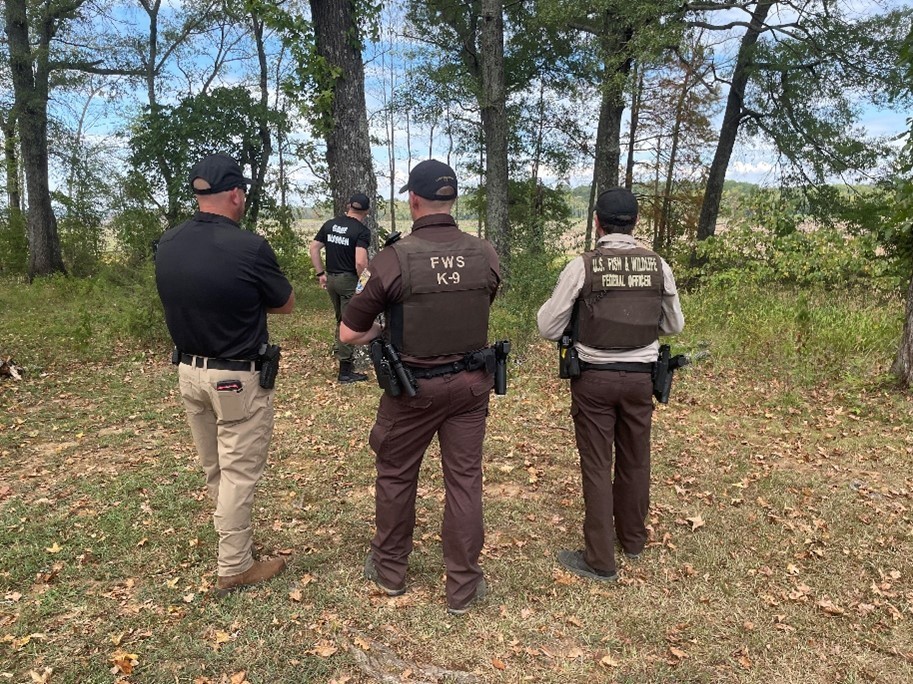
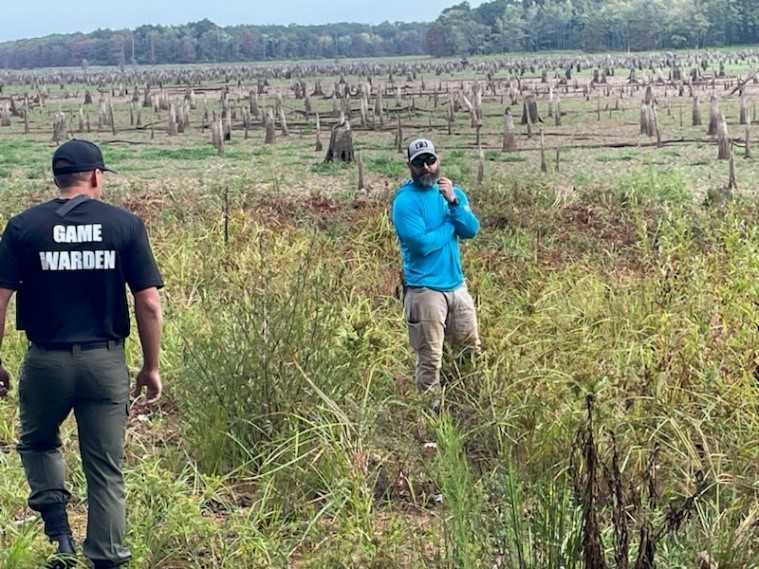
Unfortunately, public lands in Arkansas and Missouri have a troubling history of cultural resource exploitation.  To counteract this trend, Little Rock District Archaeologist Allen Wilson, has teamed up with Capt. Brandon Bland, who oversees the U.S. Fish and Wildlife Service division of Refuge Law Enforcement in Arkansas to provide training to law enforcement focused on identifying theft sites and understanding legal cases as they relate to cultural resources.

“We are extremely proud of our cultural resources training program and the devotion of the USACE, AGFC and USFWS training staff who make it successful,” said Bland.

Over the years, this program has led to heightened investigative interest and engagement from law enforcement at both state and federal levels. Notably, during a recent training session, an officer detected an Archeological Resource Protection Act violation on USACE lands, which was promptly reported to the USFWS and AGFC.

Violators of these laws face severe penalties, including potential prison sentences of up to five years without parole and fines reaching $250,000. Digging for and selling artifacts for profit not only undermines ethical standards but also shows a profound disregard for the irreplaceable nature of our cultural resources.

“There are no more prehistoric archaeological sites being created,” said Wilson. “When areas like these are destroyed or artifacts removed, we lose invaluable insights into the cultures of these regions. Our resources for understanding this history is already limited, making preservation essential.”

As these agencies confront the pressing issue of theft and vandalism at historical sites, it’s imperative to recognize the cultural significance of these artifacts and the critical need for their protection. Illegal activities associated with artifact theft encompass the unauthorized excavation of archaeological items—such as tools, pottery, and burial remains—regardless of whether the site is on government or private land.

Taking artifacts from their original locations violates laws such as the Archaeological Resources Protection Act, the Native American Graves Protection and Repatriation Act and state regulations, which exist to protect the integrity of archaeological sites and Native American graves.

Actively searching for and collecting artifacts with the intent to sell or display them constitutes looting and undermines cultural heritage.

“Site destruction has gone on far too long and it’s time to start respecting other peoples’ history by ending the practice of looting,” said Dr. Zabecki.

By raising awareness of these illegal activities and emphasizing the importance of cultural preservation and legal enforcement, communities can play a crucial role in safeguarding our shared heritage for generations to come.

KEEP READING:  https://www.army.mil/article/281175/respecting_the_past_the_importance_of_leaving_artifacts_undisturbed

CLICK OLDER POSTS (above) to see more news

CLICK OLDER POSTS  (above) to see more news

MEGWETCH THANK YOU

HUGE Thank you for visiting this blog and sharing this with your kin. It's appreciated. Contact Trace anytime! Use the form below.

BOOKSHOP

Please use BOOKSHOP to buy our titles. We will not be posting links to Amazon.

Popular Posts

To Veronica Brown

Veronica, we adult adoptees are thinking of you today and every day. We will be here when you need us. Your journey in the adopted life has begun, nothing can revoke that now, the damage cannot be undone. Be courageous, you have what no adoptee before you has had; a strong group of adult adoptees who know your story, who are behind you and will always be so.

OUR HISTORY

OUR HISTORY
BOOK 5: Lost Children of the Indian Adoption Projects