BACK UP BLOG (no longer updating)

This blog was a backup for American Indian Adoptees blog
USE THE SEARCH BAR or SEARCH TOPICS at bottom of this blog

If you need support

Support Info: If you are a Survivor and need emotional support, a national crisis line is available 24 hours a day, seven days a week: Residential School Survivor Support Line: 1-866-925-4419. Additional Health Support Information: Emotional, cultural, and professional support services are also available to Survivors and their families through the Indian Residential Schools Resolution Health Support Program. Services can be accessed on an individual, family, or group basis.” These & regional support phone numbers are found at https://nctr.ca/contact/survivors/ . MY EMAIL: tracelara@pm.me

Search This Blog

Friday, September 27, 2024

SO SURREAL: BEHIND THE MASKS Documentary


These masks need to go home... Trace

Documentary about repatriation efforts of masks premiered at TIFF
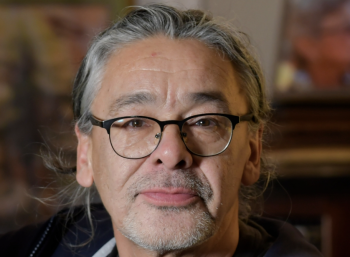
September 26th, 2024
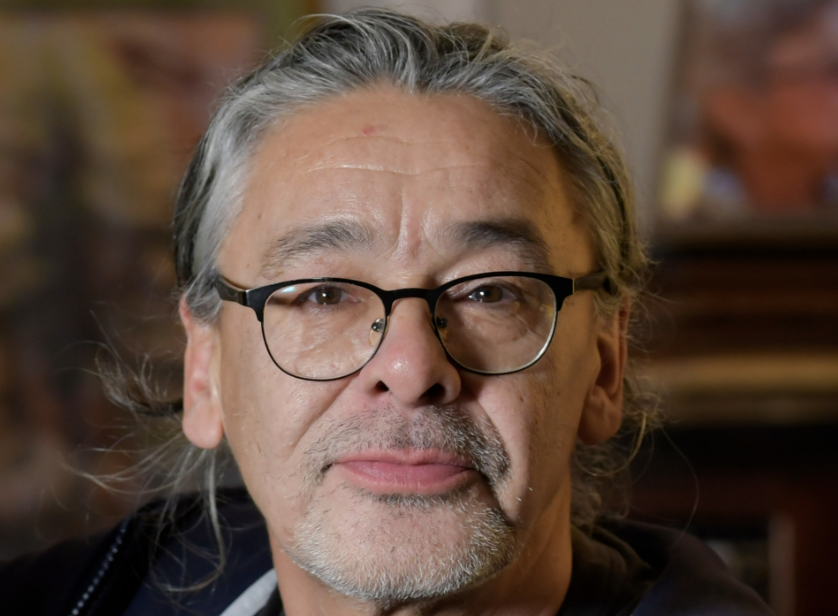
Filmmaker Neil Diamond


By Sam Laskaris,  Local Journalism Initiative Reporter

Neil Diamond’s latest film is one that he kind of stumbled into.

Diamond, a member of the Cree Nation of Waskaganish in Quebec, created the movie Red Fever, which sees him travelling to various countries to learn why people are fascinated with the stereotypical image of Natives.

Red Fever had its Canadian theatrical release this past June.

While working on that film, Diamond was inspired to write and direct another documentary titled So Surreal: Behind the Masks.

This movie had its world premiere earlier this month at the Toronto International Film Festival (TIFF).

Diamond’s latest film sees him once again travelling to various parts of the world to understand the history of Yupʼik and Kwakwa̱ka̱ʼwakw ceremonial masks.

The film examines the masks’ influence on the Surrealist art movement and includes scenes where efforts are made to return these masks, many of which were stolen, to their rightful owners.

Diamond said he himself learned quite a lot during the making of So Surreal: Behind the Masks.

“I don’t have a great knowledge of art but I know what I like,” he said, adding Spain’s Salvador Dali and American Man Ray are two of his favourite artists. “That’s pretty much all I knew about the surrealists. I knew very little. So, I learned a lot with this film.”

Joanne Robertson co-wrote and co-directed So Surreal: Behind the Masks with Diamond.  She had worked as a story producer/researcher for Red Fever.

Robertson explained that while Red Fever was being made Diamond and herself were among those who attended an art exhibit in Montreal, which focused on Picasso’s influence on African masks.

“As part of that exhibit we also learned the story of the masks and how there was this influence of Northwest coast masks on the surrealist,” she said. “So somehow we kind of ended up in that rabbit hole. And that sort of fit really well into Red Fever, which was the story of influence of sports, fashion, politics and at the time art.

“But from that exhibit and from the stories that we heard following going down that rabbit hole we ended up connecting with folks from out west in Alert Bay (in British Columbia),” she said.

That’s when it was discovered that Indigenous masks from that community ended up in the hands of surrealists in various locations. Some of those masks were stolen from the community in 1921.

Many Indigenous masks ended up in the hands of collectors or in museums. In his latest film Diamond attempts to get these masks returned.

“They are beautiful,” he said. “They weren’t created to be displayed. They tell a story, unbelievable stories, incredible stories behind the mask.”

Diamond believes returning masks will help with reconciliation efforts.

“I think so,” he said. “Things are changing, slowly. It’s just like if I stole something from you. Let’s say I stole your watch or something. You loved this watch. It’s a family heirloom. And if I returned it, I think you’d be very grateful.”

Robertson also believes repatriation efforts of the masks will help with reconciliation.

“I think it does move the needle a bit, hopefully,” she said. “In terms of reconciliation, the stories that are shared and if people start to listen like we talk about in the film, start listening to these stories and when they’re seeing the museums they’re seeing the pieces and they’re understanding where these pieces come from, I think is a part of reconciliation.”

Diamond is thrilled So Surreal: Behind the Masks had its world premiere at TIFF, one of the more prestigious festivals around.

“I never really expected it,” he said. “I was really surprised that we were invited. I’m grateful and happy.”

Diamond was pleased with the exposure that screening at TIFF will bring.

“I think the people that we talked to in the film are going to be very happy with the exposure that they’re getting,” he said. “They want people to know this story and TIFF is a great place to have this story told.”

The film will also soon be available on Canada’s Documentary Channel.

STORY:  https://windspeaker.com/news/windspeaker-news/documentary-about-repatriation-efforts-masks-premiered-tiff


Tocabe ships frozen meals ‘anywhere in the lower 48’

Tocabe is an Osage-owned Indigenous restaurant and online store founded by Ben Jacobs, and this year they’ve released a line of ready-to-eat, elevated frozen meals. The ready-made meals are made with Indigenous-sourced ingredients

Tocabe launched its Indigenous marketplace this year, selling Native foods to the mainstream.  Microwaveable meals for adults and children are among the shippable products sourced from Native producers.  Tocabe also expects a spike in orders beginning with Indigenous People’s Day on Oct. 14 and continuing through Native American Heritage Month in November. 

Founder Ben Jacobs describes Tocabe’s Indigenous sourcing as “Native-first, local second,” meaning if a Native farmer or producer has a Native ingredient, Tocabe will source from them before relying on a local organic option.

“We source from Native producers growing and raising traditional foods, but also utilizing ingredients which have been introduced post-contact, as long as they are Native-produced,” added Katrina Salon, a representative for Tocabe.  For example, she said, “Wheat berries from Ramona Farms and olive oil from Seka Hills.” 

Tocabe created their Indigenous marketplace because they want Native food to be accessible.  Native food is not well understood, encountered or available, but Tocabe hopes to bring Native foods to everyone, Jacobs said. 

In addition to creating mainstream access to Indigenous foods, Jacobs also aims to support Indigenous economic development.  Tocabe does this by supporting the development of Native farmers, ranchers, and food producers who are building “an equitable, sustainable and innovative food system … benefitting American Indian communities.”

Tocabe’s Indigenous marketplace has products for sale from such ethical Native producers for customers to use in their own cooking – or, they can order ready-made meals in bulk bundles or individually. In a children’s line called Little Harvest, Tocabe has options like blue corn pancakes, spaghetti and bison meatballs and French toast.  In the adult line of meals, there are “elevated” options like iko’s green chili stew.

One Harvest Meal option is the “bison Sonora bowl,” which has a wheatberry and white tepary bean blended with roasted squash purée, nopales, zucchini and Navajo-grown pinto beans, with braised bison and a chili sauce.  Meal bundles include the “Best of Bison” bundle, with the bison Sonoran bowl alongside bison chili, bison posu, sausage posu, wild rice jambalaya and a “sausage sunset” – similar to the Sonoran, but with roasted yams, bison sausage and other variations in sauce and the type of beans.  

The meals do have some preservatives, Salon said, due to some of the ingredients they include in their ready-made meals.  But Tocabe does not add any additional artificial or synthetic preservatives, according to Salon.

The company has scaled-up their distribution and they’re ready to fill all the orders they’re expecting through the fall, said Salon.  From home cooks who want to source Indigenous ingredients for their Thanksgiving menus to busy professionals who want fast, nutritious options for dinner, Tocabe is hoping to be one of the options that comes to mind.

Their frozen Indigenous meals can be prepared with a microwave, in the oven, or by heating in a sauté pan after defrosting.  To give one of the ready-made meals a try – or to order Indigenous-sourced ingredients – visit https://shoptocabe.com/.    

STORY: https://osagenews.org/tocabe-ships-frozen-meals-anywhere-in-the-lower-48/?utm_source_platform=mailpoet

Warm Springs Tribes receive $1.25 million Justice Dept. grant to investigate domestic violence, sex trafficking, other crimes


Confederated Tribes of Warm Springs

WASHINGTON (KTVZ) -- The Justice Department has announced more than $86 million in grants administered by the Tribal Affairs Division within the Office on Violence Against Women (OVW) to American Indian and Alaska Native communities to support survivors of domestic violence, dating violence, sexual assault, stalking, and sex trafficking.

The grants provided through the Violence Against Women Act will fund services for victims of these crimes while providing support for Tribal governments, including law enforcement, prosecutors, and Tribal courts, to enhance safety and support Tribal sovereignty.

The Confederated Tribes of Warm Springs is receiving $1.25 million, one of three grants under the Tribal Special Assistant U.S. Attorney Initiative “to support the collaboration between Tribes and U.S. Attorneys’ Offices in their investigation and prosecution of domestic violence, sexual assault, dating violence, sex trafficking, and stalking cases in Indian country.”

The Tribal Affairs Division within OVW is responsible for the administration of Tribal-specific grant programs and initiatives, management of Tribal-specific training and technical assistance, and coordination with other federal departments and Justice Department offices on Tribal issues.

Principal Deputy Director Allison Randall of OVW made the announcement Tuesday at the annual Tribal Sexual Assault Services Program Institute, a convening of Tribal officials, victim advocates, and other Tribal leaders, as well as OVW-funded training and technical assistance advisors, who work to support Tribes in developing and improving programs to support survivors of sexual assault.

SOURCE:  https://ktvz.com/news/warm-springs/2024/09/25/warm-springs-tribes-receive-1-25-million-justice-dept-grant-to-investigate-domestic-violence-sex-trafficking-other-crimes/

Sugarcane: “I could feel the presence of that devastating and violent history — a history that is largely invisibilized in Alaska.”

A new film highlights the traumas inflicted on Indigenous children by residential schools

Alaskans say that history needs more attention. “Sugarcane” is set in British Columbia. But after recent screenings in Sitka and Anchorage, advocates say the documentary’s themes are as relevant and urgent just across the Canadian border in Alaska.

By: - September 25, 2024 5:00 am
St. Joseph's Mission Indian Residential School, a site featured in a scene from the new documentary Sugarcane. (Sugarcane Film LLC)

St. Joseph’s Mission Indian Residential School, a site featured in a scene from the new documentary Sugarcane. (Sugarcane Film LLC)

This story contains difficult subject matter relating to Canada’s and America’s history of operating residential schools for Indigenous people. The National Native American Boarding School Healing Coalition has gathered resources for self-care at this site.

A new documentary, “Sugarcane,” recounts the searing, traumatic history of colonization and forced assimilation of British Columbia’s Indigenous people through a network of what are known as Indian residential schools. 

The film features former students and their descendants seeking truth, reconciliation and healing from the nation’s legacy of those schools — institutions that the Canadian federal government now says carried out a “cultural genocide” through physical and sexual abuse.

After recent screenings in Sitka and Anchorage — and with the approach of the annual Sept. 30 commemoration for survivors — advocates say the film’s themes are as relevant and urgent just across the Canadian border in Alaska. 

Churches and the federal government once operated a similar network of roughly two dozen such schools in Alaska starting in the 1870s, according to federal records.

Those institutions, advocates say, inflicted their own traumas that still cast a shadow over Alaskan survivors and their relatives — many of whom have not had the same chance to process the painful history in the way that’s shown onscreen in the new film.

“I could feel the tension in my body. I was shaking all night; I still feel it now, two days later,” Ayyu Qassataq, a 44-year-old Yup’ik and Iñupiaq advocate, said after watching Sugarcane at its packed screening last month at the Anchorage Museum. “I could feel the presence of that devastating and violent history — a history that is largely invisibilized in Alaska.”

The Canadian federal government established a Truth and Reconciliation Commission in 2008 in response to class action lawsuits filed by survivors of the country’s residential schools. 

The commission ultimately concluded that the Canadian schools were a “systematic, government-sponsored attempt to destroy Aboriginal cultures and languages and to assimilate Aboriginal peoples so that they no longer existed as distinct peoples.”

Sugarcane’s two directors, who spoke onstage with Qassataq immediately after the Anchorage screening, said they want the movie to lead to deeper understanding among both Indigenous and non-Indigenous people of the systems that operated on both sides of the border. 

That’s especially the case in the U.S., they said, where the federal government hasn’t as thoroughly accounted for the schools’ history as in Canada. 

In that country, the government has provided some $7.5 billion in restitution for Indigenous people, according to the New York Times. 

The Canadian federal government also is currently spending more than $150 million to support tribes as they document, locate and commemorate missing children and unmarked burial sites at former residential schools. In 2008, the prime minister formally apologized for the school system.

Julian Brave NoiseCat, co-director of Sugarcane, speaks after a screening in August at the Anchorage Museum. Co-director Emily Kassie is at left, and Ayyu Qassataq, a Yup’ik and Iñupiaq advocate, is at right. (Photo by Nathaniel Herz/Northern Journal)

“There is not a parallel process of truth and reconciliation happening in this country in as robust a way as there is in Canada,” co-director Julian Brave NoiseCat, who explores his family’s own traumatic history in Sugarcane, said in an interview just before the screening. He added: “It takes a lot of courage to have the conversation. And our hope is that this film inspires people across the country who are living in the legacy of this genocide to have those conversations.”

Sugarcane, described by the New York Times as “stunning” and a “must-see” film, tells the story of a single Canadian First Nation in British Columbia, and its efforts to excavate and account for the deep harms inflicted by a Catholic-run boarding school. 

NoiseCat’s grandmother was a student at the school, where she gave birth to NoiseCat’s father. Harrowing scenes feature survivors and former workers recounting how unwanted babies born to Indigenous students at the school were sometimes thrown into an incinerator.

KEEP READING:  https://alaskabeacon.com/2024/09/25/a-new-film-highlights-the-traumas-inflicted-on-indigenous-children-by-residential-schools/

September 30 | ORANGE SHIRT DAY #TRC


Experts available to comment ahead of National Day for Truth and Reconciliation

Topics include Indigenous health, preservation of culture and languages, Indigenous history and Indigenous knowledge   

LINK: https://mediarelations.uwo.ca/2024/09/24/experts-available-to-comment-ahead-of-national-day-for-truth-and-reconciliation-2/

Monday, September 23, 2024

Locked Up in Museums


Locked in a museum - it all makes me sad... I do not support Smithsonian... Trace


THEIR WEBSITE:  https://www.smithsonianmag.com/blogs/national-museum-of-natural-history/2024/09/19/fetching-fossils-and-unwrapping-mannequins-heres-what-happens-when-a-museum-exhibition-closes/?spMailingID=50200666&spUserID=OTgzMTkxMTc1NzQ4S0&spJobID=2782391134&spReportId=Mjc4MjM5MTEzNAS2

Check Out These Wondrous Objects on Display Before They Return to the Museum’s Collection

Canadian Medical Association Apologizes for Harming First Nations People | HEALING STONE at Seneca

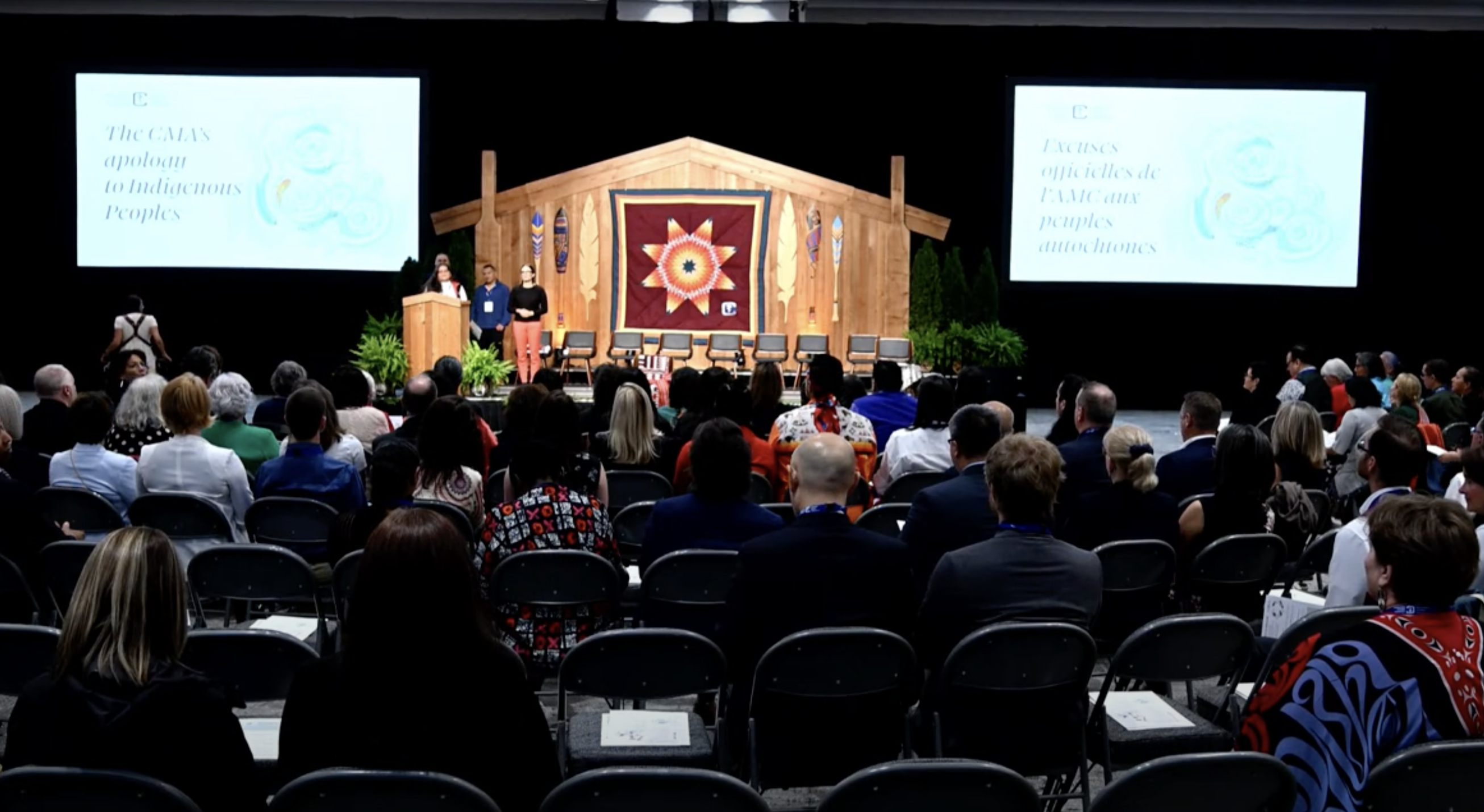
The Canadian Medical Association (CMA) apologized for its role and the role of the medical profession in past and ongoing harms to First Nations, Inuit, and Métis Peoples in the health system.

In presenting the apology at a ceremony held on Wednesday, Sept. 18, in Victoria on the ancestral lands of the lək̓ʷəŋiʔnəŋ-speaking people of Songhees and Xwsepsum Nations., CMA President Dr. Joss Reimer spoke of the organization's commitment to being accountable and working together with Indigenous Peoples to do better in the spirit of humility and reciprocity.

“We have not lived up to the ethical standards the medical profession is expected to uphold to ensure the highest standard of care is provided to patients and trust is fostered in physicians, residents and medical students,” she said. “We realize we have left Indigenous Peoples out of that high standard of care.”

The ceremony also included singers, drummers, dancers, musicians and storytellers.

Approximately 225 guests, including local and national Indigenous leaders, members of the CMA Indigenous Guiding Circle and Indigenous Survivors listened as CMA leadership outlined the organization’s path to an apology.

“Today, we turn the first page of a new chapter in the CMA’s history,” said Dr. Alika Lafontaine, CMA president (2022–23). “It's a chapter that we hope First Nations, Inuit and Métis Peoples can write with us together, as we work toward a health system that provides Indigenous Peoples with the right care, at the right time, in the right place, in a good way.”

That path included an in-depth review of more than 150 years of archives, which revealed the role the CMA, and the medical profession, have played in the mistreatment of Indigenous Peoples, whether through action or inaction.  These harms include the devastating impacts of Indian hospitals, forced medical experimentation, forced sterilization, child apprehensions, systemic racism, neglect and abuse within the health care system.

The CMA’s first Indigenous president, Dr. Lafontaine announced the association’s commitment to an apology in June 2023, as an important part of the CMA’s response to the Truth and Reconciliation Commission of Canada’s Calls to Action.  With the goal of creating meaningful change in health care and in the relationship between physicians and Indigenous Peoples, the CMA is hoping the apology inspires members of the profession and medical organizations to begin their own reconciliation journeys.

Building on past reconciliation work, the CMA’s ReconciliACTION Plan outlines how it will advance health and well-being for Indigenous Peoples, support the medical profession’s journey toward truth and reconciliation, and promote internal reconciliation as an organization.

SOURCE: https://nativenewsonline.net/health/canadian-medical-association-apologizes-for-harming-first-nations-people 


Seneca Iroquois (Alleghany) Museum: https://www.senecamuseum.org/

The Healing Stone will remain at the cultural center for two years before returning to New Zealand for the next World Indigenous Suicide Prevention Conference. Alongside the stone, the Seneca Nation received other gifts from previous conference hosts, which will also be displayed at the cultural center.

The Onöhsagwë:de’ Cultural Center is open six days a week and offers exhibits, collections, and educational programs. To learn more visit their website.


LOCATION: Salamanca, New York 

ALSO READ: Healing Stone from World Indigenous Suicide Prevention Conference on Display at Seneca Museum

Remains belonging to dozens of Native ancestors set to return to tribal nations in four states

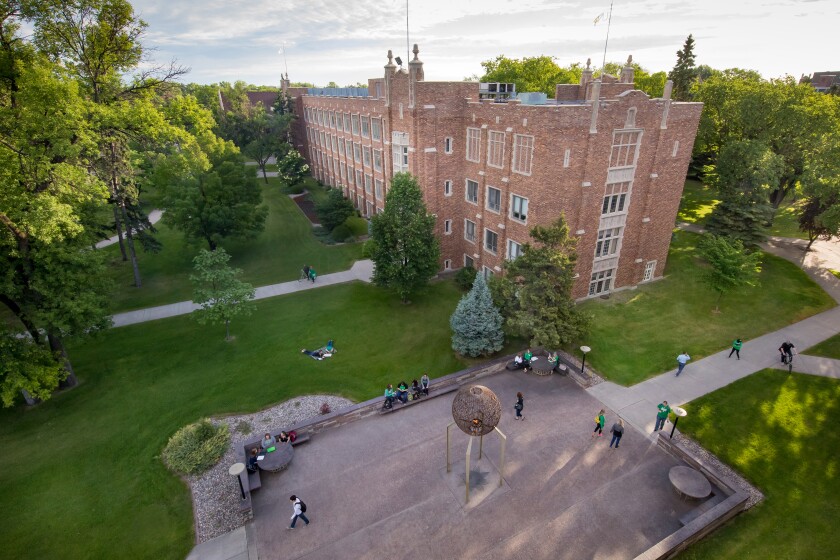
Students gather around the eternal flame on UND’s campus. Eric Hylden/Grand Forks Herald

The first of the human remains identified in the university’s archives became available for repatriation to Native American tribal nations on Thursday.

Now, the remains of dozens of Native ancestors, along with more than 1,000 funerary objects and other artifacts, can be returned to tribal nations across the region.

“It’s finally done,” said Keith Malaterre, director of the Indigenous Student Center and a member of the Turtle Mountain Band of Chippewa Indians. “They finally get to go home.”

All told, the remains of some 57 ancestors and associated funerary objects are now available for repatriation, according to the two Federal Register notices published in August.  Tribes have been able to submit written claims for ancestral remains since the notices went out.

Per the Federal Register notices, the remains have a “reasonable connection” to nearly two dozen Native tribes, including all five tribes in North Dakota as well as tribes in South Dakota, Minnesota, and Wyoming.

Many of the remains in question came from excavations of burial mounds across North Dakota.  Ancestral remains were received by the university as early as 1907 and as late as 1982, according to the notices.

The university has also issued notices of intent to repatriate several sacred objects to area tribes, including the Turtle Mountain Band of Chippewa Indians and the Sisseton-Wahpeton Oyate of the Lake Traverse Reservation in South Dakota.

An unspecified amount of ancestral remains or related objects possessed by UND was also transferred under the legal authority of the U.S. Army Corps of Engineers in August, in order to comply with the Native American Graves Protection and Repatriation Act.

The return of ancestral remains comes just over two years after UND first announced it had located what it estimated at the time as around 250 boxes of sacred objects and the remains of what was initially estimated to be 70 Native American ancestors.

Faculty had first identified ancestral remains in the university’s possession in March 2022, beginning months of discussions with area tribal nations.

President Andy Armacost issued an apology to tribal nations across the country and pledged to return the remains and any sacred objects in the university’s possession to their respective tribes.

Since 2022, the university has worked since then with the affected tribes as well as multiple state and federal agencies to inventory the ancestral remains and identify their rightful recipients while remaining in compliance with NAGPRA.

Crystal Alberts, co-chair of UND’s NAGPRA compliance committee, says staff has searched “building to building, floor to floor, door to door” to identify any ancestral remains in the university’s possession.

Even so, she did not rule out the possibility of more ancestral remains being found in the future.

“I can’t definitively say no one else will be found and there is no one else,” Alberts said. “That would be an irresponsible statement.”

Dianne Desrosiers, the tribal historic preservation officer for the Sisseton-Wahpeton Oyate tribe, credited UND for its handling of the reparation process.

“I have to commend UND,” Desrosiers said. “They worked with the tribes and did everything they could within their power to make this process easy and smooth for tribes.”

As opposed to its very public early stages, administrators have elected to avoid publicizing this latest step in the repatriation process.

An email went out to members of the university’s Indigenous community in July informing them of the forthcoming Federal Register notices.

“This is a very private and sacred time for our tribal nations and we want to respect that,” Armacost told the Herald earlier this month, adding the affected tribes had been “very patient” over the two years working with the university.

Keali’i Baker, a third-year law student who is president of the Native American Law Students Association, says he believes the end of the repatriation process will mean relief for Native students and the opportunity to heal.

“I think students will just be happy it's over,” said Baker, a member of the Mandan, Hidatsa and Arikara Nation. “We’ll always be sad it happened in the first place and it wasn’t taken care of sooner.”

Still, he noted, he felt the university, and Armacost in particular, had handled the task of repatriation as best they could.

The process of repatriating sacred objects and other objects of cultural patrimony will likely take longer than the return of ancestral remains.

According to a summary submitted by UND to the National Park Service under NAGPRA, UND has sent summaries of the sacred objects in its possession to 49 tribes that may have a claim to those items.

Two tribes and one lineal descendant have reached out to claim sacred objects so far. The Sisseton-Wahpeton Oyate tribe is claiming a pipe that belonged to a series of tribal chiefs named Standing Buffalo, per Desrosiers.

She said the Sisseton-Wahpeton Oyate tribe seeks to display the pipe alongside other sacred objects, with the goal of establishing a museum documenting the tribe’s history.

“We want to be able to educate people about us, about who we are, what our history here has been and how long it has been, because we have been here for thousands of years,” she said.

She declined to share specific details on how the tribe will address the return of ancestral remains.

“It is a very private thing,” she said. “We are repatriating human remains. It would be akin to going to retrieve your ancestors out of a museum or research facility.”

Malaterre, who also served on the repatriation committee, said he anticipated his tribe would hold a traditional burial for the ancestral remains the tribe receives from UND.

He said the tribe had responded similarly to the repatriation of the remains of ancestors who died at federally-run boarding schools.

A proper burial in the Ojibwe tradition is important, Malaterre said, because it helps to shepherd the spirit into the afterlife.

“I’m just happy they’re in the right place and at peace,” he said. “That they’re not in a state of unrest, that their spirit has moved on.”

US navy apologizes for razing of Native Alaska communities in late 1800s

USS Saginaw, probably at Mare Island Navy Yard in 1862.

In ceremony in Kake, military acknowledges bombardment of village that destroyed it and led to many deaths

Sat 21 Sep 202

In a ceremony Saturday afternoon, the US navy apologized for firing upon and torching the Alaska Native village of Kake in 1869.

Surrounded by tribal Chilkat weavings, historic photographs and other Lingít artwork in the Kake elementary and high school gymnasium, R Adm Mark B Sucato expressed the military’s regret, in the first of two apologies planned by the military for bombardments of Alaska Native communities in the late 1800s.

“This has been 155 years in the making,” said Joel Jackson, the president of the Organized Village of Kake, of the apology to the Lingít (often known as the Tlingit) people. “It’s becoming real because we never talked about it and now we are.”

“They burned everything. All the shelters, all the food caches, the canoes,” Jackson told the Washington Post. Although no one was killed during the winter bombardment, he said the destruction of the community and its supplies and canoes led to many deaths.

READ: https://www.theguardian.com/us-news/2024/sep/21/us-navy-to-apologize-for-razing-of-native-alaska-community-in-late-1800s?CMP=share_btn_url

ABOUT SAGINAW: wiki

https://en.wikipedia.org/wiki/USS_Saginaw_(1859)

Saturday, September 21, 2024

Peehee Mu’huh (Thacker Pass)


Over the past couple years, you’ve heard several times from us about the Indigenous resistance to construction of what’s slated to become the world’s largest lithium mine near Peehee Mu’huh (Thacker Pass), on the ancestral lands of our Paiute and Shoshone relatives in so-called Nevada. We remain ever grateful to Lakota Law supporters like you who have taken action to try to stop the mine and helped us raise funds to help support the legal defense of water and land protectors targeted by law enforcement there.

Those issues aren’t going away.  But today, I want to share with you something I hope will lift your spirits.  Each year, on Sept. 12, the descendants of Ox Sam (according to the lore of the people, one of just three Paiutes who survived the 1885 Mountain Meadow Massacre) host a run to honor his memory — and all who were lost. This year, I traveled out to participate with my daughter, Tokata, and Antoine Running Bear of the Native American Youth Organization (NAYO). 

I invite you to watch our new video, narrated by Tokata, which highlights her participation in the run and offers our appreciation to the grandmothers and all those who organized this important recognition of history and resilience.

Watch: Tokata put in some miles to honor our Paiute relatives and their ancestors!

It should go without saying, but these lands — and many sites contained within them — are sacred.  While we may not, in the end, be able to halt the mine’s construction, I’m grateful that you have helped us make an impact by publicizing its threat to Native homelands, sacred burial grounds, and a delicate ecosystem with several threatened species. Your support has empowered what must be an ongoing conversation about the continued necessity to gain consent from frontline communities as we transition from fossil fuels to “clean” energy like lithium, cobalt, and other critical minerals.

20% of these sought-after commodities lie under land currently controlled by tribal governments. Even more minerals and other resources are contained within land Native nations possess and over which we hold legal claims — titles which have never been extinguished. We have a right to be in our lands and withhold our consent on infrastructure which puts us in the sacrifice zone.

Thank you for helping us make new friends in this struggle. Part of what Lakota Law always aims to accomplish — with a renewed emphasis as we complete our transition to full Indigenous leadership under the Sacred Defense Fund — is the forging of rock-solid relationships and partnerships with our fellow Indigenous People, across Turtle Island and the world. On this trip, we met Ivan Bender, from the Hualapai Tribe in Arizona, whose lands are also currently threatened by an exploratory drilling project for lithium. Mining for lithium, gold, and other resources also remains a major issue closer to home in the Black Hills.

Please stay with us as we move forward.  We’ll have much more to say — and there will be more you can help us do — to protect sacred lands, elevate Indigenous voices, and safeguard the Native communities who seem always to be disproportionately affected by incursions from extractive industries. Your friendship means the world to us.

Wopila tanka — thank you for standing up for the sacred!
Chase Iron Eyes
Director and Lead Counsel
Lakota People’s Law Project
Sacred Defense Fund


Friday, September 20, 2024

The last Indian Wars were dirty wars. The new Indian Wars are as well.


Indian Fighting Today: Gibson, Dunn and Crutcher

News | September 19th, 2024

By Winona LaDuke | winona@winonaladuke.com

The business of Indian Hating is a lucrative one. It’s historically been designed to dehumanize Native people so that it’s easier to take their land. ‘Kill the Indian, save the man,” manifest destiny, and “merciless Indian savages” are all phrases which underscore the deep hatred of the American Empire for Indigenous peoples. After all, this is our land, indakiingimin, the very land to which we belong.  And to make America, it’s important to steal it.

That’s pretty much history — a lot of theft: land, cultural items and people. And where possible, the laws themselves. It starts with hating and expands to war. Welcome to the modern Indian Wars. Some of them are in the courtroom.

There’s a long list of law firms who specialize in modern day Indian fighting. It’s usually to do with tribal jurisdiction over water, land, or children, all pretty basic for the survival of a people. Most of those law firms have other clients like real estate or title insurance folks, mining companies, oil companies, county governments and the like who want to have access to more Indian land or people. Those interests need a modern cavalry; that’s some lawyers.

Gibson, Dunn and Crutcher is a big shot law firm for fighting Indians. That’s sort of their practice. These days, they are the attorneys for Energy Transfer in a $300 million case known as a Strategic Lawsuit Against Public Participation (or SLAPP suit), intended to stop Greenpeace, the international environmental network, from supporting Indigenous peoples. Gibson, Dunn and Crutcher appear to want to stop Indigenous peoples from protecting their lands. And while they are at it, scare away any allies to protect those lands.

It’s called a SLAPP suit. SLAPP lawsuits are more typically targeted at journalists and human rights defenders. They are meant to shut down anyone who opposes the corporation which sues. Thirty-two states have passed regulations discouraging these lawsuits, not only because they deter basic civil rights, but also because they waste a lot of time in the court. North Dakota is not among those 32 states.

Filed originally in 2019, Energy Transfer (ET) accuses Greenpeace of criminal behavior — trespassing, vandalism, arson, as well as the harassment and assault of construction workers — to stop the Dakota Access pipeline. Energy Transfer basically holds Greenpeace responsible for most of what happened at Standing Rock.

That’s rather surprising, since many of us were there, and frankly had no idea Greenpeace was in the camp. As a matter of fact, ET contends Greenpeace orchestrated a campaign that ultimately convinced the federal government to halt construction of DAPL for roughly five months. A lot of us wrote letters to the federal government and the Army Corps of Engineers and Greenpeace didn’t even give us pencils.

It is likely that Gibson, Dunn and Crutcher isn’t just interested in Greenpeace; they are actually interested in diminishing tribal sovereignty, and tribal rights. Let me explain.


Supreme Court and ICWA

Remember the U.S. Supreme Court case on the Indian Child Welfare Act? The Brackeens, in Haaland v. Brackeen (one of three lawsuits where no Native foster parents wanted to adopt Native children) had Gibson, Dunn and Crutcher represent them for free.  That’s right, pro bono.

The case, if it prevailed, would have gutted the Indian Child Welfare Act. That’s a hard fought for law to protect Native communities.

Mother Jones Magazine explains why pro bono made sense to the firm: “Taking a financial loss litigating a family law case is a small investment toward advancing the interests of the rest of the firm’s clients in diminishing the last, tenuous pockets of tribal sovereignty…. make no mistake that it is a business decision. All the ‘everyone deserves a lawyer’ rhetoric doesn’t play here — the firm is taking on a pro bono case for a family with seemingly no injuries as part of a broad attack on tribal rights.”

“One of the things that tribes need to continue to exist is their children,” says Shannon Smith, executive director of the Indian Child Welfare Act Law Center, which provides legal services for Native families. “Things just don’t exist if you don’t have kids.”

Ultimately, in a narrow margin, the Supreme Court affirmed the Indian Child Welfare Act, and ruled against the Brackeens, dashing Gibson, Dunn and Crutcher’s hopes. They have other battles.

Welcome to the modern-day Indian Wars.

Chevron in Ecuador

The Cofan are a water people who travel and live upon the Aguarico River in what’s called Ecuador. Because of American oil companies, they live in the oil wasteland.

Texaco began operating the Lago Agrio oil fields in the 1960s. By the 1990s, millions of gallons of crude oil had been spilled throughout the region. Toxic waste from drilling and refining was stored in unprotected pits, toxifying the soil and contaminating water supplies.

There were 30,000 plaintiffs in a case against oil producers, mostly Native. The case took almost 18 years to resolve, but in 2011 an Ecuadorian court ruled against Chevron, which now owned Texaco, ordering it to pay $18 billion. While that figure was later reduced to $9.5 billion, it still represented one of the largest judgments ever against an oil company. Rather than pay up, Chevron, the $200 billion company, refused to clean up and instead removed its assets from the country.

Enter Gibson, Dunn and Crutcher.

The attorney for the Ecuadorian Native people was a man named Steven Donziger. None of Donziger’s original 30,000 Ecuadorian clients — suffering and dying from cancers and other diseases that many believe are related to the oil contamination —have received a penny since the original lawsuit was filed in 1993.

The Ecuadorian court awarded $l8 million to the people of the river. Then it was halved. Three years after it all stopped in New York. Here’s what happened: Chevron’s attorneys, Gibson, Dunn and Crutcher, argued successfully that Steven Donziger had secured the $9.2 billion judgment by corrupt means. The lawyers argued that Donziger violated U.S. federal laws prohibiting attempted extortion, wire fraud, money laundering, witness tampering, and obstruction of justice, as well as the Foreign Corrupt Practices Act. That was in 2014. Then the state of New York arrested and disbarred the lawyer, Steven Donziger.

The river, the water, is still full of oil. And the people are sick. But Gibson, Dunn and Crutcher won.

Gibson, Dunn and Crutcher will be at the front lines of the Indian Wars in North Dakota. Looks like they hope to discredit Greenpeace, make them pay $300 million and be sure that no one says a peep about that dirty oil pipeline.

Greenpeace’s attorney Everett Jack told Southwest District Court Judge James Gion that “Greenpeace cannot be responsible for the entire protest without evidence.” Jack said only six people working for Greenpeace ever attended the demonstrations.

Greenpeace is a big fish in the environmental world.

But Lakota lands, waters and jurisdiction are a bigger fish. We will see how the case rolls out in Morton County, but ultimately Gibson, Dunn and Crutcher has proven to have a larger agenda for Indian Country. The last Indian Wars were dirty wars. The new Indian Wars are as well.

Historic Fort Wayne to host Indigenous wild rice camp

 Preserving culture, reconnecting and ricing is a very good thing... TLH

Rosebud Bear Schneider and her son, Sonny, use a push pole to harvest rice. Credit: Antonio Cosme

Along the shores of the Detroit River and in almost every Michigan waterway,  manoomin, or wild rice, used to grow abundantly. 

Sacred and central to Great Lakes tribes’ origin stories, manoomin has largely disappeared due to development, pollution and other factors. But Indigenous people remain and they are bringing wild rice traditions back to Detroit. 

On Sunday, Historic Fort Wayne is hosting a rice camp where participants will craft wooden sticks for wild rice harvesting, “dance” on the rice in moccasins to remove the hulls and share a meal, among other activities. 

Rosebud Bear Schneider, a Southwest Detroit native and member of the Lac Courte Oreilles Band of Lake Superior Chippewa Indians, has been working for 10 years on cultivating Indigenous food sovereignty in Detroit. In the past, she would cook and serve wild rice at events to reconnect people to their traditional ways. 

“You would see a full room of people light up and get really excited, like, ‘I haven’t eaten that in a long time,’” said Schneider, who is a co-director of education and engagement at local farming nonprofit Keep Growing Detroit.

Teaching people how to process the rice will deepen that connection even further, she said. It’s the first time she can think of that the teaching was offered in Detroit during her lifetime.

“It’s another step to this path that we’re on to connect to this food, connect to our ways, connect to our spirit and connect to the land,” said Schneider, who will process manoomin for the first time this weekend. 

Teachings say Ojibwe people migrating from the East were told to establish where they found food that grew in water. They found wild rice in Lake Superior and made the region home. The rice grew abundantly along the Detroit River and in other parts of the city before 97% of the city’s coastal wetlands were destroyed for development in the late 20th century and 85% of the city’s inland streams were buried. 

The decimation has contributed to a disconnect between local tribes and the sacred grain, according to rice camp organizers.

“Manoomin, the food that grows on the water – it’s the whole reason that we Anishinaabe are even here,” said east side resident Jared Ten Brink, a member of the Nottawaseppi Huron Band of the Potawatomi and one of the event’s collaborators. “It’s so important to who we are, but I talked with my own family members, and most of them don’t know anything about it.” 

Manoomin harvest. Credit: Antonio Cosme

The closest place to Detroit where traditional wild rice harvesting occurs is several hours up north, creating a barrier for Detroit Natives to reconnect to their traditions. The wild rice camp hosted by the Detroit Indigenous People’s Alliance, Black to the Land Coalition and the Ecumenical Theological Seminary seeks to close the gap. 

“We want people to be able to experience wild rice here in Detroit,” said Antonio Cosme, co-founder of Black to the Land Coalition, a nonprofit that helps Black and brown people return to the land. Just a few weeks ago Cosme traveled to Lac du Flambeau, Wisconsin, to learn traditional manoomin harvest methods. 

Fort Wayne, the induction center for soldiers for every conflict from the Civil War to Vietnam, is the site of Native burial mounds and where members of the Potawatomi tribe once lived. On Sunday, attendees will smell the toasted rice, feel it beneath their feet and see it with their eyes. 

“It’s hard to really understand something if you can’t actually get your hands into it and do it, so this is a great opportunity where we can bring this to people who wouldn’t otherwise necessarily be able to have this experience,” said Ten Brink. 

Regrowing wild rice

At the state level, efforts are being made to regrow wild rice and recognize its importance.

Last year, Gov. Gretchen Whitmer signed legislation making wild rice the state’s official native grain, the first state to designate a native grain. In November, more than 70 groups from across the state gave input on a draft of the Michigan Tribal-State Manoomin Stewardship Plan, a joint partnership between the Michigan Wild Rice Initiative and U-M Water Center, funded with a $100,000 state grant from 2022.

The plan is still being finalized, said Ten Brink, who worked on it as a PhD student at U-U-M. Reseeding Detroit and Michigan with manoomin is complicated for a number of reasons, he said. 

“You can’t just harvest manoomin seeds from some place and go out and start tossing them,” he said. 

Jared Ten Brink harvesting rice at Tawas Lake in Michigan. Credit: Nigora Erkeava

Specific varieties need to be used for different locations. Reseeding can be made challenging by water current speeds and temperature, pollution, and species like phragmites, which take over an ecosystem and make it hard for native species like wild rice to thrive. It’s even harder in an urban setting like Detroit, where many waterways have been buried, said Ten Brink, including Bloody Run on the city’s east side near where he lives.

“It’s enclosed in a storm drain, it doesn’t exist as a river,” he said.  “Those are places where river rice would have been growing, but we don’t even have the rivers to restore it.” 

Another challenge is figuring out how to work together on the plan, he said.

“Wild rice restoration – a lot of the knowledge is held within the tribes, but a lot of the resources are with the cities, counties, states and the federal government.” 

And, climate change is an increasing threat. In Lac du Flambeau, the rice was struggling, Cosme added.

“You go to a rice bed and you’ll see that it’s a lot of water, there’s not much seed to harvest,” he said. “You start knocking the rice, and it’s not much coming into your boat.” 

The Wisconsin Department of Natural Resources confirmed in September that the wild rice production this year was significantly lower than average due to a warmer winter and heavy June storms. Factors that are made more likely due to climate change, which Ten Brink hopes to educate people about at Sunday’s rice camp. 

“In Southeast Michigan, we will see more and more severe weather as a result of warmer temperatures and that severe weather has a couple of big impacts for wild rice,” he said, primarily increased water levels and water temperatures. 

For non-Natives interested in the camp and the topic, Schneider wants them to know that Indigenous people still exist in Detroit and need support. 

Since 2018, when the city of Detroit had its first Indigenous Peoples’ Day, on what is alternatively considered Columbus Day, Schneider said the relationship between Indigenous people and the city has been growing, like District 6 representatives supporting the traditional maple sugarbush in Rouge Park. 

“We are still very much a thriving community and we still very much need that solidarity and support when it comes to these huge issues like feeding ourselves, having our neighbors recognize that we are still here and that Indigenous People’s Day is an actual and important day,” she said. 

The Sunday camp runs from 1-6 p.m. Registration is required and urban Natives will be prioritized.

SOURCE: https://www.bridgedetroit.com/historic-fort-wayne-to-host-indigenous-wild-rice-camp/

CLICK OLDER POSTS (above) to see more news

CLICK OLDER POSTS  (above) to see more news

MEGWETCH THANK YOU

HUGE Thank you for visiting this blog and sharing this with your kin. It's appreciated. Contact Trace anytime! Use the form below.

BOOKSHOP

Please use BOOKSHOP to buy our titles. We will not be posting links to Amazon.

Popular Posts

To Veronica Brown

Veronica, we adult adoptees are thinking of you today and every day. We will be here when you need us. Your journey in the adopted life has begun, nothing can revoke that now, the damage cannot be undone. Be courageous, you have what no adoptee before you has had; a strong group of adult adoptees who know your story, who are behind you and will always be so.

OUR HISTORY

OUR HISTORY
BOOK 5: Lost Children of the Indian Adoption Projects