BACK UP BLOG (no longer updating)

This blog was a backup for American Indian Adoptees blog
USE THE SEARCH BAR or SEARCH TOPICS at bottom of this blog

If you need support

Support Info: If you are a Survivor and need emotional support, a national crisis line is available 24 hours a day, seven days a week: Residential School Survivor Support Line: 1-866-925-4419. Additional Health Support Information: Emotional, cultural, and professional support services are also available to Survivors and their families through the Indian Residential Schools Resolution Health Support Program. Services can be accessed on an individual, family, or group basis.” These & regional support phone numbers are found at https://nctr.ca/contact/survivors/ . MY EMAIL: tracelara@pm.me

Search This Blog

Friday, September 13, 2024

Minnesota Joins Growing Number of States Allowing Adoptees New Access to Birth Records

 By

SOURCE: https://imprintnews.org/top-stories/minnesota-joins-growing-number-of-states-allowing-adoptees-new-access-to-birth-records/251720 

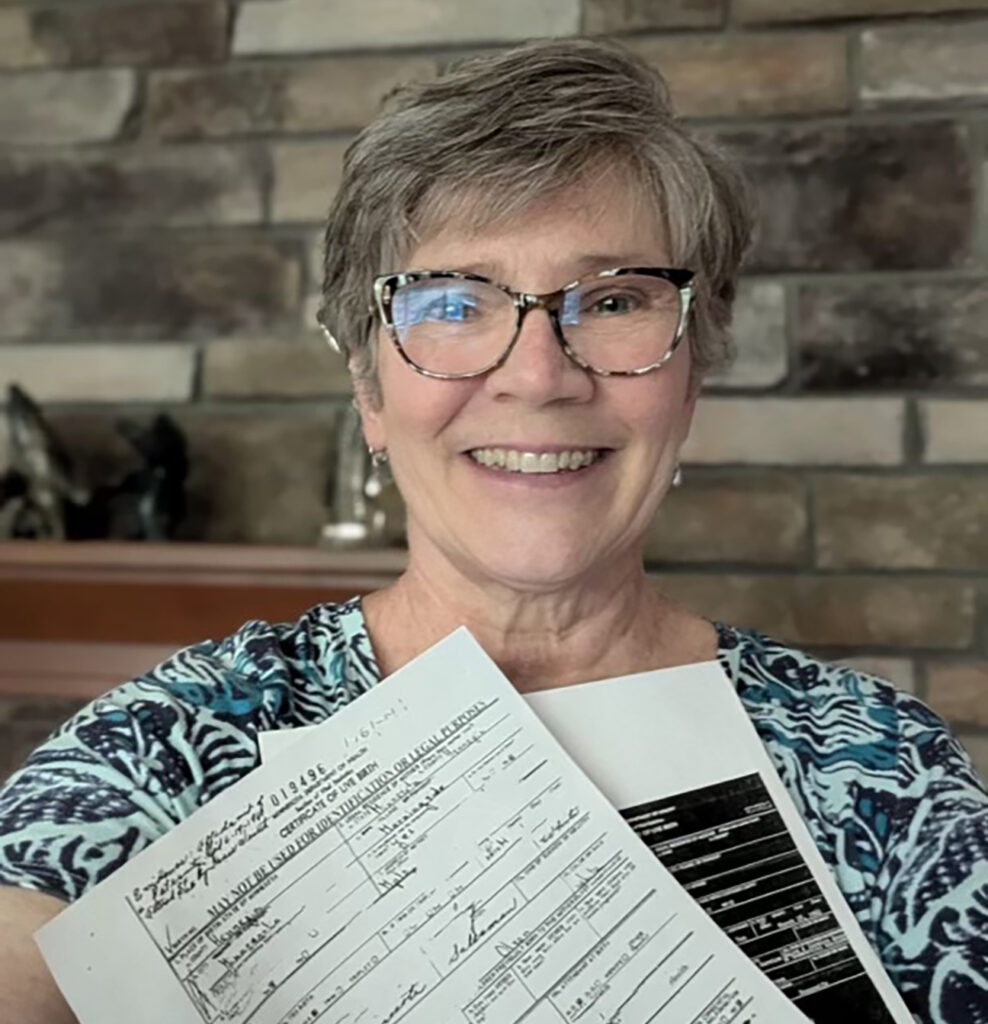
Sheri Sheeks quickly obtained her original birth certificate under Minnesota’s new law. (Note: some personal information on the document has been digitally redacted.) Provided photo.

For decades, U.S. adoptions were steeped in secrecy — private arrangements struck between parents and caseworkers. Pre-adoption birth certificates sealed in government archives often left the origin stories of adoptees undisclosed and inaccessible. 

Finding long-lost relatives through DNA testing and social media have upended that legacy. But confidentiality laws across the country have not kept pace. 

This summer, following decades of advocacy, Minnesota joined a growing number of states lifting all restrictions. Since enactment of a new law July 1, thousands of adoptees born in the state have received vital records that contain the once-concealed details of their birth. As of August 30, Minnesota’s Office of Vital Records had processed all 2,349 requests it had received, according to a spokesperson.

Sheri Sheeks, a 63-year-old retiree in the Minneapolis area, was one of the first Minnesotans to seek her original birth certificate after the law took effect just over two months ago. 

She said she had always puzzled over the “very bizarre” gaps in the birth certificate she’s had since childhood. No name of the hospital where she was born, no time of birth. 

Five years ago she learned why: a genetic test turned up a half-sister from the second marriage of a birth father she had never known.  Sheeks had been adopted, and her birth certificate was an “amended” version of the original.  The parents who raised her never shared that vital information before they died.

Sheeks said she had great adoptive parents, but often wondered whether they were told to keep the adoption secret, perhaps to protect her from being teased by other kids. Yet she remained acutely aware of a “key missing piece” in her life: the name of her biological mother. 

“I’d look in the mirror and say ‘Who the heck are you’?” she said.

So she faxed a request to the Minnesota Department of Health on the morning of July 1, the same day the new law went into effect. She was thrilled to see her birth certificate in the mail two days later. 

Her birth mother would be 95 today, and Sheeks is hoping to confirm whether or not she is alive. In the meantime, she said she has a new sense of closure — simply seeing her mother’s name and address on a formal document. 

“Now,” Sheeks added, “when I look in the mirror, I feel more grounded in who I am. I don’t have these loose threads hanging out.”


The Minnesota reform represents the latest win for a loosely knit national movement. The number of states granting adoptees unrestricted access to original birth certificates has nearly doubled since 2019, from eight to 15. It’s a quiet but momentous change for millions of American families with some connection to an adoption, including some 172,000 adoptees born in Minnesota alone, according to an estimate by the state Department of Health. Previously, the documents were only made available with a court order or affidavits of permission from biological parents, who could be unreachable or deceased. 

Private adoption agencies have also remained reluctant to release their internal case files to adoptees, but some agencies have begun to reconsider longstanding practices. 

Under the recently enacted bill authored by Sen. Erin Maye Quade and Rep. Steve Elkins, people over age 18 and who were adopted in Minnesota can access an original, pre-adoption birth certificate that typically includes biological parents’ names, birth location and time — with little hassle. Requests to the state are handled after applicants fill out a simple notarized form and pay a $40 fee. Wait times may be between a few days and a few weeks.

One leading national advocate for adoptees marveled at the progress.

“It’s been crazy,” said Greg Luce, the Minneapolis-based founder of the Adoption Rights Law Center. “Minnesota is my state. I live and vote in this state and advocate in it — to say that it can be done, that you can undo an incredibly complex law like Minnesota’s, it’s incredibly fulfilling to see that.” 

For decades, some Catholic groups, adoptive parents and adoption agencies opposed granting adoptees unfettered access to their vital records, raising concerns about the privacy of birth mothers or pain and confusion for adoptees. In a 2017 Minnesota Star-Tribune article, a state lawmaker pointed to opposition from the anti-abortion group Citizens Concerned for Life. 

Despite passage of Minnesota’s new law, two prominent and long-practicing Minnesota charitable nonprofits that work together on adoptions — Lutheran Social Service of Minnesota (LSS) and Children’s Home Society of Minnesota — list ongoing concerns. 

“Overall, Children’s Home and LSS support adult adoptees gaining access to their original birth record,” the groups’ website states. But they also warn the new law “may be difficult for some birth parents who believed their identity would remain confidential.”

Adoptees cite a range of reasons for seeking their original birth certificates. Like Sheeks, some want answers to gnawing questions, their parents’ names and medical history, the ability to complete a family tree, or to learn more about the circumstances of their birth. Others hope to reunite, or to meet extended family members. 

Others are driven less by an interest in personal details or a hoped-for reunion than by their belief that they have a right to these records like any other American citizen — that these personal records belong to them, and that accessing them is a matter of equal rights. 

Penelope Needham, speaking in support of Minnesota’s new law at a hearing last year. Screen capture from Minnesota Senate Media Services.

Penelope Needham spent three decades helping lead the Minnesota Coalition for Adoption Reform — a group that includes adoptees, birth parents, adoptive parents, and adoption professionals — and pressing lawmakers to change state policy that dates back to 1939.

“We shouldn’t be discriminated against because we were adopted as children,” said Needham, a former school teacher, 75. “It should be ours upon request.”

Needham, who was adopted as an infant, said having her own children as well as her elementary, middle and high school students motivated her to trek repeatedly to St. Paul to testify before lawmakers about the need for reform. She and other advocates have long sought to overturn legislation that previously only provided the “amended’’ birth certificates to adoptees, with no details about their births such as birth weight, location, time, parents’ addresses and occupations.

After a costly and lengthy process with her adoption agency, she had reunited with some family members decades ago and gained her mother’s consent for the state to release her own birth certificate. She knew the importance of family origin, and as a result, she later organized adoptee support groups for her students. Each school year, whenever she stood before a class of new students, she said she could sometimes guess who had been adopted. 

“When you’re adopted, you can be really good at adapting to other things, too. There’s a flexibility you can learn,” she added. “But I saw some students who just wanted to know: ‘Where did I come from?’ That’s a universal question we all have. There’s grief at the bottom of this.”


In recent years, both Republican and Democratic-controlled legislatures nationwide have approved birth certificate bills that eliminate all restrictions on adoptees’ access. Advocates in Minnesota say even though they have also had bipartisan support, Democratic control of both statehouses and the governors’ office since 2022 eased passage of its law. 

Needham and Luce said passage of a similar hard-fought reform law in New York in 2019 also helped. Since taking effect four years ago, nearly 37,000 people who had been adopted in the state have received original birth certificates, according to data provided to The Imprint by the vital records agencies for New York State and New York City.

Since then, in addition to New York and Minnesota, Connecticut, Louisiana, Massachusetts, Vermont, and South Dakota have made similar reforms, often with strong bipartisan support. 

Republican Rep. Marty Overweg, an adoptive father in the South Dakota Legislature, testified at a 2023 hearing in support of a bill signed by the Republican Gov. Kristi Noem a month later.

“When my son went to get his, he ran into more roadblocks than you can even imagine,” Overweg said. “And then, throwing $2,000 fees at them just to find out where they came from — who they originally were — that’s not fair.” 

Overweg testified that said fears about the emotional fragility of adoptees uncovering painful family history tend to be overblown. 

“Most of the time when they go back and look, it’s a good thing,” he said. “It’s not a scary thing.” 


Advocates for adoptees and birth parents have argued that the availability of DNA testing, online genealogical archives and public social media accounts have rendered any assurances of birth mothers’ secrecy all but obsolete. In her examination of dozens of adoption case files from the mid-20th century, the legal scholar Elizabeth Samuels found little evidence that mothers who placed children for adoption were even given explicit offers of lifelong secrecy. 

Professional services are also widely available to assist with nationwide searches. In the 1980s, Needham paid hundreds of dollars for the agency’s staff to help find her birth mother — a process that required intensive questioning and a letter expressing her intentions. The contact information later trickled out “in little pieces,” she said.

“They wouldn’t allow contact — only through the social worker. And then it was only by mail, and then it was a phone call,” she said. “But nobody gave identifying information. It was very controlled. I think they wanted to evaluate if you were ‘competent’ for a reunion.”

Only after the eventual reunion did Needham obtain her mother’s sign-off for her birth certificate. 

She said she will never forget finally meeting her biological sisters when she was 39. They had similar musical skills. They were teachers, just like her. And when the siblings sat down together, there were other traits they shared. They took off their shoes and socks and compared toes, happily noting remarkable similarities.

New Law Helps CA Tribes Keep Kids Out of Foster Care | SoCal Matters

Native American children in California's foster care system are frequently placed in non-relative, non-native homes. Although the U.S. Supreme Court upheld the 1978 Indian Child Welfare Act, ensuring child welfare agencies investigate ancestry, contested cases still emerge. This story explores the long-standing issues and the ongoing fight to protect Native foster care rights in California. 

 Learn more at https://bit.ly/3NNzJ4T

Inuit Voices: What is lacking is political will #MMIWG

Pauktuutit leader calls for Inuit voices to be heard in fight against violence

Nancy Etok shares experience from meeting with Indigenous women from U.S., Mexico earlier this month in Mexico City

Pauktuutit president Nancy Etok, left, speaks at the Sixth Convening of the Trilateral Working Group on Violence Against Women and Girls in Mexico City, which ran Sept. 3 and 4. (Photo courtesy of Pauktuutit Inuit Women of Canada)

By  Kierstin Williams

Inuit voices must be included in conversations about ending violence against Indigenous women, girls and gender-diverse people, says Pauktuutit president Nancy Etok.

Etok attended a trilateral working group that included representatives from Canada, the United States and Mexico on Sept. 3 and 4 in Mexico City on behalf of Pauktuutit Inuit Women of Canada, the national non-profit Inuit women’s organization.

The meeting aimed to address the alarming rates of violence against Indigenous women and girls.

“We were able to share what kind of work we do at Pauktuutit,” Etok said, adding she also had the chance to listen to what Indigenous women had to say about finding solutions.

“If I were to close my eyes and just listen, all women were facing all of the same struggles with violence,” she said.

The trilateral working group was established as a result of the North American Leaders Summit in June 2016, which brought national leaders from Canada, the U.S. and Mexico together to discuss the “alarming” rates of violence against this demographic, a joint statement from the group released Sept. 5 said.

This month’s meeting marked the sixth time the working group has convened.

Etok said the discussions in Mexico City highlighted the ongoing failure by governments to implement promises made to Indigenous communities.

For Canada specifically, she said the federal government must be held accountable on following through on recommendations stemming from the National Inquiry into Missing and Murdered Indigenous Women and Girls.

The MMIWG inquiry was hosted across Canada between 2016 and 2019. It gave Indigenous women and girls the chance to provide testimony about their experiences with violence, police, the justice system and other colonial systems.

In its final report, released in 2019, the inquiry said high rates of violence against Indigenous women and girls amounts to a genocide. It released 231 calls to action aimed at governments, institutions and the public.

“The Government of Canada has been given a clear path forward to end this genocide. What is lacking is political will,” said Etok.

In a joint statement from the meeting, the trilateral working group called on the three countries’ governments to respond to the group’s demands from previous years by Nov. 25, the International Day for the Elimination of Violence Against Women.

The group wants to see a “matrix” of each of the trilateral group’s demands by year. It should provide corresponding information as to how the governments have responded to these demands, and include resources developed and future plans for continuing efforts on the group’s requests.

“Pauktuutit is going to keep asking on what the government committed to. They need to start delivering,” said Etok.

“Inuit women’s voices must be heard and it’s absolutely essential that Pauktuutit is included in those conversations because we have the ideas, we have the solutions, and we are ready.”

Members of the working group are scheduled to have quarterly meetings to allow Indigenous leaders to independently shape the group’s agenda and focus on priorities outside the influence of the three national governments.  Indigenous leaders in the U.S. are set to host the first meeting on Jan. 15.

“With unwavering resolve and collective commitment to justice, we stand united in our mission to create a future where Indigenous rights are honoured, respected, upheld, and protected,” reads a portion of the group’s statement.

Wednesday, September 11, 2024

Adoption: 2% to 25% of adoptions FAIL

I didn't want to post this: It always hurt to think about the innocent child who suffered this... Remember, HUMAN TRAFFICKING is what we are looking at here... Trace Hentz

Woman wins six-figure payout after adoption broke down

Suzanne Allan | BBC Scotland News
BBC Karen Maguire
BBC:
 Karen Maguire was paid an out-of-court settlement last year

A woman has been paid an out-of-court settlement from a council after her adoption of a two-year-old boy broke down.

Karen Maguire won the six-figure payout from South Lanarkshire Council last year after her lawyer argued it failed to provide her with enough background information on the child and did not support her during the placement.

Ms Maguire told BBC Scotland the child barely slept, hated being cuddled and self-harmed by banging his head. It later transpired he had a serious underlying medical condition which she was not told about.

South Lanarkshire Council said it aimed to provide full support to any prospective adoptive parents.

Ms Maguire said she was speaking out for the first time to raise awareness of the lack of support for adoptive families.

The adoption took place in 2013, and broke down after just four months, but Ms Maguire has been fighting for years to get the council to recognise its role in the failure.

'Eyes wide open'

Ms Maguire told the BBC she had applied to adopt a child as a lone parent and the approval process - which makes sure a prospective parent can provide a stable and loving home - took six months.

She said she went into the process with her "eyes wide open".

Ms Maguire knew that many children in local authority care had social and emotional difficulties and she told social workers she was fine with a child with mild additional support needs.

However, she said she would find it hard to cope on her own with a child with severe difficulties.

A two-year-old boy was identified as being suitable. The social worker who came to tell Ms Maguire the news stressed how lucky she was.

"At the time she said she didn't know a lot about him, but said that he was relatively uncomplicated,” she said.

"In fact she used the words ‘you've won a watch’."

'Something was wrong'

Later, Ms Maguire said she was told the child had a developmental delay.

She said she knew things were not going to be easy but felt she had good support from her wider family to help her cope.

Social workers told her the forms with more information on the boy had not been written yet and that they could only provide verbal information at that time.

But Ms Maguire said she “knew something was wrong” as soon as the child came to live with her.

“When he came to me, he was covered in bruises and his face was cut from self-harming,” she said.

"He came to me with a helmet that he was supposed to wear, such was the severity of the head-banging."

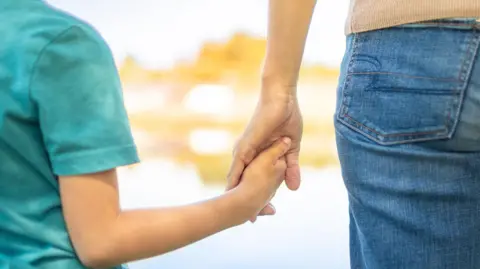
Getty Images Child and woman from behind, close up of arms, holding handsGetty Images: Charities estimate that between 2% to 25% of adoptions can break down

Ms Maguire said daily life was a struggle. "He had rages," she said.

"For hours on end he was inconsolable. It was horrific to watch.

"He would be hanging from my hair or he would hit me about the head, the nose, the mouth."

Ms Maguire said her pleas for help were dismissed and she felt let down.

"I got absolutely no support whatsoever," she said.

"They kept insisting there was absolutely nothing wrong and that it was me, imagining it. I needed immediate help."

Family and friends helped her but eventually Ms Maguire told South Lanarkshire Council she was not coping.

She said social work help was provided but she needed specialist support - a child psychologist or paediatrician - as she suspected there was more to the child’s problems than developmental delay.

She said her health visitor and a therapist wrote to the council supporting her need for extra help.

"I felt social workers could not see there were serious problems despite being advised by other professionals who had seen him," she said.

“They didn't seem to believe me until the situation was completely out of hand."

Adoption disruption

Ms Maguire said it reached crisis point with an incident when the boy threw a heavy paperweight at her head.

“If that had hit me full on it would have been catastrophic as it would have knocked me out and left him alone in the house," she said.

"At that moment I thought, 'I can't keep this child safe'.”

Social workers visited that day and seeing her bruises suggested the placement should end.

"In that moment I agreed," Ms Maguire said.

"However, I didn't think it would happen."

She said "adoption disruption", as it is called, should be a long road and efforts should be made to stop it happening.

Although the boy was in Ms Maguire's care, legally the adoption hadn't yet been approved by the courts.

After further meetings and assessments Ms Maguire said she was asked to make the "life-changing" decision about whether to keep him.

"I believe there was a fine line between my desperate cry for help and them taking him," she said.

"I was under pressure and fighting an uphill battle."

The boy returned to local authority care four months after being placed with Ms Maguire.

She said she felt misled over the adoption.

Legal advice

It was only later that Ms Maguire found out about the boy's underlying medical condition.

"Everything I had thought from the very outset was correct, and yet I was made to feel that wasn't the case throughout it all,” she said.

Ms Maguire said "adoption disruption" is not often discussed and she feels a stigma about what happened.

"I am consumed by guilt because I tried so hard to keep him," she said.

"The stigma is that you've given your child back and people don't understand the situation."

Ms Maguire said she lost friends over the decision.

"People made judgements about me," she said.

"You would walk into rooms at work and people would stop talking.

"Somebody actually said I'd given him back like a pair of trousers at Marks & Spencers".

While dealing with the devastation of the adoption breaking down, and losing what she still describes as “her little boy”, Ms Maguire sought legal advice.

Lawyer Elizabeth Rose
Lawyer Elizabeth Rose said it was an unusual case

Elizabeth Rose, from L&M Medilaw, acknowledged that in law a council does not generally owe an adoptive parent a duty of care.

However, she felt the lack of information provided to Karen prior to the boy being placed in her care, and lack of support during the placement, meant there was scope for the law to be tested.

"It was an unusual case,” she told BBC Scotland News.

"In this certain situation there were issues with the matching and assessment period prior to placement and I think it was time that the law challenged this.

"Essentially insufficient information was given to my client and as a result she wasn't able to make an informed decision, and even when the placement started there was insufficient support given."

South Lanarkshire Council paid Ms Maguire an undisclosed sum to settle the case, understood to be more than £100,000.

Polly Cowan
Dr Polly Cowan has looked at how often adoptions break down and why

Dr Polly Cowan, from the charity Scottish Adoption, has looked at how often adoptions break down and the reasons why.

She analysed UK and international figures and estimates the rate to be between 2% and 25%, but said it is hard to get definite figures, because the way they are gathered in Scotland varies.

"There is a real need for support for families," Dr Cowan said.

"That is the real issue that needs to be talked about and thought about."

She would like to see more funded support from the Scottish government, national guidelines for adoption and better monitoring of the number of adoption breakdowns.

South Lanarkshire Council told BBC Scotland it always aims to provide adoptive parents with full support.

A spokeswoman said: "It would be inappropriate for us to comment on individual cases.

“Our policy for practice reflects national standards and regulatory requirements.

"Support is offered following adoption which we endeavour to tailor to the needs of the child."

The Scottish government said it was committed to ensuring adoptees and adoptive families could access the support they need.

A spokeswoman said: “This includes funding to Adoption UK to provide a national helpline and support for adoptive families to help minimise adoption breakdowns."

It has been almost a decade since Ms Maguire's adoption process came to an end but she said she still thinks about the child involved.

"I live every day with what happened. I miss him every day,” she said.

Need help? If you have been affected by this story the BBC Action Line web page features a list of organisations which are ready to provide support and advice.

Tuesday, September 10, 2024

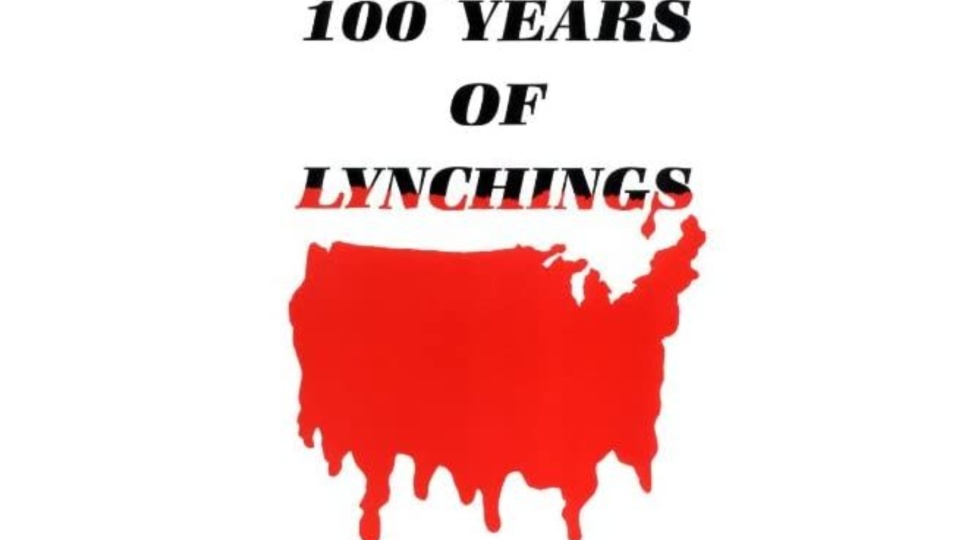
Albert Bender: ‘100 Years of Lynchings’: 1962 book remains a ‘should-read’ for all

1962 book remains a ‘should-read’ for all 

September 9, 2024 By Albert Bender (Cherokee)

‘100 Years of Lynchings’: 1962 book remains a ‘should-read’ for all

The genocide, the horrendous deaths in the Israeli invasion of Gaza, have prompted many, this reviewer included, to reflect on the racial horror of times gone by. The book 100 Years of Lynchings, came to mind.  I had read sections of the work some years ago, but never through and through. This volume, produced by Ralph Ginzburg in 1962, presented newspaper articles spanning a century documenting the most savage murders of African-American men and, in some cases, even women in the history of the United States.

Indeed, from a historical viewpoint, these killings represented some of the most horrific in the annals of humanity on this earth, displaying a level of unspeakable horror.

The mass murder of innocents in Gaza directed my attention to a century of the killings of innocents in this country. Thousands were lynched over a century-long span.

I also felt that this needed to be brought to public attention in light of current racist politicians’ efforts to whitewash history with attacks on so-called “critical race theory” and other education efforts around racism and slavery. Another reason is Biden’s refusal to do anything meaningful to stop the Gaza massacres, something which is well within his power. When Biden takes so little account of the lost lives of thousands of Palestinians, it must be remembered the bloody background from which the United States arose.

Ginzurg hoped the tome he assembled would, “in this Centennial of the Civil War, give pause to segregationists everywhere to reflect upon their persecution of the Black man.” Of course, this did not happen, but nonetheless, it was a worthy thought.

The newspapers from which the accounts were taken run the gamut from white to Black, small to large, and liberal to radical and conservative.  Many of the accounts are so graphic, with such horrifying and vivid detail, that it would be a rare reader who would not be greatly affected.

A sampling of some of the headlines will give the reader a portent of what to expect. “Negro and wife burned.” “Lynched Negro and wife were first mutilated.” “Colored woman is hanged.” “Shoe thief suspect lynched.” “4 Negroes lynched at once.” “ Louisian Negro is burned alive screaming ‘I didn’t do it.’” “Bumps into [white] girl; is lynched.” “2 hung for jostling horse” (two Black men hung for brushing against a farmer’s horse). “Boy unsexes Negro before mob lynches him” (a 10-year-old white boy is forced to castrate the victim before he is lynched).  “Indescribable tortures inflicted on Williams” (this lynching was described as a “gala event”). “Blood-thirsty mob lynches 3 members of one family.” “Georgia mob massacres two Negroes and wives.”

These foregoing bylines are a smattering of the newspaper accounts compiled for the book.

It is a record of the most extreme racial atrocities, so constant over such a long period of time that one can get the impression of not just racial terror, but in fact, a race war being waged against the African-American population.

In many articles, descriptions are given of the most horrifying tortures that assume the aura of a festival, attended by entire white families, not just men, but their wives and children—veritable family affairs. Body appendages were often cut off the victims, sometimes while they were still alive, to be taken home as souvenirs. Postcards were fashioned of the victims and distributed far and wide. Lynchings were frequently advertised in advance to maximize turnout.

This writer shall not deem it proper to describe in detail the gory newspaper accounts in this review. The articles make the reader wince, to say the least.

The takeaway from the volume, now over 60 years old, is that large sections of the white population were in a state of savagery, racial savagery. They were living in a culture of such hate-filled racism that spawned savagery toward their fellow human beings.  

This was a legacy of the worst slavery in the chronicles of world history. 

This racism turned human beings into monsters against their fellow humans.  

Enslaved people were treated worse than animals, the result of a capitalism that, as Marx said, entered upon the world stage “covered from head to foot with blood and gore.”

It was actually the courage of the African-American people, aided by progressive white allies, that uplifted the white people of the South from a culture of racist horror.  Indeed, it is not an exaggeration to say that the Civil Rights Movement civilized the “savage South.” Led by stalwarts such as Rev. Martin Luther King, Jr., and others, it raised the cultural level of not just the Southern United States, but the country as a whole.

These are some of the reflections produced by a re-reading of this extremely poignant, emotive volume. Again, this book is a “should-read” for all adults in this country.

We hope you appreciated this article. At People’s World, we believe news and information should be free and accessible to all, but we need your help. Our journalism is free of corporate influence and paywalls because we are totally reader-supported. Only you, our readers and supporters, make this possible. If you enjoy reading People’s World and the stories we bring you, please support our work by donating or becoming a monthly sustainer today. Thank you!
Albert Bender

Albert Bender is a Cherokee activist, historian, political columnist, and freelance reporter. He is currently writing a legal treatise on Native American sovereignty and working on a book on the war crimes committed by the U.S. against the Maya people in the Guatemalan civil war. He is a consulting attorney on Indigenous sovereignty, land restoration, and Indian Child Welfare Act (ICWA) issues.


China’s One-Child Policy Sent Thousands of Adoptees Overseas. That Era Is Over.

READ: (paywall)  https://www.wsj.com/world/china/china-ends-international-adoptions-ff7fc87e 


Hong Kong (CNN) — China is ending most foreign adoptions of its children, leaving hundreds of American and other foreign families with pending applications in limbo.

Since the early 1990s, China has sent tens of thousands of adoptees overseas – with about half arriving in the United States – as its draconian one-child policy forced many families to abandon children, especially girls and babies with disabilities.

But in recent decades, as China’s economy boomed and births slowed, international adoptions of Chinese children have declined in number. Since the Covid-19 pandemic began, they have largely been on hold.

Now the Chinese government is officially ending the program – which it said is in line with global trends, but also comes as officials try to reverse the country’s sharply declining birthrates and avert a looming demographic crisis.

China’s Foreign Ministry announced Thursday that no more Chinese children would be sent abroad for adoption. The only exceptions will be for foreigners adopting the children or stepchildren of blood relatives in China.

“This is in line with the spirit of relevant international conventions,” the ministry’s spokesperson Mao Ning told a regular news conference. “We are grateful for the desire and love of the governments and adoptive families of relevant countries to adopt Chinese children.”

The ban raises uncertainty for hundreds of American families currently in the process of adopting children from China.

The US embassy in Beijing is seeking clarification in writing from China’s Ministry of Civil Affairs on the new directive, the State Department said Thursday, according to the Associated Press.

In a phone call with US diplomats in China, Beijing said it “will not continue to process cases at any stage” other than those covered by an exception clause, AP reported.

“We understand there are hundreds of families still pending completion of their adoption, and we sympathize with their situation,” the State Department said.

More than 160,000 Chinese children have been adopted into families all over the world since China officially opened its doors to international adoption in 1992, according to China’s Children International, an international organization created by and for Chinese adoptees. About half of these children have been adopted to the US.

Between 1999 and 2023, American parents adopted 82,674 children from China, accounting for 29% of all US adoptions, according to data from the US State Department.

China suspended international adoptions in 2020 during the pandemic to “ensure the health and safety” of the children, according to a notice from the US State Department on intercountry adoptions from China at the time.

No Chinese children were sent to the US for adoption in 2021 or 2022. Last year, 16 children were adopted from China, according to the US State Department.

Beijing scrapped its decades-long and highly controversial “one child” policy after realizing the restriction had contributed to a rapidly aging population and shrinking workforce that could severely distress the country’s economic and social stability.

To arrest the falling birth rate, the Chinese government announced in 2015 that it would allow married couples to have two children. But after a brief uptick in 2016, the national birth rate has continued to fall.

Policymakers further relaxed limits on births in 2021, allowing three children, and ramped up efforts to encourage larger families, including strengthening maternity leave and offering tax deductions and other perks to families.

But those efforts have yet to see results amid changing gender norms, the high cost of living and education, and looming economic uncertainty.

SOURCE: https://www.wral.com/story/china-is-ending-foreign-adoptions-of-its-children-that-leaves-hundreds-of-american-families-in-limbo/21611385/


Monday, September 9, 2024

Well, this is terrifying | Finding the Invisibles


In 2022, I posted my free book to read online: https://www.findingtheinvisibles.com/ (it's also a free ebook)

Chapter 3 involves healing with sound: https://www.findingtheinvisibles.com/2023/08/chapter-three-way.html

A few days ago: Renowned researcher Michael Tellinger guides us through a compelling investigation into how lies and misinformation have shaped historical narratives and distorted our knowledge.  By examining ancient artifacts and modern-day secrets, the film uncovers the ways in which critical truths have been manipulated and concealed.

In other words, vibration and sound is the healer...


Friday, September 6, 2024

Army Begins Disinterment and Return of Remains for 11 Native Children Who Died at Carlisle Indian Boarding School


The left side of the Carlisle Main Post Cemetery after last summer’s disinterments concluded.  While 32 children have gone home in the last seven years, more than 160 are still waiting. (Photo/Jenna Kunze)

By Native News Online Staff | 


This week, the U.S. Office of Army Cemeteries began its annual process of disinterring, identifying, and returning the remains of eleven Native American children— who died more than a century ago at a government-run Indian boarding school in Pennsylvania— home to their closest living relatives.

Those former students include William Norkok from the Eastern Shoshone Tribe; Almeda Heavy Hair, Bishop L. Shield, and John Bull from the Gros Ventre Tribe of the Fort Belknap Indian Community; Fanny Chargingshield, James Cornman, and Samuel Flying Horse from the Oglala Sioux Tribe; Albert Mekko from the Seminole Nation of Oklahoma; and Alfred Charko and Kati Rosskidwits from the Wichita and Affiliated Tribes.  One additional tribal nation receiving their relative's remains wishes to remain anonymous, according to a spokesperson from the Office of Army Cemeteries.

The students are among nearly 200 who died and were buried in the government’s care between 1880 and 1910 while attending the nation’s flagship Indian boarding school, Carlisle Indian Industrial School, in Carlisle, Penn. 

Over the last seven years, the Army has returned 32 children’s remains back to their relatives.  Each project was conducted over about a month-long period during the summer by a team of professionals from the Army Corps of Engineers’ Center of Expertise for Curation.  The team worked with tribal nations to carry out the process of exhuming and identifying each child’s remains.  The Army confirmed to NNO that it will be disinterring and returning an additional 18 children in 2025.  

This disinterment project began on September 3, 2024, and will end on October 14, according to the Office of Army Cemeteries. 

In 1879, the Army’s Carlisle Barracks became the site of the nation’s first government-run Indian boarding school.  Operating under the motto of “kill the Indian, save the man,” school administrators tried to forcibly assimilate 7,800 Native American children from more than 140 tribal nations through a mix of Western-style education and hard labor. 

Before it closed and the property was transferred to the Army in 1918, the school buried the bodies of at least 194 Indigenous children in the school cemetery, including 14 who are marked with “unknown” grave markers. 

Many students’ deaths were announced in the local newspaper at the time, noting causes of death as “that dread disease, consumption” or tuberculosis or detailing circumstances of unknown sickness. 

LINK: https://nativenewsonline.net/sovereignty/army-begins-disinterment-and-return-of-remains-for-11-native-children-who-died-at-carlisle-indian-boarding-school

READ: Esquire: The U.S. Is Standing in the Way of Repatriating the Bodies of Native Kids Who Died at the Carlisle School

“As long as the Army can avoid scrutiny and accountability and maintain absolute control over the remains, it doesn’t care if tribes’ rights as sovereigns are abused in the process,” said Greg Werkeiser, an attorney with Cultural Heritage Partners, which has joined with the Native American Rights Fund in representing the Winnebago Tribe of Nebraska in a lawsuit over the issue, along with the tribe’s general counsel, Danelle Smith, at Big Fire Law & Policy Group. “Asking tribes to subserviate themselves once again just continues the Army’s tradition of abuses,” Werkeiser said. “Some traditions need to end.”

https://www.esquire.com/news-politics/politics/a62044883/native-repatriation-army/

Thursday, September 5, 2024

23 & ME DNA Quacks Bad Science

23&Me is collapsing: turns out, all that precious DNA data is worthless.


Quick Note By Trace L Hentz (p.s. I'm an elder, too)

Native Elders warned long ago about the collection of your sacred and sovereign DNA (blood and spit) - and the elders also warned about colonial QUACKS (bad medicine) and science's inaccuracy!  Bad data?  That, too.  

Blood for Money? READ MY REVIEW OF LEECH AND EARTHWORM:  www.ipcb.org/publications/video/files/revp2.html

I wrote:

Ever wondered if genetic research is being done on Indigenous people? Absolutely and often without their knowledge. The film “The Leech and the Earthworm” chronicles the new Columbus – a genetic scientist who wants to map your genetic identity, and will even steal to get it.”

One interview that stands out is with Larry Baird, leader of the Nuu-chah-nulth Tribe of Vancouver Island, Canada, who was outraged to find out that DNA samples taken from over 800 tribal members almost 20 years ago for arthritis research were taken to Oxford (in England) and used for other purposes without their consent. (Cloning and worse...)

👉THIS BLOG: https://blog.americanindianadoptees.com/2019/02/twins-get-mystifying-dna-ancestry-test.html

Mainstream History was written so wrong, so fake, for so long, you cannot trust it, any of it... Think back to school... what did you learn? No history worth your time remembering, I'd bet.  (We're educated to be ignorant?)

Years ago, my birthfather's family (cousins) insisted they do DNA to prove what tribe - well, dah... that failed... YOU CANNOT PROVE YOUR TRIBE with a DNA swab. The "science" is total bullcrap.  (But all those expensive TV Commercials told you and sold you, right?) 

They are making MONEY on our stupidity!

You and I and DNA cannot begin to correct the bad history, a million years of migrations, conquest, intermarriages, invasions and murders -and bad theories abound about our FIRST NATIONS (aka anthropology)...

To today...

In what feels like a desperate attempt to stay afloat, 23andMe plans to… start prescribing weight loss drugs.  How did we get here, with the once-mighty DNA testing company becoming just the latest to join the GLP-1 trend, like so many others have already done?  But 23andMe has few cards left to play.  Once valued at $6 billion, it’s now a penny stock on the verge of being delisted from the Nasdaq.  It’s struggled to stoke demand for its DNA spit tests, and its attempts to use its trove of genetic data for drug discovery and development have been predictably expensive, with potential profits a long way off.

On Friday, August 9, the company said it’s shutting down its internal drug discovery efforts but will continue to fund development of two cancer drugs.

23andMe's attempt in recent years to connect consumer DNA tests to health — showing the diseases people are at risk for, and visits with doctors who can help determine next steps — seems like an offering that should catch on, especially given how popular the longevity and wellness fads have become.

But that was all a fraud and didn't work!

The experts are baffled - why, given the mountain of precious DNA information, the “code of life” and “software for everything” the company can’t make it work?  Some brave souls have suggested there’s not much doctors can do with the information gleaned from consumer DNA tests. 

Oh, great!

By the way, it’s not much anyone can do with DNA data, other than make Ponzi schemes investing into stupid things like 23andMe, then pumping and dumping the stock.   Admittedly, a Ponzi scheme can last a while and be profitable for some, who dump the stock ahead of others.


BAD SCIENCE?  Isolation of DNA from nucleus of cells is just as hocus-pocus as isolation of viruses from samples.  Despite several decades after the hyped-up “human genome sequencing” project completion, which promised to cure cancer (yeah… again…) and all diseases, none of that happened. Nothing really useful came out of those billions invested into the pipe dream of cracking the genetic “code of life”.  At the completion of the human genome project, Svante Paabo could not coherently explain the difference between a chimpanzee and a human, while any 5 year old will have no difficulty explaining it.  (A huge waste of MONEY, too.)

👉 Did you know the new weight loss shots have killed people...America is buying these (weight loss) drugs and having them prescribed to Americans more than any other country on earth.”  This is where he shocked me the most.

“…the company Novo Nordisk ... was just handed 10,000 lawsuits by people who have used Ozempic and Wegovy and have now either died, had brain cancers, had thyroid cancers, breast cancers, paralyzed stomachs.


...and there is a rise in strange cancers, sudden deaths and autoimmune diseases NEVER seen before…

READ MORE:  https://sashalatypova.substack.com/p/23-and-me-is-collapsing-turns-out?publication_id=870364&post_id=147670281&action=share&triggerShare=true&isFreemail=true&token=eyJ1c2VyX2lkIjoyMDcwNTY0OSwicG9zdF9pZCI6MTQ3NjcwMjgxLCJpYXQiOjE3MjQ5NDI1OTQsImV4cCI6MTcyNzUzNDU5NCwiaXNzIjoicHViLTg3MDM2NCIsInN1YiI6InBvc3QtcmVhY3Rpb24ifQ.M8jRQP8Q8S7Hp_bWG3XOPQHad-7w32uwk0eyf2WlFH0&r=cbskx&triedRedirect=true 

Both companies 23AndMe and Ancestry.com will collect your DNA sample, charge you money to tell you who you are related to — BUT they are under no obligation to keep this private.  As far as I can tell they use this data to sell your information, and of course profit from it. (Always follow that money, right?)

The Leech and The Earthworm preview:


Wednesday, September 4, 2024

LandBack Celebration


Caldwell First Nation welcomes a new chapter

A Land Back and cultural event was held on Saturday, to welcome families who have moved back to Canada's southernmost First Nation, and leave out a welcome for those who may soon be moving back.

Chief Mary Duckworth said Saturday's celebration is the start of a new chapter in the life of Caldwell First Nation.

"It took years of strong leadership and enduring obstacles on our path home," said Duckworth. "If not for our ancestors and leaders, we would not be standing here on our land now. In ceremonies, songs, and stories, and most of all through our nationhood, we are sharing our gratitude to the Creator and to all who have come before us and contributed to saving our nation and creating a new homeland."

The celebration completed the journey of ten people -- eight adults and two children -- who began returning home on July 20. By September, 58 people are expected to return to the community.

Caldwell First Nation, which has existed since 1790, finally had a place to call home when it acquired land near Point Pelee in Leamington in 2020.  Funding for development was granted in November 2021.  Since then, new net-zero homes have been built, along with new street signs.

The First Nation persevered through war, arson, racism, the residential school system, the Sixties Scoop, and other challenges.

"This small yet strong nation persevered, meeting around kitchen tables, writing letters, and testifying to the federal government," read a release from Caldwell First Nation. "We set aside small amounts of money for our dream and, with the advocacy and leadership of Chief Carl Johnson and his son Larry Johnson, we eventually, some 230 years later, won a 198-acre small piece of our original homelands back by ratifying a land claim settlement for Point Pelee with Canada in 2011 for $105-million."

Duckworth said that Saturday's ceremony brought the story of the First Nation full circle.

"We have come through a devastating experience of land loss at the hands of colonial powers and have restored our land and our homes," said Duckworth. "Land Back is a deeply meaningful and important history for everyone who lives in Windsor-Essex, Chatham-Kent, and Elgin County to understand."

SOURCE: https://cknxnewstoday.ca/chatham/news/2024/08/19/caldwell-first-nation-welcomes-a-new-chapter


Tuesday, September 3, 2024

Living with Lies : Late Discovery Adoptee (LDA)


Woman Forgives Adoptive Parents Who Hid Her Race for 19 Years: 'Supporter'

By
Life and Trends Reporter 
 
Most children take their parents' words as gospel while growing up, but Melissa Guida-Richards had more than a few reasons to question what her parents told her.
The 31-year-old's life went through a seismic shift after she discovered at the age of 19 that she had been adopted from Bogotá, Colombia.  Her Italian-Portuguese parents, who are based in the U.S., had always kept Guida-Richards' adoption story hidden from her.  For nearly two decades, she lived under the assumption that she was biologically related to her parents, who had chosen to raise her in a "colorblind" environment, in which she was oblivious to her true ethnic heritage.
 
"Love is not enough in adoption. Children need support and resources," Guida-Richards said, warning about emotional issues if the latter is not provided. "When you take a child and place them in a family of another ethnicity, the parents need to incorporate that child's birth culture and hygiene needs, like hair care, and provide racial mirrors of people that look like them."
 

"Like many adoptees of color, I was raised by a white American family," Guida-Richards, who went on to publish a book about her experience, told Newsweek. "I grew up in the middle-class suburbs of New York and was very sheltered.

Monday, September 2, 2024

How International Adoption is Failing Children?


--

“No one should remove children from healthy, loving parents who are struggling in poverty to be placed with strangers who are given money to care for them.”

--

excerpt:

The System Is Failing Children

In early June 2024, Pakistani child welfare activist Sarim Burney was arrested on charges of child trafficking. According to the report filed against him, Burney and two associates allegedly forged documents to facilitate the adoption of three baby girls by falsely making it seem like they were orphans.

The complaint that led to this case was initially filed by US authorities, which led to the Pakistani Federal Investigation Agency (FIA) to open an investigation into the process by which Burney and his organization put these children up for adoption. In light of the ongoing investigation against Burney, the Sindh government has taken over his welfare trust.

Syed Muaz Shah, a lawyer and expert on Islamic jurisprudence who is representing two of the families involved in this case, points out that clear discrepancies by Burney and his legal team show a lack of respect for both adoptees and prospective adoptive parents.

“Even in the best situations, there is trauma, whether perceived or not.”

“These parents are guided by adoption agencies in the US, who have a legal duty to guide them appropriately, and they misguided them,” he stated. In the Burney case, Shah blames the agencies involved, advocating for the families’ pure intentions to build a life for a child from their home country.

The complex international adoption process, which involves prospective families, agencies in both countries, and a slew of legal teams, often lacks sufficient oversight, both during the process and once the adoption is complete. This can lead to children being wrongly taken from their birth parents by agencies—some of which ignore potential red flags that the children entering into the adoption system might, in fact, already have homes.

Moreover, adoptive parents aren’t always well-meaning.  JS Lee, an author, artist, and musician, describes herself as “the sole child purchased from Korea by a White American couple who had six biological children of their own.” Lee has been open about her own experience as a transracial adoptee, sharing the abuse she faced from a young age and the trauma she had from growing up around people who claimed to be “color-blind.”

“I acknowledge that there are a variety of adoption experiences. Some adoptees do feel they’ve been saved—particularly those who were true war orphans and those who had medical needs. But even in the best situations, there is trauma, whether perceived or not. Many of us grow up parroting what we hear from others only to reflect more deeply with age and safety,” Lee says of the trauma caused by interracial adoptions and a system that ignores adoptee voices.

While international adoptions have been documented as early as the 1950s, many of the challenges and harms faced by adoptees have only come to light more recently. Burney’s case of falsified documents is similar to the cases in Uganda, reported on in 2018, and South Korea, where it was revealed two years ago that for some 60 years, 200,000 adoptees from the country may have had their documents falsified.

When intercountry—particularly interracial—adoptees are placed in a home that doesn’t celebrate or share their culture, the disconnect can cause an identity crisis throughout their lifetime.

KEEP READING: https://nonprofitquarterly.org/how-international-adoption-is-failing-children/


CLICK OLDER POSTS (above) to see more news

CLICK OLDER POSTS  (above) to see more news

MEGWETCH THANK YOU

HUGE Thank you for visiting this blog and sharing this with your kin. It's appreciated. Contact Trace anytime! Use the form below.

BOOKSHOP

Please use BOOKSHOP to buy our titles. We will not be posting links to Amazon.

Popular Posts

To Veronica Brown

Veronica, we adult adoptees are thinking of you today and every day. We will be here when you need us. Your journey in the adopted life has begun, nothing can revoke that now, the damage cannot be undone. Be courageous, you have what no adoptee before you has had; a strong group of adult adoptees who know your story, who are behind you and will always be so.

OUR HISTORY

OUR HISTORY
BOOK 5: Lost Children of the Indian Adoption Projects