This blog was a backup for American Indian Adopteesblog
USE THE SEARCH BAR or SEARCH TOPICS at bottom of this blog
If you need support
Support Info: If you are a Survivor and need emotional support, a national crisis line is available 24 hours a day, seven days a week: Residential School Survivor Support Line: 1-866-925-4419. Additional Health Support Information: Emotional, cultural, and professional support services are also available to Survivors and their families through the Indian Residential Schools Resolution Health Support Program. Services can be accessed on an individual, family, or group basis.” These & regional support phone numbers are found at https://nctr.ca/contact/survivors/ .
MY EMAIL: tracelara@pm.me
Righting Canada’s Wrongs: The Sixties Scoop and the Stolen Lives of Indigenous Children is the latest in the long-running Righting Canada’s Wrongs
series, which explores historical instances of discrimination by the
Canadian government. In this volume, Andrew Bomberry (Haudenosaunee) and
Teresa Edwards (Mi’gmaq) tackle the difficult task of writing a history
of the Sixties Scoop that is accessible, but not oversimplified.
The Sixties Scoop refers to the
period from 1951 to 1985 when Canada amended the Indian Act to extend
provincial child welfare agency power to on-reserve Indigenous families.
This amendment led to First Nations, Inuit, and Métis children being
disproportionately removed from their families, or “scooped,” by
non-Indigenous social workers. Children were adopted out to white
families not just in Canada, but internationally, and, in addition to
being removed from their families and cultures, many suffered abuse in
their foster and adoptive homes. Like residential schools, this policy
aimed to assimilate Indigenous children into Canadian society and
eliminate Indigenous cultures.
Understanding
the context of the Sixties Scoop is important to understanding its
long-reaching effects. Bomberry and Edwards begin the book with
pre-colonial history and the impact of colonization, discuss the history
and long-term repercussions of the Indian Act, and cover the history of
residential schools before getting into the Sixties Scoop in detail.
These are frank, matter-of-fact presentations of history that fit an
impressive amount of information into a relatively small number of
pages. The authors also actively demonstrate the plurality of Indigenous
cultures and experiences throughout the book, drawing examples from
across First Nations, Inuit, and Métis communities, with special
attention paid to the different policies the Canadian government had
toward different populations.
The authors centre conversations on
Indigenous activism, healing, and strength rather than focusing on abuse
and despair. A section on the limitations of the 2017 Sixties Scoop
Settlement Agreement, for example, is followed by a list of healing
organizations, such as the Legacy of Hope Foundation. The Sixties Scoop and the Stolen Lives of Indigenous Children
embraces complexity in the history it tells, which is further enhanced
by the inclusion of first-hand accounts from survivors of the Scoop.
Their stories provide a plurality of experiences, adding additional
nuance to the book.
The Sixties Scoop and the Stolen Lives of Indigenous Children
includes a timeline, glossary, additional resources and further
reading, and an index in its backmatter, as well as URLs for videos
throughout the book. It is timely and well-researched, an excellent
resource for teachers, librarians, and parents interested in educating
young people about the harms these policies had – and continue to have –
on Indigenous communities, as well as the continued overrepresentation
of Indigenous children in care.
Event was held at Pembroke Campus with the partnership of Local
Immigration Partnership - Lanark & Renfrew, the Mamidoswin Centre,
the '60s Scoop Network, and the Students' Association
Agrani Tiwari |July 3, 2024
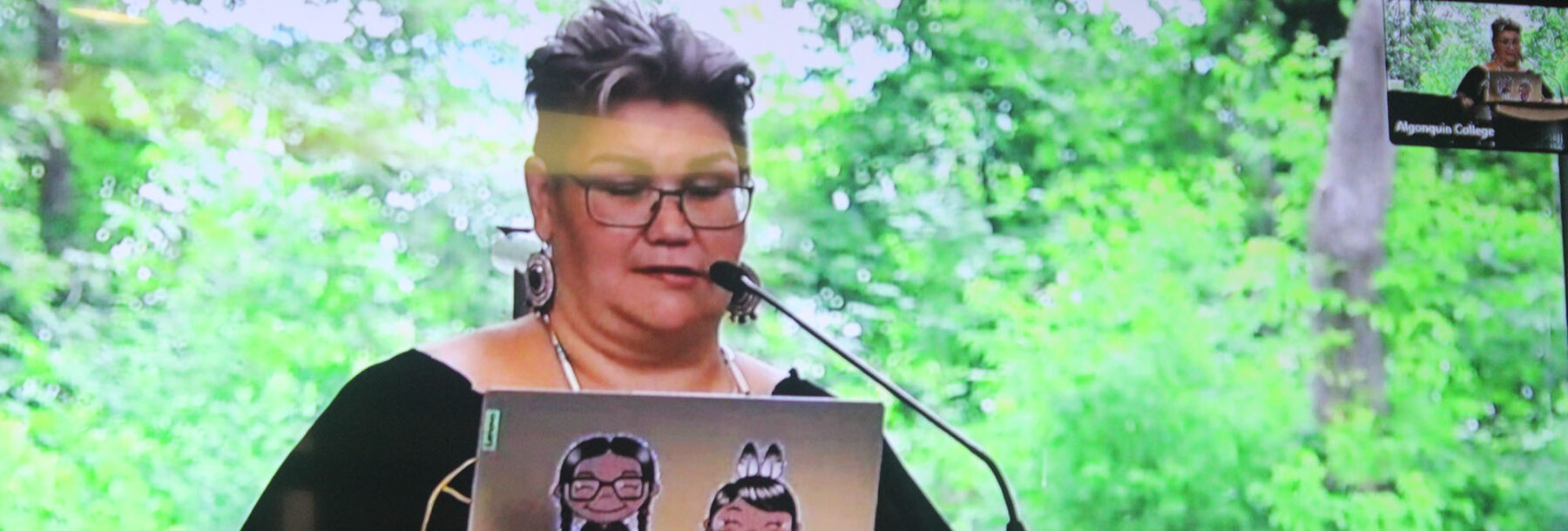
Photo: Agrani Tiwari, Colleen Hele Cardinal, keynote speaker at
the National Indigenous Peoples Day Speaker Series Event, gave a
presentation on the scoop of trafficking of Indigenous children through
welfare policies.
Colleen Hele Cardinal, an academic and activist from Saddle Lake
First Nation, spoke at the Pembroke campus as part of Algonquin
College’s National Indigenous Peoples Day Speaker Series. Her speech on
June 21 was live-streamed at the Mamidosewin Centre.
Cardinal spoke about contextualizing Indigenous child removals in
Canada and understanding the historical and contemporary circumstances
surrounding the Sixties Scoop.
This period, which actually lasted from the 1950s to mid-’80s, saw
the large-scale, non-consensual removal of Indigenous children from
their families and communities. The children “scooped” in this way were
put in foster homes or up for adoption, often in non-Indigenous
families.
The program is considered to have been cultural genocide (as
described in the famous Kimelman Report) and to have contributed to
long-term issues dogging Indigenous communities, including mental
illness rates.
Cardinal is herself a Sixties Scoop survivor and now works to help
others. She has organized six national Sixties Scoop gatherings in
Ontario and raises international awareness about the displacement
experienced by survivors. She noted the connections between colonial
child welfare policies, missing and murdered Indigenous women, and the
Sixties Scoop, drawing from personal and familial experiences. She has
written a book titled Raised Somewhere Else, and led the “GIS Mapping the Sixties Scoop Diaspora” project.
“Some of our issues are very unique and sometimes we have to teach
non-Indigenous folks about what life could be like for us in isolated
communities or without resources,” Cardinal said.
“My colleague, Elaine Kiknosway, and I go to communities and
organizations, anybody who works frontline with Indigenous people, we
want to help them understand how to work with Sixties Scoop survivors
and our descendants.”
“There is not one single Indigenous person that I know that has not
dealt with these issues or is currently dealing with these issues . . . .
missing and murdered Indigenous women, girls and Two-Spirit, as well as
gender violence. My . . . older sister, Gina, and my sister-in-law,
Lynn, were both murdered out in Edmonton while I was living out there. I
was 16 years old at the time, and I carried that grief with me for a
long time,” Cardinal said.
She said she didn’t have any context as to why that happened and wanted to know more.
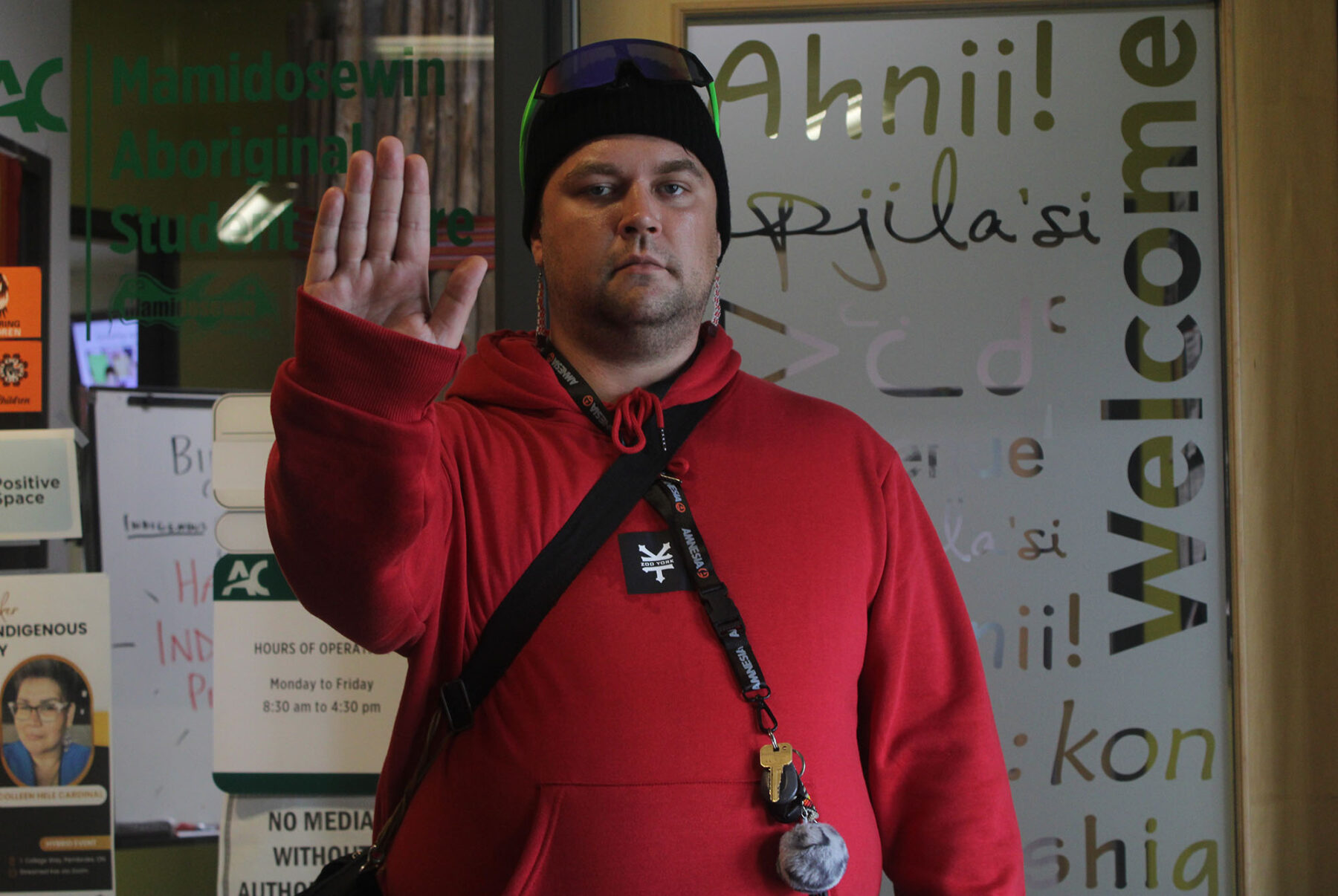
Jacob
Thompson Bonaparte, a music industry arts student, said, "I want them
to stop taking our children." Photo credit: Agrani Tiwari
Jacob Thompson Bonaparte, a music industry arts student said: “My
grandfather was a Sixties Scoop survivor and today us Indigenous are
over a barrel and we are just trying to live … My community has lived
through the Oka crisis and has gone through generational trauma. We are
just trying to go through our healing journey.”
As Sixties Scoop survivors and co-founders of the Sixties Scoop Network in Ottawa, Cardinal and her colleague Kicknosway have worked to foster a supportive community for survivors since 2014.
“There was nobody else doing this work. It was important for us to
have space to reconnect with our culture and to build community with
other ’60s group survivors.” “To this date, 11 years later, we’re still
continuing to partner with research initiatives, raising awareness to
spaces like this and workshops and creating trauma-informed curriculum,
which is hard to find out there, as well as anti-racism workshops.”
Cardinal also created the Sixties Scoop Geo forms,
a website where Sixties Scoop survivors tell their stories. It is a map
which shows where they were taken from, and where they ended up.
Summer Wabasse, events and communications officer at the Mamidosewin
Centre, said: “I think it’s really important that every student, every
staff member, every faculty member here at the college takes time to
attend an event like this, virtually or in person. Because we all have
the responsibility to learn about not only Indigenous history, but
candid history of colonialism and depression of Indigenous people.”
“I think it’s all of our responsibility to educate ourselves and so
happy that we were able to partner and put on this event today … it was a
great way to commemorate National Indigenous Peoples Day.”
Ahead of its release, we sat down with Fancy Dance
director Erica Tremblay to talk about her narrative debut with Lily
Gladstone.
Fancy Dance will mean different things to different people. For a start, no one seems able to describe what genre of film it is. Since its Sundance debut last year, it’s been described as a road trip
movie, a coming-of-age story and a crime drama. More than those, though,
it feels like a window into life on a modern-day Seneca-Cayuga Nation
reservation; a snapshot still rarely put on the big screen, let alone
one given a profile like Apple have given this one.
Starring Lily Gladstone as tough-as-nails grifter, Jax, and Isabel
Deroy-Olson as her niece, Roki, the film starts days after the
disappearance of Jax’s sister (and Roki’s mother), Tawi. Together, they
fight child services and Roki’s white grandparents to track Tawi down –
and prepare for a dance at the upcoming powwow while they’re at it.
With a profile boosted by Gladstone’s Killers Of The Flower MoonOscar
nomination, the film arrives on Apple TV+ on Friday. We sat down with its
director, Erica Tremblay, to talk Gladstone, building believable
characters and making the jump from documentary filmmaking.
Why don’t we begin with how Fancy Dance got started?
Well, Lily Gladstone and I had done a short called Little Chief
together that had premiered at Sundance in 2020. And people were really
drawn to that film and kept asking me if I was going to do something
bigger with that story. I called [Lily] up and said: “If I create a
story in the same world with a similar kind of character, would you be
interested?” And she said she would.
And, you know, we started developing the project, she read all the
versions of the script, and she really helped inform her character along
the way. I was doing a three-year language immersion programme in my
ancestral language, Cayuga, at the time, and I was learning family
words. I learned that the word for mother is knó:ha, and the word for auntie is knohá:’ah,
which means little mother. And that just excited me to tell a story
about an aunty and a niece as a kind of mother-daughter story.
Did learning Cayuga at the same time inform what you were writing?
I think the language was one of the things that inspired me to do
this film, because currently there aren’t young people that speak the
language fluently, or there aren’t very many. And so it was
aspirational, in a sense, to see young people speaking the language.
I was studying eight hours a day and then writing at night. So it was
certainly an influence, and all the folks – the other seven in my
cohort – we’d be driving around at lunch, and I’d be pitching ideas and
we’d be talking about it. So it was a very formative time to be
creating, yeah.
Isabel Deroy-Olson stars as Jax’s niece, Roki (Credit: Apple TV+)
I’d like to talk about Frank, Jax’s father in the film. He’s a
much less black and white, Hollywood-style villain than he first
appears.
Yeah, you know… That relationship isn’t exactly my relationship with
my white dad, but it’s definitely a place in my own personal life that I
was able to draw from. I think when you have one side of your family
that’s native and the other side that’s not, there are going to be these
areas of cultural divide, and there are gonna be these things that just
aren’t understood on either side.
Michiana, my co-writer and I, when we were writing Frank
specifically, we didn’t want him to just be a trope: he’s the
antagonist, and he’s gonna be a bad guy. We wanted there to be grey
areas, and we wanted the audience to sometimes wonder, “Where should
Roki be?” Frank very much loves his children in the best way that he
knows how. And sometimes that’s very heartbreaking to a child, when
their parent loves them like that.
One line that particularly stood out to me was from Frank’s
wife, Nancy. I’m paraphrasing, but it was something like: “We know how
important it is for you to stay connected to your culture.” It’s meant
in a really lovely way, but it almost assumes that Roki’s native culture
is something she’s going to lose by default, that she’ll have to make
an effort to stay connected to these traditions.
Nancy really stood in for a lot of relationships that Michiana and I
have with non-native folks. I think Nancy is fine that her adopted
grandchild is native, but she kind of only wants Roki to be native in a
way that’s comfortable for her. So, when she says, “We want you to
remain connected”, she wants her to remain connected so she can talk
about this with her friends at the Rotary Club. But not if it starts to
push up against things that she holds valuable.
And Nancy provides that feeling of: “I’m certainly not a bad person.
And I’m certainly not a racist. And I’m certainly not all these things.
But this is really scary, and I’m only going to engage with this in a
way that’s safe for me.” And that safe space ends up being oppressive.
“I learned that the word for mother is knó:ha, and the word for auntie is knohá:’ah, which means little mother…”
The film’s been described as so many things, from a road trip
to a coming-of-age movie… You said you started with the idea of that
aunty-niece relationship, when did the missing person element come in?
Yeah, the idea of an aunty-niece story, that kind of came first. But
women and relatives going missing in our communities, and being murdered
in our communities is something that’s very prevalent, and it’s
something that all native communities handle. This seemed to be a way we
could talk about that, but through a central relationship between two
people left behind.
Then them being wanted by the authorities gives us an instant
antagonistic force, one that’s making the characters move and make
choices. And then we’re dealing with the Indian Child Welfare Act, with
the forced removal of native children, as well. So there’s all these
things that you think existed in the past, but are actually still really
actively existing in communities today.
The crime element does provide this really interesting
flashpoint, it puts the characters in such a heightened state. How much
do you think about what these characters are like in any other week,
before Jax’s sister went missing? Because that could almost completely
change their personality, how they react to things.
Yeah, I think my muse for a lot of my characters – and for both of
the characters that I’ve written for Lily – it’s been my mom. And my mom
is an incredibly talented, kind, strong native woman. And the thing is,
is that when you’re traversing a world where you’re constantly having
to play defence and offence at the same time, you have these walls built
up around you. Because the moment that you allow yourself to laugh or
the moment that you allow yourself to be goofy, or the moment that you
allow yourself to fall in love, or, you know, put in anything that makes
you vulnerable in a way that you know, is perhaps different for native
folks than some others.
Jax is very loving, and she’s very giving, and she’s extremely
passionate about the things that she cares about. But she can seem
gruff, and she can seem distant, and she can seem like she’s not
connected, because she has to operate in that way to protect herself. And I think what’s great about a character like that is that despite her
stoic, exterior, we really get to see her go on a journey. When you
write a character, you want to know, well, what was her relationship
with this person last week? Where’s it gonna go in two weeks, and you
really want to be able to live in that world.
So you come from a documentary background, and Fancy Dance is your first narrative feature. Were there any habits you had to stop during filming?
What’s funny is that I kind of only ever made documentary films
because they were cheaper and you could do it when you had a camera on
your arm. And while I was making documentaries, I started to question my
ethics as a documentary filmmaker because as I would make docs all I
wanted to do was make it up, like, “This isn’t as entertaining as it
could be. If they would have said this or done this, it would have been
way better story.”
So I think a couple of things that I’ve brought with me are, number
one, probably don’t hire me as a documentary filmmaker. But two, I
really do love people’s real lived experiences, but I have to say, I’m
better suited making up what happens in the world, rather than
documenting what’s happened.
WARNING: DISTURBING CONTENT (This is a crime against humanity and human trafficking called adoption)
White Couple Accused of Targeting Black Adoptees for Forced Labor Pleads Not Guilty
"They
were used basically as slaves," a judge said when discussing the
allegations in a recent indictment against the couple, who were first
arrested last year.
A white couple in West Virginia is behind bars once again on charges of targeting Black adoptees for forced labor.
Donald
Lantz and Jeanne Whitefeather, a couple in their 60s from Sissonville,
West Virginia, were first arrested last October when two of their adopted children were
found locked in a barn. The Kanawha County Sheriff's Office said at the time that deputies had received a 911 call expressing concern for the children’s wellbeing.
Per
the department, responding deputies "had to force entry into the barn,"
at which point they found "a juvenile male and juvenile female locked
inside." The children had no access to running water or a restroom;
furthermore, deputies said, they had been "obviously deprived of
adequate hygienic care and food." In the main house, deputies found
another child "locked inside alone" in an area described as "an
unprotected loft."
Lantz and Whitefeater were both arrested in
October on felony-level gross child neglect charges. They were later
released after posting bond, though new charges revealed this May
resulted in them returning to jail. As reported by
regional outlet WCHS, a 16-count indictment from a grand jury saw Lantz
and Whitefeather being hit with additional charges including human
trafficking of a minor child, civil rights violations, use of a minor in
forced labor, and more.
As for the original $400,000 bond, questions have been raised about the origin of the funds, with prosecutors alleging it was "contraband"
connected to alleged human trafficking offenses. Also called into
question was the couple’s previous claims of having no income or assets.
On that issue, prosecutors have pointed to the selling of a property in
Washington state for a reported $725,000 mere days prior to the
original bonds being posted. The couple is also said to have later sold
the home where they were arrested in October.
This month, per WV MetroNews, Lantz and Whitefeather were arraigned
on the new charges and returned to jail. Both pleaded not guilty to the
charges, while their bonds have been raised to $500,000 each. Kanawha
County Circuit Judge Maryclaire Akers, quoted in the article, stated that the recent indictment against the couple alleges that the children "were used basically as slaves."
Cowichan Tribes will not practice child
apprehension and placements “that have alienated children from their
families and our community for generations,” says the chief of Vancouver
Island’s most populous First Nation.
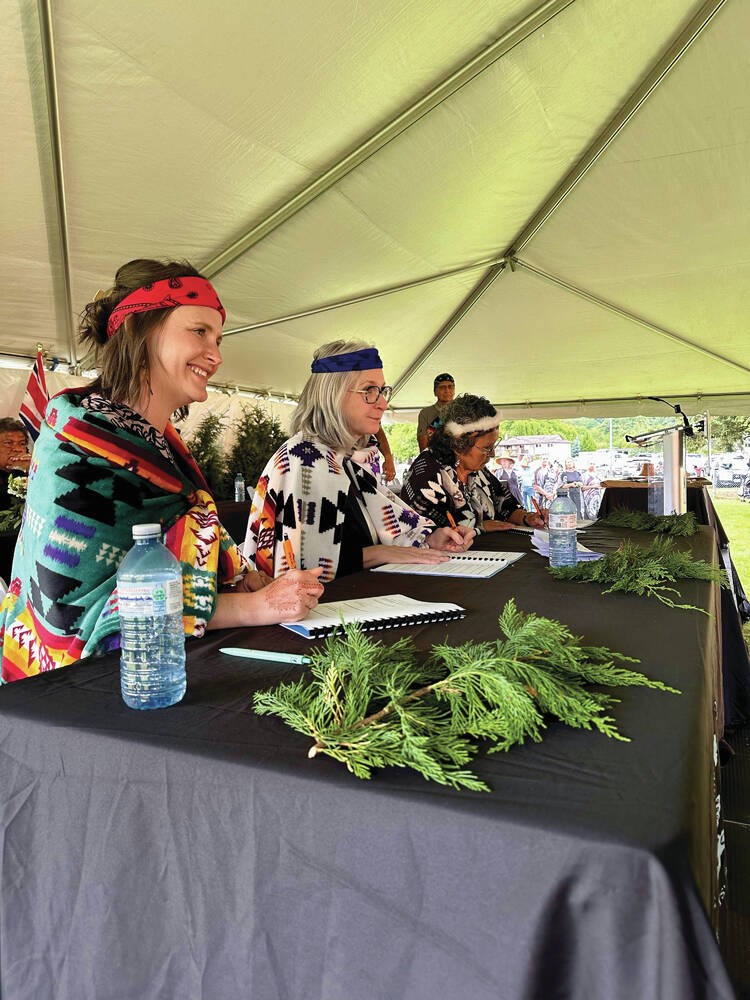
From
left, Grace Lore, B.C. Minister of Children and Family Development,
Patty Hajdu, Federal Minister of Indigenous Services of Canada and Cindy
Daniels, Chief Cowichan Tribes sign an agreement on June 24, 2024.
COURTESY MINISTRY OF CHILDREN AND FAMILY DEVELOPMENT
As the Cowichan Tribes assumes control over its child and
family services, it plans to leave behind the practice of child
apprehension that its chief says has traumatized members of her nation
for generations.
“Today, we are making history,” said Chief Cindy Daniels of the Cowichan Tribes, Vancouver Island’s most populous First Nation.
“We are putting in place our law.”
Representatives from Cowichan Tribes, B.C. and Canada officially
signed a tripartite agreement on June 24 under a tent on the soccer
fields next to the community’s Si’em Lelum Gymnasium.
The agreement allows for Cowichan Tribes to assume full management of
all aspects of child and family services for its community, including
prevention, protection measures and operations.
Daniels, whose traditional name is Sulsulxumaat, said her thoughts
were with the generations of Cowichan children who experienced the
trauma of being removed from their families and their community.
Cowichan Tribes will not practice child apprehension and placements
“that have alienated children from their families and our community for
generations,” she said.
Grace Lore, B.C.’s minister of children and family development, said
state intervention in Indigenous families has a long history of causing
harm, from residential schools to the Sixties Scoop.
Lore said the agreement means her ministry will no longer oversee Cowichan Tribes child and family services as of Aug. 1.
“By recognizing their inherent right to jurisdiction, we do not have
oversight. The services are provided by the Nation for Nation members
from prevention to protection, provided by Cowichan Tribes in
accordance with Cowichan law,” she said. “They never gave up the
responsibility and honour of caring for their kids and families.”
Federal Minister of Indigenous Services Patty Hajdu, representing
Canada, said the agreement allows the Cowichan Tribes to take back
control of their child and family services, “something that should have
never been taken away in the first place.”
The Cowichan Tribes have been pushing for child and family services
to be under its control since 2020, after the passage of the federal
government’s Bill C-92 in 2019 allowed for Indigenous groups to assume
full jurisdiction over child and family services.
Cowichan citizens voted last November
to reclaim child services from B.C. and for Cowichan Tribes regulations
concerning its child and family services to prevail over federal or
provincial law in cases of disagreement.
Nation-provided service will initially cover Vancouver Island and the Gulf Islands.
Lore said her ministry will continue to be involved in cases that
involve Cowichan members in other parts of the province not covered by
the agreement.
The nation’s child protection services will be managed by a services
authority named Stsi’elh stuhw’ew’t-hw tun Smun’eem, which is in the
process of appointing a CEO, the province said.
Cowichan Tribes council will regulate, support and ensure that the
authority functions properly but will otherwise be uninvolved in
day-to-day operations and case decisions.
The Cowichan Tribes have delivered prevention and protection services
through its child and family service, Lalum’utul’ Smun’eem, since 1993.
The agency currently operates under the authority of the provincial government.
Indigenous children are vastly over-represented in foster care in
Canada, making up 53.8 per cent of children under 14 in care, despite
the fact they are just 7.7 per cent of the population under 14,
according to 2021 census data.
NOTE: For those of you who read ALMOST DEAD INDIANS, you will know I have a chapter on FORT DETROIT which explains taking captives/captivity/adoption, collecting and taking scalps and the conditions for the tribes dealing with the French, British and Spanish invaders and the Long Knives (Virginians, pre-America).
There is also history about New England, like King Phillips War and the Phips Proclamation. You really need to understand this real history, our tribal histories.... and I made it easy to read...Trace
THIS IS SO HELPFUL!👇
Finnish
historian Pekka Hämäläinen – who hates the film ‘Dances with Wolves’ –
wrote a book called ‘Indigenous Continent,’ in which he explains that
the tribes of North America had notable military capacity and that their
defeat was by no means inevitable...
The
defeat of Custer and his Seventh Cavalry at the hands of the Sioux and
Cheyennes at Little Bighorn in 1876 was not at all a matter of bad luck
on the part of the general and his troops. Rather, it was the logical
and expected result of the Indigenous people being better strategists, more familiar with the terrain and tactically superior to the American soldiers.
By
no means was this the only time in which the so-called “redskins” — a
derogatory term — proved to be very capable of defeating the whites and
imposing their own military dynamics from the beginning of the 16th
century until the end of the 19th century. In a fascinating history of
the American Indian Wars — Indigenous Continent: The Epic Contest for North America
(2022) — Finnish historian Pekka Hämäläinen calls into question the
inevitability of colonial expansionism. The researcher — who holds a
doctorate in History from the University of Helsinki and is considered
to be one of the world’s specialists in the conquest of North America —
reveals how, on several occasions, the Indigenous people came close to
inflicting a definitive defeat on the European colonial powers, as well
as the United States.
In fact, they nearly expelled these settlers from
North America entirely.
In
the revolutionary account by the 57-year-old Hämäläinen — who is
currently the Rhodes Professor of American History at the University of
Oxford — the Indigenous tribes of North America cease to be the usual
passive victims, subject to an inexorable and irreversible destiny. Instead, in the book, they become powerful agents who dominated the
continent for centuries after the arrival of the colonizers and
represented a very serious threat to their plans of conquest.
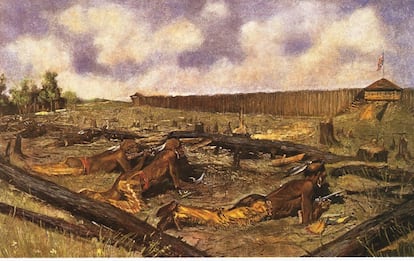
The siege of Fort Detroit during the Pontiac Revolt of 1763, depicted in a painting by Frederic Remington.
The
continent, Hämäläinen points out, was in the hands of the Indigenous
peoples for much longer than we usually think. They had political entities with extraordinary warlike capacity,
such as the Iroquois League — whose power, he reminds us, lasted from
the 16th to the 19th century, “which makes this nation the oldest and
gives it a more central historical role than the United States” — or the
Comanche and Sioux equestrian empires, which he compares to other
powerful tribes of horseback nomads, such as the Mongols.
On
a date like 1776 — when the independence of the United States was
proclaimed — the scholar tells EL PAÍS that “the Europeans claimed most
of the continent… but the natives, as a whole, effectively controlled
it.” The expert affirms that instead of talking about a “colonial
America,” we should talk about an “Indigenous America” that became
colonial “only slowly and unevenly.” In fact, it remained
“overwhelmingly Indigenous until well into the 19th century.” Countless
native nations, he claims, “fought fiercely to keep their territories
intact and their cultures unscathed” and “came to thwart the imperialist
pretensions of France, Spain, Great Britain, the Netherlands and,
later, the United States.”
The
scholar’s narrative follows the Indian Wars in a
meticulously-documented and very engaging way, contrasting sharply with
the somber and traditional structure of classics such as Bury My Heart at Wounded Knee (1970), by Dee Brown. This book established an idea in the popular consciousness — reinforced by the film Dances with Wolves
(1990) — that the fight against the whites was an unavoidable march
towards the disaster of Indigenous societies, which were doomed since
the first settlers set foot in North America. However, Hämäläinen shows
how, in fact, the colonizers often moved on the margins of powerful Indian tribes and confederations,
retreating on many occasions, with their colonial project bordering on
disaster. And the Indigenous people didn’t sit around nursing feelings
of melancholy or disaster: rather, they were muscular, full of vitality
and equipped with the resources and weapons needed to fight.
Throughout
Indigenous Continent, Hämäläinen portrays the native people as “strong,
creative and resilient” historical actors. In the work, he highlights
that they were by no means one-dimensional tribes, as they have been
shown in a traditional narrative “entrenched in our [Western] culture
and our mentality.”
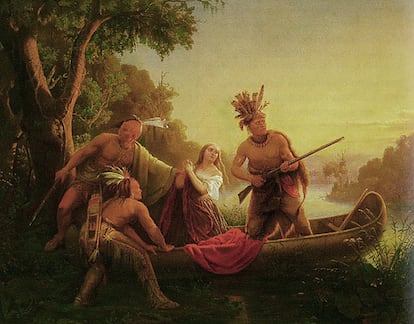
The kidnapping of Jemima Boone by the Shawnee people, depicted in a painting by Karl Ferdinand Wimar.
Along
with the word “empires” — which draws so much attention in relation to
Indigenous peoples of North America, who are popularly associated more
with veritable gangs — the researcher chooses to refer to the native
warriors as “soldiers” (which equates them militarily with white
combatants) and uses Indigenous terms for the leaders and authorities of
tribal nations, instead of the standard use of “chiefs.” It’s also
notable that, in several cases, he uses the names that these nations
prefer to use, instead of the more common ones given to them by the
whites or their enemies. For instance, he uses Wyandot people instead of
Hurons and Meswaki Nation instead of the Fox tribe.
Finnish historian Pekka Hämäläinen, who specializes in history of the conquest of North America.
In
his account of the “overwhelming and persistent Indigenous power in
North America” — after some chapters in which he explains the past of
the societies that faced European colonization, highlighting their
“horizontal and consensual” concept of leadership — Hämäläinen reviews
the early conflicts with the Spanish, French and English, while touching
on how the pilgrims from the Mayflower were allowed in because they
were useful in the Wampanoags’ strategy against their Indigenous enemies. The historical Uncas and their manipulation of the Connecticut settlers
to achieve primacy over the Pequots also appears in the book. As does
the central role of women in the politics of the League of Five Nations —
which so surprised the French (other Indigenous women, such as the
Cherokees, could even go into battle) — and the “overwhelming military
superiority of the Iroquois.” The Mohawk, Hämäläinen emphasizes, “had
gone beyond containing the Europeans… they demanded obedience from
them.”
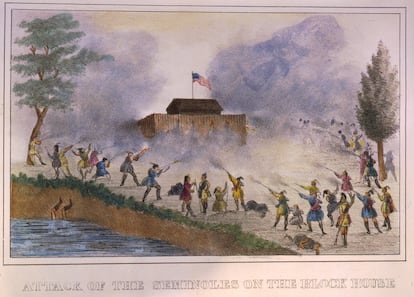
The Seminole people attack a fort, in a vintage illustration.
New
England was nearly destroyed in 1675. And all colonial projects on the
continent seemed to falter or expire entirely between that date and
1690, during what Hämäläinen refers to as an Indigenous “backlash.” King
Philip’s War (1675-1676) forced New York to be defended. The scholar
emphasizes that the cruelty that the whites deployed was a sign of
weakness: it’s no coincidence that the terror they felt was expressed in
a psychosis of demons and witches. In 1692, Salem was only 50 miles
away from the Indigenous border.
In
the southwest, the rebellion of the Pueblo Indians broke out in 1680. Colonialism receded throughout North America at the end of the 17th
century. In 1763 came the Pontiac War. And, in the 18th and 19th
centuries, the threat came especially from the Comanche and Lakota
equestrian empires, whose Seven Council Fires were the most powerful
Indigenous force on the continent, after the weakening of the Iroquois
and Cherokee peoples in the Seven Years’ War (1756-1763).
Hämäläinen also points out that the Sioux and their allies
defeated the United States in two wars: first in Red Cloud (1866) and
then in the campaign that ended at Little Bighorn. He writes how the
Lakota Empire — also known as the Teton Sioux — served as an involuntary
protective shield for a multitude of smaller Indigenous nations,
keeping the US militias and soldiers at bay for decades.
The
chronicle of the powerful Indigenous resistance is lengthy. It includes
Osceola — the leader of the Seminoles of Florida — or Black Hawk, the
Sauk leader west of Lake Michigan. The Kiowa and Apache people are also
mentioned. Indeed, there were fires of resistance everywhere. The United
States was only able to finally extinguish them after “four centuries
of Indigenous power” by applying a genocidal policy.
The Wounded Knee
Massacre of 1890, Hämäläinen states, was a sign of settler weakness and
fear. The US was exhausted after more than 1,600 official armed clashes
against the natives. “There’s a direct link between Indigenous success
and the sense of vulnerability — and the magnitude of revenge — of the
Americans.”
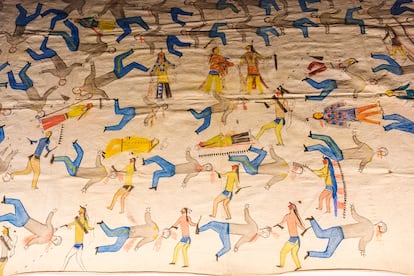
A Sioux depiction of the Battle of Little Bighorn.HECTOR JUAN
Could
the history of North America be different from what has been taught?
“As historians, we can only point out the possible forks in the road…
but in 1776, it was certainly possible to imagine a future on the
continent in which [Indigenous] peoples controlled it.”
For
Hämäläinen, the military technology of the European settlers wasn’t as
superior as is believed. “It was important, without a doubt. But it must
also be taken into account that there wasn’t a single moment in North
American history in which that technology wasn’t also available to the
[Indigenous people], or even transferred by them to others. Success in
war often lies less in technology per se and more in social, cultural
and strategic issues of access to technology and what’s done with it.
We’re making a mistake if we conceive the continent’s military history
as having been a battle between Europeans with modern military
technology against Indigenous peoples without it. Much more important is
the scale at which communities can access and effectively deploy such
technology.”
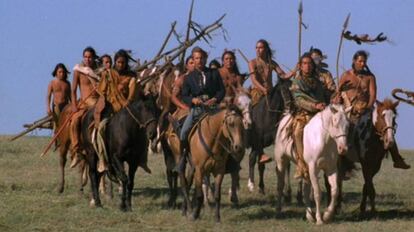
A scene from 'Dancing with Wolves' (1990).
Among the most exciting pages of Indigenous Continent
is the chapter on the acquisition and mastery of horses by the Comanche
and Sioux nations. “It was a thrilling turning point and I’ve always
enjoyed writing about it. Fortunately for me, European authors of the
era were obsessed with native equestrian peoples and wrote about the
subject in great detail. My ability to describe the phenomenon is
largely based on theirs.”
The
use of the term “empires” for Indigenous tribes may appear surprising
at first glance. “There have been different kinds of empires throughout
history. The last thing I wanted is to suggest an equivalence between
empires such as the Comanche or the Sioux with the current United
States. If there’s a similarity, it’s with other empires of horsemen.
That’s the center of the project we launched at Oxford a few years ago. One of the books that came out of it was [French historian] Marie
Favereau’s seminal The Horde: How the Mongols Changed the World (2021).”
When asked what he thinks about Bury My Heart at Wounded Knee,
the Finnish historian notes that it was an “extraordinarily popular
book that arrived in the early 1970s at the time of the anti-Vietnam War
protests and the civil rights movement, when people were disillusioned
with stories of frontier progress and were hungry for new narratives
that shed light on the violence and inhumanity of Western expansion. [But we’re now] in another moment,” he clarifies, “in which historians
are [centering Indigenous narratives] in the context of the history of
the continent.”
As
for movies about Indigenous peoples in North America, Hämäläinen is
firm: “I can’t remember any that don’t present problems, but I reserve
my particular distaste for Dances with Wolves,
which is full of historical errors and has a protagonist — a very
intelligent white man — who guides the Native American characters. Black
Robe (released in 1991, based on Brian Moore’s novel about a Jesuit
trying to convert the Hurons in Canada) is less known, but better and
more historically accurate.”
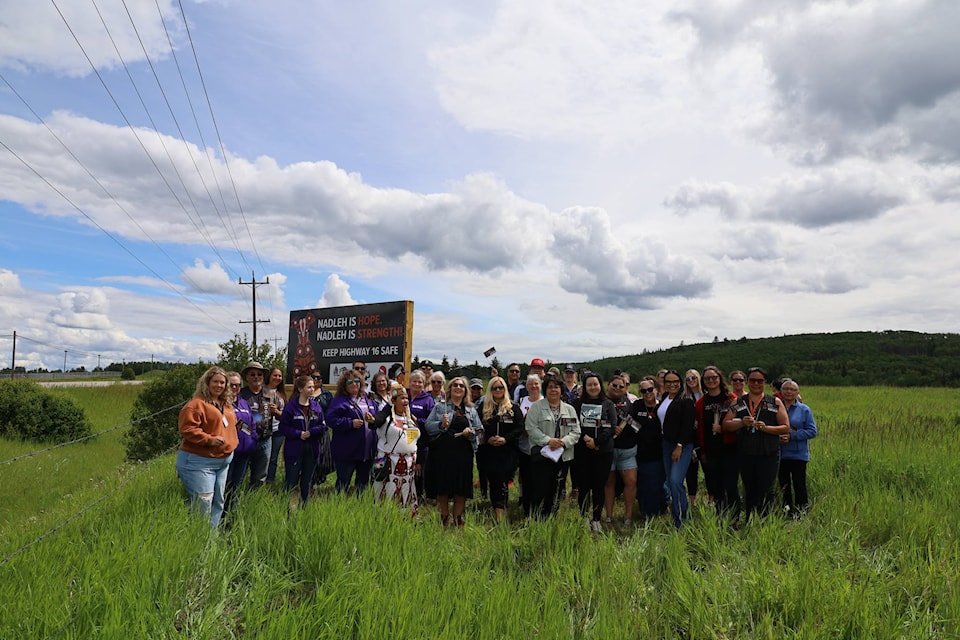
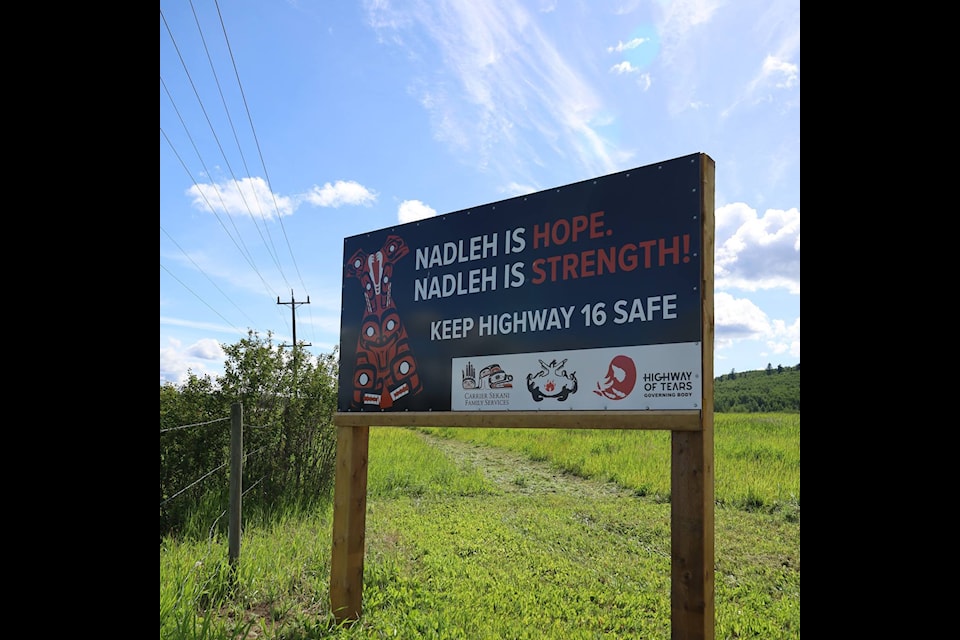
Nadleh Whut’en unveiled
the Hope and Strength billboard, located at the Tse Yaz Bunket Gas Bar,
along Hwy 16 on June 25 . The billboard signifies Nadleh’s commitment to
the safety of all people along Highway 16. (Carrier Sekani Family Services photo)
A new billboard, advocating awareness for the the Missing and
Murdered Indigenous people was unveiled along Highway 16, near Fraser
Lake (on June 25).
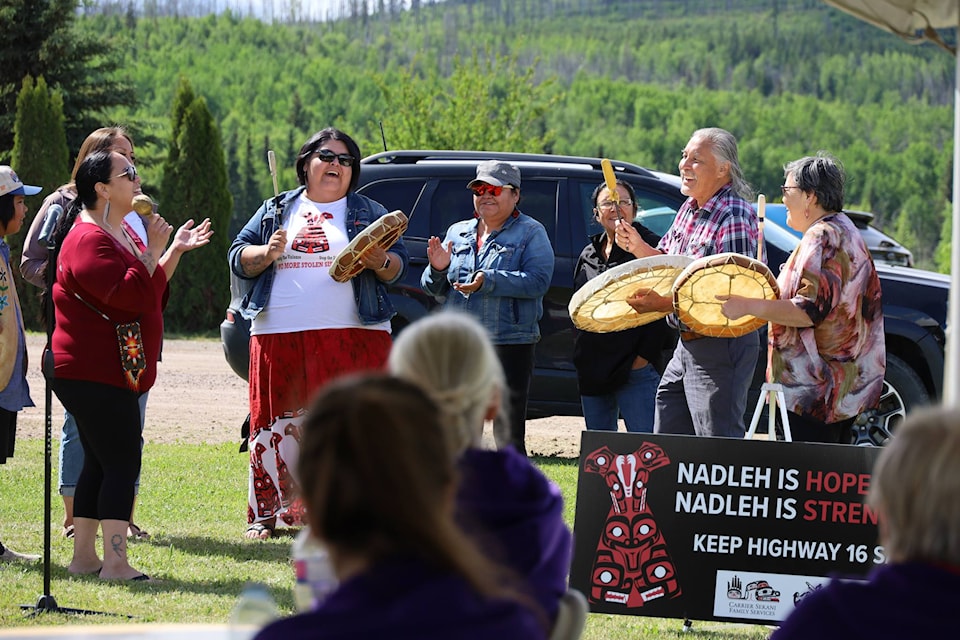
The billboard, unveiled amidst drumming and speeches, features the
message of 'Hope and Strength' and is located 5 kilometres east of
Fraser Lake at the Tse Yaz Bunk’et Gas Bar & Café.
It was erected by Nadleh Whut’en, in partnership with Carrier Sekani Family Services (CSFS).
Talking about the event, Serina Greene, Family Advocate at Nadleh
Whut’en said the moment exemplifies the strength of the Nadleh
community.
“The billboards are important to draw awareness for the Missing and
Murdered Indigenous people along Highway 16 and to bring hope and
strength to our people,” Greene said.
“It took a lot of people and partnerships to make this possible, and it
warms my heart to see so many come together for justice," she said,
adding, "I get goosebumps just thinking about it.”
Last year, CSFS, in partnership with the Highway of Tears Governing
Body, raised their own Hope and Strength billboards along Highway 16.
“Highway 16 has been a place of hurt for many Indigenous families, and
we want to honour those families to the best of our abilities” says
Julie Daum, CSFS Executive Director of Justice.
“Amidst the heartache of the Highway of Tears, these Hope and Strength billboards are a symbol of our resiliency," she said.
"The strength shown by families who have lost loved ones along
Highway 16 is inspirational, and gives us strength in our campaign for
justice for Missing and Murdered Indigenous Women, Girls, Men, Boys, and
2SLGBTQQIA individuals who are missing or have been murdered along this
highway. All of this work is for them.”
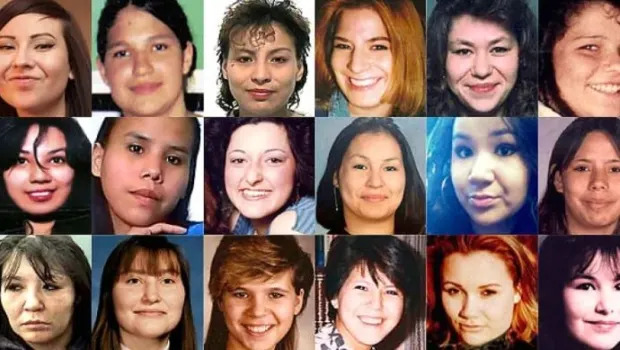
'Bittersweet' reaction to MMIWG inquiry deeming deaths and disappearances a genocide
For
many British Columbians, a new report deeming the deaths and
disappearances of thousands of Indigenous women and girls a "Canadian
genocide" could not come soon enough.
The national inquiry into
the ongoing tragedy, two-and-a-half years and $92 million in the making,
culminated in a final report that was set to be released on Monday. CBC
obtained a copy earlier.
"Our families have been fighting for
this for so long and it's coming to an end," said Lorelei Williams, who
testified at the national inquiry.
"I'm definitely feeling emotional."
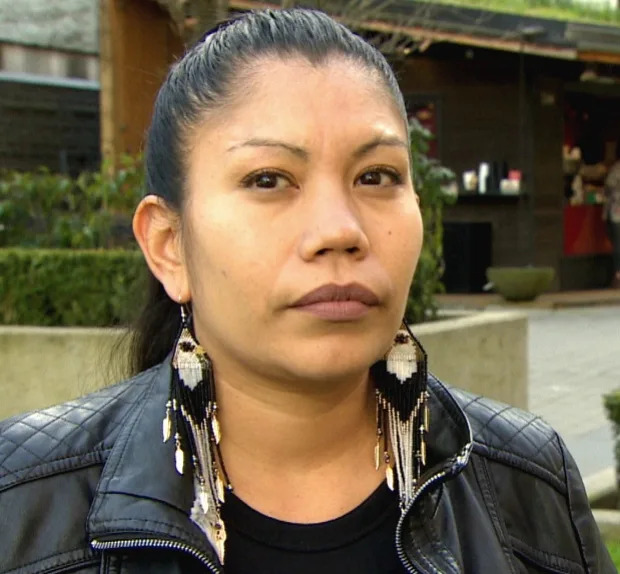
CBC News
Her
cousin Tanya Holyk's DNA was found on the farm of convicted serial
killer Robert Pickton. Her aunt, Belinda Williams, went missing from
Vancouver's Downtown Eastside more than 40 years ago.
Since 2017,
the inquiry has held 24 hearings and events to gather statements from
people like Williams across the country. More than 2,380 Canadians
attended those events.
"It's been a very, very hard process," Williams told CBC's B.C. Today
"Now, it's coming to an end but our women are still going missing and being murdered at a high rate."
Some estimates have suggested roughly 4,000 Indigenous women have been murdered or have disappeared over the past few decades.
The inquiry report said the true number may be impossible to establish.
Not just numbers
For Mary Teegee, executive director of Child and Family Services for Carrier Sekani, the data doesn't tell the full story.
"The
report talks about the atrocities and it talks about genocide, which is
very real, but we can't forget that all the statistics is somebody's
daughter, somebody's child, somebody's cousin, somebody's friend," she
said.
Her cousin Ramona is among those murdered along Highway 16, known as the Highway of Tears.
"It's
a vindication and I welcome this report. I'm glad that it has been
completed, but definitely there's a lot of bittersweet feelings," Teegee
said.
"We could have been doing this decades ago."
Tristan Le Rudulier/CBC
Calls for action
The report runs to over 1,200 pages and includes more than 230 recommendations.
Judy
Wilson, Chief of the Neskonlith and Union of BC Indian Chief's
Executive Member, said she hopes the report will lead to immediate
action.
"It's really timely with this report because we need to get on with the actions," said Wilson, whose sister was murdered.
She wants to see concrete change before the fall election. "We're dealing with it in every day of our lives," she said.
"It's
hard to find anyone that is not affected in some way or another — our
family is most definitely affected with the murder of my young sister at
the age of 21."
T he Métis National Council and the Government of Canada will be working collaboratively, Nation-to-Nation, to develop a process to engag...
To Veronica Brown
Veronica, we adult adoptees are thinking of you today and every day. We will be here when you need us. Your journey in the adopted life has begun, nothing can revoke that now, the damage cannot be undone. Be courageous, you have what no adoptee before you has had; a strong group of adult adoptees who know your story, who are behind you and will always be so.
OUR HISTORY
BOOK 5: Lost Children of the Indian Adoption Projects