BACK UP BLOG (no longer updating)

This blog was a backup for American Indian Adoptees blog
USE THE SEARCH BAR or SEARCH TOPICS at bottom of this blog

If you need support

Support Info: If you are a Survivor and need emotional support, a national crisis line is available 24 hours a day, seven days a week: Residential School Survivor Support Line: 1-866-925-4419. Additional Health Support Information: Emotional, cultural, and professional support services are also available to Survivors and their families through the Indian Residential Schools Resolution Health Support Program. Services can be accessed on an individual, family, or group basis.” These & regional support phone numbers are found at https://nctr.ca/contact/survivors/ . MY EMAIL: tracelara@pm.me

Search This Blog

Thursday, July 4, 2024

How to be an Ally? Learn our history!

Photo by Alexey Demidov

Most of the time adoption is viewed as a rescue in a sense. A child in need of a home is given one with a family who will raise that child as their own. That simple story often doesn’t resemble the reality of what adoption can mean for a child or that child’s first mother. That is even more true if a child was a part of a Native American tribe at any time over the history of our country.

The Count 2024

The number of children adopted out of Native American tribes is so unclear that journalist and Native American Adoptee Trace Lara Hentz has embarked on an ambitious plan to get a count of every Native American adoptee she can this year. She tries to explain just how far-flung Native Adoptees can be.

“The United States adoptees, some of them were sent to Canada and some of the Canadian adoptees were sent to the United States, but like the story I published on the American Indian adoptees.com. There was a young woman from Canada who was taken to Scotland. I mean, literally, these adoptees are everywhere. I had a friend who found an adoptee in Iceland, So that’s why this count means so much to me. No one has ever published an actual count, one that we can look at and trust. It’s long overdue.” (1)

The Boarding School Nightmare

How did we get here? The tension between America’s original inhabitants and European settlers has been present since before America as a nation existed. Europeans tried to control or destroy the Native population in a variety of ways over the years. It was in the 1800s that they began to take the tribes’ children As Elizabeth Hidalgo Reece so aptly said in her article in Harper’s Bazaar, “The United States figured out a long time ago that it is impossible for a tribal nation to survive without its next generation.” (2) Native children were placed into boarding schools. The language and culture of their tribes of origin were forbidden. Children were dressed in the costumes of traditional European children and taught a whitewashed curriculum. More than 75% of the Native children who were in school at the turn of the century were in these boarding schools. (3) Life in a Native American boarding school wasn’t just harsh in the sense that the children there were deprived of their Native community. These schools were prone to disease outbreaks. Abuse of all kinds was known to plague these schools. The combination of lack of health care and abuse led to the deaths of hundreds of Native children throughout the existence of these schools. The number of dead in America is still not completely known. (4)

The Indian Adoption Project Deception

Even when the boarding school movement began to wind down in the late 1950s to 1960s that didn’t mean that efforts to separate native children from their families using adoption was over. In this period the Indian Adoption Project began. (5)This was another government policy. Rather than shuffling Native children into boarding schools, this policy sought to get them placed into white families. It is said that social workers sometimes came to native homes and just took children without talking to the adults involved. (5)The criteria for taking children was often questionable, but Native people didn’t have the standing to speak up for themselves or their families. As many as ⅓ of Native children during this time were taken from their homes and placed with non-native families. (6) Before better protections were in place it is said that 75-80% of families living on a reservation had lost at least one child to adoption outside of their tribe. 

A Shred of Hope

In 1978, less than 50 years ago, Congress passed the Indian Child Welfare Act. (7). Finally, potentially for the first time in our Country’s history, the voice of Native people pleading for their right to exist was starting to be heard. Common sense minimum standards were set that needed to be met before Native children could be taken from their homes. If children did need to leave their first families this law required that homes within the tribe be sought first, then if one couldn’t be found it mandated that a home be sought in another tribe before any non-native family is found for the children. (8)

Hope Under Attack

Native tribes can’t rest, though. Even as recently as recently as 2023 the Supreme Court weighed in on a case that may have meant that the ICWA was pronounced unconstitutional. In this case, a white family adopted a Navaho boy. The Navaho tribe stepped up, requesting that the boy be placed with a Navaho family. One of the arguments made in the case was that the white family was being discriminated against based on race. The tribe argued that tribal memberships were a citizenship designation and not a race. In the end, the ICWA was preserved. (9)

Children from Native tribes do sometimes legitimately need to be placed outside of their homes. When they do, compliance with the ICWA isn’t always followed as well as it should be. Part of the reason might be that those involved in the placement might not understand fully what is at stake (10) People, social workers especially, need to comprehend the importance of preserving Native tribes by making sure the children of tribes are immersed as fully as possible in their birth culture.

Trust the Tribes to Look out for Their Children

As much as non-Native families want to help the children of Native tribes, their place may not be to care for Native children themselves. Non-Native placements are looked at as a last resort by the ICWA after extended family, or Native American foster homes, whether those are within the child’s tribe or from another tribe. (11)

If we look back over the history of the Native people in America and the many attempts that this country has made to extinguish them and their culture, it starts to make sense that placing a Native child anywhere they cannot easily access their tribe and culture is much more than an inconvenience. Making sure Native children know their heritage can in some ways mean the life or death of their tribe and the tribe’s unique ways. (12)

When Being an Ally Means Staying on the Outside.

Knowledge of the history of this issue is necessary to be a true ally of Native people today. Making sure a child is in a safe home is necessary, but when we understand how the future of Native tribes rely on the ability to pass their culture and language down to the children of that tribe, that should change how non-Natives support them. We should be striving to support keeping children within their culture rather than separating them. 

Sources

  1. Spiering, Charlyn. “Trace Lara Hentz Talks About the Importance of “The Count 2024” to Native American Adoptees Everywhere.” Adoption Uncovered, 7 Feb. 2024, adoptionuncovered.com/2024/02/07/trace-lara-hentz-talks-about-the-importance-of-the-count-2024-to-native-american-adoptees-everywhere/.
  2. Hidalgo Reese, Elizabeth. “The Long History of Native American Adoptions.” Harper’s Bazaar, Hearst, 30 Nov. 2022, http://www.harpersbazaar.com/culture/features/a42097413/native-americans-scotus-adoption/.
  3. Abrams, Abigail. “The Fight Over Native American Adoptions Is About More Than Just the Children.” Time, 2 July 2019, time.com/longform/native-american-adoptions/ .
  4. Little, Becky. “Government Boarding Schools Once Separated Native American Children From Families.” History.com, 10 July 2023, http://www.history.com/news/government-boarding-schools-separated-native-american-children-families  .
  5. Randhawa, PJ. “‘Indian orphan nobody wanted gets parents’: The dark history of the Indian Adoption Project.” King5.com, 23 June 2023, http://www.king5.com/article/news/community/facing-race/indian-adoption-project-dark-history/281-a21a5d07-b405-4342-a6d7-ba3d0a01921f .
  6. Kaur, Harmeet. “Should Native Americans get preference over White people in adopting Native children? The Supreme Court may decide.” CNN.com, 13 Nov. 2022, http://www.cnn.com/2022/11/13/us/supreme-court-icwa-native-adoptions-cec/index.html .
  7. “ICWA History and Purpose.” dphhs.mt.gov, dphhs.mt.gov/cfsd/icwa/icwahistory#:~:text=The%20Indian%20Child%20Welfare%20Act,placed%20in%20non%2DIndian%20families.
  8. “About ICWA.” NICWA.org, http://www.nicwa.org/about-icwa/ .
  9. “ICWA RULED CONSTITUTIONAL BY U.S. SUPREME COURT.” potawatomi.org, 30 Aug. 2023, http://www.potawatomi.org/blog/2023/08/30/icwa-ruled-constitutional-by-u-s-supreme-court/#:~:text=In%202022%2C%20the%20states%20of,vote%2C%20June%2015%2C%202023. .
  10. Kraker, Dan. “Heart work: Training social workers to keep Native children home.” mprnews.org, 12 June 2023, http://www.mprnews.org/story/2023/06/12/heart-work-training-social-workers-to-keep-native-children-home .
  11. “Topic 16.Placement.” narf.org, narf.org/nill/documents/icwa/faq/placement.html .
  12. “Identity Crisis: Tribal Nonenrollment & Its Consequences for Children.” embracerace.org, http://www.embracerace.org/resources/identity-crisis-tribal-nonenrollment-its-consequences-for-children .

SOURCE: https://adoptionuncovered.com/2024/02/28/native-american-adoptees-can-help-their-tribes-continue-to-exist-but-only-if-they-know-who-they-are/comment-page-1/#respond

Almost Dead Indians (excerpt)


What did tribes make of the INVASION?

“Try as he might to comprehend the life on the far side of the ocean that the white man described, the brown man was unable.  Such a life was beyond belief.  He could not envision one man or a small group of men and women owning all the land, all the animals, all who dwelt upon it, all the produce, man’s labor and his harvest, and men’s lives. But he felt sorry for his friend.” – Basil Johnston, THE MANITOUS (1995), Chapter 11, AUTTISSOOKAUNUK, describing the strangers with light complexions who landed on the brown man’s land and described Europe.  Tribes had no concept for what he described, which was colonization and slavery.

(👆this is my favorite quote)

What has been written about the European’s arrival is for the most part sinister.  In rock art, scrolls and oral history, tribes recorded, understood and remembered the events of early colonial contact by means of symbolic images: Manitous (or spirits), floating islands, flying and underwater ships, giant birds, thunder and lighting, sounds of music in the air, a strange white whale, dreams, premonitions and warnings.  Early tribes viewed Puritan disregard for ritual to mean earthly disaster and punishment.  The tribes believed these aliens were Manitous possessing a powerful spirit.  (This is according to missionaries who knew the tribes here in the northeast.  And of course, this was written from their perspective…) (I use “Indian” in this text, as they did.)

Anishinaabe say:  After the French came the Zhaaganaash (“Off-shore ones”) of Great Britain.  But out of the Zhaaganaash came the Gichi-ookomaan (“Big-Knives”)—the Virginians (i.e. pre-Americans) via WIKI   Wonder if the Anishinaabe have a word for serial killers?

The Indians lack of material wealth and simple lifestyle was viewed as a character flaw; Puritans could not comprehend their apparent lack of interest in wealth.  (The “Indian” had no concept of being owned or owning land.)

**

You and me: we are not supposed to know.    

President Thomas Jefferson


The Papers of Thomas Jefferson, December 29, 1813  

 “This unfortunate race, whom we had been taking so much pains to save and to civilize, have by their unexpected desertion and ferocious barbarities justified extermination and now await our decision on their fate.”  

Jefferson owned many slaves, had offspring with slaves, and had a fancy plantation, of course. (In Virginia)

These are real crimes and real atrocities against Indigenous First Nations People yet no one involved has been charged or put in prison?  Their goal? 

When details of the Indian Adoption Projects were sealed and files were closed after adoptions, a child would not have his/her name or tribal identity anymore, with their birth certificate altered and falsified.  Tribal membership might exist for some adoptees on paper but with secrecy and sealed files, the adult adoptee would never know or be able to find out.  

It appears that was the plan.   


Tuesday, July 2, 2024

Connecting Threads: Five Siblings Lost and Found (NEW MEMOIR)


LINK TO BUY:  https://a.co/d/0ivODDif

ISBN: 978-1-938627-08-8
 
Author/Illustrator: Elizabeth Miyu Blake
Publisher: Nisse Press LLC
Genre: Graphic Memoir
Age: 17+
 
Connecting Threads: Five Siblings Lost and Found is a powerful story of identity, belonging, and the resilience of the human spirit. All were separated by foster care and closed adoptions. One sibling’s life and search for first family, belonging, and culture, one thread at a time.
 
 
Available July 2, 2024.  It can be ordered from any bookstore or online.  Or it can be ordered by your local library. 
 
AUTHOR WEBSITE:
 
Elizabeth contributed her story in the anthology CALLED HOME: The RoadMap.

Monday, July 1, 2024

6 Types of Emotional Abuse


Have you experienced this? Many adoptees have.

1. REJECTING 

Narcissistic Parents or caregivers who display rejecting behavior toward a child will often [purposefully or unconsciously] let a child know, in a variety of ways, that he or she is unwanted. Putting down a child’s worth or belittling their needs is one form these types of emotional abuse may take. Other examples can include telling a child to leave or worse, to get out of your face, calling him names or telling the child that he is worthless, making a child the family scapegoat or blaming him for family/sibling problems. Refusing to talk to or holding a young child as he or she grows can also be considered abuse.

  • constant criticism
  • name-calling
  • telling child he/she is ugly
  • yelling or swearing at the child
  • frequent belittling and use of labels such as “stupid” or “idiot”
  • constant demeaning jokes
  • verbal humiliation
  • constant teasing about child’s body type and/or weight
  • expressing…

View original post 812 more words

Quebec law helps adopted children to find their birth parents

Sunday, June 30, 2024

FILM: I Have Lived Four Lives | STAR KNOWLEDGE


Wilfred Buck by Lisa Jackson | 92 min
Press kit: mediaspace.nfb.ca/epk/wilfred-buck
New trailer: vimeo.com/942488273/38a2dbba43


Wilfred Buck is an Ininiw (Cree) astronomer, author, educator, Knowledge Keeper and lecturer originally from Opaskwayak Cree Nation (OCN). He graduated from the University of Manitoba with two degrees in Education and has 25 years of experience as an educator, working with students from kindergarten to university. Considered the foremost authority on Indigenous astronomy in the world, Wilfred is the author of Tipiskawi Kisik: Night Sky Star Stories (2018), the semi-autobiographical I Have Lived Four Lives (2021) and Kitcikisik (Great Sky): Tellings That Fill the Night Sky (2021).


A new film by Director Lisa Jackson, Wilfred Buck: I Have Lived Four Lives. 

MORE:  https://www.canada.ca/en/national-film-board/news/2024/05/cree-elder-and-astronomer-overcomes-a-harrowing-history-to-take-us-to-the-stars-lisa-jacksons-wilfred-buck-opens-in-canadian-cities.html

The film was screened in June featuring a live Q&A with filmmaker Lisa Jackson.

Weaving together moments of his life today as an expert in Indigenous cosmology and his past as a troubled young child and teen, charismatic Cree Elder Wilfred Buck shares his embodied wisdom and profound reflections on colonial trauma in this expertly crafted adaptation of his autobiographical memoir, I Have Lived Four Lives.

When his family is cruelly torn from their land during the Sixties Scoop, Buck is left to survive on his own, falling into the darkness of addiction, until he discovers the cosmological teachings of his people and finds his way, guided by the celestial beings that become his compass and the focus of his life’s work. Using archival footage, stylized re-enactments, poetic imagery and vérité, director Lisa Jackson brilliantly jumps between genres to craft a constellation of Buck’s key life moments and memories, charting his journey to a knowledge system that survived colonization by going underground, now revived by Buck’s endless curiosity and marvel of the Ininew night sky.

About Lisa Jackson

Lisa Jackson is an Anishinaabe (Aamjiwnaang) filmmaker whose work has garnered two Canadian Screen Awards, been nominated for a Webby and screened at top festivals including Sundance, Tribeca, SXSW, Berlinale and Hot Docs. Her NFB VR experience Biidaaban was viewed by more than 25,000 people, while her film Indictment won Best Doc at imagineNATIVE and is one of CBC’s top watched documentaries. She won the 2022 Chicken & Egg Award and the 2021 DOC Vanguard Award, and has an MFA from York University.

You can hear Buck tell the Mista Muskwa story here: https://soundcloud.com/scifri/wilfred-buck-tells-the-story-of-mista-muskwa


This webinar is the first of what will become a series. Facilitators recommended also learning from  Native Skywatchers, the Anishinaabe Sky Star Map, and resources from Elder Wilfred Buck.

WEBINAR:  https://windspeaker.com/buffalo-spirit/webinar-explores-indigenous-ways-knowing-stars

Why do we accept as universal the teachings of constellations by their Greek names and stories? Indigenous peoples have their own stories and names for the star formations. These stories capture teachings about the land, medicines, animals and our relations. We don’t need to replace the Indigenous worldview. It’s just as valid.  


National Indian Boarding School Digital Archive


Announcing the Launch of the National Indian Boarding School Digital Archive (NIBSDA)

NABS is proud to announce the launch of the National Indian Boarding School Digital Archive (NIBSDA), the first-ever digital archives database on Indian Boarding Schools. NIBSDA is a groundbreaking project aimed at preserving and bringing to light the history of the U.S. Indian Boarding School era. Over the last four years, NABS has been dedicated to compiling and digitizing records from Indian boarding schools.  

Through NIBSDA, survivors, families, researchers, educators, tribal leaders, and the general public will have the ability to access information that allows them to gain a better understanding of what happened at Indian boarding schools. This digital repository will include documents, photographs, and oral histories, offering invaluable insights into the experiences of those who attended these institutions and the impact they had and continue to have on Native communities.

"This initiative marks a significant milestone in NABS commitment to truth, healing, and justice," said NABS CEO Deborah Parker (Tulalip Tribes). "The majority of all Indian boarding school records are currently not available to the public, by making these records accessible, we are taking a big step towards honoring the history and strength of Native peoples and building a more just and equitable future."

SEARCH: https://boardingschoolhealing.org/nibsda/

Thursday, May 23, 2024

History: OPERATION BABYLIFT

Heartbreak and hope - The Vietnamese children of Operation Babylift and their battle to find birth parents and their identity

Almost 50 years ago, thousands of children were removed from Vietnam to be adopted around the world, including Scotland.  Their story is now explored in a new play, Precious Cargo...

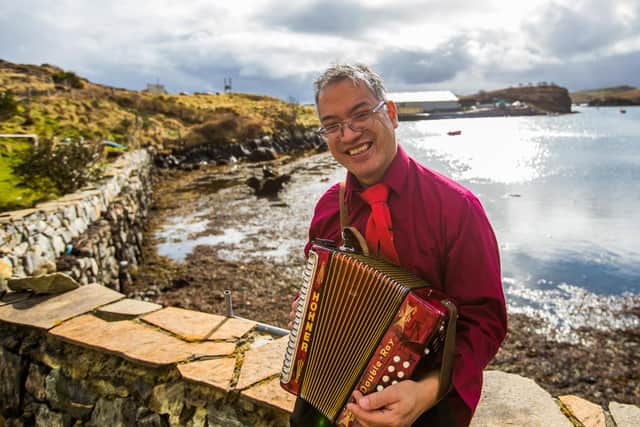
​Andy Yearley still vividly remembers the journey he made from the Isle of Lewis to Vietnam 20 years ago.  Travelling with a film crew from Mac TV in Stornoway, he had what he calls “the most unforgettable, vivid and surreal week of my entire life”.

Born in 1973, Yearley was one of thousands of young Vietnamese children evacuated from the country as the Vietnam war finally ended, culminating in a huge, US-led initiative in April 1975 called Operation Babylift.  The children, many transported on military aircraft, were adopted by families in the USA, Australia and across Europe. Yearley’s Vietnamese name is Nguyen Tang; adopted by a Scottish couple, he grew up as Andy in a small, seaside village on Lewis, knowing virtually nothing about his biological family.  The aim of that 2004 journey was to try and find them.

“A normal tourist visiting Vietnam finds stimulation overload, but in my case it was my first time seeing the country of my birth, potentially finding blood family, surrounded by a Gaelic TV crew, and escorted by a high up official from the Vietnamese government,” recalls Yearley. “Surreal was a total understatement.”

Yearley is a professional musician who has performed at Celtic Connections, HebCelt, and other high profile Scottish events, as well as teaching music to children. In Saigon, he remembers visiting a music shop where the shopkeeper talked at him for half an hour in Vietnamese. Not understanding a word, Yearley eventually decided to respond in Gaelic, just to see what would happen. “I said something along the lines of "Ciomair a tha thu? Tha mi duillich, a bheil Gaelic agad?" (how are you, sorry do you speak Gaelic?). The look on her face!”

Yearley never found any members of his Vietnamese family, but thanks to orphanage staff he was at least able to identify and visit the street where he had been found as a baby, next to a dead woman thought to have been his mother. “It was 5am and the street was buzzing with activity. To a lot of folk, their first known location is a hospital bed, or a birthing pool. Here I was at mine – a bustling, beautiful street with overgrown foliage everywhere, children, cats and dogs running wild, and a barely discernible old train track running through it. I quite like the fact that this last day was not filmed. It was a very personal moment.”

Two decades later, Yearley is one of the creators of Precious Cargo, a new theatre show coinciding with the 50th anniversary of Operation Babylift. Developed in Uig on the Isle of Lewis, Precious Cargo is now set for a full Edinburgh Fringe run at Summerhall following its debut performance at An Lanntair in Stornoway at the beginning of July.

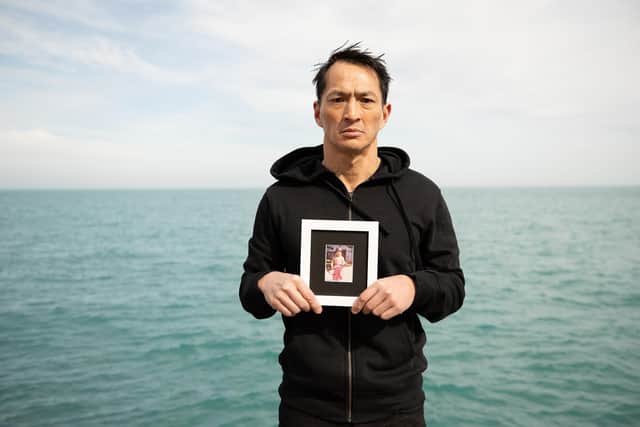
The show grew out of a chance meeting in autumn 2021.  Australian actor Barton Williams, also a Vietnam war orphan, was visiting Lewis as one of the cast of Silent Roar, a feature film about Hebridean surfers that was being shot in Uig and would ultimately go on to open the 2023 Edinburgh International Film Festival. Introduced by one of the film crew, Williams and Yearley made an immediate connection. Both had been raised by white families, growing up as virtually the only Asian child in small, overwhelmingly white communities, with no connection to their Vietnamese language or heritage. Both had later travelled back to Vietnam in the hope of finding their biological families but had returned home with no answers – a common experience for adoptees, so much information having been lost in the chaos of war.

Williams had been telling his own story for a while in various ways, in a children’s book, a short film, and in a solo stage show which he had developed as far as a work in progress performance at the Vaults in London. When he met Yearley, though, something clicked. “Andy understood the displacement I felt, looking Asian from the outside but something else inside,” he says. “He’s me, but Scottish.” Precious Cargo has now become international in scope, telling not just Williams’ story but those of five other adoptees living across the world, including Yearley, who also composed the musical score. All of the adoptees featured in the show grew up in very different places and circumstances, from rural Iowa to small town England, but with a powerful shared experience.

Operation Babylift may have saved many lives but it was controversial even in 1975. The first flight crashed a few minutes after take-off, killing 138 people including 78 Vietnamese children. Photographs from the time show rows and rows of babies being flown to their new Western homes in boxes. There were questions as to the USA’s motivation; to what extent was it a public relations exercise after an infamously disastrous war? In one of several eye-opening historical details, Playboy founder Hugh Hefner provided his private plane, the ‘Big Bunny’, to transport 41 Vietnamese orphans from a military processing unit in San Francisco to New York; there are photographs of Playboy Bunnies carrying the babies off the plane.

Some of the adoptees weren’t orphans at all, however, just children separated from their Vietnamese families, and the situation was fraught with cultural misunderstanding. There are stories of impoverished Vietnamese mothers effectively using orphanages as a place to keep their children safe, then returning weeks later to find they had been taken out of the country. As one later put it, “To understand my story, think you are caught upstairs in a burning house. To save your babies’ lives you drop them to people on the ground to catch. It’s good people that would catch them, but then you find a way to get out of the fire, too, and thank the people for catching your babies, and you try to take your babies with you. But the people say, oh no, these are our babies now, you can’t have them back.”

While Vietnam war adoptees mostly express immense gratitude for the lives they have had, there is also a sense of displacement, loss, and perhaps survivor’s guilt. “The first time I ever met adoptees it felt like group therapy,” says Rachel Gregg Galvez, an adoptee who grew up in the suburbs of New York and whose story features in Precious Cargo. She is co-founder of the South East Asian Coast to Coast Foundation, a non-profit company that helps reconnect families separated by the war. “Some of the adoptees I’ve worked with, on the surface they’ve had a great life but underneath they have this sadness and emptiness.”

Vietnam war adoptees also face a distinct and complex form of racial prejudice. A recurring theme in Precious Cargo is that Barton is continually judged by white people – from school friends to casting directors – as part of a group to which he feels little connection. Jennifer Adams, who was adopted by a family in Iowa, has a formative childhood memory of not being allowed to play at a white friend’s house because their father had served in the Vietnam war and didn’t want her there. Years later, as a teenager, she was selling snow cones at a community event when she saw the man again. “He came by and he very intentionally bought a snow cone from me, and I took it as his apology. He didn’t say I’m sorry and I didn’t need him to, I just needed to feel like he could acknowledge my existence.”

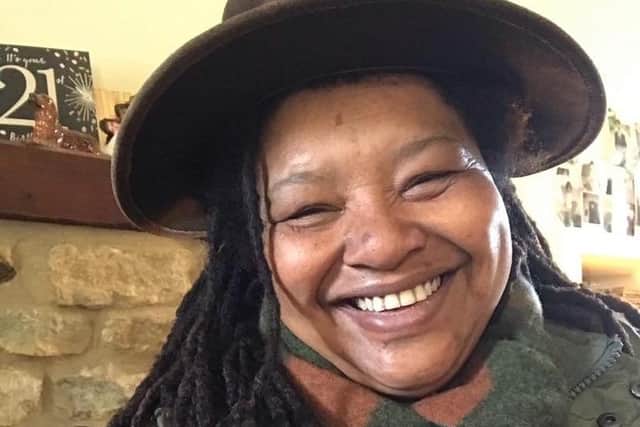
Toni Angelique Harrison, another adoptee whose story features in Precious Cargo, grew up as one of very few Black children in Biggleswade, a small town in Bedfordshire. Harrison says she didn’t understand that she was seen as a Black person until she was 15 or 16.

“As a teenager I didn’t like to talk about Vietnam,” she says. “I was only seen as Black, never Vietnamese.” She ended up internalising the racism in Hollywood movies about the Vietnam war. “In the films it was the African-American GIs who were shown killing Vietnamese people and raping Vietnamese women. It made me really angry at them. Racism is everywhere. It was only when I met some real GIs as an adult that I found out they were desperately looking for their Vietnamese families too.”

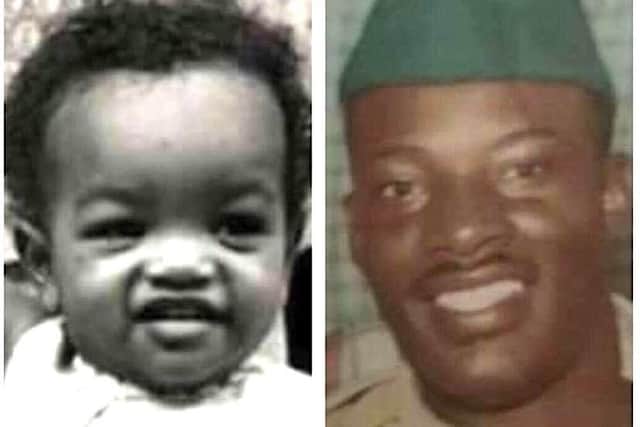
Harrison finally managed to find her biological father, an American ex-drill sergeant called Lee Butler, via a DNA search. Their emotional meeting was captured in a BBC news report in 2018; she also met other American relatives who had been previously aware of her existence but had no way to find her. It was the first time in her life, she says, that she’d been in a family photo with people who looked like her.

The increasing number of DNA tests, particularly in the USA, has resulted in a few reunions like this. Many Vietnam war adoptees were the product of relationships between American soldiers and Vietnamese women. Butler was with Harrison’s biological mother for two years, she discovered, but had to leave her behind when the army sent him back to the USA. Vietnamese parents are harder to track down, but Harrison remains determined to find her mother and hopes that sharing her story in an Edinburgh Fringe show will help with this.

“There are more success stories now, orphans finding fathers or siblings by using DNA companies like Ancestry or Family Finder,” she says. “But our biological Vietnamese mothers can’t afford to spend $100 on a DNA test. In Vietnam it could be a month’s wage. I set up a music festival called Free Spirit and we raised enough money to send 50 DNA kits to Vietnam. But time is not on our side. Our biological fathers and mothers are ageing or dying. The memories of the war are dying.”

Indeed, as Operation Babylift approaches its 50th anniversary and adoptees adjust to middle age and mortality, there is a strong sense of time running out. Williams’ beloved adopted mother died in autumn last year. His grief at her loss, he says, is part of the reason why he was so determined to tell this story now, a story that has become as much about looking for peace and acceptance as it is about continuing to search for lost relatives.

Like Yearley and Williams, Jennifer Adams returned to Vietnam as an adult a few years ago. She describes the experience as “life-changing” even though, like them, she found no trace of her birth family. But she wasn’t expecting answers, she says; she didn’t know her birth name or birth date and the orphanage she had been in no longer existed. She just wanted to see the “mother country” for herself. “Growing up, all I’d ever seen about Vietnam was through the lens of the US military, or Miss Saigon,” she explains. “I wanted to have a relationship that wasn’t through someone else’s lens or filter.”

Her description of her journey home is an eloquent summary of the Vietnam adoptee experience, the constant challenge of finding a place for yourself somewhere between different identities.

“When I came back from Vietnam after a month I remember coming in through LAX (Los Angeles International Airport) and there was a ginormous US flag and I started crying,” she recalls. “I’m not this overly patriotic person but seeing that flag represented to me ‘I’m home, I’m on firm ground again.’ That surprised me to be honest. I think this is probably a common experience for many transracial adoptees. I don’t get the advantage of having everything all in one. If I allow myself I could tell myself that I’m an outsider wherever I go. I was definitely an outsider in Iowa and in a way I was an outsider in Vietnam, they could take one look at me and know I wasn’t raised there. I’m just bigger, I have a different build. But I prefer to think of myself as an insider. In the US I find my commonalities, and I did the same in Vietnam.”

SOURCE: https://www.scotsman.com/whats-on/arts-and-entertainment/operation-babylift-vietnam-edinburgh-fringe-4631063

SCOTLAND:  Precious Cargo is at An Lanntair, Stornoway, 6 July (www.lanntair.com), then Summerhall, Edinburgh, 1-26 August (www.summerhall.co.uk). Tickets for all performances are on sale now.

CLICK OLDER POSTS (above) to see more news

CLICK OLDER POSTS  (above) to see more news

MEGWETCH THANK YOU

HUGE Thank you for visiting this blog and sharing this with your kin. It's appreciated. Contact Trace anytime! Use the form below.

BOOKSHOP

Please use BOOKSHOP to buy our titles. We will not be posting links to Amazon.

Popular Posts

To Veronica Brown

Veronica, we adult adoptees are thinking of you today and every day. We will be here when you need us. Your journey in the adopted life has begun, nothing can revoke that now, the damage cannot be undone. Be courageous, you have what no adoptee before you has had; a strong group of adult adoptees who know your story, who are behind you and will always be so.

OUR HISTORY

OUR HISTORY
BOOK 5: Lost Children of the Indian Adoption Projects