This blog was a backup for American Indian Adopteesblog
USE THE SEARCH BAR or SEARCH TOPICS at bottom of this blog
If you need support
Support Info: If you are a Survivor and need emotional support, a national crisis line is available 24 hours a day, seven days a week: Residential School Survivor Support Line: 1-866-925-4419. Additional Health Support Information: Emotional, cultural, and professional support services are also available to Survivors and their families through the Indian Residential Schools Resolution Health Support Program. Services can be accessed on an individual, family, or group basis.” These & regional support phone numbers are found at https://nctr.ca/contact/survivors/ .
MY EMAIL: tracelara@pm.me
Narcissistic Parents or caregivers who display rejecting behavior
toward a child will often [purposefully or unconsciously] let a child
know, in a variety of ways, that he or she is unwanted. Putting down a
child’s worth or belittling their needs is one form these types of
emotional abuse may take. Other examples can include telling a child to
leave or worse, to get out of your face, calling him names or telling
the child that he is worthless, making a child the family scapegoat or
blaming him for family/sibling problems. Refusing to talk to or holding a
young child as he or she grows can also be considered abuse.
constant criticism
name-calling
telling child he/she is ugly
yelling or swearing at the child
frequent belittling and use of labels such as “stupid” or “idiot”
constant demeaning jokes
verbal humiliation
constant teasing about child’s body type and/or weight
Wilfred Buck is an Ininiw (Cree) astronomer, author, educator, Knowledge
Keeper and lecturer originally from Opaskwayak Cree Nation (OCN). He
graduated from the University of Manitoba with two degrees in Education
and has 25 years of experience as an educator, working with students
from kindergarten to university. Considered the foremost authority on
Indigenous astronomy in the world, Wilfred is the author of Tipiskawi Kisik: Night Sky Star Stories (2018), the semi-autobiographical I Have Lived Four Lives (2021) and Kitcikisik (Great Sky): Tellings That Fill the Night Sky (2021).
A new film by Director Lisa Jackson, Wilfred Buck: I Have Lived Four
Lives.
The film was screened in June featuring a live Q&A with filmmaker Lisa
Jackson.
Weaving together moments of his life today as an expert in Indigenous
cosmology and his past as a troubled young child and teen, charismatic
Cree Elder Wilfred Buck shares his embodied wisdom and profound
reflections on colonial trauma in this expertly crafted adaptation of
his autobiographical memoir, I Have Lived Four Lives.
When his family is cruelly torn from their land during the Sixties
Scoop, Buck is left to survive on his own, falling into the darkness of
addiction, until he discovers the cosmological teachings of his people
and finds his way, guided by the celestial beings that become his
compass and the focus of his life’s work. Using archival footage,
stylized re-enactments, poetic imagery and vérité, director Lisa Jackson
brilliantly jumps between genres to craft a constellation of Buck’s key
life moments and memories, charting his journey to a knowledge system
that survived colonization by going underground, now revived by Buck’s
endless curiosity and marvel of the Ininew night sky.
About Lisa Jackson
Lisa Jackson is an Anishinaabe (Aamjiwnaang) filmmaker whose work has
garnered two Canadian Screen Awards, been nominated for a Webby and
screened at top festivals including Sundance, Tribeca, SXSW, Berlinale
and Hot Docs. Her NFB VR experience Biidaaban was viewed by more than 25,000 people, while her film Indictment won
Best Doc at imagineNATIVE and is one of CBC’s top watched
documentaries. She won the 2022 Chicken & Egg Award and the 2021 DOC
Vanguard Award, and has an MFA from York University.
This webinar is the first of what will become a series. Facilitators recommended also learning from Native Skywatchers, the Anishinaabe Sky Star Map, and resources from Elder Wilfred Buck.
Why
do we accept as universal the teachings of constellations by their
Greek names and stories? Indigenous peoples have their own stories and
names for the star formations. These stories capture teachings about the
land, medicines, animals and our relations. We don’t need to replace
the Indigenous worldview. It’s just as valid.
Announcing the Launch of the National Indian Boarding School Digital Archive (NIBSDA)
NABS is proud to announce the launch of the National Indian Boarding School Digital Archive (NIBSDA),
the first-ever digital archives database on Indian Boarding Schools.
NIBSDA is a groundbreaking project aimed at preserving and bringing to
light the history of the U.S. Indian Boarding School era. Over the last
four years, NABS has been dedicated to compiling and digitizing records
from Indian boarding schools.
Through
NIBSDA, survivors, families, researchers, educators, tribal leaders,
and the general public will have the ability to access information that
allows them to gain a better understanding of what happened at Indian
boarding schools. This digital repository will include documents,
photographs, and oral histories, offering invaluable insights into the
experiences of those who attended these institutions and the impact they
had and continue to have on Native communities.
"This
initiative marks a significant milestone in NABS commitment to truth,
healing, and justice," said NABS CEO Deborah Parker (Tulalip Tribes).
"The majority of all Indian boarding school records are currently not
available to the public, by making these records accessible, we are
taking a big step towards honoring the history and strength of Native
peoples and building a more just and equitable future."
Heartbreak and hope - The Vietnamese children of Operation Babylift and their battle to find birth parents and their identity
By Andrew Eaton-Lewis | 18th May 2024
Almost
50 years ago, thousands of children were removed from Vietnam to be
adopted around the world, including Scotland. Their story is now
explored in a new play, Precious Cargo...
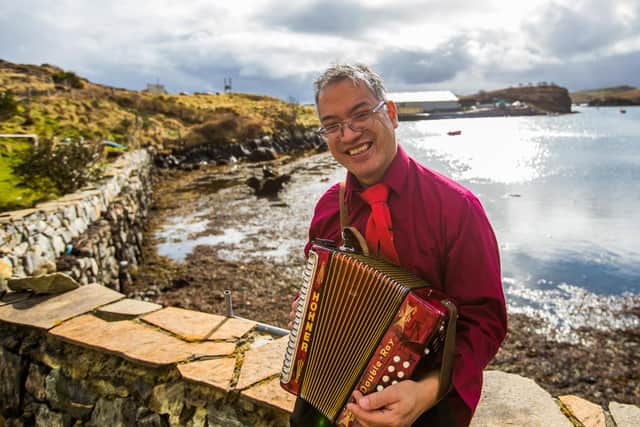
Andy
Yearley still vividly remembers the journey he made from the Isle of
Lewis to Vietnam 20 years ago. Travelling with a film crew from Mac TV
in Stornoway, he had what he calls “the most unforgettable, vivid and
surreal week of my entire life”.
Born
in 1973, Yearley was one of thousands of young Vietnamese children
evacuated from the country as the Vietnam war finally ended, culminating
in a huge, US-led initiative in April 1975 called Operation Babylift. The children, many transported on military aircraft, were adopted by
families in the USA, Australia and across Europe. Yearley’s Vietnamese
name is Nguyen Tang; adopted by a Scottish couple, he grew up as Andy in
a small, seaside village on Lewis, knowing virtually nothing about his
biological family. The aim of that 2004 journey was to try and find
them.
“A
normal tourist visiting Vietnam finds stimulation overload, but in my
case it was my first time seeing the country of my birth, potentially
finding blood family, surrounded by a Gaelic TV crew, and escorted by a
high up official from the Vietnamese government,” recalls Yearley.
“Surreal was a total understatement.”
Yearley
is a professional musician who has performed at Celtic Connections,
HebCelt, and other high profile Scottish events, as well as teaching
music to children. In Saigon, he remembers visiting a music shop where
the shopkeeper talked at him for half an hour in Vietnamese. Not
understanding a word, Yearley eventually decided to respond in Gaelic,
just to see what would happen. “I said something along the lines of
"Ciomair a tha thu? Tha mi duillich, a bheil Gaelic agad?" (how are you,
sorry do you speak Gaelic?). The look on her face!”
Yearley
never found any members of his Vietnamese family, but thanks to
orphanage staff he was at least able to identify and visit the street
where he had been found as a baby, next to a dead woman thought to have
been his mother. “It was 5am and the street was buzzing with activity.
To a lot of folk, their first known location is a hospital bed, or a
birthing pool. Here I was at mine – a bustling, beautiful street with
overgrown foliage everywhere, children, cats and dogs running wild, and a
barely discernible old train track running through it. I quite like the
fact that this last day was not filmed. It was a very personal moment.”
Two decades later, Yearley is one of the creators of Precious Cargo, a
new theatre show coinciding with the 50th anniversary of Operation
Babylift. Developed in Uig on the Isle of Lewis, Precious Cargo is now
set for a full Edinburgh Fringe run at Summerhall following its debut
performance at An Lanntair in Stornoway at the beginning of July.
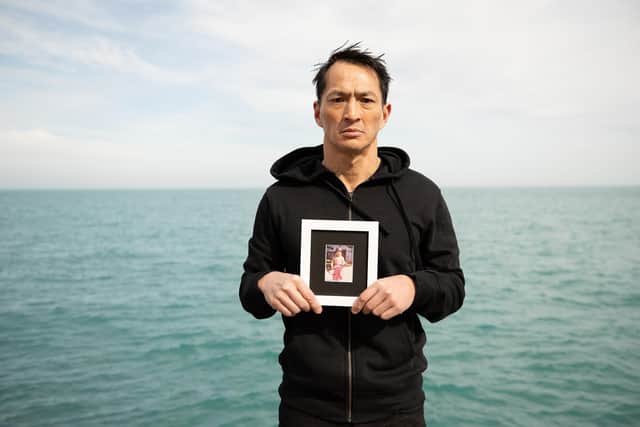
The
show grew out of a chance meeting in autumn 2021. Australian actor
Barton Williams, also a Vietnam war orphan, was visiting Lewis as one of
the cast of Silent Roar, a feature film about Hebridean surfers that
was being shot in Uig and would ultimately go on to open the 2023
Edinburgh International Film Festival. Introduced by one of the film
crew, Williams and Yearley made an immediate connection. Both had been
raised by white families, growing up as virtually the only Asian child
in small, overwhelmingly white communities, with no connection to their
Vietnamese language or heritage. Both had later travelled back to
Vietnam in the hope of finding their biological families but had
returned home with no answers – a common experience for adoptees, so
much information having been lost in the chaos of war.
Williams
had been telling his own story for a while in various ways, in a
children’s book, a short film, and in a solo stage show which he had
developed as far as a work in progress performance at the Vaults in
London. When he met Yearley, though, something clicked. “Andy understood
the displacement I felt, looking Asian from the outside but something
else inside,” he says. “He’s me, but Scottish.” Precious Cargo has now
become international in scope, telling not just Williams’ story but
those of five other adoptees living across the world, including Yearley,
who also composed the musical score. All of the adoptees featured in
the show grew up in very different places and circumstances, from rural
Iowa to small town England, but with a powerful shared experience.
Operation
Babylift may have saved many lives but it was controversial even in
1975. The first flight crashed a few minutes after take-off, killing 138
people including 78 Vietnamese children. Photographs from the time show
rows and rows of babies being flown to their new Western homes in
boxes. There were questions as to the USA’s motivation; to what extent
was it a public relations exercise after an infamously disastrous war?
In one of several eye-opening historical details, Playboy founder Hugh
Hefner provided his private plane, the ‘Big Bunny’, to transport 41
Vietnamese orphans from a military processing unit in San Francisco to
New York; there are photographs of Playboy Bunnies carrying the babies
off the plane.
Some
of the adoptees weren’t orphans at all, however, just children
separated from their Vietnamese families, and the situation was fraught
with cultural misunderstanding. There are stories of impoverished
Vietnamese mothers effectively using orphanages as a place to keep their
children safe, then returning weeks later to find they had been taken
out of the country. As one later put it, “To understand my story, think
you are caught upstairs in a burning house. To save your babies’ lives
you drop them to people on the ground to catch. It’s good people that
would catch them, but then you find a way to get out of the fire, too,
and thank the people for catching your babies, and you try to take your
babies with you. But the people say, oh no, these are our babies now,
you can’t have them back.”
While Vietnam war adoptees mostly express immense gratitude for the
lives they have had, there is also a sense of displacement, loss, and
perhaps survivor’s guilt. “The first time I ever met adoptees it felt
like group therapy,” says Rachel Gregg Galvez, an adoptee who grew up in
the suburbs of New York and whose story features in Precious Cargo. She
is co-founder of the South East Asian Coast to Coast Foundation, a
non-profit company that helps reconnect families separated by the war.
“Some of the adoptees I’ve worked with, on the surface they’ve had a
great life but underneath they have this sadness and emptiness.”
Vietnam
war adoptees also face a distinct and complex form of racial prejudice.
A recurring theme in Precious Cargo is that Barton is continually
judged by white people – from school friends to casting directors – as
part of a group to which he feels little connection. Jennifer Adams, who
was adopted by a family in Iowa, has a formative childhood memory of
not being allowed to play at a white friend’s house because their father
had served in the Vietnam war and didn’t want her there. Years later,
as a teenager, she was selling snow cones at a community event when she
saw the man again. “He came by and he very intentionally bought a snow
cone from me, and I took it as his apology. He didn’t say I’m sorry and I
didn’t need him to, I just needed to feel like he could acknowledge my
existence.”
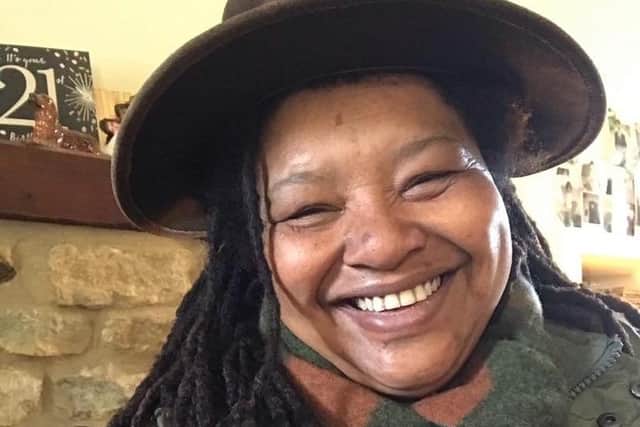
Toni
Angelique Harrison, another adoptee whose story features in Precious
Cargo, grew up as one of very few Black children in Biggleswade, a small
town in Bedfordshire. Harrison says she didn’t understand that she was
seen as a Black person until she was 15 or 16.
“As
a teenager I didn’t like to talk about Vietnam,” she says. “I was only
seen as Black, never Vietnamese.” She ended up internalising the racism
in Hollywood movies about the Vietnam war. “In the films it was the
African-American GIs who were shown killing Vietnamese people and raping
Vietnamese women. It made me really angry at them. Racism is
everywhere. It was only when I met some real GIs as an adult that I
found out they were desperately looking for their Vietnamese families
too.”
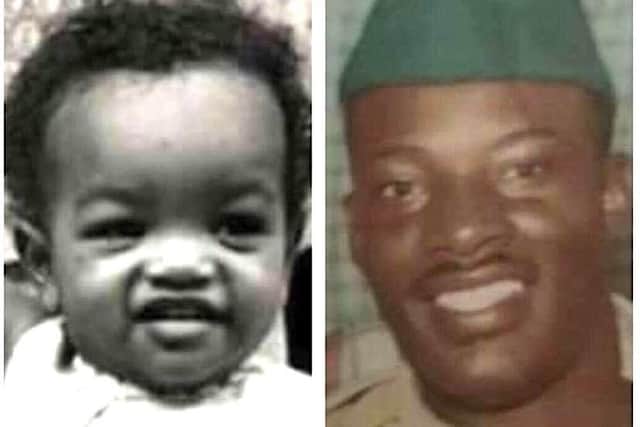
Harrison
finally managed to find her biological father, an American ex-drill
sergeant called Lee Butler, via a DNA search. Their emotional meeting
was captured in a BBC news report in 2018; she also met other American
relatives who had been previously aware of her existence but had no way
to find her. It was the first time in her life, she says, that she’d
been in a family photo with people who looked like her.
The
increasing number of DNA tests, particularly in the USA, has resulted
in a few reunions like this. Many Vietnam war adoptees were the product
of relationships between American soldiers and Vietnamese women. Butler
was with Harrison’s biological mother for two years, she discovered, but
had to leave her behind when the army sent him back to the USA.
Vietnamese parents are harder to track down, but Harrison remains
determined to find her mother and hopes that sharing her story in an
Edinburgh Fringe show will help with this.
“There
are more success stories now, orphans finding fathers or siblings by
using DNA companies like Ancestry or Family Finder,” she says. “But our
biological Vietnamese mothers can’t afford to spend $100 on a DNA test.
In Vietnam it could be a month’s wage. I set up a music festival called
Free Spirit and we raised enough money to send 50 DNA kits to Vietnam.
But time is not on our side. Our biological fathers and mothers are
ageing or dying. The memories of the war are dying.”
Indeed,
as Operation Babylift approaches its 50th anniversary and adoptees
adjust to middle age and mortality, there is a strong sense of time
running out. Williams’ beloved adopted mother died in autumn last year.
His grief at her loss, he says, is part of the reason why he was so
determined to tell this story now, a story that has become as much about
looking for peace and acceptance as it is about continuing to search
for lost relatives.
Like
Yearley and Williams, Jennifer Adams returned to Vietnam as an adult a
few years ago. She describes the experience as “life-changing” even
though, like them, she found no trace of her birth family. But she
wasn’t expecting answers, she says; she didn’t know her birth name or
birth date and the orphanage she had been in no longer existed. She just
wanted to see the “mother country” for herself. “Growing up, all I’d
ever seen about Vietnam was through the lens of the US military, or Miss
Saigon,” she explains. “I wanted to have a relationship that wasn’t
through someone else’s lens or filter.”
Her
description of her journey home is an eloquent summary of the Vietnam
adoptee experience, the constant challenge of finding a place for
yourself somewhere between different identities.
“When
I came back from Vietnam after a month I remember coming in through LAX
(Los Angeles International Airport) and there was a ginormous US flag
and I started crying,” she recalls. “I’m not this overly patriotic
person but seeing that flag represented to me ‘I’m home, I’m on firm
ground again.’ That surprised me to be honest. I think this is probably a
common experience for many transracial adoptees. I don’t get the
advantage of having everything all in one. If I allow myself I could
tell myself that I’m an outsider wherever I go. I was definitely an
outsider in Iowa and in a way I was an outsider in Vietnam, they could
take one look at me and know I wasn’t raised there. I’m just bigger, I
have a different build. But I prefer to think of myself as an insider.
In the US I find my commonalities, and I did the same in Vietnam.”
SCOTLAND: Precious
Cargo is at An Lanntair, Stornoway, 6 July (www.lanntair.com), then
Summerhall, Edinburgh, 1-26 August (www.summerhall.co.uk). Tickets for
all performances are on sale now.
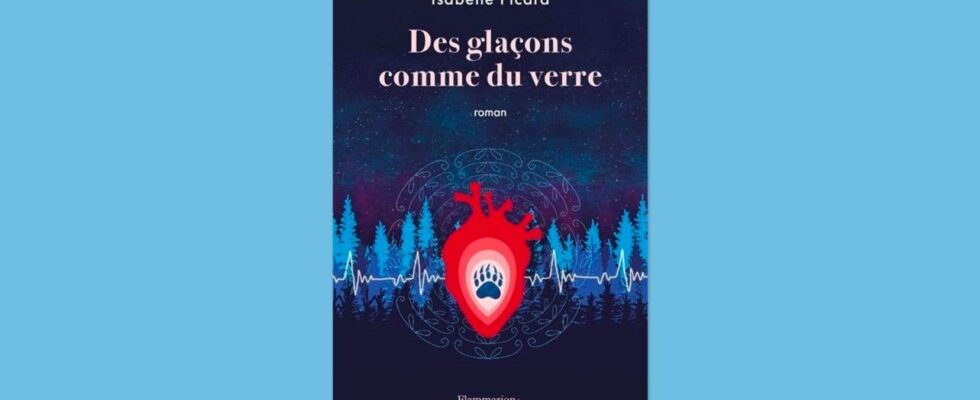
During the Sixties Scoop, thousands of Indigenous youth in Canada
were taken from their reserves by child welfare services to be adopted
or placed with non-Indigenous foster families. With sensitivity, the
novel Ice cubes like glass evokes this dark part of the country’s
past, which has left immense scars within communities. Inspired by
Canadian history as well as that of her ancestors, ethnologist and
author Isabelle Picard, originally from Wendake, immerses us in the pain
of a Huron father, Henri. The latter sees his family being divided up
by the government while remaining powerless. Through this poignant
story, the writer succeeds in injecting depth into the many characters,
such as the patriarch, his wife, Belle, and their host of children. The
eldest, Liliane, is particularly touching because of the fight she
leads to keep her family afloat. A necessary work, which remains
captivating until the end.
Goldwater is still at it... still trying to dismantle the federal law THE INDIAN CHILD WELFARE ACT... They truly do not understand we are not a race but sovereign, sacred and ancient peoples...
"...In this case, a Native child was legally
adopted by a non-Native mother—but the mother then tragically died. Ordinarily, in such a circumstance, family members or friends could
become legal guardians of a child through a simple court order. But that
effort was blocked in this case by the tribe, which declared the child a
“ward” and demanded that state judges hand her over, so that the tribe
could place her with adults who are of the “right” race. Now, an Arizona
appellate court has been asked to decide whether the tribe was acting
within its legal authority.
As we explain in our brief,
the rules of jurisdiction are part of the bedrock idea of due process. Courts are only allowed to decide cases involving people who have some
connection to that court—and the fact that a person fits one racial
profile rather than another is certainly not good enough. A few years
ago, a federal court
criticized tribes for engaging in “jurisdictional gamesmanship” in
cases involving ICWA. And this case is just the latest example.
Sadly, these “games” are no fun for the
kids themselves. ICWA was supposed to protect the best interests of
Indian children. But today it frequently blocks Native children from
getting the care and protection they need—thanks in part to the way many
tribal government officials use it to expand their power, rather than
to benefit the kids involved.
Read our brief here. You can learn more about our work defending Indian children against ICWA’s unjust burdens here.
**How this little girl was adopted by a NON-NATIVE MOTHER is also a question that needs to be answered... ICWA is federal law yet these adoptions are still happening; we need to ask: how? Trace
Ok,
we are going to start here with some dots. You and I will connect them.
In one
year, 1851, the United States paid out more than $1 million in bounties for
Indian scalps. (We’d be really dead
Indians then.)Pequot scalps? The bounty was $100 in colonial times. $100 is
like a million dollars today, right?
“…We
must not shy away from the past and the things that have hurt us. We must not
bury our truths. We must embrace and remember who we are and who the Great
Creator intended us to be.Indian people
have carried a heavy burden and responsibility. It is only with the preservation of our
cultural identity and language will we find our way back to the people we were
meant be. It is for these reasons,
preserving our culture and helping our ancestral memories to live is so very
important. Especially at this time. For if not now, then when will we wake up and
regain our freedoms, inside ourselves? Our
heritage and culture are what makes us Indian people.We have a responsibility to our youth and to
the future generations to show them who they are. Children will always be representative of our
own actions.”—Moses
Brings Plenty (Oglala Lakota) He’s a musician in the band Brule (Paul LaRoche is
an adoptee).Moses is an
enrolled tribal member from the Pine Ridge Oyate (Reservation). He’s known for his recurring role on Sheridan’s
Yellowstone, as well as the role of Ottawa Jones in Showtime’s The
Good Lord Bird.He has also has
portrayed “Crazy Horse,” “Sitting Bull,” and many other historical Indian
warriors. He also serves as American Indian consultant/producer on many of
Sheridan’s productions, where he ensures the authenticity of all American
Indian storylines, set design, hair and make-up, and costumes.
Figure 5 CLIPPING, Minnesota, 24
October 1897 https://cdnc.ucr.edu/?a=d&d=LAH18971024.2.212$100
paid for one scalp in that county and $200 for another… “Suppressing Indians War?”Over SEVEN
THOUSAND DOLLARS for SCALPS?($7,870.06
in 1897, today’s dollar value = $260,110.00)
Yes, for 500+ years it’s been an ongoing crime
against humanity, genocide, collecting scalps, bounties for dead Indians, slavery,
then murder the truth and collect our bones.
Here is one more
example:
It was so
simple (too simple) to use “disease” for massive die-offs of Indian people (for
their lack of immunity to germs) (yeah, right), instead of calling it what it
was:germ
warfare and murder.Just look at
Lord Jeffery Amherst. (Right now I know
scholars investigating—many imported Britishpoisons
produced massive deaths when victim’s bodies looked like small pox that had
killed them… clever, right?) Among the
damning evidence are letters written in 1763 between officers of the British
military detailing plans to send a
plague among the “vermin” to eradicate them. READ: https://medium.com/@alhakofi/yes-white-americans-purposefully-infected-native-americans-with-smallpox-ed5b913a235b
JAMES
KIRKER: SERIAL KILLER SCALP HUNTER? July 6 1846 Massacre
(Kirker
KILLED and SCALPED 130 men, women and children.)
They
perfected their guns and poison on our bodies. They made war on us. They wiped out entire villages.Giving diseased blankets to expose First
Nations people to smallpox is pretty well-known; it created a decisive
advantage in war and conquest against Indigenous People everywhere.The weaponization of “pathogens” like small
pox and “poisons” in tainted alcohol (like wine) (early bio-weapons) have been
a coveted area of military machinery for a very long time….a very very long
time.
MORE SOON
(request a free pdf of this entire book: tracelara@pm.me)
Artist: George Littlechild
Photo: Courtesy of the artist
George Littlechild has had numerous solo and group exhibitions. His
art has been exhibited in Canada, the United States, Japan, Australia,
Tasmania and Europe. His books and art have won numerous awards and
scholarships. To date he has created hundreds of artworks, which hang in
public and private collections around the world.
Littlechild was born in Edmonton, Alberta on August 16, 1958. The son
of a Plains Cree mother and a Canadian Celtic father, Littlechild was
taken from his home as part of the 60s scoop and was raised by foster
parents in Edmonton. He received a diploma in art and design from Red
Deer College in 1984, and a BFA from the Nova Scotia College of Art and
Design, Halifax in 1988. He also received an Honorary Doctorate Degree
from the University of the Fraser Valley. His socially charged
mixed-media paintings are often made in response to political movements,
societal concerns such as reconciliation and reclamation, as well as
personal history.
“In my work, I am committed to righting the wrongs that First Nations
peoples have endured by creating art that focuses on cultural, social
and political injustices. As an artist, educator and cultural worker, my
goal is a better world. It is my job to show the pride, strength and
beauty of First Nations people and cultures, and contribute to the
betterment of mankind.”
Giving remembrance, recognition, honour and validation
to the thousands of innocent children that nobody is able to recognize
as they stand amongst their fellow residential school students in the
photographs… these children are finally acknowledged, and work begins to
recognise and remember these lost souls.
“This work involves a series of twenty-two drawings of First Nations
children who perished while attending residential school in Maskwacis
AB. The title of work is called “Here I am – can you see me?” I
want to give remembrance, recognition, honour and validation to the
thousands of innocent children that nobody is able to recognize as they
stand amongst their fellow residential school students in the
photographs, all but forgotten in the museum archival collections. In
this manner I seek to legitimize their lives and restore a modicum of
dignity and importance to their short existence in the world.” – George
Littlechild
MINNESOTA! Birth records open to adult adoptees July 1
REGIONAL- Starting July 1, Minnesota-born adoptees, 18 years
and older, will have new access to their original birth records, a move
that promises to unlock deeply held questions about their biological
heritage. This access is part of a law passed last year which no longer
allows birth parents to conceal their identities from adult adoptees. After
an adoption in Minnesota, birth records are changed to show the new
name of the adopted person and the adoptive parents, and the original
birth records and all related correspondence are sealed, making the
records confidential and only accessible under certain provisions laid
out in state law. Access to the records has prioritized the specified
intentions of the birth parents to restrict or share the information. But
now the original birth record will be available not only to adult
adoptees, but also to an adoptee’s legal representative or relatives if
the adoptee is deceased.
Noncertified copies of original birth records may also be released to:
👉A birth parent named on the original record.
👉A
representative of a federally recognized American Indian tribe for the
sole purpose of determining an adopted person’s eligibility for tribal
enrollment or membership.
👉A person with a certified copy of a court order directing the release of the original birth record to them.
The
law also introduces a contact preference form for birth parents,
allowing them to indicate their openness to being contacted. This form,
which includes space for a brief message, will accompany the released
birth record, though the decision to initiate contact rests solely with
the adoptee. Birth parents retain the right to alter their contact
preferences at any time.
Gregory Luce, a Minneapolis attorney and adoptee, framed the matter as one of human rights. “I
think people are finally recognizing the human right to know who you
are and where you came from,” he said. “And making adoption secret in
this way is just an anachronism. It’s a human rights issue. It’s found
its day, it’s found its advocates, and it is currently now a real
movement.”
Part of the change is being driven by DNA and the
increasing knowledge base about the role of genetics in influencing
people’s physical, behavioral, and psychological traits, including
genetically-linked health conditions. A heightened societal interest in
genealogy has also informed the debate over open records, particularly
with the proliferation of large voluntarily DNA databases maintained by
companies like Ancestry that will find genetic matches with others in
the database. Also important in the shifting norm has been the
increasingly common practice of open adoption, where the birth parents’
identities are acknowledged from the very outset of the adoption process
and open communication and relationships are established between them
and the adoptive parents and the adoptee.
But in a lawsuit
now before the U.S. District Court in eastern Virginia, the Winnebago
Tribe of Nebraska argues Army officials are violating this federal law
by delaying the return of two tribal members’ remains. Samuel Gilbert
and Edward Hensley died as teenagers over a century ago while attending
the nation’s first government-run Indian boarding school. A hearing in
the case is set for July.
In its filings to the federal court, the Winnebago Tribe objects to
the bodies remaining at the Carlisle Barracks Main Post Cemetery in
Pennsylvania, and seeks their return for culturally appropriate burials.
Defendants include the U.S. Army, the Office of Army Cemeteries, and
three employees who oversee the cemetery, which is located on the
grounds of the Carlisle Indian Industrial School.
Podcast: Adoptees' Untold Stories: Voices from the Adoptee Perspective
Today,
our guests are Sarah Reinhardt and Louise Browne, who host “Adoption:
The Making of Me,” a podcast focused on adoptees’ perspectives,
highlighting the often overlooked side of adoption narratives. Our
conversation delves into how the adoption industry, driven by a
multibillion-dollar market, prioritizes the narratives of adoptive
parents, sidelining the voices and experiences of adoptees. We discuss
the societal expectations placed on adoptees to feel grateful despite
the complexities of their experiences, including feelings of loss,
identity issues, and the challenges of connecting with their biological
roots. Furthermore, the dialogue touches on systemic issues in adoption
practices, such as the lack of access to original birth records for
adoptees. Through their stories and insights, Sara and Louise stress the
need for greater understanding, reform in adoption practices, and more
inclusive conversations that give adoptees a platform to share their
experiences and identities.
“I
think you can do both. You can love your family. And you can also want
to know your other family and your roots and who you are. It’s like an
inherent right, I think, to know who you are because we strive for it.
Like we may not know we’re searching, but we are always, because you
have like this, this hole that’s missing. And you’re taken from your
mother. It’s a strange scenario if you think about it, and you put
somewhere else. No one talks to you about it, and you try to navigate
the world. And so all these little subtle things growing up affect a lot
of people.” ~Louise Browne
Sarah Reinhardt is a co-host of “Adoption: The
Making of Me,” a podcast by and for adoptees. She is a writer,
empty-nester, OCD dog parent, and works in Public Media in Kansas City,
MO. Sarah hopes her voice will help resonate with other adoptees facing
similar issues. Currently, she is working on a book of humorous essays
that follow the theme of searching for identity.
Louise Browne
is a co-host of “Adoption: The Making of Me,” a podcast by and for
adoptees. Louise works for the executive leadership team in digital
banking. She is working on a YA novel and has written two children’s
books along and several poems. Louise lives along the Central Coast of
California with her husband, Bill, and their dog, Gracie. She has a
grown son who lives in Los Angeles. She is trying to change the
narrative of adoption to include the voices of adoptees and to help
change the way adoption is run as a business.
Over the past four decades, Lisa Meeches has produced countless acclaimed films and television programs.
She tells Face to Face (APTN) there are hopes to renew the series Taken, which told the stories of missing and murdered Indigenous women and girls.
This man may live in the middle of the Reservation but he has a better understanding of what is going on in the world than most people living in the cities.
T he Métis National Council and the Government of Canada will be working collaboratively, Nation-to-Nation, to develop a process to engag...
To Veronica Brown
Veronica, we adult adoptees are thinking of you today and every day. We will be here when you need us. Your journey in the adopted life has begun, nothing can revoke that now, the damage cannot be undone. Be courageous, you have what no adoptee before you has had; a strong group of adult adoptees who know your story, who are behind you and will always be so.
OUR HISTORY
BOOK 5: Lost Children of the Indian Adoption Projects