BACK UP BLOG (no longer updating)

This blog was a backup for American Indian Adoptees blog
USE THE SEARCH BAR or SEARCH TOPICS at bottom of this blog

If you need support

Support Info: If you are a Survivor and need emotional support, a national crisis line is available 24 hours a day, seven days a week: Residential School Survivor Support Line: 1-866-925-4419. Additional Health Support Information: Emotional, cultural, and professional support services are also available to Survivors and their families through the Indian Residential Schools Resolution Health Support Program. Services can be accessed on an individual, family, or group basis.” These & regional support phone numbers are found at https://nctr.ca/contact/survivors/ . MY EMAIL: tracelara@pm.me

Search This Blog

Wednesday, March 8, 2023

ICWA Author Sen. James Abourezk Dies at 92 #ICWATHINKTANK


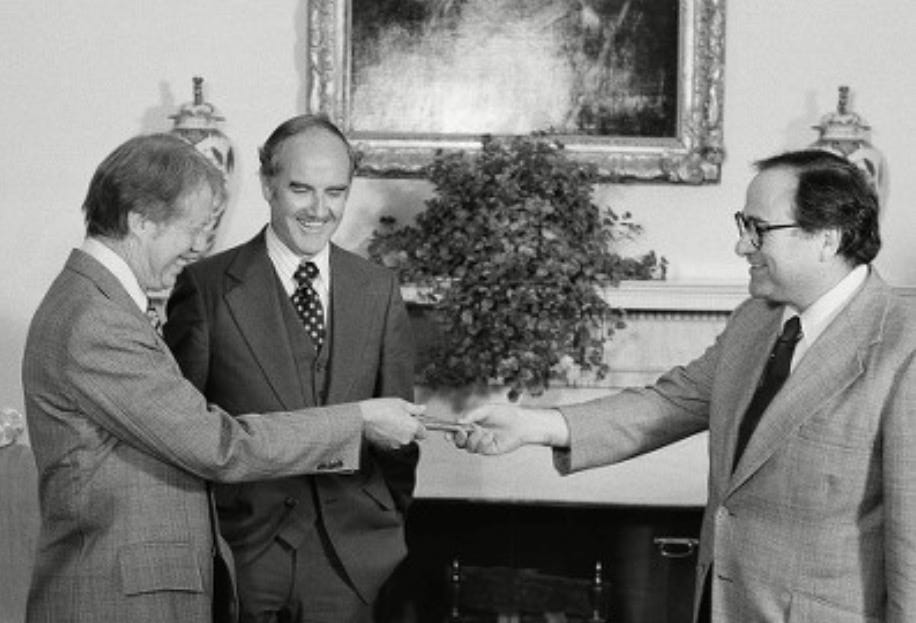
Sen. James Abourezk, right, with President Jimmy Carter, left, and Sen. George McGovern, center.

James Abourezk, a former senator who was a
staunch supporter of tribes and shepherded the passage of the Indian
Child Welfare Act, died last week on Feb. 24, his 92nd birthday. 


Abourezk, the first Arab American to serve in the U.S. Senate,
represented South Dakota in both houses of Congress in the 1970s. Having
grown up on the Rosebud Indian Reservation, where his parents had
landed after immigrating from Lebanon, he was an early champion of
Indigenous rights and sponsored ICWA and other laws that reshaped the
federal government’s tribal relations. 


During the early years of Abourezk’s tenure in the Senate, the Association on American Indian Affairs released the results
of a 5-year study that found as many as one-third of Native children
were being taken into foster care, nearly all of them being placed with
non-Native foster or adoptive families, permanently severed from their
tribal communities. 


“Those kids were my playmates,” Abourezk told The Imprint in 2018. “A friend helped me see that that was my responsibility. We have an obligation to do right by them.”


The late congressman — who was described by colleagues
as courageous, outspoken and funny — was arguably a catalyst for
getting Native issues on the minds of federal lawmakers following the
transformational civil rights movement and amid growing turbulence and
activism around Indigenous rights.


Abourezk pushed for the creation of and co-chaired the American
Indian Policy Review Commission, which conducted an in-depth analysis of
federal law regarding tribes, with the express purpose of soliciting
recommendations to improve tribes’ self-determination and participation
in making the policies that impact them.


The commission collected testimony from more than 90 tribes and heard
28 days of hearings before releasing a final report in 1976, which
covered a range of issues from hunting and fishing laws to child custody
rights. 


The findings of this report, along with the data revealing the
alarming number of children being taken from their families, paved the
way for the ICWA’s 1978 passage. 


As chair of the newly created Senate Committee on Indian Affairs, Abourezk presided over ICWA hearings,
where Indigenous activists, social workers and parents who had lost
children testified to the irreparable generational trauma caused by
federal child welfare policy in tribal communities. 


The landmark legislation — aimed at reducing the number of Native
children separated from their families through foster care and keeping
Native foster youth in tribal homes — faced enormous opposition,
including by the Bureau of Indian Affairs. It passed at the 11th hour,
just as the 95th Congress was coming to a close on October 24, 1978 —
only months before Abourezk retired from office.


The commission sparked several other reforms, including Abourezk’s
American Indian Religious Freedom Act and the Indian Self-Determination
and Education Assistance Act, which he co-sponsored, that allowed tribes
to receive and administer federal grants for education and social
programs. 


Ultimately, at least six of Abourezk’s bills relating to tribal
sovereignty would become law in his eight years in Congress. He also
took his commitment to tribal advocacy beyond the Senate chambers,
traveling to Wounded Knee to negotiate between law enforcement and
activists from the American Indian Movement who, in the late 60s and
70s, occupied that and other historic sites in protest of the federal
government’s treatment of tribes. 


Abourezk left the Senate in 1979, deciding not to run for reelection.
He focused on advocating for civil rights for Arab Americans, creating
the American-Arab Anti-Discrimination Committee. His work in this realm
was not without controversy: In 2007, he told a Hezbollah-backed TV news
station that Zionists had helped orchestrate the 9/11 attacks as a plot
to sow Islamophobia, and that Zionists controlled the U.S. Congress. 


He also continued to advocate for Native rights, and spoke out against lawsuits seeking to have ICWA overturned. 

Abourezk was interviewed by The Imprint in 2018, just as the current
threat to his landmark legislation was ballooning into national concern.
In the midst of a district judge deeming ICWA unconstitutional in the Brackeen v. Haaland
case — then called Brackeen v. Zinke, named for the Interior Secretary
at that time — Abourezk spoke to the measured improvements the bedrock
law had created for the nation’s first people.  The case is now being
decided by the Supreme Court. 


“There’s still a lot of suffering on reservations, and mean treatment
by governments,” he said, “but it’s been cut down by ICWA.”

**👇


Indian Child Welfare Act Think Tank to Strategize Legal Protections for Tribal Sovereignty


With the fate of the Indian Child Welfare Act in the Supreme Court’s
hands, a new think tank has formed to advance legal and political
strategies to protect tribal sovereignty.


Sunday, March 5, 2023

Part 1: What if we lost ICWA?


“The adoption system traditionally requires that children disavow reality.” BJ Lifton, adoptee, author (1994)

By Trace L Hentz, Blog Editor

Lying in bed last night I was writing this post "WHAT IF WE LOST ICWA?"  (Most of my ideas got wiped out by sleep.)

Here is some of what I remember:

For the last few days I've been cleaning my Outlook email inbox.  (Hundreds and hundreds of emails are kept in folders, for safe keeping. Just in case: If I need to ask something, find something or someone.)  I thought I'd be more organized if I kept everything, to remember names. (I'm talking HUGE FILES and lists and replies and adoptee stories and so many requests for help.)

I started rereading.  Shockingly: I found emails from 2004-5, from old email addresses I used, and of course I found people I don't have contact with anymore.  (Some only use their cellphone and don't email, of course.)  I found adoptees asking for help, and many were helped...  (Several people opened their adoption files and some went into reunions. Some were enrolled with their tribes, eventually. Karen Vigneault was a miracle worker.  Then we lost her in 2020. Here is an article about her: https://www.sandiegouniontribune.com/sdut-war-vets-great-niece-rights-great-wrong-2010jan24-story.html)

Looking back: I left Facebook (META) in 2018 after my cancer surgery and there are so many people on there I lost touch with... who I still miss ... but they are there and I'm not.   I lost friends, all across the country and world.  (Yes, I regret it but the loss of privacy was a much bigger concern.  WHY?  My life was invaded by the Cambridge Analytica data hack.)


Looking back, I never would have found so many adoptees without Facebook. I wrote two newspaper articles GENERATION AFTER GENERATION WE ARE COMING HOME. Both publications are gone now.  The spark that lit a fire, that 2005 article started me on a new path and new journey to find adoptees. (I have not found the article online but if I can, using the Wayback Machine, I will post a link.  It may be in this computer somewhere.)

Social media helped to create this global circle of adoptees, Native American and First Nations Adoptees, like our own universe.  Facebook connected us to each other.  Emails came in.  This blog/website began in late 2009.

Now my inbox has taken on a life of its own. And this blog has taken on a life of its own, too. (2,264 posts so far...) (That is BIG)

What if we lose ICWA? What if the Indian Child Welfare Act gets wiped out? What will happen?


Only slowly their hurt dies cry by cry 

As they fit themselves to what has happened

-Ted Hughes (1985)

 TO BE CONTINUED

Thursday, March 2, 2023

Adoptees OBC Updates


Two Good, Two Bad, Two More

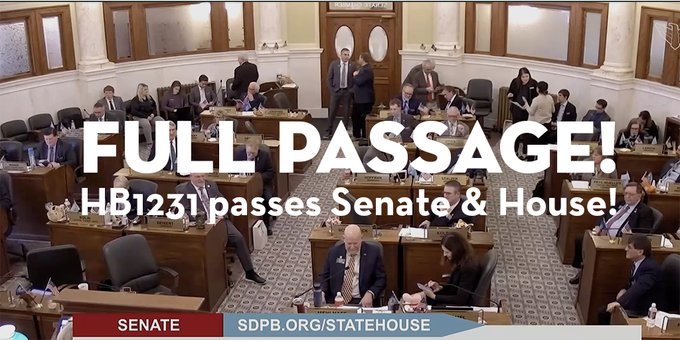
One Good. We mentioned South Dakota’s equal rights bill last week.
We have some additional fantastic news. HB1231 yesterday passed the
Senate, and it will be transmitted to Governor Kristi Noem soon, who is
widely expected to sign it into law.  Once enacted, it goes into effect
on July 1, 2023, restoring the right of all South Dakota-born adult
adopted people to apply for and obtain their own original birth
certificates. That is, apply, pay a few bucks, get it.

Two Good.
Georgia’s SB64 got over its first legislative hurdle yesterday,
receiving a unanimous DO Pass recommendation from the Senate Children
and Families Committee. It heads to a vote now by the full Senate, which
has to occur no later than March 6. Sign up with the Georgia Alliance for Adoptee Rights if you want to stay informed or get involved.

Two Bad.
The bad news comes from two bills pending in West Virginia and
Mississippi, though the bills are still far from being enacted. As we
produce this newsletter the West Virginia bill has
been passed by the Senate and is headed for the House. It has a whole
host of problems, including educational requirements, redactions, and
your mom’s permission to get your OBC.

Mississippi’s bill is a bit more complicated
because, while at one point it was a bad bill, it is now a completely
different and unrelated bill, thanks to a maneuver called a “strike
all.” It may be dead because of the strike all, but then again the
Mississippi legislature has not yet uttered the magic words to truly
signify the end of a bill: dead, dead, dead.

Two More. A pair of Texas bills are seeking to prohibit citizens of certain countries from purchasing property in the state.
While dumb and unconstitutional, they are scheduled for hearings
tomorrow in the State Affairs Committee. The kicker? The bills would
ultimately prohibit green card holders—including intercountry adoptees who do not currently have US citizenship—from
purchasing property in Texas, specifically if they were born in Russia,
China, or Iran. It’s yet another painful reminder of how intercountry
adoptees continue to be marginalized by United States policy, a
marginalization that is getting worse in anti-immigrant states like
Texas.

Mapping the Life Course of Adoption Project Launch and Survey.
Adoption professionals all agree that adoption is life long -- and no
one knows this better than adoptees. And yet, our collective knowledge
about the life course of adoption does not exist. This is what the MAP
project is seeking to change.

Protecting Our Children: A conversation about the Indian Child Welfare Act...

Voices from Pezihutazizi Oyate: Boarding School Histories


As hurtful truths come to light regarding historically operated Federal Indian boarding schools in the United States, many Native Nations are reclaiming their voices. 

For the Upper Sioux Community (“Yellow Medicine Nation”) living in Minnesota, these historical truths are known to have cast profound ripples that impact their present. 

This mini documentary explores community interpretations of this boarding school past and offers hope for justice and healing. 


For a list of self-care and trauma resources, click here.

Continue the discussion and learning by downloading the "Voices from Pezihutazizi Oyate" discussion guide here: http://boardingschoolhealing.org/wp-c...


Tuesday, February 28, 2023

SOUTH DAKOTA tweets - Adoptees OBC + more


Wednesday, February 22, 2023

StrongHearts Responds To Gun Violence


(EAGAN,
Minn., February 2023)
– Less than two full months into 2023, our
country has already experienced more than 70 incidences of gun violence.  Michigan State University is the latest to
experience a mass shooting in a school setting. StrongHearts Native Helpline
stands with the victims and survivors of gun violence, their family and
friends, as they process their horrific experience. 


“When we think about
survivors of trauma from the standpoint of domestic and sexual violence, we
know that these experiences take time and effort to heal.” said CEO Lori Jump,
StrongHearts Native Helpline adding, “Likewise, gun violence has become a
constant source of trauma in America turning our schools, shopping centers and
our homes into a battleground.”


Jump explained survivors of
trauma need mental health services for post-traumatic stress disorder (PTSD)
that is more often than not unavailable in poor communities where gun violence
is prevalent.


“There is a dire need for
health professionals to mobilize and respond to the increasing number of gun
violence cases that plagues our country,” concluded Jump. StrongHearts Native
Helpline supports common sense legislation to ensure the safety of all citizens
in the United States. We understand that gun violence is not a stand alone
issue. America’s mental health system is broken and fails to meet the most
basic needs of its citizens.   


StrongHearts Native Helpline supports the Strengthening Protections for Domestic Violence and Stalking Survivors
Act
, recently introduced by Senator Klobuchar (MN)
and Representatives Dingell (MI) and Fitzpatrick (PA) and implore our elected
representatives to take swift action to improve the safety of our citizens.


 StrongHearts Native Helpline is a 24/7
culturally-appropriate helpline for Native Americans impacted by domestic and
sexual violence. For support and advocacy, call or text: 1-844-762-8483 or chat
online at strongheartshelpline.org.


  1. https://www.klobuchar.senate.gov/public/index.cfm/news-releases?ID=9C36CAB9-45BA-4343-8B8B-3C3562ACC84C


Friday, February 10, 2023

Adoptees United (Access to our sealed adoption records and OBC) UPDATE


Our bill watchlist
lists all the pending bills that impact adoption or adoptee rights
work, whether state or federal. We update the list during legislative
sessions,
in addition to our core work of tracking priority adoptee rights legislation.


One Gone, Eleven Still Kicking

Virginia’s equal right bill
seemed well on the road to House passage and then—poof—it went down,
the victim of tight legislative deadlines and a last minute
“re-referral” to where it started: in committee. Advocates are working
to determine what happened (aides who worked closely on the bill don’t
yet seem to know) and how it can be addressed next session. Plans are
already underway for 2024—as are plans next year for next-door neighbor
Maryland.

That means it’s one state gone with eleven states still kicking, including Texas, which saw a bill filed yesterday, quickly celebrated by the Texas Adoptee Rights Coalition.

New Bills. Minnesota now has an active equal rights bill in the Senate,
with a companion bill likely introduced toward the end of the week. It
is probably the best opportunity to pass an equal rights bill in
Minnesota in at least two decades, led primarily by the Minnesota
Coalition for Adoption Reform.

AB13 in Wisconsin has been filed. It is the companion bill to SB15, which was introduced last week and assigned to a relatively friendly committee.

South Dakota has a bill that would eliminate the court process that is used today to obtain an original birth certificate , and Georgia’s SB64 is awaiting hearing in a committee that is stacked with prominent supporters.

Adoptees
United is a national nonprofit organization with an unwavering
commitment to equality for all adopted people. More information,
including our board, position statements, and programming are on our
website at
adopteesunited.org.


Jawbone found in possible unmarked residential school grave | "Six years old, I was imprisoned here"

 The landmark Truth and Reconciliation Commission (TRC) report, released
in 2015, identified 3,200 confirmed deaths of children at residential
schools but the number is believed to be higher. Not all deaths were
properly recorded and the bodies of some of the children were never sent
home. In some cases, grave markers were lost to time or removed.

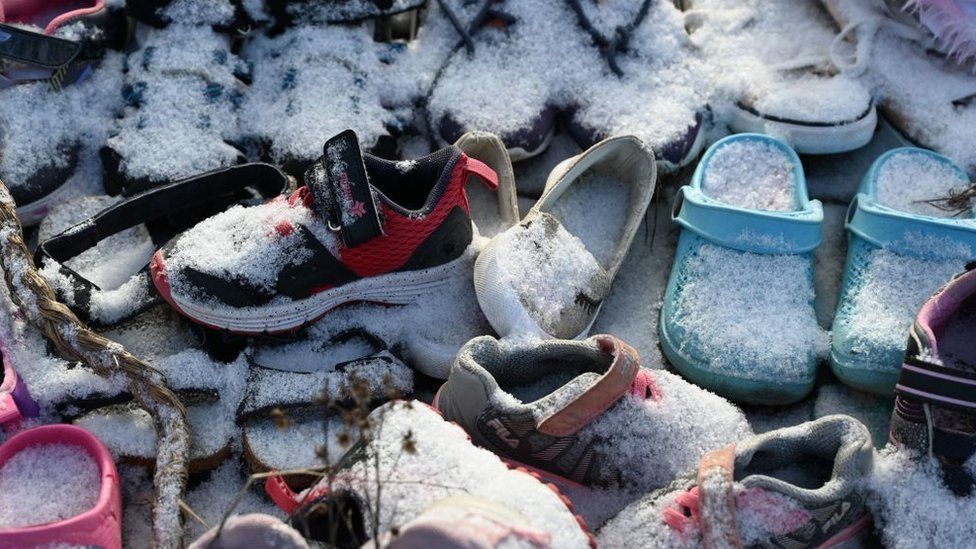
Children's shoes adorn a memorial for Saint-Marc-de-Figuery residential school student at the site of the former school near Amos, Canada, November 17, 2021Getty Images:  Children's shoes have come to be a symbol for the estimated thousands of children who died while attending residential school.

An
indigenous nation in Canada said it has discovered evidence of possible
unmarked graves on the grounds of a former residential school.

Star
Blanket Cree Nation said a ground-penetrating radar had revealed the
jawbone fragment of a small child and more than 2,000 "areas of
interest".

Those are not yet confirmed to be evidence of human remains.

But the fragment "is physical proof of an unmarked grave", project lead Sheldon Poitras said on Thursday.

The
discovery from the Star Blanket Cree Nation in Saskatchewan follows a
wave of investigations into possible unmarked graves at the sites of
former residential schools in Canada. Ground searches starting in the
spring of 2021 have uncovered evidence of more than 1,100 such graves
across the country.

Areas
for this most recent search were identified after testimonials from
elders and former students of the former Qu'Appelle Indian Residential
School.

"It
was unthinkable. It was profound. It was sad. It was hurtful," Star
Blanket Chief Michael Starr said on Thursday of the discovery. "It made
us very angry what had happened to our young people here."

These
government-funded compulsory boarding schools were part of a policy
meant to assimilate indigenous children and destroy indigenous cultures
and languages.  Some 150,000 First Nations, Métis and Inuit children were
taken from their families placed in these schools from the 19th Century
into the 1970s.

Survivors
had long testified about children who died at the schools, where
students were often housed in poorly built, poorly heated, and
unsanitary facilities.

The
landmark Truth and Reconciliation Commission (TRC) report, released in
2015, identified 3,200 confirmed deaths of children at residential
schools but the number is believed to be higher. Not all deaths were
properly recorded and the bodies of some of the children were never sent
home. In some cases, grave markers were lost to time or removed.

Investigators
said they were considering options, including DNA testing, to confirm
the findings of the radar at Qu'Appelle Indian Residential School. Some
of the anomalies picked up by the search could be innocuous, things
like stones or pieces of wood.

The
jawbone was analysed by the Saskatchewan Coroners Services, who said it
belonged to a child aged four to six and is approximately 125 years old
- around the time the school was founded.

The
Qu'Appelle Indian Residential School, in southern Saskatchewan, was one
of the first residential schools to open in Canada and was run by the
Roman Catholic Church from 1884 to 1973.  It was eventually closed in
1998.

Noel Starblanket, a former student at Qu'Appelle Indian Residential School wrote in a testimonial for the University of Regina that he was constantly "slapped on the side of the head" at the school. One teacher struck him in the face and broke his nose.

"My
parents never hit me, my grandparents," he wrote. Before going to
school "I didn't know what it meant to be hit, physically abused".

The
Indian Residential Schools Resolution Health Support Program has a
hotline to help residential school survivors and their relatives
suffering trauma invoked by the recall of past abuse. The number is
1-866-925-4419.

More on this story


Thursday, February 9, 2023

60s Scoop, #TRC, Racism Apology, Day Scholars and more (Canada)

VIDEO


Residential school, day school and Sixties Scoop survivors gather at conference


There were many emotional moments as residential school survivors gathered in Winnipeg this week.  Around 1,700 people took part in Wa-Say Healing Centre’s conference. 
**

The Physicians College of Manitoba apologizes for current and past racism against Indigenous peoples

 It also said that pledging to end racism would not be enough.

“Recognizing racism in itself will neither be spontaneous nor easy.
We are committed to working with Indigenous healers, scholars, elders
and knowledge bearers, as well as the legal and ethical requirements to
provide respect, dignity and equitable health care for Indigenous Will
ask and intend to guide you along.” 

Four months after the apology, Indigenous leaders and politicians
signed a declaration calling for an end to anti-Indigenous racism in
northern Manitoba’s health care system.


The College of Practitioners Regulating Manitoba begins work in 2021
to address the call to action from the Truth and Reconciliation
Commission. The apology is one action the college is taking as a result
of those discussions, the Assembly of Manitoba Chiefs said in a
statement released late Tuesday.

**


In photos: Pow Wows across Treaty #3 and Treaty #1 territories

“The pow wow is a living cultural
expression of song, dance, and art which brings people together, and
through the drum, reminds us of our connection to Mother Earth. […] pow
wows are a time to put differences aside and to celebrate traditions,
mostly it is the time to celebrate life. A pow wow strengthens an entire
race of people. To be Anishinabe is to be proud, to know who you are,
and where you came from.” – Harold Flett

**

Only 13 T&R Calls to Action achieved over seven years: report - rabble.ca

2023 marks the eighth year since the Truth and Reconciliation Commission released a list of 94 Calls to Action.
 
**


Canada’s $2.8 billion settlement with Indigenous "Day Scholars" is a long time coming


  F


Eleven years.  That’s how long it took the federal government to
agree with 325 First Nations over the collective loss of language and
culture suffered by Day Scholars in the Residential School system in Canada that existed between the mid 1800s until 1996.


Day scholars attended a Residential School during the day but didn’t sleep there overnight.


While Day Scholars settled an individual compensation package for just $10,000 each earlier in 2022,
this new agreement is specifically aimed at rectifying the systematic
and forced removal of language and culture through these institutions.


Left out of original agreement


In 2012, members of the Tk'emlúps te Secwépemc and shíshálh Nation led by Shane Gottfriedson and Garry Feschuk launched a national class-action lawsuit for Day Scholars who were left out of the original Indian Residential School (IRS) Settlement Agreement (2006).

READ


Podcast: How an Adoption Case Could Unravel Tribal Sovereignty

 The Supreme Court is hearing a case that could dismantle the
Indian Child Welfare Act, also known as ICWA.  The law was passed in 1978
to combat a history of forced family separation in the United States
and prevent the removal of Native children from their communities. But
now, in Haaland v. Brackeen, ICWA could be completely overturned. 

In the
third episode of Dissent, host Jordan Smith is joined by Rebecca Nagle,
a journalist, citizen of the Cherokee Nation, and host of the podcast
“This Land.” Smith and Nagle break down the case and its broad
implications for laws based on tribes’ political relationship with the
U.S. government. INTERCEPT

MN Lawmakers Working to Codify Language from Indian Child Welfare Act

Minnesota lawmakers hope to codify Indian Child Welfare Act language into state law


By: - February 7, 2023 


Kevin DuPuis, chairmain of the Fon du Lac Band of Lake Superior
Chippewa, spoke to senators on Monday, Feb.7, at the Minnesota Senate
Building. Sen. Mary Kunesh (right), a Democrat from New Brighton, is the
chief author of SF667. Photo by Michelle Griffith/Minnesota Reformer.


A bipartisan group of Minnesota
lawmakers are backing a bill aimed at keeping Native American children
within the foster care system in Native American homes, as the U.S.
Supreme Court appears likely to overturn identical federal rules.


The Indian Child Welfare Act of 1978
(ICWA) established federal minimum standards for the removal of Native
American children from their homes. The law also prioritized placing
children into homes of extended family members and other tribal homes —
places that could reflect the values of Native American culture.


ICWA was enacted following a
century-long campaign by the federal government of forcibly removing
Native children from their homes and placing them in boarding schools
and white adoptive families. The mission was to assimilate Native
children into the white American mainstream — or “kill the Indian in
him, save the man,” as the founder of the first boarding school
infamously said.


The U.S. Supreme Court in November heard a case, Brakeen v. Haaland, which argues ICWA
discriminates against non-Native families because of their race. ICWA
proponents argue tribal citizenship is a political — not racial —
category.


The conservative justices, including
Chief Justice John Roberts and Justice Amy Coney Barrett — who are both
adoptive parents — appeared
skeptical of the law. 


Social workers and tribal nations have long lauded ICWA, and Minnesota lawmakers are proposing bipartisan legislation
to adopt ICWA-like language to continue prioritizing placing Native
children with extended family, tribal members or other Native
households.


“The effects of trauma, separation
from family and disconnection from important cultural teachings caused
by the boarding school and adoption era carries on today as families and
tribes struggle to rebuild extended family and community
relationships,” said Sen. Mary Kunesh, DFL-New Brighton, the bill’s
chief author and whose mother
is an enrolled member of the Standing Rock Sioux Tribe. “This proposal is the minimum necessary to ensure protection for our tribal children, families and tribes.”


The state already has the Minnesota Indian Family Preservation Act, which was adopted in 1985 as a supplement to ICWA. Kunesh’s bill (SF667) would add language, like definitions and required processes, to strengthen the state law so it would include ICWA language. 


If the Supreme Court does overturn
ICWA, the status of the Minnesota Indian Family Preservation Act would
be up to a state court if someone were to challenge it.


At the Senate Health and Human
Services Committee on Tuesday, multiple tribal leaders and ICWA case
workers testified in support of the bill.


Kevin DuPuis, chairman of the Fond du
Lac Band of Lake Superior Chippewa, told lawmakers that passing this
bill would be a step toward preserving the future for Native Americans
and said that taking away Native children and assimilating them into
white culture is a form of genocide.


“It’s my job as a tribal leader, and
it’s my job as an Anishinaabe man to protect our children, to protect
our future, to ensure there is a future,” DuPuis said. “(This bill)
ensures that we get to determine what’s right for our children. That we
get to determine what’s right for our people.”


Prior to ICWA’s adoption in 1978, as
many as 35% of Native American children were placed in non-Native homes
by state courts and adoption agencies, according to
the U.S. Department of Justice.


Kunesh said they are working to
quickly enact the bill, as the Supreme Court may release its decision
any time in the first half of this year.


Sen. Jim Abeler, R-Anoka, one of the
bill’s co-authors, said the Legislature also needs to take further steps
to ensure the law is enforced. 


“I hope that … this year, next year,
we can get to the heart of this and preserve these families to the best
extent possible,” Abeler said. “I don’t live in this world, but I really
care. For what part I can bring, I’m happy to be a part of the
solution.”


The Supreme Court case, Brakeen v. Haaland,
hinges on a Texas family, the Brakeens, who fostered a 10-month-old
Navajo and Cherokee child. The couple was told from the beginning that
they wouldn’t be able to adopt the child, but the Brakeens became
attached and went to court. A judge ordered that the child be placed
with a Navajo couple, but the tribe backed out, effectively giving the
Brakeens custody. The Brakeens now want to adopt the child’s sibling.


The Supreme Court case includes three non-Native families who wanted to adopt Native American children — including one couple in Minnesota
who went to court against the grandmother of a White Earth Nation
child. The Minnesota couple, Danielle and Jason Clifford, argued in
court that they could better provide for the child, but the White Earth
Nation and the grandmother fought back and the grandmother won custody
because of ICWA. 


The Brakeens and the other families who are challenging ICWA are bankrolled by multiple right-wing organizations, according to This Land, a podcast about Native American rights. 


Tribal advocates worry that if the
Supreme Court overturns ICWA based on a racial discrimination argument,
the decision could lead to a domino effect against other areas of tribal
sovereignty, using the same legal rationale.


ICWA proponents argue tribal citizenship is a political — not racial —
category and therefore shouldn’t be considered racial discrimination.


The Senate Health and Human Services
Committee on Tuesday unanimously approved the bill, which will now go to
the Senate Judiciary Committee later this week.


Native Montana Lawmakers Call on State to Recognize Traumatic History of Indian Boarding Schools


A state senator with firsthand experience in
American Indian boarding schools has introduced a joint resolution
calling on the state legislature to recognize the history of these institutions and the trauma they caused generations of Indigenous people. 


Senate Joint Resolution 6 would also ask the federal government to create a national day of remembrance. 


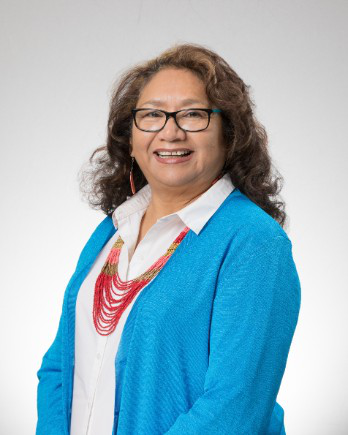
Sen. Susan Webber, a member of the Blackfeet Nation, is carrying the
bill in the state senate. She is joined by Reps. Marvin Weathermax,
Jonathan Windy Boy, Tyson Running Wolf, Frank Smith, and Mike Fox.
Webber attended Cut Bank boarding school from age 8 through junior high,
the Idaho Capital Sun reports


“I wanted to bring this bill, because I, my generation, is the last
generation that had to go to boarding school,” Webber said. “We had to
go to boarding school. Now I’m not 150 years old. This was still going
on in the ‘60s.”


Montana state Sen. Susan Webber

The federal government sent Native children en masse to boarding
schools from the late nineteenth century until the late 1960s, in an
effort to forcibly assimilate them to white American culture. This
practice was one of several national policies that shattered countless
Indigenous families for generations, along with taking Native children
from their homes and adopting them out to white families. 


The children at these schools were cut off from their families,
communities and cultures. Untold numbers of children were subjected to
physical, sexual and emotional abuse. Many died in the schools and were
buried in unmarked graves, their families never learning of their
fate.  


The resolution, through the recognition of this history, encourages
the people of Montana to “support and recognize the grief, pain, and
hardship many Native American people suffered and still endure as a
result of the assimilationist policies and practices carried out by the
United States through Indian boarding school policies.” 


More than a dozen residents testified in support of the resolution at a recent hearing, where it went unopposed. 


The horrific history of Indian boarding schools is a current focus of
the federal government, with the nation’s first Indigenous Interior
Secretary, Deb Haaland, leading the effort. 


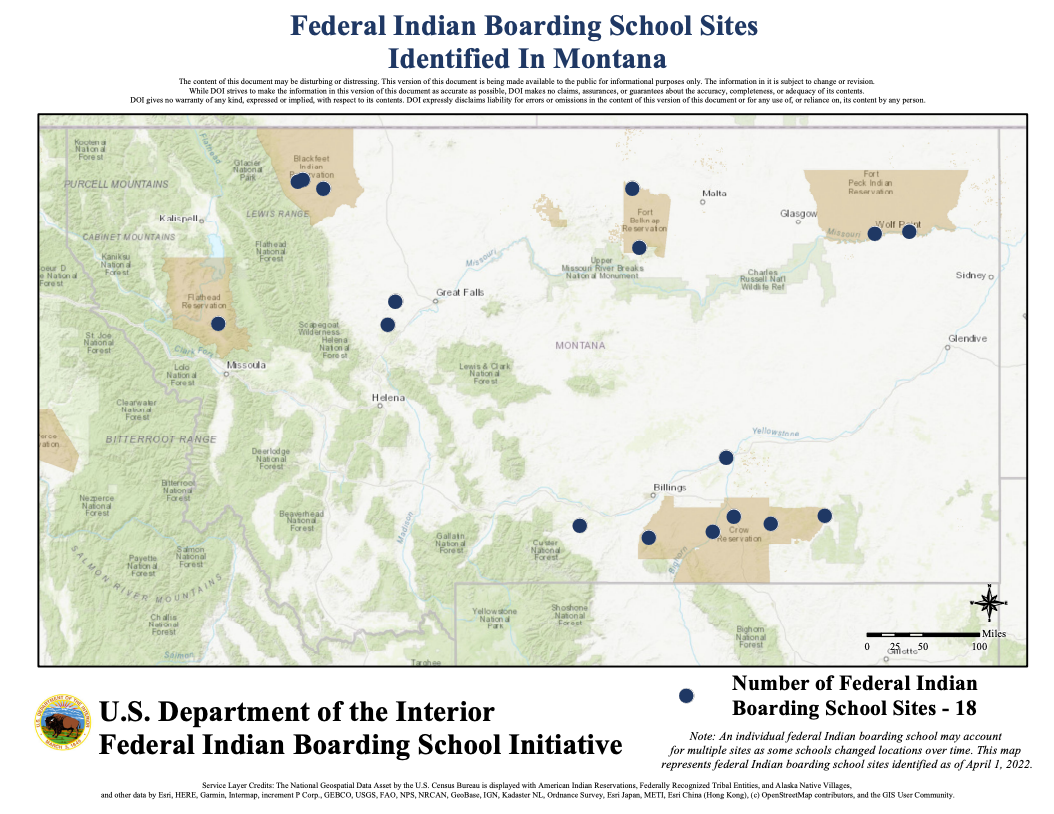
Haaland, a member of the Laguna Pueblo tribe and a descendant of people impacted by the boarding schools, launched the Federal Indian Boarding School Initiative,
described as “a comprehensive effort to recognize the troubled legacy
of federal Indian boarding school policies with the goal of addressing
their intergenerational impact and to shed light on the traumas of the
past.”


The ongoing investigation has already discovered unmarked graves of
children at the sites of nearly 20 schools and has accounted for the
deaths of more than 500 children. 


Haaland kicked off a “healing tour”
in July, traveling across the country to pray with and gather testimony
from hundreds of boarding school survivors and their families.

CLICK OLDER POSTS (above) to see more news

CLICK OLDER POSTS  (above) to see more news

MEGWETCH THANK YOU

HUGE Thank you for visiting this blog and sharing this with your kin. It's appreciated. Contact Trace anytime! Use the form below.

BOOKSHOP

Please use BOOKSHOP to buy our titles. We will not be posting links to Amazon.

Popular Posts

To Veronica Brown

Veronica, we adult adoptees are thinking of you today and every day. We will be here when you need us. Your journey in the adopted life has begun, nothing can revoke that now, the damage cannot be undone. Be courageous, you have what no adoptee before you has had; a strong group of adult adoptees who know your story, who are behind you and will always be so.

OUR HISTORY

OUR HISTORY
BOOK 5: Lost Children of the Indian Adoption Projects