BACK UP BLOG (no longer updating)

This blog was a backup for American Indian Adoptees blog
USE THE SEARCH BAR or SEARCH TOPICS at bottom of this blog

If you need support

Support Info: If you are a Survivor and need emotional support, a national crisis line is available 24 hours a day, seven days a week: Residential School Survivor Support Line: 1-866-925-4419. Additional Health Support Information: Emotional, cultural, and professional support services are also available to Survivors and their families through the Indian Residential Schools Resolution Health Support Program. Services can be accessed on an individual, family, or group basis.” These & regional support phone numbers are found at https://nctr.ca/contact/survivors/ . MY EMAIL: tracelara@pm.me

Search This Blog

Wednesday, December 21, 2022

Missed By Years


Missed by years

by Suzie Smith Fedorko


Fedorko 1.jpg


Being an adult Indigenous reunited adoptee has left a time stamp on me. It will take many years to recover the connections lost in adoption and I will have to work at it very hard for the rest of my life to reestablish roots which I was torn from at an early age. There are moments when I see the bonds forged over years between cousins and aunts and uncles and feel they’re in some invisible clique and I’m an outsider.

When I first began reconnecting, most of my native family members were accepting and curious about my life before coming home to them. But I often felt judged on so many levels. I remember having a cousin ask me how far I made it with my Education? A response following that he had obtained his master’s degree, letting me know that he made it further that I did.

My Indigenous biological family certainly had struggles in life. Most of them struggled with addictions, gambling, and money trouble—all so foreign to me. I had been raised in an upper middle class white family. I grew up with many nice things and a Private Catholic school upbringing. We always had meals and I never had any worries while I was an adolescent. I cringed when I heard stories about some of the things my cousins went through when they were young.

I grew up knowing I was adopted, as I did not resemble anyone in my immediate family. I had black hair and olive skin unlike my Polish & German adopted parents. I always stood out in the Elementary Catholic School I attended. I felt like I was treated differently by the Teachers and Nuns. The Teachers/Nuns always picked me last for lining up for school tasks and learning.

One day I found a birth certificate on our dining room table, and I asked who was baby Veronica? The birth certificate was quickly snatched out of my hand by my adopted Mom Virginia. I was told that evening that I was adopted into the Smith family. I do not recall my age, but I do remember the moment. I felt a disconnect with the Smith family. From that point on, I was always reminded that I was adopted.

At Doctors’ appointments, I remember my adopted Mom telling the Doctors that, "Suzie does not have any medical records as she is adopted." A long heavy silence would overcome me. An awkward silence reminding me that I am adopted.

As my late teen years approached, I always wondered who my biological parents were? What did they look like? I had dreams about being parked out in a car on their street, watching them coming and going into their house. At that time, I didn’t have a desire to meet them, I just wanted to watch them from afar.

My biological birth family found me when I turned forty years old. I started my search for them when I turned eighteen and waited over twenty-two years for one phone call from just one of my biological parents. Instead, I got a voicemail from a Sarah Knestrick. Her gentle, sweet, accented voice said she was “calling for Susan Fedorko who was adopted, and would love to connect with her.” I immediately thought this person leaving this message was my biological Mom.

After some niceties, my half-sister Sarah left contact information for me to call her back. I hung up the phone thinking to myself. “I have waited a lifetime for that call.” Years before, I had posted details of what I knew about my adoption on some Internet Search boards. Mainly the year I was born, what State my adoption took place in, and other details I had obtained from the Adoption Agency, which they call “Non-Identifying Information.”

I composed myself and called the number back after a ten-minute pause to catch my breath. Sarah, I learned, was my birth mother’s second daughter, and I was her first daughter. She said she was very disappointed to have to tell me that our Mother had passed away in 1997. Excitement drained from my face. I realized that I would never have the opportunity to talk with my birth mother. I would never get answers to my questions I had. I would never be able to look upon her face and see how proud she was with me. I would never get to hear her voice.

Sarah was able to tell me that my birth mother’s name. Catherine Dahmen (Sachs). She said it as if I was supposed to recognize the name? I told her that I was unfamiliar with that name. Sarah then went onto to say that Cathee Dahmen was a “huge, huge model.” I was not sure what she was trying to tell me? At first, I thought she was telling me that our Mother was a plus-sized model?

But Sarah was trying to tell me that Catherine Dahmen was a famous Supermodel, who graced the cover of Vogue and Harper’s Bazaar and Elle magazines during the late 1968 era. She was one of Eileen Ford’s top earners back in the late sixties. And would also be recognized as the first Native American Supermodel.

Cathee was once married to a famous British actor Leonard Whiting – Romeo from “Romeo and Juliet.” Cathee was also married to a musician by the name of Alan Merrill, who co-wrote the song that Joan Jett sings, “I Love Rock n Roll.” She went onto to have three additional children after me.

Cathee’s whole career teetered because of my adoption. The family story was that Cathee’s mother, my grandmother Mary Morrison was the native visionary of the family. She saw great things to happen to Cathee. She believed, I was in her way of having the great things to happen. Cathee gave birth to me at the young age of sixteen years old. She was not the only daughter this would happen to. Mary’s three oldest daughters all had children at an early age, all out of wedlock. Mary saw that Cathee was going to be famous and make lots of money in her career where she would be recognized all over the world.

One day, while Cathee was attending regular High School classes, Mary packed me up and adopted me out without Cathee knowing anything about this plan. She came home one day from School to find me gone, at her Mothers hand. This angered Cathee and it was decided that Cathee move out to the East Coast to live with her Uncle George, renowned Native American Artist-George Morrison.

Cathee could finish up her schooling and being away would help her overcome losing her daughter Veronica Rose, aka “Cricket.” Cathee nicknamed me “Cricket” and the rest of the family called me “Cricket” as well.

Cathee finished her High School academic career at Hope High School in Rhode Island. She is remembered by High School friends as being reclusive and on the shy side. Cathee’s Uncle George Morrison was an accomplished Artist at this time. He had several friends who would sketch and paint Catherine as she made the perfect still life model.

Fashion Illustrator Antonio Lopez recognized Cathee’s portrait. He was drawn to the model in the painting. He asked George who the model was in the painting? George had responded with “my Niece Cathee.” Antonio asked if Cathee had wanted a career as a Fashion Model? Antonio was in a place to be able to see this become a reality. He began sketching Cathee’s portrait in Haute Couture. Cathee became an instant sensation and was signed as an Eileen Ford Model. She was photographed for many magazine covers all over the world. She would travel the world having her photo taken over and over again for many Fashion magazines. Her face is recognized from being a model during that era, however, her name is not as recognized as her face was.

Uncle George Morrison is considered one of the greatest Native American Artists of the twentieth century. He has had pieces in the White House and all over the world, and most recently he was one of the two main featured Artists when they opened the National Smithsonian of the American Indian Museum in 2004.

Once I discovered who Cathee was I was elated that she became a success with her life after our separation. I also knew that it was at my expense. It is bittersweet to see her photographs on the covers of well know magazines back in that era.

I am so happy that she made a great life for herself and her other kids. I always wonder if I ever crossed her mind at times. Did she wonder where I was? Where I landed? Was I loved? All questions I would never hear answers to. In one tiny sentence from my half-sister Sarah, informing me that our Mother has passed. I lost so much.

It has left me with distrust, abandonment issues, and fear of belonging. I have always had anxiety and issues with social skills. I often feel out of place and thought people would surely recognize that I didn’t belong. Every year for my birthday I was reminded that I wasn’t wanted. It was hard to be excited for my birthday when I was always reminded that somebody did not want me.

I am now fifty-eight years old, and I am still at war with myself. Adoption for me has taken a lifetime of adjustments. The older I get the less painful it is for me. I have bonds with my biological birth families now, however there are still struggles being accepted by certain people.

It is painful to know that I have had two biological brothers turn their backs on me. My brother on my biological Fathers side was very upset that I was corresponding with his soon to be ex-wife. I tried to tell him, when I met his family, I met them as a whole family, and established a great bond with his wife. It was hard not to keep in touch with her. He viewed this as a betrayal and cut me out of his life.

My little brother on my biological Mom’s side really never accepted me as his long-lost sister. He always put up road blocks and actually believes I am posing to be the real daughter, he even demanded that I get a DNA test. Once it was confirmed that I am Cathee’s daughter he still to this day wants nothing to do with me.

This same brother believes that Cathee was a private person. She would not like this adoption reunion aired in public. I believe this is my story too, and I want the world to know about both of us.

My thought is that, it is because of me that he exists. Had the family decided for me to stay with Cathee, she would have never moved out to the east coast to live with Uncle George. She would have never been in the right place at the right time, to be discovered as a Fashion Model. She would have never married Leonard Whiting or Alan Merrill. Cathee would not have been discovered as the first Native American Supermodel had she stayed on the Grand Portage reservation.

I no longer have the energy to try to gain their acceptance. I merely think that someday they will have to face the music with our Mother/Father. They will be held accountable for their actions toward me during our lives. They will be judged at some point on how they treated me. I always tried to fit in with them, and it was their decision to act like I didn’t exist, or acted like I was a fake Cricket.

I am so glad that I wasn’t located until I was at an age I could handle learning about what happened to me. If I had been located when I first started searching for either biological parent, the outcome would have been different. There would have been things that would have been hard to swallow at the age of eighteen.

To this day, I always have distaste for my Grandmother Mary Morrison. It was not her place to make decisions on my life. I hope that she sees the wonderful successful human being I turned out to be. I want nothing to do with her ever, even in death. I see cousins who brag about what a great Grandmother she was. She will never be anything but the evil person who casted me out of the family circle. I realize that it takes a long time for forgiveness to pour out of me.

I was also able to connect with my biological Birth Fathers side of the family as well. I was elated to learn that I was the oldest sister to his children. My birth Fathers name is Thomas Conklin; he is enrolled in the White Earth Nation in Minnesota.

Tommy Conklin also passed away before I had the chance to meet him. He passed in 2001 of colon cancer.

Tommy Conklin was about seventeen years old when I was born. There was no contact with my Birth Mother shortly before I was born in 1962. Tommy had left Cathee on her own to have/care for me.

I have heard when he was on his deathbed, he tried to tell his children about me, but he held back the information. My brother Thomas Jr. told me that he was certain our Father was trying to tell them about me, he said it was too hard for him to let it out.

It has now been eighteen years since I have been in reunion. I have established relationships with immediate family members. It took time to find my place at the family table. When I was first located the initial shock of realizing my loss in place was so hard to accept. I didn’t realize that it would take a tremendous amount of time to plant some roots in the family circle. I have lost three significant relationships of the Dahmen family. I lost my Aunties Elaine and Barbara and an Uncle Peter. All three I met and established relationships a short time, only to lose them to sickness.

My Adopted family has disintegrated and crumbled. My adopted Father Lloyd died in 2013. My Father, my adopted brother Steve and my Husband Tim are the three men in my life that I set the bar for in men. Each of them has captured my heart in their own way. I am protective of my heart.

My husband and I have lived in the same house for over thirty-four years. When I was found in 2002, I realized that Cathee died a little over thirty miles away from my home. I waited a lifetime to meet her, yet she was so close!

I have had a pretty good upbringing; both Adoptive Parents did their best in raising me. I tried to inherit Antiquing from my Adopted Mother Virginia. One of the things I started collecting was old Vogue and Harper’s Bazaar and Life Magazines.

When I was informed who my Birth Mother was, I went to my bedroom closet where I stashed my collection. I found photos of my Birth Mother within the pages of those Magazines. Not only did she die over thirty miles away from me, Cathee was with me for years on the pages of the Magazines within my own closet.


Author’s Bio:

A lifelong resident of Minneapolis, Minnesota, Suzie Smith Fedorko (Grand Portage Band of Chippewa - Oijbwe) has contributed her writing to two anthologies (Two Worlds, left photo) on the subject of being adopted and has done numerous media interviews. Her most recent memoir “Cricket: Secret Child of a Sixties Supermodel” details her astonishing 22-year search for answers and describes touching reunions with both of her birth-families in two Minnesota tribal nations. 

SOURCE: https://nativeskinonline.com/creative-nonfiction-february-2021/missed-by-years 


AND OTHER STORY SUZIE WROTE: https://livingthesecondact.com/2019/09/24/my-adoption-reunion-story/ 


Saturday, December 17, 2022

Adoption does not save us


meme circulating on twitter

  • For Prism Reports,
    Kimberly Rooney writes about the political undercurrents of adoption
    and healing from its impact in tandem with her experiences of sexual
    violence:


Turning away from the truths of adoption might be easier—for adoptive
parents, adoptees, and anyone who doesn’t want to challenge the
normative ideas our culture has about family—but it makes it more
difficult for adoptees to process our experiences. It denies us the
language and narratives in which we can recognize and articulate our own
experiences. It minimizes the systemic inequities that tear families
apart, the violence of separating a child from their birth family,
community, and culture, and the lingering trauma that those children
carry into adulthood. 

Following other adoptees online through hashtags like #AdopteeVoices has
also introduced me to adoptees who are similarly critical about
adoption as a system, who fight for adoption abolition and who connect adoption to other forms of family separation and violations of people’s bodily autonomy.


Kimberly Rooney 高小荣


Kimberly Rooney 高小荣 is a writer and editor based in Pittsburgh,
Pa. They are a copy editor for Prism, and their writing focuses on
racial, adoptee, and queer identities. Follow them on Twitter at...


Thursday, December 8, 2022

NEW BOOK: "A Child of the Indian Race"


"A Child of the Indian Race" 
"A Child of the Indian Race": A Story of Return


Sandy White Hawk


Foreword Gene Thin Elk


Introduction by Terry Cross


Minnesota Historical Society Press (December 1, 2022)


Description


An adoptee reconnects with the
Lakota family and culture she was born into— and nurtures a new
tradition that helps others to do the same.


In the 1950s, when Sandy White Hawk was a
toddler, she was taken from her Lakota family on the Rosebud Indian
Reservation in South Dakota. Her adoption papers identify her as “a
child of the Indian race,” and her adoptive mother never let her forget
it, telling her she was unwanted and shaming her for being “Indian.”
White Hawk medicated her traumas with drugs and alcohol. At age
twenty-eight, she gained sobriety and reconnected with her birth
relatives. As she learned what it means to be Lakota, she also learned
that thousands of Native adoptees shared her experience—left to navigate
racial and cultural complexities as children, with no way to understand
what was happening to them.


Mentored by a respected elder, White Hawk
began to work with relatives who also had been separated by adoption and
foster care, taken away from their families and communities. Fighting
through her feelings of inadequacy, she accepted that she could use her
voice to advocate. Ultimately, White Hawk founded the First Nations
Repatriation Institute, an organization that addresses the post-adoption
issues of Native American individuals, families, and communities.


White Hawk lectures and presents widely on
the issues around adoption. She exposes the myth that adoption is a path
to protecting "unwanted children" from "unfit mothers," offering a
child a "better chance at life." Rather, adoption, particularly
transracial adoption, is layered in complexities. “A Child of the Indian
Race” is Sandy White Hawk's story, and it is the story of her life
work: helping other adoptees and tribal communities to reconcile the
enormous harms caused by widespread removals.


Advance Praise


“Of all human rights assaults on Native peoples in the United States, the stealing
of Native children is perhaps the most heartbreaking. Adopted by a white couple,
Sandy White Hawk grew up without cultural defenses against the onslaught of racism 
and
erasure she experienced. Her eloquent, riveting book takes the reader
on her journey back home and toward her life’s work: helping Native
families to reconnect and, together, face down generations of trauma.”
Suzan Shown Harjo (Cheyenne and Hodulgee Muscogee), writer, curator,
policy advocate, and recipient of a 2014 Presidential Medal of Freedom


"In this profoundly moving
memoir, Sandy White Hawk, Sicangu Lakota, speaks eloquently of her life
as a young child adopted by a white family. It is an intensely personal
story of resilience and perseverance in spite of trauma, racism, and
painful truths. At the core of her healing is her tribe’s Welcome Home
song and ceremony for adoptees. To all Native adoptees, this book is a
must read. Welcome home."

Denise Lajimodiere (Turtle Mountain Band of Chippewa), author of Stringing Rosaries: The History, the Unforgivable, and the Healing of Northern Plains American Indian Boarding School Survivors

"Worthy
of a novel—but true. A young child is transported to a strange place
where she is challenged to overcome events no child should have to face.
She lives in a world that doesn’t recognize or accept her, all the
while being told that this is in her own best interest. This is a story
about the triumph of the human spirit that finds love, acceptance, and
purpose in restoring hope to others who were also lost.

William A. Thorne, Jr. (Pomo and Coast Miwok), retired tribal and state court judge

"Since
the 1870s, first through boarding schools and then through forced
adoptions, federal bureaucrats have permanently removed Native children
from their families. Their goal was the erasure of Native people; the
result was trauma and severely damaged families. Sandy White Hawk, who
lived this adoption experience, has become a strong advocate for Native
people and Native families. In this compelling and immensely readable
story, her compassion and dignity shine through."
Anita Fineday (White Earth Tribal Nation), managing director, Indian Child Welfare Program, Casey Family Programs


“Sandy White Hawk is ‘a child of the Indian
race.’ This is her powerful memoir of coming home to the Rosebud Sioux
Reservation in South Dakota as an ‘Indian adoptee.’  It is a story of
much suffering and great courage, and it highlights the indelible
importance of song, ceremony, culture, and landscape in the arduous
journey towards truth, reconciliation, and healing.  It is also a
journey greatly facilitated by the vision and hard work of many Native
mentors, families, and communities. Read this book. It will change
you.” 
Frank Pommersheim, professor of law and associate justice, Rosebud Sioux Tribe Supreme Court


Author Information


Sandy White Hawk is a Sicangu Lakota adoptee from the Rosebud
Reservation, South Dakota. She is the founder and director of First
Nations Repatriation Institute, which offers resources for First Nations
people impacted by foster care or adoption to return home, reconnect,
and reclaim their identity. White Hawk is Director of Healing
Programs at the National Native American Boarding School Healing
Coalition and was elder-in-residence at the Indian Child Welfare Law
Office in Minneapolis. She is the subject of several documentaries,
including Blood Memory: A Story of Removal and Return.


Gene Thin Elk (Great Sicangu Nation) is an internationally known consultant in the area of Indigenous healing methods.


Terry Cross (Seneca
Nation) is the founding executive director of the National Indian Child
Welfare Association. He is the author of the Heritage and Helping and
Positive Indian Parenting curriculum, as well as Cross-Cultural Skills
in Indian Child Welfare.

$ 18.95 Minnesota Historical Society

One Choinumni man's adoption horror story


Emerson Gorman (R), who is a Navajo elder, poses at his property with his (L-R) daughter Naiyahnikai, wife Beverly and grandchild Nizhoni near the Navajo Nation town of Steamboat in Arizona on May 23, 2020. - Emerson Gorman knows what it's like to face the destruction of his culture: when he was five-years-old he was among thousands of Navajo children taken from their families and sent to Christian schools that tried to erase their belief systems.


Emerson
Gorman (right) was one of the thousands of Navajo children taken from
their families and sent to Christian schools to erase their beliefs. His
daughter Naiyahnikai, wife Beverly, and grandchild Nizhoni are pictured
(left to right) on his Arizona property May 23, 2020.


“But honoring tribal sovereignty isn’t about discrimination or
race. That’s a fundamental misunderstanding of Indigenous rights,” Ciesemier said in an episode meant to draw attention to what’s at stake for Native children.


Jaimie Nelson, a Choinumni Yokuts man from Fresno, California, was
once one of those children. He detailed on the podcast abuse he
encountered at the hands of a white family who adopted him. For Nelson,
legal experts, and activists, the Supreme Court challenge is an
outgrowth of an intentional and systematic effort to whitewash Native
Americans.


"I am not a victim of some odd set of circumstances where I lost my
sister and my brother," Nelson said. "It was an intentional act built
around ‘Kill the Indian, Save the Man.’"


Nelson referenced words
uttered in 1892 by racist American Army Capt. Richard Henry Pratt.
He tried, along with the federal government, to strip Native Americans
of their beliefs, cultural histories, and traditions. And though Pratt
made the speech 130 years ago, the sentiment he championed is far from
extinguished.


Nelson said eliminating the very constitutional right that attempts
to protect Native children from such cultural atrocities is “a genocidal act.” And he would know exactly what that feels like, because it was attempted on him. 


Nelson told the ACLU of his adoption:


There’s a lot of muddy water in there. I know that it happened
at a very young age in the late seventies. My biological parents, they
were, my mom was either addicted to drugs, my dad was a pretty bad dude.
But it didn’t mean that they had to take us away from our native
family. Our native family wanted to keep us, but the courts indicated,
essentially that there’s nothing you can do about it. They specifically
told my grandmother that there’s nothing that you can do about it. And
from what I understand, from what I was told, it destroyed her that she
was not able to keep us in the home. I don’t have very many memories of
my of my time in the foster care system or any of the sort of lead up to
the adoption. What I do have, I have physical reminders of my
introduction into the system. I have a tracheotomy scar on my neck and
on my sides from apparently when I was abused
, like immediately after
being taken from my Native family.


Nelson said when he learned of the case that will be before the
Supreme Court, he knew he had to do something "because there cannot be
another Jamie."


"There cannot be another child that is taken away because of some
archaic, just genocidal, bigoted ideas," he said. "It’s unbelievable.
It’s unconscionable to me that we still have to go through these
hurdles, but we do."


Dr. Twyla Baker, president of the Nueta Hidatsa Sahnish College,
tweeted about the case five days before Native American Heritage Month
began today. "The thing I can’t get off my mind—it’s about to be Native
American Heritage Month, as SCOTUS is about to hear a case that has the
potential to knock down the Indian Child Welfare Act," Baker said in the
tweet. "This kind of existential dichotomy pops up way too often for
Native people here."


She later added:


“My bad, actually this didn’t ‘pop up’—it was a situation
crafted, intentionally, over years with much larger implications and
intentions to follow. Superficial acknowledgments of our humanity as
other structures work to dismantle our Native Nationhood is really
pretty standard.”


Stephanie Amiotte, a member of the Oglala Lakota Tribe and legal
director for the ACLU of South Dakota, North Dakota, and Wyoming, said
when the Indian Child Welfare Act was proposed, 25 to 35% of American
Indian children were being raised in adoptive or foster homes or other
institutions.  About 90% of Indigenous children were being raised by
people who were not Indigenous, Amiotte said.


She explained that, historically, the federal government’s position
and policy has been “to remove Indian children from their families in an
attempt to assimilate” them “to white dominant culture.”


“It is something that actually threatens the very existence of future
tribes and Indigenous peoples as a population,” Amiotte said.

Wednesday, December 7, 2022

SIXTIES SCOOP: Raised Jewish, Adoptee Sharing Story

Former Winnipegger of Métis ancestry, raised Jewish sharing her experience


Growing up as an adopted child in a Jewish family in Winnipeg, Lisa Wilder knew she was different. She just didn’t know why.

She found out when she was in her mid-20s.


She was of Métis ancestry.


SUPPLIED by Lisa Wilder


“I felt misaligned as a child,” said Wilder, 53, who was part of the ’60s Scoop.


It wasn’t the fault of her family or the Winnipeg Jewish community, she said.


“I had a good upbringing, and my adoption was presented in a positive
manner by my parents,” she said. “I just felt something was off.”


Later in life, as Wilder learned more about her adoption, she
discovered her mother was 17 when she was born. Shortly after, her
mother was told Lisa would soon die. Hospital officials convinced her to
sign papers to pay for the burial.


But the baby was not dying. Instead, she was put into a foster home
where she was adopted by her new parents — who didn’t know she had been
“scooped.”


Today Wilder, a mother of three who now lives in Calgary, is on a
quest to learn more about her Indigenous roots and combine them with her
Jewish life.


There are similarities between the two, she said, adding both groups “suffered a genocide.”


She also noted that Indigenous people, like Jews in Nazi Germany,
were prevented from performing their ceremonies or celebrating their
spirituality. They were also confined to reservations, like Jews were,
for a time, confined to ghettos.


As she learns more about the Indigenous side of her heritage, she is
looking for ways to amalgamate the two. At the same time, although she
is of Métis ancestry, Wilder is careful not to call herself Indigenous.


“I’m not trying to pass myself off that way,” she said. “I have not
led an Indigenous life. I grew up Jewish. Métis is my ancestry. I’m
reaching out to Indigenous people for guidance. I want to learn more.”


Wilder spoke about her experience at a presentation called
Uncovering my Métis Roots: A Jewish Woman’s Journey.


“I’m a bit terrified to share my story in the community I grew up
in,” said Wilder, noting her adoptive parents, who were supportive of
her search for her biological family, will be there.


Her hope in sharing her experience is to promote understanding between Indigenous and non-Indigenous Canadians.


“I hope I can move the needle of awareness a little bit, to make this
a more peaceful and understanding world,” she said. “I’m no expert. I’m
just a person with a story who wants a better world.”


To register for the event, which is presented by the Jewish Federation of Winnipeg — Women’s Philanthropy, call 204-477-7426 or visit their website.


REUNION: ‘Where do I belong?’

Another White Earth Adoptee... are you one?  Were you raised in a Jewish family? Please leave a comment on our website.  Let's share your stories... Trace

Native roots, hard realities surface in woman’s search for her past

two women stand shoulder to shoulder
Anita Fineday (left) and Peggy Mandel, on the day they first met.
Courtesy Peggy Mandel- Fineday learned that family members at White Earth tried to adopt Peggy

Feeling
trepidation and hope, Peggy Mandel dropped a letter in the mail to a
woman she’d never met but who held the key to a secret piece of her
past.

Adopted and raised in a loving middle-class Jewish family,
Mandel didn’t know her own origin story. As a kid, she could remember
people asking, “Are you sure you're Jewish? You're too tall to be
Jewish.”

She wasn’t sure either but needed to find out.

After
decades of searching, she’d come across a name — someone who might be a
blood relative, someone who would lead her to a wrenching history of
Native people in Minnesota she wasn’t supposed to find.

Mandel had
been so scared she couldn’t write the letter. Her husband Joel wrote
it. For weeks, there was silence. Then came a voicemail that changed
lives across two families and three generations.

“I am pleasantly surprised. I'm shocked,” said the voice. “And I would like to connect with you.”

...

Mandel, who moved to the Twin Cities at age 11, started looking for
her birth mother in the 1990s. However Kentucky adoption records were
closed and no information was available.

About eight years ago she sought help from a staff member at the Children’s Home Society, a St. Paul adoption agency.

In
early 2014, an agency staff member called. “She said, ‘We found her.
She is alive and well. But we can't tell you where she lives. And she
doesn't want anybody to know. She doesn't want to meet you,’” recalled
Mandel.

READ

Tuesday, December 6, 2022

MMIWG: Bodies in Landfill


Police believe remains of three women in Winnipeg landfill, but do not plan to search

Winnipeg’s
police chief said Friday the remains of three victims of an alleged
serial killer are believed to be at a city landfill, but no search is
planned.

Too
much time has passed and there is no known starting point at the large
site, where bulldozers are constantly moving things around, Danny Smyth
said, adding that he understands that families are frustrated.

“I would want the remains of my loved ones as well.”

Smyth’s comments, after a police board meeting, came as Jeremy Skibicki, 35, appeared briefly in court.

Skibicki
was taken into custody and charged on May 18 with first-degree murder
in the death of Rebecca Contois, 24. Her partial remains were found in a
garbage bin near an apartment building. Police later found the rest of
her remains in the Brady Road landfill in the city’s south end.

On
Thursday, Skibicki was charged with first-degree murder in the deaths
of Morgan Harris, 39, Marcedes Myran, 26, and an unidentified woman.
Their bodies have not been found.

Contois
lived in Winnipeg and was a member of the O-Chi-Chak-Ko-Sipi First
Nation, also known as Crane River. Harris and Myran also lived in
Winnipeg and were both members of Long Plain First Nation. Police say
the three were killed in May.

The unidentified woman is also believed to be Indigenous. Police believe she was killed in March.

“We caught a break with Rebecca Contois in the timing of that particular search,” Smyth said.

“We
were able to take some action to isolate a very specific area of the
landfill within hours of discovering her other remains at the scene of
the crime. We don’t have that luxury with these other victims.”

Skibicki,
his head shaved and sporting a long beard, kept his gaze forward as he
walked by family members of some of the women and their supporters in
the courtroom. He said “correct” when a judge said his name and asked
him to confirm his identity.

Skibicki did not enter a plea, but his lawyer said he maintains his innocence and a trial is likely some time away.

“We
just received 10 terabytes today of disclosure and that’s probably not
all there is to it,” Leonard Tailleur told reporters outside the
courthouse.


Court documents show
Skibicki has been accused of violence against women in the past. One
woman applied for and obtained a protection order against him in 2019.
The woman alleged in the documents that Skibicki stalked her and
repeatedly sexually assaulted her while she was sleeping.

Another
woman applied for a protection order against Skibicki in 2015. The
documents say she alleged he repeatedly assaulted her while they lived
together and that he held a knife against her stomach while she was
pregnant. Her application for a protection order was dismissed.

The
court documents also say Skibicki has several Facebook pages. One page
with a profile photo matching Skibicki contains antisemitic and white
supremacist posts. A post from last January linked to a video questions
the discovery of unmarked graves at former residential schools.

The
Crown said it plans to proceed by direct indictment with a murder
trial, which means there will be no preliminary hearing to first
consider whether there is enough evidence. Skibicki remains in custody.

Members of the Contois family said they are deep in sorrow.

“The
last couple of months have been incredibly exhausting. We have
experienced paralyzing grief,” the family said in a written statement.

“We also continue to think of the other families. Our deepest condolences to them.”

— With files from Kelly Geraldine Malone in Saskatoon

This report by The Canadian Press was first published Dec. 2, 2022.


 Indigenous transracial adoptee shares her personal struggle amid US Supreme Court case

NEWS VIDEO


If the Indian Child Welfare Act is overturned, it would make it easier for non-indigenous families to adopt indigenous children.


FORT COLLINS, Colo. — When Susan Devan Harness, an indigenous
transracial adoptee, was removed from her home as a child, she was
placed with a white family, and the resulting experience was a lifetime
of otherness.


“You cannot take a child from a colonized race and place them in the
midst of the colonizers and think everything’s going to go great,” said
Harness, a Fort Collins author who said she is Salish Kootenai, of
Western Montana.


The U.S. Supreme Court is considering a challenge to the Indian Child Welfare Act, also known as ICWA,
enacted in 1978 to put in place adoption protections for Native
American and Alaska Native children. If those protections are
overturned, it would make it easier for non-native families to adopt a
native child.


Before ICWA, indigenous children were removed from their homes at
high rates. Studies showed 25% to 35% of indigenous children were being
removed from their homes. Of that group, 85% were placed outside of
their family and reservation community.


As someone who was removed from her home, Harness said she struggled
to connect with American Indian peers in school and she also faced
incredible difficulties trying to reconnect with her tribe.


There are complications to living in between those two worlds. The
first, Harness said, is the historic violence and conflict that
indigenous communities have faced at the hands of white communities.


“They’ve declared wars on us," she said. "Over a thousand wars,
they’ve declared on us, the U.S. Army. They’ve objectified us and moved
us when they didn’t want us. They’ve educated us in schools whose motto
was ‘kill the Indian, save the man.’ ”


To understand who she was, she went to school to study anthropology.
Eventually, she found others like her. They didn’t fit into white
mainstream culture but didn’t necessarily have a place amongst American
Indian peers, either.


“You can't be funny enough. You can't be scholarly enough. You can't
be talented enough,” Harness said. “You're always going to be this
person, this American Indian, living in white America.”


Harness wrote a book about her experience, aptly titled “Bitterroot,” named after a medicinal plant that grows near her tribe.


“It has the ability where if it goes through a lot of drought, it
doesn’t bloom, but the first time it gets rain, it blooms in amazing
ways,” she said.


Her book brought in rain. Harness reconnected with her tribe and even
has an honor song. Now Harness knows her biological family, intimately,
but that did not happen without a lifetime of emotional struggle.


“I don’t want to see other kids come out the same way I did, the same
way a lot of people in my generation did, trying to figure out what
happened to us when we’re in our 40s and 50s,” she said.


The U.S. Supreme Court has taken up challenges to ICWA three times —
in 1989, 2013 and 2022. The current case is the most significant because
it raises questions of equal protection under the Constitution.


The justices heard three hours of arguments Nov. 9. The high court
wasn’t expected to rule in the case until next summer. Lower courts
split on the case.


As the Supreme Court challenge goes on, Harness has a message: Anyone
involved in a transracial adoption has an immediate responsibility to
help the child find their place of belonging.


“They better be able to take that kid to the reservation every single
year,” she said. “They better make friends with people in the tribe to
ensure that child is given a proper education of who they are and where
they came from.”

HER FANTASTIC WEBSITE: HERE 

Interview – The Archibald Project – American Indian Transracial Adoption


MORE ADOPTEE STORIES


HISTORY: How the "free" state of California enslaved Native children

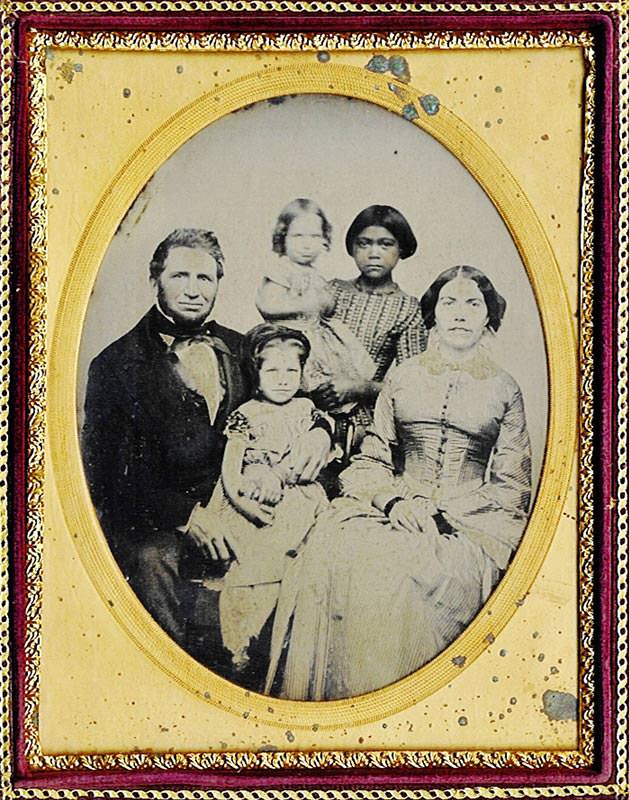
Photo of Kate Camden, a Native girl who at age 10 was forced into
servitude for a white family living in Shasta County. Photo is one of
few records that exist showing Native children entrapped by California's
apprentice and guardianship laws // Credit: Camden Family Portrait,
circa 1857-1859 courtesy of Whiskeytown National Recreation Area, WHIS
9066

 Kate Camden family portrait


New
Episode of ACLU Gold Chains Podcast Examines Indigenous Child Slavery
in 19th century California, Connects to Upcoming U.S. Supreme Court
Case Brackeen v. Haaland


How the "free" state of California enslaved Native children


Media Contact: press@aclunc.org, (415) 621-2493


SAN
FRANCISCO, CA – California came into the Union as a free state in 1850
with a constitution that banned slavery. So how did white settlers in
the mid-19th century get away with enslaving Indigenous
children, some of them as young as 2 years old? And why does this little
known, terrible chapter of California history matter today?


Today, the ACLU of Northern California released the third episode of Gold Chains, our podcast about California’s hidden history of slavery. “Indigenous Injustice” examines a 19th
century state law called the Act for the Government and Protection of
Indians that effectively legalized Indigenous child slavery and
encouraged kidnappers to snatch Native children from their tribal
communities.


“The
horror of what happened in California, the genocidal violence against
Native people, and especially the enactment of that violence against
children, is unfathomable,” said historian Stacey Smith, who appears as a
guest on the show.


“Indigenous
Injustice” isn’t just ancient history. Over time, the practice of
forcibly separating Native children from their tribal communities has
taken on many forms. There were the so- called Indian Boarding Schools. A
variety of other government-sanctioned adoption schemes have funneled
Indigenous children into Non-Native, mostly white households.


Currently,
there’s a landmark case scheduled to be heard by the U.S. Supreme Court
on Nov. 9 – Brackeen v. Haaland – that deals with the very same issue
of the forced removal of Native children from their families, tribes and
tribal culture. It threatens to dismantle the
Indian Child Welfare Act (ICWA), which was passed to prevent Native children from being removed from their communities.


The American Civil Liberties Union, along with 12 ACLU affiliates ( including the ACLU of Northern California) have filed an amicus brief with the U.S. Supreme Court, urging the court to uphold the constitutionality of the Indian Child Welfare Act.


“Indigenous Injustice” is a timely story that connects the dots between Indigenous child slavery in California to the present.


Link to Episode Website


November 1, 2022

Episode 3:
Indigenous Injustice


California joined the Union as a so-called free state in 1850.
So how did white settlers get away with enslaving Native children until
they were young adults?


We explore a little-known California state law called the Act
for the Government and Protection of Indians that unleashed genocidal
violence against Indigenous children. And we connect the dots between
that terrible past and a landmark upcoming U.S. Supreme Court case.


Episode Credits:


Produced by the ACLU of Northern California


Host and writer Tammerlin Drummond


Senior Producer and Editor Joanne Jennings


Mix and Original Score Renzo Gorrio


Executive Producer Candice Francis


We’d like to thank our wonderful guides Stacey L Smith, William Bauer and Tedde Simon.


Our associate producers are Lisa P. White and Carmen King.


A special thanks also to our voice actors Pauline Schindler, William Freeman, and Avi Frey.


Elize Manoukian provided fact-checking and production assistance.


Field recording was done by Julie Conquest, Ron George and Eric Gleske.


We’d also like to thank the following members of our Gold
Chains team: Brady Hirsch, Gigi Harney and Eliza Wee. Thank you also to
Abdi Soltani, executive director of the ACLU of Northern California.


A special thanks to World Affairs, Oregon State University and
the University of Nevada, Las Vegas for providing us with recording
studios.


Archival sound was provided courtesy of Periscope Films and Prelinger Archives.


Episode Guests:


William Bauer
is a professor of history at the University of Nevada, Las Vegas and a
citizen of the Round Valley Reservation. He is the author of California Through Native Eyes: Reclaiming History and We Were All Like Migrant Workers Here: Work, Community and Memory on California’s Round Valley Reservation.


Stacey Smith is an associate history professor at Oregon State University. She is the author of Freedom's Frontier: California and the Struggle over Unfree Labor, Emancipation and Reconstruction.


Tedde Simon is the Indigenous justice advocate at the ACLU of Northern California and a citizen of the Navajo Nation.


Additional Resources:


Gold Chains: The Hidden History of Slavery in California, ACLU of Northern California


Among the Diggers of 30 Years Ago, Helen M. Carpenter


Early California Laws and Polices Related to California Indians Kimberly Johnston-Dodds, California State Library


Federal Indian Boarding School Investigative Report U.S. Department of Indian Affairs


This Land, host Rebecca Nagle


At Liberty, host Kendall Ciesemier


CLICK OLDER POSTS (above) to see more news

CLICK OLDER POSTS  (above) to see more news

MEGWETCH THANK YOU

HUGE Thank you for visiting this blog and sharing this with your kin. It's appreciated. Contact Trace anytime! Use the form below.

BOOKSHOP

Please use BOOKSHOP to buy our titles. We will not be posting links to Amazon.

Popular Posts

To Veronica Brown

Veronica, we adult adoptees are thinking of you today and every day. We will be here when you need us. Your journey in the adopted life has begun, nothing can revoke that now, the damage cannot be undone. Be courageous, you have what no adoptee before you has had; a strong group of adult adoptees who know your story, who are behind you and will always be so.

OUR HISTORY

OUR HISTORY
BOOK 5: Lost Children of the Indian Adoption Projects