BACK UP BLOG (no longer updating)

This blog was a backup for American Indian Adoptees blog
USE THE SEARCH BAR or SEARCH TOPICS at bottom of this blog

If you need support

Support Info: If you are a Survivor and need emotional support, a national crisis line is available 24 hours a day, seven days a week: Residential School Survivor Support Line: 1-866-925-4419. Additional Health Support Information: Emotional, cultural, and professional support services are also available to Survivors and their families through the Indian Residential Schools Resolution Health Support Program. Services can be accessed on an individual, family, or group basis.” These & regional support phone numbers are found at https://nctr.ca/contact/survivors/ . MY EMAIL: tracelara@pm.me

Search This Blog

Friday, December 2, 2022

Harvard announces return of Native hair samples #ScientificRacism


Cutting hair symbolized the beginning of assimilation for boarding school students


By: - December 2, 2022 


Murals on the rear side of the abandoned Concho Indian Boarding School
in El Reno, Oklahoma, were painted by Steven Grounds of the Navajo and
Euchee tribes. (Photo by Mary Annette Pember / ICT)


WARNING: This story has disturbing details about residential and boarding schools. If you are feeling triggered, here is a resource list for trauma responses from
the National Native American Boarding School Healing Coalition in the
US. The National Indian Residential School Crisis Hotline in Canada can
be reached at 1-866-925-4419.


Tucked in hundreds of envelopes is the hair cut from Native children
as they arrived at boarding schools. Hidden away for nearly 100 years in
the recesses of the Peabody Museum at Harvard University, the
collection of hair samples offers tangible evidence of the trauma of
assimilation.


According to the hygiene of the day, cropping hair was the surest way
to avoid lice among the crowded populations of children coerced to
attend the nation’s Indian boarding schools.


For boarding school survivors, however, the haircuts came to
symbolize the harsh introduction to the process of assimilation, a
gesture disregarding their culture and families wishes.


Denise Lajimodiere, Turtle Mountain Band of Chippewa, wept as she described her reaction to hearing about the museum’s findings.


“I began to shake and weep, especially thinking of how deeply
boarding school survivors may take this news,” said Lajimodiere,
co-founder of the Native American Boarding School Healing Coalition and author of “Stringing Rosaries: The History, the Unforgivable and the Healing of Northern Plains American Indian Boarding School Survivors.”


Some of those sampled could still be alive today, Lajimodiere said.


The Peabody Museum recently discovered the box of human hair among
its holdings. Gathered nearly a century ago, the hair was taken by an
anthropologist from the heads of hundreds of Native children who
attended Indian boarding schools between 1930 and 1933.


Museum leaders released a public announcement on Nov. 10 about the findings.


“I imagine that many people, especially non-Natives, hardly gave it a
second thought,” said Jamie Azure, chairman of the Turtle Mountain Band
of Chippewa tribe.


“But for Native people hair represents cultural and spiritual
connections to family and place. Our hair is part of our strength.”


The United States is trailing Canada in addressing its history of government- and church-run Indian boarding schools.


In 2006, Canada created the Indian Residential Schools Resolution Health Support Program as part of the country’s Indian Residential School Agreement.


Although the Department of the Interior under Secretary Deb Haaland’s leadership recently released the Federal Indian Boarding School Investigative Report,
there are currently no services or support for survivors in the U.S.
Haaland is the first Indigenous person in a presidential cabinet.


But more needs to be done.


“There’s no mental health support for our survivors in the U.S.
unlike in Canada,” Lajimodiere said. “How do we begin to heal when the
trauma doesn’t stop?”


‘A spiritual violation’


When children first arrived at boarding schools, authorities would
routinely cut their long hair into short, uniform styles, an experience
that has left many survivors as well as their descendants suffering from
negative physical and mental impacts, according to researchers.


Basil Braveheart, Oglala Lakota Nation, still vividly recalls the
shock of having his long hair cut more than 80 years ago, when he first
entered the Holy Rosary Indian Mission on the Pine Ridge reservation.


“They cut my hair, a spiritual violation,” Braveheart told ICT and Reveal in
an earlier interview. “In our culture, only the maternal grandmother
had the right to cut our hair. When they let my hair fall to the floor
and stepped on it, I felt disrespected.”


No hair samples from Holy Rosary were among those discovered at the
Peabody Museum, and the names of those whose samples were discovered
have not been released. Holy Rosary has now been renamed Red Cloud
Indian School and is no longer a boarding school.


The Peabody Museum published an apology from Director Jane Pickering and a promise to return the hair to families and tribal nations.


The museum also created a website dedicated
to describing its process in addressing the hair samples, which were
originally collected by George Edward Woodbury, curator of the State
Historical Society of Colorado.


The acknowledgement section of the website reads, “It is impossible
to talk about hair taken from Indigenous people and its possession by
the Peabody Museum without acknowledging the ties between early
anthropological practices and colonialism, imperialism, and scientific
racism — the very same systems of dispossession and assimilation that
led to the establishment of Indian boarding schools.”


Woodbury and his wife Edna collected more than 1,500 samples of
Indigenous peoples’ hair between 1930 and 1933 from North and South
America as well as Asia and Oceania. They donated the collection to
Harvard in 1935.


A spokesperson for the museum told the The New York Times that
the collection has never been displayed. The samples include about 700
clippings of hair taken from students at Indian boarding schools and
have been stored in envelopes labeled with names, tribal affiliation and
locations of collection.


Although the museum has released information about tribal affiliation
and location, it has not yet published the names of the owners of the
hair.


According to its website, the museum has reached out to some tribal
leaders regarding the process of repatriation and is waiting for
feedback before releasing individuals’ names.


The Harvard University Native American Program wrote an email
offering emotional support to the school’s Native students the day
before the museum publicly announced information about the collection of
hair. According to the email, shared with ICT, “There are over 90
community members (students, staff and faculty) who have family names or
tribes associated with this list of relatives.”


In the only article published
from the research, “Differences Between Certain of the North American
Indian Tribes: As shown by a microscopical study of their head hair,”
Woodbury described texture and color differences among the samples and
noted “when these North American Indian hair specimens were compared
with Mongoloid and White (European) hair specimens it appears that the
Indian exhibits a stronger affinity toward the Mongoloid group.”


Regarding the scientific practice at the time the hair was collected,
the museum wrote, “Much of this work was carried out to support,
directly or indirectly, scientific racism.”

Descriptions and measurements of hair types were used to justify racial categories and hierarchies.


– George Edward Woodbury


NAGPRA regulations


Although several Native people contacted by ICT lauded Harvard for
its repatriation efforts as a good start, many were critical of the
process and questioned why the institution had waited so long to take
action.


“The website is a good starting point; it helps us understand a
little bit of the history of the researcher and the collection,” said
Meredith McCoy, Turtle Mountain Band of Chippewa tribe descendant and
assistant professor of American Studies and history at Carleton College
in Northfield, Minnesota.


“But there’s so much more we need to know; clearly the researcher had
an extensive network of boarding school employees willing to send him
samples of children’s hair without parental permission,” she said.


“This type of research is deeply unethical.”


Deborah Parker, Tulalip Tribes, executive director of the Native
American Boarding School Healing Coalition, believes that Harvard has
known about the Woodbury collection for a long time.


“I believe they’ve known about it for years but just didn’t know what to do about it,” she said.

It’s so sad that institutions like Harvard would hold onto and support this type of thing.


– Deborah Parker, Tulalip Tribes, executive director of the Native American Boarding School Healing Coalition


After the remains of 19 enslaved people of
African descent were discovered in the museum’s collection, Harvard
created a Steering Committee on Human Remains in University Museum
Collections in June 2021. A report by
the committee, leaked to media in June 2022, states that the school
holds the remains of nearly 7,000 Native Americans in its collections.


Although some of the remains fall under the Native American Graves Protection and Repatriation Act, known
as NAGPRA, Rachel Dane, spokesperson for Harvard, wrote in an email
to ICT that the hair in the Woodbury collection does not fall under the
federal regulation.


Shannon O’Loughlin, Choctaw, attorney and chief executive for the Association on American Indian Affairs, disagrees.


“Under NAGPRA regulations, human remains are defined as the remains
of a body of a person of Native American ancestry,” O’Loughlin said.


“Although the law doesn’t apply to portions of remains shed naturally
or freely given, children didn’t have agency to consent to the hair
collecting; they weren’t at boarding schools of their own free will.”


O’Loughlin also criticized Harvard’s stated intentions of
collaborating with tribes in determining how the collection will be
handled. She noted that a process is already in place under NAGPRA that
clearly outlines how institutions are to collaborate with tribes in
repatriating or transferring human remains and other cultural items to
appropriate parties.


“There is little transparency,” she said. “I don’t hear Harvard say
they are going to work with tribes and determine what tribes want to do.
Instead they announce they’re going to start a whole other process and
do it themselves.”


The Northern Arapaho Business Council issued a statement on Nov. 21
demanding that Harvard and the Peabody Museum return hair samples
improperly taken from Native children, including some from the Northern
Arapaho Tribe in Wyoming.


“It is impossible to undo atrocities committed against Native
children ripped away from their families as part of the federal
government’s forced boarding program,” the tribe said in a statement,
“but Peabody Museum can and must cease its role in this abuse by
returning to appropriate tribes any hair samples taken from these
children.”


The statement continued, “It’s long past time that museums,
universities and other institutions apologize for their objectification
of Native people and culture and return to rightful owners the sacred
artifacts stolen from Indian Country.”


Boarding schools as laboratories


In 2018, a
class-action lawsuit was filed in Canada on behalf of thousands of
Indigenous children used as research subjects between the 1930s and
1950s in that country’s Indian residential school system. The suit also
accused the government of “discriminatory and inadequate” medical care at Indian health institutions.


Ian Mosby, assistant professor at Toronto’s Ryerson University, has published research showing
numerous examples of Indigenous children being used as subjects of
experiments to test tuberculosis vaccines. Mosby also found that
government agencies conducted nutritional experiments in
which children were systematically starved in order to provide a
baseline reading in testing the impact of vitamin and mineral
supplements and enriched flours and milk. Dental services were also
withheld in some schools to provide test data.


The Canadian lawsuit also includes other medical experiments
performed on Indigenous populations without their consent, including skin grafting among the Inuit in the 1960s and 1970s, birth control and forced sterilization of women from the 1920s to the 1970s.


So far, there are only a handful of verified examples of similar
research and testing have been found on Native populations here in the
U.S.


In 1976, a Government Accountability Office investigation
found that Native children in government boarding schools were used as
subjects in researching trachoma, an eye disease, without parental
consent. The investigation, ordered by U.S. Sen. James Abourezk,
chairman of the Senate Committee on Indian Affairs, also showed that
more than 3,000 women were sterilized at Indian Health Service facilities without adequate consent.


As the investigation into U.S. boarding school history moves forward,
many predict that more examples of government sanctioned research and
experimentation will come to light.


Native people have long been the subject of research influenced by
colonialism, race-science or eugenics, including Samuel Morton’s
infamous 19th century Cranial Collection consisting of the skulls of around 1,300 people from around the world. According to the Smithsonian Magazine,
there are an estimated 500,000 Native American remains and nearly 1
million associated funerary objects currently held in U.S. museums.


“We weren’t considered to be human to white settlers,” said
Lajimodiere. “Our bodies were just part of the fauna, available for
exploitation.”


The museum shared information about the collection with leadership at
the Turtle Mountain Band of Chippewa, and Lajimodiere and Azure report
that they recognize several of the names listed among the Woodbury
collection.


“I can say that the museum has been extremely helpful and willing to
do whatever we feel is right to get the remains back to the family,”
Azure said. “There is a little bit of a silver lining to this; it’s
bringing people together to talk about not only the significance of the
hair but also finding a way to bring it back to the community in a good
way.”


Azure noted, however, that tribal leadership has been unprepared for
the mental health challenges associated with growing awareness about the
boarding school era.


“Some survivors have opted not to attend our events and commemorations,” Azure said. “They find it too triggering.”


Where are the resources?


The lack of mental health resources for boarding school survivors and their descendants continues to be a problem.

I wonder how many other institutions are digging around in their dark basements and will find similar things in the future.


– Denise Lajimodiere, Turtle Mountain Band of Chippewa


Parker, with the boarding school coalition, noted that although the
coalition can direct survivors toward mental health resources, there
aren’t nearly enough. She noted that according to a 2018 GAO study, the federal government allocates twice as much money per Medicaid recipient as it does for Indian Health Service patients.


“In Canada they have the residential school healing line; I think that’s something we need here as well,” she said.


Parker and the coalition are also pushing for passage of a federal boarding school truth and healing bill,
which would create a commission to investigate the history of schools
and provide trauma-informed resources for survivors and descendants.


“The government and institutions like Harvard should bear responsibility for the harm inflicted at boarding schools,” she said.


Stacey Montooth, Walker River Paiute Nation, executive director of the State of Nevada Indian Commission, agreed.


“How many times do we have to be traumatized by news like this?” she asked during an interview with ICT.


Montooth’s office is located in the Stewart Indian School Cultural Center and Museum in
Carson City, Nevada. The federal school operated from 1890 to 1980
serving children primarily from Nevada’s Great Basin tribes — Washoes,
Paiutes and Shoshones.


According to its website, the organization’s mission, which opened in
2020, is to tell the story of the thousands of American Indian children
who were educated at Stewart. The campus is also a hub for Native art,
lectures and other public programming and educational activities.


Montooth expressed surprise that Harvard did not reach out to the
center and museum about the collection of hair.  Stewart Indian School is
listed among the collection locations and many of Nevada’s tribes are
among sources listed for the hair samples.  She heard about the
collection from a colleague in another state.


“Harvard needs to open up their checkbook and not only pay for, but
help us identify, the very best psychologists, counselors and others who
are best equipped to help our people,” Montooth said.


ICT asked Harvard officials if the university had any plans to provide such funding or services.


“We do not have a comment,” was the reply.


This story was originally published by ICT. It is republished here with permission.


City seeking information from anyone connected to Albuquerque Indian School

Two Native people share how the Indian Child Welfare Act impacted their lives


“Keep Our Families Together”: A Law That Protects Native Families is at Risk


Two Native people share how the Indian Child Welfare Act impacted
their lives as the law faces a challenge at the Supreme Court. 
 

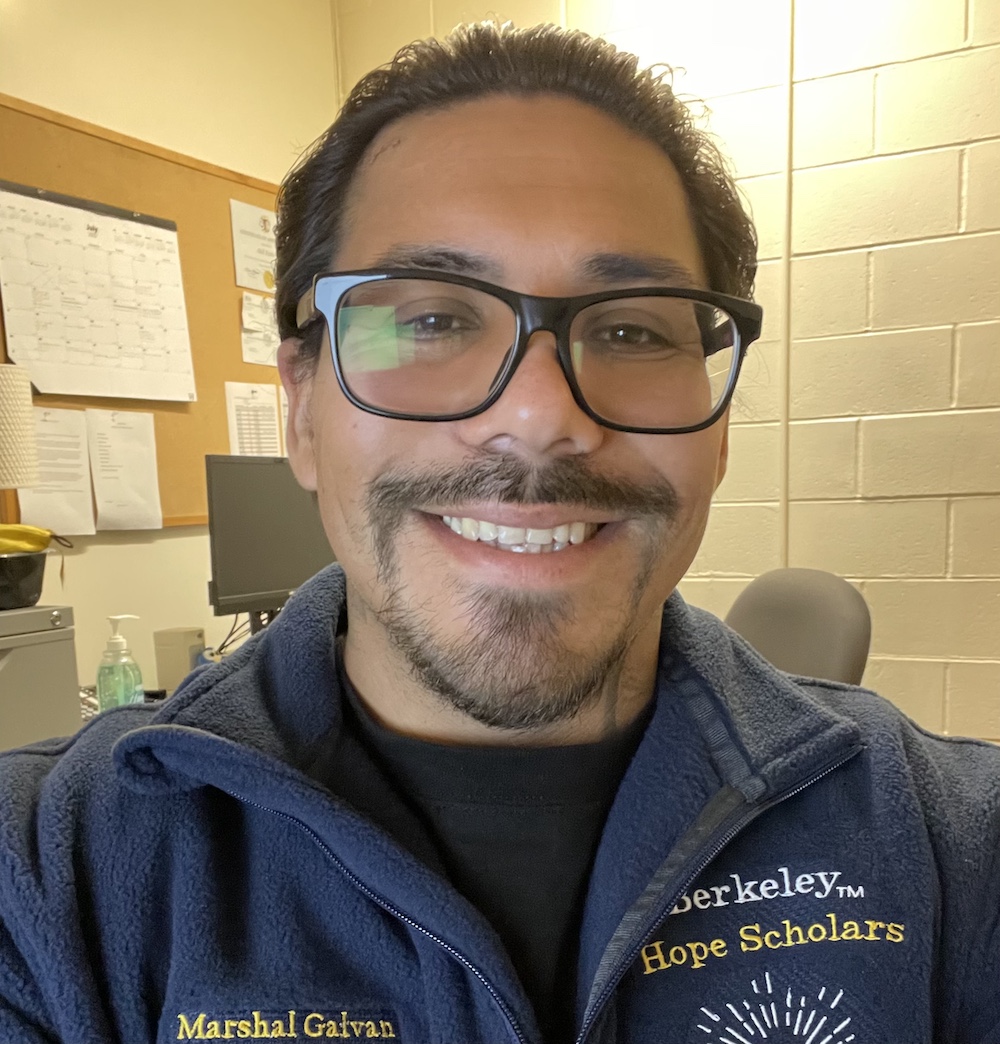
Marshal Galvan Jr., Little Shell Chippewa

A photo of Marshal Galvan Jr.

Marshal Galvan Jr.

Credit: Marshal Galvan Jr.

When
I was a child, I remember going to powwows. I remember seeing Native
people. I remember being happy in these spaces with my family, and in my
eyes and in my sisters’ eyes, my parents could do no wrong. But for
whatever reason, the child welfare system decided that my parents
weren’t good parents, and they decided to take that right of parenthood
away from them.

When my sisters and I were placed in the child
welfare system, we were initially placed together, but we got split up
and placed into different homes over the years. They said we were bad
kids and no one would take all of us on because we were a handful to
deal with. Looking back now, we were just kids who were traumatized. We
were kids that just wanted to go back to the safety of our parents.

My
first placement was in a foster home with a white family. I didn’t
learn about Catholicism or Christianity until I entered foster care. As I
went through the system, I started landing in different homes with
different cultures and languages being spoken, in different cities,
schools, and neighborhoods. Everything constantly changed, and it
constantly reinforced an identity crisis in my life.

By the time I
was a teenager, I was gravitating towards anything and everything that I
felt was going to connect me to something — whether it was the gang,
drugs, or alcohol. It gave me a false sense of pride, ego, and meaning
to life. I was putting myself in risky situations so that I could feel a
part of my community. In my young adult life, things started shifting
for me. I started getting incarcerated. I turned 18 and became homeless
immediately. My addiction took a turn for the worse. Suicidal ideation
and hopelessness started setting in. All along, I was grappling with my
identity and just really seeking to know my roots.

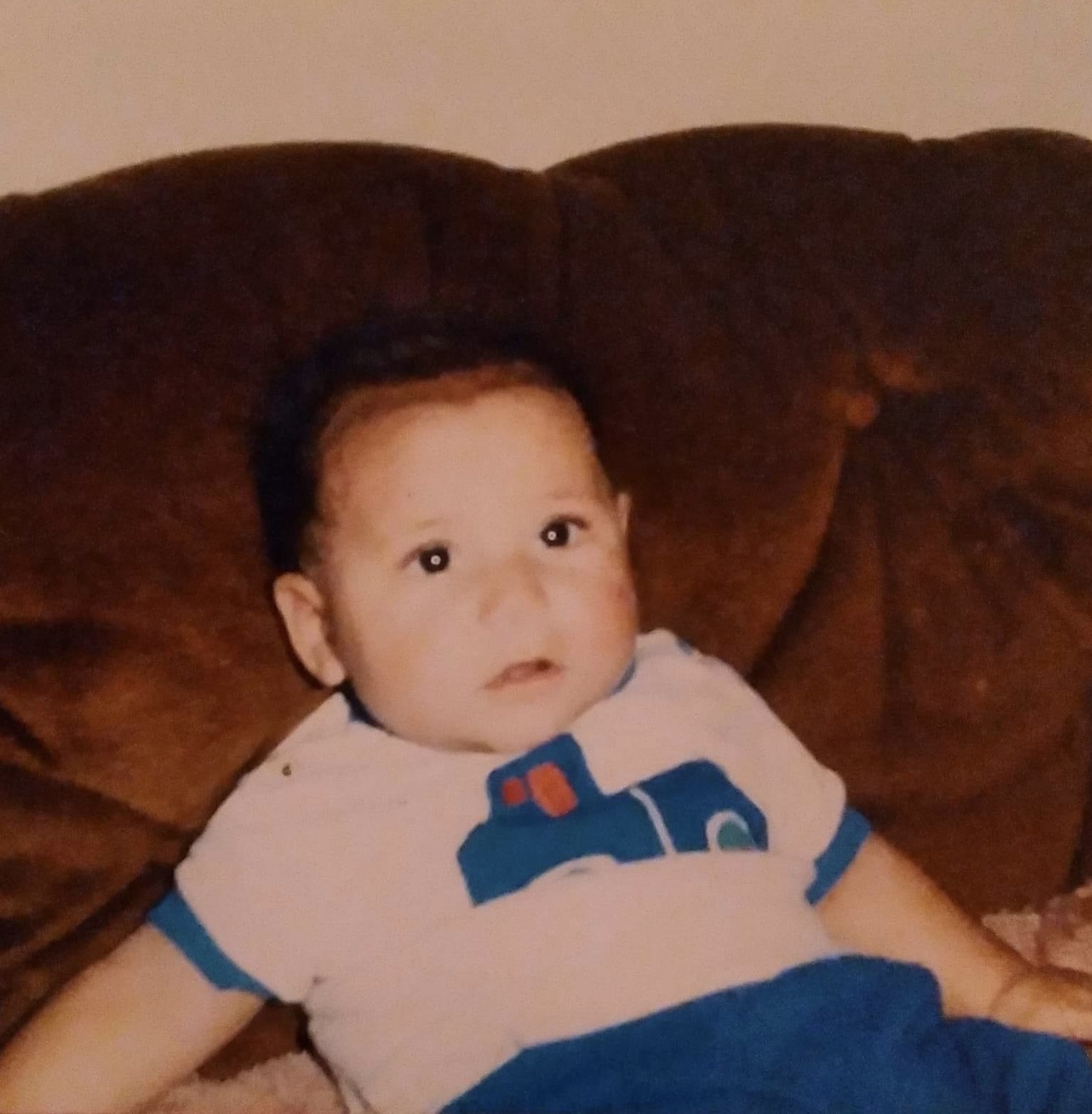
A photo of Marshal Galvan Jr. as a child.

Marshal Galvan Jr. as a child.

Credit: Marshal Galvan Jr.

In
1997, when my parents lost their rights, there was no support and there
certainly wasn’t any communication between our tribe and our family or
the courts. At the time, the social workers and courts weren’t making
active efforts to help our family bridge those gaps. My family’s tribe,
Little Shell, wasn’t federally recognized until 2019. Because of that
lack of federal recognition, my family was glossed over and wasn’t
protected under ICWA.

My tribe allowed me enrollment membership
into the tribe on August 23, 2022, but I’ve never lived in Montana and I
don’t know the practices of my tribe. I acknowledge that. But through
my enrollment, I am learning and rediscovering things about my tribe,
and it has given me the ability to share that with my family. I started
to reconnect with my family, and my enrollment is helping 16 other
family members reconnect with the tribe, including my dad who wants to
relearn his roots. I think it’s a beautiful thing.

It’s been a
journey to unlearn, decolonize myself, and decolonize my mind. It’s an
ongoing process, and I still have to do a lot of healing. To this day,
as a tribal person, I still am facing an identity crisis. But no one
should ever feel like they’re not Native enough, or enough, period.

It’s been a journey to unlearn, decolonize myself, and decolonize my mind.

Now,
my passion is helping people that have similar stories to mine.
Currently, I’m a counselor and work with youth in the Berkeley area. I
would like social workers that are working in the child welfare system
to continue to educate themselves on their own biases, because we’re
hurting families. We’re keeping kids away from their parents and
families when they don’t need to be.

The Indian Child Welfare Act
is important because it keeps people like myself connected to our
cultural roots, our family lineage, and our birthright. Not only does it
respect tribal sovereignty, it also gives Native kids an opportunity to
choose whether or not they want to embark on a journey that’s a
birthright. To have the opportunity to have community, to be able to
have folks that I can look around at and say, these are my people.
That’s the most important thing — family, community, and cultural roots.


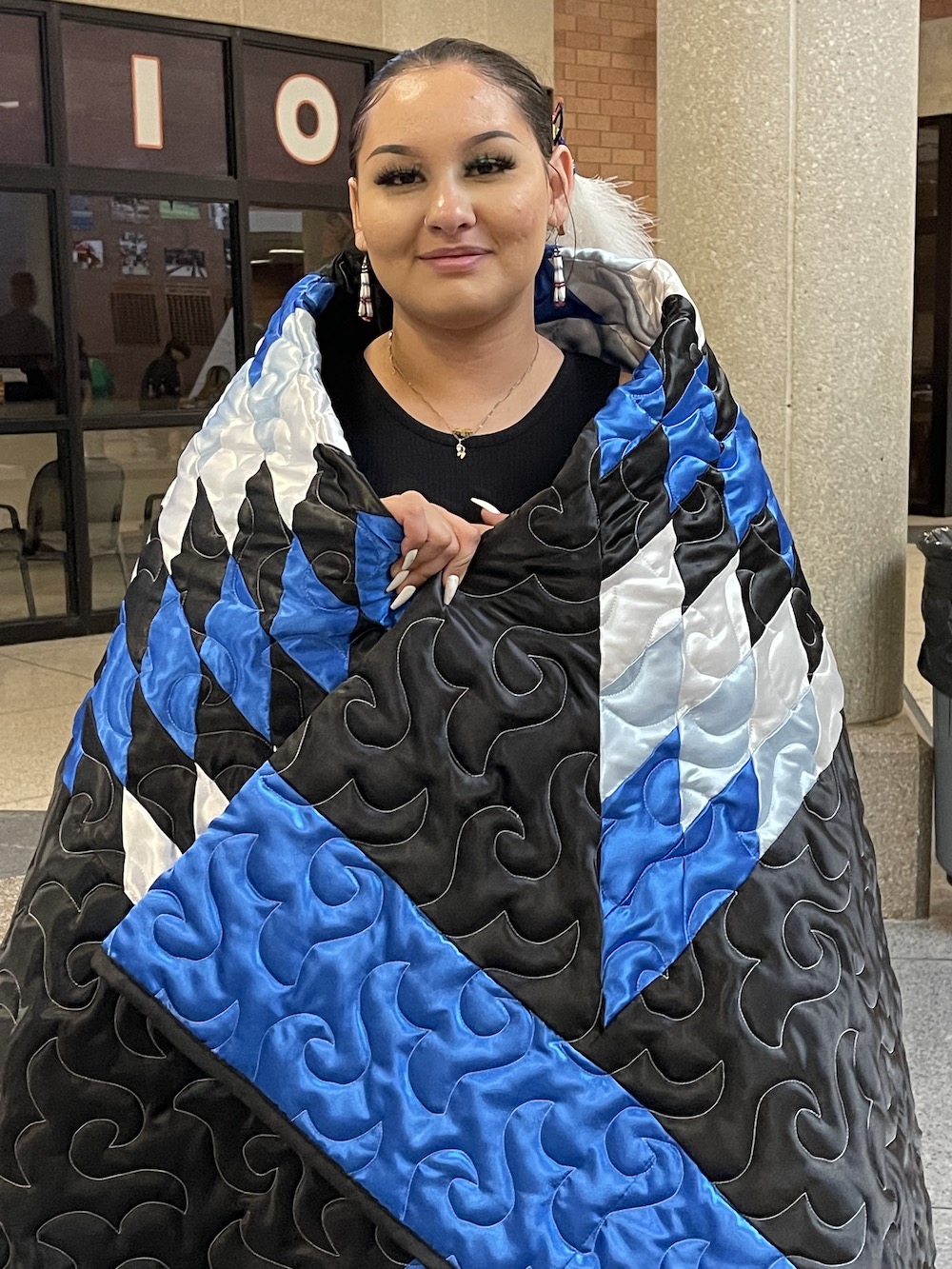
Mondae Vanderwalker, Rosebud Sioux Tribe

Mondae Vanderwalker.

Mondae Vanderwalker

Credit: Mondae Vanderwalker

It
took me three and a half years of jumping through hoops and dealing
with wrongdoings from the Department of Social Services (DSS) and the
court system to adopt my two nephews.

My oldest nephew was taken
away from my brother when he was around 3 years old. He was put in the
system, and I called the local DSS office and told them that I wanted to
get custody and adopt my nephew. The DSS representative told me “No,
we’re not going any further or moving forward with this case,” just
because they heard some hearsay about me. But they never looked into the
allegations. I asked DSS, “Well, how come you won’t do a background
investigation or whatever you have to do so that I can get my nephew?
He’s an important part of my life.” And they just kept saying, no, we’re
done here.

I had no money to fight this, and didn’t know what to
do. A few years later, my younger nephew was born, and he was also
taken away from my brother when he was just a few months old. After he
was taken, a woman from a different DSS office contacted me and asked,
“Would you be interested in taking him?” and I said, “Yes,” in a
heartbeat. I was waiting for that phone call for many years.

DSS
had me and my husband go through a program to get a foster parent
certificate to start the process of adopting our nephews. Once we were
finalized for the adoption process, DSS finally let us go see my nephews
at their foster family’s home. We had to drive from Sioux Falls two and
a half hours away each weekend to go see them. But on our third visit,
the foster family tried to keep us from visiting. I thought the
agreement was that we were working on getting these children placed back
with us, but the foster family kept trying to block our visits. DSS
representatives warned me: “You’re going to have a battle on your hands —
the foster family wants to adopt these children.”

I kept
thinking, “I need to do something about this, because I’m going to lose
my nephews.” I talked to someone I knew on our tribal council and then
to our tribal president and told them what was going on. I told them I
was afraid I was going to lose my nephews, because we were coming down
to the wire, and the foster family got a lawyer to try to keep our
nephews from us. They even tried to argue that my oldest nephew was not
an enrolled tribal member, which would have made him ineligible for
protection under ICWA. If that had happened, the foster family would
have been able to adopt him right away. But thankfully, my brother did
fill out tribal enrollment papers for my older nephew years ago — it
turned out that DSS just had never turned them into the court.

Our
tribal president ended up hiring a lawyer to help me fight for my
nephews and we went to court. ICWA ended up saving us. If one of my
nephews was not a Native American child, a non-Native person would have
been able to adopt them without any question, and I would have lost
them. But after a three and a half year battle, I was finally able to
legally adopt my nephews under ICWA.

My two nephews are now 8 and
4 years old. Once we were reunited, I felt relieved, like a lot of
pressure was taken off my shoulders. I was happy that the fight was
finally over and that we could finally just live our lives. I want to
help more people to understand ICWA and to tell them to not give up. If I
didn’t talk to somebody and try to get help, they would have been gone.
But I fought and fought and never gave up. It makes you think — how
many more people, how many children who are sacred to Native American
people, do you think we lost like that, in this system?

My
nephews love me for what I’ve done because now they know a lot about
powwows, everything to do with the tribe, and our ancestors. Before,
they didn’t know any of that. They didn’t know what a powwow was. They
didn’t know what fry bread was, or what Indian tacos were. But they do
now. Now, they can have a better understanding of their culture and
where they came from.

If ICWA was not put in place, I would have
lost my nephews. The ICWA guidelines are important, but the state has to
follow them. When my nephews were first placed in the system, my tribe
was supposed to be involved from the get go, but they weren’t. Under
ICWA, it was the responsibility of a DSS worker to call our family and
tribe to let them know that these children were placed in a foster home
with non-Native American families, but that didn’t happen. Our tribe
needs to know that these children are in this system. And they should
have known about it a long time ago.

If ICWA was not put in place, I would have lost my nephews.

When
government workers don’t follow the ICWA guidelines, it hurts our
people by allowing our children to be adopted out to other families and
away from their tribe. ICWA is there to protect us, and DSS needs to do
more to help these Native American children be placed back with their
families.

ICWA helps us keep our children with their families
like they should be. Our children need to stay with us, and we need to
keep our families together.

 SOURCE: https://www.aclu.org/news/racial-justice/icwa-a-law-that-protects-native-families-is-at-risk

Thursday, December 1, 2022

Half-sisters Raelene Recksiedler and Helene Rosenzweig-Schmidt always felt like something was missing


REUNION and VIDEO HERE


Like many Indigenous siblings separated by adoptions, half-sisters Raelene Recksiedler and Helene Rosenzweig-Schmidt always felt like something was missing.

They met for the first time in Winnipeg on June 29, 2022. They are just 44 days apart in age and didn’t know each other despite sharing the same father.

Native American children are under threat — again

The integrity of territory and the integrity of Native families have long been entwined

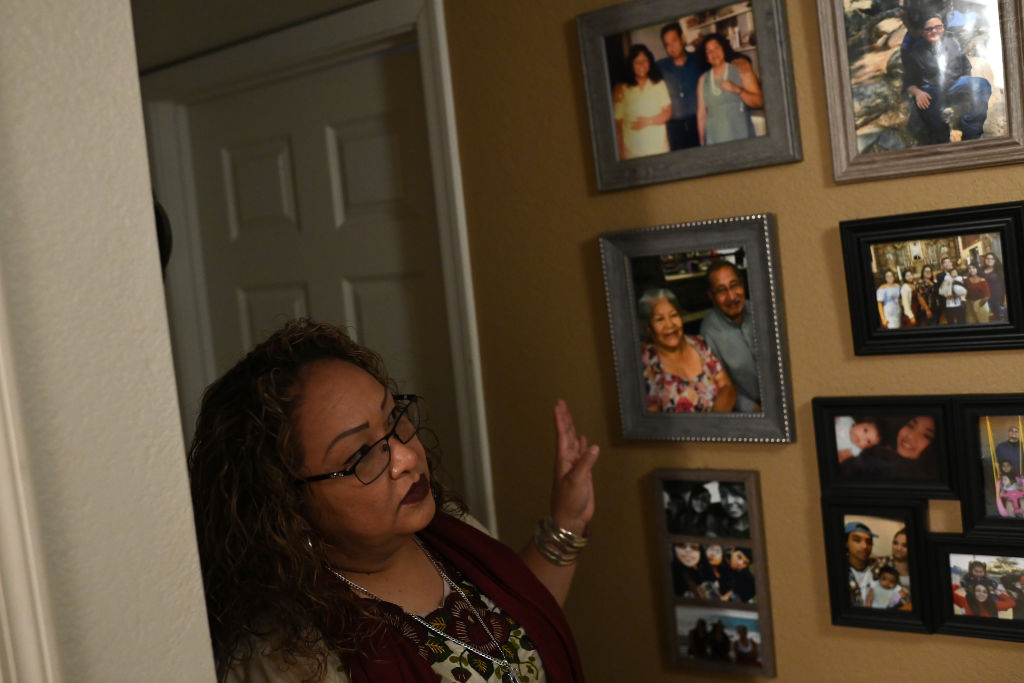
Rosa
Soto Alvarez and her three siblings were removed as children from their
mother in Tucson. After a social worker realized the children were
Yaqui, a Yaqui couple became permanent guardians to them all. Soto
Alvarez touches the grave of her foster mother, Carmen Alvarez, at Monte
Calvario Cemetery in Tucson this month. (Joshua Lott/The Washington
Post)


Native
American children are far more likely than White children to be taken
from their parents and placed in the foster care system. Now, the
situation may get much worse.  On Wednesday, the Supreme Court heard
arguments in
Bracken v. Haaland regarding the constitutionality of the Indian Child Welfare Act. If the court dismantles the act, thousands of Native families could lose their children.

The
Indian Child Welfare Act, or ICWA, was put in place in 1978 to respond
to an epidemic of child loss in Indian country, with some 80 percent of
Indigenous families losing at least one child to the foster care system.
ICWA put the brakes on this wave of child loss by requiring authorities
to attempt to place children with members of their tribe if their
families could not care for them. It created a checklist for officials
in the broader system that dealt with child welfare to consider the
political and cultural identities of Native American people as a factor
in adoptions. The act also recognized the sovereignty of the 574
federally recognized tribes in the United States by stating that tribal
nations should have a say in what happens to their youngest citizens.

ICWA
was not perfect
— as the number of cases of Native children in foster
care today shows — but it protected hundreds of thousands of children
from cultural loss. Members of extended families and kin networks were
able to raise children within their own communities and offer them the
strength of their people’s histories and religious values. While the
Western approach to family privileges a nuclear two-parent model, Native
families have never conformed to this — children have always been
raised within extensive kinship networks, which ICWA also recognized.

The
case now before the Supreme Court appears to be about a White family’s
desire to give a Navajo child a home. But there is more to it than that.
The plaintiffs are arguing that ICWA is racially discriminatory against
the child they would like to adopt. They are using the Equal Protection
Clause of the 14th Amendment to claim that Native children are members
of a racial group and are being treated unfairly. But casting Native
children as members of a racial group instead of a political one is an
attempt to unravel the legal identity of Native people as citizens and
to dismantle tribal sovereignty as a whole.  Doing so would enable the
exploitation of Native resources, including tribal lands — a potentially
rich source of oil, and profit, for extractive industries.

The
argument that Native people are members of a race rather than a
political community goes against 400 years of treaty law. Treaties
between Indigenous groups and colonial governments established the
sovereignty of Native people within Euroamerican legal frameworks
starting in the 1600s. This sovereignty has long been concerned with the
integrity of territory as well as the integrity of families.

For
example, as early as 1618, English settlers in Virginia made plans to
remove Powhatan children from their homes to be brought up in the “true
religion” of Protestantism. But these “savages and infidels” — as John
Smith and early settlers called the Powhatan people of the Virginia
region — insisted that children remain in their tribes. The Powhatan
leader Opechancanough made clear that this was both a family
and
a political issue. If parents wished for their children to leave for
brief periods for education, this had to be done with a nation-to-nation
agreement between settlers and Powhatans to respect tribal sovereignty.

Settlers
consistently pushed against established legal boundaries that these
early treaties had created.  At the end of the 17th century into the
18th, for example, settlers in the American South enslaved more than
50,000 Native people, including large numbers of children.
This
destroyed Native families. Enslaved Native youths were forced to labor
on plantations beside enslaved Africans whose family networks were also
devastated. As the plantation system rose to prominence, planters
positioned Indigenous children as “Indian” enslaved people who were
racial others.

In
the early 19th century on the eve of the Trail of Tears, Cherokees
bravely fought this kind of racialization. They remembered the stories
of their ancestors’ enslavement. They put their case for nationhood
before the Supreme Court and won the right to tribal governance. The
trio of cases that resulted, known as the Marshal Trilogy, established
the system of dual sovereignty that has structured relations between all
tribes and the U.S. federal government since.

But
failure to honor treaties led to disaster again in the late 19th
century. Treaty obligations established in the wake of the conquest of
the American West obligated the United States to issue Native families
food rations. When officials refused, leaving families hungry, Indian
Agents swooped in and forced starving Native families to swap their
children for sacks of flour and livestock. Between 1869 and the 1960s,
hundreds of thousands of Native children were taken to boarding schools
across the United States where they were forced to give up their culture
and accept Christian education and “civilization.” Once again, children
were cast as “savages” who could not function in their tribal nations
as future citizens.

ICWA
came about in the 1970s as child advocates and members of the American
Indian Movement reacted to hundreds of years of these attacks on
children and tribal sovereignty. Many of AIM’s leading figures spoke of
their elders’ and their own harrowing experiences being taken from their
families in the boarding school era and the intergenerational trauma
they were living with as a result. Big media moments like the occupation
of Alcatraz in 1969 caught the attention of Washington, and Indigenous
leaders made careful use of the event. Recognizing that their children
were the future, they focused on developing legislation that protected
both Indigenous models for kinship and tribal sovereignty at the same
time — ICWA.

Now
as ICWA is under threat, Indigenous leaders are gathering once again in
Washington to make their case before the public. They are arguing — as
their ancestors have argued for hundreds of years — that their children
are not for settlers to define.
Congress drafted the 14th Amendment
during the post-Civil War Reconstruction era to redress the wrongs of
slavery and the disenfranchisement of Black Americans, not to divest
Native Americans of tribal sovereignty — as the plaintiffs are now using
it.

Unraveling
tribal sovereignty would not only leave Native children vulnerable, but
also could undermine tribal territory. Many in Indigenous communities
and their allies worry that, as in the past, settlers may be using
Native children to access Indigenous resources, especially oil on tribal
lands.

Given
the current composition of the Supreme Court and what history tells us
about the federal government’s unwillingness to honor treaty agreements
protecting Native children, it is likely that ICWA will be struck down
or weakened. But the position of Native people will remain the same as
it always has. 

As Fawn Sharp, vice president of the Quinault Indian
Nation, said of the court during a news conference on Thursday. “We know
that no matter what they do, we occupy a certain place in this life as
Native people. … There’s not a single thing that any one of them can do
to take that away from us, no legislation, no court decision. They can’t
buy their way into that, and they can’t regulate us. We are sovereign
tribal nations from the beginning of time until the end of time.”

Wednesday, November 30, 2022

“For Indian country, it is maybe one of the most important cases that has ever gone before the Supreme Court” | The case that seeks to strike down the Indian Child Welfare Act is about colonialism

 NOVEMBER 5, 2022  THE HILL


Supreme Court’s ‘sleeper’ case is major clash over Native American adoptions


The Supreme Court heard a dispute over a
longstanding federal law that gives preference to Native American
families and tribes over non-Native couples when deciding where to place
Native children in custody proceedings.


Although overshadowed by the court’s more politically charged cases,
legal experts say the dispute could prove hugely consequential for
Native American rights and tribal sovereignty.


“It is a sleeper case,” said Mary Kathryn Nagle, a Native rights attorney who filed an amicus brief in the case. “For Indian country, it is maybe one of the most important cases that has ever gone before the Supreme Court.”


The dispute tees up questions about whether the Indian Child Welfare
Act (ICWA) unlawfully imposes race-based preferences when placing Native
children, and if the law amounts to excessive federal overreach into
state adoption policy.


The case plays out against the uniquely troubling history of
mistreatment suffered by the country’s Indigenous population, including
the once-common practice of separating Native American children from
their families and tribes, which the ICWA was designed to combat.


The Supreme Court looked very different when it last confronted a major ICWA question in
2013 and counted the late Justices Antonin Scalia and Ruth Bader
Ginsburg among its members. Although the court now has a solid 6-3
conservative majority, some court watchers believe the current ICWA case
could produce a split among the court’s conservatives.


The complex dispute to be heard Wednesday began when three white
couples who sought to adopt Indian children sued the federal government
over ICWA. Later, additional plaintiffs including the state of Texas
joined the case, and several Indian tribes intervened to support ICWA.


Texas and the other challengers claim, among other things, that the
law’s provision giving preference to Native American adoptive parents
over non-Native parents violates the Equal Protection Clause of the 14th
Amendment.


“A classic example of so-called ‘benign’ discrimination, ICWA creates
a government-imposed and government-funded discriminatory regime
sorting children, their biological parents, and potential non-Indian
adoptive parents based on race and ancestry,” Texas wrote in court
papers.


“Because this Court has recognized that ‘the way to stop
discrimination on the basis of race is to stop discriminating on the
basis of race,’ such methods violate equal protection.”


ICWA’s passage arose in response to the frequent separation of Native
children from their families and communities by state child welfare and
private adoption agencies.


According to research conducted around the time
of ICWA’s passage in 1978, around 25 to 35 percent of all Native
children were removed from their families and placed either into foster
homes or with adoptive families or other institutions. Among Indian
children in foster care, roughly 85 percent were in non-Native homes,
according to a 1969 survey of 16 states.


“This law was passed against a very disturbing and tragic history of
the wholesale removal of Indian children from families to assimilate
them into white culture based on prejudice about Indian culture,” said
frequent Supreme Court litigator Lisa Blatt at a recent legal forum.
Blatt argued the 2013 ICWA case on behalf of a non-Native adoptive
couple. 


“It started with the Bureau of Indian Affairs putting all these kids
in horrendous boarding schools, and then it then transitioned to the
‘60s and ‘70s to state custody removal proceedings,” said Blatt, a
partner at the law firm Williams & Connolly.


In practice, ICWA requires that Indian children be placed with
members of their extended family or tribe, or other Native American
families before outside candidates may be considered.


Ben Kappelman, a partner at the law firm Dorsey & Whitney who has
provided pro bono services to a Minnesota Indian tribe in child welfare
proceedings, touted the law as a success.


“ICWA, considered the gold standard in child welfare policy,
establishes priority for caregivers of Native American children whose
parents cannot care for them,” he said.


Supporters of the law say the ugly history that led up to its
enactment underscores the enduring need for protections for Indian
children and families’ culture.


“ICWA is based on a simple idea: When Indian children can stay with
their families and communities, Tribes and children alike are better
off,” the tribes wrote in court papers. “By implementing that simple
idea, ICWA ‘promotes the stability and security of Indian tribes and
families’ and ‘protects the best interests of Indian children.’”


The Justice Department, on behalf of the Biden administration, is arguing in support of ICWA.


The case has the potential to create a split among the court’s
conservatives, some experts say. Blatt, of the firm Williams &
Connolly, noted that Justice Neil Gorsuch, a Trump appointee, has
“consistently ruled” in favor of tribal rights and law.


“I think the assumption is that the United States that’s defending
the law with the support of the tribes, has at least four votes,
assuming they have Gorsuch’s vote,” she said. “And that leaves the
challengers needing to pick up both Justice [Brett] Kavanaugh and
Justice [Amy Coney] Barrett.”


A decision in the cases, Haaland v. Brackeen, is expected by summer 2023.

👇👇👇


When You Take Away the Kids, You Take Away the Future


The case that seeks to strike down the Indian Child Welfare Act is about colonialism, not civil rights.

 LISTEN:


Reclaim your name


 [This needs to be universal, and in America, too... Editor]

Manitoba bill would help ensure birth certificates reflect Indigenous names

WINNIPEG
- The Manitoba government is moving to ensure birth certificates can
better represent the names of Indigenous people and those of other
cultures.

A
bill now before the legislature would establish a wider range of
letters, characters and symbols beyond the traditional ones found in the
English and French languages.

The bill would also allow for single names, instead of first and last ones, in accordance with cultural practices.

Government
Services Minister Reg Helwer says the change will meet the needs of
residential school and ’60s Scoop survivors who want to reclaim their
birth names
.

He says it will also serve Indigenous and other families who give their children traditional names connected to their culture.

The proposed changes would apply to name registrations for newborns and for people applying to legally change their names.

“Throughout
the residential school period, it was common for institutions to rename
children when they were enrolled, erasing traditional Indigenous names
to cut the ties a child had with their cultural identity and family,”
Indigenous Reconciliation Minister Alan Lagimodiere said in a press
release Thursday.

“The
Truth and Reconciliation Commission of Canada called upon governments
to enable survivors to reclaim their birth names. This change would
allow us to take the first step toward implementing call to action
Number 17.“

This report by The Canadian Press was first published Nov. 17, 2022.

 👇

Recognizing that Indigenous parents should have a right to name their
children according to the languages their ancestors carried for
millennia means treating them like human beings.


Reconciliation is more than that. - READ


 This Supreme Court Case Is a Case Study in Conservative Hypocrisy


Just
weeks after railing against race-conscious college admissions, the
justices entertained a bogus race-based argument aimed at undermining
Native sovereignty.


By Elie Mystal

There is a deep irony to this claim by white families,
who are in essence the beneficiaries of centuries of theft,
discrimination, and outright genocide of Native peoples, that they are
the victims of a law preventing them from claiming Native children
against the will of tribal governments.  More to the point, this case
should not turn on the race of the families involved in the dispute
because, from the perspective of ICWA, race is irrelevant.

READ 

**

Supreme Court could decide where Native American foster kids in Michigan live

“It’s causing a lot of confusion, and tribal communities feel as if rights are being taken away from them,” Kate Fort said.


If the act is found unconstitutional, this could enable other groups
to question more of tribal communities’ sovereignty because they would
be designated as a racial group, not a political entity, Fort said. This
is especially problematic because not everyone who lives in a tribal
community is racially Native.


“Tribal sovereignty exists whether or not the Supreme Court
recognizes it,” Fort said. “If the ruling is overturned, the trust
between tribes and the U.S. government will be eroded.” READ


**


The Supreme Court Case That Could Wipe Out Indigenous Sovereignty In The USA...

Rebecca Nagle is INCREDIBLE! We love her!  #ProudtoProtectICWA

Nov 27, 2022 | MSNBC

The Supreme Court is hearing arguments in a high-stakes case about indigenous children and culture.  On the surface, the case known as Brackeen v. Haaland revolves around a dispute over whether a non-native family can adopt a native baby. At the heart of the case is the Indian Child Welfare Act, a law passed in 1978 that says if a state determines a Native child must be legally removed from their home, they must be placed with an American Indian family or, if possible, a member of the child’s extended family or tribe. Non-native families and states are challenging the constitutionality of ICWA, arguing it discriminates on the basis of race. But the case could have implications that extend far beyond that - potentially upending Native sovereignty altogether. “A lot of laws flow from this special nation-to-nation relationship between tribes and the US federal government,” says Cherokee Nation journalist Rebecca Nagle. “And the fear is that because the plaintiffs are making such broad and sweeping arguments in Brackeen, (if the court strikes down ICWA) they could turn all of that – literally centuries of laws – on their head.”

White Christians Are Still Taking Native Children

11/29/2022 by


The Brackeen case is one of many lawsuits by conservative legal
groups to weaponize constitutional equality protections against people
of color to the advantage of white people. 


icwa-supreme-court-native-children-adopted-white-parents
Rosa
Alvarez, a Yaqui Indian Native American, was protected under Indian
Child Welfare Act, passed by Congress in 1978 to help keep Native
American children close to their families and traditional heritage.
(Joshua Lott / The Washington Post via Getty Images)


This article originally appeared in the Daily Hampshire Gazette.


On Nov. 9, the U.S. Supreme Court heard oral arguments in a case, Haaland v. Brackeen, challenging the constitutionality of the 1978 Indian Child Welfare Act (ICWA). The act gives a preference for Native American
people to foster and adopt Native American children. The lead
plaintiffs are a well-to-do white, evangelical Texan couple, Chad and
Jennifer Brackeen, who are seeking to adopt a Navaho girl against the
wishes of her relatives, who want to adopt her themselves. Among other
arguments, the Brackeens allege reverse racism—that the law discriminates against them based on their race in violation of the equality guarantees of the U.S. Constitution. 


This case is just the most recent chapter in a long history of white
people taking Native children from their parents, tribes and cultures.


Beginning in the late 19th century, the U.S. government set up an extensive system of boarding schools for Native children
designed to assimilate them by eliminating traditional Native American
ways of life and replacing them with mainstream American culture. Many
were run by Christian missionaries.


The federal government forced Native families to send their children
to these schools, often far from home and for many years. The white
people running these schools forbid the children from speaking their
Native languages, gave them English names, forced them to cut their hair
and give up their traditional clothes, and coercively replaced their
own traditional religious practices with Christianity. The schools were
run like military schools, where children had to wear uniforms, march in
formations, and adhere to strict rules or face harsh discipline.


The boarding schools taught Native children that their cultures were
inferior, with some teachers ridiculing and making fun of the students’
traditions. These lessons taught the children to be ashamed of being
Native American. A recent Interior Department report found “rampant physical, sexual, and emotional abuse; disease; malnourishment; overcrowding; and lack of health care in [the] boarding schools.” 


In the 1970s, in response to continuing high rates of public and
private agencies removing Native American and Alaska Native children
from their homes, Congress passed ICWA. The law requires states to
notify tribes before placing a Native American child for adoption and to
prioritize placement of children with their extended family, members of
their tribe, or other Native American families. 


ICWA advocates supported the law as a way to preserve Native American
families, traditions and cultures and counter the widespread assumption
that white parents are best for all children. Advocates also argued
that the ICWA protects tribal sovereignty by granting tribal nations
“exclusive jurisdiction” over their enrolled members and their
lands—removing control from federal or state governments and private
Christian organizations. 


The lawsuit against the ICWA, brought by the Brackeens, the state of
Texas, and three other white couples seeking to take Native children
from tribes, could be just the first step to reduce tribal sovereignty
and nationhood, creating opportunities for white people to take tribal
land and resources as well as children.


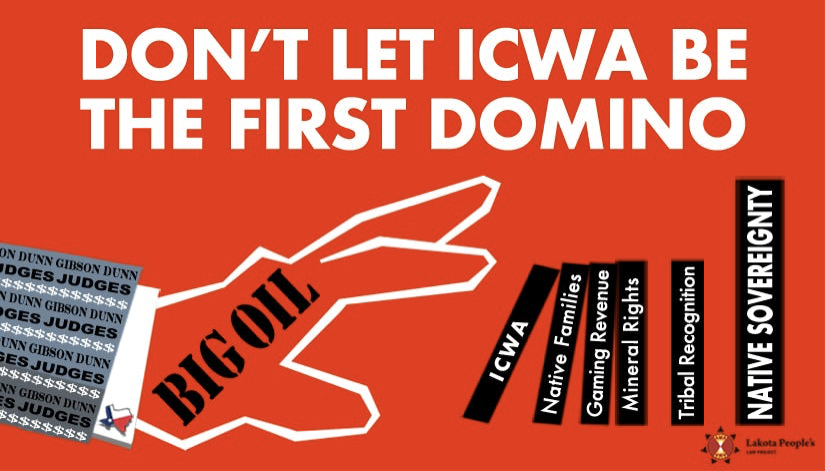
It’s not surprising that the plaintiffs in the current case are
represented for free by Gibson Dunn, a high-powered law firm that has represented oil and gas companies.
One of their previous clients was Energy Transfer and Enbridge, a
company responsible for the Dakota Access and Line 3 pipelines. This
firm also has clients in the gambling sector. Eroding tribal sovereignty would threaten tribal rights over valuable resources such as mineral rights and gaming operations.


icwa-supreme-court-native-children-adopted-white-parents
The
Lakota People’s Law Project urges in this graphic for readers to fight
to uphold the ICWA and protect Native self-determination.
(Lakota Law)


More generally, the Brackeen lawsuit is part of a series of lawsuits
brought by conservative legal groups and lawyers to weaponize
constitutional equality protections against people of color to the
advantage of white people. 


Last month in an affirmative action case,
the Supreme Court appeared ready to eliminate the ability of schools to
promote the admission of historically disadvantaged students, using
reasoning similar to that used by the ICWA case plaintiffs. Republican
members of the Court made comments indicating that they believed the
14th Amendment equal protection guarantee—adopted after the Civil War to
protect Black people—does not allow any law designed to address
longstanding and harmful race discrimination against people of color. 


By advocating for “color blind” applications of the law, the Court
would allow white people with greater access to resources and power to
take money, land, and even children from communities of color—all in the
name of equality. In the ICWA lawsuit, the equality guarantees adopted
to protect Black people from the violence and discrimination of white
people may now be used by white Christians to continue their
long-standing practice of removing Native children from their tribes and
cultures—and eradicating their religious practices.


The Brackeen case is a shameful display of the ongoing white
supremacist settler colonial project in American society. All people
must speak out against this centuries-old genocidal behavior against
Native Americans that continues to this day.

Saturday, November 26, 2022

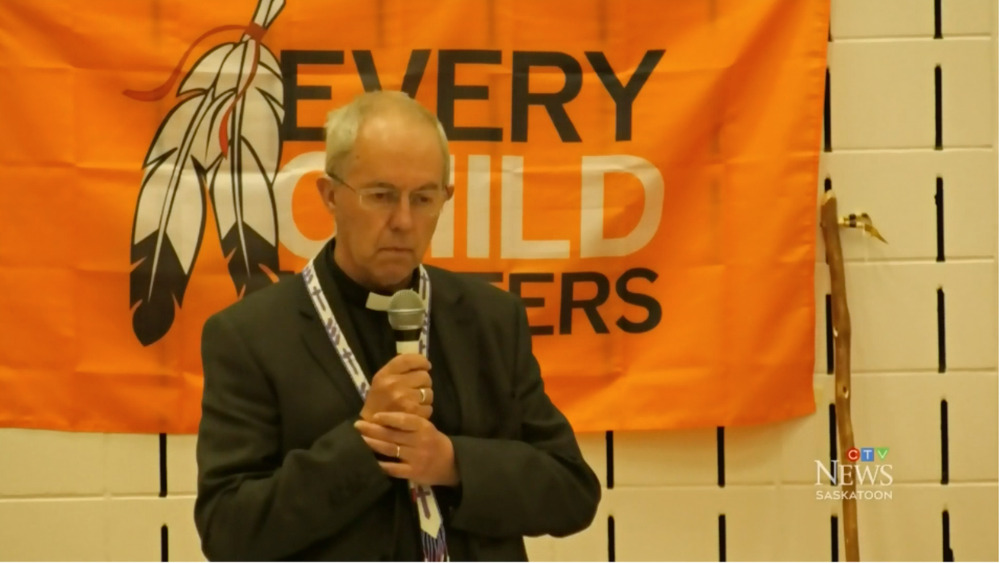
Archbishop Justin Welby apologises for "building hell, putting children into it and staffing it"


REBLOG from May 4, 2022

Readers are advised this story mentions the physical and sexual
abuse of Indigenous children in institutions. There are no graphic
accounts included, but the subject matter may be triggering for some
people. 


Archbishop of Canterbury Justin Welby delivered an unequivocal
apology to children, grandchildren and survivors of Canadian residential
schools over the weekend, describing their experiences as “a bit of
hell” that was “built by the Church and in the name of the Church.”


The Anglican Church leader met with dignitaries from Indigenous
governments from James Smith Cree Nation and the Federation of Sovereign
Indigenous Nations, which represents 74 First Nations in Saskatchewan.
There, he heard the stories of school survivors about how the
residential school system ripped families apart, raised self-doubt and
self-confidence issues and left them with traumas as a result of sexual
and physical abuse.


“It is the rawest, wickedest, most terrible thing, to molest a child
while you read them the Bible,” a sombre Welby told the group after
hearing the harrowing accounts.

KEEP READING 


Archbishop of Canterbury apologizes for church's role residential schools - APTN News


Somewhere, there are records and I want them. They’re mine.


sample of 2022 adoption bingo card


Loved this article by an adoptee


22
Nov


“Here we go again.


Those four words pop into my mind every November, like an annual calendar reminder set to go off with a cartoon “boing.”


November is National Adoption Month, and as an adopted person you
might think we’re all a bundle of anticipatory excitement, planning the
kegger and booking the cover band.”

For example, I’ve been on a 30-year mission to obtain every page of my medical, adoption, foster care and genealogical records.


I’ve had some success at this mostly because I haven’t stopped asking after being told no.


Mardi Link: Happy National Adoption Month

CLICK OLDER POSTS (above) to see more news

CLICK OLDER POSTS  (above) to see more news

MEGWETCH THANK YOU

HUGE Thank you for visiting this blog and sharing this with your kin. It's appreciated. Contact Trace anytime! Use the form below.

BOOKSHOP

Please use BOOKSHOP to buy our titles. We will not be posting links to Amazon.

Popular Posts

To Veronica Brown

Veronica, we adult adoptees are thinking of you today and every day. We will be here when you need us. Your journey in the adopted life has begun, nothing can revoke that now, the damage cannot be undone. Be courageous, you have what no adoptee before you has had; a strong group of adult adoptees who know your story, who are behind you and will always be so.

OUR HISTORY

OUR HISTORY
BOOK 5: Lost Children of the Indian Adoption Projects