BACK UP BLOG (no longer updating)

This blog was a backup for American Indian Adoptees blog
USE THE SEARCH BAR or SEARCH TOPICS at bottom of this blog

If you need support

Support Info: If you are a Survivor and need emotional support, a national crisis line is available 24 hours a day, seven days a week: Residential School Survivor Support Line: 1-866-925-4419. Additional Health Support Information: Emotional, cultural, and professional support services are also available to Survivors and their families through the Indian Residential Schools Resolution Health Support Program. Services can be accessed on an individual, family, or group basis.” These & regional support phone numbers are found at https://nctr.ca/contact/survivors/ . MY EMAIL: tracelara@pm.me

Search This Blog

Tuesday, November 8, 2022

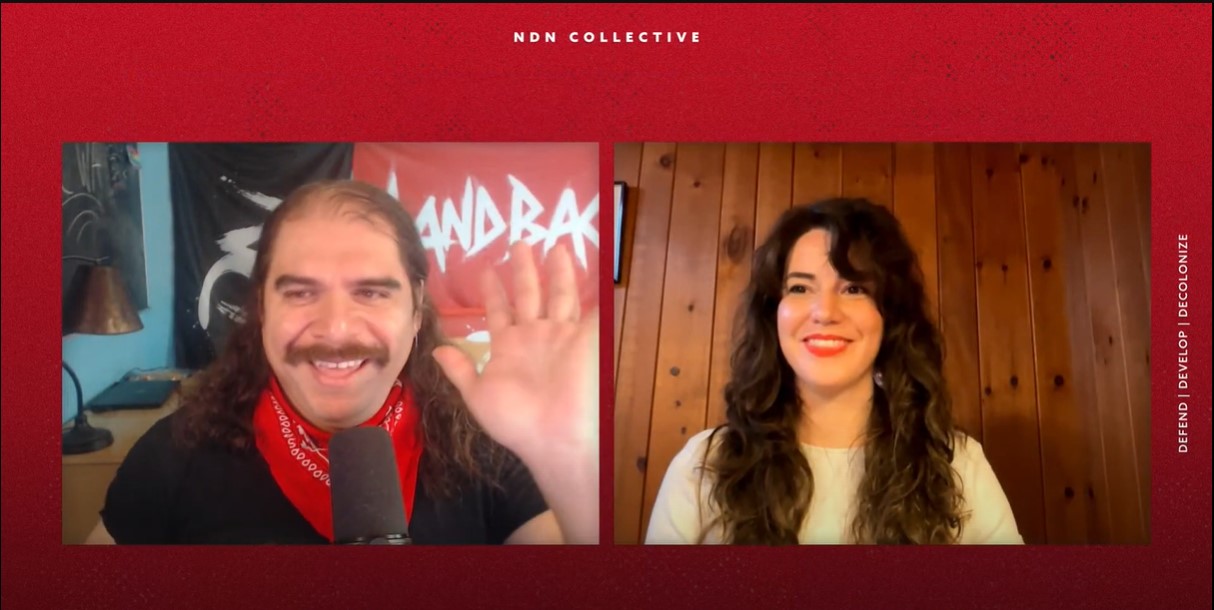
NDN Collective LIVESTREAM #ICWA Lawsuit


The Indian Child Welfare Act (ICWA) was passed in 1978 as a federal law that set standards for the removal and out-of-home placement for Indigenous children; it protects the best interests of the child by placing them in homes that are connected to their tribes and relatives. Brackeen is challenging
the constitutionality of ICWA, as it places preference for the
placement of Indian children to the tribes themselves.

This Wednesday, November 9th, the Supreme Court of the United States will hear oral arguments for the Brackeen v. Haaland (2021) case. 


Learn more about the case, the Indian Child Welfare Act, and the fight to protect ICWA by visiting these resources:

Monday, November 7, 2022

Zoom Discussion on Brackeen ICWA CASE November 9th - free to register


Brackeen Post-Oral Argument Discussion – via Zoom

Please join the Indigenous Law and Policy Center this Wednesday, November 9, at 6:00 p.m. ET for a post-oral argument discussion of Brackeen over Zoom. Wenona Singel will be moderating this conversation with speakers Matthew L.M. Fletcher, Melody McCoy and April Youpee-Roll.

The link to register is here. Please see the below flyer for more information.

Videos are not displayed in this email and must be viewed on the website.

Friday, November 4, 2022

National Adoption Awareness Month #NAAM2022 #adoptiontraffickingmonth


MORE MAPS: here 


Tuesday, November 1, 2022

November is Adoption (beware) Awareness Month (#NAAM) AND Native American Heritage Month


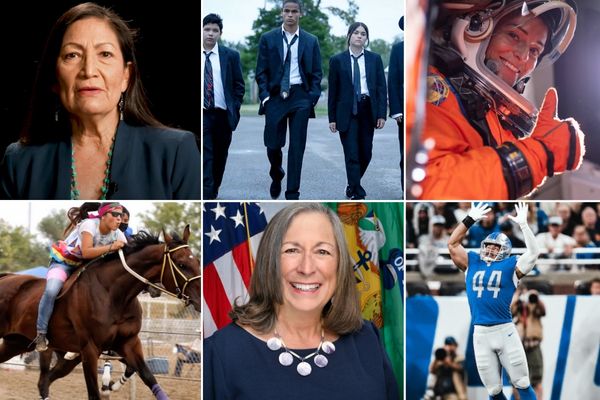
Top row (L-R): Interior Secretary Deb Haaland (Laguna Pueblo), the
first Native American cabinet secretary; some of the young cast members
of the breakout hit show “Reservation Dogs”; Marine Colonel Nicole
Aunapu Mann (Round Valley Indian Tribes), the first Indigenous woman in
space. Bottom row (L-R): An Indian relay rider in Buffalo, Wyoming;
Chief Lynn Malerba (Mohegan Tribe), Treasurer of the United States;
Detroit Lions rookie linebacker Malcolm Rodriguez (Cherokee).


A journalist asked me recently: What’s the one thing that mainstream media often get wrong about your community?


My answer was brief:  Unfortunately, the media still speaks about Native Americans in the past tense. 


The truth is: We are still here.


That’s part of the reason Native News Online was founded in 2011.
Because the media often portrayed Native people in a negative light:
high levels of alcoholism, poverty or as all being rich because of
Indian casinos.

In our newsroom, we work to present a balanced and accurate portrayal
of Native people living in contemporary times. We write about Native
people as we are now, and the issues that actually matter to us. 


We report on — and occasionally celebrate — Native people who, in
2022, are reaching new heights in art, science, business, and public
service.  


They’re not just doing great things in Indian Country.  They’re doing
great things that affect the entire country — and well beyond our
borders, as well. 


Throughout the month of November, Native News Online will highlight
some of the Native Americans who have made “immeasurable contributions
to the country’s progress,” as President Joe Biden noted in his proclamation
about National Native American Heritage Month yesterday. We’ll share
stories of Native Americans who have helped shape culture in Indian
Country, the United States, and around the world.


We are still here, and our presence is growing.  

In advance of
recognizing Native American Heritage Month, the U.S. Census Bureau
released the following facts about American Indians and Alaska Natives:


3.7 million


The nation’s American Indian and Alaska Native population alone in
2020. This population group identifies as AI/AN only and does not
identify with any other race.


10.1 million


The projected population of American Indian and Alaska Native alone
or in combination with other race groups on July 1, 2060, about 2.5% of
the projected total U.S. population.


324


The number of distinct, federally recognized American Indian
reservations in 2022, including federal reservations and off-reservation
trust land. 


574


The number of federally recognized Indian tribes in 2022.


120,944


The number of single-race American Indian and Alaska Native veterans of the U.S. Armed Forces in 2021.


We are still here.  We have been since time immemorial.  And we plan to be for generations to come. 

SOURCE


We are not going back


We’re not going back


By Blog Editor
Trace Hentz  (on WHY ICWA MATTERS)


Can you imagine
this: you are a young girl and someone throws a bag over your head and ties
your wrists and you end up on a boat? And that boat takes you to an island? And
there are others there, just like you?


Can you imagine
the horror of this, of being abducted?


This really happened
in the Americas but we are just finding out about
it.  Brown University in Rhode Island is
investigating Indigenous slavery, finally looking at it in 2022.  I studied this
slavery of American Indian people back in 2000 and wrote a paper called First
Contact
. I read the paper at NAJA in Florida. Most did believe me but it was so
hard to find proof.


Who did this
slavery? Not just Spain and France, it was England, too.  Some call this method colonizing the Americas and Indian people were
just another commodity, a way to make money.


Scholars now
estimate that between 2.5 and 5 million Natives were enslaved in the Americas
between 1492 and the late nineteenth century – an astonishing number by any
measure, even compared to the approximately 12.5 million Africans who were
brought as slaves from Africa in this same time period. This is a
long-neglected aspect of North American history in the age of European empires,
one historians are now exploring in much greater depth. To begin to tabulate
the immensity of indigenous slavery in the Americas and to centralize the
research that is being done, the team of researchers I’m leading are
documenting as many instances as possible of indigenous enslavement in the
Americas between 1492 and 1900.  BROWN
UNIVERSITY (www.indigenousslavery.org)


Another example:


The Treaty of Hartford was
signed in 1637 and a different version was found hiding in the British Museum
20+ years ago.  That discovery of a piece of paper in the UK didn’t make
any headlines in American or New England newspapers. 
The final act of the Pequot
War was on September 21, 1638, when Miantinomi (Narragansett Sachem), Uncas (or
Poquiam, Mohegan Sachem), John Haynes, Roger Ludlow and Edward Hopkins signed a
tripartite treaty. Known as the Treaty of Hartford, the
articles of agreement specified: Forbade any followers of Sassacus (Pequot Sachem) to be called
Pequots.


Governor
John Winthrop (Slave owner: Harvard)


(1588–1649) Overseer (1637–1649)  His Slaves:
The wife and two unnamed sons of Pequot Sachem Mononotto.  At least four other unnamed Indigenous people,
two men and two women. https://www.thecrimson.com/article/2022/4/26/harvard-legacy-of-slavery-report/


WE ARE NOT SUPPOSED TO KNOW


For academics and scholars who
write history, they definitely knew about the extermination of First Nations
Indigenous people, and their murders and their enslavement, but conveniently
chose not
to write about it.  They knew
the evidence was right there all along, but they chose not to document
it. 


‘I agree that much of this
history was hiding in plain sight (and in many published documents and sources
that historians had used for decades to research colonial history in New
England.’
—Ohio State University Professor Margaret
Ellen Newell, History Department  (
Her book, Brethren by Nature: New England Indians,
Colonists, and the Origins of American Slavery,
received the 2016
James Rawley prize for best book on the history of race relations in America,
Cornell Press.  (Her response to an email
inquiry by author Trace Hentz) *


Most Americans don’t know that
slave owners killed their slaves without mercy, just to keep the rest in
terror, scared for their lives and their children’s lives: 


“Gen. Charles LeClerc wrote the
French monarch Napoleon: We must destroy all the Negroes of the mountains, men
and women, and keep only children under 12 (then import new ones.) So the
French would need to inspire great
terror
.”  That is what they did.


Slavery in historical
perspective:
 
Slavery was the cornerstone of the colonization of the Americas.  Of the
ten million or so people who crossed the Atlantic before 1800, about eight and
a half million—roughly six of every seven people—were enslaved Africans.
 By the time the transatlantic trade was finally suppressed in the 1860s,
a total of 10 million to 12 million Africans had been carried into New World
slavery, while an estimated two million more had died in the passage. http://www.brown.edu/Research/Slavery_Justice/documents/SlaveryAndJustice.pdf


I’m sure plenty of you are aware
that historians (history snobs) have controlled the narratives a long long time and created
divisions in the way we think.  You’d
guess right that they did this on purpose.


For years and years I searched
for the books that mention what happened to tribes in the east, how they were
loaded on boats and sold into slavery on the islands.  I met people from
Bermuda who are relatives of these Eastern Indians who were enslaved.


You may not know these early
chapters of COLONIZATION and SLAVERY in the Americas.  The next chapters are Residential
Boarding Schools and The Indian Adoption Projects, and all the laws made to crush
Tribal Sovereignty, etc.   Let me say that SOME Euro-white people have TAKEN what
they wanted from the beginning and always invent ways to take more.


Like Goldwater Institute who is behind
the unravelling of tribal sovereignty.  Like
dismantling ICWA and the federal law protecting tribes from having their
children stolen AGAIN via adoption.


Universities across the United
States and the world have been forced to confront connections to slavery
throughout their histories. From Brown to Yale, Oxford and in South Africa,
students, faculty, and administrations wrestle with how to expose, conceal,
honor, or memorialize the legacies of slavery.


I wonder if “they” realize how
much they suppressed
and oppressed
history by keeping it theirs, locked up in academia archives, in costly history
books, in their versions. 
Today European churches and especially Spain’s
churches and cathedrals are
crammed full
of stolen and looted gold from Peru: Gold that was mined by Indigenous
slaves from the Americas.


Oh, our Indian bones are still
locked up in their dusty drawers, too, in those same Ivy League Schools.
 To them Indians are the distant past, relics, disappeared.  Some of
these schools are sweating the revelations how they profited from the slave
trade, too, of course.


We are not going back. 

We will
not allow the future of Tribal Nations to experience HUMAN TRAFFICKING again via
adoption or slavery.


If the Indian Child Welfare Act (ICWA) fails we will write a
stronger law.


I wrote more about this history here:
 https://pressbooks.pub/cosmicglue/chapter/chapter-4/


Monday, October 31, 2022

It is never too late to do the right thing

Photo and more background via


Wounded Knee Repatriation Ceremony

November 5th in Barre, MA

11:00am - 5:00pm


When: Saturday, November 5, 2022; 1:00 – 3:00 PM Eastern

Where: Ruggles Lane Elementary 105 Ruggles Ln

Barre, MA


What: Native Organizers Alliance is organizing Harvard
students and faculty to participate in a ceremony to commemorate the
return of remains and artifacts stolen from the Wounded Knee massacre
site. In the early 19th century, a traveling shoe salesman stole items
from a gravesite at Wounded Knee in South Dakota. At the event, more
than 131 items including moccasins, weapons, arrows, and clothing, will
be returned to representatives of the Oglala Sioux and Cheyenne River
Sioux Tribes.


Speakers will include

Kevin Killer, Oglala Lakota Tribe President

Nipmuc Chief Cheryll Toney Holley;

Chair of the Massachusetts Commission On Indian Affairs

Ann Meilus, Barre Museum Association Board President


Please sign up for transportation provided by the HKS Institute of Politics from Harvard to Barre, MA. On Saturday, November 5, we will leave at 11 am and return by 5 pm to Cambridge. The event is from 1 pm - 3 pm in Barre, MA.


 Mass Grave

Burial after the massacre of Wounded Knee. U.S. Soldiers putting Native
Americans in mass grave. Photograph from wikipedia.org creative commons


Saturday, October 29, 2022

Why ICWA Matters

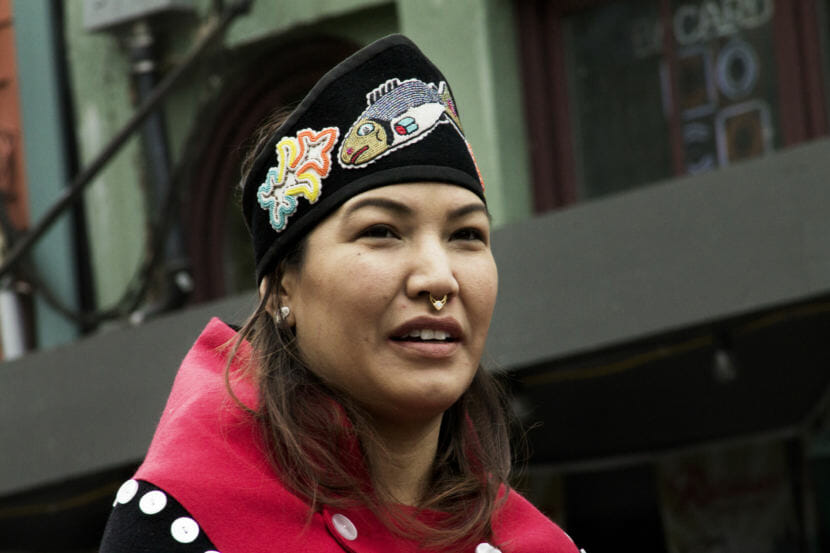
Various indigenous groups march and dance during a parade Saturday, June 9, 2018, in downtown Juneau, Alaska. (Photo by Tripp J Crouse/KTOO)
Jennifer
Quinto marches with various indigenous groups during a parade at
Celebration 2018 on Saturday, June 9, 2018, in downtown Juneau, Alaska.
(Photo by Tripp J Crouse/KTOO)

To Quinto, ICWA helps adoptees like her to stay connected to their identities and communities.


“Who could ever believe that [ICWA]
would be taken away?” she said. “That’s one of the last things keeping
our community together in the way that it has, so imagining a world
where that doesn’t exist is just too, too painful.”


Friday, October 28, 2022

HESAPA - A LANDBACK FILM


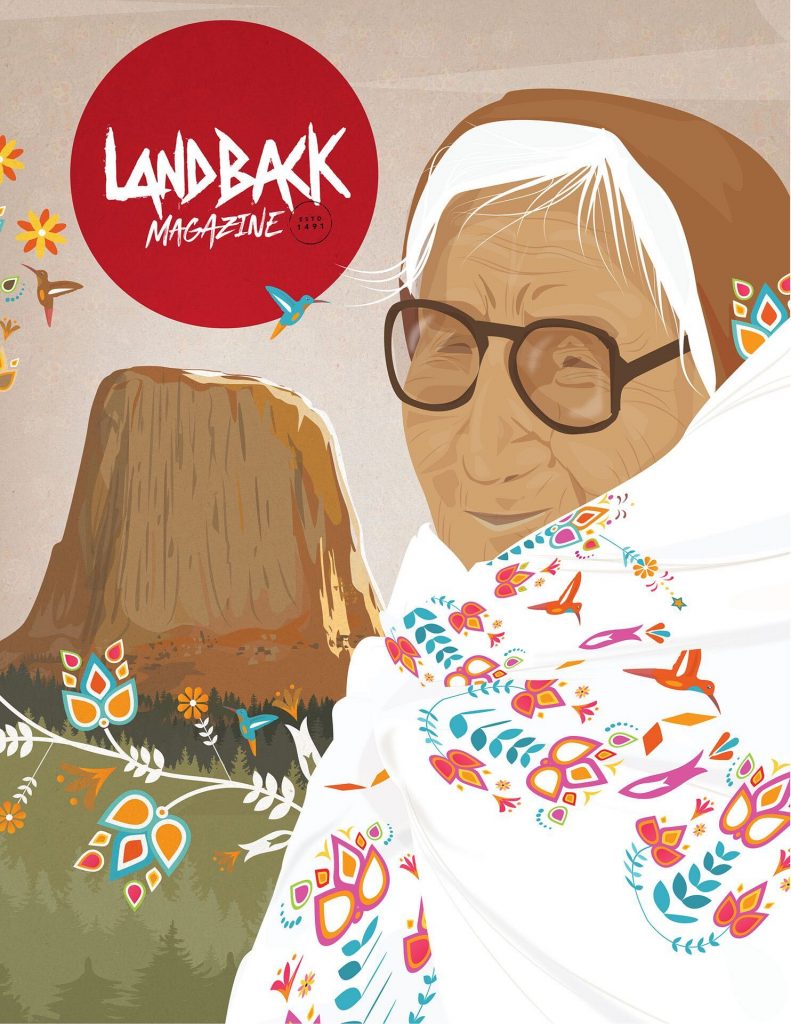
Rapid City, SD – NDN Collective’s LANDBACK Campaign has officially launched pre-sales of the limited edition LANDBACK Magazine, He Sapa: The Heart of Everything That Is, which pivots on the cornerstone work of the LANDBACK Campaign
to reignite and continue the ongoing struggle to return the He Sapa
(Black Hills) to the Oceti Sakowin (Lakota/ Dakota/Nakota) Nation.
LANDBACK organizing has a powerful lineage. Nellie Red Owl (1907-1992)
is intentionally featured on the cover as an acknowledgment of that
lineage, her courageous actions, and her commitment to reclaiming the He
Sapa. 


The LANDBACK Magazine contains over 100 pages of content from
movement elders, youth organizers, the frontlines of LGBTQ2S+ justice,
climate justice, and joint-struggle movements against White Supremacy
and colonialism and is intentionally Indigenous-powered project, created
in partnership with Indígena, Primate, Red Media Press, and Red Planet Books and Comics.

“The LANDBACK Magazine is a culmination of stories and experiences
shared across generations of front line struggles, courageous mass
mobilization, and teachings to guide us into the future,” said Nadya Tannous, LANDBACK Campaign Organizer.
“We’re bringing old school, punk vibes and a loud voice, connecting
local LANDBACK efforts to domestic and international struggles for
justice.”


“What started as just a wild idea shared with a few brilliant minds
is now a work of art that represents the past, present, and future of
LANDBACK as a global movement,” Krystal Two Bulls, LANDBACK Campaign Director.
“We focus locally on the He Sapa: The Heart of Everything That Is. My
hope is that it activates a whole new generation of organizers to step
into the centuries-long mission that our Ancestors sacrificed their
lives for. It has always been about our relationship to the land, and it
always will be.”


“It is a true honor to be able to compile stories, poems, photos, and
interviews with movement elders and young people who call He Sapa
home,” said Demetrius Johnson, LANDBACK Campaign Organizer.
“The care and love that went into the creation of this magazine can be
felt and seen on every single page. The struggle to reclaim He Sapa is
ongoing, and the hope is that this magazine supplements this long and
powerful history of reclaiming that sacred site.”


The LANDBACK Magazine
will hit the shelves of many Indigenous-owned and Movement bookstores
in the so-called continental US, so-called Canada, and the Hawaiian
Kingdom in November for Native American Heritage Month, including
Goodminds, Libélula Books and Co, Birchbark Books, Red Planet Books and
Comics, and Native Books Hawai’i. It will also be intentionally
distributed to highschools, Tribal Colleges and Universities, University
Libraries and to our incarcerated Relatives. 


Thursday, October 27, 2022

Smudging helped David Fineday deal with trauma from #60sScoop

 'Smudge On': Saskatoon man working to fill Indigenous cultural, spiritual gap in city

David
Fineday, middle, in a small circle of people who stopped by Friday for
Smudge On, a program that allows people to engage in the Indigenous
cultural and spiritual practice of smudging. (Dayne Patterson/CBC)

A
Saskatoon man is trying to bring the Indigenous spiritual and cultural
practice of smudging to those in the city, where he says it is lacking.

David
Fineday, 66, said he was taken from his home at about five years old,
then didn't see his mother until he returned home more than a decade
later at 16. 

He said his mother and elders then taught him how to smudge. Smudging is a spiritual practice meant to purify oneself by washing the smoke from burning certain herbs, like sweetgrass and sage, over your face and body.

Fineday
said he doesn't see smudging often in the city — so he treks from his
home in Saskatoon to a small, treed area near the corner of 20th Street
West and Avenue K South, and does it there.

Fineday
leads "Smudge On," a program backed by the Pleasant Hill Community
Association that invites people to smudge every Saturday. Last week he
also held a smudge on Friday for those who wanted to participate on the
National Day for Truth and Reconciliation.

"Smudge On is a spiritual thing that I am trying to bring back to our people," he said. 

"When you say your prayers that smoke takes your prayers up and that's how you're heard."

Two men stand in a park with a banner between them reading '60s Scoop' in large, colourful lettering, with many names written on it.
David
Fineday, left, and Dennis Kissling, right, carried a banner on July 1
with names of people they said were taken from their homes during the
Sixties Scoop. On the back it said 'Smudge-On,' a reference to the
practice of smudging, which Fineday said has been a way to heal from the
traumatic past. (Dayne Patterson/CBC)

Smudge
On started in June 2020, but has become more consistent through 2021
and 2022, operating almost every Saturday through the late winter months
into the late fall, Fineday said.

"People can come here if
they're having problems, they can have a smudge and have a prayer and if
they want to talk, they can talk," he said, calling it a no-judgment
zone.

"Everybody deserves a prayer, especially these people on the
street with their mental illnesses and addictions. They're chased out
of every other place."

Fineday said smudging helped him to know he wasn't alone and to heal from the trauma associated with being taken during the Sixties Scoop,
a period from the 1960s to 1980s when Canadian child welfare
authorities took thousands of Indigenous children from their homes and
placed them with non-Indigenous foster parents.

David
Fineday, right, hosts the Smudge On program almost every Saturday to
provide those in search of the traditional Indigenous practice an
opportunity to do it. (Dayne Patterson/CBC)

While
Fineday didn't attend residential schools, he said he moved from foster
home to foster home from November 1961 until June 1973.

Saskatoon
Ward 2 Coun. Hilary Gough stopped by Smudge On's Friday ceremony with
a case of coffee and Timbits for the attendees, who sat on blue tarps
that circled a metal firepit in the grassed area. 

She said she stops by occasionally.

"This
is something that is happening today, for [National Day for Truth and
Reconciliation], but it's also something that happens every week," Gough
said. 

"It is intended to meet people where they're at."

Gough said she thinks much of the work done on the national day needs to be done year-round, not just on a designated date.

Wednesday, October 26, 2022

AFN national chief says there has to be truth before reconciliation

Surviving Genocide: Native Boarding School Archives Reveal Defiance, Loss & Love

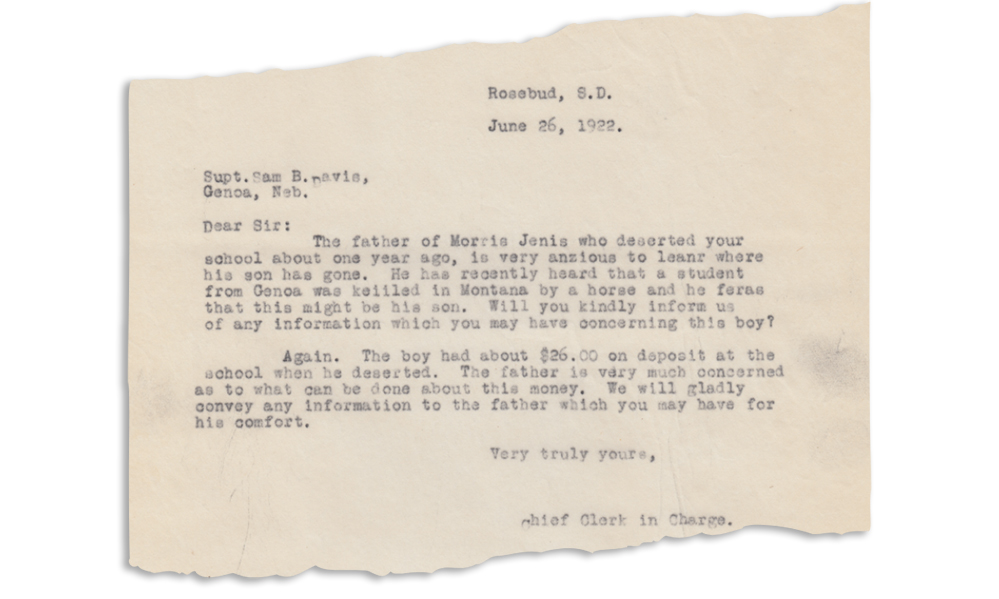
It is a desperate plea from a father seeking information about his missing son.

Morris
Jenis Jr.’s father knew only his son, a Native American student at the
Genoa Indian School in Nebraska 100 years ago, had not been seen in a
year.

Morris ran away from the school in 1921 — “deserted,”
according to the militaristic language school officials used — like
hundreds of other young Indigenous children who resisted the boarding
school policies that forcibly stripped them of language and identity,
often hundreds of miles from home.

“The father…is very anxious to
see where his son has gone,” a school clerk wrote the superintendent on
the father’s behalf. “He recently heard that a student from Genoa was
killed in Montana by a horse and he fears that this may be his son.”

Public
archives do not provide any answers about Morris, nor his age and
tribal affiliation. The school told his father that they could not find “any trace of him,” and reportedly returned the $26 — worth about $450 today — his family previously paid to send him home.

The plea is among thousands of stories made public by the Genoa Indian School Digital Reconciliation Project, one of many efforts
to digitize elusive school, state and federal records, to bring the
stories of Indigenous survivors and those who never made it home back to
their families and tribes.

Last summer, the discovery of more
than 900 child graves at former Canadian residential schools tore
through international media and reignited investigations of U.S.
boarding schools; reports focused on brutal abuse and quantifying death.

KEEP READING 


Tuesday, October 25, 2022

MMIWG: Cover Stories


One night in Hinton, Alta., 16-year-old Shelley-Anne Bacsu decided to walk home along Highway 16 from her boyfriend's house.

She was never heard from again.


But 40 years later, her story is part of a new project aiming to honour
the thousands of Indigenous women and girls who have been murdered or
gone missing in Canada: a newspaper of “cover stories,” which organizers
plan to hand deliver to Prime Minister Justin Trudeau.

On
Monday, one day before the National Day of Action for Missing and
Murdered Indigenous Women and Girls, those walking by the Ontario
legislature at Queen's Park in Toronto came face to face with these
women.

More than 100 “missing” posters set up in front of the building showcased those whose stories are rarely amplified.


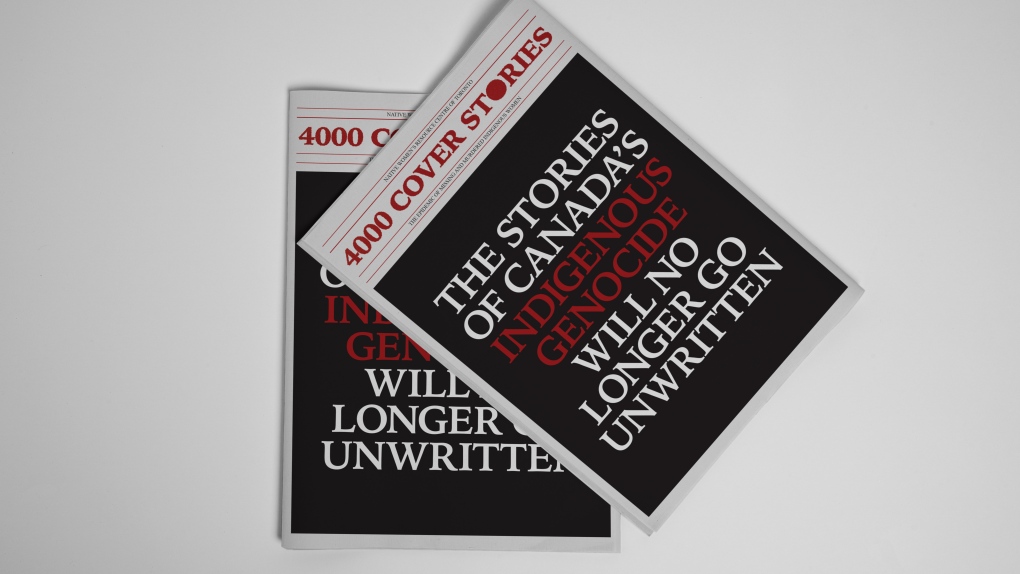
In the middle of the posters is a newsstand carrying the “4,000 Cover
Stories” newspaper compiled by the Native Women's Resource Centre of
Toronto (NWRCT).

“It's really to demonstrate the impact of how
many women have been missing that we know of,” Pamela Hart, NWRCT
executive director, told CTVNews.ca. “So instead of a small section of a
40-page newspaper, you have a 2,000 (page), double-sided newspaper of
cover stories of missing and murdered Indigenous women.”

She
said that the massive size of the newspaper was to show “how large a
newspaper would be if you covered all of these stories with the amount
of attention that they deserve.”

Each one of these women's disappearances could be a cover story, she said.


The project is aiming to spur action to protect Indigenous women and
girls in Canada. A national inquiry that ran between 2015 and 2019 called the issue a “genocide,”
finding that governments and law enforcement have often failed to
collect proper data or follow up on cases of missing Indigenous women.


More than 1,000 Indigenous women and girls were killed or went missing
between 1980 and 2012, according to the RCMP, but experts believe the
true number is closer to 4,000, according to the Native Women's
Association of Canada (NWAC).

And this violence is ongoing —
between 2015 and 2020, the most recent year for this data, Indigenous
women accounted for 24 per cent of all female homicide victims in
Canada, NWAC reports, despite making up just five per cent of the female population nationally.


Advocates say little has been done to tackle this crisis in the three
years since the release of the national inquiry's final report,
something that the NWRCT is hoping this project will challenge.


Each page and story within the newspaper will be accompanied by a QR
code that, when scanned, will draft a letter to the MP of that specific
missing or murdered woman's local riding, calling for action.


“My hope is that folks will learn and that they will follow through with
the letter … so that we are slamming MPs and Trudeau with letters that
force us to remember that this issue has never gone away,” Hart said.


“The other (goal) is that we honour and show that these women existed
and that they deserved a cover page and that they deserve to be spoken
about, and that there should have been outrage, there should have been
more storytelling, there should have been more coverage.”


Following the demonstration in Queen's Park, the newspaper will be part
of activities on Tuesday, which is National Day of Action for Missing
and Murdered Indigenous Women and Girls (MMIWG).

It will be
present at the annual Sisters in Spirit Vigil at Allan Gardens in
Toronto, where community members gather to honour those who are no
longer with them and celebrate their lives, Hart explained.

Afterwards, organizers are planning to deliver the newspaper to Trudeau's doorstep in Ottawa.


“So everybody knows that it's been done and that he has one of the largest levels of responsibility to respond,” Hart said.

KEEP READING 

https://www.ctvnews.ca/canada/4-000-cover-stories-project-honours-mmiwg-with-front-page-coverage-in-massive-newspaper-1.6093078


CLICK OLDER POSTS (above) to see more news

CLICK OLDER POSTS  (above) to see more news

MEGWETCH THANK YOU

HUGE Thank you for visiting this blog and sharing this with your kin. It's appreciated. Contact Trace anytime! Use the form below.

BOOKSHOP

Please use BOOKSHOP to buy our titles. We will not be posting links to Amazon.

Popular Posts

To Veronica Brown

Veronica, we adult adoptees are thinking of you today and every day. We will be here when you need us. Your journey in the adopted life has begun, nothing can revoke that now, the damage cannot be undone. Be courageous, you have what no adoptee before you has had; a strong group of adult adoptees who know your story, who are behind you and will always be so.

OUR HISTORY

OUR HISTORY
BOOK 5: Lost Children of the Indian Adoption Projects