BACK UP BLOG (no longer updating)

This blog was a backup for American Indian Adoptees blog
USE THE SEARCH BAR or SEARCH TOPICS at bottom of this blog

If you need support

Support Info: If you are a Survivor and need emotional support, a national crisis line is available 24 hours a day, seven days a week: Residential School Survivor Support Line: 1-866-925-4419. Additional Health Support Information: Emotional, cultural, and professional support services are also available to Survivors and their families through the Indian Residential Schools Resolution Health Support Program. Services can be accessed on an individual, family, or group basis.” These & regional support phone numbers are found at https://nctr.ca/contact/survivors/ . MY EMAIL: tracelara@pm.me

Search This Blog

Friday, September 30, 2022

Northern Arapaho tribe asks Wyoming for a state ICWA law as U.S. Supreme Court decision looms

 IMPORTANT STEP!

Northern Arapaho tribe asks Wyoming for a state ICWA law as U.S. Supreme Court decision looms

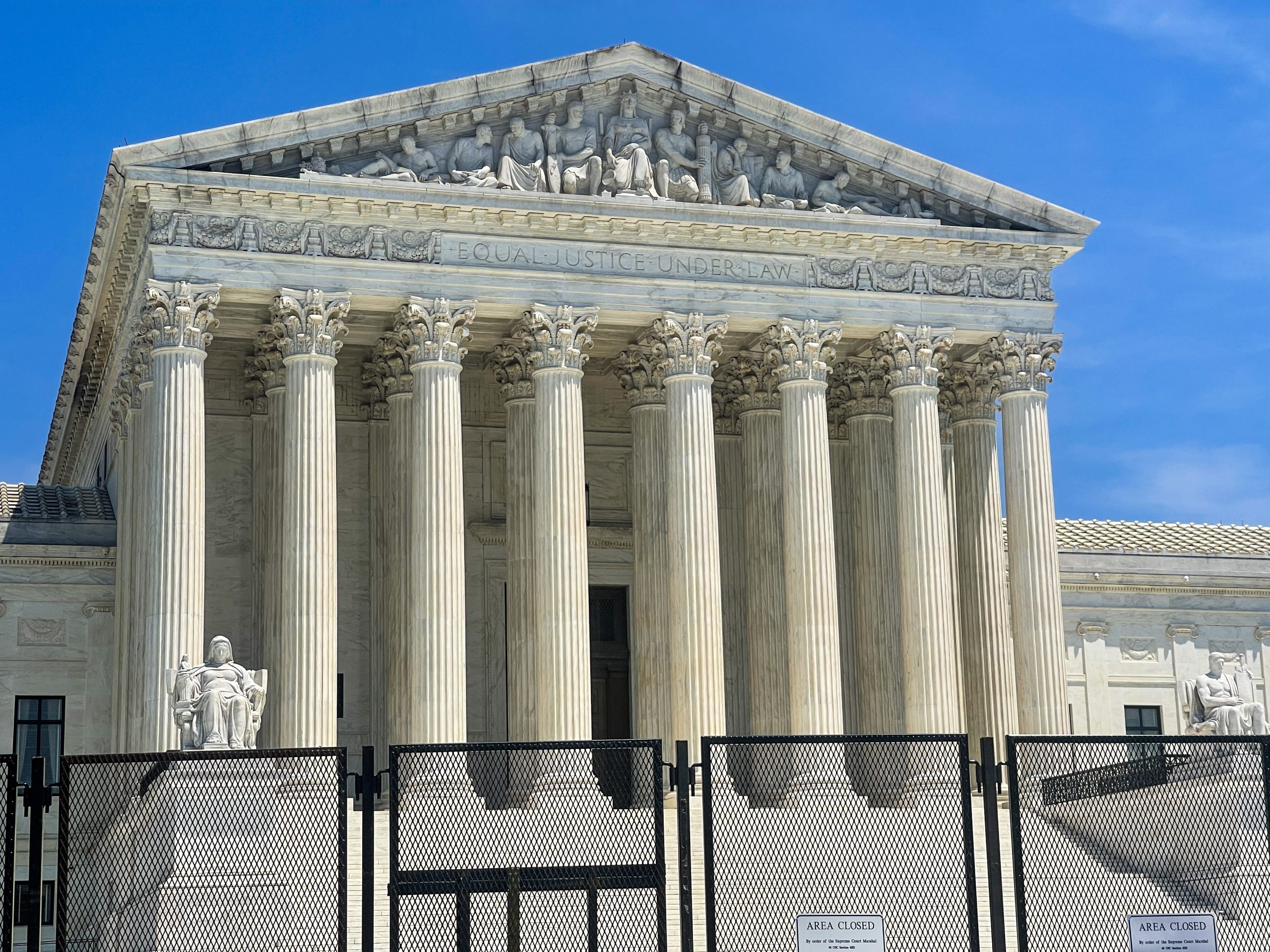
US Supreme Court
Joe Ravi /Wikimedia Commons
The U.S. Supreme Court will rule on the Indian Child Welfare Act sometime in 2023, the Northern Arapaho are asking for state protections and guidelines.

Northern Arapaho business council member Lee Spoonhunter has one request of the Wyoming legislature.

“Let's get started on working on legislation to protect the children of the state of Wyoming,” Spoonhunter asked

An upcoming U.S. Supreme Court case looking at the Indian Child Welfare Act (ICWA), first passed in 1978. A law that keeps tribes of Indigenous children in the loop of family court proceedings to maintain families and communities. Spoonhunter is asking the state-tribal relations committee on behalf of the Northern Arapaho tribe to enact a state law protecting the tenets of ICWA.

The U.S. Supreme Court is expected to rule on Brackeen v. Haaland before summer of next year, and some fear that ICWA will be repealed.

“We're going to lose our children to the system. We're not going to find them until they've been adopted out,” said Spoonhunter. “And that's just the reality of what's going to happen if this law is struck down.”

An ICWA case requires two things: One, a child who is enrolled or could be enrolled in a tribe and one of their parents needs to be enrolled and two: the child’s case needs to be going through some kind of child custody proceedings. This includes foster care, adoption, or a termination of parental rights.

Clare Johnson, the Northern Arapaho tribe attorney, said she is currently working on 62 ICWA cases, about half within the state of Wyoming and the other half Northern Arapaho children in other states. They are all unique in what the individual child requires to be compliant with ICWA. But all have one thing in common.

“The Northern Arapaho tribe strongly believes in bringing these cases back to tribal court to attempt to reunify the child with their family. And if that's not possible to place them with other members of their family or their tribe,” said Johnson.

Being adopted outside of the community might lead a child to feel disconnected from their culture. And the U.S. has a long history of actively taking away Indigenous children from their families in boarding schools. This was a policy that removed Indigenous children from their homes in order to break cultural traditions.

Department of Interior Deb Haaland has enacted its Indian Boarding School Initiative, aimed at detailing the forced assimilation of Indigenous children.

ICWA has allowed children to stay in their communities.

“The tribe likes to have the children within the tribal system so we can look at alternative solutions,” said Johnson. “So, that maybe we place with grandma, and parents have a chance to work the system and get into a place where they can one day have their children back.”

The proposed options could include drafting a trigger protection legislation. What that means is if the federal government does strike down ICWA, Wyoming could say ‘no, we will still follow the tenets of ICWA’. Or use the federal law as a template to draft a state law.

But Senator Affie Ellis said it might be prudent to wait and see what the federal government does before drafting legislation. Since tribes are political entities, they have a special status under the law that describes them as sovereign, unlike other racial categories. This gives them political power and protections under the tribes that they are enrolled in.

Ellis said if the law was repealed, this unique political distinction afforded to tribes would be called into question.

“So, that's what's at stake here, is if the Supreme Court somehow finds that that political classification no longer applies, and it's just race-based, then we can't just mimic the federal law, because then it really just takes it all away,” she said.

So, Ellis said waiting might be the better move.

Kate Fort, director of the Indian Law Clinic at Michigan State University, is an expert on ICWA. She said ICWA brings state and tribal governments together in a unique way.

“State ICWA laws are going to protect and ensure that the protections that exist now continue,” she said. “It provides guidance to your state agencies. I think one thing that is really hard to explain to the Supreme Court is sort of how much work has been built up around ICWA.”

Fort said it's hard to say if the federal government is prepared to upend decades of federal Indian law, but being prepared isn’t a bad thing. While the tribes are essential to getting a state ICWA law going, the state should get involved.

“ICWA is the state's responsibility, it was, frankly, a remedial law to ensure that states aren't acting agencies and courts aren't acting wrong when they get native children in front of them,” she said.

Ten states currently have state ICWA laws including Iowa, Nebraska, and New Mexico.

The next tribal committee meeting is in October on the University of Wyoming campus where the committee will continue to discuss whether to write a bill or wait to see what the supreme court does.
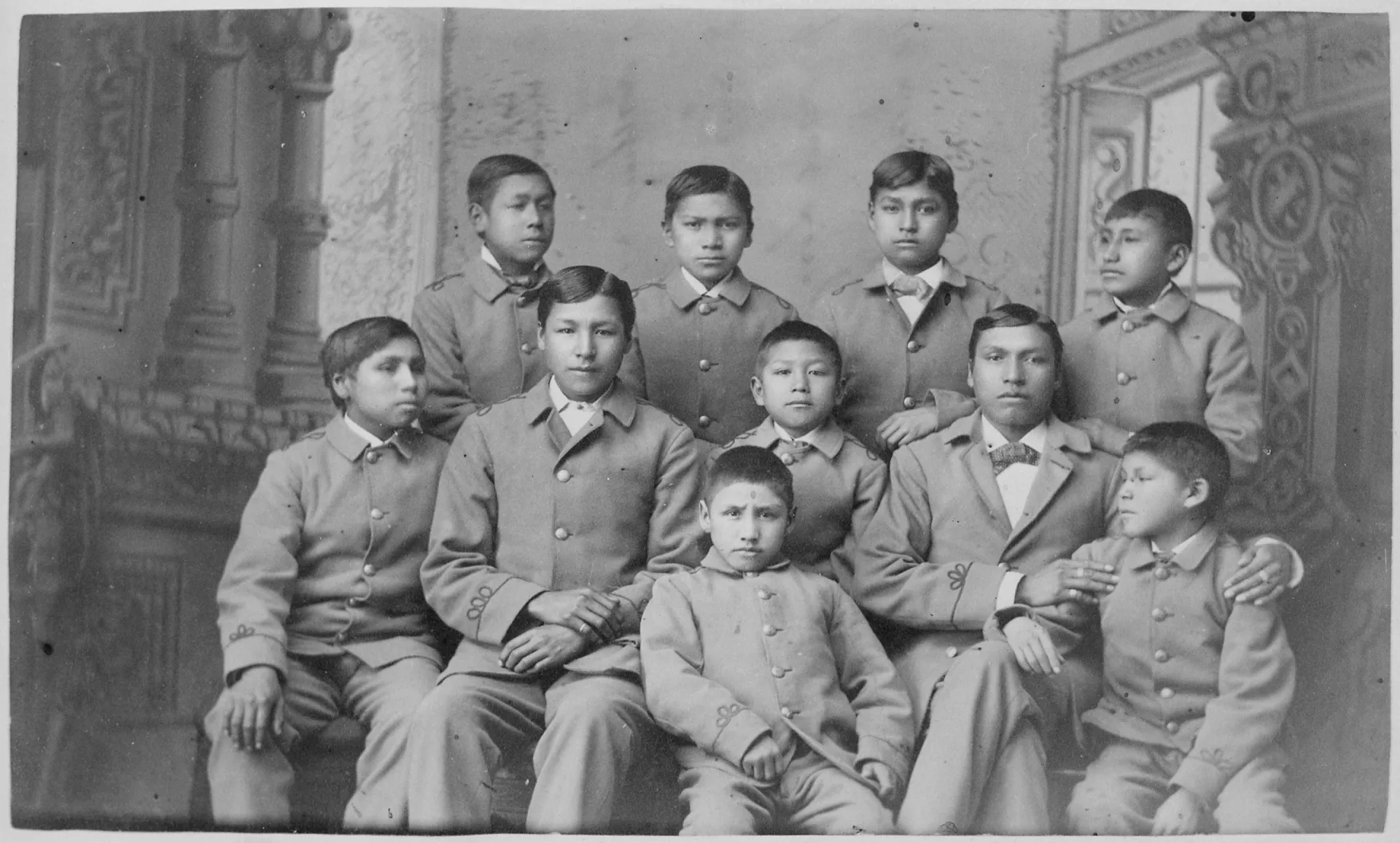
 

Group of Omaha boys in cadet uniforms, Carlisle Indian School, Pennsylvania, ca. 1880. (National Archives Identifier 519136)

MORE

ACLU of Wyoming urges Supreme Court to uphold Indian Child Welfare Act  

The ACLU of Wyoming is weighing in on a U.S. Supreme Court case that could overturn the Indian Child Welfare Act, a law that protects Indigenous children from forced removal from their families and tribes.

The court will start reviewing the act in November, and the Wyoming ACLU branch recently sent the justices a brief, along with 13 other states, urging them to uphold the act.

"It basically ensures that all efforts are made to maintain those ties and connections between Indian children and their heritage," said Stephanie Amiotte, legal director of the Wyoming ACLU, and an enrolled member of the Oglala Lakota Sioux tribe in South Dakota.


Thursday, September 29, 2022

KU is in possession of Native American remains

The University of Kansas has remains of Native American people in its museum collections, according to a statement from administrators.

The remains are being stored in the annex of Lippincott Hall, which is the building that currently houses offices of staff members in KU’s Indigenous Studies program. Offices were closed Tuesday, and they will be moved to a different location on campus.

KU Chancellor Douglas Girod; Barbara Bichelmeyer, provost and executive vice chancellor; Nicole Hodges Persley, interim vice provost for diversity, equity, inclusion and belonging; and Melissa Peterson (Diné), director of tribal relations, sent out a joint statement Tuesday morning.

“While some efforts have been made in the past to repatriate items, the process was never completed,” the statement says. “The continued possession of these human remains causes great pain for many in the Native community and beyond.”

“As a university, we have a responsibility to follow the Native American Graves Protection and Repatriation Act (NAGPRA), a federal law enacted by Congress in 1990, which sets criteria for tribal nations to reclaim human remains (ancestors) and funerary objects held by museums,” according to the statement. “The University has a responsibility to tribal nations and the Native American community to continue a relationship built on dignity, respect, and enduring support.”

An online federal database shows that KU is in possession of remains belonging to a minimum of 380 individuals, as well as 554 associated funerary objects. However, Peterson said that 380 number was probably from a complete inventory that KU did back in the 90s.

University of Kansas Melissa Peterson

The current number of individuals may be closer to 200 — “That is early kind of numbers that we received. We don’t know lots of details, but that’s what we’re working on so that we’re able to … identify those that will need to consult with tribes and kind of go through the NAGPRA process and then just to understand the issue” of why KU has these remains, Peterson said.

She said the discovery came about recently because “We’ve had new people start at KU, and I think someone from the museum was getting to know the collections and realized these were in there and that’s when it was brought forward.”

KU’s Indigenous Studies Program tweeted on Tuesday, “It’s been a heavy, heavy week. There are no words. Please keep our Native students, faculty, staff, alums and community in your thoughts as we try to process this and work for all ancestors to find their way home.”

KU is still gathering information, according to the administrators’ statement.

“We are fully committed to the work of creating meaningful institutional memory by properly repatriating the ancestors and funerary objects,” the statement continues. “We are working with members in our Native American community and outside consultants specializing in repatriation.”

Peterson said the university is planning to make a website that will have updates on the NAGPRA process.

Spokespeople for KU’s Natural History Museum and Spencer Museum of Art forwarded our requests for information to Erinn Barcomb-Peterson, a spokesperson for the university.

“We are working to (communicate) more fully with our Native American students, staff and faculty and address their immediate needs at this time,” Barcomb-Peterson said. “We are still gathering information and will share more details in the future.”

Geographic origins listed for the remains and artifacts attributed to KU in the online database include Arizona, Florida, Illinois, Missouri, Montana, Nebraska, New Mexico, New York and several counties in Kansas. Remains of at least 73 individuals are listed as coming from an unknown geographic origin.

Rep. Christina Haswood, a Lawrence Democrat and Diné, tweeted late Tuesday, “My heart is heavy with this news and how we have ancestors who have not completed the journey home. Native students of Lawrence, I’m here if you need my support.”

SOURCE

Data shows number of Indigenous kids in foster care is going up

 NEWS VIDEO


‘The bond is broken’: StatCan

Indigenous population is on the rise, housing still an issue.

A Winnipeg mother says she was scarred for life when her first child was taken away at birth by social workers, who told her she was unfit to parent her newborn daughter because she was just 17 at the time.

“I don’t know how one could fully heal from that trauma,” said the woman, now 41, whom The Canadian Press has agreed not to identify because of her family’s involvement in the child welfare system. “Having a baby taken away from birth the bond is broken.”

Statistics Canada says 2021 census data shows Indigenous children accounted for 53.8 per cent of all children in foster care.

This has gone up slightly from the 2016 census, which found 52.2 per cent of children in care under the age of 14 were Indigenous.

At the time, only about eight per cent of kids that age in Canada were Indigenous.

More than three per cent of Indigenous children living in private households in 2021 were in foster care compared to the 0.2 per cent of non-Indigenous children. Nationally, Indigenous children accounted for 7.7 per cent of all children 14 years of age and younger.

Statistics Canada says because of difficulties in collecting census data on First Nations and other Indigenous communities, some caution should be exercised in comparing census years.

In recent years there has been a significant push from Indigenous leaders and child welfare advocates across the country to address the myriad systemic issues contributing to the overrepresentation of Indigenous children in care.

But experts say factors like colonialism, chronic underfunding of child welfare systems, discriminatory practices and poverty remain.

READ

Kuster: How George Floyd pulled a '60s Scoop survivor out of a dark pit


The irony was that I am a survivor of the ’60s Scoop. I’d been taken away from my native family at birth (no, my mother didn’t drink or do drugs) and was what I call “The Flavour of the Month,” the feature brown baby in the Regina Leader-Post. (Yes, they actually did that, it was a thing.) I felt like I was in the adopt-a-pet section of the paper: “Here, everybody, you can adopt this pooch or tabby, or even this brown kid!” and was adopted by a lovely white family (That’s why I’m an Indian named Kuster — place punchlines here) and at that particular time, I’d just found my true biological family (no thanks to Saskatchewan Social Services, the Department of Indigenous and Northern Affairs in Ottawa, but THAT’S a whole other tale). I was lucky, I have two amazing families; one white, the other Aboriginal, and I fit in both worlds. 

Read more

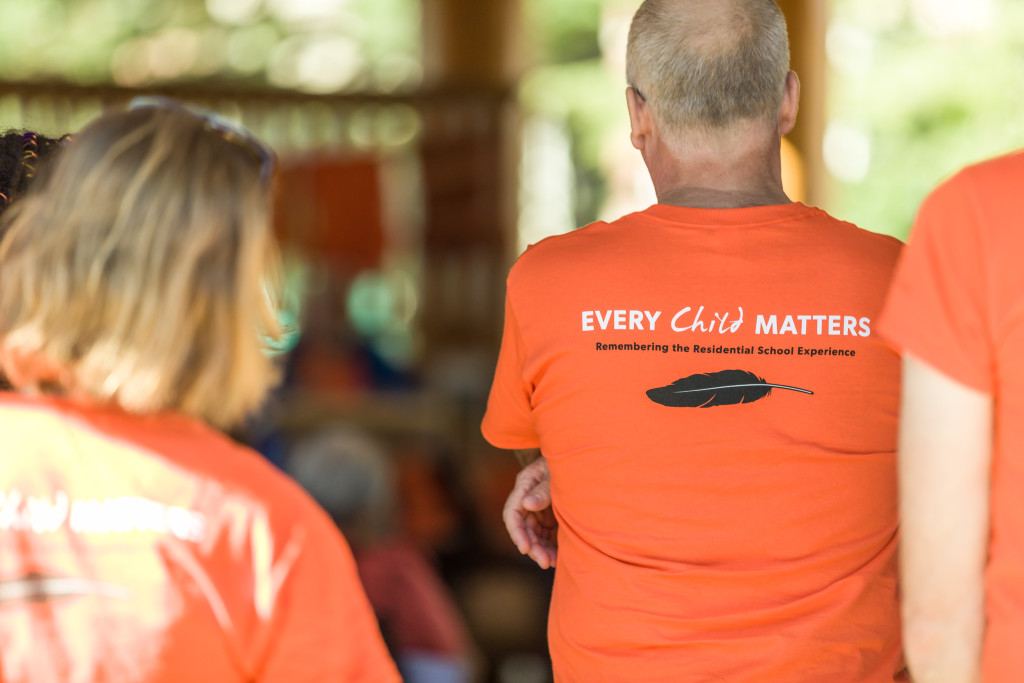
#OrangeShirtDay September 30


Indigenous people in Canada and the U.S. are recognizing September 30 as “Orange Shirt Day”, or “Every Child Matters Day” to raise awareness and educate about the harms of Indian schools in North America.

Orange Shirt Day 2022 at Camosun

An orange shirt printed with the words "every child matters"

Camosun encourages students to wear an orange shirt on Sept. 29 and 30, and to take the time to learn and reflect as an act of reconciliation.

“Orange Shirt Day is an important day to honour Indian residential school survivors, as well as those who didn’t survive or died, often, young and tragically as a result of the horrors they experienced in these schools,” says Ruth Lyall, Chair of Indigenous programs at Eye? Sqa’lewen: The Centre for Indigenous Education & Community Connections (IECC) and Orange Shirt Day spokesperson.

Elder Dr. Barney Williams, Nuu-chah-nulth Nation from the Tla-o-qui-aht First Nation, will be emceeing the gathering. Hosted by Eye? Sqa’lewen, the event will include invited guests from Quilts for Survivors, a poetry reading by Beth Mills, as well as drumming and music. 

KEEP READING


Monday, September 26, 2022

Take Back Tekanontak

Take Back Tekanontak from Take Back on Vimeo.

Early in September, a purple haze of smoke ascended over the colonial cross on top of tekanontak (Mount-Royal), at the heart of Tiotiake (Montreal). Kanien’kehà:ka oral tradition says that smoke signals sent by their ancestors on tekanontak used to be picked up in the Adirondaks, making its way down the East Coast with surprising rapidity. Our signal today calls on people across Turtle Island to “open their minds and think how to help” so that these issues do not become white noise.

Tekanontak is at the heart of a colonial dispute. In their press conference of July 27th the Mohawk Mothers detailed their legal struggle to stop the construction of McGill University's New Vic project. The risks are damaging multiple archeological sites of Rotinonshionni presence on the island of Montreal and throughout onowarekeh, turtle island, and destroying evidence of unmarked graves from the Mk-ultra experiments on indigenous children, orphans and innocent children classed as juvenile delinquents.

Contrary to colonial history's cover ups, the smoke signaled that it is time to make things right! Mainly to do away with the religious symbols of the atrocities committed on Indigenous peoples ever since the Europeans grabbed Turtle Island. *** To stand firm with the Mohawk Mothers, we call on all solidarity groups to join in action to end the cycle of unquestioned ways of doing.

The Mohawk Mothers have filed an interlocutory injunction to "stop excavation of unmarked graves of children and disturbance of archeological remains of kahnienkehaka/Mohawks on tekanontak [Mount Royal Montreal]". Regardless of the upcoming hearing on 26th October to address the unmarked graves on the grounds of the Royal Victoria Hospital, McGill and the Société Québécoise des Infrastructures announced that they will start excavating work in early October.

*** Credits Music - Bear Fox sings Ohenton Karihwatekwen Karenna Film & Editing - Take Back Tekanontak Solidarity Committee *** Fundraiser: https://fundrazr.com/e23JRc?ref=ab_0I1Hge1ldOh0I1Hge1ldOhhttps://vimeo.com/752710874

https://fundrazr.com/e23JRc?ref=ab_0I1Hge1ldOh0I1Hge1ldOh


stolen children: gimoodinaan binojiinhyan (+tweets) #LandBack


Thursday, September 22, 2022

How tribal placements benefit Native foster children’s health #PROTECTICWA


Allowing children from these communities to be placed through state foster care when there are family or tribal members to take them in dissociates children from their culture and perpetuates the harmful effects of decades of state and federal policies that enabled removal of Native children from their families and tribes.

Because evidence shows that children’s mental and physical health are best served when placed with a family or tribal member, the Litigation Center of the American Medical Association and State Medical Societies and the American Academy of Pediatrics (AAP) are urging the U.S. Supreme Court to uphold the Indian Child Welfare Act (ICWA) of 1978.

The law—passed in response to decades of laws that took children away from their families and tribes and promoted forced assimilation—says that a child’s extended family is the first preference for adoption, followed by members of the child’s tribe. In the case before the U.S. Supreme Court, Haaland et al. v. Brackeen et al., seven people, along with Texas, Louisiana and Indiana are challenging the ICWA’s provisions as race-based discrimination infringing on state sovereignty.

“Invalidating ICWA risks returning far too many children to the assimilationist realities of the past. The historical trauma that so many already suffer would be compounded and magnified with fresh loss. Preserving ICWA, however, protects the critical familial and tribal support networks” that American Indian and Alaska Native “children need to thrive,” says the amicus brief filed with the Supreme Court (PDF) by the AAP and AMA Litigation Center.

Find out more about the cases in which the AMA Litigation Center is providing assistance and learn about the Litigation Center’s case-selection criteria.


Monday, September 19, 2022

Tweets #Orange Shirt Day


Saturday, September 17, 2022

Margaret D. Jacobs — After One Hundred Winters - with Alaina E. Roberts


2021 BOOK: After One Hundred Winters confronts the harsh truth that the United States was founded on the violent dispossession of Indigenous people and asks what reconciliation might mean in light of this haunted history. In this timely and urgent book, settler historian Margaret Jacobs tells the stories of the individuals and communities who are working together to heal historical wounds--and reveals how much we have to gain by learning from our history instead of denying it. 

Purchase Book Here: https://www.politics-prose.com/book/9... 

Margaret D. Jacobs is professor of history and director of the Center for Great Plains Studies at the University of Nebraska-Lincoln. 

Her books include White Mother to a Dark Race: Settler Colonialism, Maternalism, and the Removal of Indigenous Children in the American West and Australia, 1880-1940. 

Website: reconciliationrising.org.

Jacobs will be in conversation with Alaina E. Roberts, an Assistant Professor of History at the University of Pittsburgh. Her research focuses on the intersection of Black and Native American life from the nineteenth century to the modern day with particular attention to identity, settler colonialism, and anti-Blackness. In addition to her first book, I've Been Here All The While: Black Freedom on Native Land, and multiple academic articles, her writing has appeared in outlets like the Washington Post and TIME magazine and her work has been profiled by the likes of CNN and the Boston Globe. Find her on Twitter @allthewhile1.

A necessary reckoning with America's troubled history of injustice to Indigenous people

Jacobs traces the brutal legacy of systemic racial injustice to Indigenous people that has endured since the nation's founding. Explaining how early attempts at reconciliation succeeded only in robbing tribal nations of their land and forcing their children into abusive boarding schools, she shows that true reconciliation must emerge through Indigenous leadership and sustained relationships between Indigenous and non-Indigenous people that are rooted in specific places and histories. 

In the absence of an official apology and a federal Truth and Reconciliation Commission, ordinary people are creating a movement for transformative reconciliation that puts Indigenous land rights, sovereignty, and values at the forefront. With historical sensitivity and an eye to the future, Jacobs urges us to face our past and learn from it, and once we have done so, to redress past abuses. Drawing on dozens of interviews, After One Hundred Winters reveals how Indigenous people and settlers in America today, despite their troubled history, are finding unexpected gifts in reconciliation.


Chilocco Through the Years (Broadcast Version)


Graphic Novel Developed for a classroom audience, this graphic novel is available for download, print-on-demand, and for a limited time - free on request. 

Jaya, ​a Native teen temporarily separated from her mom, accompanies her Grandmother and Aunt to a family reunion. Between chores and activities, the older women lead her through a story about Chilocco Indian Agricultural School, combining history and their own memories of attending the boarding school in northern Oklahoma. Their account arouses a range of emotions in the teen, from tears, to laughter, to anger, to compassion. The result: a new respect for her family and the resilience of Native peoples, along with insights into how Jaya might handle the changes in her own life. 

This story, set in present-day Oklahoma, was compiled from the experiences of real students who attended Chilocco, and their recollections were shared through oral history interviews, photographs, letters, and other archival sources. It engages students and adults in an often overlooked part of U.S. history and pushes back against stereotypes of Native identity. 

Get the free digital download of the graphic novel! 

Want a physical printed copy of this book, you can order a printed copy from Literati Press for $5. Want a library or classroom copy of the printed book, contact us. Also see this related Project Based Learning module from Dr. Lisa Lynn Brooks. Project support from Oklahoma Humanities. 

GO HERE

Voices from Pezihutazizi Oyate: Boarding School Histories


Join NABS as we screen the short film “Voices from Pezihutazizi Oyate: Boarding School Histories” followed by a panel discussion. Over the past few years NABS has partnered with the Upper Sioux Community on a digitization and oral history project, one of the results of this partnership was a short film looking at the unique experiences of the Yellow Medicine Nation. 

The panel will be moderated by NABS Creative Director Kenrick Escalanti and will feature community members and experts.


Documentary description:
As hurtful truths come to light in the public eye regarding historically operated Federal Indian boarding schools in the United States, many Native Nations are reclaiming their voices regarding these assimilative educational institutions. For the Upper Sioux Community (“Yellow Medicine Nation”) living in Minnesota, these historical truths are known to have cast profound ripples that effect their present. This mini documentary explores community interpretations of this boarding school past and offers hope for justice and healing.


Register for our virtual event here:
 
Register Today

Tuesday, September 13, 2022

Vermont hires ICWA Coordinator

 Building better relationships with Vermont’s Abenaki tribes

Building better relationships with Vermont’s Abenaki tribes-- that’s what the Vermont...
Building better relationships with Vermont’s Abenaki tribes-- that’s what the Vermont Department for Children and Families is hoping to achieve with the creation of their newest position. - File photo(FILE)
Published: Sep. 4, 2022

MONTPELIER, Vt. (WCAX) - Building better relationships with Vermont’s Abenaki tribes-- that’s what the Vermont Department for Children and Families is hoping to achieve with the creation of their newest position. The role is called the Indian Child Welfare Act coordinator. The title references the federal law that aims to keep Native American children under the care of relatives or tribe members whenever safe and possible. Because Abenaki tribes are recognized by the state but not by the federal government, that federal law doesn’t apply to them.

“Vermont is one of the few states that does not have any federally recognized tribes. But that doesn’t mean that we do not see these families,” said Lindsay Barron, the policy and planning manager for the Department for Children and Families.

When a child could have tribal affiliation or heritage, the coordinator will be responsible for verifying that information with the relevant tribes before a child is placed in another home. Advocates like Jeff Bena,y the director of Indian education for Franklin County public schools, say that placing an emphasis on the child’s culture could be a game changer.

“It breaks your heart when you see some of the stuff and some of the things that these kids go through. And it really is a traumatic experience. If we can reduce that level of trauma, for so many of the kids this would be amazing… If the state of Vermont can finally say that we want to work with you, and we understand that there’s a culture here and we understand that there’s this distinct community, what can we do to support kids? Well, this is going to go a long way,” said Benay.

Currently, a paralegal with the Vermont attorney general’s office conducts these tribal verifications after DCF workers speak with a child’s family member.

“It’s rethinking where it’s sitting within state government. And so, our intention first and foremost of this position is to continue to maintain compliance with an ICWA and all the notification work that we’re already doing that’s already happening. It’s not just about federal compliance, and it’s not just about the law, but it’s about doing what is right and doing what is best practice,” said Barron.

The Department for Children and Families hopes the coordinator will help build collaborative relationships with Vermont’s Abenaki communities, as well as strengthen existing partnerships.

Joanne Crawford, the chief of the Abenaki nation of Missisquoi, says she hopes the same.

“I think this is a great opportunity for there to be more communication and support and for us to work together and make sure that it’s happening in a very sensitive way to all that are involved because this is a very traumatic event for children and it’s traumatic for families. I would love to see us be part of creating policy around this,” said Crawford.

The application for the position has already closed and the person who is hired for the role is expected to begin in October.

Supreme Court anti-Native decision sets stage for Tribal-State conflict

September 8, 2022 | By Albert Bender People's World peoplesworld.org

“States have no criminal jurisdiction in Indian Country over crimes by Indians against anyone or crimes by non-Indians against Indians. Crimes by Indians are punishable either by the tribe or the federal government, and crimes by non-Indians against Indians are punishable exclusively by the federal government.” Williams v. United States (1946)

The above passage is from the much-esteemed book, American Indian Law, by William C. Canby Jr., Senior Judge of the U.S. Court of Appeals for the Ninth Circuit. Canby was a former Director of the Office of Indian Law of the Arizona State College of Law and a foremost authority on Federal Indian law. The ruling cited by Judge Canby is quite clear— and on point—in reference to states and criminal jurisdiction regarding crimes committed by non-Indians against Indians in Indian Country.

On June 29 of this year, the Supreme Court issued a decision striking an unprecedented body blow against the Tribal sovereignty of Indigenous nations. The retrograde Court ruled in the case of Oklahoma v. Castro-Huerta, that states have concurrent jurisdiction with the federal government in crimes of non-Indians against Indians on Tribal lands.

The Court stated in its inflammatory decision that Indian Country is part of state territory. This is incredibly shocking and betrays an apparent complete ignorance of Federal Indian law.
As an attorney whose specialty is federal Indian law, and having practiced on a number of reservations, I shall review the recent Supreme Court decision from the standpoint of its most basic egregious errors, while also scrutinizing the ruling from the perspective of the scathing dissent issued by Supreme Court Justice—and Indian law authority—Neil Gorsuch.

The general foundational rule is that state jurisdiction is limited to those crimes that do not concern Indians or Indian interests. Hence, state jurisdiction is limited to crimes committed by non-Indians against non-Indians in Indian Country. Otherwise, the state has no authority on Tribal lands absent Congressional authorization. This is clear and unambiguous.

But it must also be kept in mind that Federal Indian law is filled with ambiguities, uncertainties, inconsistencies, and nuances, more so than any other body of law in the entire United States. However, this discourse addresses the more salient errors and lack of knowledge, history, and law embodied in the Court’s latest excursion into Indigenous jurisprudence.

As Long as the Waters Flow by Allan C. Houser
As Long as the Waters Flow by Allan C. Houser (Apache) stands outside the Oklahoma State Capitol Building in Oklahoma City. Photo: Ann W

Supreme Court decision foreshadows Tribal-State conflict

The decision written by Justice Kavanaugh, who has no Indian law background, is an engagement into the most labyrinthine twists and turns of Byzantine sophistry in a sordid, awkward attempt to pull the proverbial “rabbit out of the hat.” It is a clear violation of long established Federal Indian law.

The granting of states the right to intrude on Native lands in this respect has no basis in case law, or in the enshrined tenets of statutes and case law, beginning with the Indian Trade and Intercourse Act of 1790, to the much heralded decision of Worcester v. Georgia issued by the John Marshall Court in 1832. This set the standard of a nation-to-nation relationship between the Tribal nations and the United States. The Marshall Court stated that the “treaties and laws of the United States contemplate the Indian territory as completely separated from that of the states.”

The ruling rendered in Oklahoma v. Castro-Huerta purports to give the states a foothold in Indian Country. The legal reasoning asserted in this decision is stunningly faulty; indeed, one has to strain to try to make sense of it, and still to no avail.

I shall begin with an issue that is a supporting core of Kavanaugh’s ruling that is curiously not directly addressed by Justice Gorsuch. Justice Kavanaugh asserts as one of the foundations of his errant opinion, that Indian Country is part of and not separate from state territory. That would be equivalent to saying that New York is part of Pennsylvania, or Ohio is part of Indiana. Both are, of course, separate political entities. A state is defined as a territory with its own government and borders within a larger country.

Justice Kavanaugh’s assertion that a reservation is part of state territory lowers Tribal land to a subordinate status and takes away the nation-to-nation status vis-à-vis the federal government proclaimed in Worcester. Federal Indian law has held for over 200 years that reservations are separate from the states. This is founded on treaties, statutes, and case law that the Tribes are sovereign nations with only Congressional limitations.
In reference to the Worcester decision, that states have no jurisdiction in Indian Country, Kavanaugh’s retort is that at the time of the ruling territorial separation was the reason that state authority did not extend to Tribal lands. He advances that in the early 1800s Indian Country was separate from the states, therefore state law did not apply. Kavanaugh has no idea of what he is talking about, as he has no knowledge or grasp of history.

Georgia was already a state in the Worcester case of 1832 and had been for decades. There was no territorial separation between it and the Cherokee Nation. The Cherokee Nation was geographically within the boundaries of the states of Georgia, Tennessee, North Carolina, and Alabama. Since there was no territory separating those states from the Cherokee Nation, such an argument is absurd. There was a national boundary between those states and the Cherokee Nation based upon treaties with the federal government of the United States.

Keep in mind that Kavanaugh, throughout his bumbling opinion, never explains what he means by “territorial separation.” We are left to draw our own reasonable, logical conclusion.

Moreover, the case of Organized Village of Kake v. Egan (1962)—which Kavanaugh professes as supporting his argument that reservations are part of states—is inapplicable because the language in regard to state authority is dicta and, therefore, non-binding. Further, it is irrelevant because the land involved in that case was neither a reservation nor under a treaty.

Kavanaugh further states that the Worcester ruling of Indian Country as separate from the state was abandoned in the 1800s. He says “that after that change, Indian Country in each state became part of the state’s territory.” What change is he referring to? Again, Kavanaugh provides no answer and makes no sense.

He continues to prattle on, throughout his opinion, that a reservation is part of a state while citing Kake, which again is pure dicta no matter how many times it is repeated, and cannot rise to the level of binding precedent.

In reference to legitimate state authority, a state has general criminal jurisdiction over all persons including Indians, outside Indian Country. Inside Indian Country, the state’s jurisdiction is generally limited to those crimes that do not affect Indians or Indian interests. That has been the long-standing rule. However, it can be clearly seen that non-Indian crimes against Indians affect and concern Indians and Indian interests. Hence, the long-standing prohibition against state involvement, in accordance with Federal Indian law, has to be maintained. It is also good to keep in mind another general rule: The state has exclusive jurisdiction over crimes committed by non-Indians against non-Indians in Indian Country, as these are the only crimes that normally do not concern Indians or Indian interests. This is as simple as it should get and as simple as it should stay.

Gorsuch points out in his dissent that the Castro-Huerta decision is Oklahoma’s effort to exercise jurisdiction over crimes involving Tribal members on Tribal lands in violation of the decision of its own Court of Criminal Appeals. The Justice asserts that this has been an attempt to portray reservations as “lawless dystopias.” He also expounds that “the decision is unattached to any colorable legal authority.”

His dissent maintains that the Court has committed “astonishing errors”’ that are violations of clear principles of precedent, and argues that only Congress can make a change of the type and magnitude conferred on Oklahoma by the errant ruling. The majority opinion, propounds Gorsuch, is a ”string of carefully curated snippets—a clause here, a sentence there—from six decisions from a galaxy of the Court’s Indian law cases.” Gorsuch is unrelenting in his scorching criticism of this outlier ruling. The Court’s reasoning is “mistaken root and branch” he continued.

The Justice also delves into Oklahoma Indian history. He cites the famous groundbreaking volume by famed Oklahoma historian, Angie Debo, entitled And Still the Waters Run: The Betrayal of the Five Civilized Tribes, to illustrate that state officials and state courts defrauded the exiled Tribes of land and resources guaranteed by federal treaties. Gorsuch also cites the “deadliest of enemies” description from United States v. Kagama (1886) to further indicate traditional state enmity toward Tribal nations.
The dissent notes that “in the decades following statehood, many settlers engaged in schemes to seize Indian lands and mineral rights by subterfuge.” Gorsuch explains that these schemes resulted in the bulk of the landed wealth of the Indians ending up in the hands of the new settlers, and that state officials and courts “were sometimes complicit in the process.” I would add that this happened more than “sometimes” considering that the vast amount of Oklahoma Indian land was taken in stolen allotments.

For Kavanaugh to continue claiming that Indian Country is part of the state is inflammatory and provocative language that will foster further conflict and confrontation in Tribal-State relations. Some tribal communities are already pondering whether the decision means that state police will enter reservations patrolling and policing for non-Indian law violators. Will the ruling foster state jurisdictional intrusions into Indian land and interests?

Will the Court’s decision “that Indian Country is part of a state and not separate from it” be tested by an overzealous state to further this intrusion into Indigenous sovereignty?

Supreme Court decision is part of a conservative political agenda
The Supreme Court ruling has less to do with law, than with the conservative majority’s pursuit of an energized right-wing political agenda. Its anti-Indian sovereignty ruling will join a conservative cavalcade of other regressive decisions seen previously with abortion rights, the Environment Protection Agency’s (EPA) authority to control carbon emissions, the separation between church and state, and restricting Miranda rights.

The potential ramifications are huge and far-reaching. It shall remain, for the time being, a decision issued in infamy and best described by Gorsuch as “an embarrassing new entry into the anticanon of Indian law.” Tribal nations must be prepared to combat this judicial onslaught—and any more to come—from this Court’s conservative anti-Native agenda.

As with all op-eds published by People’s World, this article reflects the opinions of its author.

U.S. Supreme Court Decision in Oklahoma v. Castro-Huerta
Syllabus | Opinion [Kavanaugh] | Dissent [Gorsuch] | Complete Document

U.S. Supreme Court Documents in Oklahoma v. Castro-Huerta
Questions Presented | Docket Sheet: No. 21-429 | Oral Argument Transcript | Day Call


Albert Bender is a Cherokee activist, historian, political columnist, and freelance reporter for Native and Non-Native publications. He is currently writing a legal treatise on Native American sovereignty and working on a book on the war crimes committed by the U.S. against the Maya people in the Guatemalan civil war He is a consulting attorney on Indigenous sovereignty, land restoration, and Indian Child Welfare Act (ICWA) issues and a former staff attorney with Legal Services of Eastern Oklahoma (LSEO) in Muskogee, Oklahoma.

This article originally appeared on People's World. It is published under a Creative Commons license.

Indigenous leaders call on King Charles III to renounce Doctrine of Discovery


Alexandra Mae Jones

Alexandra Mae Jones | September 11, 2022


For many Indigenous people across Canada, the death of Queen Elizabeth II isn’t an occasion to mourn, but a chance to re-examine the monarchy’s legacy of subjugation as colonizers, with leaders calling on the new King to denounce the Doctrine of Discovery.

Queen Elizabeth II, the U.K.’s longest serving monarch, passed away at the age of 96 on Thursday, sparking off official mourning periods in both the U.K. and Canada.

But reflecting on her 70 year legacy can bring up painful memories and anger for those who had their land and culture stolen from them in the name of the Crown.

KEEP READING **

The Wind & the Reckoning | Official Trailer

Monday, September 5, 2022

“He didn’t want revenge; he wanted justice, you know”

Son of ’60s Scoop survivor fighting for father’s status under Indian Act

Aaron GreyCloud hopes to raise awareness about the challenge of seeking status after being placed in care decades ago.


Aaron GreyCloud II holds a black and white photo of his grandparents, Barbara and David Flamming, and declares they are Cree First Nations people from Saskatchewan.

He can see it in their faces. But that’s not what the federal government says.

Three years after his father, Aaron GreyCloud, died in 2016, Aaron II applied for compensation on his behalf from the $875-million Sixties Scoop Settlement agreement.

His father was one of 25,000 to 35,000 First Nations, Inuit, Métis and non-status First Nations children “scooped” from their families and communities between Jan. 1, 1951 and Dec. 31, 1991, and placed with non-Indigenous caregivers. The bulk of the apprehensions occurred in the 1960s.

A group of survivors filed a class-action lawsuit for the loss of cultural identities, and the government settled in 2018 agreeing to pay eligible survivors $25,000 each, and put up $50 million for a ’60s Scoop healing foundation.

Aaron GreyCloud II holds a photo of his paternal grandparents. 
Photo: Lee Wilson/APTN News

“I was looking at the lawsuit they had – the ’60s scoop lawsuit – and I was like, ‘Man, my dad wanted that, but he died before he got that,’ so I was like, ‘I’m going to do that for him’,” Aaron II said.

But Aaron II said the application was rejected because his father was not registered with the government as a First Nations person, also known as being recognized as having status under the Indian Act.

And Métis and non-status First Nations survivors are excluded from the settlement agreement.

The rejection letter gave Aaron II, who lives in Kitimat, B.C., 45 days to provide more information.

“It was so easy for them to write him down as Caucasian and whitewash him,” Aaron II said, “yet it is difficult to undo what they have done.”

Grandparents Barbara and David Flamming in an undated family photo. Courtesy Aaron GreyCloud II

Aaron II said he filed a Freedom of Information request for his father’s adoption records in the province of B.C. The records he shared with APTN News show his father listed as “Indian” and “caucasian”.

The son sent the documents to Indigenous Services Canada (ISC) in Ottawa.

The department confirmed it is working on the file, but it’s not looking good.

Based on a search using the records provided, ISC said it was not possible to identify his father as a person who had ever been registered as an Indian.

Aaron was placed in foster care in Vancouver in the mid-1950s, his son said.

Aaron GreyCloud died in 2016, before he could prove he was 
a status First Nations person in the eyes of the government. 
Photo courtesy Aaron GreyCloud II

But it was another policy that eliminated Aaron’s lack of status.

His mother lost her status rights when she married someone without status.

It wasn’t until 2017 when that inequality was corrected in the Indian Act through Bill S-3.

But Barbara Flamming had already died.

Then Bill C31 in 2019 allowed women who had previously lost their status to regain it, as well as their children’s status.

Aaron GreyCloud holds his son, Aaron GreyCloud II, in this 
undated family photo. Courtesy Aaron GreyCloud II

ISC said restored status applies to everyone, including those in foster care in Canada.

“Bill S-3 addresses the known sex-based inequities in the registration provisions of the Indian Act and it applies to individuals in every province, regardless of whether they are in care,” ISC said in a statement.

“Bill S-3 also addressed cases of unknown or unstated paternity, allowing the Registrar to assess all forms of evidence for a child’s ancestry and to make every reasonable inference in favour of the applicant.”

Aaron II said the fight was a significant frustration for his father before he passed away.

He said it will be sad to see his father regain his status without being here to witness it.

“Even if they do accept his application, I regret he is not here to accept it, to be able to revel in it a bit, to be able to feel the victory.”

Aaron II said he is just hoping to get justice for his father and other ’60 Scoop survivors facing similar circumstances.

“He didn’t want revenge; he wanted justice, you know,” the son said. “That echoed through my life.

“At times, I was so frustrated with this process at having my history taken from me. As a young man, I do remember wanting revenge and my dad sitting me down and telling me that’s not the path. ‘You know that’s not going to bring the change we need’.”

Meanwhile, the spokesperson for ISC said the department is working with the settlement claims administrator to improve the process.

“Canada worked closely with the third-party administrator Collectiva to support the administration of the Sixties Scoop Settlement Agreement,” said an emailed statement.

“A key part of this support was to update protocols, processes and systems related to the registration process, with the understanding that these improvements would benefit all individuals seeking registration under the Indian Act, including those impacted by the Sixties Scoop.”

The spokesperson encouraged anyone who thinks they are eligible for status to apply.

50+ Years Later, A Daughter And Birth Mother Reunite With Help From DNA ...


CLICK OLDER POSTS (above) to see more news

CLICK OLDER POSTS  (above) to see more news

MEGWETCH THANK YOU

HUGE Thank you for visiting this blog and sharing this with your kin. It's appreciated. Contact Trace anytime! Use the form below.

BOOKSHOP

Please use BOOKSHOP to buy our titles. We will not be posting links to Amazon.

Popular Posts

To Veronica Brown

Veronica, we adult adoptees are thinking of you today and every day. We will be here when you need us. Your journey in the adopted life has begun, nothing can revoke that now, the damage cannot be undone. Be courageous, you have what no adoptee before you has had; a strong group of adult adoptees who know your story, who are behind you and will always be so.

OUR HISTORY

OUR HISTORY
BOOK 5: Lost Children of the Indian Adoption Projects