BACK UP BLOG (no longer updating)

This blog was a backup for American Indian Adoptees blog
USE THE SEARCH BAR or SEARCH TOPICS at bottom of this blog

If you need support

Support Info: If you are a Survivor and need emotional support, a national crisis line is available 24 hours a day, seven days a week: Residential School Survivor Support Line: 1-866-925-4419. Additional Health Support Information: Emotional, cultural, and professional support services are also available to Survivors and their families through the Indian Residential Schools Resolution Health Support Program. Services can be accessed on an individual, family, or group basis.” These & regional support phone numbers are found at https://nctr.ca/contact/survivors/ . MY EMAIL: tracelara@pm.me

Search This Blog

Tuesday, June 14, 2022

Healing, remembrance as former boarding school crumbles


sclark@record-eagle.com |  

MOUNT PLEASANT — Children ran along the grounds, playing on the former grounds of the Mount Pleasant Indian Industrial Boarding School.

Long braided hair, ribbon skirts, and the practice of Anishinaabek ceremony such as smudging would have not been allowed 88 years ago.

On the anniversary of the institution’s closure, more than 100 community members gathered to recognize the suffering, strength and resilience of the children through a day of memoriam and fellowship.

The Mount Pleasant Indian Industrial Boarding School operated for more than four decades starting in 1893, before its closure on June 6, 1934.

Now, seven crumbling buildings are all that physically remain of the institution which once kept thousands of Native American children.

Despite boarded windows and deteriorating brick, the structures remain standing, to give testimony of the legacy of the boarding schools felt deeply across Indian Country throughout generations.

Eleven-year old Harmony Wethington, a citizen of the Nottawaseppi Huron Band of Potawatomi, stood along the former girl’s dormitory.

She tiptoed on her white moccasins, and peeped through a window, hoping to catch a glance of the interior.

She could have been kept there prior to the passage of the Indian Child Welfare Act in 1978 — it wasn’t until then Native American parents gained the legal right to deny their children’s placement in off-reservation schools.

Wethington said it was her second year coming to the memoriam.

“It’s a sad experience, but I am here to remember my family and all other families,” Wethington said.

Her great-great grandparents attended MIIBS, and other families also went to other boarding schools in the U.S.

The culturally significant clothing Harmony donned proudly was made by her grandmother, Jennifer Wethington, who said coming to the grounds is a visual reminder of what their family overcame from boarding schools.

MIIBS was just one of over 497 federally funded institutions identified that operated under U.S policies for more than 150 years where children as young as 4 were forced from their families, prohibited from speaking their languages and often abused.

According the first volume of the Federal Indian Boarding School Initiative Investigative Report, these institutions used “militarized” tactics to assimilate Native American children in environments described as fostering “rampant physical, sexual, and emotional abuse; disease; malnourishment; overcrowding; and lack of health care.”

Many children never returned home, and the Interior Department said that, with further investigation, the number of known student deaths could climb to the thousands or even tens of thousands.

“Each of those children is a missing family member, a person who was not able to live out their purpose on this Earth because they lost their lives as part of this terrible system,” said Interior Secretary Deb Haaland, whose paternal grandparents were sent to boarding school for several years.

As previously reported, the U.S. documented five deaths of Indigenous children at MIIBS from 1893 to 1934.

But after the land was returned to the Saginaw Chippewa Indian Tribe of Michigan in 2010 by the state, volunteer researchers from the Ziibiwing Cultural center found evidence of 227 deaths attributed to MIIBS that were not reported in the school’s archives.

The search for the missing children remains underway, said Marcella Haden, SCIT Tribal Historical Preservation officer.

She said that plans under an amended deed agreement between the city of Mount Pleasant and the tribe will begin ground-penetrating radar on the land, but no exact date was given

Federal government used money from Indian Trust Funds to pay schools — even those run by religious organizations, the report stated.

While it doesn’t say how many were church-run. An earlier report by the National Native American Boarding School Healing Coalition found that more than 150 were, about half each by Catholic and Protestant groups.

Further details state the government provided funding and other support to religious boarding schools for Native children in the 19th and early 20th centuries to an extent that normally would have been prohibited under rules of separation between church and state.

The Interior Department report, quoted a 1969 Senate investigation, acknowledged that “federal policy toward the Indian was based on the desire to dispossess him of his land. Education policy was a function of our land policy.”

Churches had clout with the government as well, it adds, and were able to recommend people for appointments to federal positions on Native affairs.

“We do this because they couldn’t,” said Lacey Kinnart, citizen of the Sault Ste. Marie Tribe of Chippewa Indians and descendant of boarding school survivors.

Her grandmother and great-aunts attended Holy Childhood as children, and other family members attended MIIBS.

“It is important that we recognize the generational trauma but it’s also just as important to remember the generational resilience and wisdom,” Kinnart said.

Kinnart serves as the programs and operations coordinator for the Native American Boarding School Healing Coalition. It was her and her mother’s first year coming to the grounds.

“I’m humbled to be here among our community,” she said.

The day closed in front of the former boys dormitory, with traditional Anishinaabek jingle dress dancing, led by Punkin Shananaquet, citizen of the Match-e-be-nash-she-wish Band of Potawatomi Indians.

Shananaquet said the time was now to come together for the healing and protection of the future generations,

The Associated Press contributed to this report.

A life, a history, an author: S.P. Joseph Lyons shares his story

Image via KFPL.

Kingston Frontenac Public Library (KFPL) will host S.P. Joseph Lyons for a live online discussion in JUNE. The Anishinaabe Algonquin author, speaker, and Indigenous education advocate intimately knows the terrible impacts of colonization.

According to a release from the library, Lyons is a ‘60s Scoop adoptee and intergenerational survivor of the residential school system, he endured abuse and neglect, turning to his imagination and creativity as a haven.

On Wednesday, June 15, 2022, Lyons will discuss Indigenous history, colonization, residential schools, the ‘60s Scoop, and intergenerational trauma. The event will take place from 6:30 to 8 p.m. over Zoom. Participants are welcome to ask questions as part of the Q&A following the main presentation, according to the release.

Register to participate at https://calendar.kfpl.ca/event/6195794. The library thanks the Friends of Kingston Frontenac Public Library for generously supporting this event.

KFPL said that Lyon is author of the DRUX series, Little Bear in Foster Care, Wolf Pup Misses His Pack, and the Nootau Tales trilogy; co-author of Rose’s Thorns; with work featured in collaborative and charity publications.

“Having Joseph with us is a great opportunity for our region to learn how personal and wider Indigenous experiences influence the creative process,” said Jake Miller, Librarian, Adult Programming. “Joseph can speak to the hardships experienced by Indigenous communities, especially in the last several decades. He’s an author to watch!”

Source

Monday, June 13, 2022

The U.S. Army has begun 5th disinterment at Carlisle

Digging up children's bodies and past atrocity in Pennsylvania...

The U.S. Army has begun another disinterment 


at the site of the former Carlisle Indian Industrial School to reunite the remains of eight Native American children with family members.

WITF reports the children were from the Washoe, Catawba, Umpqua, Oneida, Ute, and Alaskan Aleut tribes.

It’s the fifth such disinterment with the remains of 21 Native American children returned to date. The school was operated by the Department of Interior from 1879 until 2018 with the motto “Kill the Indian, Save the Man.”

More than 10,000 children attended the school from approximately 50 different tribes and more than 180 died from hunger and disease.

Starting in 2016, some remains began being returned as tribes reached out to the Department of the Army.

The Army reimburses families for their travel to participate in a transfer ceremony. It also funds the cost for transport and reinternment. 

National Native News: https://www.nativenews.net/monday-june-13-2022/


Editor Note: I think we should call places like Carlisle death camps and prisons - not schools. Schools don't usually kill their students and starve and torture them.  And the people who ran them (priests nuns, etc.) they all need to be PROSECUTED - no apology will ever do... Trace


**

May 24, 2018
Carlisle Indian School Teaching Kit

Thanks to a generous grant from the NHPRC, the Carlisle Indian School Digital Resource Center has developed a teaching kit for use in schools, libraries, and other educational institutions in the United States. The teaching kit is comprised of color facsimile reproductions of a variety of photographs, newspapers, and booklets dating from the years of the school’s operation, 1879 to 1918. A full inventory of the materials included in the teaching kit is available here, along with PDF copies of each of the items so that you can preview the content and even download your own copies, if desired. The contents of these teaching...

Read more


Friday, June 10, 2022

6 books on Canada's residential schools recommended by Duncan McCue and the Kuper Island podcast team


6 books on Canada's residential schools recommended by Duncan McCue and the Kuper Island podcast team

The new CBC Podcast series Kuper Island tells the story of four students: three who survived and one who didn't. They attended one of Canada's most notorious residential schools — where unsolved deaths, abuse and lies haunt the community and the survivors to this day.

Kuper Island is an eight-episode series hosted by journalist Duncan McCue. You can find it on CBC Listen or wherever you get your podcasts. 

To continue the conversation, Kuper Island host McCue and producers Martha Troian and Jodie Martinson connected with CBC Books to share some of the books that impacted them when reflecting on and researching the residential school system. 


LISTEN: Kuper Island

*

Missing Children and Unmarked Burials, vol. 4 by Truth and Reconciliation Commission of Canada

Missing Children and Unmarked Burials, vol. 4 document findings from The Final Report of the Truth and Reconciliation Commission of Canada. (McGill-Queen's University Press)


Indigenous-themed podcasts offer richness, diversity of First Nations, Inuit and Métis cultures

June is National Indigenous History Month and a time for learning about, appreciating and acknowledging the contributions of First Nations, Inuit and Métis peoples.CBC offers you a wide variety of Indigenous-themed podcasts, including the CBC Books podcast This Place, hosted by Rosanna Deerchild.

Thursday, June 9, 2022

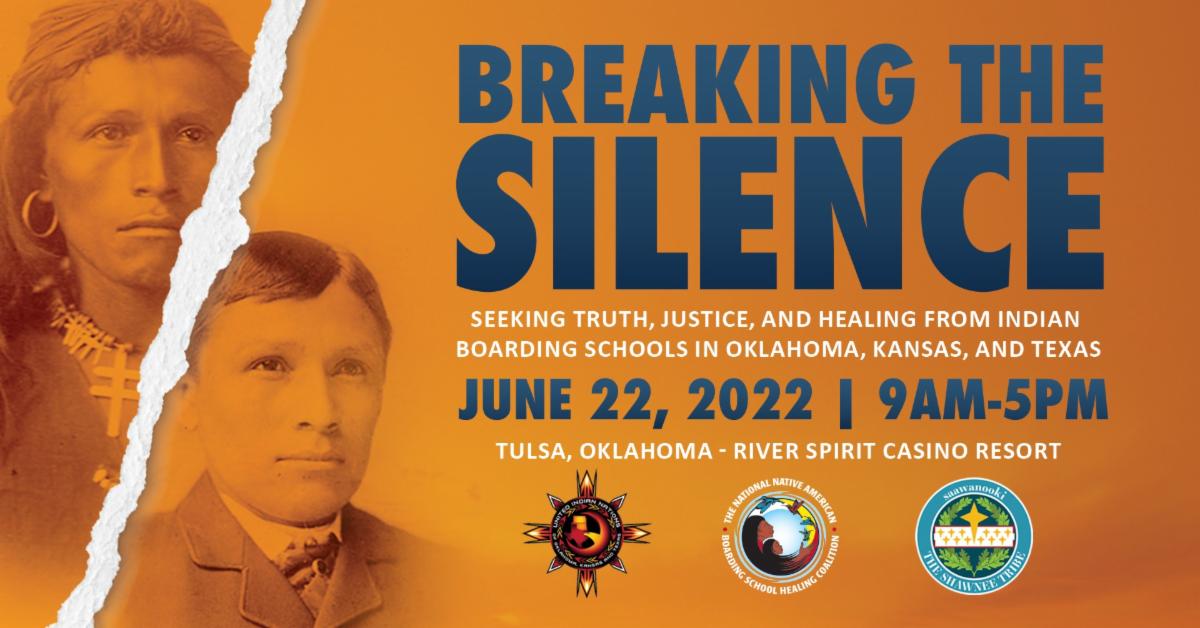
Hearing on Abuse of Native American Children | Breaking the Silence

May 12, 2022: The House Natural Resources Subcommittee on Indigenous Peoples of the United States held a hearing to examine a recent Interior Department report…  


Breaking the Silence - Seeking Truth, Justice and Healing from Indian Boarding Schools


Dear Relatives,

We are thrilled to announce a day-long summit we are calling, Breaking the Silence, a collaborative event co-hosted by the UINOKT, the Shawnee Tribe, and NABS. This summit welcomes and encourages Tribal leaders, tribal councils, healthcare professionals, tribal museum archivists, boarding school attendees and survivors, and their families to attend and explore the historical impacts of the federal Indian boarding school policy in Oklahoma, Kansas & Texas. register


About the National Native American Boarding School Healing Coalition
The mission of the National Native American Boarding School Healing Coalition (NABS) is to lead in the pursuit of understanding and addressing the ongoing trauma created by the United States Indian boarding school policy. The National Native American Boarding School Healing Coalition is a 501(c)(3) non-profit, incorporated in June 2012 under the laws of the Navajo Nation. For more information, visit: https://boardingschoolhealing.org/


Monday, June 6, 2022

Alaska’s ‘failing, dangerous’ foster care system

Alaska’s child welfare system is failing, dangerous and routinely violates the rights of children, asserts a first-of-its-kind class-action lawsuit filed against the state Office of Children’s Services in federal court Thursday.

The 90-page complaint alleges that systemic issues have long festered in almost every facet of Alaska’s child welfare system, and asks a federal judge to order immediate and sweeping changes.

“There has not, in Alaska, been a comprehensive lawsuit (on this subject)” until now, said Mark Regan, an attorney with the Disability Law Center of Alaska, one of the entities representing the plaintiffs.

The lawsuit is filed on behalf of 13 child plaintiffs by a partnership of attorneys, including the Northern Justice Project, the Disability Law Center of Alaska, Perkins Coie and A Better Childhood, a national nonprofit headquartered in New York. The Alaska Department of Health and Social Services and the Office of Children’s Services are named as defendants.

“Without a doubt,” the class-action lawsuit represents the biggest opportunity for foster care system reform that the state has seen, said Marcia Robinson Lowry, the director of A Better Childhood and a longtime litigator on child welfare issues.

DHSS and the Office of Children’s Services did not immediately respond to a request for comment about the lawsuit.

The state of Alaska has long known about the magnitude of the problems in its child welfare system but hasn’t acted to fix them, the lawsuit alleges.

Robinson Lowry’s organization, A Better Childhood, has filed similar class-action lawsuits seeking to reform child welfare systems in nearly a dozen other states or jurisdictions, including Oregon, Indiana, West Virginia and New York City. Some states, such as Oklahoma, have made improvements based on court orders. Many of the lawsuits are still in progress.

Alaska’s child welfare system “is not the worst,” said Robinson Lowry. “But it’s certainly not good.”

Some of the biggest problems in Alaska, according to the lawsuit: OCS worker caseloads are too high, sometimes three times the national average. Turnover is at a crisis level, topping nearly 60% annually and leading “mission critical tasks to go unmet,” according to a legislative report cited. Children are shuffled between foster homes too much. And Alaska Native children, who make up nearly two-thirds of the youths in foster care, aren’t provided with Alaska Native foster homes or other services, violating the Indian Child Welfare Act and “often inflicting deep wounds of cultural loss in the process.”

“All too often, children in OCS custody face unnecessary institutionalizations, inappropriate placements with non-relative foster families, and unconscionable delays in receiving timely health screenings and interventions,” Regan, with the Disability Law Center of Alaska, said in a statement.

The complaint includes stories about the Alaska plaintiffs, including a 16-year-old girl who’d lived at six different foster placements since 2020. Twice, the Office of Children’s Services sent her to residential treatment centers, where she reported being overmedicated and sexually abused by another child.

The lawsuit describes OCS placing children in North Star Behavioral Health Center, a locked, for-profit hospital in Anchorage, for more than 30 days “based on lack of other placement.” Another foster youth was allegedly called a racial slur and hit by their foster parent. That child is still in the same home. A sibling group of five racked up more than 40 placements between the group — within one year.

Other reports, lawsuits and audits have documented similar problems with the Office of Children’s Service.

The lawsuit seeks a court order that would force major reforms, including ordering the state to reduce OCS worker caseloads; meet federally required time limits for children’s case plans; provide licensing and financial support to extended family foster placements so more kids can live with relatives; and ensure that care recommended for kids in their case plans actually happens. Children with disabilities would need to get services in their home communities. And kids couldn’t be put into hospitals like North Star simply because other foster care placements weren’t available.

How those changes would be funded or implemented is less clear. Other states have made concrete changes as a result of lawsuits, Robinson Lowry said. She cites Tennessee, which has reduced the number of children in institutions. Oklahoma eliminated shelters where some children were sent because foster placements weren’t available.

“Class-action lawsuits can have a major impact on child welfare systems,” she said.

SOURCE 

MORE:

Class-action lawsuit says state is failing Alaska foster kids

Under the Indian Child Welfare Act, or ICWA, child welfare agencies are federally compelled to work as hard as possible to house Native foster ...
 
The year of the graves: How the world's media got it wrong on residential school graves
Most important of these efforts were the widely publicized undertakings of the 2008-2015 Truth and Reconciliation Commission of Canada (TRC), ...


Friday, June 3, 2022

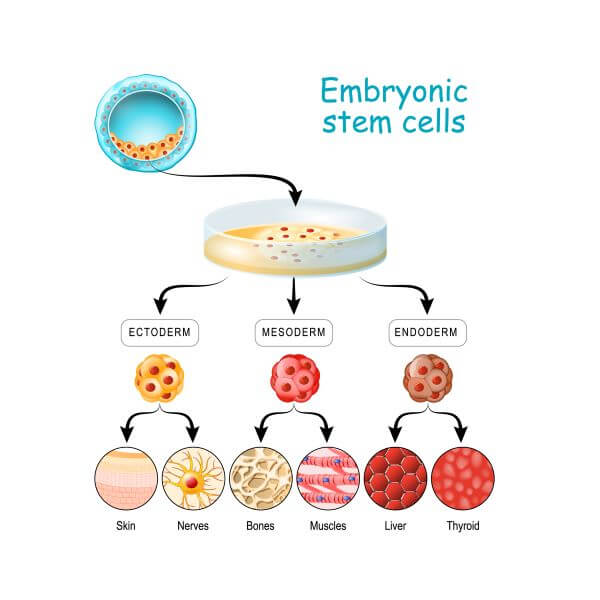
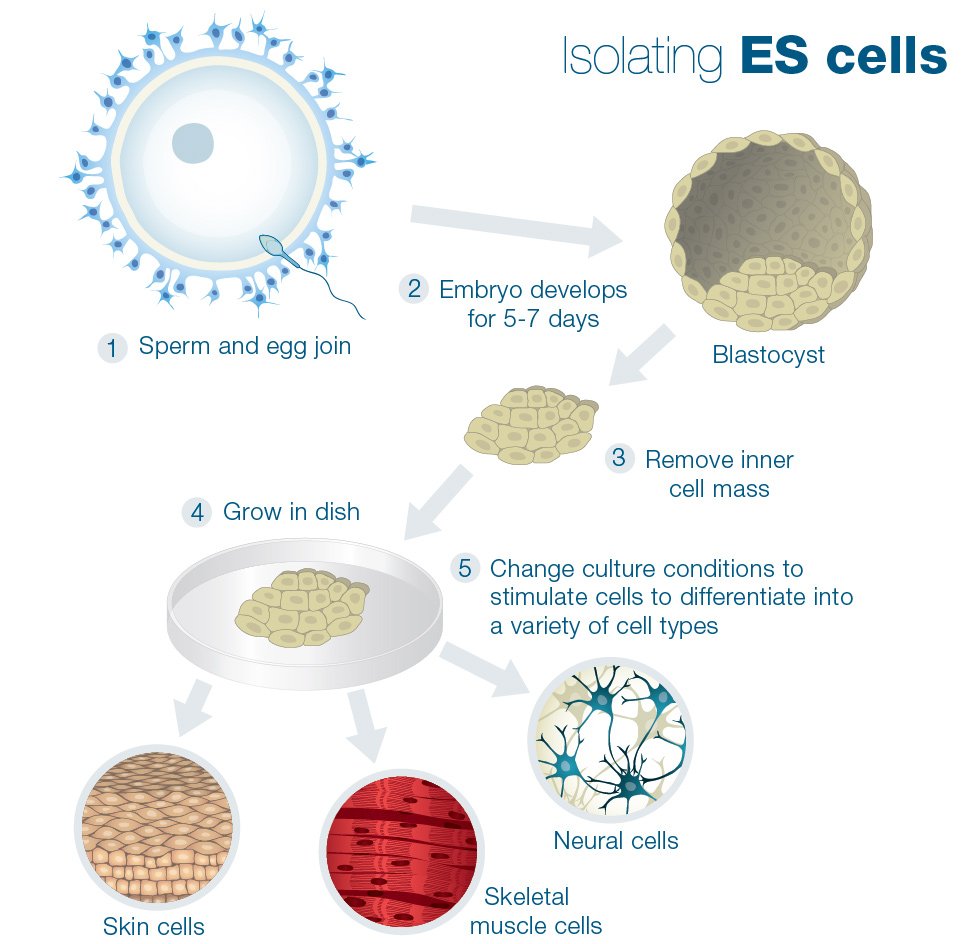
Adoption Abortion Stem Cell Debate

I am adopted, and I am pro-choice. So please hear me when I say this: adoption and abortion are not interchangeable. Adoption is not the solution to abortion.  KEEP READING
Wednesday, June 1, 2022

Find a Shelter in Indian Country


From StrongHearts Native Helpline

There is a severe resource gap (see current Resource Impact Summary) impacting the ability of tribes to address intimate partner violence in their communities. Presently, there are 259 Native-centered service providers that are culturally appropriate for Native Americans and Alaska Natives; and that includes only 62 shelters nationwide. In addition to the Native service provider database, through an invaluable partnership with the National Domestic Violence Hotline, StrongHearts’ advocates have access to more than 3,500 non-Native service providers in the U.S. 

What You Should Know

Shelters prioritize clients based on the lethality of their situation. That is why it is important to share all of the lethality concerns in your situation. Consider the following: 

●      Has the perpetrator increased physical or sexual violence?

●      Is there a history of strangulation, or threats of suicide or homicide?

●      Are you pregnant?

●      Are there weapons in the home?

Overcoming Challenges

A shelter can be very overwhelming if you have not been in one before. It’s important to differentiate between shelter types. 

Avoid saying the word "homeless" when looking for shelter. When fleeing an abusive relationship, be careful not to say you are homeless. This could result in being referred to a homeless shelter instead of a domestic violence shelter. A shelter for unhoused people can be used in a pinch but if you are a survivor of domestic and sexual violence it’s best to seek assistance from an intimate partner violence service provider. They will be more informed on your situation and rights and will likely have other services available for you.

It’s important to be aware of who may work at the shelter for your tribe. Indian Country is small, and a relative or a friend of a family member may work at your tribal shelter. If you feel like there may be a conflict of interest or you feel unsafe, you may want to seek shelter on other tribal lands if they allow citizens of other Native Nations.

If you have no other options you may consider staying at a non-Native shelter. You can still receive other services from a Native provider. If you stay in a non-Native shelter, it may be a good idea to ask about using your traditional medicines. Some shelters may have rules about smudging or using traditional medicines/herbs inside or on-premises.

If you struggle with substance abuse, it may be difficult to avoid other users. Be aware that although the shelter may have rules around substance use on their campus, oftentimes these rules are ignored. It’s important to be aware that this may happen and find a system to help keep yourself in check may be part of your safety plan.

If you have livestock, farmlands or even ceremonial duties in your Native community, it may be difficult to reach out to a shelter because of your responsibilities. Be aware that although these are all important, your safety is also important and should be prioritized. It can be helpful to reach out to your trusted community network to get assistance to care for your livestock and farmland or make arrangements to get support from other community members to help with ceremonial duties.

You may need to seek help from more than one organization to get all of your needs met. Don’t be afraid to seek more than one resource. Depending on how comfortable you are with churches, they often offer programs to help with bill payments. You can also use AuntBertha.org and search by zip code to find local resources for assistance, food, health, housing and employment. Oftentimes depending on what's available, you can find various programs that offer grants to help you get back on your feet.

Native Parents and Children

Shelters offer little privacy for families. If you have children the best shelter type for you is a transitional housing facility. They are often long-term, which means you will not need to leave every night and they help set you up with permanent housing when you're ready to leave their program.

Don't be afraid to have a conversation with your children to make sure that they understand what is happening. They should have the space to have their feelings validated and understand that they are not at fault for what is happening. Talk to them about your ground rules. It can be challenging to a parent in a new environment with different rules and other families with varying values. Remember, our children are sacred beings and can help bring healing into our lives and our communities.

Native Men

Very few Native-centered shelters are able to house male victim-survivors though several do offer non-residential services for men. Sometimes a shelter may be able to help support a survivor with a hotel room, legal advocacy or counseling services and case management. It can vary from shelter to shelter so it’s always best to clarify what services they are able to offer men.

Native LGBTQ2S+

Within the 2S+/LGBTQ+ community, intimate partner violence occurs at a rate equal to or higher than that of the cis-heterosexual community. Additionally, they may have concerns about being outed, not having inclusive restroom facilities, not being addressed with the correct pronouns and facing bias from other residents and staff members may prevent them from seeking a placement in a shelter. If you identify as a part of the LGBTQ2S+ community and are seeking shelter, here are a few questions to consider asking:

●      Ask questions about sleeping arrangements, restrooms and privacy so you know what to expect

●      Ask if there are any additional accommodations for your identity

●      Ask if the staff has training in working with the LGBTQ2S+ community

●      Ask about the safety and complaint procedures

If you experience bias or feel unsafe in the shelter, notify staff immediately and file a complaint.

Shelter Tips

Choosing to seek a shelter may be a part of your individual safety plan. Be aware that sometimes shelters are not immediately available and your safety plan should include some additional options while going through the process. Shelters can be overcrowded and Native-centered shelters may take some time to get into for families. 

Important things to consider when seeking a shelter: 

●      It can take a while (and a lot of calls) to find shelter space.

●      If there is an emergency shelter directory in your area, our advocates may suggest contacting them directly to help you find a vacancy. These directories maintain current information on all of the shelter vacancies in their area so calling them can be easier than calling each place individually.

●      Despite the potential for uncertainty, be respectful of shelter advocates during the intake process. They only want to help you. Speaking to a StrongHearts advocate before calling the domestic violence program may help you navigate some of the challenges.  

●      Remember that some shelters won't serve people who live out of the county, or out of state. If you desire to relocate to a different county or state, some shelters require a referral from the local shelter. Call the out-of-county/state program to learn more about the policies for accepting survivors.  

●      Call the shelter two to three times a day to check for space. Bed availability changes very quickly every day and many times it is given out on a first come, first served basis. Ask the shelter worker to recommend the best time to make a return call.

●      In the event that the shelter becomes undesirable, refrain from talking badly about it when speaking with a new shelter.  

●      If the shelter is full, shelter workers may be able to provide motel vouchers or know about alternative options at other nearby shelters.

Multiple needs require multiple programs which take time and considerable effort on the part of an advocate, please be as patient as possible. Our advocates are working hard to keep you safe.

Staying in A Shelter

Every shelter is different so get clarification on rules beforehand so there are no surprises. Some may have different rules on cell phone use and curfews.

Discrimination and/or mistreatment by shelter staff is not okay and there may be a way to address a grievance through proper channels. Contact the state domestic violence program to ask if there is a way to address the issue or file a complaint.

Avoid the drama. It’s good to find support if you can but recognize this is only temporary and sometimes it’s best to keep your head down and get the services you need. It’s hard living in a place with so many varying perspectives so be aware there may be conflicts among your new neighbors. 

Self-Care

Stress can greatly impact your health so it is important to consider self-care. Participating in self-care activities like exercise (if safe to do so), eating healthily, counseling and journaling could be helpful. Be gentle with yourself mentally and physically. Connecting with your cultural pregnancy practices during this time can be uplifting. Also, you can practice resilience by smudging, praying or sitting with your traditional medicines.

StrongHearts Native Helpline

If you consider leaving an abusive partner, StrongHearts Native Helpline can help you with safety planning and finding a Native-centered shelter.

StrongHearts Native Helpline is a 24/7 culturally-appropriate, anonymous, confidential and free service dedicated to serving Native survivors, concerned family members and friends affected by domestic, dating and sexual violence available by calling or texting 1-844-762-8483 or clicking on the chat icon on Strongheartshelpline.org

Showing Up in Support of Indigenous 2S+/LGBTQ+ Survivors for Pride Month


FROM:
 National Indigenous Women’s Resource Center, StrongHearts Native Helpline, Alaska Native Women’s Resource Center


This June, the National Indigenous Women’s Resource Center (NIWRC), StrongHearts Native Helpline (StrongHearts) and the Alaska Native Women’s Resource Center (AKNWRC) acknowledge, support and lift the voices of Native Two-Spirit, non-binary, lesbian, gay, bisexual, transgender, queer and/or questioning survivors of violence for Pride Month. As Indigenous nonprofit organizations, we strongly support the need to facilitate inclusive conversations about the identities intersecting across the Indigenous and 2S+/LGBTQ+ spectrum.

When NIWRC, StrongHearts, and ANWRC raise awareness on gender-based violence issues, we also recognize that our 2S+/LGBTQ+ relatives experience domestic violence and sexual violence at exceptionally high rates. Violence and abuse can happen to anyone. Across Indigenous cultures and communities, our traditional teachings uphold respect for all identities and celebrate diversity. As relatives, we must stand firmly against dangerous attitudes toward our 2S+/LGBTQ+ relatives and instead, use our Indigenous values and sacred teachings of love, respect and compassion to advocate for them. We see you. We support you. We honor your spirit.

For generations, Western culture has disparaged Indigenous religions and teachings about gender and sexuality, including the pre-existing traditional understanding that Two-Spirit individuals, embodying male and female spirits, are blessed by Creator. Colonialism and Western patriarchy threaten our relatives on the 2S+/LGBTQ+ spectrum with policy, violence and oppression across the United States. Within the 2S+/LGBTQ+ community, intimate partner violence occurs at a rate equal to or higher than that of the cis-heterosexual community.  American Indians, Alaska Natives, and Native Hawaiians in 2S+/LGBTQ+ communities face systemic discrimination, violence, and harassment at disproportional rates.  According to the 2015 U.S. Transgender Survey (USTS), of all the respondents who experienced sexual assault, 65% were American Indian/Alaskan Natives.  Also, 73% of Native respondents experienced intimate partner violence, including physical violence, compared to 54% of the overall USTS respondents. 2S+/LGBTQ+ relatives also experience other forms of domestic violence and additional barriers to seeking help due to fear of discrimination or bias.

These statistics do not include the intergenerational and individual trauma our Indigenous relatives experience. There is a need for intergenerational efforts to recognize, reclaim and dismantle oppressive and systemic injustices toward 2S+/LGBTQ+ survivors.

Although there are incredible resources available for LGBTQ+ survivors, there is an urgent need for more culturally-tailored, inclusive programs and resources that offer support services for Indigenous 2S+/LGBTQ+ survivors. As family members and communities, we must collectively advocate for more inviting, safe, accessible and inclusive spaces for our 2S+/LGBTQ+ relatives. All members of our families, communities, and nations should feel safe, protected and supported to live free of violence and discrimination.

Tips for Family and Friends

·       Show up: Family members and friends of 2S+/LGBTQ+ relatives can create safe spaces simply by showing up, listening and acknowledging their relative’s experiences. Keeping “open minds and hearts” can positively impact Indigenous 2S+/LGBTQ+ survivors.

·       Believe survivors: Validate the feelings of 2S+/LGBTQ+ relatives, assuring them that the violence they experienced is not their fault and they are not alone. Offering support when a loved one is hurting, even in seemingly small ways, encourages connection and protects against isolation.

·       Celebrate sacred teachings: Learning more about Indigenous 2S+/LGBTQ+ communities–including their history of trauma and teachings about love, compassion, courage, and support–can help reverse the shame tied to Western norms about gender and sexual orientation. Return to traditional teachings that honor all identities and sexualities. 

Helpful Resources

Read

·       Toolkit: How Families and Friends Can Reconnect with Native Teachings and Create Healing Spaces with and for Native 2S+/LGBTQ Victim-Survivors of Domestic Violence

·       Summary: How Families and Friends Can Reconnect with Native Teachings and Create Healing Spaces with and for Native 2S+/LGBTQ Victim-Survivors of Domestic Violence

·       Restoration Magazine: Reconnecting with Indigenous Teachings to Create Healing Spaces with and for Native 2SLGBTQ Survivors of Violence

·       Two-Spirit Identity from StrongHearts Native Helpline

·       LGBTQ2S (Two-Spirit) Resources by the Southwest Indigenous Women’s Coalition

·       Two-Spirit People from the National Congress of American Indians

·       Two Spirits, One Heart, Five Genders from Indian Country Today

·       A Spotlight on Native LGBT from the National Congress of American Indians

Watch

·       Virtual Conversations With the Field 1 of 4 How Family and Friends Can Reconnect with Native Teachings & Create Healing Spaces With & For Native LGBTQ2S Relatives

·       Virtual Conversations With the Field 2 of 4 How Family and Friends Can Reconnect with Native Teachings & Create Healing Spaces With & For Native LGBTQ2S Relatives

·       Webinar: Mending the Rainbow: Working with the Native LGBT/Two-Spirit Community

·       Webinar: Understanding the Dynamics and Tactics of Intimate Partner Violence through the Lens of Indigenous Survivors

For Youth

·       Native Youth Sexual Health Network

·       It Gets Better Project

·       Indigenizing Love: A Toolkit for Native Youth to Build Inclusion PDF

·       A Guide to Being an Ally to Transgender and Nonbinary Youth by The Trevor Project

·       How Can I Make My Center An Affirming Place For People Who Identify As LGBTQ? by NRCDV

·       Setting The Stage: Strategies For Supporting LGBTIQ Survivors by Washington Coalition of Sexual AssaultPrograms

Get Help

·       StrongHearts Native Helpline call/text 1-844-7NATIVE (762-8483), or chat: strongheartshelpline.org. StrongHearts Native Helpline is a 24/7 domestic violence, dating and sexual violence helpline for American Indians and Alaska Natives, offering culturally appropriate support.

·       The Trevor Project call 1-866-488-7386, text 678678, or chat thetrevorproject.org/get-help. The Trevor Project has trained crisis counselors who understand the challenges LGBTQ young people face, available 24/7.


About StrongHearts Native Helpline

StrongHearts Native Helpline was created by and built to serve Indigenous communities across the United States. It is a culturally-appropriate, anonymous, confidential and free service dedicated to serving Native American and Alaska Native survivors and concerned family members and friends affected by domestic, dating and sexual violence. Advocates are available 24/7 by texting or calling 1-844-7NATIVE (1-844-762-8483) or via online chat at strongheartshelpline.org. Connect with knowledgeable advocates who can provide lifesaving tools and immediate support to enable survivors to find safety and live lives free of abuse. StrongHearts Native Helpline is a proud partner of the National Indigenous Women’s Resource Center and the National Domestic Violence Hotline.

About the National Indigenous Women’s Resource Center

The National Indigenous Women’s Resource Center, Inc. (NIWRC) is a Native-led nonprofit organization dedicated to ending violence against Native women and children. NIWRC provides national leadership in ending gender-based violence in Tribal communities by lifting the collective voices of grassroots advocates and offering culturally grounded resources, technical assistance and training, and policy development to strengthen Tribal sovereignty. niwrc.org

About the Alaska Native Women’s Resource Center

Organized in 2015, the Alaska Native Women’s Resource Center (AKNWRC) is a tribal nonprofit organization dedicated to ending violence against women with Alaska’s 229 tribes and allied organizations. AKNWRC board members and staff are Alaska Native women raised in Alaska Native Villages and have over 250 years of combined experience in tribal governments, nonprofit management, domestic violence, and sexual assault advocacy (both individual crisis and systems and grassroots social change advocacy at the local, statewide, regional, national and international levels), and other social services experience. AKNWRC’s philosophy is that violence against women is rooted in the colonization of indigenous nations and thus dedicated to strengthening local, tribal government’s responses through community organizing efforts advocating for the safety of women and children in their communities and homes against domestic and sexual abuse and violence. aknwrc.org


around twitterland


CLICK OLDER POSTS (above) to see more news

CLICK OLDER POSTS  (above) to see more news

MEGWETCH THANK YOU

HUGE Thank you for visiting this blog and sharing this with your kin. It's appreciated. Contact Trace anytime! Use the form below.

BOOKSHOP

Please use BOOKSHOP to buy our titles. We will not be posting links to Amazon.

Popular Posts

To Veronica Brown

Veronica, we adult adoptees are thinking of you today and every day. We will be here when you need us. Your journey in the adopted life has begun, nothing can revoke that now, the damage cannot be undone. Be courageous, you have what no adoptee before you has had; a strong group of adult adoptees who know your story, who are behind you and will always be so.

OUR HISTORY

OUR HISTORY
BOOK 5: Lost Children of the Indian Adoption Projects