This blog was a backup for American Indian Adopteesblog
USE THE SEARCH BAR or SEARCH TOPICS at bottom of this blog
If you need support
Support Info: If you are a Survivor and need emotional support, a national crisis line is available 24 hours a day, seven days a week: Residential School Survivor Support Line: 1-866-925-4419. Additional Health Support Information: Emotional, cultural, and professional support services are also available to Survivors and their families through the Indian Residential Schools Resolution Health Support Program. Services can be accessed on an individual, family, or group basis.” These & regional support phone numbers are found at https://nctr.ca/contact/survivors/ .
MY EMAIL: tracelara@pm.me
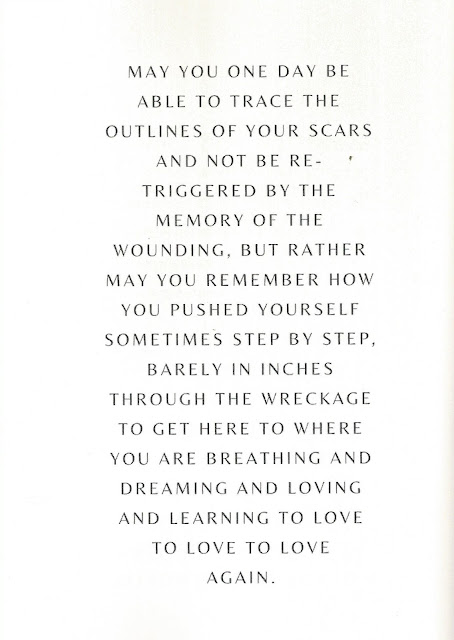
I am not murdered, and I am not missing, but parts of me have been disappeared. — Leanne Simpson
They too know all too well that some cracks were built just for us to fall through. We live in a world that tries to steal spirits each day; they steal ours by taking us away.
From Industrial Schools to forced assimilation, genocide means removal of those who birth nations — our living threatens. Colonization has been choking
us for generations. I tell my girls they are vessels of spirit, air to lungs expanding; this world cannot breathe without us. There are days I wish
I didn’t have to teach these lessons, but as an Indigenous womxn silence is deadening. There is danger in being seen, our bodies are targets
marked for violence. We carry the Earth’s me too inside us, a howling wind, our mothers & their mothers swallowed these bullets long ago.
The voices ricochet I wish I were invisible I wish I were invisible I wish echoes in my eardrums — we know what it’s like to live in fear. Colonialism’s bullet sits cocked,
waiting behind a finger on trigger. We breathe and speak and sing for survival. We carve out in lines; we write — I know joy I know pain I know love
I know love I know — lessons we’ve carried throughout time. Should I go missing: don’t stop searching; drag every river until it turns red and the waters of our names
stretch a flood so wide it catches everything. And we find each other whole and sacred, alive and breathing and breathing and breathing.
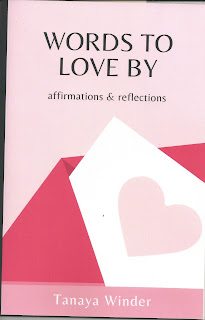
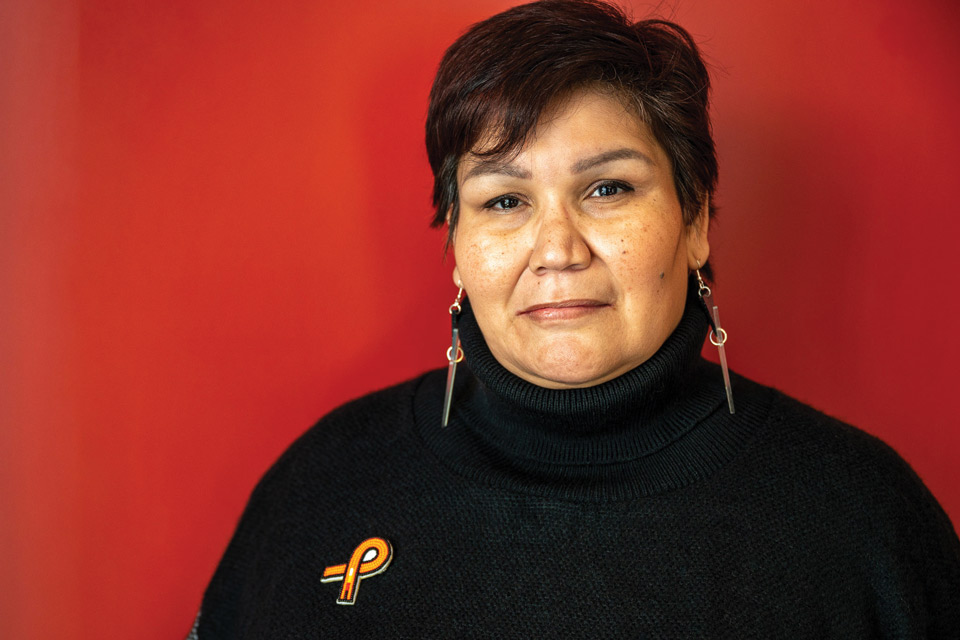
Poet, writer, and educator Tanaya Winder is an enrolled member of the Duckwater Shoshone Tribe and has ancestors from the Southern Ute, Pyramid Lake Paiute, Navajo, and Black tribes.
In an interview with Zingara Poetry Review, Winder notes, “I am a person who hopes my own writing and poetry reflects the times and the needs of society; without interacting with the community the poetry cannot attempt to reflect communities and so I believe poetry must intersect with community. Poetry has the potential to create community for people who are searching for it by providing a space to interact and share experiences on the page.”
Winder cofounded As/Us, an online journal devoted to writers of color; cofounded the traveling exhibit Sing Our Rivers Red to raise awareness of missing and murdered indigenous women; and founded Dream Warriors Management, a company that manages indigenous artists. The National Center for American Indian Enterprise Development named her one of “40 Under 40” emerging American Indian leaders, and she was a 2017 First Peoples Fund Artists in Business Leadership fellow.
Author, community organizer and social justice advocate Colleen Hele-Cardinal, a Nehiyaw Iskwew from Onihcikiskowapowin Saddle Lake Cree First Nation Alberta, reflected upon her experiences growing up in a non-Indigenous household as a ‘60s scoop adoptee on Feb. 11 with Humanities Dean Annalee Lepp on a virtual stage for Humanities Reads: Colleen Hele-Cardinal, the keynote event of UVic’s fourth annual Humanities Week.
Hele-Cardinal is a co-founder of the National Indigenous Survivors of Child Welfare Network and a public figure who speaks candidly about the connections between murdered and missing Indigenous women, colonial violence, racism and the Indigenous child welfare system.
Her latest project, In Our Own Words: Mapping the ‘60s Scoop Diaspora, provides a mapping tool for visualizing the displacement of ‘60s scoop survivors across the globe, a platform to share personal stories and experiences and a database for survivors and their families looking to reconnect with one another.
Coleen read from her book, Ohpikiihaakan-ohpihmeh (Raised somewhere else): A ‘60s Scoop Adoptee’s Story of Coming Home and discussed the themes raised within it with Lepp before engaging in a live Q&A with the audience.
“Ohpikiihaakan-ohpihmeh powerfully confronts the legacy of colonialism in Canada by telling hard truths about the ‘60s scoop based on the author’s personal experiences,” says Lepp. “We are honoured to welcome Colleen Hele-Cardinal to UVic and to have this opportunity to listen and have a conversation with her about her work.”
A new Saskatchewan film is drawing a direct link between government policies of the residential school era, to the 60s Scoop, to the current rash of violence against Indigenous women.
Everything is Connected was funded by a number of organizations including the First Nations University Canada, the Amiskusees Semeganis Worme Family Foundation and the federal government.
The stories are all different, but they all have one thing in common.
One of the primary goals of the Indian Child Welfare Act (ICWA) is to limit the influence or bias of state workers in decisions placing American Indian children out of their home and community.1 While this focus usually concerns state social workers, the officials who most often seek removal of a child, or the courts, the body that issues the orders and opinions, guardians ad litem (GALs) receive less attention.2 Despite this lack of attention, GALs exert a similar level of influence as state social workers. In Adoptive Couple v. Baby Girl,3 the role of the GAL was unusual but critical – the GAL, while officially appointed by the court, was handpicked by the adoptive parents.4 The role of the GAL remains understudied in the ICWA literature, though GALs continue to exert enormous influence in the courts. Unfortunately, many GALs throughout the nation subvert the national policy embodied by the ICWA by advocating against the implementation of the statute in case after case.5
There are three other papers in the symposium:
Perspective I by Professor Barbara Ann Atwood is available here,
Perspective II by Professor James G. Dwyer is available here, and
Perspective III by Professors Naomi Cahn and June Carbone is available here.
I am reading this book NOW and was warned I would get sick... and I am. TLH (blog editor)
about the book:
For four hundred years--from the first Spanish assaults against the Arawak people of Hispaniola in the 1490s to the U.S. Army's massacre of Sioux Indians at Wounded Knee in the 1890s--the indigenous inhabitants of North and South America endured an unending firestorm of violence. During that time the native population of the Western Hemisphere declined by as many as 100 million people. Indeed, as historian David E. Stannard argues in his stunning book in 1992, the European and white American destruction of the native peoples of the Americas was the most massive act of genocide in the history of the world.
Stannard begins with a portrait of the enormous richness and diversity of life in the Americas prior to Columbus's fateful voyage in 1492. He then follows the path of genocide from the Indies to Mexico and Central and South America, then north to Florida, Virginia, and New England, and finally out across the Great Plains and Southwest to California and the North Pacific Coast. Stannard reveals that wherever Europeans or white Americans went, the native people were caught between imported plagues and barbarous atrocities, typically resulting in the annihilation of 95 percent of their populations. What kind of people, he asks, do such horrendous things to others? His highly provocative answer: Christians. Digging deeply into ancient European and Christian attitudes toward sex, race, and war, he finds the cultural ground well prepared by the end of the Middle Ages for the centuries-long genocide campaign that Europeans and their descendants launched--and in places continue to wage--against the New World's original inhabitants. Advancing a thesis that is sure to create much controversy, Stannard contends that the perpetrators of the American Holocaust drew on the same ideological wellspring as did the later architects of the Nazi Holocaust. It is an ideology that remains dangerously alive today, he adds, and one that in recent years has surfaced in American justifications for large-scale military intervention in Southeast Asia and the Middle East.
At once sweeping in scope and meticulously detailed, American Holocaust is a work of impassioned scholarship that is certain to ignite intense historical and moral debate.
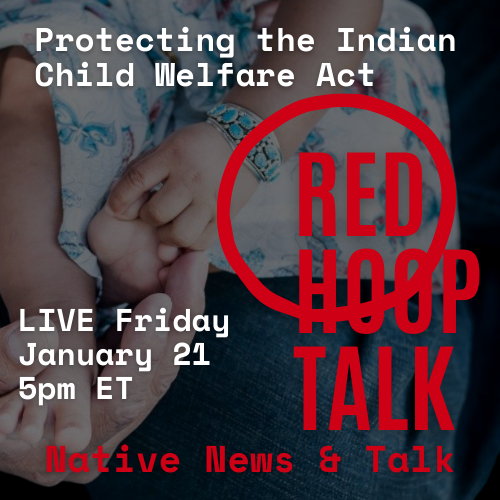
This episode of #REDHOOPTALK discusses protecting the Indian Child Welfare Act with Dan Lewerenz, citizen of the Iowa Tribe of Kansas and Nebraska. ICWA is legislation passed in 1978, developed by advocates fighting state judges, child welfare agencies, religious entities & boarding schools to return children taken because of historic racist ideology.
Today, advocates fight to protect ICWA from continued racism & conservative political groups and corporations wanting more land and resources that are seeking to do away with Tribal Sovereignty.
Our guest expert is DAN LEWERENZ, a citizen of the Iowa Tribe of Kansas and Nebraska. Dan is a staff attorney at the Native American Rights Fund (www.narf.org). Before joining NARF, Dan was an attorney-advisor for the U.S. Department of the Interior, Office of the Solicitor, Division of Indian Affairs; a law clerk to the Hon. Claudia Wilken (N.D. Cal.) and the Hon. Leo I. Brisbois (D. Minn.); and an associate in the Oklahoma City office of Hobbs, Straus, Dean & Walker, LLP. Dan earned his Juris Doctorate from the University of Wisconsin Law School, where he graduated cum laude and Order of the Coif. Before going to law school, Dan spent more than 10 years as a reporter and editor for The Associated Press, and was a board member, officer, and president of the Native American Journalists Association. He earned his bachelor’s degree from Kansas State University.
Utah: Bill takes on ‘excessive removal of Native American children from their homes’
SB28 protects Native children in the state welfare system.
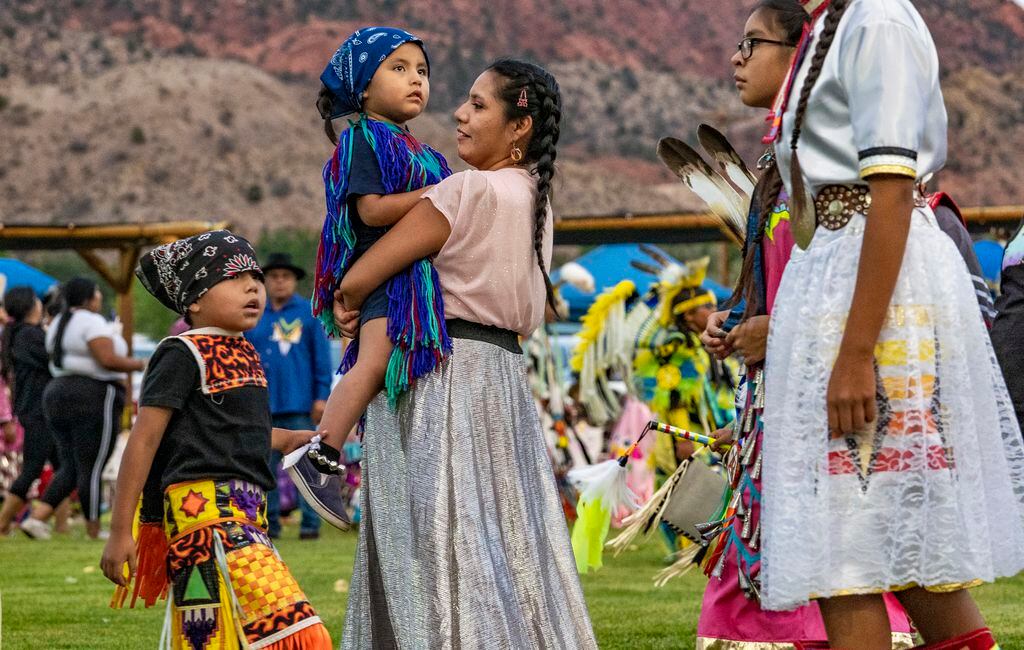
Men, women and children from Native American tribes throughout the West show their regalia during the Grand Entry at the 41st Annual Paiute Indian Tribe of Utah Restoration Gathering, Aug. 13, 2021 in Cedar City, Utah. (Leah Hogsten | The Salt Lake Tribune)
Utah continues to neglect Indigenous children and families, tribal community leaders and experts told members of the Senate Government Operations and Political Subdivisions on Monday, February 1, 2022.
Indigenous leaders hope the bill SB28 would fix some of the inequities which have plagued Indigenous residents of Utah for the last 126 years. The bill creates an Office of American Indian-Alaska Native Health and Family Services under the Utah Department of Health and Human Services to make sure that Indigenous children and families get protection when they enter the state’s child welfare system.
SB28 also moves the Indian Child Welfare Act Liaison and the American Indian-Alaskan Native Health Liaison from two different state agencies and brings both roles into the merging Utah Department of Health and Human Services. The merger is expected to take effect in July.
Supporters of the bill say the proposed merger streamlines how the government responds to Indigenous children and families when these children are taken by welfare agencies and also ensures that the Indian Child Welfare Act of 1978 is enforced. Also known as ICWA, the federal law governs the removal and placement of Native children to combat the high number of Indigenous children removed from their homes.
The bill “combats the excessive removal of Native American children from their homes and acknowledges the alarmingly high percentage of Indian families which are broken up by the removal of children,” Sen. Jani Iwamoto, D-Holliday, told The Tribune.
Paul Tsosie, legal counsel to the Confederated Tribes of the Goshute Reservation, said that SB28 also allows Utah to meet the burden of higher protections for Native families in the state, a burden he says is spelled out through the U.S. Constitution and the treaties between tribes and the federal government.
“The [Indian Child Welfare Act] specialist is crucial to help all parties correctly apply ICWA in the Utah State Court system,” Tsosie said.
The goal is to make sure that cultural sensitivity and Indigenous values are being taught to children who go to any home in the state, Tsosie added.
Rupert Steele, chairman of the Confederated Tribes of the Goshute Reservation, and Moroni Benally, a lobbyist for the Navajo Nation, and other tribes requested the Legislature pass the bill to protect the well-being, safety and health of the approximately 41,644 Indigenous children and families living in the state.
I’m familiar with Indigenous resurgence and how it’s connected to the restoration and reparation happening within Indigenous communities — work that often focuses on healing intergenerational divides caused by Indian Residential Schoolsand the 60s Scoop — but this idea of “re-indigenization” was different.
It appeared to justify the idea that any person who discovers they have a “root Indigenous ancestor” from anywhere between 150 to 400 years ago must claim an Indigenous identity and proudly take up spaces deemed to require Indigenous perspectives and voices.
Part of this process appeared to involve attaching and embedding oneself, not within the particular Indigenous community or Nation where their long-ago “Indigenous” ancestor hailed from, but within internal institutional Indigenous communities or organizations that fronted as “Indigenous communities” for the purpose of institutional or “urban” legitimacy.
This is a problem.
As a citizen of the Anishinaabeg Nation and community member of Nezaadiikaang (Lac des Mille Lacs First Nation), I am the Queen’s National Scholar in Indigenous Studies and an associate professor at Queen’s University, Ontario. I have been in academia for a decade now, and previously worked in various capacities serving Indigenous communities. My first full-time job after undergrad was in the political office of former Grand Chief of Nishnawbe Aski Nation Stan Beardy.
Given that my own family members have continuously held political appointments, I have been listening to Anishinaabeg articulate concepts of self-determination, nationhood and sovereignty for many years.
Indigeneity through self-indigenization
I want to address the inherent problems with indigeneity through self-indigenization or re-indigenization.
“Mining” the archive for biological trace(s) of “nativeness” follows the same settler colonial, possessive and extractivist logic of mining Indigenous lands.
Both Indigenous lands and identities are positioned as resources that people are entitled to claim and own. Dakota scholar Kim Tall Bear has shown us how this practice is linked to Eurocentric concepts of “identity” that privilege individualism and inherited property.
That DNA test doesn’t make you Indigenous.(Shutterstock)
The issue is that in their rush to “indigenize,” universities have created the conditions whereby someone who has mined the genealogical archives can access a position reserved for an Indigenous person, displacing those of us who are connected to and claimed by a living community/Nation of people.
When Indigenous folks push back against self-indigenization or re-indigenization, they receive considerable backlash that in many ways distracts from the key issues at hand.
We are often accused of being caught up in divisive blood quantum requirements. The irony, of course, is that I have yet to hear any Indigenous critic of the extractivist logic even mention “Indian status” or “blood quantum” in their arguments.
The only ones who seem obsessed with “native blood” are those whose entire claim to indigeneity is based on them locating someone in their genetic or ancestral history.
I recently heard arguments that self-indigenization is a moral, ethical and traditional process that brings us out of the colonial shackles of the Indian Act. But erasing or ignoring the reality of the Indian Act, and of Indigenous survival in the face of it, does not magically bring about decolonization.
The problem with re-inventing oneself as “Indigenous” is based on the same logic of possession and fantasies of entitlement that rationalized settler possession of Indigenous lands.
Embracing your “Indigenous roots,” re-casting oneself as Indigenous and thinking that this is the best way to account for your history or to help Indigenous Peoples is not supporting Indigenous sovereignties or the movement toward decolonial futures.
In her new book, Red Scare: The State’s Indigenous Terrorist, Lenape scholar Joanne Barker uses the term “kinless Indian” to describe how individuals whose initial claim to indigeneity stems from a false, tenuous or distant ancestor, and how this claiming absolves the notion that they have any benefit from or complicity with the dispossession of, and violence against, Indigenous Peoples.
Drawing on the work of Métis scholar Adam Gaudry, Barker clearly articulates how this process of individual or collective Indigenous “re-invention” undermines Indigenous self-determination and sovereignty, as it reflects this idea that Indigenous communities and their respective governance systems did not survive colonization.
It is very clear that we are not facing an Indigenous identity crisis in public institutions. Indigenous Nations have always maintained their citizenship orders. They have always retained the right to determine who does and does not belong. We know who we are.
What we are facing has been, and continues to be, a settler colonial crisis, which under its current guise, seeks to replace us.
Disclosure statement: Celeste Pedri-Spade, Associate Professor & QNS in Indigenous Studies, Queen's University, Ontario,does not work for, consult, own shares in or receive funding from any company or organization that would benefit from this article, and has disclosed no relevant affiliations beyond their academic appointment.
Department of Human Services says reforms are starting to work and newer state program shows promise.
By Jessica Washington, Fuller Project/Special to the Star Tribune | January 24, 2022
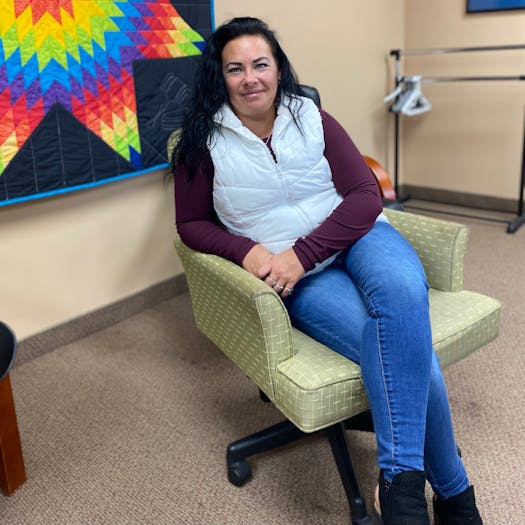
Photo: Jessica Washington/The Fuller Project. Caption: Teresa Nord works as a parent mentor at the ICWA Law Center. Nord, who is a Navajo and Hopi Indian descendant, says she had her daughter removed by child protective services.
Teresa Nord regained custody of her eldest daughter several years ago, but the experience still haunts her.
"I live with this constant fear," says Nord, 42, a Navajo and Hopi Indian descendant who lives in Glencoe, Minn. "I call it child protection PTSD, that they're just gonna one day knock on my door."
In 2015, Nord's then 6-year-old daughter told her she had been abused by one of her mom's close friends. Nord reached out to a social worker for help — only to have her daughter immediately removed by child protective services.
Nord spent three years fighting to regain custody, but her daughter's time in foster care left her with deep abandonment fears and exacerbated other mental health challenges. "The foster provider told her, 'Your mom is a bad mom. You're never going to see her again [and] you might as well get used to that,'" Nord says.
Recent discoveries of mass graves on former indigenous boarding school sites have led to an international reckoning over the atrocities committed by the U.S. and Canadian governments in the name of assimilation. And political leaders like Minnesota Gov. Tim Walz have acknowledged the deep trauma the schools inflicted upon generations of Native families.
However, Native parents and experts in Native child welfare in Minnesota say that many of the underlying beliefs about Native families that fueled the boarding school systems are perpetuated by the state's modern child welfare system, with devastating effects.
Many Native mothers like Nord can't shake the fear of having their children ripped away from them or the ripple effects of generations of Native removals.
"There's a really explicit connection in the indigenous community's mind between boarding schools and the child welfare system," says Nicole Martin Rogers, a White Earth Ojibwe descendant and senior research manager at Wilder Research, a research organization that works with nonprofits and governments. That's because boarding schools are "how the system first started taking kids away from their families," she said.
The boarding schools legacy
In the 1800s, the federal government established mandatory boarding schools for Native American children, with the mission of assimilating Native children. The first boarding school in Minnesota opened in 1871. Children in these schools often were starved, beaten and forced to sever their connection to their Native heritage and language.
Although these schools mostly were discontinued by the 1950s, Native children continued to be removed from their homes at staggering rates through adoption.
Native children were removed from their families in Minnesota and other states at such high rates that outrage from Native communities led to the creation of the 1978 Indian Child Welfare Act (ICWA).
ICWA mandates that child welfare agencies give special consideration to cases involving enrollable tribal members in the form of consultation with tribes.
But for Native women like Nord, who is a tribal descendant but not an enrollable member, these protections don't apply.
Social workers and courts often fail to give Native parents adequate and culturally appropriate guidance on how to reunite with their children, a core tenet of ICWA, says Sadie Hart, an ICWA compliance court monitor in Ramsey County. And they often mandate parents to follow impossibly strict deadlines to resolve issues related to poverty or addiction to regain custody, without providing adequate support to do so, she says.
Looking back on the boarding school and adoption eras, it's easy to say they were wrong, says Shannon Smith, executive director of the ICWA Law Center. But she says the underlying mentality persists, as does the impact, often due to factors like cultural ignorance or mistaken beliefs about Native parents.
"I think a lot of times removals [are] society … equating removal with safety. And that is an equation that is just automatic. And I think that's fundamentally flawed," Smith says.
Indeed, some experts say, poverty can often look like neglect to social workers, especially in families of color. Even when poverty is causing instability that puts kids at risk, removal may not be the best option and can exacerbate rather than fix the root issues.
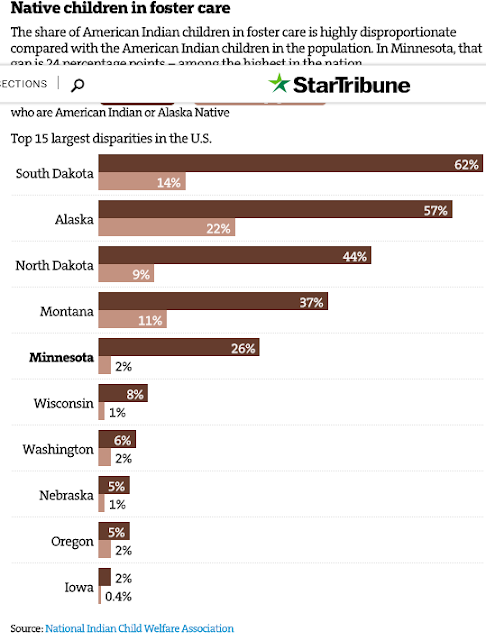
In Hennepin County, where the ICWA Law Center is located, Native Americans account for roughly 26% of those living in poverty, although they make up just 1% of the population, according to the county's 2018 report "Child Protective Services: Reform and Child Well-Being."
"There are so many indigenous families living in poverty," says MartinRogers. "It's hard not to consider it neglect … if the caseworker walks into the house and there's no food in the refrigerator or the kids don't have a bed to sleep on or other things that can result from someone just being really poor."
Canada: Indigenous community finds 93 potential unmarked graves
Williams Lake First Nation unveils findings of preliminary search at former ‘residential school’ known for abuse.
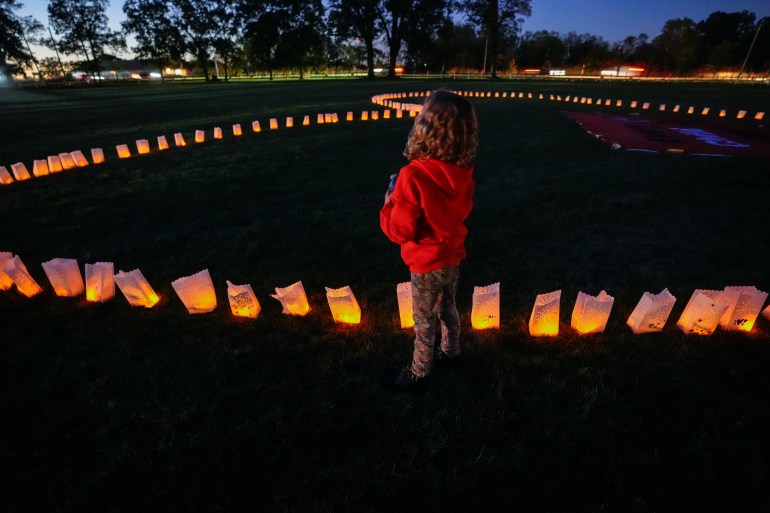
A child stands next to candles during a vigil on Canada's first National Day for Truth and Reconciliation, in Ohsweken, Ontario, Canada [File: Carlos Osorio/Reuters]
Warning: The story below contains details of residential schools that may be upsetting. Canada’s Indian Residential School Survivors and Family Crisis Line is available 24 hours a day at 1-866-925-4419.
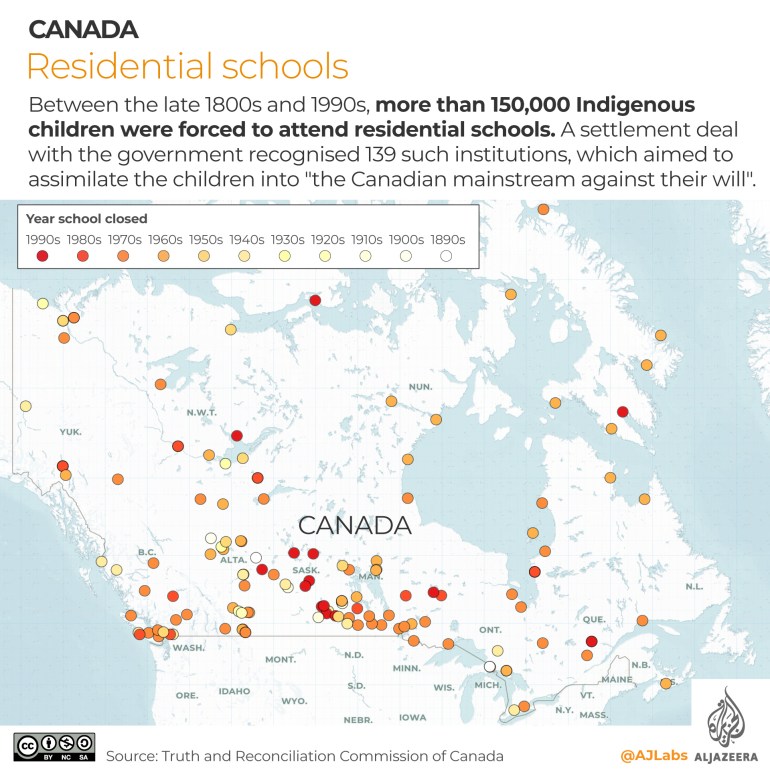
Canada – An Indigenous community in Canada’s western province of British Columbia has found dozens of potential unmarked graves on the grounds of a former residential school, the latest such discovery over the past year.
Williams Lake First Nation announced on Monday that preliminary results of the first phase of a geophysical search at St Joseph Mission Residential School uncovered 93 “reflections” – believed to be unmarked gravesites.
“Ninety-three is our number,” Chief Willie Sellars told reporters.
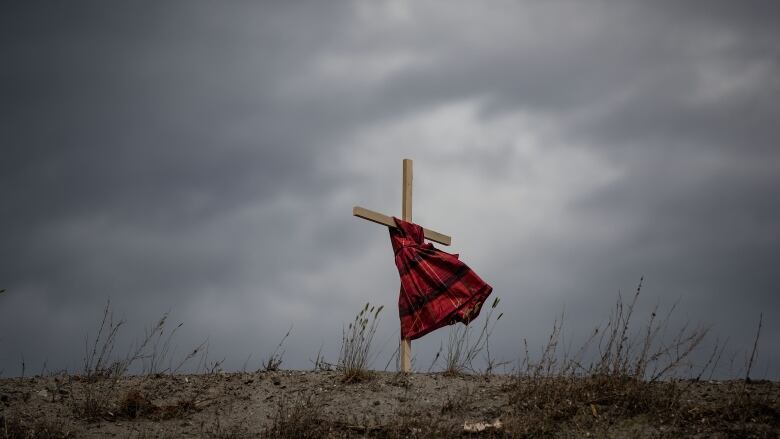
A child's dress hangs on a cross near the former Kamloops Indian Residential School. (Canadian Press/Darryl Dyck)
The leadership of Tk'emlúps te Secwépemc hopes to identify and locate missing children believed to be buried in unmarked graves near the former Kamloops Indian Residential School (IRS) with the help of previously undisclosed documents set for release by the federal government.
The federal government plans to transfer more than 875,000 records through a recently signed agreement with the National Centre for Truth and Reconciliation (NCTR), the archival repository for all of the material collected by the Truth and Reconciliation Commission.
Those files include the school "narrative" for Kamloops IRS, which summarizes the institution's history, including its administration, attendance record, key events and reports of abuse.
"We have to find answers," Tk'emlúps te Secwépemc Kukpi7 (Chief) Rosanne Casimir told CBC News.
"Access to the records means not having to re-traumatize ... residential school survivors to pinpoint information about who attended KIRS and who could possibly be in the unmarked graves."
Tk'emlúps te Secwépemc sent shockwaves around the world last May when it announced the preliminary findings from ground penetrating radar scans — 215 suspected graves of children near the site of Kamloops IRS.
Now, the community and residential school survivors are waiting for their chance to review these records for the first time, which could help piece together what happened at Canada's largest residential school. KEEP READING
PLEASE WATCH
The Fifth Estate shows how a B.C. First Nation is dealing with the traumatic discovery of what are assumed to be the graves of children near a former residential school, as it tries to lead the way for other communities coping with a similar tragic history. 45:35
California paved the way for reparations conversation. Will America ever follow?
About 60 years after mandatory attendance for Canada’s brutal Indian residential school system ended, the country created its own Truth and Reconciliation Commission. From the late 1800s to the mid-1940s, this school system prioritized the erasure of Indigenous culture in Canada. Earlier this month, Canada’s government agreed to pay $31.5 billion to fix country’s welfare system and to pay reparations to indigenous people harmed by it, a settlement aided by what the country learned from its commission.
Yet the closest thing America has to any of the aforementioned commissions is California’s first-in-the-nation reparations task force, which started in 2021, roughly 400 years after slavery first began and 156 years after Congress abolished it.
Former patients can contact any of the four law firms involved in the class-action lawsuit.
Archive photo of unidentified children at Charles Camsell Indian Hospital. Photo: APTN file
The Hope for Wellness Help Line offers immediate help to all Indigenous Peoples across Canada. Call 1-855-242-3310 or connect to the online chat at www.hopeforwellness.ca
A class-action lawsuit against the federal government over the treatment of patients in Canada’s Indian Hospital system has not been settled or begun a claims process.
A lawyer issued that statement Thursday after incorrect information appeared on Facebook this week garnering hundreds of responses from former patients.
“There’s no settlement and there may not be one,” said class-action lawyer Doug Lennox of Klein Lawyers in Vancouver, one of four law firms suing the federal government on behalf of thousands of former patients.
“This may be one of those cases that goes to trial.”
Last week, Fred Wilson, a First Nations health support worker on Vancouver Island, posted an ad for one of the law firms that said, “The Indian Hospital Claim Process is starting” and at the bottom, “Fred will Email you a form to start the process.”
Fred Wilson is a health support worker raising awareness about the Indian Hospital class-action lawsuit. Photo: Submitted.
But the process hasn’t started yet.
The four firms are suing Canada for $1.1-billion in damages alleging the operation of 29 segregated facilities known as “Indian Hospitals” was negligent and breached fiduciary duties owed to Indigenous Peoples.
The case was certified on Jan. 17, 2020, and still has a long way to go.
“There’s a lot of complicated issues to go through,” said Lennox Thursday. “We’re still gathering information on how many patients went through the hospitals and how many may still be alive.”
“Indian hospitals” operated between 1945 and 1981 for Indigenous peoples to be treated for tuberculosis and other ailments.
The Charles Camsell Indian Hospital in Alberta. Photo: APTN file
The Charles Camsell in Edmonton was one of the largest, with a patient population of more than a thousand at its peak.
“The class was consent certified but all that means is we have the right to proceed on behalf of the class,” added lawyer Steven Cooper of Cooper Regel in Alberta, another of the four law firms involved.
“That’s no guarantee of settlement or success at trial.”
Both lawyers say they are months – possibly years – from a final result.
And mistakenly using the words “Indian Hospital Claim Process” in the ad didn’t help.
This ad on Facebook wrongly said the claims process was starting. Photo: Facebook
“I heard from at least 300 people,” said Wilson, who is working with Klein to create awareness of the lawsuit among Indigenous Peoples.
“It’s my mistake; 100 per cent my mistake. I’ve updated that now.”
The new post now asks: “Do you qualify?”
Former patients can contact Wilson or any of the four law firms involved for a qualification form.
“There’s a lot of people out there who still haven’t heard about this case,” said Lennox, who is also involved in the ‘60s Scoop class-action settlement.
“We’re very grateful that they called us, but just understand it’s a longer process than you may have thought based on Facebook.”
‘60s Scoop
There are many Indigenous class-action lawsuits going on at the same time.
“There’s so many wrongs to right,” said Lennox, “but it’s confusing and very hard for people to navigate.
The Federal Indian Day School settlement is offering compensation for damages and abuses suffered by students forced to attend one of the identified Federal Indian Day Schools or Federal Day Schools.
The Indian Residential Schools Day Scholars settlement is for students who attended an Indian Residential School during the day only (and did not sleep there overnight).
The Sixties Scoop Class-Action settlement is for First Nations and Inuit children removed from their homes and placed with non-Indigenous foster or adoptive parents between 1951 and 1991.
Millenium Scoop is another name for two agreements that could compensate for the racist underfunding of child welfare services on reserves and in the Yukon.
Collectiva
Lennox said the claims administrator in the ’60s Scoop settlement, Collectiva, posted an update on its claims process on Dec. 20, 2021.
It shows there were 19,041 claims approved, 697 rejected, 3,306 require more information and 2,876 are being assessed.
Still, the claims are behind schedule, said Lennox.
“It’s not on the original schedule that was planned, but there was a (coronavirus) pandemic and some cases turned out to be more complicated than anyone expected,” he explained. “We are getting closer to the end.”
Collectiva’s figures also show 8,850 claims were denied.
“It’s frustrating (for those turned down) but at least it’s an answer for some people,” said Lennox, “They may qualify for other settlements.”
Day Schools
One complaint about the Day School claims process is that it is going too fast.
Claims administrator Deloitte set a record, Lennox said, by processing and paying more than 70,000 claims in the first year.
“That kind of speed in getting people money, I can’t think of any other class action that has moved that much money to that many people that quickly.”
However, some claimants who received payment reconsidered their claims and wanted to refile.
“They thought about it more and want to change their answer,” Lennox said. “But a judge said No.”
Editor’s Note: This story was updated on Jan. 21 to correct the Day School and Day Scholar criteria.
The Honourable Marc Miller, Minister of Crown-Indigenous Relations, and Stephanie Scott, Executive Director of the National Centre for Truth and Reconciliation (NCTR) are pleased to announce the signing of a Memorandum of Agreement that outlines how and when Canada will share historical documents related to Residential Schools. This co-developed approach will ensure an efficient and secure transmission of documents while protecting and respecting the privacy of Survivors. The timing will be set by the National Centre for Truth and Reconciliation and will begin with school narratives.
Canada recognizes the importance of preserving and sharing documentation that will help the National Centre for Truth and Reconciliation honour and remember the children who attended Residential Schools, while respecting Survivors' wishes, legislation, court orders, settlement agreements and ongoing litigation processes. The Memorandum also outlines next steps to acquire records of Residential School history. This also highlights the new collaboration between the NCTR and Canada, and is a step towards a renewed relationship with Indigenous Peoples, accountability, and a stronger understanding of the legacy of Residential Schools.via
Quick facts
On December 10, 2021, Minister Miller issued a statement committing to a new approach for federal document disclosure related to Residential Schools.
The transmission of documents will occur in an order and schedule that works for the National Centre for Truth and Reconciliation (NCTR) and will include additional documents to those previously provided to the NCTR by the Truth and Reconciliation Commission (TRC). In 2015, Crown–Indigenous Relations and Northern Affairs Canada and other federal government departments provided over 4 million documents to the TRC to support their work.
In 2016, Crown-Indigenous Relations and Northern Affairs Canada allocated $10 million to the NCTR in response to Call to Action 78, which recommended funding to assist the NCTR in establishing a national archive of information related to Residential Schools. In 2018, Crown–Indigenous Relations and Northern Affairs Canada provided $500,000 to the NCTR to support their development of a national student death register.
NEYAASHIINIGMIING — Kegedonce Press proudly announces the release of These are the Stories: Memories of a 60s Scoop Survivor by author, editor and journalist Christine Miskonoodinkwe Smith. This timely collection of auto-biographical essays addresses a topic that has gained increasing attention in Canadian news and cultural media; the historical and ongoing treatment of Indigenous children in Canada.
Miskonoodinkwe Smith relates her experiences in the child welfare system after she and her siblings were taken from her mother on Peguis First Nation. The stories describe the author’s failed adoption by a non-Indigenous family, her quest to find her birth mother, and address the lasting harm caused by the seizure of First Nations children from their homes and communities. While this is a story of the lamentable failures of the Canadian Child Welfare system, it is also one of hope, as Miskonoodinkwe Smith relates her journey towards home and healing.
Cynthia Wesley-Esquimaux, Chair for Truth and Reconciliation, Lakehead University writes:
“Christine’s story illuminates a pathway trod by far too many Indigenous children over the last 100 years. When Indian Residential Schools didn’t ‘kill the Indian in the child’, Child Welfare agencies stepped in to finish the job. There was light; however, in the darkness for Christine. Light that healed her brokenness through kindness, the connection of friends, and the reconstitution of a family. Lost and found, and lost again is a tragic summary of her experience of being scooped, to abandoned, to finding solace in the arms of a mother who died far too soon. Still, her strength shines through in her hope, her joy of storytelling, and her endearing ability to break open the hearts of those around her. She has a rare courage, and I’ve always admired her ability to show us all how it’s done, because this is a woman who truly understands how to ‘walk in beauty.’”
Christine Miskonoodinkwe Smith is a Saulteaux woman from Peguis First Nation who currently lives in Toronto. She graduated from the University of Toronto with a specialization in Aboriginal Studies and received her Master’s in Education in Social Justice. Her first non-fiction story, Choosing the Path to Healing, appeared in the 2006 anthology, Growing Up Girl: An Anthology of Voices from Marginalized Spaces. She has written for the Native Canadian, Anishinabek News, Windspeaker, First Nations House Magazine, New Tribe Magazine, Muskrat Magazine, and the Piker Press.
Kegedonce Press hosted an online book launch for These are the Storieson January 22 with moderator Nathan Niigan Noodin Adler and introduction by Cynthia Wesley-Esquimaux. Details on Facebook @60sScoopBookLaunch.
Kegedonce Press is a dedicated Indigenous publisher, based in Neyaashiinigmiing and Owen Sound, Ontario. It has been publishing books involving Indigenous peoples at all levels of production since 1993.
Searching for solutions, Zacharias Kunuk’s latest film takes a grounded, Indigenous approach.
Taqqut Productions
Indigenous people are frequently asked for solutions based on traditional knowledge. From environmental stewardship to psychedelics and mental health, the thirst for “ancient” answers to contemporary problems can run a wide gamut. But in legendary Inuit filmmaker Zacharias Kunuk’s latest animated short, Angakuksajaujuq: The Shaman’s Apprentice, that notion of easy answers is turned on its head.
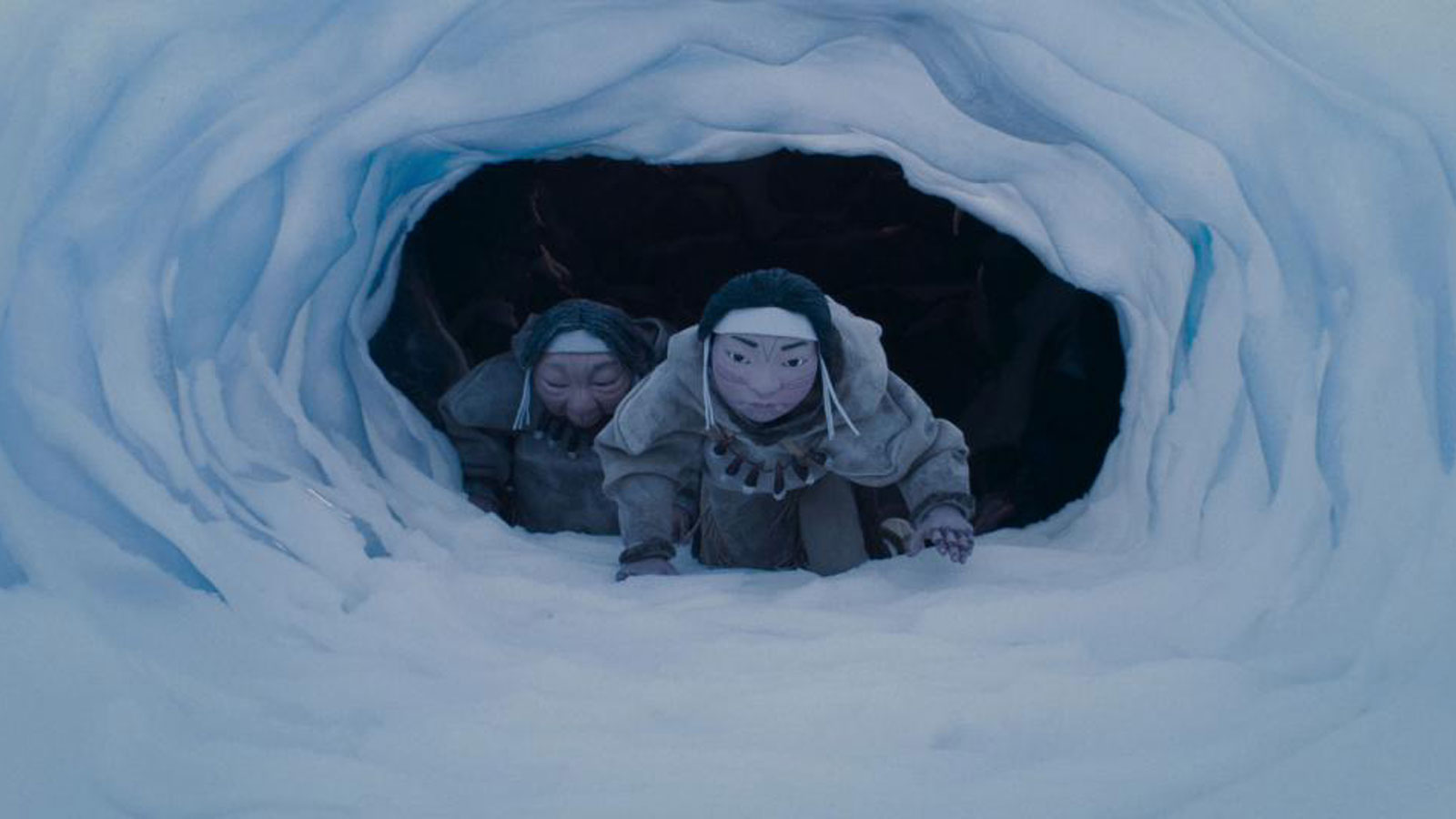
The film, which was recently shortlisted for the Academy Award for Best Animated Short, follows a shaman and her titular apprentice after they are summoned to heal a sick community member. After traveling across the icy landscape, the pair arrive to administer aid to the patient, a young hunter sick with fever. During their first attempt to heal the man, the shaman asks him, “Did you do anything to deserve this?” The unspoken question here is: Is this man living a proper Inuit life or has he strayed too far away? In this sense, the shaman and her apprentice act not only as healers but as keepers of tradition. This will become clearer later in the film as the pair embark on a trip to the Underground to visit The One Below for answers. They seek not only to understand the hunter’s dilemma, but also to determine the next steps in how to fix it.
The Shaman’s Apprentice is not a “climate” movie per se, but its icy setting and theme – the search for a solution – will feel highly relevant to climate-concerned viewers. In this sense, it is likely to draw comparisons to recent disaster films like Don’t Look Up, which offers funny, easy, and some might say mean-spirited answers to our current climate dilemma. But an Indigenous film like The Shaman’s Apprentice relies more on interpretation, experience, observation and introspection than flashy hijinks. The director does not hate on his subjects; there will be no destroying of a whole arctic village for laughs. It is clear that Kunuk feels a deep connection to this community. He does not have the luxury to blithely kill off his subjects as a cautionary tale.
Many non-Indigenous viewers will not have heard of Kunuk (which is, again, why Indigenous films like these are important contributions to our current cinematic landscape) but the 63-year-old Inuk filmmaker has been making movies for over 20 years. Standouts include Atanarjuat:The Fast Runner in 2001, and The Journals of Knud Rasmussen in 2006, both of which depict slices of traditional Inuit life and culture. What makes Kunuk’s films stand out in particular is their authenticity. They are raw and real. You feel cold when you see his characters in their arctic conditions. You feel the isolation, the hard work it must be to live in Inuit country, especially for those of us who are nowhere near such a region. They deal with very basic things like love, death, jealousy, trust, and life in a region and community far away from a local grocery store or hospital.
Kunuk is not known for animated films, but one could say after viewing The Shaman’s Apprentice that maybe he ought to delve into the genre again. The animation is mesmerizing. Lines in the elder Shaman’s face are oh-so-subtle: the droop in her mouth, the way her eyes narrow with concern when faced with a dilemma. The animators somehow make the Shaman older and wiser in ways that differentiate her from her younger apprentice. They have traditional Inuit tattoos. Light and shadow dance off their faces to illustrate dramatic mood and tone, just as they would on actual human beings. I’d argue that half the fun of watching a stop motion film such as this is shouting to yourself or whomever you’re watching the film with, “How did they do that?”
But for all its artful craft, one might say Kunuk is more invested in this story, and in that way, humanity at large. He’s fascinated in the way knowledge is passed on and the ways people must rely on each other; In the way that humanity can course correct itself when needed.
Taqqut Productions
In Kunuk’s world, life is beautiful and complicated. The film draws from a traditional Inuit story, one in which the protagonists must trust each other and draw upon a faith deep within. At the beginning of the journey to the Underground, the Shaman tells her apprentice, “If you lack confidence you may not return, do you understand?” The apprentice simply looks back with a look on her face that says, fake it til you make it.
Subtle moments like these remind us that representation is more than an oft-repeated refrain in 2022. Indigenous-made TV like Reservation Dogs and Rutherford Falls have reinforced just how much better Indigenous films are when they are made with authenticity. No longer do we have to wonder, “Is this really an Indigenous point of view?” because the new work being created is Indigenous made. When we see stories like The Shaman’s Apprentice, that references an Inuit deity from the Underground called Kannaaluk, we can trust that Kunuk is telling us a story from his vantage point, from his community.
And not to beat up on blockbusters like Don’t Look Up, which admittedly made me laugh more than a few times, films like The Shaman’s Apprentice are likely to stay with you longer. It isn’t just because it’s an Indigenous film made by an Indigenous director which touches on Indigenous themes like respect for elders and teachings as well as the unique ways we pass down knowledge. It has more to do with how films like Don’t Look Up aim for low hanging fruit that comes from a detached place of privilege. In contrast, stories like Kunuk’s are timeless; a more substantial meal as opposed to something fun, quick and easy to consume mindlessly. GRIST
T he Métis National Council and the Government of Canada will be working collaboratively, Nation-to-Nation, to develop a process to engag...
To Veronica Brown
Veronica, we adult adoptees are thinking of you today and every day. We will be here when you need us. Your journey in the adopted life has begun, nothing can revoke that now, the damage cannot be undone. Be courageous, you have what no adoptee before you has had; a strong group of adult adoptees who know your story, who are behind you and will always be so.
OUR HISTORY
BOOK 5: Lost Children of the Indian Adoption Projects