This blog was a backup for American Indian Adopteesblog
USE THE SEARCH BAR or SEARCH TOPICS at bottom of this blog
If you need support
Support Info: If you are a Survivor and need emotional support, a national crisis line is available 24 hours a day, seven days a week: Residential School Survivor Support Line: 1-866-925-4419. Additional Health Support Information: Emotional, cultural, and professional support services are also available to Survivors and their families through the Indian Residential Schools Resolution Health Support Program. Services can be accessed on an individual, family, or group basis.” These & regional support phone numbers are found at https://nctr.ca/contact/survivors/ .
MY EMAIL: tracelara@pm.me
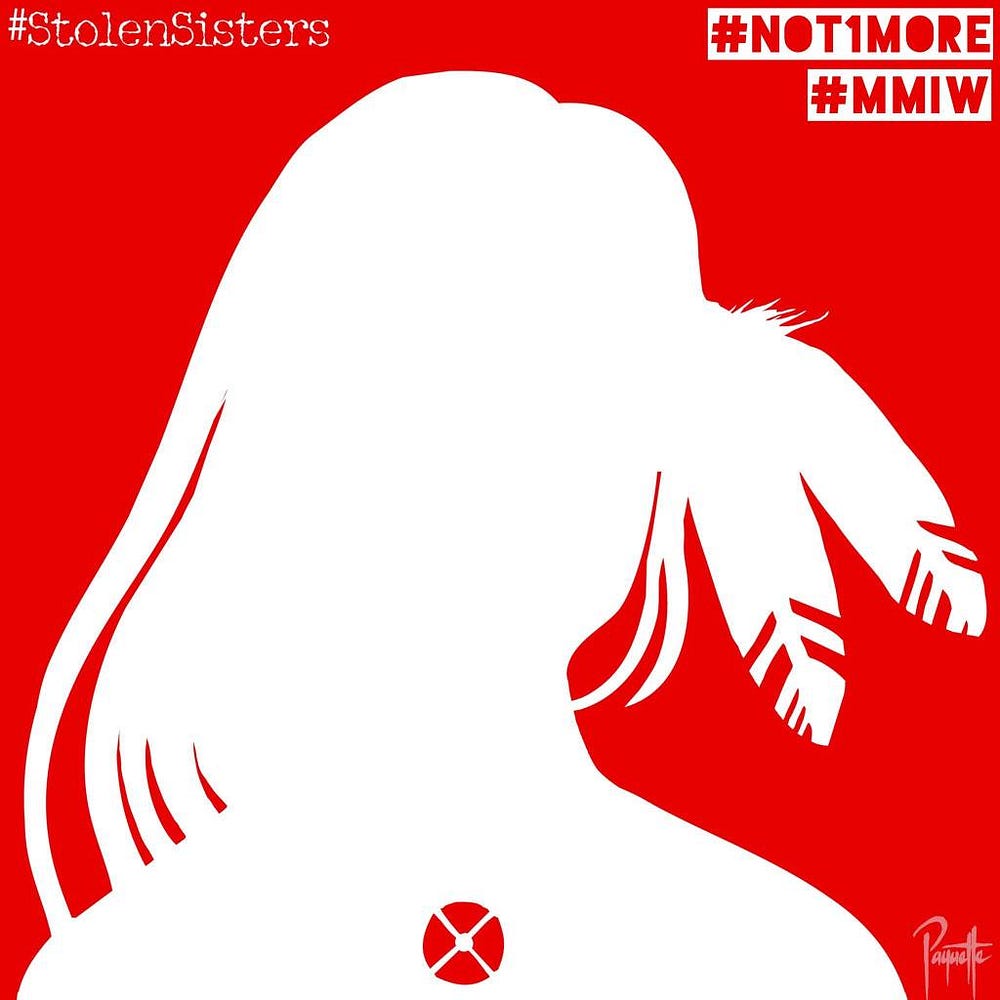
Violence is the third leading cause of death for native women between 10 and 24 years of age and thefifth leading cause of death for women 25 to 34 years (Simpson 5). Today American Indian women face murder 10 times the national average according to the Department of Justice. The government has failed to address the violence against Native women despite staggering statistics that provide evidence for the high rates of violence perpetrated against this marginalized group (Simpson 5). In 2015, the federal government approved an act that would provide additional resources to improve tribes’ access to databases that had data of MMIW but have not followed through. In response to the lack of a database that includes all the MMIW, I have created a web map that will visualize the Indigenous women that have been reported missing and murdered. The ultimate goal is to try to understand what is unique about the situation that causes Native American women to experience higher rates of violence. In the future I hope to be able to provide statistical analysis for my theory about the relation between map camps and missing women.
The MMIWG2 Database logs cases of missing and murdered indigenous women, girls, and two spirit people, from 1900 to the present.
There are many lists and sources of information online, but no central database that is routinely updated, spans beyond colonial borders, and thoroughly logs important aspects of the data, and overall, there is a chronic lack of data on this violence. The Database works to address that need, by maintaining a comprehensive resource to support community members, advocates, activists, and researchers in their work towards justice for our stolen sisters.
The Database originally included cases from the US and Canada, but starting in 2019, we have expanded its reach to include all Indigenous women, girls, and two spirit people. We will continue to pursue archival research in the US and Canada, and will rely on partnerships with Indigenous women’s collectives and organizations in other regions to include our sisters indigenous to lands occupied by other colonial entities.
The kind of information the Database cares for is determined by ongoing consultation with Indigenous communities. The Database currently logs the following:
About Victims:
Name, Indigenous name and translation, tribal affiliation(s), birth date, age, if they were a mother, if they have other MMIWG2 cases in their family
About Perpetrators:
Race, gender, relationship to the victim
About the Violence:
Missing or murdered, incident date, violence perpetrated against murder victims after they are deceased, relevant issues (domestic violence, sexual assault, sex work/sex trafficking, foster care, police brutality, trans victim, death in custody, unsheltered, residential/boarding school)
About Police & Court Response:
Reward amount (if any), case classification, conviction status, which entities located deceased individuals
About Geography:
City, state/province, country, location type (tribal land, rural, urban)
I don't know about you but I saw this coming - that the Truth and Reconciliation (TRC) in Canada would end with money paid to victims. Canada is first. Will America be next? Or Australia?... Blog Editor TLH
The Canadian government announced Tuesday that it had reached what it called the largest settlement in Canada’s history, paying $31.5 billion to fix the nation’s discriminatory child welfare system and compensate the Indigenous people harmed by it.
For those who were following this case, it involves the First Nations Child and Family Caring Society, which is led by Cindy Blackstock. The settlement attempts to reform Child and Family Services and address Jordan’s Principle. This is a major settlement and significant milestone for Native children and families in Canada.
The compensation announced yesterday applies to First Nations children and families on reserve as it is linked to Canada's underfunding of public services on reserve. There is another class action for Indigenous children off reserve- here is the link: https://t.co/QmPR2HaSzT
This proposed class action alleges that Canada failed to take reasonable steps to protect and preserve the aboriginal identity of the Indigenous children and youth who were apprehended. Canada denied Indigenous children and youth any reasonable opportunity to maintain connections to the language and territory of the Indigenous community, group or people to which they belonged. Canada’s actions also denied Indigenous peoples’ their inherent right to jurisdiction over child and family services. This lawsuit alleges that Canada should have taken steps to safeguard the wellbeing of apprehended Indigenous youth and children and ensure that Indigenous youth and children, and their families, were advised of any federal financial benefits to which they may have been entitled; this lawsuit alleges that Canada failed to do so.
This conduct was systemic, lasted for decades, and eradicated the language, culture, and heritage of Metis, Inuit, and Status and Non-Status Indian (First Nations) children and youth in care. The parents and grandparents of apprehended children and youth were also harmed; in my cases, these parents and grandparents never saw their children and grandchildren again.
LIVE: First Nations Child & Family Caring Society of Canada Executive Director Cindy Blackstock is sharing an update on the negotiations related to compensation and long-term reform of First Nations Child and Family Services. https://t.co/yBtm7Dj2PU
Canada's 'wilful and reckless' treatment of Indigenous children continues | CBC News https://t.co/o5E9dntsEY— RoseAnne Archibald (@ChiefRoseAnne) January 5, 2022
Thousands of Native children were adopted in the 1960s as a government plan of forced assimilation. This woman was one of them.
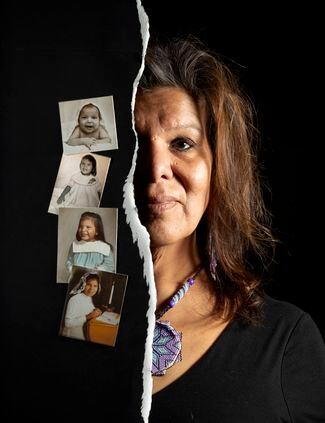
Kelley Bashew was adopted at the age of 3 months and taken from South Dakota to Glenside. She is shown on a hillside near her Meadowbrook home in April 2021.CHARLES FOX / Staff Photographer
Dec 28, 2021
While visiting the Tekakwitha Nursing Home to sing for residents, 13-year-old Denise Owen was led away from the rest of her boarding school group by a nun. A special surprise awaited her.
There, in another room in the Sisseton, S.D., facility, was her newborn sister, Rose Anne. Denise got only a glimpse of the infant, lying in a bassinet in a long-sleeve shirt and a diaper, before another nun ordered her to leave. Denise was not supposed to see her sibling, soon to be adopted.
It would be 50 years before they saw each other again.
Rose Anne, who would be raised by a Glenside dentist and his wife, became a child of the country’s American Indian adoption era, a decades-long forced assimilation of Native children first established under the Indian Adoption Project, which started in 1958 and evolved to include 50 private and public placement agencies across the United States and Canada, where the so-called Sixties Scoop was coined to describe the mass removal of children from Native homes. During the next 20 years, almost 13,000 Native children would be adopted.
Bashew experienced a loving childhood. But she always knew she was different, and felt isolated in white suburbia. Here, a series of photos from those times.CHARLES FOX / Staff Photographer
According to a 1969 report by the Association on American Indian Affairs, between 25% and 35% of all Native children were placed in adoptive homes, foster homes, or institutions; and about 90% of those children were being raised by non-Natives.
That was the case for Rose Anne, who, at the age of 3 months, was handed over to Salvatore and André Petrilli. The white couple of Italian and Irish descent had struggled to have their own biological children, and it was André's interest in American history and a phone conversation with a priest from St. Joseph’s Indian School in Chamberlain, S.D., that led her to seek a Native adoption through Catholic Charities.
Eventually, a new birth certificate reflected the new name of Kelley Elizabeth Petrilli, the child of two Caucasian parents. Her American Indian heritage was wiped away on paper. A Montgomery County Orphans Court clerk with the last name of Custer gave the final stamp of approval to the adoption.
“When I was younger, I wanted to be white. I still feel guilt about that,” said Bashew, who lives in Meadowbrook. “I just wanted to fit in and be like my sisters. … I did not like being tall and brown and different.”
Kelley Bashew was born Rose Anne Owen in Sisseton, S.D., but was adopted by Salvatore and André Petrilli, a suburban Philadelphia dentist and his wife.CHARLES FOX / Staff Photographer
PLEASE SHARE THIS POST with other American Indian Adoptees... TLH
Wow. Canada is setting aside $40 billion to compensate Indigenous children and families in foster care for suffering discrimination, and will start paying out once a protracted lawsuit is settled, officials said on Monday.https://t.co/qw4fw4Sg4w
OTTAWA, Dec 13 (Reuters) - Canada is setting aside C$40 billion ($31.2 billion) to compensate Indigenous children and families in foster care for suffering discrimination, and will start paying out once a protracted lawsuit is settled, officials said on Monday.
The compensation decision affects some 55,000 children.
In 2018, a young Indigenous mother named Jermain Charlo left a bar in Missoula, Montana, and was never seen again. After two years and thousands of hours of investigative work, police believe they are close to solving the mystery of what happened to her. We go inside the investigation, tracking down leads and joining search parties through the dense mountains of the Flathead Reservation. As we unravel this mystery, the show examines what it means to be an Indigenous woman in America.
Growing up in Inuvik, in the Inuvialuit Settlement Region in Canada’s Western Arctic, I lived next to a group home.
The children – Inuvialuit like me – were in the care of Northwest Territories social services, separated from their families, sometimes far from their home communities, with no connection to their identity.
Even as a child, I could see how hard it was for them, going through life and school without any people, without any sense of who they were in the world.
This week, the Inuvialuit Regional Corporation, which was established in 1984 to represent the Inuvialuit under one of Canada’s oldest and most comprehensive land claim agreements, passed our first law: Inuvialuit Qitunrariit Inuuniarnikkun Maligaksat.
This law re-establishes our jurisdiction over child and family services, and in doing so, makes us the first Inuit region to assert this important right.
Duane Ningaqsiq Smith is the chair and CEO of Inuvialuit Regional Corporation, which represents the communities of Aklavik, Inuvik, Paulatuk, Sachs Harbour, Tuktoyaktuk and Ulukhaktok in the Northwest Territories.
Assembly of First Nations (AFN) National Chief RoseAnne Archibald pictured in June 2019 (Christopher Katsarov/The Canadian Press)
A trip that Indigenous leaders were supposed to take to Rome later this month for a meeting with the Pope has been postponed because of the pandemic, said RoseAnne Archibald, National Chief for the Assembly of First Nations, on Tuesday.
Leaders with the Assembly of First Nations (AFN) were scheduled to meet with Pope Francis on Dec. 20 to seek an apology for the Roman Catholic Church’s role in running residential schools. The Métis and Inuit were supposed to meet the Pope earlier that week.
Hundreds of unmarked graves were discovered earlier this year at former residential schools across the country. The schools — sponsored by the government and mostly run by the Catholic Church — were set up to assimilate Indigenous youth into Canadian culture by removing them from their families and communities. Many Indigenous children were abused and/or died at the schools.
Archibald told First Nations leaders who’d gathered virtually for three days that the AFN has asked the church to: return diocese lands to Indigenous Peoples; increase the $30 million the church announced in September for long-term healing; and encourage the Pope to meet with Indigenous leaders on traditional lands when he visits Canada. The Pope has agreed to meet with Indigenous Peoples when he travels to Canada, but no date has been set for his visit.
Archibald went on to tell attendees that the AFN plans to hold the government to account for forcing Indigenous children to attend residential schools.
“We continue to call for accountability,” she said. “Someone must be charged for the deaths of our children. There must be examinations to determine if our children were murdered. Canada must be held to account, and they have to be held responsible for their genocidal laws and policies.”
Archibald said Canada shouldn’t be allowed to investigate itself, and that the AFN would be reaching out to the Special Rapporteur on the Rights of Indigenous Peoples to file a human-rights complaint, and to pursue remedies “for the victims of genocide.”
“We need to know the truth before we can walk the road to reconciliation,” she said.
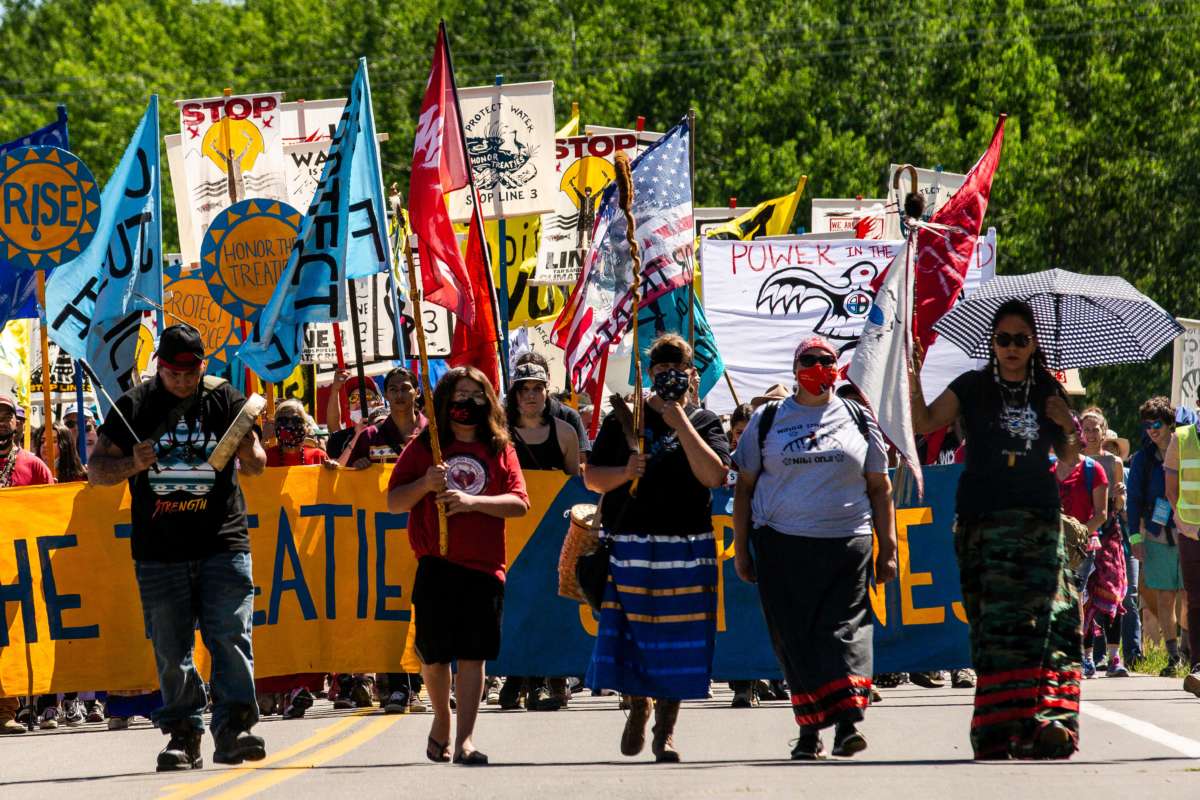
Climate activist and Indigenous community members hold a banner and flags during a rally and march against the Line 3 pipeline in Solway, Minnesota, on June 7, 2021. Kerem Yucel / AFP via Getty Images
Enough Colonial Pageantry. Let’s Rally Behind Criminalized Water Protectors.
The government of Sweden is the most recent to announce that it will investigate “irregularities” in the last 60 years of international adoptions, focusing in particular on China and Chile.
Around 60,000 children have been adopted to Sweden, most originally from South Korea, India, Colombia, and Sri Lanka.
Results of the investigation are expected to be released in November 2023.
In February 2021, The Netherlands froze international adoptions after adult adoptees raised concerns about adoptions from Bangladesh, Brazil, Colombia, Indonesia, and Sri Lanka. A government commission found some adoptions, dating back to the 1960’s and through the 1990’s, where children had been stolen or bought.
An additional article about Sweden’s investigations from February 2021 is available here.
USD’s
69th Harrington Lecture was led by Beth Boyd, director and professor in
the USD clinical psychology program, presenting “Mitákuye Oyás ‘iŋ (We
Are All Related): Reflections to Learning to Become a Relative.”
The
Harrington Lecture is an annual event featuring a USD professor
established on campus within the College of Arts and Sciences. Featured
speakers are recommended by a faculty committee. The lecture is based on
the speaker’s scholarly work.
Boyd is a member of the Turtle Clan of the Seneca Nation and the USD Disaster Mental Health Institute (DHMI).
“I
aspire to honor and respect the indigenous peoples who were forcibly
removed from here and are still connected to this territory. By owning
my part in their continued displacement, I am incorporating indigenous
knowledge into my work and establishing meaningful reciprocal
relationships with indigenous peoples and communities,” Boyd said
Boyd
participated in the Board for the Advancement of Psychology in the
Public Interest, the Presidential Task Force on PTSD and Trauma in
Children and Adolescents, the Commission on Ethnic Minority Recruitment,
Retention & Training and the Minority Fellowship Program Training
Advisory Committee. She was also president of the APA Society for the
Psychological Study of Culture, Ethnicity and Race and the Society for
the Clinical Psychology of Ethnic Minorities.
“Over the years,
I’ve watched many of my colleagues reflect on liberal arts education, on
what they’ve learned, the work they have done over the years, the
contributions and their hopes about the future of their fields. And so I
have also done a lot of reflection over this last year,” Boyd said.
Boyd said that looking through a lens of liberation psychology at the past fosters healing and awareness of inequality.
“Liberation
psychology encourages empowerment, healing and transformation that
fosters an awareness of discrimination and inequality, and fortifies
individuals strengths. It affirms cultural identities and promotes
change to attenuate human suffering and improve people’s lives in
multiple contexts, including cultural-historical, gender, sexual
orientation, socio-political, geopolitical and other intersecting
factors,” Boyd said.
Boyd’s lecture covered the removal of Native
children from their homes. Boyd said over 80,000 native children were
separated from their families, and said some children were put into
foster care, while others were put into residential schools.
“Between
1867 and 1990, thousands of Native American children were taken from
their homes and families by the U.S. and Canadian governments. Most of
them were taken to Indian residential schools,” Boyd said. “Both,
regardless of where they were, had the same goal in mind: to assimilate
Native American children into U.S. or Canadian society and to obliterate
their familiarity with their native heritage.”
In 1958, the
Bureau of Indian Affairs created the Indian Adoption Act in an attempt
to assimilate Native children and end tribes, Boyd said. The act took
Native children away from their families as they were adopted by white
families. In 1966, the Adoption Resource Exchange, including private
agencies and churches, took over. By the end of the 1970s, one-third of
all Native children, estimated at 80,000 to 100,000 children, were
separated from their families.
“No one by the late 1950s imagined
a solution to the care of Indian children that involved strengthening
Indian families and keeping Indian children in their homes. Most
government officials deemed Native families inherently and irreparably
unfit… Native American spirituality was outlawed at this period of time.
It was not legal again until 1978. A child of someone who might have
gone to jail for practicing traditional spirituality would be a reason
for removal,” Boyd said
Native children were alienated from their culture and often did not have people to look up to within their culture, Boyd said.
“Many
adopted families denied the children’s Indian heritage, a change that
will change their children’s names and caused them to grow up in
communities where they were few of or there were a few of any others who
looked like them held similar beliefs, spoke the same language or
shared the same culture,” Boyd said.
A study done in 2017 by the
Centers for American Indian Alaskan Native Health at the Colorado School
of Public Health found that native children adopted away from their
families are more likely than their white counterparts to struggle with
drug abuse, alcohol addiction, suicide, self harm and other mental
health issues, Boyd said.
When the Indian Child Welfare Act was
put into place, it set standards for child custody proceedings involving
native children to be eligible for membership of federally recognized
tribes, Boyd said.
“This came about because tribes started to
understand how a large proportion of the children were affected by
losing the tribes,” Boyd said. “There was a lot of pressure and
congressional testimony documenting the devastating impact that this was
having on native children, families and tribes.”
Gary Cheeseman,
associate USD professor of curriculum and instruction and American
Indian education, presented Boyd with a star blanket and ended the
lecture with an honor song.
“This is an unbelievable woman… I am incredibly proud to be native and to be a colleague of hers,” Cheeseman said.
Boyd was born in 1958 and adopted at nine months of age.
“My
mother and I lived with my grandmother and my great grandmother in
Cattaraugus, one of the two Seneca Nation of Indians reservations in
Western New York,” Boyd said. “I was removed from this home and went to
several foster homes and the county orphanage. Around the age of three, I
was adopted by my adoptive family, a couple who had not been able to
have biological children.”
Boyd grew up with her adopted family on
an island between Buffalo and Niagara Falls, a mile upstream from the
falls, which was Seneca territory no longer in the possession of the
nation.
There was a great deal of racism toward Native people in the area, Boyd said.
“All
of these experiences made me hate that I was different, because all I
really wanted was to fit in to belong and to be one of them, but I did
not have the words to explain that to my family. I didn’t have the words
to explain to them how this discrimination hurt me, and they did not
have the experience to realize how I felt or helped me cope with it,”
Boyd said.
In Boyd’s teen years, she was reconnected with her
culture for a moment. She felt seen, Boyd said. She again felt seen when
her son was born.
“In that moment, I understood what it felt like to be a relative,” Boyd said.
Again, in 1992 when Boyd first came to USD, she felt seen as a Native person.
“For
many Native adoptees to process the socialization with white culture
tends to produce a negative self image, limiting self concept, low self
esteem and a lack of self love, so with all of that, how could you know
how to become a good relative?” Boyd said.
The Lakota concept of
wellness illustrated in the medicine wheel involves a balance between
the natural world and the physical, spiritual and emotional world, along
with the spiritual concept of the self, Boyd said. Separation from this
causes communal illness.
“Healing in native ways is a communal
process of rediscovering balance within self and the harmony between
self, the Creator and the natural world in the context of family and
community,” Boyd said. “In order to ask for help, I had to realize my
connection to others, and accept the help of family and community. I had
to recognize I am no more and no less than anyone else.”
Boyd
said through the lens of liberation psychology, knowledge is anchored in
lived experience and historical experience, and power dynamics of
oppression can be challenged and the strength of marginalized and
oppressed people can be recognized. This encourages personal agency and
engagement in social justice, she said.
“A decolonial psychology
would mean moving away from the assumption that the individual is the
central unit of analysis in ways that overlook people’s social, economic
and political context,” Boyd said. “It’s important to recognize these
contexts from the oppression we experience and the healing we take part
in… Who I am is relative to those around me.” SOURCE
The other reparation debate California needs to start having
By the early 20th century, more than 80% of all Native children attended Indian boarding schools. In California, the largest were the Fort Bidwell Indian School near Upper Alkali Lake in Modoc County, the St. Boniface Indian Industrial School in Banning, in Riverside County 85 miles east of Los Angeles, and the Sherman Institute in Riverside. In addition to the poor education that was geared toward the service industry, there was a summer “outing program” where students worked throughout Southern California. Many boys would spend their summers working on citrus farms in the Riverside area. Girls would work as domestic servants for people in Anaheim and other cities.
The opportunities for abuse and exploitation of these children were enormous and to this day have not been documented.
NEW MEXICO: There was an increase in Native American children entering the system—from 134 or 6.1 percent in 2019 to 147 or 7.4 percent in 2020. The increase of Native children in the foster care system happened after children’s biological or legal guardians have passed. Native American families often live with several generations in one house, and we saw that, tragically, many family members in one household would contract COVID.
Those who refuse to acknowledge the trauma adoptees experience likely have never had to submit an empty page when attempting to complete "Family Tree" or "Life Timeline" assignments in school or write "N/A" in the Family Medical History section on forms at the doctor's office.
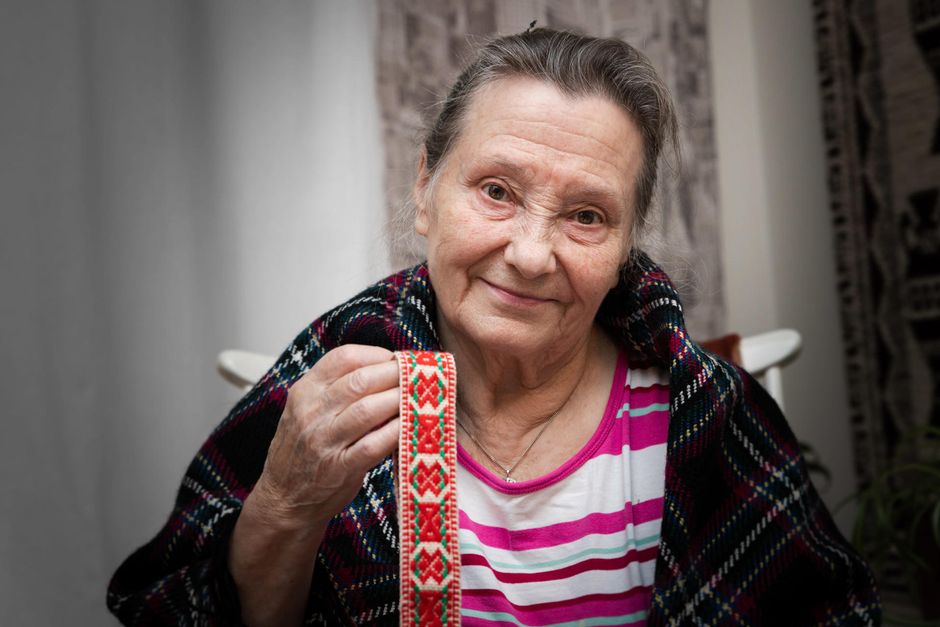
Skolt Sámi Heini Wesslin did not learn about her culture – now she hopes that truth and reconciliation process changes education
The recently founded Truth and Reconciliation Commission aims at acknowledging and assessing the wrongs done against the Sámi in Finland. Two Sámi tell now about their experiences and what they expect of the Commission.
Yle Sapmi | November 30, 2021| By Inger-Elle Souninen
For Skolt Sámi Heini Wesslin, loss of language has been the tough issue in her life, while Inari Sámi Rauni Mannermaa still feels the burden of her days in a dormitory.
The stories and experiences of Wesslin and Mannermaa are familiar to the Sámi. The old events that still cause pain for the next generations would presently be considered serious violations. The purpose of the Truth and Reconciliation Commission is to look at these issues now.
After years of preparation, the historical Sámi Truth and Reconciliation Commission has started its work. The objective is to acknowledge and assess the wrongdoings that have been, and are still being, done against the Sámi. In addition, the Commission also aims at admitting and assessing the State’s assimilation policy and violations of rights.
The report of the Commission is to be submitted by the end of November 2023. Before that, the Commission has an enormous amount of work to do. The variety of experiences and expectations equals the number of people, but there is a common history behind them all.
Returned home when she got children
Heini Wesslin lives in the village of Sevettijärvi in the northeastern part of Inari Municipality. There is a strong sense of Skolt Sámi community in the village, and the local language and culture play a central role in Wesslin’s everyday life. But this has not always been the case.
When Wesslin was six, her family moved from her parent’s home village Sevettijärvi to Utsjoki. Wesslin got her primary and secondary education there. Although Utsjoki is in the Finnish Sámi Area, it is not the home region of the Skolt Sámi. Thus Wesslin did not get to learn about the Skolt Sámi and their culture at school.
Later, life and studies took Heini Wesslin to Helsinki, Inari and Rovaniemi. Finally, twelve years ago, she returned to Sevettijärvi. She moved there above all because she wanted to give her children a sense of belonging from the very day they were born.
“Despite the fact that I’ve lived in Sápmi, I have not lived in my own community. Therefore, it felt natural and important to move here.”
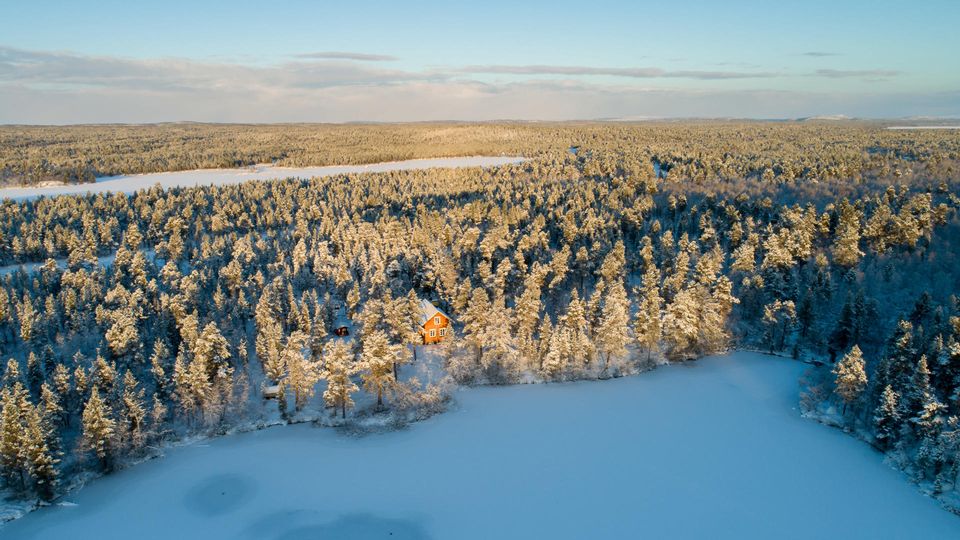
Heini Wesslin’s home is situated right on Lake Sevettijärvi. Photo: Vesa Toppari / Yle
The Skolt Sámi language has had a great impact on Heini Wesslin’s choices in life. She did not learn her native language from her mother, who believed that not knowing the language would make Heini’s life easier. But Heini began to study the language as soon as it was possible.
At first, speaking the language was difficult for Heini Wesslin: she felt that she should already know the language. Today, she accepts that she does not always speak correctly, but at least she uses the language.
She speaks Sámi with her children. The children speak Skolt Sámi also with their grandmother, but for Wesslin herself it does not yet feel natural to speak the language with her mother.
“It’s extremely difficult to switch languages with certain people.”
Used handicraft to connection with culture
At present, Heini Wesslin knows the language and lives in a community with a strong Skolt Sámi culture. However, she has sometimes bad feelings about not having learned the language as a child.
“I’ve thought a few times that I could also be doing something else in the evenings instead of conjugating Skolt Sámi verbs via Teams.”
At first, Wesslin used doing Sámi handicraft, or duodji, to build up a connection to her culture.
“There’s also another language I speak: duodji.”
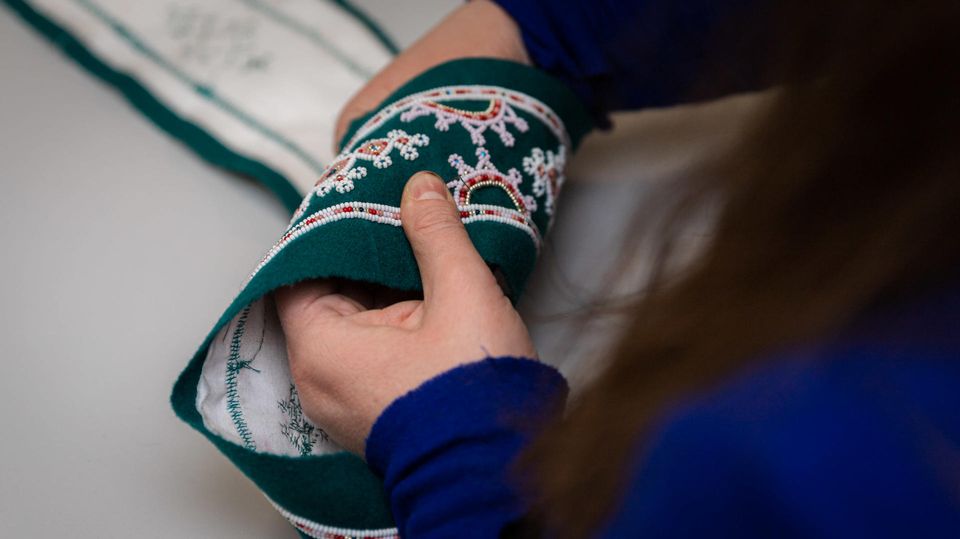
Many people know Heini Wesslin as a skilled craftmaker. Beadwork is an important part of Skolt Sámi culture. Photo: Vesa Toppari / Yle
Wesslin began to wear the traditional Sámi clothing after her secondary education. She had crafted the Skolt Sámi dress together with her grandmother. Wearing Skolt Sámi clothing, finally, evoked many feelings in her.
“It was an important thing. I didn’t have a very strong sense of belonging then. It took a while to feel part of the community.”
At present, she makes the clothes for both her children and parents, helping them wear them. Wesslin’s parents belong to the generation who had to stay in dormitories, so they never learned to wear the traditional clothing. When Wesslin dressed her children in Skolt Sámi clothing, her parents also dared to start wearing it.
Today, she is a carrier of culture – as a result of many conscious choices. She did not get to learn about her culture at school, but hopes that everyone will have the opportunity in future.
“The biggest problem is that we’re not allowed to learn about ourselves. We learn the history and way of thinking of the dominant culture.”
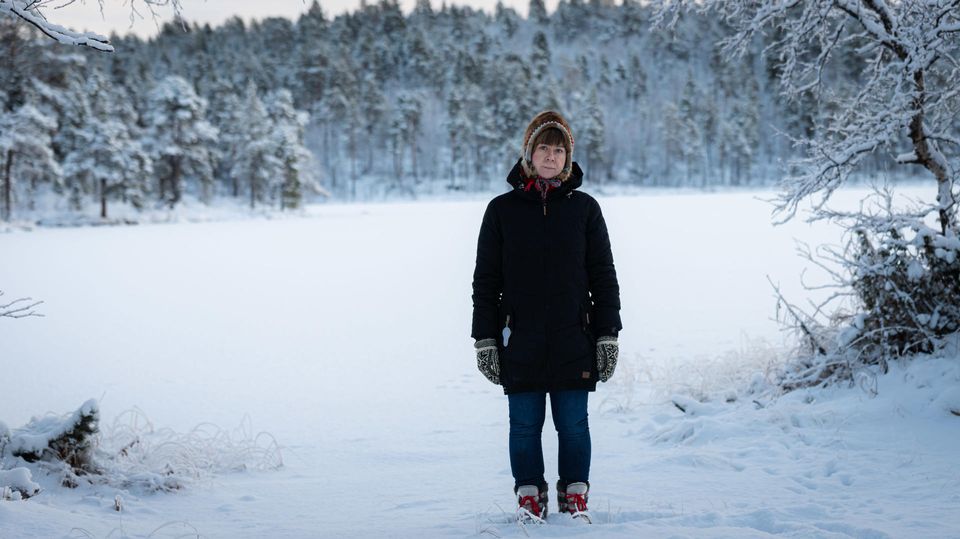
Wesslin believes that if the truth and reconciliation process is carried out properly, it will benefit everyone. Photo: Vesa Toppari / Yle
Wesslin hopes that the work of the Truth and Reconciliation Commission will change the situation and that the process will be careful and carried out on the terms of the Sámi. She hopes that the process will lead to changes both in health and social care and in the School.
Wesslin feels that this process of looking at history will also help the main population to understand its own history. The past may reveal answers that can help maintain the culture in future, too.
“If the process is carried out properly, we’ll all win.”
Both good and bad memories from school
Rauni Mannermaa was born into an Inari Sámi family on the Katsomasaari Island on Lake Inari in 1940. When she was four years old, her family was evacuated further south in the autumn. They were allowed to return home the next spring. Despite the war, everything was intact on the island.
Rauni Mannermaa, who was evacuated at an early age, did not get to use or learn her native language at school, but sees things nevertheless positively. She would rather let bygones be bygones. She still has the first woven handicraft that she made with her mother. Photograph: Vesa Toppari / Yle
As soon as the next winter, Mannermaa’s life changed again dramatically. She fell ill and had to be taken to the village of Nellim 25 km away from home. From there, she was supposed to continue to the hospital. However, she got well, but there was no one to take her home, as it was not easy to travel in those days. The only possible means was being pulled by a reindeer. She thus stayed in Nellim and started school at the age of five, sitting in on classes at first.
Because of long distances, schoolchildren had to stay in dormitories. They got to go home only for Christmas and summer. Mannermaa has both bad and good memories of the period.
Mannermaa recalls how pupils could be punished physically both in the school and the dormitory. She remembers how they once pulled her by her hair so that her fringe came loose and there was a hairless spot on her skull. The reason was that the teacher thought she had talked in the evening after the pupils were supposed to be silent.
The schoolchildren of Nellim School. Rauni Mannermaa is on the right in the first row, in a white blouse. Photo: Vesa Toppari / Yle
Mannermaa feels that being punished filled a child with shame even if they had done nothing wrong.
There are also worse memories, but Mannermaa chooses not to talk about them. The worst matters have also been tried in court.
“It was a long time ago, and the wrongdoers have been convicted. I don’t want to go into the worst things.”
The children never talked about their experiences at home. They had already forgotten them by the time they got home. There, they just wanted to enjoy being at home again.
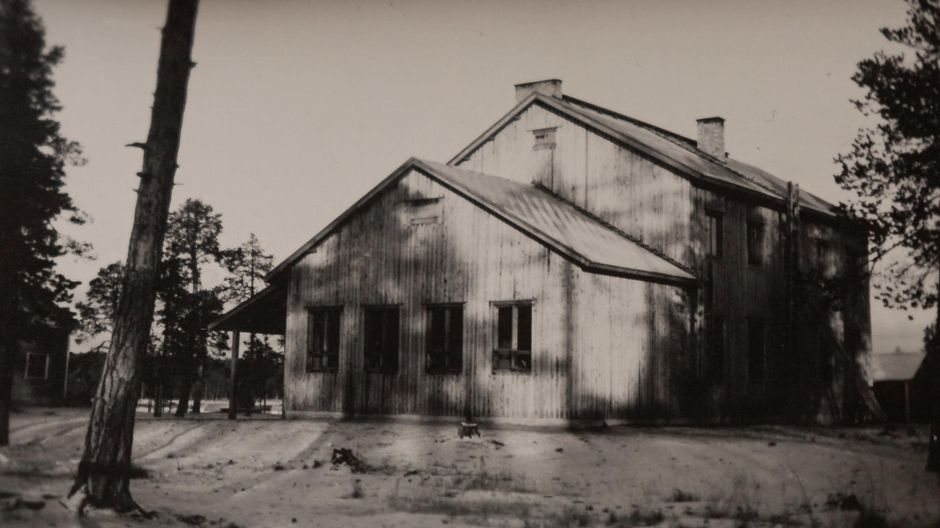
The dormitory in Nellim, which was initially also used as a school. Photo: Vesa Toppari / Yle
No speaking in Sámi unless everyone understood
There were strict rules both in the school and the dormitory, and no Sámi was spoken there. The personnel made it clear that no Sámi could be spoken unless everyone understood it. The children naturally obeyed the adults. Thus, they only spoke Sámi at home.
Not being able to speak the language lefts its mark.
Mannermaa has never learned to write in Sámi. As an adult, Mannermaa began to study Sámi in Inari, but quit the course as the distance from home to Inari was so long.
Mannermaa hopes that the Truth and Reconciliation Commission will take into consideration the people who wish to learn the language. Her view is that the State should have provided, and still should provide, support for studies in Sámi to those who did not get to learn their native language at school.
“I feel that the State should’ve given us resources.”
In addition to support for language studies and the acknowledgement of school-time experiences, Mannermaa hopes that the Commission’s work will lead to equality between all the Sámi – no matter which group of Sámi they belong to and whether they have studied or not.
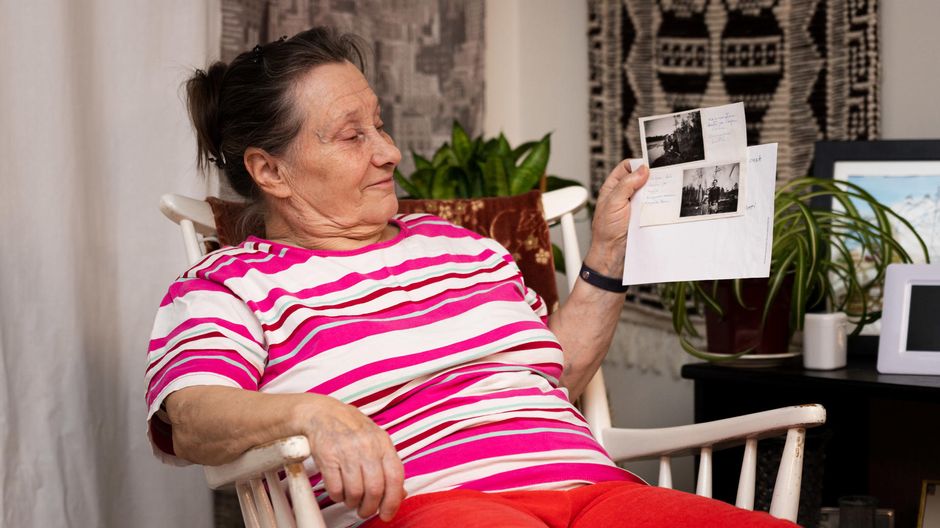
Rauni Mannermaa recently received a letter with old photos of her parents, and herself and her sisters as children. Photo: Vesa Toppari / Yle
Mannermaa says that people earlier felt ashamed of being Sámi and avoided using their language. According to Mannermaa, this is the reason why so many “turned into Finns”. However, she feels that people have a right to their ancestry and culture even if their grandparents have tried to hide them.
“It was not their fault. It was the period when they attempted to turn us into Finns,” Mannermaa says.
Commission has begun its work
The Sámi Truth and Reconciliation Commission of Finland met for the first time in mid-November. The commissaries are Kari Mäkinen, Hannele Pokka, Heikki Hyvärinen, Miina Seurujärvi and Irja Jefremoff. Two of the commissaries were nominated by the Government of Finland, two by the Sámi Parliament and one by the Skolt Sámi Village Meeting.
Senior Specialist Nina Brander tells that the Commission will also choose a secretariat and chair for itself. In addition, the Commission will have a monitoring group that consists of members who represent parliamentary parties, the Sámi Parliament, the Skolt Sámi Village Meeting, the Evangelical Lutheran Church of Finland and the Orthodox Church.
When the Sámi Truth and Reconciliation Commission was founded, the significance of its work was emphasised by Finnish Prime Minister Sanna Marin at the briefing.
“This work is important because we need to transparently look at what has happened in Finnish history and how the Sámi have been treated, and still are treated, in Finland,” the Prime Minister said.
Translated from North Sámi by Kaija Anttonen
This article first appeared in Yle Sapmi and is translated and republished as part of a news sharing partnership with the Barents Observer
The confirmation of unmarked graves at the sites of former residential schools has led to a global awakening on the effects of the harmful policy says the executive director of the National Centre for Truth and Reconciliation (NCTR.)
Stephanie Scott, who has been with the NCTR since 2016, had only been in her new leadership position for a little over two months when 215 remains were located in unmarked graves on the former site of the Kamloops Indian Residential School.
Scott remembers being in bed when the texts started rolling in about the news. Despite being aware of the existence of the graves, “it was still horrendous news to get.”
The NCTR will not be part of a delegation heading to the Vatican to meet with Pope Francis – but if she was going her message would be “give us the records.” The Catholic church ran 65 residential schools.
She says negotiations with the church for over one thousand boxes of documents have been going on for years. The NCTR has been given access to five of those boxes.
As for the apology by the Pope, on Canadian soil, Scott says it would be wonderful to see the Pope “in a pipe ceremony, acknowledging our peoples and cultures and the harms that took place and really understanding what they tried to destroy and how important that is for our people to continue on the path of reconciliation.” SOURCE
Shannon Varley, one of the lead plaintiffs in a Sixties Scoop class action against the federal government, says she wants to be a voice for all Métis and non-status Indian survivors. (Jessica Deer/The Eastern Door)
WARNING: This story contains distressing details.
A co-lead plaintiff in a national class action on behalf of Métis and non-status Indian survivors of the Sixties Scoop says she wants to be a voice for all of them after hearing that some feel they won't have a say in the legal proceeding.
"That is very good information for me to know," Shannon Varley said. "I want to try and help all these people."
The Sixties Scoop refers to the Canadian practice — from the early 1950s until the early 1990s — of taking children from Indigenous families and placing them for adoption with non-Indigenous parents. Many of the affected children lost their Indigenous identity and suffered mentally, emotionally, spiritually and physically.
Varley said she grew up on a farm about 75 kilometres northeast of Regina, not realizing she was Indigenous or adopted.
She said she grew up in a very loving adoptive family and felt "totally included."
Varley said she was 11 years old when her adoptive family told her that she had been adopted through the Adopt Indian Métis (AIM) program when she was an infant.
“They Took Us Away From Each Other”: Lost Inside America’s Shadow Foster System
Across the country, unregulated “shadow” foster care is severing parents from children — who often wind up abandoned by the system that’s supposed to protect them.
by Lizzie Presser, photography by Elinor Carucci for The New York Times This story was co-published with The New York Times Magazine and is not subject to our Creative Commons license.
When a staph infection killed Molly Cordell’s mother just before Halloween in 2015, Molly felt, almost immediately, as if she were being shoved out of her own life. At 15, she and her sister, Heaven, who was a year younger, had no idea where they would go. Their dad had been in and out of their lives for most of their childhood. His grief, as their mother lay dying, sent him spinning. It seemed to the girls that he was on too much meth, and whenever he used, he got mean and crazy. Once, he made Heaven watch him set their mom’s Chevy truck on fire. Their older brother, Isaiah, left their home in the foothills of the Great Smoky Mountains when their mom was still alive, and the teenage girls depended on each other. Molly was deaf in her left ear, and her sister always asked others to speak loudly for her. They shared the same group of friends, the same tanks and capri pants. Although Molly had her own bedroom, she slept on the couch in Heaven’s.
The girls moved in with their grandmother, up the road from their wood-paneled house in Cherokee County, North Carolina, a poor, sprawling region at the southwesternmost edge of the state. Their dad lived in a camper in the yard. Their grandmother, too, was trapped in an angry stage of mourning, looking for someone to blame for her daughter’s death. She kept telling Molly and Heaven that it was their fault — if only they’d taken better care of their mom, she might be alive. Molly was starting to believe it.
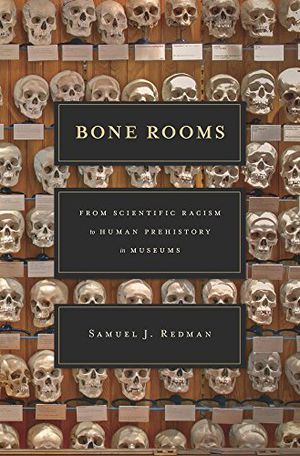
In the 2016 book ‘Bone Rooms: From Scientific Racism to Human Prehistory in Museums’, Samuel J Redman notes: “The campaign to preserve and collect was viewed as a race against time; bone empires benefited from this powerful sentiment by conceptualising indigenous and ancient bodies as a limited and scientifically valuable resource.”
The history of these collections is dramatic, occasionally punctuated by unexpected twists. The story emerges from an ongoing competition to establish the largest and most prestigious museums in cities across the United States. At times driven by both ego and intellect, scientists established a new field as they collected, their studies working to shape ideas about race and what it means to be human. For scientists who collected the dead, the desire to obtain remains for growing bone rooms often suspended or displaced codes of ethical behavior. Museum curators, as well as amateur collectors, competed and collaborated to understand the body as a scientific object; at the same time, visitors to museums that displayed bodies were continually enthralled, almost surprised, by the humanity of ancient and recent bodies they found exhibited before them.
With the music scene rising again after it was nearly extinguished by the COVID-19 pandemic, M.I.S. looks forward to performing together more and playing their debut album, “Kill the Man/Save the Indian.” (Jacob Stepetin)
Jacob Tix̂lax̂ Stepetin remembers growing up in his aunties’ and uncles’ homes, listening to Metallica.
“Aang, Tix̂lax̂ asax̂takuq. Unangax̂ akuq. Akutanam ilan angix̂takuq,” Stepetin introduces himself in Unangam Tunuu. “My name is Jacob, or Tix̂lax̂, my Unangax̂ name. I’m from Akutan, which is a village in the Aleutians on Akutan Island. That’s where I grew up most of my childhood. So that’s home for me.”
Stepetin said heavy metal was popular when he was growing up in the Unangam village of about 100 people
“As a kid, that was just one of the types of music that I was surrounded by, and I latched on to that,” he said. “I would spend a lot of time at my cousin’s house and my older cousins were all into metal, they all played Metallica, they all played instruments.”
Stepetin started his music journey at the age of 12 and has been dialing in his metal riffs ever since. In 2014, he began playing music with his college roommate, another Indigenous metalhead.
Together, they founded the Indigenous heavy metal group Merciless Indian Savages. Stepetin plays lead guitar. The band’s music addresses a lot of heavy topics, some that come from their own experiences. They have song titles like “Pseudo Savior,” “Manifest Death” and “Kill the Man/Save the Indian.”
The song titles grab your attention, but Stepetin said the point is to create an opportunity to talk about Indigenous issues.
“I think our lyrical content focuses a lot on things that make us angry about the Indigenous experience,” Stepetin said. “I feel like you could also write a lot of really positive music. But that’s the nature of the genre. You know, we’re metalheads, we’re passionate about metal. And so the nature of the genre isn’t really positive.”
Listen to this story:
Each song that the band writes highlights an aspect of the Indigenous experience. But more specifically, Stepetin said, they want to call attention to “the histories and systems that perpetuate colonization.”
“In the Declaration of Independence, it calls the Indigenous people of the land, ‘Merciless Indian Savages,’” said Stepetin.
He said that racist language in the Declaration was included in a list of wrongdoings the king of England had committed against the United States.
“And one of those bad things [it says] is, ‘He has brought on the merciless Indian savages,’ and then says something about how they only know about war and death, or killing or something like that,” Stepetin said. “So it’s pretty brutal. And it’s obviously extremely racist, which is not a surprise for something that was written in the 1700s.”
The statement in the Declaration of Independence that Stepetin is referring to is this:
“He has excited domestic Insurrections amongst us, and has endeavoured to bring on the inhabitants of our frontiers, themerciless Indian Savages, whose known rule of warfare, is an undistinguished destruction of all ages, sexes and conditions.”
According to Stepetin, their band name is an educational opportunity to bring awareness to issues impacting Indigenous people of North America.
“I don’t think we’re trying to embrace this name as if it’s a valid description for who we are. It’s like an intentional misnomer,” he said.
After graduating college in 2019, Stepetin and his fellow band members relocated to Tempe, Ariz., the ancestral homelands of the Akimel O’odam people. With the music scene rising again after it was nearly extinguished by the COVID-19 pandemic, M.I.S. looks forward to performing together more and playing their debut album, “Kill the Man/Save the Indian.”
M.I.S. band members include Corey Ashley (Diné) on vocals/rhythm guitar, Jacob Stepetin (Unangax̂) on lead guitar, Ruben Dawahoya III (Hopi/O’odham/Yaqui) on bass, and Joseph Manuel Jr. (Hopi/Akimel O’odham) on drums.
M.I.S. played their second show earlier this month at the Navajo Nation Metal Fest in Gallup, N.M. You can listen to M.I.S. on all major streaming platforms or find more information on their website at mercilessndns.bandcamp.com.
Two young girls share a mystical relationship with the nearby river — where families have been known to drown baby girls — in “Step into the River,” written and directed by Weijia Ma.
Editor's note: This story contains images some readers may find disturbing.
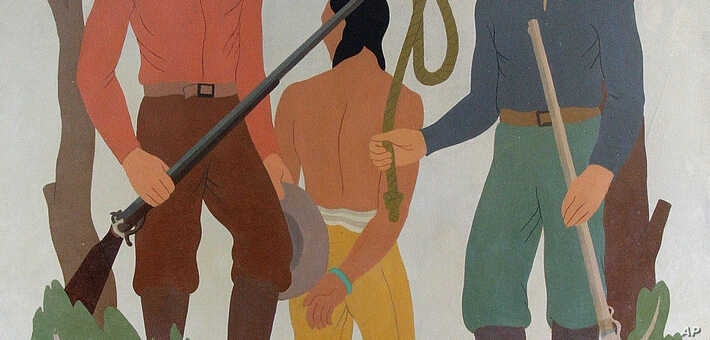
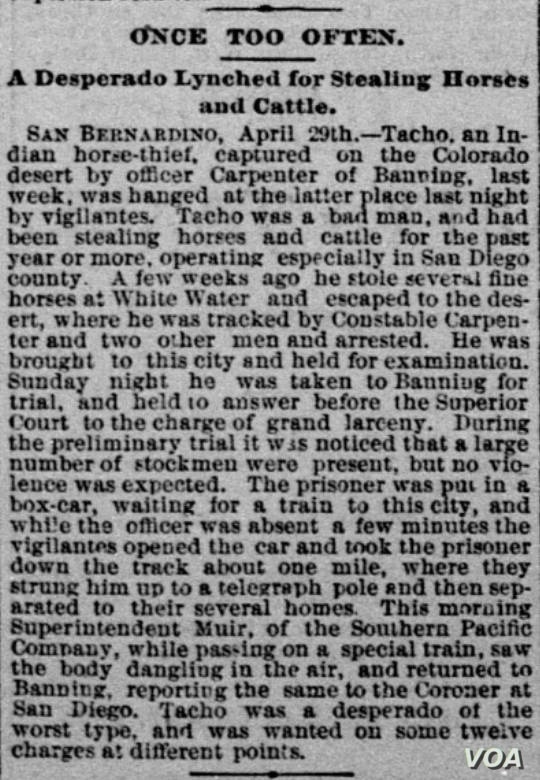
In 2018, the National Memorial for Peace and Justice in Montgomery, Alabama, opened to the public, paying tribute to thousands of African Americans who were lynched by white mobs from the close of the 19th century Civil War through the 1960s. While lynching is most commonly associated with blacks in the southern United States, little attention has been paid to the lynching of other minorities, among them, Native Americans.
In his 2011 book, the Roots of Rough Justice: Origins of American Lynching, Michael J. Pfeifer, history professor at the City University of New York’s (CUNY) John Jay College of Criminal Justice, describes lynching as “informal group murder.”
“The definition that I and many scholars have used stipulates that there has to be an illegally-obtained death perpetrated by a mob -- three or more persons -- and that the collected killing must be in service to justice, race or tradition,” he said.
It’s not a secret that I love studying history; I believe it is a vital discipline for understanding and transforming the world. And as shocking and terrifying as human cruelty has been throughout recorded history, it’s also heartening to observe, time and time again, the movements opposing oppression that have always existed. This is also important to remember if you are tempted to excuse the complicity of people in the past by insisting that they were just products of their time. By studying history, we also become more aware of our own responsibilities and possibilities in the present.
A Legacy of Failure, Cruelty, and War
One of these important historical moments in US history, when there were multiple and large movements to either oppose or work for social justice, followed the American Civil War.
Optimism that Reconstruction would bring about true and lasting healing and change in a nation ravaged and traumatized by the horrors of slavery and war, were combined with optimism that there could be a change in the government’s policies regarding Native peoples.
President Ulysses S. Grant and the events that took place in his administration are a good example of these trends. The Enforcement Acts of 1870 and 1871, for example, were aimed at providing federal support to protect the rights of Black Americans and oppose the Ku Klux Klan. Under the direction of Attorney General Amos Ackerman, hundreds of Klansmen were tried, often by Black juries, and imprisoned. Thousands more received fines or warnings, or even fled to escape prosecution. As a result, the KKK as a formal organization was in wreckage by 1872.
Optimism that Reconstruction would bring about healing were combined with optimism that there could be a change in the government’s policies regarding Native peoples.
At the same time, Grant wanted to find a different approach to US relations with Native peoples. He worked closely with his longtime friend and colleague, Ely S. Parker, and made Parker his Commissioner of Indian Affairs. Parker, whose Native name was Donehogawa, was a member of the Seneca nation and the first Indigenous person to hold the post of Commissioner. Together, they developed policies that included providing federal troops to protect reservation borders from settlers and that ultimately would have provided a pathway to citizenship for Indigenous people.
These plans were vehemently opposed and undermined, and opponents eventually falsely accused Parker of embezzling money. He was exonerated, but Congress stripped power from the office of Commissioner of Indian Affairs, and Parker resigned in 1871.
Plans and relationships fell apart, and Grant ended up waging war against the very people he had thought he would protect, including “the Modoc War in 1873, the Red River War in 1874, and the Great Sioux War in 1876.”
By 1885, the year Grant died, Donehogawa, once Grant’s enthusiastic colleague, described the fate of Indigenous peoples in North America. Resisting the racist idea that blamed Indigenous people for their troubles, he wrote:
“The disabilities, disadvantages and wrongs do not result, however, either primarily, consequently or ultimately from their tribal condition and native inheritances, but solely, wholly and absolutely from the unchristian treatment they have always received from Christian white people … . The tenacity with which the remnants of this people have adhered to their tribal organizations and religious traditions is all that has saved them thus far from inevitable extinguishment.”
Grant’s campaign slogan had been “Let us have peace,” and he seemed sincere in his vision to reform federal Indian policies. So how did it happen that, as Alysa Landry pointed out, “some of the worst massacres and grossest injustices in history [occurred] while Ulysses S. Grant was in office”? This is an important question to ask, if we want to avoid the kind of pitfalls that kept others’ from true healing and change.
In Grant’s case, central to his failures was “the development of millions of acres of federal public lands” and “the private acquisition of land by pioneers, spectators and railroad and mining companies,” made possible by Grant’s approval of the Timber Culture, General Mining, and Desert Lands Acts, which all expanded the land available to homesteaders and settlers – at the expense of Native peoples. In the end, Grant’s hopeful slogan, “Let us have peace,” was no match for the reality of expansionism. In Landry’s words,
“Grant realized that his expansionist goals required the removal of Indians from desirable land. His Indian Peace Policy, designed to reform the Indian Bureau and remove corrupt agents, also called for rigorous agricultural training on reservations and established schools and churches that would transform Indians into Christian citizens.”
Cultural Genocide by Another Name
This tension is the US setting for residential schools. Even though some people, like Grant and Donehogawa, wanted to promote and protect the rights of the Original Nations, that hope was always in second place to the relentless westward push of land-grabbing and violent displacement.
A cluster of ideas have especially supported and justified this kind of colonization. First, the dominating power believes in its own superiority. Members of this society, then, are entitled to rule and profit from that superiority, even if it comes at the expense of others.
This is especially the case when the people harmed are categorized as inferior. Moreover, because the dominating power believes in its superiority, it can reframe the harm it causes to others as ultimately in their best interest.
Those that survive will reap the benefits of being assimilated into the superior culture. It’s a tidy system that excused hundreds of years of oppression and continues to do so today.
The residential school emphasis on agricultural training, education, and conversion fits this pattern. But forced assimilation could only be viewed as moral and good from the vantage point of superiority.
Unfortunately, the settlers of North America never lacked that character trait. Captain Richard H. Pratt, who was a founder and superintendent of the infamous Carlisle Indian Industrial School in Pennsylvania, gave a speech in 1892 that showed how a person could justify even the most cruel actions under the guise of racist and paternalistic generosity and care. He began by stating that:
“A great general has said that the only good Indian is a dead one, and that high sanction of his destruction has been an enormous factor in promoting Indian massacres. In a sense, I agree with the sentiment, but only in this: that all the Indian there is in the race should be dead. Kill the Indian in him, and save the man.”
Amazingly and horrifyingly, Pratt would then use the enslavement of Africans as a positive example of how assimilation could work. Rather than recognize the courage, persistence, creativity, and love that marked Black resistance to slavery and its descendants, such as Jim Crow and mass incarceration, Pratt gave all the credit to the White people who enslaved them. In Pratt’s view, “the care and authority of individuals of the higher race” was a blessing in disguise.
“Horrible as were the experiences … of slavery itself, there was concealed in them the greatest blessing that ever came to the Negro race—seven millions of blacks from cannibalism in darkest Africa to citizenship in free and enlightened America … .” (ibid)
In contrast, Pratt saw the wars fought against Native peoples and concluded that forced assimilation was more effective. “We have never made any attempt to civilize them with the idea of taking them into the nation,” Pratt wrote, “and all of our policies have been against citizenizing and absorbing them.” Boarding schools were Pratt’s answer:
“It is a great mistake to think that the Indian is born an inevitable savage. He is born a blank, like all the rest of us. … Transfer the infant white to the savage surroundings, he will grow to possess a savage language, superstition, and habit. Transfer the savage-born infant to the surroundings of civilization, and he will grow to possess a civilized language and habit.” (ibid)
This is what White supremacy looks like, dressed up in schoolmaster’s robes. The unmistakable goal was to eliminate Indigenous nations, communities, customs, languages, and life.
T he Métis National Council and the Government of Canada will be working collaboratively, Nation-to-Nation, to develop a process to engag...
To Veronica Brown
Veronica, we adult adoptees are thinking of you today and every day. We will be here when you need us. Your journey in the adopted life has begun, nothing can revoke that now, the damage cannot be undone. Be courageous, you have what no adoptee before you has had; a strong group of adult adoptees who know your story, who are behind you and will always be so.
OUR HISTORY
BOOK 5: Lost Children of the Indian Adoption Projects














The other reparation debate California needs to start having