BACK UP BLOG (no longer updating)

This blog was a backup for American Indian Adoptees blog
USE THE SEARCH BAR or SEARCH TOPICS at bottom of this blog

If you need support

Support Info: If you are a Survivor and need emotional support, a national crisis line is available 24 hours a day, seven days a week: Residential School Survivor Support Line: 1-866-925-4419. Additional Health Support Information: Emotional, cultural, and professional support services are also available to Survivors and their families through the Indian Residential Schools Resolution Health Support Program. Services can be accessed on an individual, family, or group basis.” These & regional support phone numbers are found at https://nctr.ca/contact/survivors/ . MY EMAIL: tracelara@pm.me

Search This Blog

Tuesday, November 23, 2021

Kamloops Indian Residential School: So why is it so hard to determine how many children died there?

With any genocide, the oppressor seeks to minimize their damage and atrocity... TLH

Lost children


The threat of death was part of life at the Kamloops Indian Residential School. So why is it so hard to determine how many children died there?

June 13, 2021

WARNING: This story contains details some readers may find distressing.

During a 1937 outbreak of measles at the Kamloops residential school, a nurse gave student Mary Francois some Aspirin, mustard plasters and brandy after the girl fell ill on May 3.

On May 10, Mary was taken by car to the nearby Royal Inland Hospital. She had been sick with pneumonia, two bacterial ear infections and inflamed kidneys. That day, the school principal sent a letter to her parents — but they never received it.

The local Indian agent phoned them on the morning of May 13. But when the parents arrived at the hospital that evening, it was too late.

Mary was dead from a blood clot in her brain.

Afterward, Mary's father, the chief of the Adams Lake Band, which sits about 60 kilometres to the east, wrote a letter to the Indian agent.

"In connection with the death of my daughter Mary, while attending Kamloops Indian Residential School," read the letter from Chief Francois, "I would request, as Chief of the Adams Lake Band, that in future, when a child of the school is taken sick and requires hospital attention, that the parents or guardian be notified at once."

The typewritten letter is signed with an "X."

The information about Mary Francois's case is found in a death memorandum from the Indian Affairs department (which does not, in fact, note her age). Mary's record now lies in the holdings of the National Centre for Truth and Reconciliation alongside 10 other death memorandums from 1935 to 1945, in a folder titled "Kamloops Residential School, Pupil Deaths." The folder is twice stamped with the word "dormant."

An image of Mary Francois's death record, kept by the Indian Affairs department. (National Centre for Truth and Reconciliation)
 

These memorandums are a reminder that the threat of death was part of life at the Kamloops Indian Residential School.

The institution has become a household word since Tk'emlúps te Secwépemc First Nation announced the discovery of what are believed to be the unmarked burial sites of children's remains adjacent to the former school's grounds.

The death of students at Kamloops residential school was no secret among the First Nations whose children were forced to go there. Finding out how they died is a challenge, but the evidence that does exist reveals a record characterized by the indifference of authorities, who saw the children as a means to an end that had little to do with their well-being.

CBC News obtained historical records as well as an out-of-print book that, along with the oral history of survivors, sheds light on the lives and suffering of the students who attended the school.

 
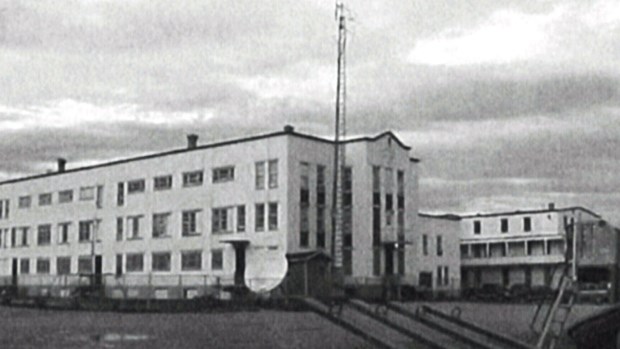
An undated photo of the Kamloops residential school. (National Centre for Truth and Reconciliation)

Many causes of death

Survivor testimony and historical records reveal how children died at the institution throughout the years. Many fell to diseases like tuberculosis and measles. Others drowned in the Thompson River, which flowed nearby. Some, fleeing school, tried to hop trains and died. Others died of suicide.

The National Centre for Truth and Reconciliation, the repository of residential school records gathered by the Truth and Reconciliation Commission, found evidence for 51 fatalities at the institution. There are likely more.

The federal government purged three volumes of funeral records from Kamloops residential school, according to listings of destroyed files held by the National Archives of Canada. The Indian Affairs department also destroyed three volumes of Indian agent reports, along with quarterly "returns" for 1956 to 1961 — student lists that would include deaths.

The memories of survivors fill in some of the gaps left by the reports.

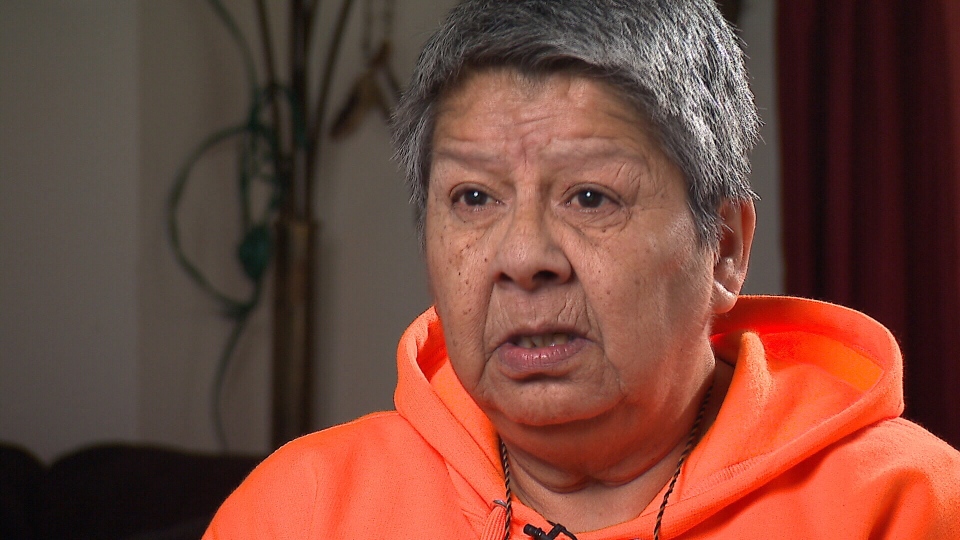
Barbara McNab-Larson, who attended the school from 1948 to 1950, often goes down to a creek near her house in Skeetchestn First Nation. It's a place teeming with life and scents that bring her back to the place before her childhood was shattered.

"That was probably the safest time in my life," said McNab-Larson. 

When she was five, a cattle truck came to take her to Kamloops residential school. "The first thing they did was take us down to the cleansing room, where they cut off our hair," she said. "Then, they deloused us. Then, they scrubbed us down with disinfectant like we were diseased animals."

McNab-Larson returned home for the summer, but the next year, she said the school came to get her in an army truck.

WATCH | Barbara McNab-Larson talks about her time at the Kamloops residential school:

Remembering life in the Kamloops residential school

Not all were so lucky — to live and remember.

Seven years before McNab entered the doors of Kamloops residential school, a student named Florence Morgan became sick there. Her death memo notes that it was at 6:30 a.m. on June 26, 1941; by 6:50 a.m., she was taken to the Royal Inland Hospital. Florence died on June 28 from the viral infection encephalitis, the memo says.

The Indian agent reported that her body was returned by truck to her parents on the Bonaparte First Nation, which sits 90 kilometres to the east of the school.

The viral infection that killed Florence was a common after-effect of contracting measles. Outbreaks of measles coursed through the school during this era.

One of these outbreaks sickened nine-year-old Leslie Lewis. On Sept. 22, 1935, while Leslie was recovering, he suffered an epileptic attack. The nurse at the school gave him three grams of luminal, an anti-seizure medication. Leslie was put in a car and sent to the hospital at 9 a.m. the next day.

The doctor reported that Leslie seemed fine that morning, but the next day he was dead, his memo says. The doctor reported that the measles infection likely triggered the seizure.

An image of  Leslie Lewis's death memo. (National Centre for Truth and Reconciliation)
 

The Indian agent concluded the memo by commenting on the overcrowded conditions at Kamloops residential school, where five dormitories accommodated 285 students.

"During an epidemic it is impossible to properly isolate the patients and contacts," typed the Indian agent. "The need for separate quarters to house sick children is evident."

'They still get nightmares about it'

It wasn't just disease. Some students were also driven to suicide.

"This … young boy hung himself in the bathroom. You know, my brother's age group," said Gerry Oleman, who attended Kamloops residential school from about 1960 to 1968, in a recent interview with CBC. Oleman, who is from St'át'imc First Nation in B.C.'s Interior but now lives in Brandon, Man., said the students who witnessed it still can't shake the moment.

"Still today they remember that. They still get nightmares about it," he said. Oleman also mentioned other distraught students: "the runaways and people jumping trains, getting killed jumping a train, you know, freezing to death."

Suicide also haunts the stories of survivors gathered in the book Behind Closed Doors: Stories from the Kamloops Indian Residential School, which was published by the Secwepemc Cultural Society in 2001.

James Charles, who attended from 1964 to 1978 and is featured in the book, knew of three boys who died of suicide. "One suicide was over on the swings beside the brown building," Charles says in Behind Closed Doors. "No one could figure out how that really took place, because it happened in broad daylight, blue sky out, sun was shining."

Charles said there was another child who died on the bell rope and a third found in the orchard. "I think remembering these suicides played a big role in a lot of my anger that I had bottled up inside," Charles says.

According to the book, some of the children who died attempting to escape on a nearby train came from the Lillooet district, about 170 km west of the school.

One anecdote in the book, told by a survivor who signed their story "Anonymous," said their older sister Nellie died at the school. She was sick for months with hepatitis and yellow jaundice. No doctor came to treat her and no one told her parents of her illness until after her death.

"When my father came to the school after hearing of the sad news, he beat the principal and punched him down the stairs," says the survivor in the book. "As much as I want the memories of my education years to be positive, it just can't be."

 
A photo from April 4, 1937, of students, administration and teaching staff at Kamloops residential school. The photo is from the Quebec archives of the Oblates of Mary Immaculate. (National Centre for Truth and Reconciliation)

Another survivor in the book, Eddy Jules, spoke of abortions and a furnace.

"All of us that were going to school would hear the clang, and we would say, 'Oh, that's so and so's friend, and they gave her an abortion,'" said Jules, noting the strangeness of "fire in September or October or November when it's not cold."

Retired senator Murray Sinclair, who chaired the Truth and Reconciliation Commission, said in a recent video statement that he also heard testimony from survivors about this use for a furnace in residential schools.

"Some survivors talked about infants who were born to young girls at the residential schools, infants who had been fathered by priests, were taken away from them and deliberately killed — sometimes thrown into furnaces, we were told," said Sinclair.

'We mourned these children'

Despite all this evidence of death at the school, no record has yet surfaced of a graveyard at the institution — no shred of paper, cross or stone marks conveying who might lie beneath the earth.

Sister Marie Zarowny, chair of the board for the Order of St. Anne's, which provided teachers and nurses to the school, told CBC News a fire destroyed the first 30 years of records from the institution. She said that to her knowledge, no students were ever buried on the school grounds.

She said that if a child died at the Royal Inland Hospital, the body would not be returned to the school. If a student did die at the school, the body would be sent back to their home community for burial.

"We mourned these children at the school. We had a ceremony for them, but they were ... returned to their parents," said Zarowny.

She said that students from Tk'emlúps te Secwépemc who died at the school were buried in the community's cemetery. There are hints of another, now-forgotten graveyard in the records, she said, but couldn't confirm any aspect of this.

"I actually don't know if that reference comes from that school or from another school," she said.

As a result of destroyed records, the true number of students who died at residential school may never be known. The Truth and Reconciliation Commission, which was created to delve into the long history of the schools, concluded that at least 4,100 children died in these institutions.

The same uncertainty shadows the location of graveyards. Many children were buried in unmarked graves, some of which are now lost to time.

One institution that holds large pieces of this history in its archives is the Catholic Church. Catholic entities ran roughly 75 per cent of residential schools.

The church has faced widespread calls, from Prime Minister Justin Trudeau on down, to release all records related to residential schools, to augment the incomplete government record.

Zarowny said her order is sharing any relevant records with Tk'emlúps te Secwépemc that could help aid in the quest to identify the suspected remains on the Kamloops residential school grounds.

She said the Sisters of St. Anne's turned over what they viewed as records related to residential schools to the Truth and Reconciliation Commission (TRC).

 
A photo from 1931, taken at the Kamloops residential school. (National Centre for Truth and Reconciliation)

But the order has yet to sign off on the transfer of its records to the National Centre for Truth and Reconciliation, said Stephanie Scott, executive director of the institute.

"The [Sisters of St. Anne's] remain unwilling to authorize disclosure of [its] records currently in the possession of the government of Canada," said Scott, in a statement to CBC News.

Several Catholic entities never turned over any records to the TRC. According to an internal TRC document obtained by CBC News, 17 Catholic entities failed to hand over any archival material to the commission.

"There are a lot of records in church archives that we never got to go through," Tom McMahon, the former general counsel for the TRC, told CBC.

The Oblates of Mary Immaculata, which ran Kamloops residential school, turned over what it deemed to be relevant records to the TRC, according to the internal TRC document.

McMahon said the Catholic entities that did provide files made their own determinations about what was deemed to be a "relevant" document. He said the Catholic entities held onto records connected to church functions and personnel files.

"When you start talking about personnel records, they did not see that as relevant to the children and education of the children," said McMahon.

"When we talk about deaths of children, you want to think about the church records, the baptism records, death records held by the church. The church told us those records pertain to church activities and were not relevant."

McMahon said one of the potentially richest sources of survivor testimony is held by the federal Justice Department in documents relating to roughly 4,000 civil actions filed by survivors against Canada and the various churches that ran residential schools. He said most of those files were never turned over to the TRC.

Survivors and descendants have long spoken about unmarked graves and children who never came home. Their calls made it to the House of Commons in 2007 and then-Indian Affairs minister Jim Prentice, who asked the interim executive director of the Truth and Reconciliation Commission to begin working on the issue.

According to a 2008 memo obtained by CBC News, the TRC asked the research branch of Indian Residential Schools Resolutions Canada, a federal agency created to deal with a multitude of civil claims filed by survivors, to conduct an internal records search for cemeteries.

Numerous schools came back with no records of cemeteries, including Kamloops residential school, according to a preliminary report.

John Milloy, one of the country's leading historians and author of A National Crime, perhaps the seminal book on residential schools, said that may be because Indian Affairs never prioritized residential school files.

When government edicts forced the department to destroy records through recycling — for example, as a result of a paper shortage during the Second World War — such files were seen as expendable.

"An awful lot of information which one could have had, to describe the nature of the system, the treatment of the children… a lot of that information was simply lost," said Milloy, who was involved with the Royal Commission on Aboriginal Peoples and the Truth and Reconciliation Commission.

Milloy said the Indian Affairs department, which is now known as Indigenous and Northern Affairs, is really a large real estate company, holding in trust reserve lands across the country. It also determines who has the right to live on this property, holding registries with status records and band membership lists.

"So those are the records which are most critical to the department," said Milloy.

He also said that the Canadian public has not properly understood the rationale for the evolution of a residential school system under the country's first prime minister, John A. Macdonald. The schools were a means of nation-building and achieving state-security ends, he said.

"It becomes pretty obvious that, as far as Macdonald and other senior members of the Indian Affairs department [were concerned]… one of the purposes of the schools was to hold the children hostage against the good behaviour of their parents," said Milloy.

He said the officials used children as bargaining chips to counter any attempts by Indigenous nations from raising arms against the still-fledgling state.

John Milloy, one of the country's leading historians and author of A National Crime, considered one of the seminal books on residential schools. (CBC News)

Milloy provided CBC News with a pre-print academic paper he wrote that details the strategy. The draft title is "Sir John A.'s Hostages." It states that government and North-West Mounted Police officials were increasingly concerned about a breakout in hostilities between the state and armed Indigenous nations such as the Blackfoot in the Prairies, just as Canada was building a railway to deliver goods and people — as well as establish control over territory.

The use of the schools to neutralize Indigenous resistance was put bluntly by school inspector J. A. Mcrea in a 1886 letter to the Indian commissioner: "It is unlikely that any Tribe or tribes would give trouble of a serious nature to the Government whose members had children completely under Government control."

At the time, Canada wanted to avoid a repeat of the wars in the U.S. and feared any new conflicts would eclipse the violence from the rebellion led by Louis Riel in 1885, Milloy's research showed.

A 1879 report by Nicolas Flood Davin, which recommended the creation of residential schools, followed a fact-finding mission to explore how the Americans used similar institutions, the paper said.

"Davin would have discovered this covert purpose for residential schools in his conversations with Carl Schurtz, the U.S. Secretary of the Interior, and Ezra Hayt, the Commissioner of Indian Affairs," said the paper. "Certainly, for the Department, the resolution of the 'Indian problem,' characterized so often as carrying the white man's burden of Christian duty was, in fact, countering the perceived threat to state security and social purity."

Milloy said that "this is one of the reasons why the Kamloops school is developed in the 1890s, because the situation in the area is tenuous for the government … The schools are also very much part of the colonial process … for the sake of the development of Canada."

The schools used fear and violence — and fear of violence — to bend generations of children under the cross and flag. Much remains hidden from the record about the fate of thousands of children who attended these institutions, but this history is carried by those who came home.

"'You better behave. Don't get out of line, because there's a graveyard and there's also the river.' Those were warnings that were given to us as little, tiny children — five, six years old," said Barbara McNab-Larson of her time at the Kamloops school.

"I don't think you really grasp it at the time, but when your friends disappear and they don't come back, even as a child, you know something's wrong."

Support is available for anyone affected by their experience at residential schools and those who are triggered by the latest reports.

A national Indian Residential School Crisis Line has been set up to provide support for former students and those affected. People can access emotional and crisis referral services by calling the 24-hour national crisis line: 1-866-925-4419.

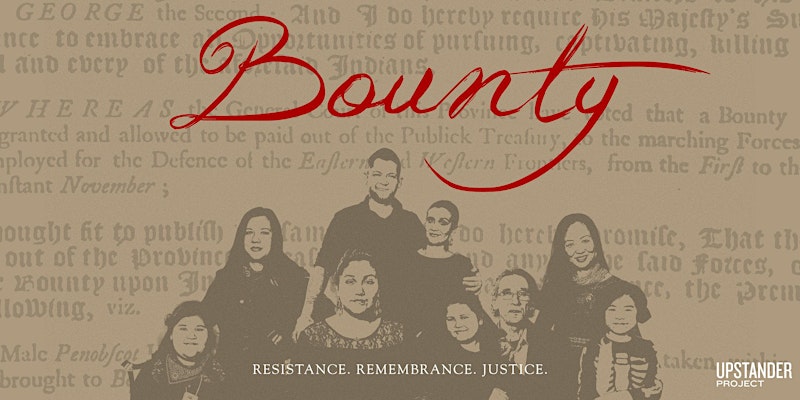

Scalp "Bounty" in Maine


This is on my website Trace Hentz:

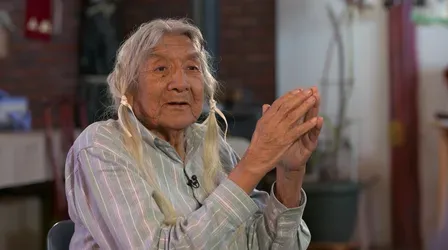
Neptune Adams: I lived on Indian Island until I was four when I was stolen and placed in non-native foster care in a white, upper-middle-class neighborhood. That’s where I now live, not in the foster home, but the same town, literally on the land that was stolen from my grandfather’s side of the family. It was very racist and very abusive in the foster home. It’s not necessarily the color of your skin. If someone knows you’re Penobscot, that can get you targeted. I never gave up my identity. People will say that we lost [our identity] in foster care, but you don’t lose things like that. It’s stolen.

The more people have tried to oppress us, the harder we fight back. And again, we’re still here. We Penobscot people are numbered at about 2,800, and we’re all across this nation. We are still practicing our culture. We are still defending our relatives, both human and non-human alike — the land, the water and all our relations.

I’ve sometimes heard Indigenous people described as being vulnerable, and that is not the case. We are targeted and marginalized. But we are very resilient.

Learn more about the film at bountyfilm.org.

KEEP READING 

FILM TRAILER 

Monday, November 22, 2021

Home From School: The Children of Carlisle (airs tomorrow)


 INDEPENDENT LENS on PBS

"Kill the Indian in him, and save the man.” This was the guiding
principle that removed thousands of Native American children and placed
them in Indian boarding schools. Among the many who died at Carlisle
Indian Industrial School were three Northern Arapaho boys. Now, more
than a century later, tribal members journey from Wyoming to
Pennsylvania to help them finally come home.


Airing:
11/23/21

Sunday, November 21, 2021

Manitoba: Missing Indigenous tuberculosis patients

U of W researcher wants to empower families, communities to navigate records, government agencies

The Ninette Sanatorium opened in May 1909 and over the next several decades, the facility grew into the largest sanatorium in the province, comprising over a dozen buildings and taking in thousands of tuberculosis patients. With advances in medicine it was eventually not required and closed in 1972. (Gordon Goldsborough/Manitoba Historical Society)

A University of Winnipeg researcher is developing an online research tool to help Indigenous communities and families find missing tuberculosis patients who were sent to Manitoba hospitals and sanatoriums but never came home. 

Anne Lindsay is a post-doctoral fellow at the University of Winnipeg and will be working with the university's Manitoba Indigenous Tuberculosis History Project on the initiative. 

Lindsay has spent several years working as an archivist and researcher. Her experience includes working with the Truth and Reconciliation Commission. Some of her work has involved helping families research connections to residential and Indian hospital schools, and find where missing residential school children may be buried. 

Due to privacy laws, the tool won't be a database of records of missing tuberculosis patients, but will instead empower families and communities to do their own research, Lindsay said. 

"I think it needs to be something that is not just a set of links, but that gives people some information about where to start looking and how to use the information from that to get other information, and sort of helps to give people a bit more of a step-by-step understanding of how to perform their own research," she said. 

KEEP READING

Remarks by President Biden at the Tribal Nations Summit


November 15, 2021 • Speeches and Remarks

Via Teleconference | South Court Auditorium | 11:50 A.M. EST
 
THE PRESIDENT:  Thank you, Madam Secretary.  And I say to the press, “Excuse my back.”  (The President turns to the video call screen behind him.)  Next time in Washington, okay?  I see you all up on the board behind me, and I hope we do this in person.  I hope, I hope, I hope.  That’s my — that’s my hope.  Thank you.
 
Good morning.  I want to thank you for joining us.  This is a big day.  I think, as my mother would say, former Senator Dan Inouye is looking down going, “Finally.  Finally.”  I was raised by Dan Inouye in the United States Senate.
 
And to President Fawn Sharp and Chairman Hill of the Oneida Nation, and our President Holsey: I thank you all for what you’re doing, and I want to recognize you.
 
And, Chairman Hill, I thought going — being from Upstate New York, in college, and my deceased wife is from Skaneateles Lake, not far from Oneida, New York — I thought that the Oneida Nation was all in Central New York, but obviously you’re up in Wisconsin.  Come down and see us in Oneida.  (Laughs.)
 
Anyway, I want to thank you, Madam Secretary, for your remarks.  But I also want to thank you, Deb, for being willing to join when I asked you to come along and to serve.  And as I said, I was confident, at the time, you would be incredibly important.
 

When I got to the Senate, Dan Inouye took me under his wing.  He helped me understand the simple truth that I had only been vaguely aware of, and that is that Tribal Nations do better when they make their own decisions.  That’s why some of the votes I took as a young senator are among my proudest: supporting the Indian Self-Determination and Education Assistance Act, the Indian Child Welfare Act, the Native American Graves Protection and Repatriation Act, and so much more.
 
When I ran for President, it was important for me to continue to make progress.  And that’s what we’ve done since I took office.  When COVID-19 struck in Indian — it hit Indian Country with devastating consequences.  Native Americans contracted the virus at over three times the rate of white Americans, nearly twice the rate of lives lost; twice as many died as a percentage.
 
But Tribal Nations stepped up.  And today, the Native Americans have gone from being a population most harmed by COVID to one of the populations most vaccinated against COVID.  That success has a lot to do with Tribal leadership, but it also has to do with the American Rescue Plan, which included over $31 billion — $31 billion for Tribal Nations — the most significant investment in the history of Indian Country.  Long overdue.
 
Now we’re taking the next step.  Today, I’m signed — and I’ll shortly sign — a Bipartisan Infrastructure Deal.  Everyone knows we’re long overdue to make major investments in infrastructure, but nobody knows that better than Indian Country.  Tribal lands have been chronically underfunded for generations.
 
And so I’m very proud to say that when I sign the bill outside on the South Lawn shortly, the single-largest investment in Tribal infrastructure ever is going to occur: more than $13 billion in direct investments to Indian Country and tens of billions more in grants and future funding opportunities — funding for clean drinking water, high-speed Internet, roads and bridges, environmental cleanups, and so much more.
 
But we can’t stop there.  We need Congress to pass my Build Back Better plan as well.  Today, 1 in 10 Native American parents have reported having to quit or change their jobs or turn down an opportunity due to a childcare challenge.  This bill would save most families thousands of dollars per year in childcare, helping moms and dads rejoin the workforce. 
 
But also, this bill, when it passes, will allow every three- and four-year-old in the nation to attend high-quality preschool, increasing considerably their chances of getting all the way through the first 12 years of primary school and on to college.  It includes the most significant investment to tackle the climate crisis in history.
 
And I might note parenthetically: No group of Americans has created and cared more about preserving what we inherited than the Tribal Nations.  And it will be expand — will — this also will expand health coverage, lower costs for millions of Americans.
 
You know, we have to continue to stand up for the dignity and sovereignty of Tribal Nations.  My dad used the word “dignity” I think more than any other word.  He said, “Everyone is entitled to be treated with dignity.” 
 
I was proud to reestablish the White House Council on Native American Affairs and to issue a memorandum my first week in office instructing my entire administration to engage in regular, meaningful consultation with Tribal Nations.
 
I was kidding my wife Jill, who’ll be out here shortly: She’s visited the Navajo Nation so many times I’m worried she’s not going to come home. 
 
But, look, I’ve been proud — I’m proud to –- of the — to name Native American leaders in my administration: not only the first Native American Cabinet Secretary — and it won’t be the last in history — but more than 50 Native Americans now serving in significant roles in my administration. 
 
We’ve also taken action to protect Tribal lands: revoking the permit for the Keystone XL pipeline; preserving and protecting their sacred homeland, including Bears Ears and the Grand Staircase-Escalante.  It’s part of who we are as a nation.  And I’m grateful to the Tribes who led the effort. 
 
You know, we also can be proud of that progress, but there’s still so much more to do.  So, today, I’m announcing five new initiatives.
 
First, a new initiative involving 17 departments and agencies to protect Tribal treaty rights and the work of the federal government. 
 
Second, a new initiative to increase Tribal participation in the management and stewardship of federal lands. 
 
Third, my administration will be the first to work with the Tribes to comprehensively incorporate Tribal — Tribal ecological knowledge into the federal government’s scientific approach, helping us fight climate change. 
 
And fourth, taking action to protect the Greater Chaco Landscape in Northwest New Mexico from future oil and gas drilling and leasing. 
 
And fifth, I’m about to sign an executive order, in a moment, addressing the crisis of violence against Native Americans.
 
Today, I’m directing federal officials to work with Tribal Nations on a strategy to improve public safety and advance justice.  This builds on the work we did together in reauthorizing the Violence Against Women Act in 2013, when we granted authority to try to exercise jurisdiction over non-Indian offenders who commit violence on Tribal lands.  We’re going to reauthorize that again.  We’re going to expand the jurisdiction to include other offenses like sex trafficking, sexual assault, and child abuse.
 
These efforts — again, to use the word my dad would use much — are a matter of dignity.  That’s the foundation of our nation-to-nation partnership.  That’s what this summit is all about. 
 
So, I want to thank everyone who’s here for participating, and I look forward to continuing to work together. 
 
And now it’s my honor to sign an executive order.  And a couple of my friends are going to be coming out here, I’m told — Cabinet members.  But, you know, here we go.
 
Where is everybody?  (Laughter.)  Jill.
 
THE FIRST LADY:  Hi.  (Laughs.)
 
THE PRESIDENT:  Jill is here.  The Attorney General.  We got — oh, everybody is there.  All right, Jill.
 
I don’t know what was going on back there, but I — (laughter).  You’re all here.  Okay.  I was worried you weren’t going to come out here.  (Laughter.)  Good to see you.  All right. 
 
The title of this legislation is “Improving Public Safety and Criminal Justice for Native Americans and Addressing the Crisis of Missing or Murdered Indigenous People.”
 
And I’m proud to sign it.  It’s long overdue.
 
(The executive order is signed.)
 
Thank you all so very much.
 
We’re going to make some substantial change in Indian Country, and it’s going to continue.
 
Thank you all.  (Applause.)
 
Q    Mr. President, are you confident that Build Back Better will pass the House (inaudible)?
 
THE PRESIDENT:  You ask me that all the time and I give you the same answer.  I’ve been confident since the day I stepped into office.
 
12:00 P.M. EST

'Many pieces missing for survivors': Growing calls for a national inquiry into #60sScoop


TORONTO -- Warning: This story contains details that may be disturbing to some

There are growing calls for a national inquiry into the ‘60s Scoop, when Indigenous children were taken from their families in huge numbers to be placed in foster care.

An estimated 20,000 First Nations children were taken from their parents during that time, but survivors believe the numbers are much higher than that, and they want support to find lost loved ones.

Lidia Lorane Lagard is one of those who was taken as a young child.

Now, surrounded by binders documenting part of her early life, she is trying to piece her past together and find her family.

“I would really love to get connected with my brother again and find my sisters,” Lagard told CTV News.

Known by family and friends as Mama Crow, Lagard and her siblings from Longlac in Northern Ontario were part of the ‘60s Scoop.

It’s a cycle that still continues today — now known as the Millennium Scoop.

"Me and my sisters became a ward of the courts,” Lagard said.

But being taken from her family isn’t the only pain that has haunted her.

In 1965, a social worker dropped Lagard off at St. Mary’s Residential School, when she around five-years-old.

“She talked to a nun for a bit and then she — she left me there,” Lagard said. “When she left, they cut off all my hair, shaved it down to nothing, […] scrubbed me down with steel wool and put me in the shower. And as she was scrubbing me she was saying I was just a dirty little Indian and I was going to learn to be proper.”

She said that she wasn’t allowed to speak her own language, which her grandparents spoke.

“When we were little, we spoke Ojibwe, we spoke our language,” she said.

The name “Mama Crow” comes from her grandparents, who called her “Little Crow” when she was born.

The name Lidia was forced on her, she said.

“They kept throwing the Bible at me always and saying, ‘pick a name’. And I wouldn’t,” Lagard said. “And every time I said my language I got beat.”

She kept hoping for the social worker to return — but she didn’t. Lagard was in residential school for around three years.

“Those priests in there were so horrible,” Lagard said. “They would rape us, and they would beat us, and they would never stop. It was one child after another.”

She described how at night, sleeping in a room full of many other children, she would hear priests come in and take a child out with them.

“I still listen for footsteps coming towards my room,” she confessed. “I’m 60-years-old now.”

The foster system was no respite. Two weeks before her 13th birthday, Lagard ran away to Vancouver, where she struggled with drug and alcohol addiction until 2004, when she found the strength to get sober and begin searching for her siblings.

“The government is there to protect us. And they didn’t,” she said. "The priests and nuns were there to protect us. And they didn’t. So now we have to jump through hoops to have our truth known, and our truth seen, and our truth heard.”

Many other survivors are also struggling to trace what happened to them, according to Katherine Legrange, volunteer director for Legacy of Canada.

“We want to ensure that this piece of history is not lost,” she told CTV News. “As survivors, we want to make sure that this doesn’t happen to children going forward.”

Her organization, among others, is calling for the federal government to commission a national inquiry into the ‘60s Scoop, similar to the MMIWG inquiry.

There’s been no government commitment to an inquiry, but Crown-Indigenous Relations Minister Mark Miller’s office says the government is "committed to working with all ‘60s Scoop survivors, including Métis and non-Status First Nations to establish a path forward to mend past wrongs and ensure they have what need to heal.”

“There’s still many, many pieces missing for survivors, including where their parents and siblings may be, what community they come from in some cases,” Legrange said. “And lots of files have been misplaced or in some cases redacted so that we can’t trace back our family histories.”

That’s the case for Lagard, who hopes sharing her story will help find her brother Clifford and sister Isobelle.

“I just found my niece through Facebook,” she said.

But it’s a slow journey. Many of the documents relating to her early history have names and details blacked out, she said.

“The ones that are still out there, looking for Lidia Lorane Lagard — I’m here,” she said. “I’m looking, I’m reaching. I want my family home.”

And although she’s worked hard to heal, the combined trauma of being a ‘60s Scoop and residential school survivor runs deep.

“I still carry scars in my head,” Lagard said. “But the saddest part is nobody sees the scars that we carry within us.” 

Attacks on ICWA


Right-Wing Attacks on Native Child Welfare Law Should Frighten Us All

LISTEN
https://megaphone.link/TRUO6414184424

Headlines (November 2021)


Indigenous delegates to have private meeting with Pope Francis during Vatican visit

The Canadian Conference of Catholic Bishops says 25 to 30 Indigenous people are to meet with Pope Francis at the Vatican in December.

The delegates are to include elders, knowledge keepers, residential school survivors and youth. A small group of Canadian bishops is also to attend from Dec. 17 to Dec. 20.

“The journey towards healing and reconciliation is a long one, but we believe this will be a significant milestone in the Catholic Church's commitment to renewing, strengthening and reconciling relationships with Indigenous Peoples across the land,” Raymond Poisson, president of the Canadian bishops, said in a news release Wednesday.

First Nations, Inuit and Metis delegates are to have private meetings with the Pope, during which they will tell personal stories about the legacy of residential schools.

KEEP READING

Murray Sinclair to chair negotiations on federal compensation for First Nations kids


Ontario to release death registrations of 1,800 Indigenous children

Releasing death records was one of the recommendations in the 2015 report from the Truth and Reconciliation Commission

Ste. Anne's Residential School
St. Anne's residential school. (Supplied)

Ontario is in the process of releasing death records of approximately 1,800 Indigenous children to the National Centre for Truth and Reconciliation.

Releasing death records was one of the recommendations in the 2015 report from the Truth and Reconciliation Commission that documented abuse suffered by Indigenous children at residential schools.

A spokeswoman for the Office of Ontario’s Registrar General says the province began gathering and archiving the records after the report was released.

The province says Service Ontario has records of deaths that occurred over the past 70 years that were registered with the provincial government. 

It says the search to find death registrations of student-aged Indigenous children began at the end of 2016 and it was determined that the approximately 1,800 records should be released.

The province says digital copies of the records will be transferred to the centre once an agreement authorizing their release is finalized.

Earlier this year, the provincial government committed $10 million to search for burial sites at residential schools following news that the remains of hundreds of people had been found buried near other residential school facilities around Canada. 

The National Truth and Reconciliation Commission has identified 12 locations of unmarked burial sites in Ontario and the province has said there are likely more.

It reported the known deaths of 426 children who attended schools in Ontario and an unknown number of children still missing.

This report by The Canadian Press was first published Nov. 2, 2021.

First Nation leaders and 60s Scoop survivors press conference (Nov. 1, 2021)

++sorry to post this so late... TLH

Nov. 17, 2021

Canada's Crying Shame

The fields full of children’s bones

Indigenous survivors of Canada’s residential schools tell the stories of those who never made it out.

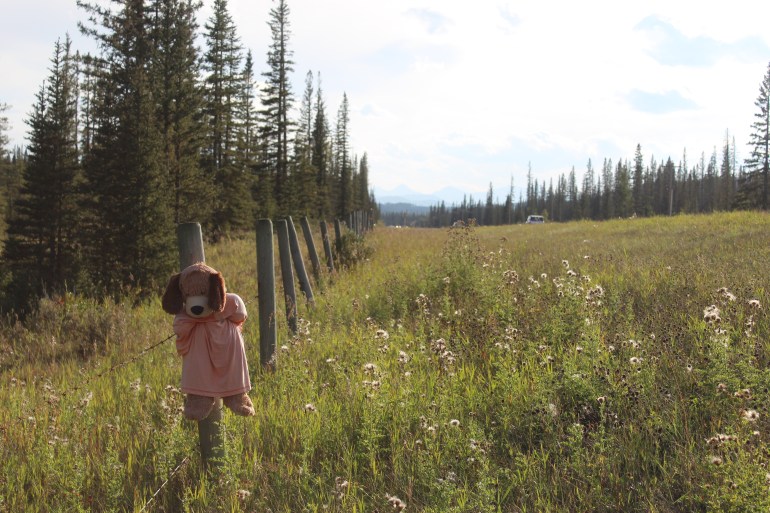
A teddy bear in a field in Saskatchewan where 751 unmarked graves were found [Brandi Morin/Al Jazeera]

Tuesday, November 16, 2021

50 Ways PTSD Undermines Intimate Relationships #NAAM2021


Grief may not be always considered in relation to PTSD. But what happens when you have PTSD and go to therapy? At a certain point, you come across a great loss that was sitting underneath the trauma all along. You lost someone you love. You lost your appearance due to injury. You lost an opportunity. You lost your innocence. You lost love. 

READ

Monday, November 15, 2021

Assessing Blame for Deaths of Indian Boarding School Students


Editor’s note: This report reveals information about illness and death in federal Indian boarding schools that some readers could find triggering or upsetting. Discretion to sensitive groups is advised.

On June 16, 1913, Pauline Peazzoni, a 13-year-old Maidu girl from the Sierra Nevada of Northern California, lost her battle with the “white plague,” tuberculosis.

Temporary buildings at Chemawa school, 1885, W.P. AndersonOregon Historical Society, 0335P151

 READ MORE


Triggered #NAAM2021


Good Read: https://www.dailybastardette.com/my-nam-basket-was-poked-sorry-adoption-is-not-normal-and-adoptees-dont-have-normal-lives/


By Trace Hentz (blog editor)

The internet is full of adoptees writing (some yelling) about their loss. Like on twitter: Being Adopted Means @Being_Adopted

We know the loss is real.  Our ability to grieve is difficult and different for an adoptee.  It shapes us but perhaps biggest is the loss of mother.

The loss and grief are a constant, a background noise in your spirit. You don't wake up one day and say the loss is gone. It changes you in many ways, and makes you question "can I make this internal anguish stop?"  Being an adoptee becomes your theme song.  It never goes away.

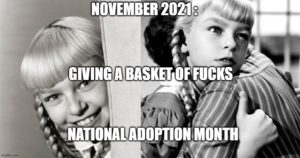
This month is Nati onal Adoption Awareness Month (NAAM2021) and if you read twitter or other social media, you may find yourself triggered at all the loss and pain adoptees are sharing.  It happens to me.  It happens every year in the month of November especially. When I started writing about adoption, I had never heard of being triggered.  It means you have a bad sad hurt feeling. The pain seems bigger whenever I read ADOPTEE VOICES.

Something and someone is missing in your life. That affects you. That triggers you.  Reaching out to other adoptees and reading what they say can make you feel less alone. That is also the reason this blog exists. You are not alone. There are hundreds (millions) of us. We needed to find each other and it worked. (Social media helped.)

There is no doubt that American Indian and First Nation and Aborigines in Australia were the target of cultural genocide.  Children were stolen, children were sent to strangers, our identity was erased. To deny this now is absurd. It happened. Even if the people who write history didn't tell us.

This blog or website is for you to find others. And learn what happened. It may be triggering, of course.

For me, finding out why my mother Helen gave me away to strangers, this did not magically end the trauma and loss I feel and felt. 

Every relationship an adoptee has will be affected.  I asked other adoptees. The overwhelming sense of loss lies under the skin, in the brain, in the heart. That loss can't be grieved in a way like when you lose a relative to death.

I can only say I try to be kind and remind myself I am OK now, I am safe now. I go minute by minute...


"My baby was stolen" #NAAM2021


DALTON, Ga. — On a humid evening in August, Nancy Davis Womac paced anxiously on her front deck. Her hands trembled as she stared at a text message from her firstborn daughter, Melanie Spencer, saying that she was minutes away.

The two had never met.

Forty-three years ago, Womac was pregnant and living in an orphanage when she was sent to the Bethesda Home for Girls on the outskirts of Hattiesburg, Mississippi. It was run by Baptist preachers who forced girls to memorize Bible chapters and scrub carpets by hand. Staff members beat the girls with wooden boards if they broke a rule. 

Image: Nancy Womac

Nancy Davis Womac waits for her daughter to arrive on Aug. 3. (Brock Stoneham / NBC News)

 KEEP READING

Researchers identify 102 students who died at Native American school in Nebraska

School was operated by the federal government between 1884 and 1934 and was known for brutal punishments and hard labour

A fifth-grade class is seen at the Genoa US Indian Industrial School in Nebraska in 1910.
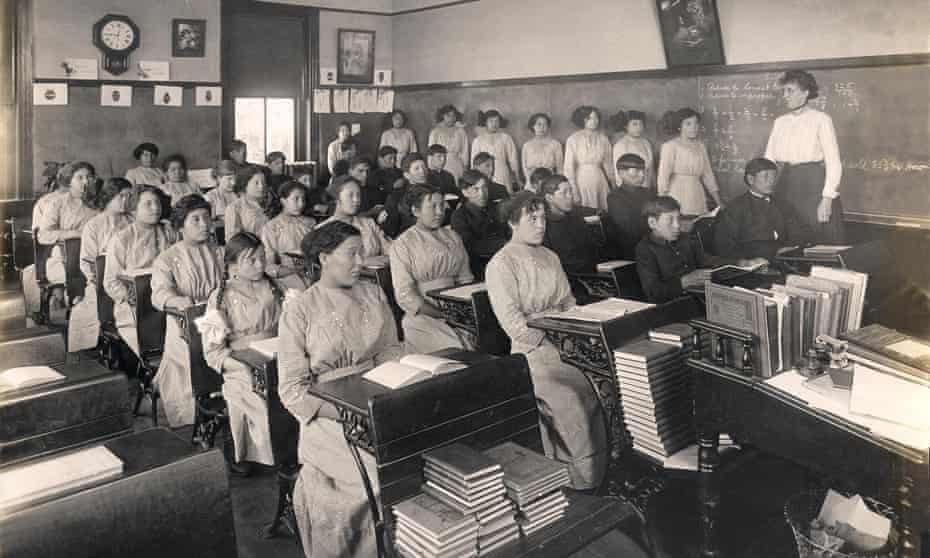
A fifth-grade class is seen at the Genoa US Indian Industrial School in Nebraska in 1910. Photograph: National Archives and Records Administration

Researchers say they have identified more than 100 students who died at a harsh residential school for Native Americans in Genoa, Nebraska. The search for the cemetery where many are believed to be buried continues.

The Genoa US Indian School was operated by the federal government between 1884 and 1934. Brutal punishments and hard labour were commonplace for students, large numbers of whom were removed from their families and homelands against their will, prohibited from speaking tribal languages and forced to convert to Christianity in an effort to subdue or eliminate Indian culture.

The announcement from the Genoa Indian School Digital Reconciliation Project, a collaboration between the University of Nebraska-Lincoln (UNL), the Genoa US Indian School Foundation and descendants and representatives from five Nebraska tribes, is among the most significant developments since the project began in 2017.

The names of 102 deceased students were gathered from sources including newspaper archives and school newsletters, according to the researchers who say official records were destroyed or scattered when the school closed.

While some names are likely to be duplicates, the death toll from the school which enrolled thousands from more than 40 tribal nations in its 50-year history is probably far higher, said Margaret Jacobs, professor of history at UNL and project co-director.

She said the names would be released after consultation with tribal leaders and after efforts to trace living relatives of the deceased were exhausted.

“These children died at the school,” Jacobs told the Omaha World-Herald. “They didn’t get a chance to go home. I think that the descendants deserve to know what happened to their ancestors.”

Some of the students, aged four to 22, died in accidents, by drowning or by shooting and in one case reportedly after being hit by a freight train. But most died from disease. Tuberculosis and pneumonia were rife in the federal Indian school system set up in the 1860s with the intention of educating tribal youth in the English language.

The system took a dark turn in 1879 when a US army brigadier general, Richard Henry Pratt, founded Pennsylvania’s Carlisle Indian Industrial School, the first off-reservation boarding school for Native Americans, with the motto: “Kill the Indian, save the man.”

In a harsh era, thousands of children were forced to leave their families and travel to schools in other states, to “remove them from tribal influences”. Many teachers forced students to speak only English, and many schools imposed military style rules. Braids were cut off and students given “white” names.

Some graduates said they benefited from the experience and educational opportunities they would not otherwise have received, but numerous other accounts record harsh discipline, abuse and exploitation, the Genoa project says.

One descendant claimed his great-grandmother was blinded while a student at Genoa, likely by having lye soap rubbed into her eyes as a punishment.

The search for the school’s cemetery is continuing in partnership with the Nebraska Commission on Indian Affairs and the state archaeology office. Maps from the 1920s marked a plot of the 640-acre campus where it was believed to exist but ground-penetrating radar has failed to find any graves, project leaders said.

“If we’re not able to find them, I think we need to do something to recognize that they lost their lives there,” Judi gaiashkibos, a citizen of the Ponca Tribe and the commission’s executive director, told the World-Herald.

The troubled legacy of Native American boarding schools became a focus of Joe Biden’s administration in June when the interior secretary, Deb Haaland, announced an investigation into “horrific assimilation policies”.

It followed the discovery of the graves of more than 200 children at an Indigenous residential school in Canada in May. In the US, Haaland, a Laguna Pueblo tribe member, said her maternal grandparents were among those forcibly removed, her grandfather to the Carlisle school.

“Many Americans may be alarmed to learn that the United States has a history of taking Native children from their families in an effort to eradicate our culture and erase us as a people,” Haaland wrote in an opinion piece in the Washington Post.

“It is a history that we must learn from if our country is to heal from this tragic era.”

The Federal Indian Boarding School Truth Initiative will investigate allegations of abuse and assist efforts to locate burial sites.

“I’m looking to see something good come out of this,” gaiashkibos said. “Perhaps we will find some way to restore language, to restore some of the culture that was stripped from us.

“Everyone needs to learn the stories and say, ‘America did this and we can do better’.” SOURCE


Monday, November 8, 2021

Reframing Adoption Stories #NAAM2021


Alice Stephens is a fiction writer. She is also an adoptee, born to a Korean mother but raised by a white American family. Stephens shares her humble opinion on “parent narratives” and how she learned to become the subject of her own adoption story, rather than the object.

WATCH: Author Alice Stephens on reframing adoption stories | PBS NewsHour

Friday, November 5, 2021

Who is Delusional? What is Stockholm Syndrome? #NAAM2021

(written in 2014) Updated in 2021

By Trace L Hentz
 
"...I’ve been thinking about this concept for a long time. Adopters, when it comes right down to it, count on Stockholm Syndrome. Children who don’t succumb are labelled RAD.
Whenever I encounter an infertile woman so desperate to be a mother that she’ll bring home a stranger’s baby and force it to live in her fantasy, I always secretly wonder what she would do if she were single and desperate to be married.
Would she drag some strange man home and force him to watch the Notebook and cuddle? And if she did, would society think it was beautiful and precious?  Or would they think she was delusional and dangerous?  Rhetorical question, of course.  But why? Why is what is clearly a crime between adults viewed in such an overwhelmingly positive way when one of the parties is a child?..."  - Renee Musgrove 
 
This comment by Renee has been in my head (since 2014) then I did research on Stockholm Syndrome!
 
What was legally thrust upon us as adoptees is an illusion/fantasy, right?  From babyhood, we are supposed to pretend these are our only parents -- years pass and if they raised us, they ARE our parents. They are the only people we know that intimately so we call them mom and dad. We don't know anything else. Of course, years pass...
 
Then one day you wake up and think, "What about my ancestry, what about my medical history?" and you start to feel despondent since you can't ask your "parents" since you found out they get upset when you ask about your identity (We chose you, you're ours...) -- and even if you do ask, too often they know absolutely nothing. Why is that?
 
Eventually you realize that you are really not "their" child. You're not related in any physical sense or biology.  Then the adoptee realizes and finds out quickly enough that lawmakers (and your adoptive parents) are on the side of secrecy - that they don't want you to know who you are and they DEMAND privacy for the mother who created you.  REALLY?

On my writing blog LARA, I wrote about the ADOPTION EXPERIMENT and then my friend Cully Ray did a guest post about Stockholm Syndrome: which is when you are abducted and start to identify with your captors.
 

Cully wrote:

As do Stockholm Syndrome victims, these Adoptees have great difficulty identifying and expressing their feelings, tragically some are unable to go on with their lives.
Some of the effects that are seen in adoptees and foster children who are objectified by their adoptive parents, foster care givers, and/or communities and peers are:

* Denial of actions by the adoptive parents or foster caregivers that make the child feel inadequate or physically hurt.
* Co-dependency
* Substance abuse
* Minimizing their feelings – self-sacrifice
* Disassociation with the idea of natural family or parent-child relationships
* Failure to make realistic relationships in both personal and professional life
* Internalizing – blame and guilt for things they have/had no control over
* Over achieving – fear of not being “good enough”
* Anger/Rage/Overwhelming depression often triggered by birthdays or celebrations
* Suicide


No matter how much I write then think about this - we still come back to the lawmakers still demanding sealed adoptions and secrecy again and again. 

What about you? Do you think they are delusional?


From my post Adoption Experiment:

The modern process of breaking the spirit of an expectant mother for the purpose of stealing her infant, reminds me of that old film taken by Hitler’s doctors of their own medical experiments, whereby they left a parent locked alone in a room with their baby, but without food or drink. They watched and filmed through a one-way mirror as the adult victim unraveled. It only took a couple of days for the adults to crack completely. In the same way a vulnerable expectant woman is easy pickings for the public and its press. The North American press behaves just like Hitler’s doctors, carrying out goulash experiments on defenseless victim mothers, who are unable to fight back or protect themselves. The North American press appears to be in love with adoption. Or maybe in love with the wash of money always associated with slavery?  -Joss Shawyer, Death by Adoption

Thursday, November 4, 2021

Complex PTSD

READ MORE: http://traumadissociation.com/complexptsd


Complex Post-traumatic Stress Disorder. (Nov 01, 2021). Traumadissociation.com. Retrieved Nov 1, 2021 from http://traumadissociation.com/complexptsd. Read more: http://traumadissociation.com/complexptsd

Wednesday, November 3, 2021

What you need: Court Order Petition

 written in 2012 for this blog (Nation Adoption Awareness Month - #NAAM)

What you need: Court Order Petition

Hi! I wrote about this in my memoir One Small Sacrifice but I am going to post it again. (p.s. what is in your adoption file will AMAZE you)

Since it's National Adoption Awareness Month and we still need our information, adoptees can petition the state court for your adoption file! You get a court order to request a copy of your adoption file! A judge has to agree to release it to you!

You have to pay for it ($75-100+) but what is in the adoption file are documents about your birth, your social worker, where you were placed in foster care, who they were, and even doctor appointments you had prior to your adoption.

What is in my adoption file:

1 - State of Wisconsin Order for Hearing and Investigation, where my adoptive parents petition in writing to adopt me: Laura Jean Thrall and the court ordered Catholic Welfare Agency of Superior, Wisconsin and the State of Wisconsin to investigate, as required by law.

2 – The letter to my parent’s lawyer from the Wisconsin State Supervisor of Adoptions, Division for Child and Youth who wrote, “According to our incomplete record, it appears this child was committed permanently to the Catholic Child Welfare Bureau and that agency placed this child in this home. If that is true, no action is necessary on the State Dept. of Public Welfare. We are sure that if our assumption is incorrect, the agency will so notify us and appropriate action of the state dept. can be taken upon receipt of the investigator’s report.” Dated June 9, 1958.
ALSO in my file, the state of Wisconsin sent a letter to the Judge in Superior, Wisc. acknowledging the date of my adoption hearing: June 24, 1958. The investigator was the Catholic Welfare Agency who had complete control of me.

3- Report: Movements of Child while Under Care: Catholic Infant Home, Foster Care in Superior (with their name and address) and Foster-Adoptive Home (DeMeyer).

4-Certificate of Baptism: First Baptism: 9-18-56 (requested by my mother Helen) and a New Baptismal Certificate was issued on 2-21-1964. Wow – Catholics get this done quick and recorded. Up on the top of the form is Legal Status: Illegitimate and Mother’s Name: Helen Thrall. My Birthplace: St. Paul, MN. In my adoption file is the signed “Certificate of Baptism, Cathedral of St. Paul,” listing my adoptive parents and my new name! It is signed by Rev. Barr and dated March 10, 1959 when in fact I had been baptized in Sept. 1956. This falsified baptismal certificate and my amended birth certificate are two fake documents made to hide my adoptee status – in case my parents decide not to tell me I am adopted.

5- Hospital Discharge Report: The Physical Record of Mother. She was admitted to the Catholic Infant Home on May 23, 1956. Her home address is in Chicago, IL. She delivered on 9-9-56. She stayed in the hospital 5 days until 9-14-56. Children living: One. (This is the proof Helen had already had a child who was also given up for adoption before me!) Delivery: Normal, spontaneous (Helen had an lml episiotomy with no complications). On 5-25-56, Helen’s blood work: Her RH factor was positive. Helen was allergic to penicillin. No Sauk Vaccine given. (I am also allergic to penicillin.) ALSO: The Child (me) Physical Report: full-term, 10 lbs., 3 oz., 21 ½ in., Head Circumference 14” and Chest Circumference 14 ½ in. I was discharged from the hospital on 9-26-1956 as a normal female infant. Social Worker: Miss Underhill.

6- Catholic Infant Home Report – Their Address, Nurse: Sister Enid, Physical Exam at Birth and Physical Exam on Discharge from Hospital to Infant Home, 2 doctors signed. Feeding: Similac every 4 hours. (Obviously no breast milk for me!)

7- Medical Exam (Infant to Two Years, Wisconsin Child Center) – Laura Jean Thrall in Foster Care, General physical: Ok with Mild eczema on face. March 12, 1957.

8- Medical Exam – July 15, 1957 – now named Tracy DeMeyer, General Development: Normal and lists all the various immunizations and vaccines I had. (My adoptive mother told me I was covered in rashes and bald on the back of my head when they got me.)

9- State of Juvenile Court, Vilas Country, Wisconsin, Parental Consent to Termination of Parental Rights, dated December 5, 1956. Miss Alverna Underhill (social worker) is the witness. "Father’s consent is not necessary In case of illegitimate child." Signed by my mother Helen Thrall.

10- Leo Block, Director of Catholic Welfare Agency appears before Judge Robert Curran on May 28, 1958, in the matter of Adoption of Laura Jean Thrall and Mr. Block consents to my adoption on this legal form. Block’s reason for consent: for the best interest of the child.

11 – Form letter: Request to the State of Minnesota Dept. of Public Welfare on April 9, 1958, states that Catholic Welfare Agency needs a copy of my birth record to be used as proof of birth to protect the interest of this child at the time of placement of adoption. Required fee enclosed $1.00. Signed Jean Johnson, Supervisor Protection Unit. Certified Photostat April 16, 1958 sent to Social Worker Miss Underhill.

12- Copy of Investigation, submitted by Catholic Welfare Agency, done March 17, 1957 through May 28, 1958 to the County Court in Wisconsin. Describes The Child (me) and Mother of Child (Helen). INFORMATION NECESSARY FOR CHANGING BIRTH CERTIFICATE in bold type. This is the story I wanted – all the details and dates.  My first months, Helen’s life, and my adoptive parents life and their desire to adopt me, was revealed on four typed pages.

This is what to expect: PAGES of legal documents, reports, letters, stories, arrangements, explanations, descriptions, maybe even a Baptismal Certificate, places and dates.

The BUREAUCRACY they created for each adoptee, all the paperwork, judges, lawyers, social workers, no wonder they don't want to change their system - it's jobs and generates billions of dollars each year!

Every adoptee needs to read their file.

Tuesday, November 2, 2021

Out of the Shadows: An Adoptee Perspective on "American Baby" by Gabrielle Glaser #NAAM2021


2021 BOOK REVIEW:

Lost Daughters: Out of the Shadows: An Adoptee Perspective on "American Baby...: American Baby is a new non-fiction book about the history of closed adoption in the United States that takes a critical look about adoption...  While anyone reading about these situations would be horrified, reading it from the perspective of an adoptee made them very personal.

CLICK OLDER POSTS (above) to see more news

CLICK OLDER POSTS  (above) to see more news

MEGWETCH THANK YOU

HUGE Thank you for visiting this blog and sharing this with your kin. It's appreciated. Contact Trace anytime! Use the form below.

BOOKSHOP

Please use BOOKSHOP to buy our titles. We will not be posting links to Amazon.

Popular Posts

To Veronica Brown

Veronica, we adult adoptees are thinking of you today and every day. We will be here when you need us. Your journey in the adopted life has begun, nothing can revoke that now, the damage cannot be undone. Be courageous, you have what no adoptee before you has had; a strong group of adult adoptees who know your story, who are behind you and will always be so.

OUR HISTORY

OUR HISTORY
BOOK 5: Lost Children of the Indian Adoption Projects