BACK UP BLOG (no longer updating)

This blog was a backup for American Indian Adoptees blog
USE THE SEARCH BAR or SEARCH TOPICS at bottom of this blog

If you need support

Support Info: If you are a Survivor and need emotional support, a national crisis line is available 24 hours a day, seven days a week: Residential School Survivor Support Line: 1-866-925-4419. Additional Health Support Information: Emotional, cultural, and professional support services are also available to Survivors and their families through the Indian Residential Schools Resolution Health Support Program. Services can be accessed on an individual, family, or group basis.” These & regional support phone numbers are found at https://nctr.ca/contact/survivors/ . MY EMAIL: tracelara@pm.me

Search This Blog

Sunday, April 4, 2021

First Environmental-Themed Program in April | “commUNITY: Environment is Sacred”

In April, VMM’s first environmental-themed program will acknowledge International Earth Day with a month-long community-themed online film streaming event, titled “commUNITY: Environment is Sacred,” and a panel discussion. The April programs are free and open to the public but registration is required.


“commUNITY: Environment is Sacred” is a program of six films, featuring themes of water, energy, Indigenous food and health. The themes highlight important environmental issues that have a direct effect on Native lands and an Indigenous philosophy for the world to better understand. The films will be available April 1-30 for worldwide online streaming 24/7 at visionmakermedia.org.


The six films include: “
Crying Earth Rise Up” (2015, USA, 57 min.); “Red Power Energy” (2016, USA, 56 min.); “Growing Native Northwest: Coast Salish” (2018, USA, 57 min.); “RETURN: Native American Women Reclaim Foodways for Health & Spirit” (2019, USA, 28 min.); “Rematriation Series: Joanne Shenandoah” (TBD, USA, 10 min.); and “The Seven Generation River” (2019, USA, 27 min.). 

For more information about the films and to register, visit visionmakermedia.org.

Lack of federal recognition to slow-motion ‘genocide’


For over 120 years, the Chinook Indian Nation of the Pacific Northwest has been trying to prove its sovereignty to the United States government by seeking formal federal recognition -- yet the tribe is still unrecognized. And the pandemic has only exacerbated the Chinook’s lack of a social safety net.

“We don’t need the government to tell us we’re Indian. We just need them to honor the treaty our ancestors signed.”

READ: Members of Chinook Indian Nation liken lack of federal recognition to slow-motion ‘genocide’

Sunday, March 28, 2021

Red Hoop Talk EP 49: CELEBRATE WOMEN'S HISTORY MONTH WITH LAUGHTER


The Association on American Indian Affairs 

#WOMENS HISTORY​ MONTH 

Visit with amazing Native women who inspire us! 

JACKIE CROW SHOE is Turtle Mountain Band of Chippewa and an Indian Child Welfare Act advocate, and Policy Associate with the University of Southern Maine. She is also a Consulting Organization to the Capacity Building Center for Tribes that serves to support Tribal child welfare professionals. 

SIENA EAST is Choctaw and Isleta Pueblo and a writer, comedian, and actress based in Los Angeles. She studied Film and Television Production at New York University. You can find Siena on Instagram, Twitter, and www.sienaeast.com. 

 PURA FE is Tuscarora and Taino and an award-winning singer-songwriter, musician and activist. She is the founding member of the internationally renowned Native women’s acapella trio, Ulali. She currently lives in Northern Saskatchewan. Read more about her and listen to her music at www.purafe.com. 

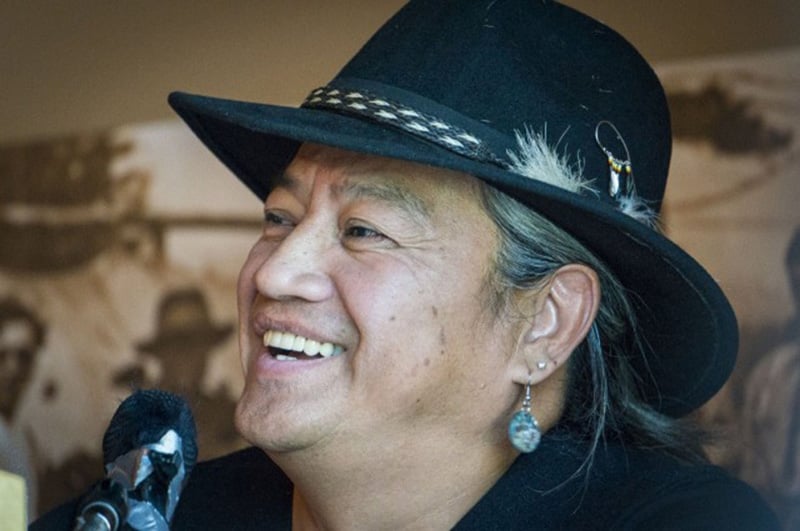
SANDY WHITE HAWK is Sicangu Lakota and an adoptee from the Rosebud Reservation, South Dakota. She is the founder and Director of First Nations Repatriation Institute, which helps First Nations people impacted by foster care or adoption return home and reclaim their identity. Sandy also serves as a board member for the Association on American Indian Affairs.

Wednesday, March 24, 2021

How to Create an Indigenous Child Welfare System

The Splatsin, among the first nation to create its own, will share hard-won knowledge in an upcoming webinar.

SOURCE:Katie Hyslop March 23, 2021 | TheTyee.ca

It’s been over a year since a federal law affirming the right of First Nations, Inuit and Métis peoples to run their own child welfare systems came into force.

Yet over half of the children in government care nationally and two-thirds of kids in care in B.C. are still Indigenous, despite making up just 10 per cent of all children.

Bill C-92 allows communities to create their own child welfare systems and services, but implementation is just beginning and no funding is yet confirmed, with the Assembly of First Nations and federal government still in discussions.

The Assembly of First Nations and the First Nations Leadership Council have held some information sessions and town halls on creating and operating child welfare systems in B.C.

But Kukpi7 (Chief) Wayne Christian of the Splatsin of the Secwepemc Nation said they haven’t answered all the questions about what it means to have jurisdiction over child welfare.

And he should know. Christian helped spearhead a movement in 1980 that saw the Splatsin become one of the very few First Nations in Canada to create and operate its own child welfare system. It continues to operate today.

And he’ll share the lessons learned in a two-day webinar for other First Nations Wednesday and Thursday.

“I wanted the opportunity to explain to people in a learning environment what is it we actually do. And what does it mean in terms of jurisdiction, because jurisdiction, in essence, is having the resources and making decisions for your children,” he said.

“Our Elders told us back in 1979, when we started the process, this is our inherent law before the white people imposed their law on us, this is how we did it. And so that’s what we codified with our Elders at the time, and that’s what we’ve been operating with now for four decades.

“We know where every child is and who they are in our community,” said Christian. In the community of about 1,000 people just outside Enderby, B.C., 30 to 35 children are in care at all times, he said, a rate that hasn’t changed much since the community numbered 350 in 1980.

“Every child that’s been born in that four decades, we know. And I think that’s the key is that we know, and then they know, who they are and who they’re connected to.”

The law — C-92: An Act respecting First Nations, Inuit and Métis children, youth and families — came into effect in January 2020 as a result of a national outcry over the disproportionate number of Indigenous youth in care, as well as the federal government’s systematic underfunding of child and family services in First Nations and Inuit communities.

But 39 years earlier, when the Splatsin of the Secwepemc Nation were pushing for child welfare jurisdiction, it didn’t have national support.

Instead, it had the support of several B.C. First Nations who joined them in a caravan to then-deputy premier Grace McCarthy’s Vancouver house on Thanksgiving weekend to demand jurisdiction over their children’s welfare.

With help from these nations, along with George Manuel, then-Grand Chief of the Union of BC Indian Chiefs, human rights lawyer Louise Mandell and Jacob Marule, an exiled member of the South African National Congress, the Splatsin were able to hash out a jurisdiction agreement with McCarthy.

The federal government did not stand in the Splatsin’s way of reclaiming its child welfare services, and ultimately the Splatsin’s jurisdiction was federally and provincially recognized.

But the federal government would not allow several dozen other First Nations to follow suit.

“I think there was about 40 to 45 communities, and it would have made a big difference if they were able to stand up their laws at that time. But Indian Affairs said no to them,” Christian said.

Which is why the Splatsin of the Secwepemc Nation are holding these webinars.

“It’s our way of thanking people for helping us back then, because without that groundswell of support from all the communities, we wouldn’t have been able to achieve what we’ve achieved back in 1980,” Christian said, adding that Mandell will address the legal aspects of the win during the webinar.

Many of the roadblocks the Splatsin have and continue to face in delivering child welfare services are ones that other First Nations communities will grapple with, too.

For example, retaining control over services on and off reserve land will mean dealing with both the provincial and federal governments. As recently as a decade ago, the Splatsin were in conflict with a provincial government that refused to acknowledge their jurisdiction over Splatsin children who lived outside of the community.

“We were going to file a constitutional challenge,” Christian said, but five years ago the deputy minister of children and family development agreed to sign a memorandum of understanding with the nation that reaffirmed B.C.’s acknowledgement of Splatsin jurisdiction.

Nations will also need to determine how they used to govern themselves before colonization and how to adapt those laws into a modern-day child welfare system.

“The essence of what we do and follow is related to the wisdom of our old people,” Christian said, adding it’s the same in many other nations.

Then there are several other matters: federal funding, both initial capital and long-term operating funds; hiring and training personnel; gathering and storing community members’ data; developing culturally relevant child, youth and family programming; developing an appeals process; sourcing and funding temporary caregivers; and liaising with other health and social services that community members use.

Monty Montgomery, associate professor at the University of British Columbia’s school of social work, said finding the right people to work in an Indigenous-run child welfare system isn’t as easy as hiring for a typical service.

“It can be difficult work. There is a sacred responsibility in looking after our young people and working with our young people, our Elders tell us this,” said Montgomery, who is of Mi’kmaq and Irish-Canadian descent.

“And we need to be trained in ways that we understand both the culture and the dynamics of the communities, plus mainstream ways.”

Christian said federal funding has not been easy to maintain. The federal government still pressures the Splatsin to change its child welfare system to a Delegated Aboriginal Agency format, where the offices would be staffed by mostly Indigenous people but operate under provincial government laws and jurisdiction, he said.

“I really have a hard time with the federal government, because they don’t understand jurisdiction,” Christian said. “So when we’re in discussion with them, we’re continuously educating them in terms of what it actually means.”

Because of the lack of federal funding for Indigenous child welfare jurisdiction so far, Montgomery predicts some First Nations will join together to create their own delegated agencies and apply for federal funding that way. But again, they would have to operate under provincial child welfare rules. For a band or nation to do it on their own, Montgomery isn’t sure what operational funding they could access at the moment.

The barriers are real, and not every community or nation will be ready to open and operate their own child welfare system any time soon. But it can be done, Christian said.

“I think at times we get disheartened or so many roadblocks get put in place that people give up,” he said. “And you can’t afford to give up on your children, you have a responsibility to them.”  [Tyee]

Tuesday, March 16, 2021

HUGE NEWS! Deb Haaland makes history as first Indigenous cabinet secretary


In a historic vote on Monday, Debra Haaland was confirmed as President Biden’s Interior secretary. As a member of the Laguna Pueblo tribe, she will be the first Native American cabinet secretary in U.S. history.

Haaland, a former representative from New Mexico, was confirmed with a 51 to 40 split in the Senate, the narrowest margin of any of Biden’s cabinet picks so far. At the helm of the Department of the Interior, which houses the Department of Indian Affairs, she will oversee 500 million acres of public land, including the national parks system and oil and gas drilling on federal land. The Interior has an important part to play in tackling climate change, as one-quarter of all U.S. emissions can be attributed to fossil fuels extracted on these lands.

READ: Deb Haaland makes history as first Indigenous cabinet secretary

Saturday, March 6, 2021

Better late than never

 South Dakota House Passes Resolution Acknowledging Boarding Schools

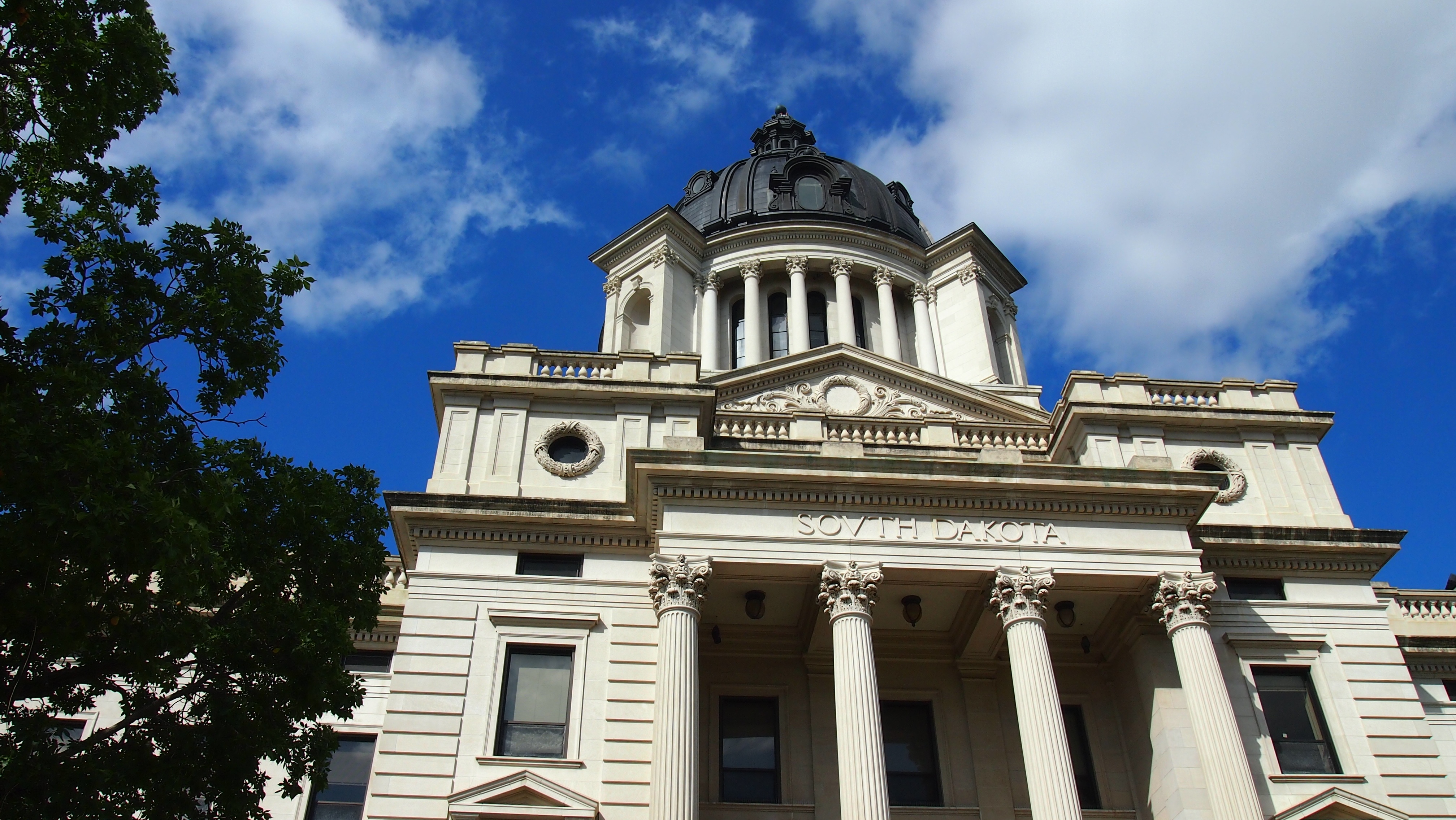
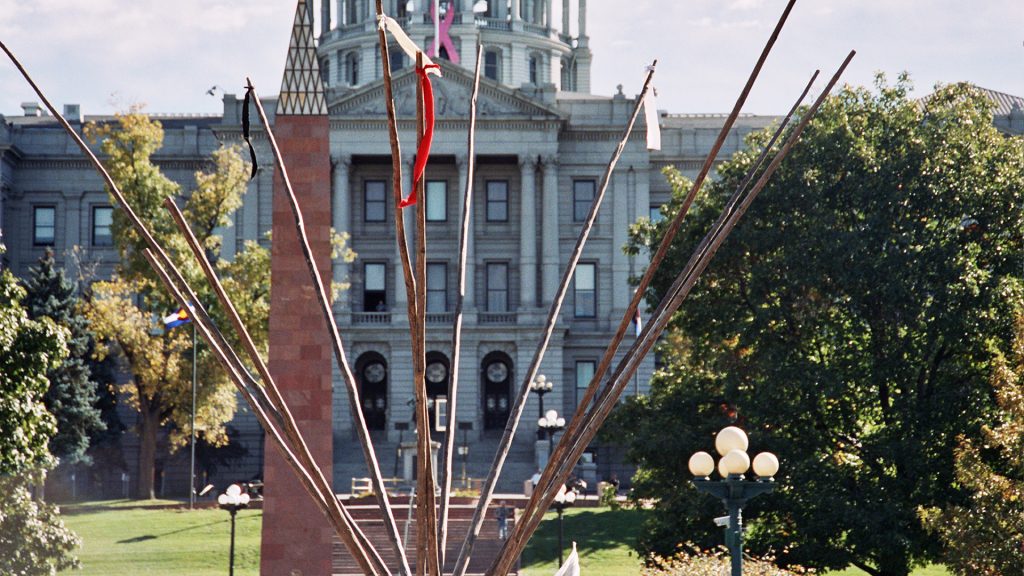
The South Dakota State Capitol building in Pierre, S.D.

PIERRE, S.D. — The South Dakota State House of Representatives passed a resolution on Tuesday, March 2, 2021, acknowledging and honoring the survivors of American Indian boarding schools. House Concurrent Resolution 6014 was introduced and sponsored by State Rep. Peri Pourier (D—Pine Ridge), who is an enrolled member of the Oglala Sioux Tribe. 

“This passage from the House of Representatives speaks volumes towards reconciliation,” said South Dakota Representative Peri Pourier to Native News Online. “The acknowledgement of the suffering and abuse while honoring survivors’ resiliency is long overdue.” 

The resolution was adopted in a 52-17 vote. 

Boarding schools for American Indian children began in 1860 when Methodist missionary James Wilbur established a vocational Indian Boarding School on the Yakima Indian Reservation in the state of Washington as part of the Yakama Indian Agency. 

KEEP READING

Wednesday, March 3, 2021

ADOPTEES: Petitioning a Court for Birth Records


We're excited to announce an upcoming online event that features adoptees who have successfully obtained court orders in their states to release their own records, including birth records and, in some cases, adoption agency records.

Join us on Sunday, March 21 as I talk with Rudy Owens and Courtney Humbaugh about their experiences in seeking court orders to release their own records in Michigan and Georgia. We'll discuss the ins and outs of the legal process, whether or how to work with an attorney, and what it looks like when an adopted person seeks a court order to get his or her own birth and adoption records.

I'll also chime in on my own experience in the District of Columbia as well as what the process looks like as an attorney in Minnesota and other states. - Attorney Gregory D. Luce

The event is Sunday, March 21, 2021, at 1pm Pacific/4pm Eastern. Details and registration are here

 LINK 

Vision Maker Media Celebrates Women’s History Month


...in March with Online Film Event and Panel Discussion Featuring Prominent Indigenous Women Leaders

LINCOLN, Neb., March 2, 2021 — Vision Maker Media (VMM) is marking its 45th anniversary in 2021 with a yearlong celebration of free “commUNITY” events, including thematic online film screenings, online virtual programs and more. To celebrate Women’s History Month in March, VMM will launch its first online program of 2021, a community-themed online film streaming event, titled “commUNITY: Herald Native Women.”  All March programs are free and open to the public but registration is required. The Cherokee Nation Film Office is a sponsor of VMM’s 45th anniversary events.

The March celebration will include a program of seven films — two short and five feature-length documentaries — all produced and/or directed by women, and a panel discussion organized in partnership with Americans for Indian Opportunity (AIO). Founded in 1970 by LaDonna Harris (Comanche), AIO advances, from an Indigenous worldview, the cultural, political and economic rights of Indigenous peoples in the United States and around the world.

The seven films will be available all month for streaming 24/7 at visionmakermedia.org. The films portray Native women in leadership, coming of age, and language revitalization. All are available worldwide. For more information about the films and to register, visit visionmakermedia.org.

“Making Matriarchs – Indigenous Values-Based Leadership Development,” a panel discussion featuring four Native women leaders who are among the more than 250 graduates of AIO’s Ambassadors Program, will take place via Zoom on Tuesday, March 16 at 7 p.m. CST. AIO’s Ambassadors Program is the only national leadership training that encourages Native leaders to weave their traditional tribal values in a contemporary reality in order to affect positive social change and advance human rights.

“Americans for Indian Opportunity is pleased to partner with Vision Maker Media during Women’s History Month as we showcase some of the many contributions of Indigenous women to American society,” says AIO Executive Director Laura Harris (Comanche). “Together, we can amplify Native voices, build awareness and understanding, and share a positive and contemporary Indigenous narrative.”

Panel participants include: Francene Blythe-Lewis (Diné, Sisseton-Wahpeton, Eastern Cherokee), executive director, Vision Maker Media (introduction); Laura Harris (Comanche), executive director, Americans for Indian Opportunity (moderator); Janeen Comenote (Quinault/Hesquiaht/Oglala), executive director, National Urban Indian Family Coalition (panelist); Brittany Schulman (Waccama Siouan), director of leadership initiatives, AIO (panelist) and Lindsay Early, deputy director, National Indian Child Welfare Association (panelist). The fourth panelist is unconfirmed at press time.

The panelists will discuss the importance of female leadership and the influence of matriarchy. They will talk about the work they do for social change and education, and how they utilize the teachings of the AIO Ambassadors Program and their “Medicine” (personal strengths and talents) for the good of their communities and humanity. 


About Vision Maker Media

https://youtu.be/WVZtMXX6ZB4 Vision Maker Media (VMM) is the premiere source of public media by and about Native Americans since 1976. Our mission is empowering and engaging Native people to share stories. We envision a world changed and healed by understanding Native stories and the public conversations they generate. We work with VMM funded producers to develop, produce and distribute programs for all public media. VMM supports training to increase the number of American Indians and Alaska Natives producing public broadcasting programs. A key strategy for this work is in partnerships with Tribal nations, Indian organizations and Native communities. Reaching the national public and a global market is the ultimate goal for the dissemination of Native public media that shares Native perspectives with the world. VMM is a nonprofit 501(c)(3) funded in part by the Corporation for Public Broadcasting (CPB). For more information, visionmakermedia.org, visionmaker@unl.edu or (402) 472-3522.


Tuesday, February 16, 2021

Indigenous well-being | Cultural Attachment #ICWA

UMD Visiting faculty member Estelle Simard
DULUTH, Minnesota | February 15, 2021 | by Lissa Maki   source

Visiting scholar’s research examines the ways Indigenous culture and well-being are intertwined.


Estelle Simard is in her second year of a visiting scholar role in the UMD Department of Social Work. Her research features a theory of cultural attachment—or the idea that one’s connection to culture can help protect their well-being. 

Simard obtained a Master of Social Work degree from UMD in 2009. For the research component of the program, she wrote a paper about the need for culturally restorative practices in American Indian child welfare. This foundational work impacted her career research trajectory.

A member of the Couchiching First Nation in Canada, Simard's research seeks to bring the concept of cultural attachment from the Indigenous world into academia. She also wants it to inform mainstream social work practice, particularly as it relates to child welfare.

The dominant approach to child welfare in the United States and Canada has long ignored the significance of culture. The overarching goal of the child welfare system is to protect children from harm. But removing Indigenous children from their homes and communities strips them of their cultural identity.

Because culture plays a role in nearly all aspects of Indigenous life, Simard asserts that culturally responsive services need to be integrated into social work practice. “Any service provision there is, culture has to be embedded within it. It needs to be a driving force,” she says, noting that otherwise Native children become “casualties of the system because we’re not addressing their unique cultural needs.”

Last summer, Simard helped facilitate the development of curriculum for the new Aabinoojiiyag-Wakhanheza Un Thantanhanpi - “For All the Children”  Sacred Being: Tribal Training and Certification Partnership (TTCP), a foundational training for all Minnesota child welfare workers. This training is considered a foundational training piece for all practicing child welfare workers across Minnesota. 

Simard calls the program and curriculum offered by the TTCP “provocative” and says it helps people to understand the true intention of the Indian Child Welfare Act and how to apply it in practice. This “decolonized social work practice” aims to protect children while preserving Native families.

She’s enthusiastic about the first virtual training, and says it was “exciting and pivotal” with people across Minnesota participating—including tribal child welfare workers in Leech Lake and Red Lake.

Developing and Sharing Knowledge 

The UMD Department of Social Work, which houses the TTCP, aligns itself and its coursework with social justice principles and places an emphasis on providing culturally responsive services to American Indians, which Simard appreciates. “These are exciting times—there are a lot of good developments. I like the direction the department is taking. It feels really good to be part of that.”

She credits Professor Priscilla Day for being a supportive mentor and is thankful to have a chance to share her expertise broadly within the UMD social work program. “To be able to have a space where I could bring the things I learned in my clinical social work experience—to bring that knowledge forth and rest it. To share, grow, and develop. It’s an incredible opportunity to be able to do that,” she says.

Simard teaches classes about trauma-informed and culturally responsive social work practice. “Students come to my class knowing they’re going to work. The information is really powerful and important,” she says.

Despite the COVID-19 constraints since last March, Simard remains optimistic and says teaching and helping students navigate intercultural relationships with American Indians has been a good experience.

Though she admits that the pandemic, racial injustice, and a contentious Presidential election all combined to make 2020 especially challenging, she says, “We have a real need and real opportunity to help students process that stuff out. Through our work, we’re keeping their minds focused and helping them develop strategies on how to deal with that stress.”

The department has a structure in place to respond effectively to the pandemic, which has been important, according to Simard. She also appreciates having the flexibility to make accommodations for students as needed. 

A tight-knit community of UMD colleagues that work together and support one another is key to maintaining that balance. “There’s enough chaos in the world,” says Simard. “We’re all in the same canoe—don’t tip it over.”

Simard recently published the article (click)➣ “Indigenous Ways of Knowing: Research, Narratives, and Self-Actualization" in the International Journal of Critical Indigenous Studies. A forthcoming article, written with colleague Jennifer McCleary, associate professor and department head in the social work department, addresses the issue of white supremacy within social work and the systematic changes needed to decolonize social work practice.

She’s also working on a manuscript that outlines 130 factors in Indigenous well-being. “I like being an Indigenous scholar. I like writing and putting ideas out there,” Simard says.

Learn more about UMD's Department of Social Work.

Friday, February 12, 2021

Native Greiving During COVID-19

I Rejected the Native Grieving Ceremonies My Mother Taught Me When She Died. But Losing Friends During the Pandemic Changed That

Terese Marie Mailhot, pictured at 16 with her late mother Wahzinak Joyce Bobb

Terese Marie Mailhot, pictured at 16 with her late mother Wahzinak Joyce Bobb
Courtesy of Terese Marie Mailhot
 
December 28, 2020

I cut a fistful of hair over the bathroom sink in tears. This is how our people have mourned for generations. Nlaka’pamux women, my mother taught me, would cut their hair. They swallowed a spoonful of oil. They prayed and stopped harvesting for a year when a loved one died. There are stories about a woman who tried to pick berries after the death of a child, and the bush dried up, never grew back.

We grieve with ceremony—we have practices and traditions that go back thousands of years, before borders were created, before colonization, before smallpox brought more stories about devastation that made our healthy children skeletal and wiped out whole communities. Grief is honor work, and if you don’t follow instructions, it could hurt your family, hurt the dead trying to pass over into the next life.

READ:   https://time.com/5923276/grieving-during-covid-19-pandemic/

MORE HISTORY

Wednesday, February 10, 2021

blogger issues

We lost our sidebar on this blog. Changes were made to our blog design by Blogger, not us.

Scroll to the bottom of the blog for the other information you need to read.

Tuesday, February 9, 2021

45 Years of Engaging Native Voices + How to be an ALLY


*only 0.4 % Of Primetime TV & Films have a native character


LINCOLN, Neb., Feb. 9, 2021 — This year, Vision Maker Media — founded in 1976 as the Native American Public Broadcasting Consortium — is celebrating 45 years of engaging Native voices in public media platforms.

“What began as a film archive to conserve and document Native American stories has, through the years, transformed into the nation’s public-media leader in content by and about America’s first people — Native Americans and Alaska Natives — for public broadcasting,” says Executive Director Francene Blythe-Lewis (Diné, Sisseton-Wahpeton, Eastern Cherokee).

With continuous support from the Corporation for Public Broadcasting and Nebraska Educational Telecommunications, Vision Maker Media’s mission empowering and engaging Native people to share their stories remains meaningful. Currently, Vision Maker Media has 28 projects in various stages of production and 34 films in public-media broadcasting, 5 of which were added in fiscal year 2020.

Vision Maker Media’s content reaches nearly 90 million Americans on public television series, including Independent Lens, POV, America ReFramed, American Masters and others.

 
NEWS from their website:


2021
Vision Maker Media is marking its 45th anniversary with a yearlong celebration of free commUNITY events, including thematic online film screenings, online virtual programs, and more. The Cherokee Nation Film Office is a sponsor of the 45th anniversary events.

March — Women’s History Month
* “commUNITY: Herald Native Women,” will showcase six films free to the public for 24/7 streaming all month at visionmakermedia.org.

* An online moderated panel discussion will feature Native women leaders, in partnership with Americans for Indian Opportunity (AIO), who are graduates of AIO’s Ambassadors Program—the only national leadership training that encourages Native leaders to weave traditional tribal values in a contemporary reality in order to affect positive social change and advance human rights.

April — Focus on Mother Earth and the Environment
* International Earth Day on April 22 will be observed with a community-themed online film streaming event titled, “commUNITY: Environment is Sacred.” Five films will feature themes of water, energy, Indigenous food and health. The films will be available free to the public for 24/7 streaming all month at visionmakermedia.org. Additional online events and a panel discussion are also planned.

June — Youth Media Project
* Vision Maker Media is partnering with several Native American organizations and communities with existing and sustainable youth programs. The goal is to nurture the next generation of Native youth media makers by furthering the development of the youths’ creativity through a sequence of conceptualizing, investigating and planning, to ultimately produce a short 30-60 second PSA around the topic of wellness.

October — Indigenous Peoples Day and Halloween
* Indigenous Peoples Day on October 11 will be celebrated with a free film program that will stream online from October 6-13 at visionmakermedia.org.

* On October 25-31, look for a curated encore of Vision Maker Media’s popular 2020 Halloween horror-themed film program, “Nightmare Vision.” The program is free and open to the public and will stream 24/7 at visionmakermedia.org.

November — Native American and Alaska Native Heritage Month and Veterans Day
* “commUNITY: The Meaning of Home” is a short production featuring Native veterans who have served in the U.S. Armed Forces. This is a Vision Maker Media-commissioned work by Charles “Boots” Kennedye (Kiowa). The film program is free and open to the public and will stream 24/7 from November 10-24 at visionmakermedia.org.

December — Frank Blythe Award in Native Media
* This legacy award honors Vision Maker Media’s Founding Executive Director Frank Blythe’s leadership as a path maker and recognizes a lifelong career that has supported opportunities for Native Americans and Alaska Natives in public broadcasting and radio. 

Vision Maker Media (VMM) is the premiere source of public media by and about Native Americans since 1976. Our mission is empowering and engaging Native people to share stories. We envision a world changed and healed by understanding Native stories and the public conversations they generate. We work with VMM funded producers to develop, produce and distribute programs for all public media. VMM supports training to increase the number of American Indians and Alaska Natives producing public broadcasting programs. A key strategy for this work is in partnerships with Tribal nations, Indian organizations and Native communities. Reaching the general public and the global market is the ultimate goal for the dissemination of Native public media that shares Native perspectives with the world. VMM is a nonprofit 501(c)(3) funded in part by the Corporation for Public Broadcasting (CPB). 
 
FMI: visionmakermedia.org, visionmaker@unl.edu or (402) 472-3522.
 
 
2019 Sundance: Native Shorts


In The News : New Mexico, Colorado, Dutch Halt Adoptions #ICWA

Bill to keep Native children within their community receives bipartisan support

A bill to keep Native children within their tribe or pueblo when the state separates them from their parents passed the House State Government and Indian Affairs Committee unanimously on Feb. 8.

Sponsored by state Rep. Georgene Louis, D-Albuquerque and of the Acoma Pueblo, HB 209 has overwhelming support from various organizations and Tribal and pueblo governments in the state. 

If it becomes law, the bill would codify the federal Indian Child Welfare Act, which was passed in the 1970s but is poorly enforced, according to experts. The bill would guide the state Children, Youth and Families Department to notify tribes and pueblos when a child removal occurs and to work with the Tribal community to place a Native child with extended family or friends or foster families within their own sovereign nation.

Keep reading

**

Arapahoe County agency did not comply with federal American Indian child adoption law, court finds 

The department did send notice to the Bureau of Indian Affairs and three federally-recognized Cherokee tribes about the child’s case. But the appellate panel found no evidence to confirm whether the tribes received those notices. Prior Court of Appeals decisions have established that notification must take place by registered mail with a return receipt requested.

“As a result, the juvenile court and the Department did not comply with ICWA’s notice provisions,” wrote Judge Sueanna P. Johnson. The panel returned the case to the lower court for compliance with ICWA.

In an annual report on American Indian child adoption cases, Kathryn Fort of the Michigan State University College of Law and Adrian T. Smith found that state appellate courts across the country decide approximately 200 cases implicating ICWA each year. Of the appeals that cite a lack of tribal notice, appellate judges returned nearly two-thirds of them to lower courts in 2019.

Larimer County did not comply with the federal law that protects the rights of Indian children when it failed to notify the relevant tribes in a custody proceeding, the Colorado Court of Appeals ruled on Thursday.

 Source 


Around the World

THE HAGUE, Netherlands -- The Dutch government suspended adoptions from foreign countries Monday after an investigative committee report criticized past ruling coalitions for being "too passive" in the face of years of reported abuses including impoverished mothers being coerced into putting up their children for adoption.

The committee said that abuses included "the falsification of documents, the abuse of poverty among the birth mothers and the abandonment of children for payment or through coercion." Dutch media began reporting on them in the late 1960s, but previous governments failed to take decisive action to tackle the problems, it added.

"Not only have there been many abuses in the past, the system of intercountry adoption is still open to fraud and abuses continue to this day," the government-installed committee warned.

It said that the government needs to "restore its damaged relationship with adoptees, adoptive parents, birth parents and families."

Minister for Legal Protection Sander Dekker conceded that Dutch governments had fallen short.

The committee studied adoptions from 1967-1998 in five countries -- Bangladesh, Brazil, Colombia, Indonesia and Sri Lanka.

Adoptions already underway will be allowed to continue, authorities said. The committee also found cases of corruption, falsification of documents to make it impossible or more difficult to establish the birth families of adoptees, child trafficking and "baby farming."
VIA


Friday, February 5, 2021

Podcast: Unreserved (CBC)

From beaded cat clothes to plant knowledge: Indigenous people pick up skills during pandemic

Cheryl Simon (left) and her seven-year-old daughter Carolyn are using porcupine quills to make art. When her mom couldn't come to her class to teach the students how to quill due to COVID-19, Carolyn stepped in. (Emma Smith/CBC) From beaded cat clothes to plant knowledge: Indigenous people pick up skills during pandemic

It's been almost a year since the pandemic forced a significant change in our lifestyle on Turtle Island. 

Many Indigenous people have been using their extended time at home to learn new skills and feel closer to their identity — whether it was through moose hide tanning, learning a language, or beadwork.

This week on Unreserved, how Indigenous people are learning traditional skills to beat the quarantine blues. LISTEN


Thursday, February 4, 2021

Pioneer of “Strong Hearted Native Women” Tilda Mae Green passes on

Tilda Mae Green passed away on Jan 7, 2021 at the age of 66 due to Covid 19 complications.

Born September 3, 1954 in Escondido, she was one of eight children born to Manuel and Julia Escalante. She was a member of the San Pasqual Band of Indians and moved to Valley Center in early 1978.  Ms. Green served the tribe in an official capacity for 41 years and was elected as the Secretary-Treasurer of the Business Committee for several terms until her passing.

Ms. Green became a director representing San Pasqual with San Luis Rey Water Authority from 1999 to 2009. She was influential in the early research, among other early tribal members from the five tribes, which eventually led to the water rights litigation and settlement with The City of Escondido. Ms. Green was also one of the pioneers of “Strong Hearted Native Women” advocating for domestic violence victims and supported the VAWA movement.  Her previous roles with the San Pasqual Band of Indians included bookkeeper, grants manager, education director, and tribal administrator.  She was the tribal government representative in recent years advocating for ICWA (Indian Child Welfare Act). She believed that the children are the greatest asset of the tribe. 

Ms. Green was deeply respected for her tenacity, integrity and love for her community.  She was a humble person and had a strong compassion for her family and had many friends throughout the county and native communities.

Ms. Green is survived by her three children Nichole Green of Oklahoma, Charles Green, and Megan Green of Valley Center. She had eight grandchildren and two great grandchildren that she loved and they all brought great happiness to her heart. She is also survived by three sisters  Eva Arredondo, Lydia Escalante, Judy Wright all of Valley Center and one brother Felix Escalante of Escondido all who will miss her sense of humor and the laughter she shared with them throughout the years. SOURCE

Monday, February 1, 2021

Who Stands for the River, for the Wild Things


How about, we keep things out of where the wild things live? Things like pipelines and mines, even 5G. The whole world doesn’t need 5G. Sometimes, just listen to the ice crack on the lake, or maybe hear a wolf howl, that’s good enough.

Worldwide, Indigenous peoples represent 4% of the world’s population, but live with 75% of the world’s biodiversity. Indakiingimin, the land to which we belong.

GOOD READ: LaDuke: Who stands for the river, for the wild things? | Duluth News Tribune

Sunday, January 31, 2021

For The Life of Me


Following the lives of Dave and Joe, ages 52 and 67, this feature film delves deep into the issues that adoptees in closed adoption face. The unexpected conclusion of both men's stories underscores the need for change in adoption policy in all fifty states in America.

Saturday, January 9, 2021

Adoptive Couple v. Baby Girl #BabyVeronica


Baby V (Cherokee)

Fletcher and Fort’s Rewritten Opinion in Adoptive Couple v. Baby Girl

Fletcher and Fort posted “Intimate Choice and Autonomy: Adoptive Couple v. Baby Girl,” forthcoming in CRITICAL RACE JUDGMENTS (Cambridge Univ. Press, eds. Bennett Capers, Devon Carbado, Robin A. Lenhart, and Angela Onwuachi-Willig) (forthcoming 2021).

As if there was any doubt, we have reached the opposite outcome as the Supreme Court did back in 2013. A few excerpts:

This case is about a little girl (Baby Girl) who is a citizen of the Cherokee Nation, like her father, grandparents, and a multitude of generations before her. American Indian tribal citizenship with a federally recognized tribe is a unique concept in American law. E.g., Santa Clara Pueblo v. Martinez, 436 U.S. 49, 55 (1978) (“[Indian tribes] have power to make their own substantive law in internal matters. . . .”). Tribal citizens are beneficiaries of the federal government’s trust relationship with Indian tribes, and the federal government has promised to tribal citizens for centuries to assist in the maintenance of tribal governments, cultures, and sovereignty. Worcester v. Georgia, 31 U.S. 515, 556 (1831) (“[The Cherokee treaty], thus explicitly recognizing the national character of the Cherokees, and their right of self government; thus guarantying their lands; assuming the duty of protection, and of course pledging the faith of the United States for that protection; has been frequently renewed, and is now in full force.”).

And:

The ethically dubious acts of the Petitioners in this case extends to this Court’s amici. Several amici invoked the racist dog whistle of referring to the Petitioners as the “only family” Baby Girl has ever known. E.g., Brief for Guardian Ad Litem, as Representative of Respondent Baby Girl, Supporting Reversal at 56 (“Indeed, it is hard to imagine what liberty interest is more important to a 27-month old child than maintaining the only family bonds she has ever known, absent a strong showing of necessity.”) (emphasis added); Brief of Amica Curiae Birth Mother in Support of Petitioners at 3 (“The decision below effectively negated Birth Mother’s decision to place Baby Girl with Adoptive Couple, and ripped Baby Girl from the only family she has ever known, in derogation of both Birth Mother’s and Baby Girl’s rights and expectations under state law.”) (emphasis added); Brief of Amici Curiae Bonnie and Shannon Hofer; Roger, Loreal, and Sierra Lauderbaugh; and Craig and Esther Adams in Support of Petitioners at 38 (“[T]he lower court took non-Indian Petitioners’ adopted Indian daughter from them – destroying the only family she has ever known.”) (emphasis added); Brief of Amici Curiae National Council for Adoption in Support of Petitioners at 13-14 (“ICWA is implemented in some cases to traumatize children by forcing them into completely unknown environments, traumatizing them by removal from the only family they’d ever felt a connection with and imposing the developmental delays that come with the traumatic removal from a secure attachment.”) (emphasis added).[1] It appears that for some of our amici, the “only family” that matters is the non-Indian Petitioners’ family. For these amici, the Indian family and other biological relatives are strangers and foreigners. The only pain and shame of removal and separation that matters is that of the non-Indian family. It is apparent the “only family” dog whistle is designed to distract our attention from the ever-present bias against Indian parents and relatives in the child welfare and adoption system. This we will not accept. As noted above, this Court long has been complicit in dehumanizing Indian people. In Professor Harris’ words, “[C]ourts established whiteness as a prerequisite to the exercise of enforceable property rights.” Harris, supra, at 1724. No longer. We additionally suspect that this form of advocacy implicates American Bar Association Rules of Professional Conduct 3.4 (Fairness to Opposing Party and Counsel), 3.5 (Impartiality & Decorum of the Tribunal), 4.4 (Respect for Rights of Third Persons), and 8.4 (Misconduct).


[1] One commentator even referred to the Cherokee family here, who descend from an Indigenous nation that has been present in this hemisphere since time immemorial, as “foreign.” Thomas Sowell, Indian Child Welfare Act does not protect kids, Denton Record-Chronicle, Feb. 1, 2018, at 6A (“This little girl is just the latest in a long line of Indian children who have been ripped out of the only family they have ever known and given to someone who is a stranger to them, often living on an Indian reservation that is foreign to them.”) (emphasis added).

**

Use the search word Baby Veronica to find our coverage and opinion on this blog...

CLICK OLDER POSTS (above) to see more news

CLICK OLDER POSTS  (above) to see more news

MEGWETCH THANK YOU

HUGE Thank you for visiting this blog and sharing this with your kin. It's appreciated. Contact Trace anytime! Use the form below.

BOOKSHOP

Please use BOOKSHOP to buy our titles. We will not be posting links to Amazon.

Popular Posts

To Veronica Brown

Veronica, we adult adoptees are thinking of you today and every day. We will be here when you need us. Your journey in the adopted life has begun, nothing can revoke that now, the damage cannot be undone. Be courageous, you have what no adoptee before you has had; a strong group of adult adoptees who know your story, who are behind you and will always be so.

OUR HISTORY

OUR HISTORY
BOOK 5: Lost Children of the Indian Adoption Projects