BACK UP BLOG (no longer updating)

This blog was a backup for American Indian Adoptees blog
USE THE SEARCH BAR or SEARCH TOPICS at bottom of this blog

If you need support

Support Info: If you are a Survivor and need emotional support, a national crisis line is available 24 hours a day, seven days a week: Residential School Survivor Support Line: 1-866-925-4419. Additional Health Support Information: Emotional, cultural, and professional support services are also available to Survivors and their families through the Indian Residential Schools Resolution Health Support Program. Services can be accessed on an individual, family, or group basis.” These & regional support phone numbers are found at https://nctr.ca/contact/survivors/ . MY EMAIL: tracelara@pm.me

Search This Blog

Monday, September 17, 2018

It was human trafficking, not adoption


Task Force Aims To Recruit More American Indian Foster Families


Indian Child Welfare Act task force (Kenneth Ramos)
PUBLISHED IN 2014

The way Navajo Indian Leland Morrill sees it; he was a victim of trafficking when he was four years old. 
In the 1970s, Morrill, 48, was living with his grandparents on the Arizona Navajo reservation. His mother had died in a car crash a few years earlier. Besides one picture, her relatives were all she left behind for her young son.
But, as the state government would soon decide, that wasn’t enough.
The Morrill grandparents lived in a hogan, a Navajo Indian dwelling made of dirt, branches and mud, with an open fire pit. Morrill’s grandfather was blind. One day, when his great-grandmother went out with the sheep, Morrill stepped into the fire.
At the hospital, doctors determined that he suffered from first, second and third degree burns, broken bones and malnutrition. Morrill said the last affliction was through no fault of his grandparents.
“There was no electricity and no running water on the reservation. I would say everyone in that area was malnourished,” Morrill said.
The Bureau of Indian Affairs (BIA), a federal organization designed to provide services to American Indian tribes, placed Morrill with a Caucasian Mormon couple as foster parents. The BIA paid them $65 a month to give him a home. Soon after, the Morrills adopted Leland and moved the family to Canada. Now, tribes across the nation are trying to recruit Native American foster families to keep their children in the tribe. Morrill has fought on the front lines in this effort. He filed an amicus brief in the Supreme Court case Adoptive Couple vs. Baby Girl last year. The case interpreted the Indian Child Welfare Act and concerned a Cherokee girl whose mother adopted her to a non-native family without her father’s consent. The father, who ultimately lost, sought to obtain custody of his daughter again.
“I know the inequality of children not being able to speak for themselves,” Morrill said. “Who’s going to speak for them?” Fifteen years would pass before Morrill himself saw the Navajo reservation again.
During that time, Leland Morrill was one of about 2,000 Navajo children adopted annually by a Mormon family, according to the blog American Indian Adoptees. This was due to the Indian Adoption Project, a plan launched in 1958 by the BIA and the nonprofit Child Welfare League of America. The project paid states to remove American Indian children and place them in non-native or religious families to assimilate them into ‘conventional’ society. One goal was to give them opportunities the impoverished reservation could not provide for them, according to Reuters.
In the 1970s, Indian leaders went to the Senate and demanded an inquiry into the large numbers of their children disappearing. William Byler, the executive director of the Association of American Indian affairs, testified that under current conditions, tribal survival looked grim, according to American Indian Adoptees. In response, Congress passed the Indian Child Welfare Act (ICWA) in 1978. Under this law, states must do everything possible to keep Indian children with their families, or at least send them to Native American adoptive or foster families that the child’s tribe selects.
But many states, such as New Mexico, Alaska and California, lack licensed Indian foster families. In Los Angeles, about 200 American Indian kids are in the foster system and the city has no licensed foster families, according to L.A. children’s court judge Amy Pellman. In California, 439 Native American children entered foster care in 2012. This is a large number, given that Native Americans make up slightly over one percent of the state’s population, according to the Child Welfare Dynamic Report System, a joint effort of the California Department of Social Services and the University of California at Berkeley. The disproportionate amount suggests that welfare agencies still may pull Indian children from their homes too quickly, which children’s social worker Roberta Javier confirmed.
“When I was growing up, I had a cousin in my adoptive family who stepped into a pile of burning trash,” Morrill said. This was similar to the incident Morrill suffered that resulted in his removal from his Navajo grandparents. “When I asked my adoptive family why he didn’t get taken, they had no response.”
Javier, who is Cherokee and Sac & Fox Indian, formed a task force with other Los Angeles Natives to recruit more foster and adoptive families. They are working on a public service announcement to air on local TV channels and FNX, a Native American channel. The key message, ‘lend a hand,’ evokes a cultural ideal. Morrill attends the task force meetings and has contributed ideas, but is not a member of any committee.
“It’s traditional in Native American culture when you see someone who needs help you step up. It’s part of being in a collective community,” Javier said.
Adopted Native children are often disconnected from their culture. Growing up, Morrill’s foster parents raised him in the Mormon Church. They did not teach him anything about his tribe or its customs.
“My dad once took me on a business trip to Pine Ridge reservation (South Dakota). I don’t think he really understood the importance of culture,” Morrill said. The reservation is home to the Oglala Sioux, a tribe that Morrill does not belong to.
Even if non-native adoptive parents do show appreciation for their child’s background, children can still feel alienated without others around like them. Jennifer Varenchik, 42, an adoptee and member of the Tohono-O’odham tribe, said her adoptive dad researched her tribe and hung their baskets in the house. But she said still felt like an outsider in her predominately white neighborhood.
“When I was in sixth grade, a black family moved down the street and I was so happy because I wouldn’t be the only one with dark skin,” she said.
But when Varenchik tried to learn more about her roots, the process was not as natural as she expected.
“I took some Native studies classes in college, but it felt really foreign to me,” Varenchik said. “I felt like it should have a deeper meaning, but it didn’t.”
After finishing college at St. Mary’s, in Moraga, Calif., Varenchik moved to Los Angeles, which she knew had a large urban Indian population (the second largest in the U.S., according to Indian Country Today Media Network). She started work at United Indian American Involvement, a nonprofit providing service and support to American Indians in California, and began attending powwows. She even reconnected with her biological siblings on the reservation in Arizona.
But not every adoptee’s story ends as happily. Javier’s own painful experiences compelled her to campaign for more Native foster families.
“I’ve been in 17 foster homes from the ages 6-16. I was separated from one of my (biological) sisters who then got lost in the system. A social worker took her to a group home and my sister ran away. Four days later, her social worker killed herself so there was a disconnect (in information),” Javier said. “It took me 25 years to find my sister.”
The task force efforts began two years ago, but members have yet to find a single foster family. They are collaborating with Los Angeles County, but Javier cites a lack of cultural awareness among officials as part of the problem. She gave the example of the county sending a non-native woman to an American Indian church sing to speak on the shortage of foster parents.
“This is like sending an African-American to recruit for a Chinese home,” she said.
But more Native adoptees are coming together to talk about the issue. Morrill has started a blog and a Facebook page where he shares his story and circulates others’.  He said his efforts are “normalizing the craziness of what it’s like to be an adoptee,” and helping disconnected Natives repatriate to their tribes. Though Morrill and Varenchik cannot control the past, they are combining their influence and education to improve the future for other American Indians.
“I’m the opposite of the people on the reservation, but I’m fighting for their rights and their children’s rights,” Morrill said.
Reach Staff Reporter Anne Artley here

Leland was 48 at the time of this story. He lives in LA, CA.


(The links are old and may not work... Trace)
Leland's search and reunion is laid out in the book series (see the sidebar for the books...

Friday, September 14, 2018

Fighting for our children -- 35 years after ICWA


NEW YORK STATE OCFS


Terry Cross, the executive director of the National Indian Child Welfare Association, reflects on the 35th anniversary of the Indian Child Welfare Act:
Thirty-five years ago today (Nov. 11, 1978), Congress enacted groundbreaking legislation, the impact of which has been arguably more profound than any other piece of federal Indian law in the modern era.

On November 8, 1978, the Indian Child Welfare Act, otherwise known as ICWA, became law. While recent national attention has highlighted the law’s role in child custody and adoption proceedings involving tribal citizens, less credit has been granted to ICWA for its wider affirmation of tribal sovereignty as a guaranteed and guiding tenet of federal law. In ICWA, Congress affirmed tribal authority to protect American Indian children through their own laws, courts, and services. It recognized that tribal courts are of commensurate standing to state courts.

ICWA established minimum standards for states to follow in issues of custody and adoptions, giving tribes the right to intervene in state court proceedings as full parties. In an extraordinary acknowledgment of tribal sovereign authority for the time, ICWA provided protection to all tribal citizens no matter where they resided.

As such, ICWA served as a catalyst for subsequent legislation that further restored the capacity of tribes to govern themselves and reinforced the era of self-determination for tribal nations. Yet all of these sovereignty-affirming provisions were not the intended purpose of ICWA. Rather, ICWA was aimed at stopping the inappropriate removal of our children from their parents, extended families, tribes, and culture by non-Indians. In the 1970s, studies documented the horrifying experiences of thousands of American Indian families: one out of every four of our children was being removed from their families.

Of these, 85 percent were placed in non-Indian homes. Often such placement meant these children were cut off forever from loving extended families, their culture, community, and traditional way of life. The resulting trauma experienced by American Indian children, families, and entire tribes was as wounding as any assimilationist policy ever inflicted upon our people.

Thursday, September 13, 2018

Indian Child Welfare Act #ICWA updates


The National Indian Law Library added new content to the Indian Law Bulletins on 9/12/18.


Law Review & Bar Journal Bulletin (contact us if you need help finding a copy of an article)
http://www.narf.org/nill/bulletins/lawreviews/2018.html
  • I see you- A story from the Haudenosaunee.
  • Indian Child Welfare Act annual case law update and commentary.
  • August 2016-August 2017 case law on American Indians.
  • CDIB: The role of the certificate of the degree of Indian blood in defining Native American legal identity.
  • Tribal Exclusion Authority: Its sovereign bases with recommendations for federal support.
  • Native American rights and adoption by non-Indian families: The manipulation and distortion of public opinion to overthrow ICWA.
  • Racial anxieties in adoption: Reflections on adoptive couple, white parenthood, and constitutional challenges to the ICWA.

Thursday, August 30, 2018

Migration Across the Global Regimes of Childhood

UNIVERSITY OF MINNESOTA

The upcoming daylong IHRC symposium called Migration Across the Global Regimes of Childhood, will be held on Friday, September 21, conceived and organized by Dr. Kelly Condit-Shrestha. The symposium introduces such categories as "childhood" and "childhood studies" to rethink the field of migration studies generally. But it goes further. It promises to engage directly with the contemporary problem, particularly the current administration's family separation policy. Our keynote speaker, Laura Briggs of UMass Amherst will guide us through the challenge of facing reality and connecting the past to the present. Taken from their parents at the border, migrant children are being detained in Custom and Border Protection facilities across the country. Variations of historical memories of state-sanctioned violences have already been recalled in the aftermath of this policy of "zero tolerance." Condemnations came from many corners, drawing lines to connect the off-reservation  Indian boarding school experience, the World War II Japanese American incarceration, and the systematic denial of Black family formations so central to the American institution of racial slavery and punishment to the present crisis. The IHRC's first symposium of this academic year will issue a stark reminder of still present colonial and racial pasts and in so doing recast emergent conversations on what the historian Tera Hunter calls "the long history of child-snatching."
The event is free and open to the public.

American Indian adoptee and author Trace Hentz is a presenter, via Skype. 
Her paper is:

Disappeared: Finding Survivors of the Indian Adoption Programs (and Healing the Hard Stuff)

Wednesday, August 29, 2018

How much I changed (Part 1) #BABYVERONICA

REBLOG (worth a read)


By Trace DeMeyer (now Trace Lara Hentz) (I'm legally dropping my adoptee name in 2014)

I started this blog in 2009! How little I knew then. I tried to write a regular post about the subject of adoption, my own experience of search and reunion, my learning curve, what I hate about the billion dollar adoption industry, and the history I was finding about the Indian Adoption Projects and the Indian Child Welfare Act (ICWA), all of it. I looked at books, academic papers, everything I could find.

First I had to learn Google Blogger then I did as the marketers suggest: use social media and share your blog posts on Facebook and Twitter to get new readers. (Thank you all for reading and adding me to your networks!)

I met many adoptees after my memoir One Small Sacrifice came out. These Native American adoptees needed to tell their stories which lead to the first anthology TWO WORLDS.

Then along came a little girl named Veronica. I was utterly changed. To think a mother would (and did) adopt out her infant (when the baby had a young Cherokee dad who was not notified), I really thought this was an odd phenomena. This was not something that happens now. It's not the 50s, 60s or early 70s! We have the Indian Child Welfare Act, even it was passed in 1978. This was not supposed to happen!

What would make a mother do this? Money was all I could think or possibly revenge. (Even if this was a supposedly open adoption, Veronica's Cherokee dad wasn't in the picture and she was not adoptable since that is a violation of federal law!)

Veronica is a Cherokee child. We see how Veronica was ensnared in the racketeering industry called adoption.  Veronica was sold! We really don't know how the Nightlight Adoption Agency circumvented ICWA but they did. Veronica was moved across state lines and the tribe was not notified correctly. All this smelled rotten to me.

I know about the Supreme Court case and I know that Indians don't win cases but come on! This is a child who is not with her tribe or her own family because her non-Indian mother adopted her out? How does this happen in this century when there is a federal law that was enacted to prevent this?

Well, this case was my wake up call. And there are other cases where evidently ICWA is not being adhered to, even if it is federal law. WHY? Indians can live anywhere and do. You can find a Lakota or Inuit in Los Angeles or Miami or Dallas.  We have judges and social workers in cities everywhere asking how can this be? If the mother (or father) is Lakota or Inuit, shouldn't they be in South Dakota or Alaska? NO!

These authority figures learned as little as I did about Indians in school. If they know so little, they shouldn't even be allowed to handle a case with an Indian child. If they haven't been to an Indian reservation, they should recuse themselves from any case involving an Indian family.

What they don't know is dangerous. This is how children will slip through like Veronica did. And that is not supposed to happen with ICWA.

Indians are still living here in the USA! 

(continued) Eight part series is posted under HOW I CHANGED (part 4 was deleted)
How much I changed (Part 2) #IndianProblem


Tuesday, August 28, 2018

Kyrie Irving: Little Mountain, son of Lost Bird adoptee


Kyrie [Irving] stunned members of the tribe in 2016 when he said in an interview with ESPN that his mother was a member. That sent the elders scrambling to identify a lineage, and they found his grandparents and great-grandparents from the White Mountain family in the Standing Rock reservation in South Dakota.
Irving supported the tribe’s fight against the Dakota Access Pipeline two years ago and has had the tribe’s logo tattooed on the back of his neck. Earlier this year, he released a version of his Nike signature shoe that featured the logo as well. Last year, Irving made a six-figure donation to the tribe.
The tribe and Irving have been working since April to put together a time for him to come and take part in a naming ceremony, which is sacred in Native American culture.
ESPN
Brian Windhorst (??!?) was on the scene in North Dakota yesterday.
From the AP, we get a few more details.
In Lakota, Irving’s name, ‘Little Mountain’ is ‘Hela’ (roughly: HEY-law), and his sister, Asia’s, name, ‘Buffalo Woman’, is ‘Tatanka Winyan’ (roughly: ta-TONG-ka WIN-yan). ‘Winyan’, ‘woman’, is perhaps most familiar to the rest of us in the derived form used to refer to one’s oldest daughter: ‘Winona’.
Kyrie had apparently known of his tribal heritage for a while before acknowledging it publicly during the Dakota Access Pipeline protests in 2016. His mother was adopted out of the tribe as a child, a practice that was common at the time, but which was sharply curtailed by the Indian Child Welfare Act in 1978.
On his mother’s side, Kyrie and his sister are members of White Mountain family which is itself a part of the Hunkpapa band of the Lakota Sioux; Sitting Bull is probably the best known member of the band.

The tribe occupies some of the worst land in the Dakotas. The Sioux were, according to the 1868 Laramie Treaty, granted all of Dakota Territory west of the Missouri River, including the Black Hills. When George A. Custer’s expedition confirmed that there was gold in the Hills, the Army first put up a half-hearted effort to keep trespassers out of the Hills, before taking possession of them and protecting prospectors and others from the Lakota who objected to their presence.

Although the US had de facto, if not de jure, possession of the Black Hills, they were content to leave the rest of the Lakota reservation alone. However, passage of the Dawes act–which most famously opened up Oklahoma for homesteaders–led to a similar gutting of reservation lands in South Dakota.
What was left for Natives was the most unproductive land available. Such members of the tribes as had an inclination to learn how to farm and raise stock were forced to do so on the most marginal of land which was marginal for those purposes to begin with. The South Dakota Badlands, for example, occupy about a third of the land allocated to the bands of the Pine Ridge reservation.

At present, only about one out of a thousand U.S. citizens identify as Native American and their suffering is more or less invisible to the rest of the country. Life expectancy for those born onto the Pine Ridge reservation is less than 67 years. Unemployment is reportedly 60% on the Standing Rock, where 40% of the population is below the poverty line.

The pipeline protests of 2016 are perhaps illustrative of the occasional interest shown in Native issues. For a short period, any number of people embraced some Native phrases, and camped out along the Missouri River professing solidarity. When the protests ended, they left behind a gigantic mess and more or less forgot about the tribe, having done absolutely nothing to improve the plight of the people they were ostensibly there to support.

This is not a post about political parties, about who’s right and who’s wrong. This isn’t about blaming people of one particular set of political beliefs for a course of neglect and mistreatment that has gone on for over 200 years and for which people of all political stripes bear a measure of responsibility. This post is about the manifest suffering of ethnic groups that were more or less wiped out by the United States over the course of a century. It’s about the horrific world of Indian Health Services, the mismanagement of trust funds, and broken treaties.

What you choose to do with this information is up to you, but you need to know what life is like on these reservations.

source

Wednesday, August 22, 2018

Conflicting court views on legal fees leave '60s Scoop lawyers in limbo


BY THE CANADIAN PRESS
ORIGINALLY PUBLISHED: AUG 15, 2018

TORONTO — Class-action lawyers who secured a landmark $750-million compensation deal for Indigenous victims of the ’60s Scoop have been left in fee limbo amid conflicting views as to how much they deserve.
Under the settlement, which required separate approvals from both Federal Court and an Ontario court, Ottawa agreed to pay $75 million to the law firms involved.
The lawyers further agreed to split the fees 50-50 between the two groups — one group comprising the Toronto lawyers who began the case in Superior Court in 2009, the other comprising three firms who pursued their action through Federal Court.
In June, Federal Court Judge Michel Shore approved the $37.5 million earmarked for the lawyers in his court. The amount was “fair and reasonable” and amounted to less than 10 per cent of the overall global payment, said Shore, who had helped mediate settlement discussions.
Ontario Superior Court Justice Edward Belobaba, however, took a much dimmer view of the fee deal.
He delivered a blistering indictment of the agreement, calling $75 million in fees rich beyond reasonable and the system for compensating class-action lawyers broken. He also railed at the split, saying the Federal Court lawyers simply didn’t deserve anywhere near half the total, or $37.5 million.
“This decision was a bolt of lightning on this topic,” said Kirk Baert, who represents one of the three groups of Federal Court lawyers.
Belobaba did sign off on the class-action settlement, but only after the lawyers on the Ontario end agreed the fee issue would be resolved separately. The Federal Court lawyers, however, balked at re-opening the arrangement.
“Why would class counsel, after the bargain has been struck and after we’ve lost all our leverage by going for a settlement approval, agree to take less?” Baert said. “The answer is: We’re not going to.”
Still, in light of the change to the Ontario deal, the national lawyers headed back to Federal Court to again secure approval for their end of the class action.
As Shore had done previously, Federal Court Judge Michael Phelan signed an order on Aug. 2, with the agreement of the parties involved, approving both the settlement and $37.5 million in fees for the lawyers in his court.
According to one source who asked not to be named given the sensitivity of the matter, Belobaba had expected a full hearing in Federal Court on the lawyer fees. After receiving Phelan’s order on Aug. 3, the source said Belobaba began asking for details about what Phelan’s decision had been based on.
Days later, Phelan wrote the Federal Court parties to ask for “submissions on the current motion for approval of fees.” Two days later, he further wrote that nothing in his order “should be taken as either explicitly or implied approval of counsel’s fees.”
“His directions have left a little bit of confusion,” Baert said. “(But) these fees have now been approved twice. It’s done.”
A telephone conference with Phelan and the lawyers involved aimed at clarifying the situation is set for Thursday.
Belobaba appears to be awaiting the outcome of those discussions before deciding how much the Ontario lawyers deserve.
Morris Cooper, who along with Toronto lawyer Jeffery Wilson was instrumental in reaching a settlement in the Ontario case, said Belobaba should accept that the national lawyers have been awarded $37.5 million and approve the same amount for the Ontario group.
“I’m hopeful he will conclude that we shouldn’t be penalized if he’s dissatisfied with how the Federal Court has dealt with it,” Cooper said. “That would be grossly unfair in our view based on his own findings that we were the ones who did everything and deserve at least twice as much as them.”
Baert, who called Belobaba’s views “mystifying,” said it would be up to the legislature or appeal courts to make any changes to how class-action lawyers are compensated. The judge’s view that fees should be calculated differently for settlements over $100 million makes no sense, Baert said.
“Class actions don’t happen in a vacuum,” Baert said. “Law firms bring them and they pay for them. So when they do their jobs, they should get paid and they should get paid what the defendant agreed to pay.”
The fee issue has no bearing on how much will be paid to victims of the ’60s Scoop — Indigenous children who lost their cultural heritage after being taken from their homes and placed with non-Indigenous families. Each will receive between $25,000 and $50,000, depending on how many file claims.

#SixtiesScoop Settlement

There is Now A Settlement

The two Courts have approved the settlement.
Please contact the class proceeding administrator, Collectiva at 1-(844) 287-4270 for more information regarding the claims’ application process.

The settlement provides free legal assistance to all inquiring survivors or claimants.
If you are a member of the Brown v Canada class, please call the law firm  Wilson Christen LLP at 1-866-360-5952. 
If you are not part of the Brown v Canada class, you may call any one or more of these three law firms for free legal assistance:
Klein Lawyers LLP at (778) 654-7171
Koskie Minsky at 1-(855) 595-2626
Merchant Law at 1- (888) 567-7777

If your inquiry is about the Sixties Scoop Healing Foundation, please wait for a separate announcement from the Foundation about the work it will be doing.
All of us, at this website, who have walked this journey for many years, apologize to all survivors for the confusion and alienation so many have experienced in consequence of the workings of the class action legal process.
Ontario Brown v Canada Sixties Scoop Claim Litigation Committee

Open Letter on the Ontario Sixties Scoop Class Action Settlement

Dear Community Members,
The fight for justice has been a long one. We launched the class action lawsuit for Ontario Sixties Scoop survivors in 2009, but we have been fighting for justice for much longer than that.
We know there is misinformation and false speculation about the proposed national Sixties Scoop settlement. We are addressing this issue to ensure that everyone has the correct information.
What this settlement gives us, in addition to money, is a healing foundation.
This foundation will be run by an Indigenous Board and Indigenous Executive Director. Its goal is to help families become whole again and to prevent any child, in the future, from going through what we went through. True wealth is the freedom from oppression. This is for our children and our grandchildren, and they need it and deserve it.
People also want to know who was consulted about this agreement. As the lead claimant in the only certified Sixties Scoop case in the country, I have listened to thousands of survivors. This is a journey we have taken together. We have learned from each other and supported each other. All of these stories I carried with me into the negotiations with Canada. The other representative plaintiffs carried with them their stories and their communities’ stories as well. We all stood behind Minister Bennett together when the settlement was announced.
With your stories in our hearts – we fought. Because of our stories in our hearts, we won. We could not have done it with out you.
I know this journey has been hard. We have the opportunity to move forward with this settlement, which includes a healing foundation. It is our foundation.
We want to ensure that all your questions are answered with facts. Please visit www.sixtiesscoopclaim.com to find correct information.
Thank you, Tcimigwitc,
Marcia Brown Martel
Lead Claimant, Ontario Sixties Scoop Lawsuit
Email: thesixtiesscoopclaim@gmail.com
Phone: 1-866-360-5952 ext. 217

Friday, August 17, 2018

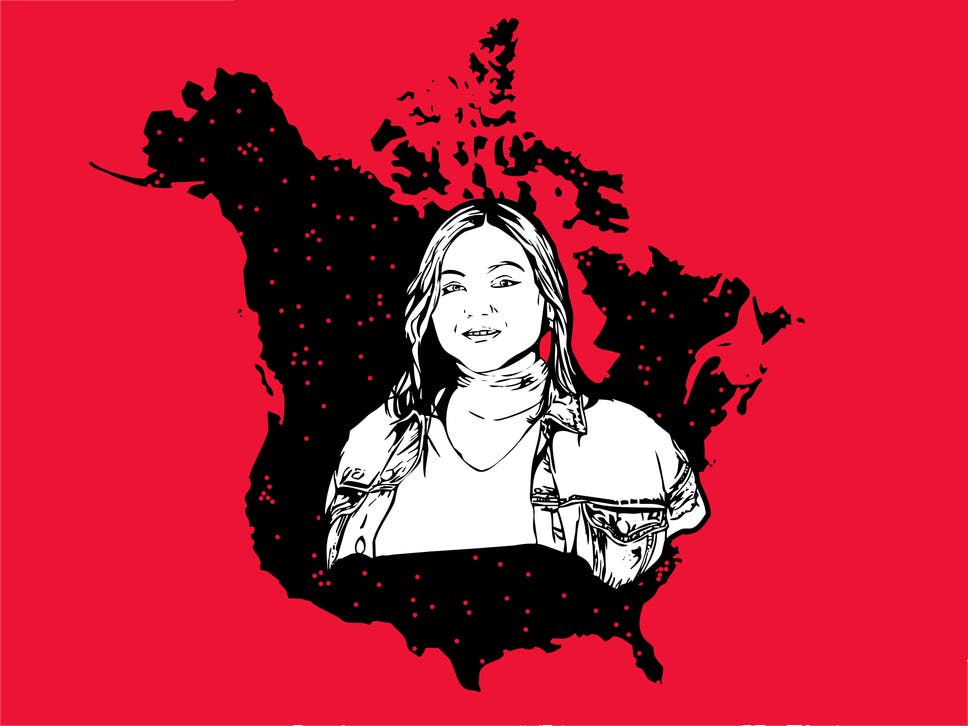
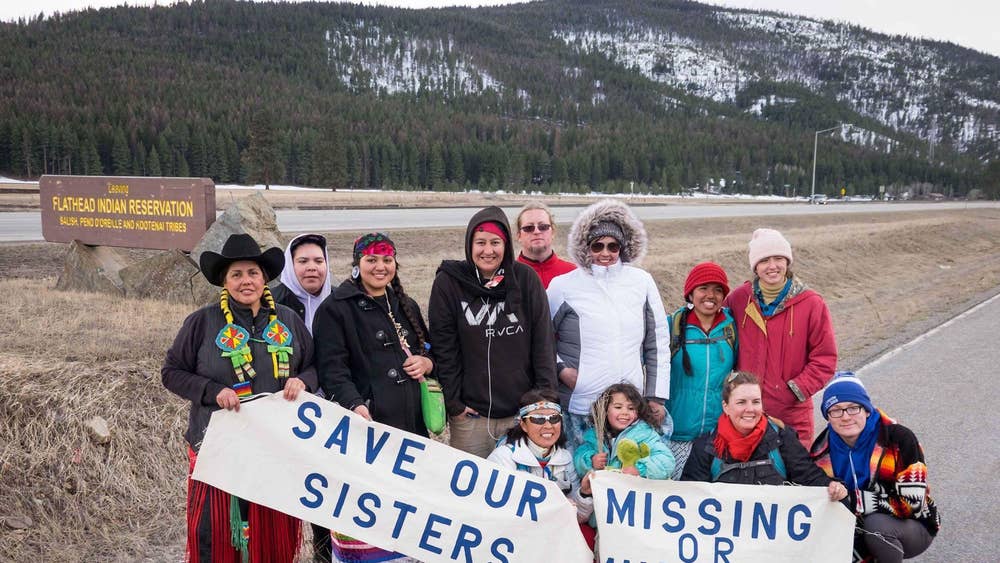
Forgotten Women? No, we remember #MMIW

This is not a problem with one cause, nor is it one that is going away. Therefore any attempt to move towards a solution must recognise how terrifyingly deep the international crisis of MMIW runs.

Despite thousands of women going missing every year, and thousands being raped over their lifetimes, startlingly few statistics are available. Given the complicated and tense mesh of federal, state and tribal law – as well as entrenched racism towards indigenous people across North America – cases continue to fall through the cracks.

The number of indigenous women reported missing has remained remarkably constant in recent years.
There were 5,646 Native American women entered as missing into the National Crime Information Centre database last year, with 5,711 in 2016. In the first six months of 2018 there were 2,758 indigenous woman reported missing.


READ: Forgotten Women: The conversation of murdered and missing native women is not one North America wants to have - but it must | The Independent


Given what we know, and what we have seen in the past centuries, we know that someone evil is behind this and doing this... and we can guess why: is it police, overt racism, serial killers or who?  Being hunted, that is our reality in Indian Country. Know this. Live this. Give this serious thought.

What if this was happening in France, where French girls and women were hunted and killed and missing - wouldn't there be outrage globally? Of course.

BE CAREFUL OUT THERE... PROTECT YOUR SISTERS... Trace

Thursday, August 16, 2018

Fostering Native children in Native homes imperative to preserving culture, preventing erasure

Left to right: Jeff Sarro and Victor Walter (Bois Forte Ojibwe) are foster parents to Native children. Photo courtesy of The Circle.
Although the Indian Child Welfare Act requires the state to place Native children with family or kin when possible, there is a severe shortage of Native foster homes to accommodate this need. Staff in the Native foster care network stress the importance of giving Native children homes that can address their culture, teach traditions and help them learn to navigate the world as a Native person. Placing children in Native homes will also serve to prevent cultural erasure.
“It’s really a difficult task to figure out what they know and how you can support it,” said Victor Walter (Bois Fort Ojibwe), foster parent. “Whether it’s going to powwows, putting out a spirit plate at meals, smudging or sweat lodges…you really have to find out what the kids are used to and at least support that. If you can, surpass it.”
Read more at The Circle.

Native parents vote on efficacy of American Indian Education in schools
In 2015, the state of Minnesota established an American Indian Education Aid program in order to provide more culturally informed teaching to Native students. The program includes an American Indian Parent Advisory Committee in each district comprised of Native parents and students who cast a yearly vote on whether or not the program is meeting cultural needs. Many Native parents have expressed enthusiasm for having a vote on the educational programming for their children, especially around Native representation in American history and sufficient cultural trainings for teachers.
“What it amounts to is there’s a mistrust of the education system by Native Americans because it’s been used as a weapon of assimilation. So when parents are distrustful of a system that in the past has not treated their students well, it’s hard for them to advocate and be proponents of educational change,” said Jane Harstad, director of the Office of Indian Education at the state Department of Education.
Read more on this story at MinnPost.

Wednesday, August 15, 2018

‘Moot’ Ruling in Federal Court Upholds Indian Child Welfare Act, Again @DefendICWA

Barry Goldwater Voted Yes on ICWA Photo Courtesy @DefendICWA
A demonstrator outside the Goldwater Institute in Phoenix. Photo Courtesy @DefendICWA
The United States Court of Appeals for the Ninth Circuit ruled last Monday that a lawsuit in Arizona challenging the Indian Child Welfare Act was moot, dismissing the challenge without an opinion on the plaintiffs’ assertions that the law is racially biased and illegal.
The Indian Child Welfare Act (ICWA) was passed in 1978 after research found that between 25 and 35 percent of American Indian children were being removed from their homes and adopted by non-Native families, according to Bertram Hirsh, one of the bill’s authors. The law aimed to prioritize tribal authority in the determination of the “best interests of the child.”
The Goldwater Institute of Arizona contends that ICWA violates the constitutional rights of children because it is based on race and requires that American Indian children be treated differently than non-Native children. But so far, the courts have disagreed with that assertion.
In this most recent case, Goldwater attorneys claimed that adoptive families had been harmed by the “race-based hoops” they had to jump through in order to adopt the children in their care. Ultimately those adoptions were finalized in 2015, which was the basis for the ruling by the three-judge panel that the case was moot.
“In other words, the courts took so long to address this case that the Ninth Circuit decision now essentially says that the case has taken too long, and the case is now a moot point,” said Timothy Sandefur, vice president for litigation at the Goldwater Institute’s Scharf-Norton Center for Constitutional Litigation in a press release. “But justice delayed is justice denied, and the Goldwater Institute is committed to ensuring that Native American children are no longer denied the same protections against abuse and neglect that children of other races already enjoy.”
Goldwater attorneys will likely appeal the decision, according to Sandefur. The institute has brought nearly a dozen suits challenging ICWA in states across the country, including Washington, California, Ohio and Texas.
According to Hirsh, in order for the Goldwater Institute’s claims to stand, a court would have to throw out about 200 years of legal precedent that has affirmed that tribes are self-governing, and that tribal members are in fact different from the rest of the U.S. population.
“If you are a tribal member then you stand in a political relationship with the U.S., not a racial relationship,” Hirsh said.
The Center for Media and Democracy and other media outlets have reported that the Goldwater Institute is supported by President Trump’s largest donor, the Mercer family, as well as the Koch brothers and the DeVos family.
Critics suspect that the institute has no interest in the well-being of children but instead is committed to the cause of undoing tribal sovereignty as it exists in the United States, ultimately paving the way to gain access to mineral rights on tribal lands worth an estimated $1.5 trillion, according to a 2009 estimate.
In a recent article for The Establishment, Rebecca Nagle writes:
“The type of litigation that the Goldwater Institute mounts is extremely expensive. To say that a conservative advocacy organization — that has shown no other interest in either child welfare nor Native rights — is making this investment based solely on the concern for the well-being of Native children is highly skeptical. Many legal experts in Indian Country see the end goal of Goldwater’s attack on ICWA as a back door route to undoing the legal structure that currently protects tribal sovereignty.”

Friday, August 10, 2018

NCC stepped up to help start ICWA

Annie Kahn, an outreach coordinator for the Navajo Child Care Standards Project, listens as parents speak out at a 1979-1980 children’s conference.
By Colleen Keane , August 9, 2018
Special to the Navajo Times


As Navajo Nation President Russell Begay applauds, members of the Navajo Nation Women’s Commission congratulate Nancy Evans on being inducted into the 2017 Hall of Fame.
Councilwoman Annie Wauneka sat at the head of the table. Nancy Evans, director of BIA Area social services, sat at the table with her, along with social and health workers Ernest Benally, Ella Shirley, Peggy Nelson, Virginia Nez, Deborah Swaim and Eloise DeGroat. It was June 13, 1979, the first day of a two-day gathering in Farmington to discuss concerns about hundreds of Navajo children in foster and adoptive homes off tribal lands, cut off from their families, culture and language.
By 1978, one-third of all American Indian and Alaska Native children were missing from their communities mostly caught in county and state social service systems and private religious placements.About eight months earlier, in November 1978, the Indian Child Welfare Act (Public Law 95-608) passed basically outlawing the practice of non-Indian foster and adoptive placements and setting up a process to transfer Indian child welfare cases to tribal courts.Diné children were coming home and Navajo Community College, now known as Diné College, played a part in implementing the law that made it happen.
BIG READ: NCC stepped up to help start ICWA – Navajo Times

CLICK OLDER POSTS (above) to see more news

CLICK OLDER POSTS  (above) to see more news

MEGWETCH THANK YOU

HUGE Thank you for visiting this blog and sharing this with your kin. It's appreciated. Contact Trace anytime! Use the form below.

BOOKSHOP

Please use BOOKSHOP to buy our titles. We will not be posting links to Amazon.

Popular Posts

To Veronica Brown

Veronica, we adult adoptees are thinking of you today and every day. We will be here when you need us. Your journey in the adopted life has begun, nothing can revoke that now, the damage cannot be undone. Be courageous, you have what no adoptee before you has had; a strong group of adult adoptees who know your story, who are behind you and will always be so.

OUR HISTORY

OUR HISTORY
BOOK 5: Lost Children of the Indian Adoption Projects