BACK UP BLOG (no longer updating)

This blog was a backup for American Indian Adoptees blog
USE THE SEARCH BAR or SEARCH TOPICS at bottom of this blog

If you need support

Support Info: If you are a Survivor and need emotional support, a national crisis line is available 24 hours a day, seven days a week: Residential School Survivor Support Line: 1-866-925-4419. Additional Health Support Information: Emotional, cultural, and professional support services are also available to Survivors and their families through the Indian Residential Schools Resolution Health Support Program. Services can be accessed on an individual, family, or group basis.” These & regional support phone numbers are found at https://nctr.ca/contact/survivors/ . MY EMAIL: tracelara@pm.me

Search This Blog

Thursday, June 23, 2016

The Social Worker in the US and #ICWA

By Trace Hentz (author, adoptee, activist)

Child “protection” is one of the biggest businesses in the country. We spend $12 billion a year on it. Let that sink in a minute.

 As many of you already know, Social Work is a career that requires a college degree. They are trained in colleges and universities across the US. These social workers gain control and have power over Indian children in every state. Many of the social workers are overwhelmed by their workload. "Children fall through the cracks (of the child welfare system," is heard often on the news when a child dies or is killed by a foster provider or adoptive parent.


I asked a recent graduate of Westfield University in Massachusetts if she had any ICWA training. She told me no.

Really?

Are there no Indians living in this state? I live here. There are two federally recognized tribes to date. There are many Indian people living in urban areas across the country, like in Boston and Springfield.

I bet if I asked this new university graduate if she knew how many federally recognized tribes there are in Massachusetts, she would have no idea. Or if I asked her how many tribes are federally recognized in the US, she wouldn't know that either. Few Americans know or care.

And if I asked her about Third World conditions on most reservations/concentration camps? Would she know that? Why else would 80% of Indians be living in big cities.

At the ICWA conference in CA, I gave them a quiz. I asked them several questions. I asked if they knew the federally recognized tribe in Rhode Island. Why did I ask that? Because a Narragansett from Rhode Island could be living in California. It's very possible. And would those judges and social workers know that tribe is federally recognized?  If a mother or father told them "I am Narragansett" in their California court room, making their child Narragansett, would that child receive protection from the federal law ICWA if they had no clue about that particular tribe?

We have a real big problem.

The fact that university doesn't require social workers to take courses on American Indians, offering recent or past history or ICWA, then these graduates can't effectively do their jobs when it comes to ICWA.

There are many tribes who are not federally recognized but acknowledged by their state. In Virginia there are SIX tribes who are state recognized. (That was part of my quiz too.)

There are even more state recognized tribes, like the Eastern Pequot and Schaghticoke in Connecticut, for example. If a child was eligible to be enrolled in their tribes, would they be protected by ICWA? Apparently not. ICWA rules say "federally recognized tribes." (see 2016 list in the sidebar of this blog)

It became evident when the Supreme Court made their ruling about Baby Veronica who is Cherokee. It appeared these important Supreme Court Justices knew little to nothing about tribal histories, sovereignty and membership requirements. Of course they used the racism of blood quantum to determine how "Indian" Veronica is... which was stupid and irrelevant.

This hurts us, all of us. Every child who enters the system has a price tag on their head. Especially Indian children. Each month the foster parents collect a check. The more kids they foster, the more money they make. It's an industry. (The same happens in the Mormon church when Native adoptees are labelled "special needs" even when they are not... those Mormon parents get an even bigger check each month.)

The social worker and the judge in the adoption system exist in that $12 billion dollar industry.

Read this about Adoption Bonuses HERE in Massachusetts.

And this quote hit me especially:

"...In this article I explain the financial infrastructure that provides the motivation for DSS to take people’s children – and not give them back."


We have to do better for ALL CHILDREN.

Poverty (violence, food scarcity, no job or underpaid, lack of hope) draws new children into the system every day. If we eliminated poverty for all people, their system would no longer be needed and obsolete.

Here is a story about the big gov't bureaucracy in Washington concerning child protection, ICWA and social work. Rafael López who was nominated by President Obama and confirmed by the United States Senate as the Commissioner of the Administration on Children, Youth and Families (ACYF) at the U.S. Department of Health and Human Services.

Rafael López: The child welfare system is a deeply broken system, and it does not yield the dramatically improved results for children and families that we would hope to see. We don’t need to accept or buy into the devastating statistics that have persisted for decades. But we first have to reimagine child welfare as something other than a crisis-oriented system....we propose collecting information on what happens with Native American and Alaskan Indian children, as defined in the Indian Child Welfare Act (ICWA). Without inquiry, many Indian children are not identified, thereby denying children, parents, and Indian tribes procedural and substantive protections under ICWA. READ HERE

The same lawyer who handled Baby V needed a new case and a new child to fill her wallet... Read: The Case of Baby A (AKA Save Lexi)

Wednesday, June 22, 2016

'I didn't get to say goodbye' #60sScoop

  Winnipeg woman recalls '60s Scoop

The Manitoba government has said it plans to apologize to the people caught up in the '60s Scoop


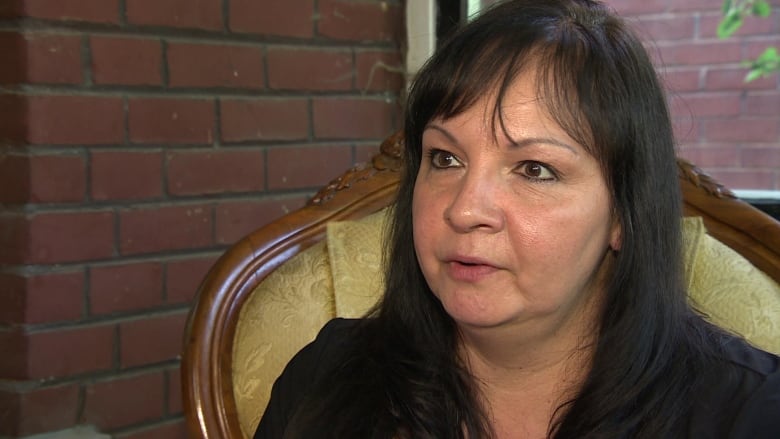
Mary Mahler and two of her brothers were adopted by a family in Pennsylvania. (CBC)
The tears take over when Mary Mahler talks about the loss of culture, language, family and identity she suffered as part of what's referred to as the Sixties Scoop, which saw her taken from Winnipeg and put into a home in the U.S.
The Manitoba government has said it plans to apologize to the people caught up in scoop, but Mahler says the apology must come with understanding.
"How can you apologize when you don't know what you are apologizing for?" she said. "So how can that be an apology when you don't know my story [or] the thousands of other stories and the horrible things?"

Mahler says a true apology can only come when those victims of the scoop have an opportunity to tell their stories.

Thousands of indigenous children were taken from their families from the 1960s through the '80s and placed in non-indigenous homes.

Mahler and her seven siblings' odyssey began in Winnipeg with placement in a foster family.

"I'm seven years old and I don't understand what was happening, and my brother was being tortured with a belt around his neck and they were abusing him," Mahler said about one of the many foster homes she was placed in after being taken from her family.

She and two brothers were eventually sent to a family in Pennsylvania when Mahler was thirteen years old. She remembers how she felt when the plane landed in the United States.

"I realized that I would never ever see anybody — any of my friends. I didn't get to say goodbye," Mahler said.


Racism and strict religion

The three children lived with two different families during their time in the U.S. She says her brothers were subject to racist comments by locals because they were "visibly aboriginal."
"They were called 'spics,' Mahler recalls. "They weren't called indians, but all kinds of other [racist] names."
Mahler says the family they ended staying with for years lived in a rural part of Pennsylvania and though it was better than some of the foster homes in Winnipeg, it was a "walled-in kind of life."
Her foster parents were very strict and religious. Sports weren't allowed and Mahler says she had few friends.
"They were so controlling about food and what we would eat and liked to control every aspect of our lives."
Mahler recalls an incident where some walnuts from the family's pantry appeared to have gone missing and she watched as one of her brothers was punished with a piece of wood taken from the woodpile.
"And why? Because you are hungry? Because you want something to eat?"


Torn apart by adoption scheme

The family would end up moving to a rural area in New York state. When she turned 18, Mahler lived with some nuns involved with a charismatic Catholic sect the family followed. Eventually Mahler would leave the nuns, and over the course of several years, marry, get divorced and re-marry.
She was never allowed to have U.S. citizenship and even lost custody of two children she had with her first husband.
Eventually, Mahler returned to Manitoba and now lives in Winnipeg once again. But she lost track of one of her brothers and a sister. One of the brothers she lived with in the U.S. went to prison and remains there today.
Mahler says in order for an apology by any government to work, the stories of what happened to children who were "scooped" has to be told, and she believes there should be money available to help those people rebuild their families.
Families she says were torn apart by the adoption scheme.
"I am trying to find money to find my brother; money to find my sister. Money to help my brother in prison."
Mahler considers herself lucky — she has been able to stay in touch with most of her family.
"There are others who haven't been able to be strong and keep their families together and stay connected."
The apology from the Manitoba government is expected in June 2016.

Tuesday, June 21, 2016

Advocates Cheer New Indian Child Welfare Act Regulation

Nicole Knight Shine

The first comprehensive update issued since ICWA's implementation in 1978, it requires state courts to ask all participants in child custody proceedings whether a child is an “Indian child," legally defined as being a member of, or eligible for membership in, a federally recognized tribe.

A new federal rule issued this month under the Indian Children Welfare Act could keep more Native children in tribal communities, advocates say.
The new regulation requires state child custody proceedings to more consistently apply the federal Indian Child Welfare Act (ICWA) by imposing several new standards. The first comprehensive update issued since ICWA’s implementation in 1978, it requires state courts to ask all participants in child custody proceedings whether a child is an “Indian child,” legally defined as being a member of, or eligible for membership in, a federally recognized tribe.
The regulation, issued by the Bureau of Indian Affairs and set to go into effect in December, also clarifies when child custody cases can be transferred to tribal courts, and requires parents and the tribe to be notified when a family is involuntarily relinquishing a child, among other key provisions.
Prior to ICWA’s enactment, an estimated 25 to 35 percent of Native children had been separated from their families in what congressional testimony at the time described as an “Indian child welfare crisis of massive proportions.”
KEEP READING

Advocates Cheer New Indian Child Welfare Act Regulation

Nicole Knight Shine

The first comprehensive update issued since ICWA's implementation in 1978, it requires state courts to ask all participants in child custody proceedings whether a child is an “Indian child," legally defined as being a member of, or eligible for membership in, a federally recognized tribe.

A new federal rule issued this month under the Indian Children Welfare Act could keep more Native children in tribal communities, advocates say.
The new regulation requires state child custody proceedings to more consistently apply the federal Indian Child Welfare Act (ICWA) by imposing several new standards. The first comprehensive update issued since ICWA’s implementation in 1978, it requires state courts to ask all participants in child custody proceedings whether a child is an “Indian child,” legally defined as being a member of, or eligible for membership in, a federally recognized tribe.
The regulation, issued by the Bureau of Indian Affairs and set to go into effect in December, also clarifies when child custody cases can be transferred to tribal courts, and requires parents and the tribe to be notified when a family is involuntarily relinquishing a child, among other key provisions.
Prior to ICWA’s enactment, an estimated 25 to 35 percent of Native children had been separated from their families in what congressional testimony at the time described as an “Indian child welfare crisis of massive proportions.”
KEEP READING

#ICWA challenges, children at risk

Preliminary Report on from California’s ICWA Compliance Task Force


Prelim Final – CA ICWA TF Report 6.10.2016

Press Release
SACRAMENTO – Insufficient services, severe underfunding, barriers preventing tribal participation and inadequate reunification efforts have undermined the effectiveness and promise of the Indian Child Welfare Act (ICWA) in California, according to a preliminary report from a Task Force of tribal leaders from across the state, working independently to apprise the California’s Attorney General’s Bureau of Children’s Justice of these inadequacies.
The ICWA Compliance Task Force’s report recognizes that efforts have been undertaken to overcome cultural, procedural and funding challenges, but these ongoing obstacles continue to severely limit the implementation of ICWA in California, resulting in devastating impacts to Indian children, their families and their tribes.

#ICWA challenges, children at risk

Preliminary Report on from California’s ICWA Compliance Task Force


Prelim Final – CA ICWA TF Report 6.10.2016

Press Release
SACRAMENTO – Insufficient services, severe underfunding, barriers preventing tribal participation and inadequate reunification efforts have undermined the effectiveness and promise of the Indian Child Welfare Act (ICWA) in California, according to a preliminary report from a Task Force of tribal leaders from across the state, working independently to apprise the California’s Attorney General’s Bureau of Children’s Justice of these inadequacies.
The ICWA Compliance Task Force’s report recognizes that efforts have been undertaken to overcome cultural, procedural and funding challenges, but these ongoing obstacles continue to severely limit the implementation of ICWA in California, resulting in devastating impacts to Indian children, their families and their tribes.

Monday, June 20, 2016

Attacking #ICWA: Goldwater, RadioLab's bias is blaring #BabyVeronica


By Trace Hentz  (adoptee, author and activist)

Remember this photo? In the big world out there, few people even knew about the Indian Child Welfare Act until Baby Veronica was adopted out... Then headlines were screaming for months. Indian Country responded and fought back using the federal law but even that wasn't enough to allow a Cherokee father to keep and raise his own daughter.

I have wanted to say something about the RadioLab program/podcast about Baby Veronica and the Supreme Court Case. This was a few years ago and rebroadcast a few days ago.

More Perfect presents: Adoptive Couple v. Baby Girl
I spoke with the interviewer. He didn't use one word of my story in his RadioLab report. I have no clue why not. I did give him names of other adoptees he could speak to... He spoke to many many people and quoted them but not one adoptee!  I recall I told him I was Baby Veronica just 50 years later.  My dad would have raised me. There was no Indian Child Welfare Act when I was adopted by strangers. I was traumatized. I was not going to stop looking for my family, even if my records were sealed in Wisconsin and Minnesota. I was one of thousands who lost their family connections and tribal connections. I didn't want Veronica to go through what I did.  Our culture matters and adoption steals years of our lives.

These Goldwater and RadioLab people didn't and don't want to hear me, or adoptees (young or old). They simply don't. Their bias is blaring. (It's been drilled into their minds how adoption is always good and saving poor kids.)

I wrote an essay in 2013 about this case and submitted it to the Atlantic editors but they didn't publish it. WHY? I didn't get a reason but it's clear...they don't consider Indians and adoptees interesting enough or news-worthy, let alone a federal law concerning Indians.

Finally (with utter frustration) I sent it to Indian Country Today Media in New York. They published it.


I’m a “lost bird," one of thousands of Native children adopted-out of tribal communities from the late 1950s to late 1960s as part of a federal program called the Indian Adoption Projects. The Project came after the decades long boarding school era when government and missionary schools aimed to “kill the Indian to save the child.”

 
Read more at https://indiancountrytodaymedianetwork.com/2013/08/12/baby-veronica-case-david-vs-goliath
 
 
Is that fair reporting and analysis if "THEY" (the mainstream radio, TV, newspaper media) don't consider WHY there is an ICWA?  Have they considered Baby V will grow up and not be a child anymore and imagine her loss of family and culture?  Who better to ask than an adoptee who has lived through it?

Why are they ignoring the ADOPTEE STORY in this story?

In San Diego a few weeks ago, Diane Tells His Name, Leland Kirk, Karen Vigneault, Tom Lidot (Tribal Star) and I had breakfast and we discussed this. (We were together, presenting at the California State ICWA Conference on June 7.)
"...There is an ICWA because of us, all the American Indian Adoptees, Lost Birds, Stolen Children, 60s Scoop, and Indian Adoption Project adoptees. WE are the reason there is a law. We are still called the Stolen Generations. We are the second phase of atrocities committed against Indian People before during and after the boarding schools. (WE were supposed to permanently disappear in closed adoptions with sealed records, living "happily ever after" with our white parents.) There is a federal law ICWA because of us, because adoption trafficking in Native babies and children was clearly genocide. With ICWA, there will be many less adoptees... We get that; in Indian Country we know this."


“And finally this, when the sun was falling down so beautiful we didn’t have time to give it a name, she held the child born of white mother and red father and said, ‘Both sides of this baby are beautiful.’”
—Sherman Alexie
The ICWA Penalty Box: In Defense of Equal Protection for Indian Children By Timothy Sandefur (Goldwater Institute) used this quote.

Toxic Trauma Stress: ACE STUDY

By Trace Hentz

I don't know if you have heard of the ACE Study. I found it when I was writing One Small Sacrifice.  I have tons of these issues, even now. And I cut most of my remarks about the study in my memoir (too long) and now I think that was a mistake.
Childhood Trauma is toxic and can kill us? (What is an adoptee's experience?)
Poverty kills, too.
Food scarcity kills, too.
Violence kills, too, right?
That is life on the rez, right?

We are in crisis!


Childhood experiences, both positive and negative, have a tremendous impact on future violence victimization and perpetration, and lifelong health and opportunity. As such, early experiences and trauma are an important public health issue. Much of the foundational research in this area has been referred to as Adverse Childhood Experiences (ACEs).
ACEs can be prevented. Learn more about preventing ACEs in your community. HERE

right click and save to your computer to enlarge this graph

Wednesday, June 15, 2016

Alaska officials welcome new federal rule on adoption cases

Alaska officials welcome new federal rule on adoption cases: JUNEAU, Alaska (AP) — Alaska officials say a new federal rule that will require judges to ask whether a child is a Native American during foster-care and adoption proceedings will help prevent litigation over Native children in state custody.

Alaska officials welcome new federal rule on adoption cases

Alaska officials welcome new federal rule on adoption cases: JUNEAU, Alaska (AP) — Alaska officials say a new federal rule that will require judges to ask whether a child is a Native American during foster-care and adoption proceedings will help prevent litigation over Native children in state custody.

Tuesday, June 14, 2016

Spotty reporting and compliance with #ICWA - why is that?

Chronicle of Social Change Article on Native Foster Home(s) in L.A.

Here.
In 1978, Congress passed the Indian Child Welfare Act (ICWA), which was meant to keep Native American families together, after foster care and adoption practices had seen thousands of Native children taken from their families, ancestral lands and culture to be placed in non-native homes. That law created a system of “preferred placements” for Native children who enter care. The first choice is to place children with family members, followed by members of the same tribe and finally Native foster parents from other tribes. The last resort is placement in non-native homes.

But the federal government has never compelled states to share how well they satisfy that “preference,” leaving little or no data to indicate who is doing a good job placing Native children in Native homes.
The reporting that does exist is spotty at best.
In 2005, the United States Government Accountability Office (GAO) surveyed all 50 states and Washington D.C. about their ability to identify Native children in the system who were subject to ICWA in 2003.
“Only five states—Oklahoma, Oregon, Rhode Island, South Dakota, and Washington—were able to provide these data,” according the GAO report.
It doesn’t appear that reporting on ICWA compliance improved much in the subsequent years.
In 2015, Casey Family Programs, one of the largest charitable foundations in all of child welfare, tried to ascertain ICWA compliance in a brief entitled “Measuring Compliance with the Indian Child Welfare Act.”
“Although cross-jurisdictional and collaborative efforts are emerging, compliance measurement remains characterized by relatively small, idiosyncratic efforts,” the thin report reads. “Empirical study results are scattered, inconsistent, and highly specific to the state and jurisdiction being examined.”

[WHY? It's Indian people - the most disrespected and underserved population. Indian Child Welfare is low on the list of priorities in American courtrooms. The ICWA is federal law. Federal law is supposed to be enforced. You can see that isn't the case with our most precious children... If you notice in our blog sidebar (right), the list of federally recognized tribes - take a look. It's not taught in school. Ignorance about Indian people is rampant.  Trace]

Saturday, June 11, 2016

Two year old Ojibwe dies in foster care #BABYKIRA

Provided by Atkins-Northland Funeral Home
Kira Friedman drowned while in foster care. Police say an admitted drug dealer living in the home is to blame.

Questions surround death of 2-year-old Ojibwe child in foster care

By Danielle Taylor | Jun 11, 2016  | Cloquet, Minnesota (NNCNOW.com)

A funeral was held Friday morning on the Fond du Lac Reservation for a two-year-old girl who drowned in a plastic laundry bin in a Bemidji Foster home last Sunday.

According to a criminal complaint, Kira Friedman was placed in the shower and left unattended by her foster dad, who is now facing manslaughter charges.
"This didn't have to happen. This little girl didn't have to die. She should be right here with her parents at this time," said Patti Larsen, a family spokesperson.

Larsen, who serves as the Sacred Hoop Coalition Director, was shepherding 2-year-old Kira Friedman's case through the St. Louis County Court system on behalf of the little girl's family, and believes her death was preventable.

"The maternal grandmother identified numerous people who would be potential placements for the child," she said.

Larsen wanted to ensure Kira was placed in a Native American home. Therefore, she says the County let this child down when they removed her from a Native foster home, and placed her with a white foster family in Duluth.

"Kira was just a number, was shipped off to a place," Larsen said.

At the family's request, Leech Lake Reservation got involved to find a Native foster home. When Kira was placed in a home in Bemidji, red flags were sent up right away.

"There was too many children in that place to properly care for a child with special needs, such as Kira," said Larsen.

Larsen says keeping Kira in the hands of the St. Louis County Court System is where her parents went wrong. However, a spokeswoman with the county says the child was no longer in their custody.

In a written statement the county said, "This case has been under the jurisdiction of Leech Lake Tribal Court for close to a year and custody has been with the Leech Lake Band. This matter is under active investigation by the authorities involved, so we would have no further comment on it."

Nonetheless, Larsen stresses the importance of applying the Indian Child Welfare Act to foster children. The act is a federal law that seeks to keep native children with native families.

"Follow ICWA. It's there for a purpose. It was placed there for a purpose in 1978 when so many kids were being lost," said Larsen.

In addition to the Indian Child Welfare Act, Larsen also mentioned the Minnesota Indian Preservation Act should be followed by government agencies, when dealing with Native foster children.

Interior Secretary Says Changes To Indian Child Welfare Act 'Close Loopholes'

A day after tribal leaders and governors in all 50 states received a letter from the Bureau of Indian Affairs, U.S. Interior Secretary Sally Jewell paid a visit to the Spokane Indian Tribe.
Jewell said Thursday, changes under the Indian Child Welfare Act, or ICWA, close some long-standing loopholes in the law.
During her visit, Jewell said a disproportionate number of tribal youth are being placed in the non-tribal foster care system “without any credible effort being made by the states to place those children in a family structure and a community structure that honors their heritage and their culture.”
The new rules require state courts to ask all participants at the beginning of custody proceedings about a child’s heritage. As well, only tribes can determine if a child is Indian.
A spokeswoman from the National Indian Child Welfare Association said no organizations or agencies at the state or federal level track the number of kids placed under ICWA. The group’s most recent estimates say one-third of the Northwest’s native population was under the age of 19.
High ranking government officials don’t come to Wellpinit, Washington, often. Jason Campbell, CEO of Sovereign Power, the Spokane Indian Tribe’s energy company, aid tribal leaders usually have to go to Washington, D.C., for this kind of conversation.
The Spokane Tribe is a sovereign nation and you could say Wellpinit is the capital. There’s a clinic, a public safety building and the cars even have their own black and green license plates.
Campbell was among leaders who offered Jewell a tour. They discussed many needs as an excited group of women gathered nearby.
“The Spokane Tribe is being recognized and it’s about time. We need this,” said Nancy Raymond, who has lived on the Spokane Indian Reservation her whole life.
Wellpinit resident Clarissa Thatcher added, “There’s a long list of stuff that can be improved on here.”
The tribe was selected to participate in a federal initiative meant to boost economic prosperity. Secretary Jewell said that effort will continue despite the outgoing Obama administration.
“That doesn’t matter,” Jewell said. “It’s the programs and the structure and the career staff that facilitates moving this forward.”
Two federal staff members will be dedicated to helping the tribe with long term projects.

****
The Indian Child Welfare Act descends from a history of human rights abuses of Native Americans and subjugation of their culture, as the Christian Science Monitor's Bamzi Banchir explained in March:
The act was passed to amend historical practices that saw native American children taken from their families and communities and placed in boarding schools in an attempt to 'solve the Indian Problem' – native Americans were depicted as 'savage heathens' – by assimilating them into mainstream American society....

http://launch.newsinc.com/share.html?trackingGroup=90962&siteSection=csmonitor_nws_non_sty_dynamic&videoId=28688128 


***
AND from the Christian group who is seeking to destroy ICWA: [Christian Newswire 2016. All Rights Reserved. | 2020 Pennsylvania Ave. NW - Washington - DC - 20006 | 202-546-0054] Elizabeth Morris is Chair of the Christian Alliance for Indian Child Welfare and author of "Dying in Indian Country." CAICW, a ministry and advocacy, has assisted families judicially, educationally, and as a prayer resource since 2004.  
If you thought Elizabeth Morris is gone after the Baby V case, she's not. Look at this

***
NARF statement about frivolous lawsuits: Since our founding 45 years ago, NARF has worked to protect the rights of Native children, families, and communities. We stand hand in hand with our allies against these recent attacks on ICWA and we will fight these meritless lawsuits. 

Friday, June 10, 2016

KATE FORT: Initial Observations #ICWA #BabyVeronica

Initial Observations on the ICWA Regulations


Today’s additions to this post have been added in red text.

The Rule is organized in much the same way as the Guidelines. They do not mirror each other, however. These are just highlights of the actual rule, not the 300+ pages addressing all of the comments, which look to be incredibly useful.
The Department anticipates issuing updated Guidelines in the next six months, before the final rule goes into effect. p.10, “Overview of Final Rule”
The Rule does not use the phrase “existing Indian family”, but pp 90-94 of the text explain that the Rule overrules the application of the EIF through other means:
The final rule no longer uses the nomenclature of the exception, and instead focuses on the substance, rather than the label, of the exception. Thus, the final rule imposes a mandatory prohibition on consideration of certain listed factors, because they are not relevant to the inquiry of whether the statute applies. If a child-custody proceeding concerns a child who meets the statutory definition of “Indian child,” then the court may not determine that ICW A does not apply to the case based on factors such as the participation of the parents or the Indian child in Tribal cultural, social, religious, or political activities, the relationship between the Indian child and his or her Indian parents, whether the parent ever had custody of the child, or the Indian child’s blood quantum.  
Rule at 93.
Highlights:
The definitions of continued custody, custody, and domicile are extensive and helpful, includes tribal custom and tribal law, makes clear that any custody at any time in the past counts as “continued custody” and makes the child’s domicile dependent on the custodial parent, not just mother. 23.2.
The active efforts definition is marginally different than the one in the Guidelines. It does not specifically state they are more or different than ASFA’s reasonable efforts, but it does say they must be “affirmative, active, thorough, and timely”. The list of elements under what active efforts “may include, for example” are also slightly different, and combine some of the Guideline elements (4 in the regs is 9&5 in the Guidelines; 7 is 10&14). 23.2.
The Department’s reasoning regarding ASFA is as follows, though is contrary to how state courts have been comparing the two at the appellate level, and not entirely helpful:
Unlike the proposed rule, the final rule does not define “active efforts” in comparison to “reasonable efforts.” After considering public comments on this issue, the Department concluded that referencing “reasonable efforts” would not promote clarity or consistency, as the term “reasonable efforts” is not in ICW A and arises from different laws (e.g., the Adoption Assistance and Child Welfare Act of 1980, as modified by the Adoption and Safe Families Act (ASFA), see 42 U.S.C. 670, et seq., as well as State laws). Such reference is unnecessary because the definition in the final rule focuses on what actions are necessary to constitute active efforts.
Rule at 50.

“When Does ICWA Apply?” addresses the issue of “continued custody” thrown into doubt by Adoptive Couple v. Baby Girl. It also specifically states a child’s blood quantum may not be considered by the state court. 23.103(c).

State laws that provide higher protections to the rights of the parent control over the regulations. 23.106.

State courts must ask each participant in an emergency or voluntary or involuntary child-custody proceeding whether the participant knows or has reason to know the child is an Indian child. 23.107(a).

A parental request for confidentiality in a voluntary proceeding does not relieve the court, agency, or other party from any duty of compliance with ICWA, including the obligation to verify whether the child is an Indian child. 23.107(d).

Only tribes can determine if a child is an Indian child under the law, that is a final determination that cannot be substituted by the state, and the state can use tribal enrollment documentation (for example) to make the judicial determination a child is an Indian child. 23.108.

A court must determine domicile of the child in any voluntary or involuntary child-custody proceeding. 23.110(a).

If a parent or Indian custodian appears in court without an attorney, the court must inform them of their rights under the law, including the right to appointed counsel, the right to request transfer to tribal court, the right to object to transfer, the right to request additional time, and the right to intervene in the child custody proceedings. 23.111(g).

23.113 Emergency removals (or the Oglala Sioux v. Fleming section) addresses all the requirements of emergency removal including length of time (30 days), how to terminate an emergency proceeding (initiate a proceeding subject to the provisions of ICWA, transfer to the tribe, or send the kid home), and the standard of “imminent physical damage or harm to the child”.

The regs direct state courts what they cannot consider “good cause” not to transfer a case to tribal court, but do not specify what is good cause not to transfer. States cannot consider advanced stage, prior proceedings where there was no petition to transfer, whether transfer will affect placement, cultural connections, and socioeconomic conditions. 23.118(c).

There is no standard of evidence for active efforts (states are still split on this), but similar to the Guidelines, the evidence must show a causal relationship between the particular conditions in the home and the likelihood of serious emotional or physical damage to the child. Evidence with no causal relationship of poverty, isolation, single parenthood, custodian age, crowded or inadequate housing, substance abuse, or nonconforming social behavior does not on its own constitute evidence that continued custody is likely to result in serious emotional or physical damage to the child. 23.121
Who can be a qualified expert witness is fairly vague, but the regulation specifically excludes the social worker regularly assigned to the Indian child from being the QEW. 23.122(c)

The state court must determine if a child is an Indian child in voluntary proceedings, and that determination may mean contacting the child’s tribe to verify. 23.124(b)

Consent to a voluntary adoption largely mirrors the law, but also includes that when a parent request confidentiality, the execution of consent must still be before a court of competent jurisdiction, but not in open court. 23.125(d).

Good cause to not follow the placement preferences must be made on the record, the party seeking to deviate bears the burden of proving good cause by clear and convincing evidence, and may not be based “solely on ordinary bonding or attachment that flowed from time spent in a non-preferred placement that was made in violation of ICWA.” 23.132

The regs do give good cause reasons to depart from the preferences. They include the request of one or both parents if they attest they have reviewed the placement preferences that comply with the order of preference, the request of the child, the presence of a sibling attachment, the extraordinary physical, mental, or emotional needs of the child, and the unavailability of a suitable placement after the court finds a diligent search was conducted. 23.132(c).

Courts should allow participation by telephone, videoconferencing, or other methods. 23.133.
If there are certain changes in an adopted Indian child’s status (the voluntary termination by the adoptive parent, or the final decree of adoption was set aside or vacated), the biological parent, prior Indian custodian, and tribe must be noticed. 23.139. Of course, the child remains an Indian child regardless of the adoption, so ICWA should apply to these situations anyway.

The state must maintain certain records of every voluntary or involuntary foster care, preadoptive, and adoptive placement of an Indian child, including the petition or complaint, all substantive orders, the complete record of the placement determination. That record must be made available within 14 days of a request by the child’s Tribe or the Secretary. 23.141.

PDF PRESS RELEASE


NEW TEETH FOR ICWA? YES!
In my heart, I cannot stop thinking that little Veronica (BABY V) helped us all ... Trace (Pre-ICWA adoptee)

BREAKING NEWS: BIA Publishes Final ICWA Rule

larry-roberts-courtesy-nicwa
Courtesy National Indian Child Welfare Association
Acting Assistant Secretary - Indian Affairs Lawrence S. Roberts today announced that the agency has published an updated final rule in the implementation of the Indian Child Welfare Act.

Breaking: BIA Publishes Final ICWA Rule


Underscoring Congress’s intent to protect the cohesiveness of Indian children, families and communities in state welfare proceedings, Acting Assistant Secretary - Indian Affairs Lawrence S. Roberts today announced that the agency has published an updated final rule in the implementation of the Indian Child Welfare Act. Roberts said the 360-page rule will provide a more consistent interpretation of the 38-year-old statute “regardless of the child welfare worker, judge or state involved.”

“We received thousands of comments from the public during the rulemaking process―more than three times the number of comments than any other rule we’ve published,” said Roberts at the press conference announcing the rule this afternoon (Wednesday). “An overwhelming number of those comments came from the tribes, so it’s clearly an issue of public interest. And we think this rule will help state agencies and courts in the application of the law and provide more consistency across the board.”
Roberts said the new rule advances the highest ideals of the federal trust responsibility in protecting and promoting cohesiveness for Indian children and their families. While praising the work of state courts across the country who work tirelessly to ensure the implementation of ICWA, he said there are still gaps in the consistency and application of ICWA in state proceedings.

“The final rule builds upon the work of tribes and states by clarifying the Indian Child Welfare Act’s requirements, promoting consistency in Indian child-placement proceedings, and ensuring that regardless of the state court forum, children and their parents receive the active efforts envisioned by Congress to maintain family and community,” Roberts said. “Child welfare workers, state court judges and state agencies deserve clear rules as they work with Native families and tribes to implement the protections of the law. This rule promotes family and community by ensuring that if a Native child has been removed from their home previously, they will have a pathway for reunification with their family.”

Under the new rule, all state courts in foster-care, termination-of-parental-rights, and adoption proceedings will now be required to ask whether the child is an “Indian child” under the definitions articulated in ICWA and subject to the law’s procedures; prompt notice of involuntary proceedings; and minimizing unnecessary separations of Indian children from their families.  Additionally, the rule requires that “active efforts” will replace “reasonable efforts” with the overall goal of reunifying the child with his or her family.

“Reunification with a child’s family is a standard the United States strives for in child welfare,” said Roberts. “It’s the gold standard and best practice and ICWA is the minimum federal standard, because tribal families continue to be broken up because of inconsistent application of the law. We are concerned that without these federal regulations that the disparities among Indian children in state custody may continue.”

Notably, Roberts said the final rule also addresses the wishes of Indian parents wanting to place their children for adoption, making it clear that the decision to place children for voluntary adoptions lies with the child’s parents. As well, the rule includes a number of new provisions which respect and enforce the confidentiality and privacy of all Indian children in state court proceedings.

The BIA has been working on strengthening the federal statute for several years. In 2014, the Department conducted five listening sessions with tribes, judicial organizations and child welfare professionals to determine whether the BIA ICWA Guidelines for State Courts should be updated and, if so, what changes should be made. The agency received hundreds of comments from tribes, child welfare professionals and state court judges, which overwhelmingly recommended updated guidelines.

That November, the Attorney General’s Advisory Committee on American Indian and Alaska Native Children Exposed to Violence also recommended that the Department of the Interior issue new regulations in order to better implement the law. Tribes and other commenters were near-universal in noting the lack of compliance with and inconsistent adherence to the guidelines in state courts, calling for the promulgation of new regulations for a more consistent interpretation of ICWA.
Subsequently, in February 2015, the agency issued revised Guidelines for State Courts and Agencies in Indian Child Custody Proceedings—the first such update since the guidelines were originally issued when ICWA (Public Law 95-608) was passed in 1978.


A month later, the agency, then headed by former Assistant Secretary Kevin Washburn, announced its intention to seek a federal rule to reinforce the 38-year-old federal statute in state courts across the country, where Indian children continue to be removed from their families and communities at far higher rates than their non-Indian peers.


Public meetings and tribal consultations were held in locations throughout the country, including Portland, Oregon; Rapid City, South Dakota; Albuquerque, New Mexico; Prior Lake, Minnesota; Tulsa, Oklahoma, and by phone conference. The hearings were attended by hundreds of tribal members, attorneys, social workers, adult pre- and post-ICWA adoptees, and tribal leaders, as well as lawyers representing the American Academy of Adoption Attorneys.

At times contentious and emotionally-charged, the ICWA public meetings were crowded and sometimes standing-room-only, drawing sharp comments from the tribes and members of the adoption industry, at odds over what constitutes the “best interests” for Native children. Often, complained tribal leaders, they are rarely given adequate notice or respect in court proceedings involving their children in ICWA proceedings. Conversely, members of the adoption industry responded with similar talking points that ICWA is “bad for children.”

For months, as the two sides skirmished in the hearings, the BIA continued gathering input and comments toward publishing a final rule. In anticipation of the final rule, the Phoenix, Arizona-based Goldwater Institute filed suit in federal court in July 2015 seeking to overturn the Indian Child Welfare Act because it contends that the 38-year-old statute is unconstitutional.

The new federal regulations provide a more consistent interpretation of and promote compliance with the Act by incorporating standard procedures and requirements for state courts and child welfare agencies in Indian child custody proceedings. Roberts said that although the final rule is being published today, it will not go into effect for 180 days in order to give time to the tribes, state agencies and courts to familiarize themselves with the new rule and for training and technical assistance.

“ICWA was designed to safeguard Native children from undue separation from their families and cultural identity. This rule will achieve consistent implementation of a law that remains critical to protecting the best interest of Native children and promoting successful Native communities,” said Secretary of the Interior Sally Jewell, who serves as chair of the President’s White House Council on Native American Affairs. “It is in a child's best interest to keep their family intact when it can be done safely, and provide pathways to connect with the child's larger family and community. This rule reflects the highest standards in child welfare.”

RELATED: Breaking: Federal Agency Publishes Proposed Rule, Announces Major Grant to Implement ICWA

Read more at http://indiancountrytodaymedianetwork.com/2016/06/08/breaking-bia-publishes-final-icwa-rule-164738
 
A new federal rule requires judges to ask whether a child is Native American during foster-care and adoption proceedings. Under the rule, judges also must ask about a child’s status as a tribal member during hearings to determine whether or not a mother’s or father’s parental rights will be terminated. The new rule is part of the Indian Child Welfare Act and it’s intended to reunite Native American families after statistics showed they were broken up at higher rates.
 
I heard this announcement when I was in SAN DIEGO at the ICWA conference!  Good News... Trace

Monday, June 6, 2016

Wakiksuyapi: Carrying Historical Trauma: Maria Yellow Horse Brave Heart

Dr. Maria Yellow Horse Brave Heart, Hunkpapa, Oglala Lakota, PhD, is a Research Associate Professor at the University of New Mexico Department of Psychiatry. Brave Heart’s groundbreaking concept of “historical trauma”—which describes how the effects of collective injuries such as genocide and discrimination can linger for generations—offered new avenues for recognizing and healing trauma experienced by members of Maine’s Wabanaki Confederacy.

In 2000, Maria Brave Heart published the article, "Wakiksuyapi: Carrying the Historical Trauma of the Lakota." 
Using the historical trauma research conducted in survivors of the Holocaust, Brave Heart would identify a comparable cluster of events correlated with massive group trauma across generations, including the 1890 Wounded Knee Massacre and the forced removal of children to federal boarding schools.[4]

She conceptualized the current form of historical trauma in the 1980s as a way to comprehend what she observed as many Native Americans being unable to fulfill "the American Dream".[5][6]

Her most significant findings came in a cluster of six symptoms: 1. 1st Contact: life shock, genocide, no time for grief, a Colonization Period in which the introduction of disease and alcohol occurred, and traumatic events such as Wounded Knee Massacre, 2. Economic competition, which resulted in loss from spiritual and tangible dimensions, 3. the occurrence of Invasion/War Period, which
involved extermination and refugee symptoms, 4. a Subjugation/Reservation Period: confinement and translocation occur, a relationship forced dependency on oppressor is formed, and a lack of security occur, 5. Boarding School Period, in which the family system is destroyed, beatings, rape, and prohibition of Native language and religion ensue; Lasting Effect: ill-prepared for parenting, identity
confusion. and 6. Forced Relocation and Termination Period: transfer to urban areas, prohibition of religious freedom, racism and being viewed as second class; loss of governmental system and community. and a three-pronged intervention mode: education, sharing the effects of trauma and grief resolution through collective mourning and healing.[7]


Since 1976, Brave Heart has worked directly in the field to gather information on the impact of historical trauma within the indigenous communities. These groups include the Lakota in South Dakota, multiple tribes in New Mexico, and populations of indigenous and Latinos in Denver, New Mexico, and New York.[8]
Dr. Brave Heart is also responsible for hosting and presenting over 175 presentations on subject matter related to historical trauma as well as training numerous tribes across the United States and First Nations populations in the country of Canada.[8]

Maria Yellow Horse Brave Heart is known for developing a model of historical trauma, historical unresolved grief theory and interventions in indigenous peoples. Brave Heart earned her Master of Science from Columbia University School of Social Work in 1976.[8]

In 1992, Brave Heart established the Takini Network, a Native nonprofit organization dedicated to healing the wounds inflicted on Native Americans through the experiences of intergenerational trauma,[9] located in Rapid City, South Dakota.[10] (WIKI)


Dr. Brave Heart's Historical Trauma and Unresolved Grief Intervention has received grant awards, including grants that incorporate components of the intervention in reservation-based parenting work. From 2001-2004 Brave Heart directed an international conference that brought together indigenous survivors of massive trauma and their descendants.  Brave Heart has been a repeat conference presenter for the International Society for Traumatic Stress Studies. She has served on the Board of Directors for the Council on Social Work Education and as a consultant to the National Indian Country Child Trauma Center.

Thursday, June 2, 2016

A Framework for Indigenous Adoptee Reconnection: Reclaiming Language and Identity #60sScoop

[PDF] A Framework for Indigenous Adoptee Reconnection: Reclaiming Language and Identity.

SW Cardinal - CJNSE/RCJCÉ, 2016
 
When I was eight, just before my Mormon baptism, I looked in the mirror in the church bathroom searching for myself. A mirror in front of me and a mirror behind me created the illusion of infinity and a multiplicity of selves. I knew I was adopted. I knew I was Native. I knew I wasn’t supposed to talk about or question where I came from. I didn’t know my adoption was part of a larger movement of transracial adoption known as the Sixties Scoop. - Sarah Wright Cardinal, University of Victoria, Canada

 
Click on pdf 

Wednesday, June 1, 2016

A formal apology from Ontario's premier

Ontario Premier Kathleen Wynne apologized for Canada's mistreatment of indigenous boarding school students, such as these in Manitoba (Photo: St. Paul's Indian Industrial School, Middlechurch/Courtesy Library and Archives of Canada).
 
A formal apology from Ontario's premier

Native Politics in Broadcast Media and Film | Native Peoples, Native Pol...

#ICWA in the headlines


    NEWS

  • Alaska Legislature Passes Foster Youth System Reform and Protection Bills
    SitNews

    “Expediting a child’s exit from the foster care system helps to reduce trauma to the child and ensure that family connections remain strong,” Governor Walker said. “Our hope is that this bill will increase the number of Alaska Native children finding permanent homes within their family, culture and traditions in a timely manner.”... but particularly those family members of a child covered under the Indian Child Welfare Act (ICWA) who want to preserve and have the court apply ...

Tuesday, May 31, 2016

Lawsuit Shines Spotlight on Sexual Abuse of Navajo Children within the Lamanite Placement Program

PRESS CONFERENCE: Lawsuit Shines Spotlight on Sexual Abuse of Navajo Children within the Lamanite Placement Program

Two enrolled members of the Navajo Nation filed suit against LDS Family Services and The Church of Jesus Christ of Latter-Day Saints, commonly known as the “Mormon” or “LDS” Church, stemming from child sexual abuse that occurred during the Church’s “Lamanite Placement Program” in the 1970’s and early 1980’s.

Complex PTSD as an official diagnosis

CLICK: Complex PTSD as an official diagnosis


For many of us adoptees, this PTSD diagnosis is reason enough to seek immediate help... Trace

Complex PTSD as an official diagnosis

CLICK: Complex PTSD as an official diagnosis

For many of us adoptees, this PTSD diagnosis is reason enough to seek immediate help... Trace

Complex PTSD as an official diagnosis

CLICK: Complex PTSD as an official diagnosis

For many of us adoptees, this PTSD diagnosis is reason enough to seek immediate help... Trace

Wednesday, May 25, 2016

How do we heal trauma suffered by Native communities?

BY GABOR MATE’ SOURCE
It is not enough that the Attawapiskat First Nation has declared a state of emergency over the epidemic of suicides and suicide attempts among its youth. Our entire country should declare a state of emergency about the appalling health status, physical and mental, of First Nations and Inuit communities. Would we not have already if, instead of Nunavut or Attawapiskat, it was, say, the teens of Westmount, Forest Hill or Kitsilano who were killing themselves at 10 times the national rate?

I am often asked to visit First Nations communities across Canada to speak about addiction, stress-related illness and child development. The ordinary Canadian citizen simply has no idea, cannot even begin to imagine, what misfortunes, tragedies and other kinds of adversity many native young people experience by the time they reach adolescence – how many deaths of loved ones they witness, what abuse they endure, what despair they feel, what self-loathing plagues them, what barriers to a life of freedom and meaning they face.

At the core of the suicide pandemic is unresolved trauma, passed almost inexorably from one generation to the next, along with social conditions that induce further hopelessness. The source of that multi-generational trauma is this country’s colonial past and its residue in the present. The march of the history and progress Canada celebrates, from which we derive much pride and national identity, meant catastrophe for natives: the loss of lands and livelihood and of freedom of movement, the mockery and invalidation of their spiritual ways, the near-extirpation of their culture, the corruption of their intra-familial and intra-communal relationships, and finally, for nearly a hundred years, the state-sanctioned abduction, rape, physical abuse and mental torture of their children.

The questions we must ask ourselves nationally are very simple. How do we as a country move to heal the trauma that drives the misery of many native communities? What can be done to undo the dynamics our past has dictated? Some may balk at such inquiry, fearing the discomfort that comes with guilt. However, this is not a matter of communal guilt, but of communal responsibility. It is not about the past. It is about the present. And it is about all of us: When some among us suffer, ultimately we all do.

To begin, native history must be taught fully and in unsparing detail in our schools. All Canadians should know, for example, that 50 years ago it was not unheard of for a four-year-old girl to have a pin stuck in her tongue for the crime of speaking her mother language and later endure serial rape by teachers, religious mentors. Such were the antecedents of today’s drug use and suicidal anguish. The resonant values, brilliant art, stories and wisdom culture of First Nations people should be introduced in Canadian schools. Canadians must be helped to see their First Nations peers in their fullness, which includes their humanity, grandeur, unspeakable suffering and strength.

We must renounce any political, economic or social policy that reinforces the colonial trauma of disempowerment, loss and dispossession. Not another square centimetre of native land must be disturbed, not a blade of grass cut, not one more drop of water diverted, not a millimetre of pipeline laid without First Nations agreement.

Institutions and individuals interacting with native people must become deeply trauma-informed. Judges, teachers, law-enforcement personnel, nurses, doctors, psychiatrists, social workers, public employees, policy-makers all must understand what trauma is, its multiple impacts on human mentality and behavior, and how to address it. Without such information, as I have witnessed repeatedly, the best-meaning people can unwittingly re-traumatize those who can least bear further pain and loss. Practices that devastate families must be stopped, such as the frequent apprehension of children without restorative and compassionate family-building support.

Alternative forms of justice must be developed, aligned with native traditions and in consultation with First Nations. The implicit racism in our law-enforcement institutions must be openly acknowledged and cleansed. Powerfully beneficial traditional healing practices must be researched, taught, encouraged. We need to celebrate the First Nations cultural renaissance, a tribute to human resilience, now taking place.

Economic and social conditions that engender despair must be addressed, with the utmost urgency. If we could spend more than $15-billion on our self-declared mission to help the people of Afghanistan, surely we can find the resources in our rich land to help redeem people whom our history continues to victimize.

(Gabor Maté is a retired B.C. physician who specializes in addiction.)

CLICK OLDER POSTS (above) to see more news

CLICK OLDER POSTS  (above) to see more news

MEGWETCH THANK YOU

HUGE Thank you for visiting this blog and sharing this with your kin. It's appreciated. Contact Trace anytime! Use the form below.

BOOKSHOP

Please use BOOKSHOP to buy our titles. We will not be posting links to Amazon.

Popular Posts

To Veronica Brown

Veronica, we adult adoptees are thinking of you today and every day. We will be here when you need us. Your journey in the adopted life has begun, nothing can revoke that now, the damage cannot be undone. Be courageous, you have what no adoptee before you has had; a strong group of adult adoptees who know your story, who are behind you and will always be so.

OUR HISTORY

OUR HISTORY
BOOK 5: Lost Children of the Indian Adoption Projects