BACK UP BLOG (no longer updating)

This blog was a backup for American Indian Adoptees blog
USE THE SEARCH BAR or SEARCH TOPICS at bottom of this blog

If you need support

Support Info: If you are a Survivor and need emotional support, a national crisis line is available 24 hours a day, seven days a week: Residential School Survivor Support Line: 1-866-925-4419. Additional Health Support Information: Emotional, cultural, and professional support services are also available to Survivors and their families through the Indian Residential Schools Resolution Health Support Program. Services can be accessed on an individual, family, or group basis.” These & regional support phone numbers are found at https://nctr.ca/contact/survivors/ . MY EMAIL: tracelara@pm.me

Search This Blog

Tuesday, September 7, 2010

Lost Siblings

    My definition of being lost is being separated from your natural family, your genetic first family. I know a few Lost Birds who were placed into adoption with a sister or brother. In many ways I consider them fortunate because they had each other. But being adopted is no less traumatic. If you don’t believe me, read my memoir.
      I had a dream this morning about an adoptee in Australia has 20 (?) siblings who are also lost. Now they are searching for each other. Can it be true?
            This was enough to get me out of bed at 4 am. Then I thought: how many siblings are separated, lost, and not together?  Why would social workers and adoption agencies separate siblings?  That seems inhuman.
            Their answer is somewhat obvious: they can’t find or place that many kids with one adoptive family. A social worker might place one or two children together but not often. Why? The childless couple only wishes to adopt one. The agencies and adopters didn’t put much weight on our blood connection and how we are a natural family who would never choose to be separated nor would we wish to be adopted out separately.
            Being separated from your natural parent(s) is hard enough but being separated from siblings – that is a nightmare - especially when you knew them and remember them. This feeling of being lost can truly be a nightmare for those in a closed adoption.
            I feel this way because I was told I have a sister. She was lost to adoption, when my natural mother Helen had her four years prior to me, and she was adopted out. Then a psychic told me Jewel-Jules-Julie was already dead. The psychic saw their family tombstone that read Russo. I dreamt about this sister a long time. I wanted to know what she was like and see her face. I wanted to know she was ok.
            Really, I love stories about reunions with siblings, when you meet your long-lost brothers and sisters.
            In my reunion with my natural dad, he had five kids after I was born so I have five in my dad’s family, 4 boys and 1 girl. They never knew about me until I met them.
            When you meet someone who looks like you, it’s PRICELESS.
            When you hear their stories, it’s like a place in your heart is finally filled. This made me feel less alone in this tough cruel world.
            Why states and provinces in North America have not opened adoption records and files to reunite lost siblings – it’s not just a crime of humanity, it’s absolutely obscene.
            So a dream of lost siblings in Australia was the reason I woke up early. Siblings need to find one other. That alone is reason enough for countries to change their laws and open adoption records.
            It’s not about privacy, it’s about love.

American Indian girls should be with siblings

 (online source Red Lake Nation News)

LITTLE ROCK, Arkansas -- Twin girls with American Indian heritage should be placed in the custody of their mother's third cousin in keeping with the guidelines of the Indian Child Welfare Act, the state Appeals Court ruled Wednesday.
The opinion overturned a decision in 2001 by Van Buren County Circuit Judge Linda P. Collier to award custody of the 9-year-old sisters to their mother's fourth cousin in Arkansas.
The appeals court said the girls should be with their four siblings, who live with the mother's third cousin, also in Arkansas. The court noted the Indian Child Welfare Act gives preference in child custody disputes to extended family members, other members of the Indian child's tribe or other Indian families.
While neither cousin is Indian, the appeals court said the third cousin has custody of the twins' four siblings and their Indian tribe recommended they be together. The court pointed to a brief the Tohono O'odham Nation filed that said: "The only family the children have in Arkansas are each other, and their placement together is the closest approximation of placement with 'extended family' intended by the Act."
The twins' mother, Tina Gaspar, has at least 13 children, the appeals court said. The twins and four other children have the same father, Ruben Sanders, who is a member of the Tohono O'odham Nation.
Gaspar sent the girls to live with her third cousin in Van Buren County in August 2002 after Sanders abandoned the children, and Gaspar gave her relative "a signed, written statement conveying the guardianship of all six children," the court opinion said. Gaspar made the arrangements because of concern the state of Arizona would take the children from her when she went to prison in that state, the court said.
Because Sanders fathered the six children and then abandoned them, they qualify for enrollment in the Nation and the Indian Child Welfare Act applies to the custody issue, according to the opinion written by Judge Robert J. Gladwin.
Gaspar's fourth cousin then visited her in Arizona in late 2002, and obtained the mother's signature relinquishing custody of the twins to her. The fourth cousin filed the document in Van Buren County and got custody of the twins with the help of law enforcement officials.
The appeals court questioned the legitimacy of the second document and noted that "the Nation clearly and repeatedly states that its preference is for all six of the siblings to be together with appellant."
While both cousins "are on equal footing when it comes to the preferences," Gaspar's third cousin had an advantage because she has custody of the twins' four siblings. The court said she also has remained in closer contact with the Tohono O'odham Nation.

Friday, September 3, 2010

Losing your right to be Indian

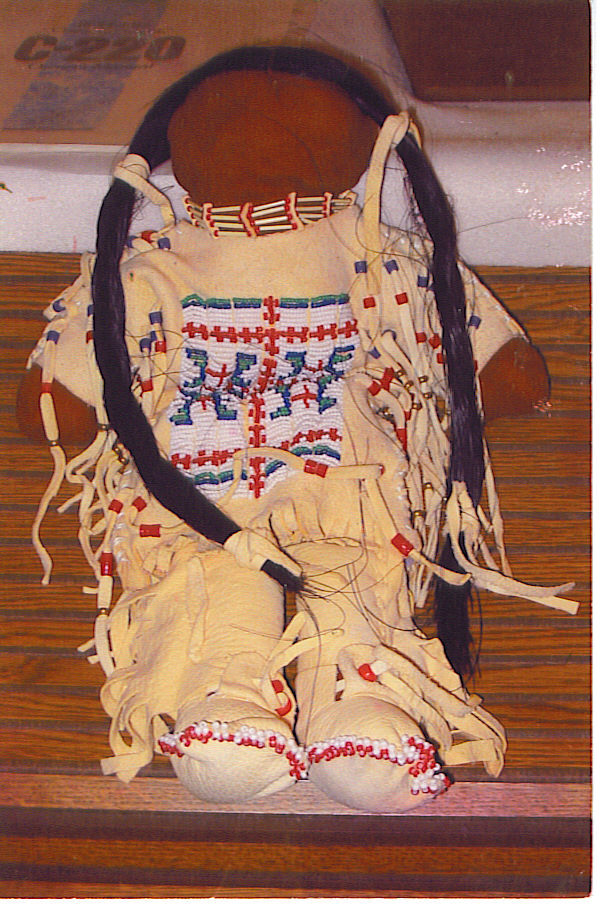
Ellowyn Locke's doll
     I’ve been thinking how some things have not changed significantly in Indian Country. The following testimony happened in 1974, when Indian leaders decided to stop the wholesale removal of Indian children to boarding schools and for adoption to non-Indian families.  Mr. Byler spoke eloquently to Senator Bartlett and Senator Abourezk about detribalization.  The result  was the Indian Child Welfare Act of 1978, which is meant to prevent non-Indians from adopting American Indian children.

            Excerpt:
            Senator BARTLETT. Do you feel that the boarding school removes some of the parental responsibility …that it creates a gap between the children and the parents, in which it makes the job of the parents more difficult and harder to achieve?

            Mr. BYLER. Yes; I think this is very much the case. In addition, I would say also we can really take the whole educational experience. Dr. Edward P. Dozier criticized Headstart programs for some Indian communities on the ground that an Indian child has such a short time in his life to learn how to behave in his own environment, to pick up the cultural and behavioral patterns of his parents. It was bad enough to start school at five or six because that bobtailed the opportunity the kids had to learn this. Now with Headstart in some communities, that age is down to 3 years, so these preschool experiences denied the children the opportunity to learn how to function properly in their own society.
            And it demoralizes the whole functioning of families when those children who grow up in a boarding school become parents themselves and have not had the opportunity to observe normal child rearing.
            In some of the early poverty programs funded under OEO, Indian tribes asked for funds to train their teenagers to be parents because they didn’t know what it was like because they had been away in boarding school.

Senator BARTLETT. What should be the structure for facing up to the emotional needs of Indian children and also in meeting the educational needs?

Mr. BYLER. I believe that in terms of the educational needs, that would be contracting the Indian schools with tribes that wish to contract for those schools. Where the tribes have taken over those schools, and there are not many yet, the educational result has been dramatic.
            For example, in Florida the Miccosukees had never had a school at all, none of their children attended school until 1961 or 1962. They took over their school about 4 years ago and, 1 year after the tribe itself had taken over the school, the comparative educational achievements of the children improved by 50 percent.
            Dropout rates have dramatically been reduced in the Busby school on Northern Cheyenne, and the Rocky Boy school, both in Montana, since Indian tribes have taken them over. So, I do think that educational needs can be met more adequately by the Indian community controlling the schools themselves.
            In terms of the emotional needs, I think perhaps one of the most central things to the emotional life of the Indian family and the Indian child, is to remove from that family the threat that their children will be taken away from them. I think this is the most dangerous aspect. It has a far greater impact on Indian emotional life than any other single factor.
            I think that in societies throughout the United States, and Indian societies, not all impoverished children or families suffer this kind of family breakdown. Among the Miccosukees, children are not taken from their parents, nor among the Coushattas of Louisiana; it’s unknown, the kind of breakdown that one sees in some Indian communities. It’s not because of Indian poverty. There are many societies in the world that are much more poverty stricken than the average American Indian community, but exhibit little or none of the family breakdown.
            I think it’s a copout when people say it’s poverty that’s causing family breakdown. I think perhaps the chief thing is the detribalization and the deculturalization, Federal and State and local efforts to make Indians white. It hasn’t worked and it will never work and one of the most vicious forms of trying to do this is to take their children. Those are the great emotional risks to Indian families.
            [More of this testimony is available at: www.liftingtheveil.org/byler]


            So what happened years ago, its effects are still being felt today. Loss of culture and language could have destroyed Indian Country but it has not. We may be wobbly but we’re still working…
            For adoptees that went through what I did, we look in a mirror and know something is wrong, yet we feel helpless to change it.  Who can discuss identity issues with you if you’re not a part of your tribal nation? I’m troubled tribes are so busy surviving they don’t reach out and search for their lost tribal members, like adoptees.
            I am so troubled by this disconnect, I try to connect adoptees to each other since we share the feeling of being lost. Our grief can’t be healed until we’re united successfully with family, relatives and tribe. Many have succeeded. Many more are trying.
            Many Native American adoptees are opening up and talking. Our identity is not mirrored back to us. We lost more than culture. We lost our right to be Indian. We have to fight to regain it. And with sealed adoption records, we may never be able to…

Losing your right to be Indian


Ellowyn Locke's doll
     I’ve been thinking how some things have not changed significantly in Indian Country. The following testimony happened in 1974, when Indian leaders decided to stop the wholesale removal of Indian children to boarding schools and for adoption to non-Indian families.  Mr. Byler spoke eloquently to Senator Bartlett and Senator Abourezk about detribalization.  The result  was the Indian Child Welfare Act of 1978, which is meant to prevent non-Indians from adopting American Indian children.


            Excerpt:
            Senator BARTLETT. Do you feel that the boarding school removes some of the parental responsibility …that it creates a gap between the children and the parents, in which it makes the job of the parents more difficult and harder to achieve?


            Mr. BYLER. Yes; I think this is very much the case. In addition, I would say also we can really take the whole educational experience. Dr. Edward P. Dozier criticized Headstart programs for some Indian communities on the ground that an Indian child has such a short time in his life to learn how to behave in his own environment, to pick up the cultural and behavioral patterns of his parents. It was bad enough to start school at five or six because that bobtailed the opportunity the kids had to learn this. Now with Headstart in some communities, that age is down to 3 years, so these preschool experiences denied the children the opportunity to learn how to function properly in their own society.

            And it demoralizes the whole functioning of families when those children who grow up in a boarding school become parents themselves and have not had the opportunity to observe normal child rearing.

            In some of the early poverty programs funded under OEO, Indian tribes asked for funds to train their teenagers to be parents because they didn’t know what it was like because they had been away in boarding school.


Senator BARTLETT. What should be the structure for facing up to the emotional needs of Indian children and also in meeting the educational needs?


Mr. BYLER. I believe that in terms of the educational needs, that would be contracting the Indian schools with tribes that wish to contract for those schools. Where the tribes have taken over those schools, and there are not many yet, the educational result has been dramatic.

            For example, in Florida the Miccosukees had never had a school at all, none of their children attended school until 1961 or 1962. They took over their school about 4 years ago and, 1 year after the tribe itself had taken over the school, the comparative educational achievements of the children improved by 50 percent.

            Dropout rates have dramatically been reduced in the Busby school on Northern Cheyenne, and the Rocky Boy school, both in Montana, since Indian tribes have taken them over. So, I do think that educational needs can be met more adequately by the Indian community controlling the schools themselves.

            In terms of the emotional needs, I think perhaps one of the most central things to the emotional life of the Indian family and the Indian child, is to remove from that family the threat that their children will be taken away from them. I think this is the most dangerous aspect. It has a far greater impact on Indian emotional life than any other single factor.

            I think that in societies throughout the United States, and Indian societies, not all impoverished children or families suffer this kind of family breakdown. Among the Miccosukees, children are not taken from their parents, nor among the Coushattas of Louisiana; it’s unknown, the kind of breakdown that one sees in some Indian communities. It’s not because of Indian poverty. There are many societies in the world that are much more poverty stricken than the average American Indian community, but exhibit little or none of the family breakdown.

            I think it’s a copout when people say it’s poverty that’s causing family breakdown. I think perhaps the chief thing is the detribalization and the deculturalization, Federal and State and local efforts to make Indians white. It hasn’t worked and it will never work and one of the most vicious forms of trying to do this is to take their children. Those are the great emotional risks to Indian families.
            [More of this testimony is available at: www.liftingtheveil.org/byler]


            So what happened years ago, its effects are still being felt today. Loss of culture and language could have destroyed Indian Country but it has not. We may be wobbly but we’re still working…
            For adoptees that went through what I did, we look in a mirror and know something is wrong, yet we feel helpless to change it.  Who can discuss identity issues with you if you’re not a part of your tribal nation? I’m troubled tribes are so busy surviving they don’t reach out and search for their lost tribal members, like adoptees.
            I am so troubled by this disconnect, I try to connect adoptees to each other since we share the feeling of being lost. Our grief can’t be healed until we’re united successfully with family, relatives and tribe. Many have succeeded. Many more are trying.
            Many Native American adoptees are opening up and talking. Our identity is not mirrored back to us. We lost more than culture. We lost our right to be Indian. We have to fight to regain it. And with sealed adoption records, we may never be able to…

Losing your right to be Indian

Ellowyn Locke's doll
     I’ve been thinking how some things have not changed significantly in Indian Country. The following testimony happened in 1974, when Indian leaders decided to stop the wholesale removal of Indian children to boarding schools and for adoption to non-Indian families.  Mr. Byler spoke eloquently to Senator Bartlett and Senator Abourezk about detribalization.  The result  was the Indian Child Welfare Act of 1978, which is meant to prevent non-Indians from adopting American Indian children.

            Excerpt:
            Senator BARTLETT. Do you feel that the boarding school removes some of the parental responsibility …that it creates a gap between the children and the parents, in which it makes the job of the parents more difficult and harder to achieve?

            Mr. BYLER. Yes; I think this is very much the case. In addition, I would say also we can really take the whole educational experience. Dr. Edward P. Dozier criticized Headstart programs for some Indian communities on the ground that an Indian child has such a short time in his life to learn how to behave in his own environment, to pick up the cultural and behavioral patterns of his parents. It was bad enough to start school at five or six because that bobtailed the opportunity the kids had to learn this. Now with Headstart in some communities, that age is down to 3 years, so these preschool experiences denied the children the opportunity to learn how to function properly in their own society.
            And it demoralizes the whole functioning of families when those children who grow up in a boarding school become parents themselves and have not had the opportunity to observe normal child rearing.
            In some of the early poverty programs funded under OEO, Indian tribes asked for funds to train their teenagers to be parents because they didn’t know what it was like because they had been away in boarding school.

Senator BARTLETT. What should be the structure for facing up to the emotional needs of Indian children and also in meeting the educational needs?

Mr. BYLER. I believe that in terms of the educational needs, that would be contracting the Indian schools with tribes that wish to contract for those schools. Where the tribes have taken over those schools, and there are not many yet, the educational result has been dramatic.
            For example, in Florida the Miccosukees had never had a school at all, none of their children attended school until 1961 or 1962. They took over their school about 4 years ago and, 1 year after the tribe itself had taken over the school, the comparative educational achievements of the children improved by 50 percent.
            Dropout rates have dramatically been reduced in the Busby school on Northern Cheyenne, and the Rocky Boy school, both in Montana, since Indian tribes have taken them over. So, I do think that educational needs can be met more adequately by the Indian community controlling the schools themselves.
            In terms of the emotional needs, I think perhaps one of the most central things to the emotional life of the Indian family and the Indian child, is to remove from that family the threat that their children will be taken away from them. I think this is the most dangerous aspect. It has a far greater impact on Indian emotional life than any other single factor.
            I think that in societies throughout the United States, and Indian societies, not all impoverished children or families suffer this kind of family breakdown. Among the Miccosukees, children are not taken from their parents, nor among the Coushattas of Louisiana; it’s unknown, the kind of breakdown that one sees in some Indian communities. It’s not because of Indian poverty. There are many societies in the world that are much more poverty stricken than the average American Indian community, but exhibit little or none of the family breakdown.
            I think it’s a copout when people say it’s poverty that’s causing family breakdown. I think perhaps the chief thing is the detribalization and the deculturalization, Federal and State and local efforts to make Indians white. It hasn’t worked and it will never work and one of the most vicious forms of trying to do this is to take their children. Those are the great emotional risks to Indian families.
            [More of this testimony is available at: www.liftingtheveil.org/byler]


            So what happened years ago, its effects are still being felt today. Loss of culture and language could have destroyed Indian Country but it has not. We may be wobbly but we’re still working…
            For adoptees that went through what I did, we look in a mirror and know something is wrong, yet we feel helpless to change it.  Who can discuss identity issues with you if you’re not a part of your tribal nation? I’m troubled tribes are so busy surviving they don’t reach out and search for their lost tribal members, like adoptees.
            I am so troubled by this disconnect, I try to connect adoptees to each other since we share the feeling of being lost. Our grief can’t be healed until we’re united successfully with family, relatives and tribe. Many have succeeded. Many more are trying.
            Many Native American adoptees are opening up and talking. Our identity is not mirrored back to us. We lost more than culture. We lost our right to be Indian. We have to fight to regain it. And with sealed adoption records, we may never be able to…

Losing your right to be Indian

Ellowyn Locke's doll
     I’ve been thinking how some things have not changed significantly in Indian Country. The following testimony happened in 1974, when Indian leaders decided to stop the wholesale removal of Indian children to boarding schools and for adoption to non-Indian families.  Mr. Byler spoke eloquently to Senator Bartlett and Senator Abourezk about detribalization.  The result  was the Indian Child Welfare Act of 1978, which is meant to prevent non-Indians from adopting American Indian children.

            Excerpt:
            Senator BARTLETT. Do you feel that the boarding school removes some of the parental responsibility …that it creates a gap between the children and the parents, in which it makes the job of the parents more difficult and harder to achieve?

            Mr. BYLER. Yes; I think this is very much the case. In addition, I would say also we can really take the whole educational experience. Dr. Edward P. Dozier criticized Headstart programs for some Indian communities on the ground that an Indian child has such a short time in his life to learn how to behave in his own environment, to pick up the cultural and behavioral patterns of his parents. It was bad enough to start school at five or six because that bobtailed the opportunity the kids had to learn this. Now with Headstart in some communities, that age is down to 3 years, so these preschool experiences denied the children the opportunity to learn how to function properly in their own society.
            And it demoralizes the whole functioning of families when those children who grow up in a boarding school become parents themselves and have not had the opportunity to observe normal child rearing.
            In some of the early poverty programs funded under OEO, Indian tribes asked for funds to train their teenagers to be parents because they didn’t know what it was like because they had been away in boarding school.

Senator BARTLETT. What should be the structure for facing up to the emotional needs of Indian children and also in meeting the educational needs?

Mr. BYLER. I believe that in terms of the educational needs, that would be contracting the Indian schools with tribes that wish to contract for those schools. Where the tribes have taken over those schools, and there are not many yet, the educational result has been dramatic.
            For example, in Florida the Miccosukees had never had a school at all, none of their children attended school until 1961 or 1962. They took over their school about 4 years ago and, 1 year after the tribe itself had taken over the school, the comparative educational achievements of the children improved by 50 percent.
            Dropout rates have dramatically been reduced in the Busby school on Northern Cheyenne, and the Rocky Boy school, both in Montana, since Indian tribes have taken them over. So, I do think that educational needs can be met more adequately by the Indian community controlling the schools themselves.
            In terms of the emotional needs, I think perhaps one of the most central things to the emotional life of the Indian family and the Indian child, is to remove from that family the threat that their children will be taken away from them. I think this is the most dangerous aspect. It has a far greater impact on Indian emotional life than any other single factor.
            I think that in societies throughout the United States, and Indian societies, not all impoverished children or families suffer this kind of family breakdown. Among the Miccosukees, children are not taken from their parents, nor among the Coushattas of Louisiana; it’s unknown, the kind of breakdown that one sees in some Indian communities. It’s not because of Indian poverty. There are many societies in the world that are much more poverty stricken than the average American Indian community, but exhibit little or none of the family breakdown.
            I think it’s a copout when people say it’s poverty that’s causing family breakdown. I think perhaps the chief thing is the detribalization and the deculturalization, Federal and State and local efforts to make Indians white. It hasn’t worked and it will never work and one of the most vicious forms of trying to do this is to take their children. Those are the great emotional risks to Indian families.
            [More of this testimony is available at: www.liftingtheveil.org/byler]


            So what happened years ago, its effects are still being felt today. Loss of culture and language could have destroyed Indian Country but it has not. We may be wobbly but we’re still working…
            For adoptees that went through what I did, we look in a mirror and know something is wrong, yet we feel helpless to change it.  Who can discuss identity issues with you if you’re not a part of your tribal nation? I’m troubled tribes are so busy surviving they don’t reach out and search for their lost tribal members, like adoptees.
            I am so troubled by this disconnect, I try to connect adoptees to each other since we share the feeling of being lost. Our grief can’t be healed until we’re united successfully with family, relatives and tribe. Many have succeeded. Many more are trying.
            Many Native American adoptees are opening up and talking. Our identity is not mirrored back to us. We lost more than culture. We lost our right to be Indian. We have to fight to regain it. And with sealed adoption records, we may never be able to…

Losing your right to be Indian

Ellowyn Locke's doll
     I’ve been thinking how some things have not changed significantly in Indian Country. The following testimony happened in 1974, when Indian leaders decided to stop the wholesale removal of Indian children to boarding schools and for adoption to non-Indian families.  Mr. Byler spoke eloquently to Senator Bartlett and Senator Abourezk about detribalization.  The result  was the Indian Child Welfare Act of 1978, which is meant to prevent non-Indians from adopting American Indian children.

            Excerpt:
            Senator BARTLETT. Do you feel that the boarding school removes some of the parental responsibility …that it creates a gap between the children and the parents, in which it makes the job of the parents more difficult and harder to achieve?

            Mr. BYLER. Yes; I think this is very much the case. In addition, I would say also we can really take the whole educational experience. Dr. Edward P. Dozier criticized Headstart programs for some Indian communities on the ground that an Indian child has such a short time in his life to learn how to behave in his own environment, to pick up the cultural and behavioral patterns of his parents. It was bad enough to start school at five or six because that bobtailed the opportunity the kids had to learn this. Now with Headstart in some communities, that age is down to 3 years, so these preschool experiences denied the children the opportunity to learn how to function properly in their own society.
            And it demoralizes the whole functioning of families when those children who grow up in a boarding school become parents themselves and have not had the opportunity to observe normal child rearing.
            In some of the early poverty programs funded under OEO, Indian tribes asked for funds to train their teenagers to be parents because they didn’t know what it was like because they had been away in boarding school.

Senator BARTLETT. What should be the structure for facing up to the emotional needs of Indian children and also in meeting the educational needs?

Mr. BYLER. I believe that in terms of the educational needs, that would be contracting the Indian schools with tribes that wish to contract for those schools. Where the tribes have taken over those schools, and there are not many yet, the educational result has been dramatic.
            For example, in Florida the Miccosukees had never had a school at all, none of their children attended school until 1961 or 1962. They took over their school about 4 years ago and, 1 year after the tribe itself had taken over the school, the comparative educational achievements of the children improved by 50 percent.
            Dropout rates have dramatically been reduced in the Busby school on Northern Cheyenne, and the Rocky Boy school, both in Montana, since Indian tribes have taken them over. So, I do think that educational needs can be met more adequately by the Indian community controlling the schools themselves.
            In terms of the emotional needs, I think perhaps one of the most central things to the emotional life of the Indian family and the Indian child, is to remove from that family the threat that their children will be taken away from them. I think this is the most dangerous aspect. It has a far greater impact on Indian emotional life than any other single factor.
            I think that in societies throughout the United States, and Indian societies, not all impoverished children or families suffer this kind of family breakdown. Among the Miccosukees, children are not taken from their parents, nor among the Coushattas of Louisiana; it’s unknown, the kind of breakdown that one sees in some Indian communities. It’s not because of Indian poverty. There are many societies in the world that are much more poverty stricken than the average American Indian community, but exhibit little or none of the family breakdown.
            I think it’s a copout when people say it’s poverty that’s causing family breakdown. I think perhaps the chief thing is the detribalization and the deculturalization, Federal and State and local efforts to make Indians white. It hasn’t worked and it will never work and one of the most vicious forms of trying to do this is to take their children. Those are the great emotional risks to Indian families.
            [More of this testimony is available at: www.liftingtheveil.org/byler]


            So what happened years ago, its effects are still being felt today. Loss of culture and language could have destroyed Indian Country but it has not. We may be wobbly but we’re still working…
            For adoptees that went through what I did, we look in a mirror and know something is wrong, yet we feel helpless to change it.  Who can discuss identity issues with you if you’re not a part of your tribal nation? I’m troubled tribes are so busy surviving they don’t reach out and search for their lost tribal members, like adoptees.
            I am so troubled by this disconnect, I try to connect adoptees to each other since we share the feeling of being lost. Our grief can’t be healed until we’re united successfully with family, relatives and tribe. Many have succeeded. Many more are trying.
            Many Native American adoptees are opening up and talking. Our identity is not mirrored back to us. We lost more than culture. We lost our right to be Indian. We have to fight to regain it. And with sealed adoption records, we may never be able to…

Losing your right to be Indian

Ellowyn Locke's doll
     I’ve been thinking how some things have not changed significantly in Indian Country. The following testimony happened in 1974, when Indian leaders decided to stop the wholesale removal of Indian children to boarding schools and for adoption to non-Indian families.  Mr. Byler spoke eloquently to Senator Bartlett and Senator Abourezk about detribalization.  The result  was the Indian Child Welfare Act of 1978, which is meant to prevent non-Indians from adopting American Indian children.

            Excerpt:
            Senator BARTLETT. Do you feel that the boarding school removes some of the parental responsibility …that it creates a gap between the children and the parents, in which it makes the job of the parents more difficult and harder to achieve?

            Mr. BYLER. Yes; I think this is very much the case. In addition, I would say also we can really take the whole educational experience. Dr. Edward P. Dozier criticized Headstart programs for some Indian communities on the ground that an Indian child has such a short time in his life to learn how to behave in his own environment, to pick up the cultural and behavioral patterns of his parents. It was bad enough to start school at five or six because that bobtailed the opportunity the kids had to learn this. Now with Headstart in some communities, that age is down to 3 years, so these preschool experiences denied the children the opportunity to learn how to function properly in their own society.
            And it demoralizes the whole functioning of families when those children who grow up in a boarding school become parents themselves and have not had the opportunity to observe normal child rearing.
            In some of the early poverty programs funded under OEO, Indian tribes asked for funds to train their teenagers to be parents because they didn’t know what it was like because they had been away in boarding school.

Senator BARTLETT. What should be the structure for facing up to the emotional needs of Indian children and also in meeting the educational needs?

Mr. BYLER. I believe that in terms of the educational needs, that would be contracting the Indian schools with tribes that wish to contract for those schools. Where the tribes have taken over those schools, and there are not many yet, the educational result has been dramatic.
            For example, in Florida the Miccosukees had never had a school at all, none of their children attended school until 1961 or 1962. They took over their school about 4 years ago and, 1 year after the tribe itself had taken over the school, the comparative educational achievements of the children improved by 50 percent.
            Dropout rates have dramatically been reduced in the Busby school on Northern Cheyenne, and the Rocky Boy school, both in Montana, since Indian tribes have taken them over. So, I do think that educational needs can be met more adequately by the Indian community controlling the schools themselves.
            In terms of the emotional needs, I think perhaps one of the most central things to the emotional life of the Indian family and the Indian child, is to remove from that family the threat that their children will be taken away from them. I think this is the most dangerous aspect. It has a far greater impact on Indian emotional life than any other single factor.
            I think that in societies throughout the United States, and Indian societies, not all impoverished children or families suffer this kind of family breakdown. Among the Miccosukees, children are not taken from their parents, nor among the Coushattas of Louisiana; it’s unknown, the kind of breakdown that one sees in some Indian communities. It’s not because of Indian poverty. There are many societies in the world that are much more poverty stricken than the average American Indian community, but exhibit little or none of the family breakdown.
            I think it’s a copout when people say it’s poverty that’s causing family breakdown. I think perhaps the chief thing is the detribalization and the deculturalization, Federal and State and local efforts to make Indians white. It hasn’t worked and it will never work and one of the most vicious forms of trying to do this is to take their children. Those are the great emotional risks to Indian families.
            [More of this testimony is available at: www.liftingtheveil.org/byler]


            So what happened years ago, its effects are still being felt today. Loss of culture and language could have destroyed Indian Country but it has not. We may be wobbly but we’re still working…
            For adoptees that went through what I did, we look in a mirror and know something is wrong, yet we feel helpless to change it.  Who can discuss identity issues with you if you’re not a part of your tribal nation? I’m troubled tribes are so busy surviving they don’t reach out and search for their lost tribal members, like adoptees.
            I am so troubled by this disconnect, I try to connect adoptees to each other since we share the feeling of being lost. Our grief can’t be healed until we’re united successfully with family, relatives and tribe. Many have succeeded. Many more are trying.
            Many Native American adoptees are opening up and talking. Our identity is not mirrored back to us. We lost more than culture. We lost our right to be Indian. We have to fight to regain it. And with sealed adoption records, we may never be able to…

Losing your right to be Indian

Ellowyn Locke's doll
     I’ve been thinking how some things have not changed significantly in Indian Country. The following testimony happened in 1974, when Indian leaders decided to stop the wholesale removal of Indian children to boarding schools and for adoption to non-Indian families.  Mr. Byler spoke eloquently to Senator Bartlett and Senator Abourezk about detribalization.  The result  was the Indian Child Welfare Act of 1978, which is meant to prevent non-Indians from adopting American Indian children.

            Excerpt:
            Senator BARTLETT. Do you feel that the boarding school removes some of the parental responsibility …that it creates a gap between the children and the parents, in which it makes the job of the parents more difficult and harder to achieve?

            Mr. BYLER. Yes; I think this is very much the case. In addition, I would say also we can really take the whole educational experience. Dr. Edward P. Dozier criticized Headstart programs for some Indian communities on the ground that an Indian child has such a short time in his life to learn how to behave in his own environment, to pick up the cultural and behavioral patterns of his parents. It was bad enough to start school at five or six because that bobtailed the opportunity the kids had to learn this. Now with Headstart in some communities, that age is down to 3 years, so these preschool experiences denied the children the opportunity to learn how to function properly in their own society.
            And it demoralizes the whole functioning of families when those children who grow up in a boarding school become parents themselves and have not had the opportunity to observe normal child rearing.
            In some of the early poverty programs funded under OEO, Indian tribes asked for funds to train their teenagers to be parents because they didn’t know what it was like because they had been away in boarding school.

Senator BARTLETT. What should be the structure for facing up to the emotional needs of Indian children and also in meeting the educational needs?

Mr. BYLER. I believe that in terms of the educational needs, that would be contracting the Indian schools with tribes that wish to contract for those schools. Where the tribes have taken over those schools, and there are not many yet, the educational result has been dramatic.
            For example, in Florida the Miccosukees had never had a school at all, none of their children attended school until 1961 or 1962. They took over their school about 4 years ago and, 1 year after the tribe itself had taken over the school, the comparative educational achievements of the children improved by 50 percent.
            Dropout rates have dramatically been reduced in the Busby school on Northern Cheyenne, and the Rocky Boy school, both in Montana, since Indian tribes have taken them over. So, I do think that educational needs can be met more adequately by the Indian community controlling the schools themselves.
            In terms of the emotional needs, I think perhaps one of the most central things to the emotional life of the Indian family and the Indian child, is to remove from that family the threat that their children will be taken away from them. I think this is the most dangerous aspect. It has a far greater impact on Indian emotional life than any other single factor.
            I think that in societies throughout the United States, and Indian societies, not all impoverished children or families suffer this kind of family breakdown. Among the Miccosukees, children are not taken from their parents, nor among the Coushattas of Louisiana; it’s unknown, the kind of breakdown that one sees in some Indian communities. It’s not because of Indian poverty. There are many societies in the world that are much more poverty stricken than the average American Indian community, but exhibit little or none of the family breakdown.
            I think it’s a copout when people say it’s poverty that’s causing family breakdown. I think perhaps the chief thing is the detribalization and the deculturalization, Federal and State and local efforts to make Indians white. It hasn’t worked and it will never work and one of the most vicious forms of trying to do this is to take their children. Those are the great emotional risks to Indian families.
            [More of this testimony is available at: www.liftingtheveil.org/byler]


            So what happened years ago, its effects are still being felt today. Loss of culture and language could have destroyed Indian Country but it has not. We may be wobbly but we’re still working…
            For adoptees that went through what I did, we look in a mirror and know something is wrong, yet we feel helpless to change it.  Who can discuss identity issues with you if you’re not a part of your tribal nation? I’m troubled tribes are so busy surviving they don’t reach out and search for their lost tribal members, like adoptees.
            I am so troubled by this disconnect, I try to connect adoptees to each other since we share the feeling of being lost. Our grief can’t be healed until we’re united successfully with family, relatives and tribe. Many have succeeded. Many more are trying.
            Many Native American adoptees are opening up and talking. Our identity is not mirrored back to us. We lost more than culture. We lost our right to be Indian. We have to fight to regain it. And with sealed adoption records, we may never be able to…

Wednesday, September 1, 2010

What you need to know about Girl Bullies

Trace in her younger days

Anything had to be better than my childhood. Being back at school was my escape.
I had no clue how to change what was happening at home. Writing in my diary was useful if I had a problem. If I had access to therapy, it would have helped.
Life was simpler then: I thought I knew so much when actually I knew so little.
I didn’t have this great grasp of reality and I wasn’t feeling great about myself. I wanted to be an older jazzier version of me.
Magazines did build my fantasies. Models and musicians were my bigger-than-life role models; all the media hype I believed. No one warned me that gossip rags simply made up stuff.  I became a devoted believer-reader of celebrity trash-talk. Yup, I was naïve. I wanted to be them, not me.
Come to think of it: being jealous all the time was not useful. Those magazines filled my head with what I wasn’t.
So when someone wore new clothes or spoke big words I didn’t understand, I was green with envy. There was plenty I envied. (Of course I knew the Catholic Commandment about coveting and I tried to stop myself.)
I thought my life would actually improve when I got to college; when I was on my own. This idea became constant. This idea kept me relatively sane.
So now its 2010 and school is about to start.  I loved getting ready for my first day back. Then I remembered the two girls who stole what I needed to play the stock market game in my high school social studies class. It bothered me. I didn’t know why they would do something like that to me.
What did I do to them? Nothing.
When my teacher Steve told me their names, it hit me these two girls were bullies.  Nothing I could say to them would make it better.
There are kids who have a mess at home and yes, they might take their frustrations out on other kids and classmates: so they become bullies.
I understand how low self-esteem works. I could have been a bully. It would have been easy. I had plenty to be angry about, especially then.
Something in me snapped. I decided to move past my envy. I decided you have to be a bigger person.
I think about girls who are bullies and bullied today, and how girls are influenced by the media images, just like I was! These bad girl images slam us everyday: be thinner, be prettier, be smarter, be Britney, be Paris.
Repeat after me: I am enough. I am enough.

What you need to know about Girl Bullies

Trace in her younger days

Anything had to be better than my childhood. Being back at school was my escape.
I had no clue how to change what was happening at home. Writing in my diary was useful if I had a problem. If I had access to therapy, it would have helped.
Life was simpler then: I thought I knew so much when actually I knew so little.
I didn’t have this great grasp of reality and I wasn’t feeling great about myself. I wanted to be an older jazzier version of me.
Magazines did build my fantasies. Models and musicians were my bigger-than-life role models; all the media hype I believed. No one warned me that gossip rags simply made up stuff.  I became a devoted believer-reader of celebrity trash-talk. Yup, I was naïve. I wanted to be them, not me.
Come to think of it: being jealous all the time was not useful. Those magazines filled my head with what I wasn’t.
So when someone wore new clothes or spoke big words I didn’t understand, I was green with envy. There was plenty I envied. (Of course I knew the Catholic Commandment about coveting and I tried to stop myself.)
I thought my life would actually improve when I got to college; when I was on my own. This idea became constant. This idea kept me relatively sane.
So now its 2010 and school is about to start.  I loved getting ready for my first day back. Then I remembered the two girls who stole what I needed to play the stock market game in my high school social studies class. It bothered me. I didn’t know why they would do something like that to me.
What did I do to them? Nothing.
When my teacher Steve told me their names, it hit me these two girls were bullies.  Nothing I could say to them would make it better.
There are kids who have a mess at home and yes, they might take their frustrations out on other kids and classmates: so they become bullies.
I understand how low self-esteem works. I could have been a bully. It would have been easy. I had plenty to be angry about, especially then.
Something in me snapped. I decided to move past my envy. I decided you have to be a bigger person.
I think about girls who are bullies and bullied today, and how girls are influenced by the media images, just like I was! These bad girl images slam us everyday: be thinner, be prettier, be smarter, be Britney, be Paris.
Repeat after me: I am enough. I am enough.

What you need to know about Girl Bullies

Trace in her younger days

Anything had to be better than my childhood. Being back at school was my escape.
I had no clue how to change what was happening at home. Writing in my diary was useful if I had a problem. If I had access to therapy, it would have helped.
Life was simpler then: I thought I knew so much when actually I knew so little.
I didn’t have this great grasp of reality and I wasn’t feeling great about myself. I wanted to be an older jazzier version of me.
Magazines did build my fantasies. Models and musicians were my bigger-than-life role models; all the media hype I believed. No one warned me that gossip rags simply made up stuff.  I became a devoted believer-reader of celebrity trash-talk. Yup, I was naïve. I wanted to be them, not me.
Come to think of it: being jealous all the time was not useful. Those magazines filled my head with what I wasn’t.
So when someone wore new clothes or spoke big words I didn’t understand, I was green with envy. There was plenty I envied. (Of course I knew the Catholic Commandment about coveting and I tried to stop myself.)
I thought my life would actually improve when I got to college; when I was on my own. This idea became constant. This idea kept me relatively sane.
So now its 2010 and school is about to start.  I loved getting ready for my first day back. Then I remembered the two girls who stole what I needed to play the stock market game in my high school social studies class. It bothered me. I didn’t know why they would do something like that to me.
What did I do to them? Nothing.
When my teacher Steve told me their names, it hit me these two girls were bullies.  Nothing I could say to them would make it better.
There are kids who have a mess at home and yes, they might take their frustrations out on other kids and classmates: so they become bullies.
I understand how low self-esteem works. I could have been a bully. It would have been easy. I had plenty to be angry about, especially then.
Something in me snapped. I decided to move past my envy. I decided you have to be a bigger person.
I think about girls who are bullies and bullied today, and how girls are influenced by the media images, just like I was! These bad girl images slam us everyday: be thinner, be prettier, be smarter, be Britney, be Paris.
Repeat after me: I am enough. I am enough.

What you need to know about Girl Bullies

Trace in her younger days

Anything had to be better than my childhood. Being back at school was my escape.
I had no clue how to change what was happening at home. Writing in my diary was useful if I had a problem. If I had access to therapy, it would have helped.
Life was simpler then: I thought I knew so much when actually I knew so little.
I didn’t have this great grasp of reality and I wasn’t feeling great about myself. I wanted to be an older jazzier version of me.
Magazines did build my fantasies. Models and musicians were my bigger-than-life role models; all the media hype I believed. No one warned me that gossip rags simply made up stuff.  I became a devoted believer-reader of celebrity trash-talk. Yup, I was naïve. I wanted to be them, not me.
Come to think of it: being jealous all the time was not useful. Those magazines filled my head with what I wasn’t.
So when someone wore new clothes or spoke big words I didn’t understand, I was green with envy. There was plenty I envied. (Of course I knew the Catholic Commandment about coveting and I tried to stop myself.)
I thought my life would actually improve when I got to college; when I was on my own. This idea became constant. This idea kept me relatively sane.
So now its 2010 and school is about to start.  I loved getting ready for my first day back. Then I remembered the two girls who stole what I needed to play the stock market game in my high school social studies class. It bothered me. I didn’t know why they would do something like that to me.
What did I do to them? Nothing.
When my teacher Steve told me their names, it hit me these two girls were bullies.  Nothing I could say to them would make it better.
There are kids who have a mess at home and yes, they might take their frustrations out on other kids and classmates: so they become bullies.
I understand how low self-esteem works. I could have been a bully. It would have been easy. I had plenty to be angry about, especially then.
Something in me snapped. I decided to move past my envy. I decided you have to be a bigger person.
I think about girls who are bullies and bullied today, and how girls are influenced by the media images, just like I was! These bad girl images slam us everyday: be thinner, be prettier, be smarter, be Britney, be Paris.
Repeat after me: I am enough. I am enough.

What you need to know about Girl Bullies

Trace in her younger days

Anything had to be better than my childhood. Being back at school was my escape.
I had no clue how to change what was happening at home. Writing in my diary was useful if I had a problem. If I had access to therapy, it would have helped.
Life was simpler then: I thought I knew so much when actually I knew so little.
I didn’t have this great grasp of reality and I wasn’t feeling great about myself. I wanted to be an older jazzier version of me.
Magazines did build my fantasies. Models and musicians were my bigger-than-life role models; all the media hype I believed. No one warned me that gossip rags simply made up stuff.  I became a devoted believer-reader of celebrity trash-talk. Yup, I was naïve. I wanted to be them, not me.
Come to think of it: being jealous all the time was not useful. Those magazines filled my head with what I wasn’t.
So when someone wore new clothes or spoke big words I didn’t understand, I was green with envy. There was plenty I envied. (Of course I knew the Catholic Commandment about coveting and I tried to stop myself.)
I thought my life would actually improve when I got to college; when I was on my own. This idea became constant. This idea kept me relatively sane.
So now its 2010 and school is about to start.  I loved getting ready for my first day back. Then I remembered the two girls who stole what I needed to play the stock market game in my high school social studies class. It bothered me. I didn’t know why they would do something like that to me.
What did I do to them? Nothing.
When my teacher Steve told me their names, it hit me these two girls were bullies.  Nothing I could say to them would make it better.
There are kids who have a mess at home and yes, they might take their frustrations out on other kids and classmates: so they become bullies.
I understand how low self-esteem works. I could have been a bully. It would have been easy. I had plenty to be angry about, especially then.
Something in me snapped. I decided to move past my envy. I decided you have to be a bigger person.
I think about girls who are bullies and bullied today, and how girls are influenced by the media images, just like I was! These bad girl images slam us everyday: be thinner, be prettier, be smarter, be Britney, be Paris.
Repeat after me: I am enough. I am enough.

Friday, August 20, 2010

Strong as a Willow

My youth disappeared

under spell and dominion,

too powerless, mute, and

too weak to protest


Maid, cook, whore, child

Necessary, I believed, so

I disappeared into their idea

of what I should be


I read their desires as directions

like their force, somehow

My illusion had to be protected

with all my energy and faith


I trusted I would be safe

I told myself it was love

and that it was worth it

I was wrong, I was as good as dead


I was incapable of love

to any degree

There was no emotion

Just a numb, frozen heart


I found memories of a little princess

whose father took his piece

then a procession of narcissists

who either betrayed or enslaved


Yet even a slave is rewarded

Angels arrive, teachers, books

that open my world of silence

and give me my voice


There is no worthless left

just a force and direction

There are beliefs that allow no weakness

and no men left to dominate desire


Now, as I choose,

I am safe within my own walls,

alive in my body, strong as a willow,

as wild, as free.


© 2010 Trace A. DeMeyer

Strong as a Willow

My youth disappeared
under spell and dominion,
too powerless, mute, and
too weak to protest

Maid, cook, whore, child
Necessary, I believed, so
I disappeared into their idea
of what I should be

I read their desires as directions
like their force, somehow
My illusion had to be protected
with all my energy and faith

I trusted I would be safe
I told myself it was love
and that it was worth it
I was wrong, I was as good as dead

I was incapable of love
to any degree
There was no emotion
Just a numb, frozen heart

I found memories of a little princess
whose father took his piece
then a procession of narcissists
who either betrayed or enslaved

Yet even a slave is rewarded
Angels arrive, teachers, books
that open my world of silence
and give me my voice

There is no worthless left
just a force and direction
There are beliefs that allow no weakness
and no men left to dominate desire

Now, as I choose,
I am safe within my own walls,
alive in my body, strong as a willow,
as wild, as free.


© 2010 Trace A. DeMeyer

Strong as a Willow

My youth disappeared
under spell and dominion,
too powerless, mute, and
too weak to protest

Maid, cook, whore, child
Necessary, I believed, so
I disappeared into their idea
of what I should be

I read their desires as directions
like their force, somehow
My illusion had to be protected
with all my energy and faith

I trusted I would be safe
I told myself it was love
and that it was worth it
I was wrong, I was as good as dead

I was incapable of love
to any degree
There was no emotion
Just a numb, frozen heart

I found memories of a little princess
whose father took his piece
then a procession of narcissists
who either betrayed or enslaved

Yet even a slave is rewarded
Angels arrive, teachers, books
that open my world of silence
and give me my voice

There is no worthless left
just a force and direction
There are beliefs that allow no weakness
and no men left to dominate desire

Now, as I choose,
I am safe within my own walls,
alive in my body, strong as a willow,
as wild, as free.
© 2010 Trace A. DeMeyer

Strong as a Willow

My youth disappeared
under spell and dominion,
too powerless, mute, and
too weak to protest

Maid, cook, whore, child
Necessary, I believed, so
I disappeared into their idea
of what I should be

I read their desires as directions
like their force, somehow
My illusion had to be protected
with all my energy and faith

I trusted I would be safe
I told myself it was love
and that it was worth it
I was wrong, I was as good as dead

I was incapable of love
to any degree
There was no emotion
Just a numb, frozen heart

I found memories of a little princess
whose father took his piece
then a procession of narcissists
who either betrayed or enslaved

Yet even a slave is rewarded
Angels arrive, teachers, books
that open my world of silence
and give me my voice

There is no worthless left
just a force and direction
There are beliefs that allow no weakness
and no men left to dominate desire

Now, as I choose,
I am safe within my own walls,
alive in my body, strong as a willow,
as wild, as free.
© 2010 Trace A. DeMeyer

Strong as a Willow

My youth disappeared
under spell and dominion,
too powerless, mute, and
too weak to protest

Maid, cook, whore, child
Necessary, I believed, so
I disappeared into their idea
of what I should be

I read their desires as directions
like their force, somehow
My illusion had to be protected
with all my energy and faith

I trusted I would be safe
I told myself it was love
and that it was worth it
I was wrong, I was as good as dead

I was incapable of love
to any degree
There was no emotion
Just a numb, frozen heart

I found memories of a little princess
whose father took his piece
then a procession of narcissists
who either betrayed or enslaved

Yet even a slave is rewarded
Angels arrive, teachers, books
that open my world of silence
and give me my voice

There is no worthless left
just a force and direction
There are beliefs that allow no weakness
and no men left to dominate desire

Now, as I choose,
I am safe within my own walls,
alive in my body, strong as a willow,
as wild, as free.
© 2010 Trace A. DeMeyer

Strong as a Willow

My youth disappeared
under spell and dominion,
too powerless, mute, and
too weak to protest

Maid, cook, whore, child
Necessary, I believed, so
I disappeared into their idea
of what I should be

I read their desires as directions
like their force, somehow
My illusion had to be protected
with all my energy and faith

I trusted I would be safe
I told myself it was love
and that it was worth it
I was wrong, I was as good as dead

I was incapable of love
to any degree
There was no emotion
Just a numb, frozen heart

I found memories of a little princess
whose father took his piece
then a procession of narcissists
who either betrayed or enslaved

Yet even a slave is rewarded
Angels arrive, teachers, books
that open my world of silence
and give me my voice

There is no worthless left
just a force and direction
There are beliefs that allow no weakness
and no men left to dominate desire

Now, as I choose,
I am safe within my own walls,
alive in my body, strong as a willow,
as wild, as free.
© 2010 Trace A. DeMeyer

Strong as a Willow

My youth disappeared
under spell and dominion,
too powerless, mute, and
too weak to protest

Maid, cook, whore, child
Necessary, I believed, so
I disappeared into their idea
of what I should be

I read their desires as directions
like their force, somehow
My illusion had to be protected
with all my energy and faith

I trusted I would be safe
I told myself it was love
and that it was worth it
I was wrong, I was as good as dead

I was incapable of love
to any degree
There was no emotion
Just a numb, frozen heart

I found memories of a little princess
whose father took his piece
then a procession of narcissists
who either betrayed or enslaved

Yet even a slave is rewarded
Angels arrive, teachers, books
that open my world of silence
and give me my voice

There is no worthless left
just a force and direction
There are beliefs that allow no weakness
and no men left to dominate desire

Now, as I choose,
I am safe within my own walls,
alive in my body, strong as a willow,
as wild, as free.
© 2010 Trace A. DeMeyer

Monday, August 2, 2010

The takeaway: Adoptees fight for birth certificates


The takeaway: Adoptees fight for birth certificates


The takeaway: Adoptees fight for birth certificates


The takeaway: Adoptees fight for birth certificates


The takeaway: Adoptees fight for birth certificates


The takeaway: Adoptees fight for birth certificates


CLICK OLDER POSTS (above) to see more news

CLICK OLDER POSTS  (above) to see more news

MEGWETCH THANK YOU

HUGE Thank you for visiting this blog and sharing this with your kin. It's appreciated. Contact Trace anytime! Use the form below.

BOOKSHOP

Please use BOOKSHOP to buy our titles. We will not be posting links to Amazon.

Popular Posts

To Veronica Brown

Veronica, we adult adoptees are thinking of you today and every day. We will be here when you need us. Your journey in the adopted life has begun, nothing can revoke that now, the damage cannot be undone. Be courageous, you have what no adoptee before you has had; a strong group of adult adoptees who know your story, who are behind you and will always be so.

OUR HISTORY

OUR HISTORY
BOOK 5: Lost Children of the Indian Adoption Projects