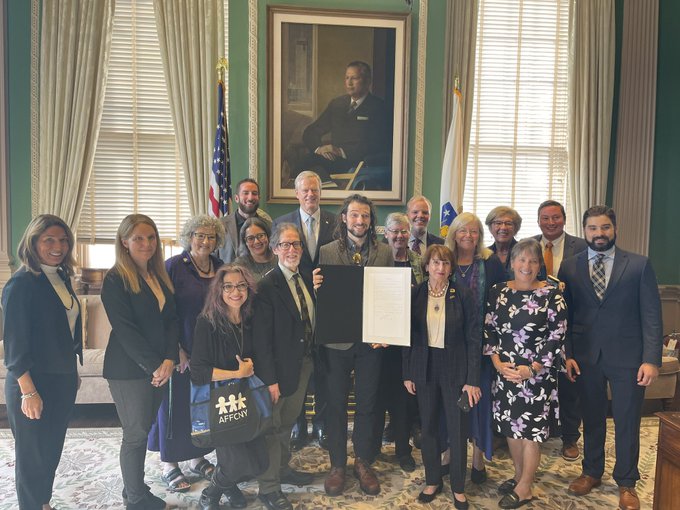
What: Native Organizers Alliance is organizing Harvard students and faculty to participate in a ceremony to commemorate the return of remains and artifacts stolen from the Wounded Knee massacre site. In the early 19th century, a traveling shoe salesman stole items from a gravesite at Wounded Knee in South Dakota. At the event, more than 131 items including moccasins, weapons, arrows, and clothing, will be returned to representatives of the Oglala Sioux and Cheyenne River Sioux Tribes.
Speakers will include
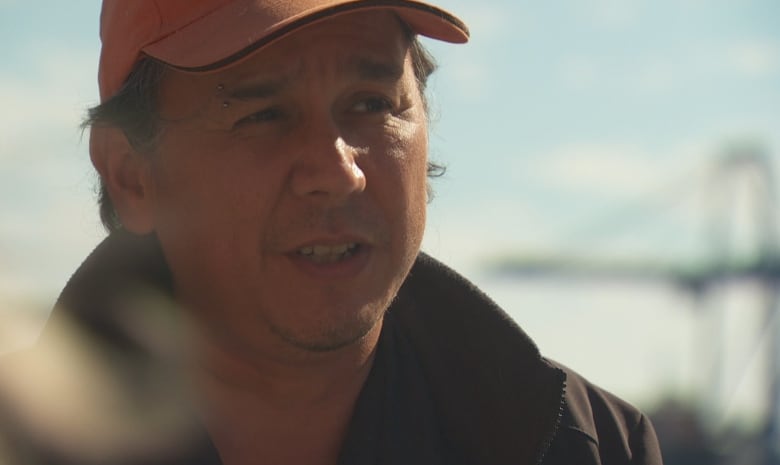
Kevin Killer, Oglala Lakota Tribe President
Nipmuc Chief Cheryll Toney Holley;
Chair of the Massachusetts Commission On Indian Affairs
Ann Meilus, Barre Museum Association Board President
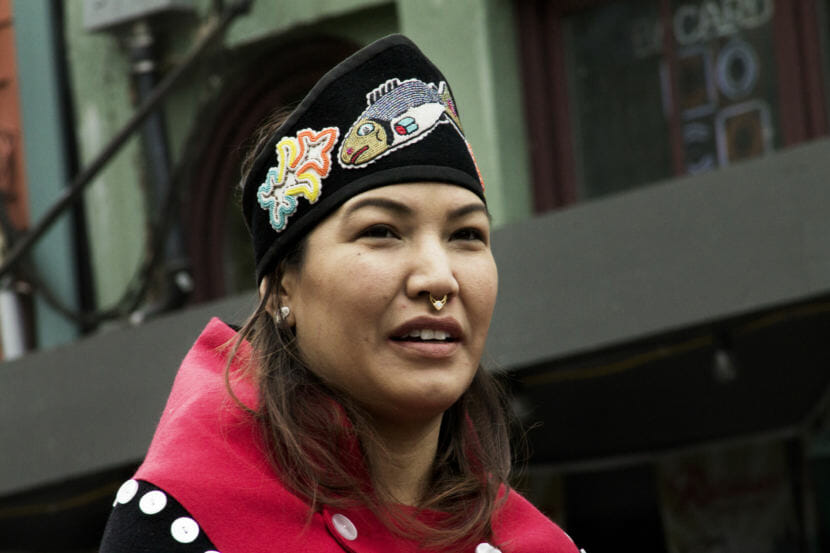
Jennifer Quinto marches with various indigenous groups during a parade at Celebration 2018 on Saturday, June 9, 2018, in downtown Juneau, Alaska. (Photo by Tripp J Crouse/KTOO)
To Quinto, ICWA helps adoptees like her to stay connected to their identities and communities.
“Who could ever believe that [ICWA] would be taken away?” she said. “That’s one of the last things keeping our community together in the way that it has, so imagining a world where that doesn’t exist is just too, too painful.”
As the Brackeen ICWA case is set to be heard in SCOTUS on November 9, one adoptee’s story https://t.co/tlNuuq8c5k
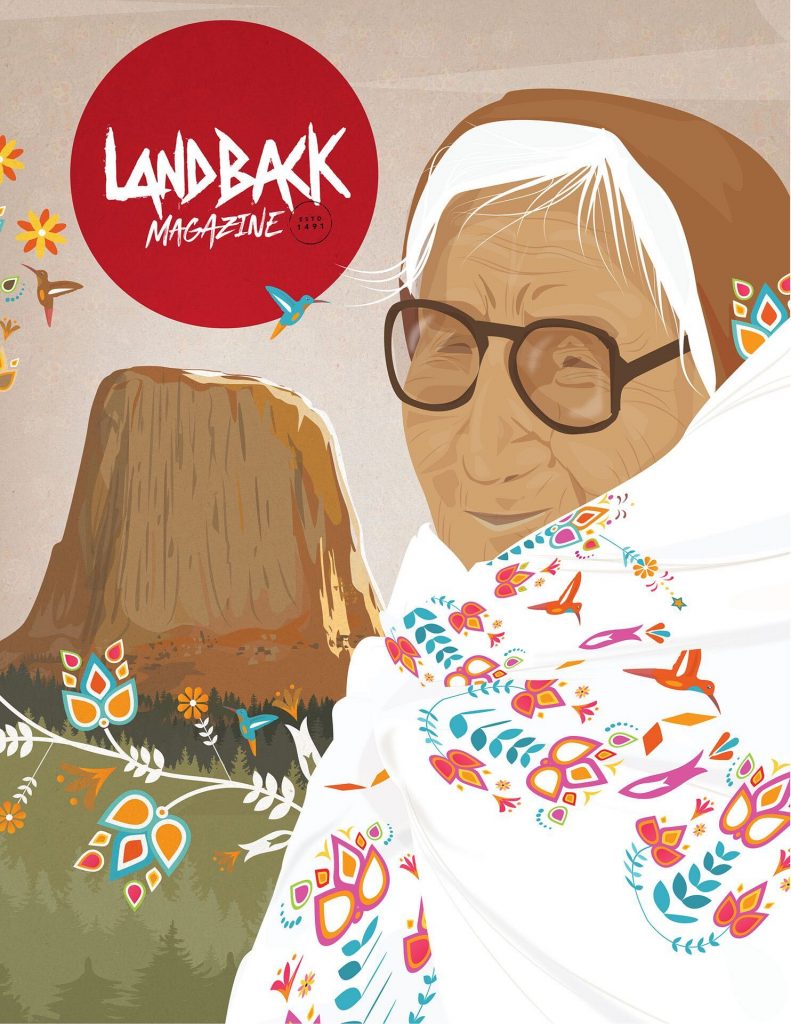
Rapid City, SD – NDN Collective’s LANDBACK Campaign has officially launched pre-sales of the limited edition LANDBACK Magazine, He Sapa: The Heart of Everything That Is, which pivots on the cornerstone work of the LANDBACK Campaign to reignite and continue the ongoing struggle to return the He Sapa (Black Hills) to the Oceti Sakowin (Lakota/ Dakota/Nakota) Nation. LANDBACK organizing has a powerful lineage. Nellie Red Owl (1907-1992) is intentionally featured on the cover as an acknowledgment of that lineage, her courageous actions, and her commitment to reclaiming the He Sapa.
The LANDBACK Magazine contains over 100 pages of content from movement elders, youth organizers, the frontlines of LGBTQ2S+ justice, climate justice, and joint-struggle movements against White Supremacy and colonialism and is intentionally Indigenous-powered project, created in partnership with Indígena, Primate, Red Media Press, and Red Planet Books and Comics.
“The LANDBACK Magazine is a culmination of stories and experiences shared across generations of front line struggles, courageous mass mobilization, and teachings to guide us into the future,” saidNadya Tannous, LANDBACK Campaign Organizer. “We’re bringing old school, punk vibes and a loud voice, connecting local LANDBACK efforts to domestic and international struggles for justice.”
“What started as just a wild idea shared with a few brilliant minds is now a work of art that represents the past, present, and future of LANDBACK as a global movement,” Krystal Two Bulls, LANDBACK Campaign Director. “We focus locally on the He Sapa: The Heart of Everything That Is. My hope is that it activates a whole new generation of organizers to step into the centuries-long mission that our Ancestors sacrificed their lives for. It has always been about our relationship to the land, and it always will be.”
“It is a true honor to be able to compile stories, poems, photos, and interviews with movement elders and young people who call He Sapa home,” saidDemetrius Johnson, LANDBACK Campaign Organizer. “The care and love that went into the creation of this magazine can be felt and seen on every single page. The struggle to reclaim He Sapa is ongoing, and the hope is that this magazine supplements this long and powerful history of reclaiming that sacred site.”
The LANDBACK Magazine will hit the shelves of many Indigenous-owned and Movement bookstores in the so-called continental US, so-called Canada, and the Hawaiian Kingdom in November for Native American Heritage Month, including Goodminds, Libélula Books and Co, Birchbark Books, Red Planet Books and Comics, and Native Books Hawai’i. It will also be intentionally distributed to highschools, Tribal Colleges and Universities, University Libraries and to our incarcerated Relatives.
David Fineday, middle, in a small circle of people who stopped by Friday for Smudge On, a program that allows people to engage in the Indigenous cultural and spiritual practice of smudging. (Dayne Patterson/CBC)
A Saskatoon man is trying to bring the Indigenous spiritual and cultural practice of smudging to those in the city, where he says it is lacking.
David Fineday, 66, said he was taken from his home at about five years old, then didn't see his mother until he returned home more than a decade later at 16.
Fineday said he doesn't see smudging often in the city — so he treks from his home in Saskatoon to a small, treed area near the corner of 20th Street West and Avenue K South, and does it there.
Fineday leads "Smudge On," a program backed by the Pleasant Hill Community Association that invites people to smudge every Saturday. Last week he also held a smudge on Friday for those who wanted to participate on the National Day for Truth and Reconciliation.
"Smudge On is a spiritual thing that I am trying to bring back to our people," he said.
"When you say your prayers that smoke takes your prayers up and that's how you're heard."
David Fineday, left, and Dennis Kissling, right, carried a banner on July 1 with names of people they said were taken from their homes during the Sixties Scoop. On the back it said 'Smudge-On,' a reference to the practice of smudging, which Fineday said has been a way to heal from the traumatic past. (Dayne Patterson/CBC)
Smudge On started in June 2020, but has become more consistent through 2021 and 2022, operating almost every Saturday through the late winter months into the late fall, Fineday said.
"People can come here if they're having problems, they can have a smudge and have a prayer and if they want to talk, they can talk," he said, calling it a no-judgment zone.
"Everybody deserves a prayer, especially these people on the street with their mental illnesses and addictions. They're chased out of every other place."
Fineday said smudging helped him to know he wasn't alone and to heal from the trauma associated with being taken during the Sixties Scoop, a period from the 1960s to 1980s when Canadian child welfare authorities took thousands of Indigenous children from their homes and placed them with non-Indigenous foster parents.
David Fineday, right, hosts the Smudge On program almost every Saturday to provide those in search of the traditional Indigenous practice an opportunity to do it. (Dayne Patterson/CBC)
While Fineday didn't attend residential schools, he said he moved from foster home to foster home from November 1961 until June 1973.
Saskatoon Ward 2 Coun. Hilary Gough stopped by Smudge On's Friday ceremony with a case of coffee and Timbits for the attendees, who sat on blue tarps that circled a metal firepit in the grassed area.
She said she stops by occasionally.
"This is something that is happening today, for [National Day for Truth and Reconciliation], but it's also something that happens every week," Gough said.
"It is intended to meet people where they're at."
Gough said she thinks much of the work done on the national day needs to be done year-round, not just on a designated date.
It is a desperate plea from a father seeking information about his missing son.
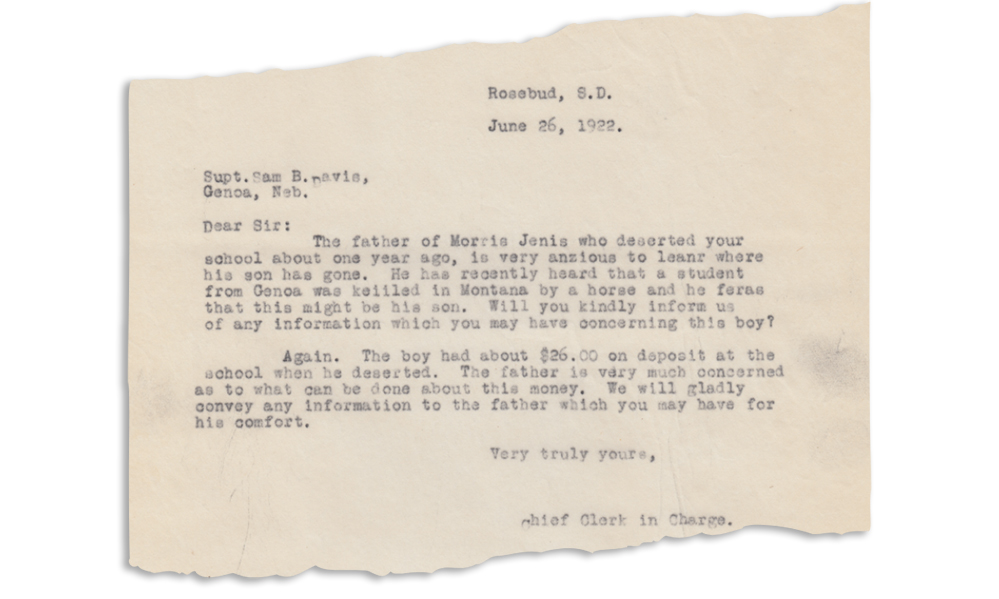
Morris Jenis Jr.’s father knew only his son, a Native American student at the Genoa Indian School in Nebraska 100 years ago, had not been seen in a year.
Morris ran away from the school in 1921 — “deserted,” according to the militaristic language school officials used — like hundreds of other young Indigenous children who resisted the boarding school policies that forcibly stripped them of language and identity, often hundreds of miles from home.
“The father…is very anxious to see where his son has gone,” a school clerk wrote the superintendent on the father’s behalf. “He recently heard that a student from Genoa was killed in Montana by a horse and he fears that this may be his son.”
Public archives do not provide any answers about Morris, nor his age and tribal affiliation. The school told his father that they could not find “any trace of him,” and reportedly returned the $26 — worth about $450 today — his family previously paid to send him home.
The plea is among thousands of stories made public by the Genoa Indian School Digital Reconciliation Project, one of many efforts to digitize elusive school, state and federal records, to bring the stories of Indigenous survivors and those who never made it home back to their families and tribes.
Last summer, the discovery of more than 900 child graves at former Canadian residential schools tore through international media and reignited investigations of U.S. boarding schools; reports focused on brutal abuse and quantifying death.
One night in Hinton, Alta., 16-year-old Shelley-Anne Bacsu decided to walk home along Highway 16 from her boyfriend's house.
She was never heard from again.
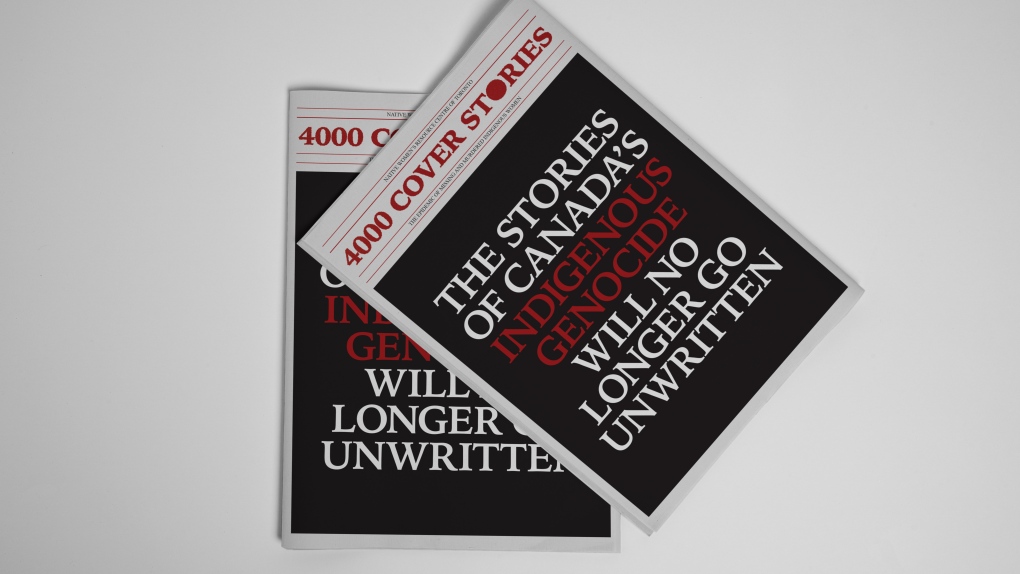
But 40 years later, her story is part of a new project aiming to honour the thousands of Indigenous women and girls who have been murdered or gone missing in Canada: a newspaper of “cover stories,” which organizers plan to hand deliver to Prime Minister Justin Trudeau.
On Monday, one day before the National Day of Action for Missing and Murdered Indigenous Women and Girls, those walking by the Ontario legislature at Queen's Park in Toronto came face to face with these women.
More than 100 “missing” posters set up in front of the building showcased those whose stories are rarely amplified.
In the middle of the posters is a newsstand carrying the “4,000 Cover Stories” newspaper compiled by the Native Women's Resource Centre of Toronto (NWRCT).
“It's really to demonstrate the impact of how many women have been missing that we know of,” Pamela Hart, NWRCT executive director, told CTVNews.ca. “So instead of a small section of a 40-page newspaper, you have a 2,000 (page), double-sided newspaper of cover stories of missing and murdered Indigenous women.”
She said that the massive size of the newspaper was to show “how large a newspaper would be if you covered all of these stories with the amount of attention that they deserve.”
Each one of these women's disappearances could be a cover story, she said.
The project is aiming to spur action to protect Indigenous women and girls in Canada. A national inquiry that ran between 2015 and 2019 called the issue a “genocide,” finding that governments and law enforcement have often failed to collect proper data or follow up on cases of missing Indigenous women.
More than 1,000 Indigenous women and girls were killed or went missing between 1980 and 2012, according to the RCMP, but experts believe the true number is closer to 4,000, according to the Native Women's Association of Canada (NWAC).
And this violence is ongoing — between 2015 and 2020, the most recent year for this data, Indigenous women accounted for 24 per cent of all female homicide victims in Canada, NWAC reports, despite making up just five per cent of the female population nationally.
Advocates say little has been done to tackle this crisis in the three years since the release of the national inquiry's final report, something that the NWRCT is hoping this project will challenge.
Each page and story within the newspaper will be accompanied by a QR code that, when scanned, will draft a letter to the MP of that specific missing or murdered woman's local riding, calling for action.
“My hope is that folks will learn and that they will follow through with the letter … so that we are slamming MPs and Trudeau with letters that force us to remember that this issue has never gone away,” Hart said.
“The other (goal) is that we honour and show that these women existed and that they deserved a cover page and that they deserve to be spoken about, and that there should have been outrage, there should have been more storytelling, there should have been more coverage.”
Following the demonstration in Queen's Park, the newspaper will be part of activities on Tuesday, which is National Day of Action for Missing and Murdered Indigenous Women and Girls (MMIWG).
It will be present at the annual Sisters in Spirit Vigil at Allan Gardens in Toronto, where community members gather to honour those who are no longer with them and celebrate their lives, Hart explained.
Afterwards, organizers are planning to deliver the newspaper to Trudeau's doorstep in Ottawa.
“So everybody knows that it's been done and that he has one of the largest levels of responsibility to respond,” Hart said.
The ’60s Scoop robbed his culture. Now he restores it through storytelling
Sixties Scoop survivor David Smith devotes his time to learning about the culture he has lost. (Mike Heenan/CBC)
When social workers visit David Smith’s community, his sister takes him into the woods.
As a young kid, Smith asked if they were playing hide and seek. I told him they were.
Then they lost one day.
“It was too big to lose that match because I and my brother were sent off,” Smith said. “We both had the same thing happen to us – we got adopted and lost everything.”
Smith and his brother were taken from the Metepenagiag Mi’kmaq Nation as part of the scoop of the 1960s, a period in Canadian history from 1961 to the 1980s, when Aboriginal children were taken from their families and adopted mainly by Canadian settlers.
Smith said he was relatively lucky when talking.
“I had a good family. I love my family. They are still my family. Now I have two families.”
Since the beginning of the year, Smith has reconnected with his culture through First Nations Storytellers, a company he and business partner Gail Bremner launched this summer that provides tours of Aboriginal history in Saint John and surrounding areas in New Brunswick.
David Smith with a tour group. His company, First Nations Storytellers, explores the Aboriginal history of the Saint John region and beyond. (Mike Heenan/CBC)
“I decided, as a way for me to take back my culture, that I would do that and devote all of my time and energy to learning my culture and my language, learning my family history, and sharing as much as possible with people,” Smith said. “So that they can get a better understanding of who we are.”
Watch | David Smith shares the history of the Wolastoq and Mi’kmaq peoples from an Aboriginal perspective:
A survivor of the ’60s Scoop reclaims his culture by educating others
Forty-four years ago, David Smith was moved from his home in Metepenagiag Mi’kmaq Nation. Now, he’s reclaiming his culture by sharing St John’s Aboriginal history.
For Smith in particular, he believed that truth and reconciliation should revolve around supporting Indigenous communities, through infrastructure and attitudes.
“I just want to see a world where not all rivers flow away from society,” he said.
“Not all paths lead me away from society. Not every government policy or all social convention takes me away from society.”
Loss of culture and search for communication
Despite his love for his adoptive family, Smith said his life away from Metepenagiag was isolated.
“I’ve lived in a society where I’m the only one of its kind…and they, kids, aren’t very tolerant. And remember, kids weren’t alone either.”
But Smith was still searching for his culture anywhere he could.
“Secretly I was in the woods, looking at plants, or saving animals and looking for any connection: movies, videos, books, anything I could find that connects me,” he said.
“But I still tried to hide it so much that I met my biological mother once. And I didn’t have the courage to come up to her and say hello.”
When Smith was 16, he was at a gymnasium for a martial arts tournament and spotted a group of Aboriginal parents and children. Smith said that whenever he saw other Aboriginal people, his little eyes naturally gravitated toward them—looking for something to help him understand where he was from.
Although his culture was taken from him, Smith as a child would seek connections to his roots. (Mike Heenan/CBC)
His eyes were dumbfounded at a certain woman he saw.
“It was like when you’re staring at someone in a crowd and you don’t know why you’re staring at them,” he said.
He imagined it might be his mother, but he couldn’t bring himself to go and talk to the group.
“I guess at one point, I didn’t want to be, I just wanted to be normal, which I did until recently.”
He will never have the opportunity to talk to his mother, who died when he was 19. At her funeral, he knew who she was and realized she was at the gym that day.
Smith walks with a tour group. On his tours, he shares familiar stories about the creation of local landmarks such as Partridge Island. (Mike Heenan/CBC)
“I’ve dreamed for years about that moment where I’d walk in and say hi. And just…it never happened.”
Decades later, it was the family that set him on his new path.
Smith has a 16-year-old daughter and wants her to know he was trying to do something important.
In January, he quit his job and embarked on his expedition.
“I hope she makes the journey herself eventually, if not today, sometime in the future, because I don’t want my culture streak to end with me.”
A trip anyone can join
One thing Smith wants to make clear is that he doesn’t know everything there is to know about Aboriginal history and culture.
“I’m not the end, everything, I’m just a guy learning and I want to share my journey.”
Smith said that every piece of feather in his company logo represents an indigenous community in New Brunswick. The colors represent the three countries in the province. (Mike Heenan/CBC)
He’s also trying to fill a gap in St. John’s tourism offerings, which his business partner Bremner noted before founding the company.
One of the company’s tours takes visitors on a walk through time by the Wolastoq River or the St. John’s River. On it, Smith describes the rich history of the area that existed before the arrival of Samuel de Champlain.
During the company’s first summer, Smith said he spoke to groups of 100 and groups of two.
“I will speak to anyone who is willing to listen and has open ears.”
For six years, a Native woman from the White Earth Band fought for custody of her granddaughter. In November, her struggle will be heard by the U.S. Supreme Court. The case, Brackeen v. Haaland, threatens the federal law protecting the bond between Native American children and their families and tribes.
This article is being co-published with The Imprint, a national nonprofit news outlet covering child welfare and youth justice.
Three white couples who sought to adopt Indigenous children will have their legal cases heard by the U.S. Supreme Court next month. Each of the foster families, including a couple from Minnesota, says the 1978 Indian Child Welfare Act discriminated against them because of their race.
The law, known as ICWA, ensures that tribes have a right to intervene when their members are involved in child welfare cases. And it requires that local governments make extra efforts to protect connections with Indigenous culture and kin. The outcome of the case challenging ICWA, Brackeen v. Haaland, has far-reaching implications: not only for the battle against family separation in Indian Country, but potentially for the foundational rights of tribes in relation to the U.S. government.
Two of the couples—Jennifer Kay and Chad Everet Brackeen of Texas, and Heather Lynn and Frank Nicholas Libretti of Nevada—gained full custody of the Native children they wanted to adopt.
One of thethree sets of plaintiffs in the Brackeen v. Haaland case did not.
Like the other two couples, Danielle and Jason Clifford of Minnesota ran into laws enacted to address centuries of destructive government policies. Native children have historically been forced to attend abusive boarding schools and systematically placed for adoption into non-Native homes.
But the Cliffords also encountered Robyn Bradshaw. A member of the White Earth Band of the Minnesota Chippewa Tribe, Bradshaw refused to give up her granddaughter,named in court documents as P.S.
“She was the only person who was there for P.S. every single step of the way,” said Conor Tucker, Bradshaw’s attorney of record at the Supreme Court. “The judges changed. The lawyers changed. Sometimes people weren’t there. But Robyn was always, always there.”
After four years in foster care and six years of court hearings,P.S. is now back home with her White Earth community and her grandmother. The 11-year-old is a fan of bike riding and has learned to swim. In addition to sharing movie nights, cartoons, and coloring, Bradshaw has sought regalia so her granddaughter can attend powwows. She’s also introducing P.S. to the Ojibwe language.
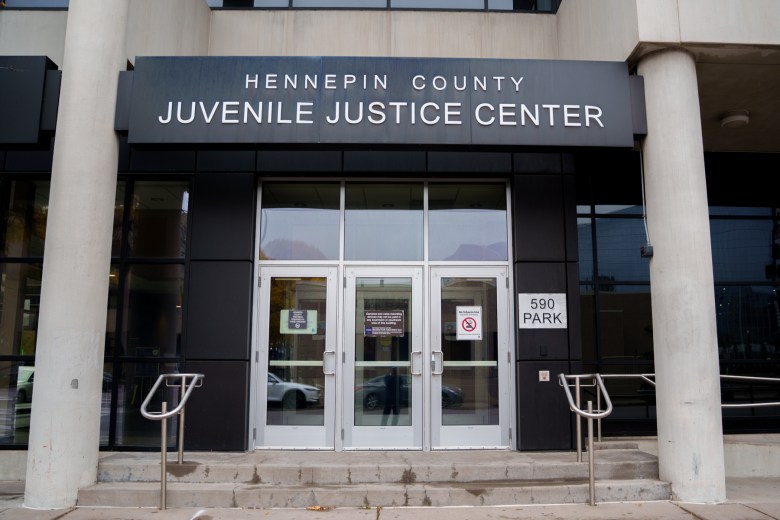
The Hennepin County Juvenile Justice Center in downtown Minneapolis on October 14, 2022. Credit: Drew Arrieta | Sahan Journal
In granting the adoption in 2020, a Hennepin County trial court acknowledged the nearly two years P.S. had spent with the Cliffords as a positive foster care experience. But after a long legal battle, the Minneapolis couple did not meet the court’s approval to become her adoptive parents.
“The Cliffords can provide love, attachment, an active two-family household and extended family, and ample financial resources,” the court had ruled the year prior. But her grandmother can nurture her “connection to her tribe, to her Ojibwe culture, to her sister, and to both sides of her family in a way that the Cliffords cannot.”
The adoption of P.S. through the Minnesota juvenile court is final and not in dispute. But the role ICWA played in hindering the Cliffords’ adoption efforts stands at the center of the larger argument now before the nation’s highest court.
The players in Brackeen v. Haaland
The Supreme Court is set to hear oral arguments in the Brackeen v. Haaland case on November 9. Secretary of the Interior Deb Haaland, a Laguna Pueblo member from New Mexico and the nation’s first Indigenous cabinet member, is a named defendant in the case because she represents the federal agency representing the tribes.
Interior Secretary Deb Haaland at Riverside Indian School in Anadarko, Oklahoma, in July 2022. Credit: Nick Oxford
The case was brought by the state of Texas, Louisiana, and Indiana, along with seven individual plaintiffs. They include three sets of foster parents and one biological mother:
the Cliffords, from Minnesota
the Brackeens, who adopted a Navajo child in 2018 and are seeking to adopt the boy’s half-sister
the Librettis, who adopted an Indigenous girl in 2018
Altagracia Socorro Hernandez, the biological mother of the child the Librettis adopted
In completing their adoption, the Librettis overcame initial objections by the Ysleta del Sur Pueblo tribe in Texas. But according to court records, the biological father and Hernandez, the child’s mother, were fully supportive. Hernandez, who is non-Native, has stated ICWA was “interfering with her wishes to have the Librettis adopt her baby.”
All three couples say prioritizing Native homes for Indigenous foster children, and providing additional support to the children’s parents, denies them equal protection. They also say states should not be forced to follow federal law, and that ICWA exceeds the authority of Congress.
A total of 497 Indian tribes and 62 American Indian organizations, 87 members of Congress, 23 states and Washington, D.C., have filed briefs in opposition to the Brackeen plaintiffs. They detail a dire need to maintain the Indian Child Welfare Act, and to protect the integrity of Indigenous families and communities. Defenders of ICWA maintain that the federal law is not based on race, but on the rights of tribes as sovereign nations who have treaty relationships with the U.S. government.
Bradshaw chose to speak through her attorneys and their amicus brief in the case. They say she did not intend to be a party to this case and simply wants to live peacefully with P.S. out of the limelight.
Yet her amicus brief now before the Supreme Court is described by the respected Turtle Talk Indigenous legal affairs blog as “unique,” among the dozens that have been filed in the case to date: “The Cliffords’ narrative of facts was allowed to go unchecked throughout the life of the case until now.”
A child born with her grandmother close
Each of the three plaintiffs in the Brackeen case has a unique set of circumstances. But none can be divorced from history and the high stakes of the case.
ICWA became law at a time when one in four Indigenous children were separated from their families. In contemporary Minnesota, Native children are more than 16 times more likely to enter foster care than white children.
According to the U.S. Department of Health and Human Services’ Children’s Bureau: “ICWA was enacted after Native American children were systematically removed—often without evidence of abuse or neglect that would be considered grounds for removal—and placed with non-Native families, with the intent to deprive them of their Native family or culture.”
Bradshaw’s granddaughter was among them.
“P.S. was born on a warm, clear, and breezy day in July 2011,” a brief filed to the Supreme Court reads.
“Ms. Bradshaw had bonded with P.S. in the womb and saw P.S.’s face for the first time moments after her birth—in the delivery room.”
P.S. and her mother lived with Bradshaw after the birth. And “for the next three years, P.S. was raised in a loving and stable home with Ms. Bradshaw and P.S.’s mother as active, full-time caregivers,” records show. “Ms. Bradshaw fed P.S., bathed her, dressed her, changed her diapers, played with her, sang to her, comforted her, cared for her, tucked her into bed, and woke up the next morning to do it all again.”
But in 2014, Bradshaw’s daughter “fell into drug addiction and became unable to care for P.S. or to contribute to the household finances,” according to court filings. Bradshaw, taking on full responsibility for her granddaughter while her daughter fought to recover, had limited income and lost her home to eviction.
Bradshaw and P.S. stayed with friends for a time. But she eventually left P.S. in the care of her father for two days, while finalizing permanent housing. He agreed, but then disappeared with the child, court records show. Bradshaw panicked. She called the police, who filed a CPS report with Hennepin County.
On August 7, Bradshaw learned her daughter and her grandaughter’s father had been arrested on drug-related charges with P.S. present, and the girl had been placed in emergency foster care.
“Ms. Bradshaw immediately called Hennepin County and asked when she could pick up P.S.,” court documents state. “The County told her she could not do so and gave her no further information.”
Bradshaw had been taken from her home as a child and forced to attend a residential boarding school. So she was steadfast in her determination to reunite with P.S., records show. She “resolved that she would never abandon her granddaughter.”
A Minnesota trial court would later rule that Bradshaw “deeply loved” her granddaughter and the two shared “a strong bond and a secure attachment.”
WARNING: This story contains disturbing details about residential and boarding schools. If you are feeling triggered, here is a resource list for trauma responses from the National Native American Boarding School Healing Coalition in the U.S. In Canada, the National Indian Residential School Crisis Hotline can be reached at 1-866-925-4419.
This story and a two-part podcast are the result of a collaboration between ICT and Reveal to examine Indigenous boarding schools in the United States. The podcast, “Buried Secrets: America’s Indian Boarding Schools,” starts with part 1 on Saturday, Oct. 15, and concludes with part 2 on Saturday, Oct. 22.
Joseph Pierce contributed an essay in the anthology STOLEN GENERATIONS: Survivors of the Indian Adoption Projects and 60s Scoop: Book 3 in the Lost Children of the Indian Adoption Projects book series.
his new op-ed
Land acknowledgment without action is an empty gesture, exculpatory and self-serving.
A protester at the Whitney Museum during the "Nine Weeks of Art and Action." Taken with permission on May 17, 2019. (photo Hakim Bishara/Hyperallergic)
You’ve probably heard one. You may have helped craft one. A land acknowledgment is quickly becoming de rigueur among mainstream cultural and arts institutions. An official will stand at a podium and announce: This building is situated on the unceded land of the XYZ people. As if those people are not still here. As if this all happened in the past. He will breathe deeply and continue: We pay homage to the original stewards of these lands. The audience will nod in agreement. As if homage were the same as returning stolen land.
A land acknowledgment is not enough.
Museums that once stole Indigenous bones now celebrate Indigenous Peoples’ Day. Organizations that have never hired an Indigenous person now admit the impact of Indigenous genocide through social media. Land-grant universities scramble to draft statements about their historical ties to fraudulent treaties and pilfered graves. Indeed, these are challenging times for institutions trying to do right by Indigenous peoples.
Some institutions will seek the input of an Indigenous scholar or perhaps a community. They will feel contented and “diverse” because of this input. They want a decolonial to-do list. But what we have are questions: What changes when an institution publishes a land acknowledgment? What material, tangible changes are enacted?
Without action, without structural change, acknowledging stolen land is what Eve Tuck and K. Wayne Yang call a “settler move to innocence.” Institutions are not innocent. Settlers are not innocent.
The problem with land acknowledgments is that they are almost never followed by meaningful action. Acknowledgment without action is an empty gesture, exculpatory and self-serving. What is more, such gestures shift the onus of action back onto Indigenous people, who neither asked for an apology nor have the ability to forgive on behalf of the land that has been stolen and desecrated. It is not my place to forgive on behalf of the land.
A land acknowledgment is not enough.
This is what settler institutions do not understand: Land does not require that you confirm it exists, but that you reciprocate the care it has given you. Land is not asking for acknowledgment. It is asking to be returned to itself. It is asking to be heard and cared for and attended to. It is asking to be free.
Land is not an object, not a thing. Land does not require recognition. It requires care. It requires presence.
Land is a gift, a relative, a body that sustains other bodies. And if the land is our relative, then we cannot simply acknowledge it as land. We must understand what our responsibilities are to the land as our kin. We must engage in a reciprocal relationship with the land. Land is — in its animate multiplicities — an ongoing enactment of reciprocity.
A land acknowledgment is not enough.
To engage with the land on the land’s terms is an act of reciprocity. Reciprocity, rather than recognition, is what the land requires because that is what it has already given. Are you not alive, breathing, because of this land?
The land exists regardless of settler acknowledgment, which can only ever be the first step toward meaningful action. Next steps involve building relationships with that land as if it were your kin. Because it is.
After requests and many kind words, the second edition of ONE SMALL SACRIFICE is back on Amazon HERE and it will start showing up in bookstores again, or you can request your local bookstore order it for you.
I never wanted to write about me, but my story helped others and it might help you open your adoption, and process what happened to you.
👇👇👇This is a reblog from 2012:
The Special Place of Children in Aboriginal Cultures
Children hold a special place in Aboriginal cultures. According to tradition, they are gifts from the spirit world and have to be treated very gently lest they become disillusioned with this world and return to a more congenial place. They must be protected from harm because there are spirits that would wish to entice them back to that other realm. They bring a purity of vision to the world that can teach their elders. They carry within them the gifts that manifest themselves as they become teachers, mothers, hunters, councillors, artisans and visionaries. They renew the strength of the family, clan and village and make the elders young again with their joyful presence. Failure to care for these gifts bestowed on the family, and to protect children from the betrayal of others, is perhaps the greatest shame that can befall an Aboriginal family. It is a shame that countless Aboriginal families have experienced some of this repeatedly over generations.
By Trace Hentz (formerly DeMeyer)
I saw a photo today (see below) This book cover reminded me of this excerpt and chapter in my memoir.
Four Traumas (published in 2012) (10 years later, republished in 2022)
Now that we have the internet and many ways to find information, I read that adoptees are more traumatized than a prisoner of war. That’s right. It’s called post-traumatic stress disorder. A prisoner of war may escape or be released, but an adoptee may suffer their entire life.
I believe there are four distinct traumas in being an adoptee. They are: 1) in utero, when you feel what is happening to you or sense what is coming; 2) when you are delivered, abandoned, and handed to strangers; 3) later when you are told you are adopted and realize fully what it means; and 4) when you realize you are different, from a different culture or country, and you can’t contact your people, or know them, or have the information you need to find them.
It took me years to get this. There are more traumas, too – like when I’d fill out forms at the doctor’s office. I had no medical history. I had no idea if I was sitting next to someone who could be my biological brother, sister, mother or father. It was terrifying to think I could marry my own relative! I could carry a gene or trait that I pass down to my children – and I wouldn’t know until it’s too late. If my birthparents were alcoholics, then I really shouldn’t drink. I could be pre-disposed to diabetes or heart disease or cancer or depression and not even know. My list went on and on.
In 2006, I found out my birthmother had diabetes, which came as another shock.
I realize a powerful link exists between what I’m feeling, and what happens in my body. Years ago I’d use emotional binging, working more than one job, creating drama, just to numb my emotional pain. By 18 I was a total workaholic! I blamed myself and hated myself for everything. What grief, too young to understand. My birthmother’s rejection destroyed my ability to trust anyone.
There may be some adoptees who do not wish to heal this and go on as they are, holding on to these sad feelings and self-pity, rather than do the mental work to heal. Recognizing a pattern of belief is tough, partly because you gain sympathy by stealing (or sucking) energy from others when you act sick. That is no way to live. You need to be your own person, self-energizing, and not steal energy from anyone.
Adoptees are meant to survive this, no matter who we are or how we were traumatized. It’s a test.
Can we heal our own minds? Yes.
Can we love two families? Yes.
Can we take our recovery and story back to our families? Definitely.
Some adoptees believe that when we meet mother or father, all pain and agony will disappear. That sadly is just hope. That is not the way it works. A reunion is just one step on the journey and it helps, but there are many many more steps just as difficult. It’s truly a test.
Regardless of ancestry, creed or complexion, adoptees can heal this. The only one who can fix it is you.
I’m uneasy around new people, reserved and shy at times. I’ve lived through many disappointments. It’s very upsetting to find out about orphan trauma now, years later, knowing no one bothered to tell me or help me while I was experiencing it.
After multiple traumas, which I’ll describe, I came to terms with it… eventually.